by Robert McClure, Alison Ledwith, and Mo Elsayed
by Beth Foster, Ryan Losch, and Robert McClure

Universities are leading a shift in how campuses engage with the world—actively shaping the rise of innovation hubs that extend their impact beyond traditional boundaries. These mixed-use districts bring academic, commercial, residential, and civic spaces together, blurring the lines between education and industry, campus and community.
As universities expand both their physical and intellectual footprints, innovation hubs offer powerful opportunities to extend institutional influence, foster job creation, and deepen regional partnerships. But realizing this potential requires more than traditional campus planning—it calls for market-savvy, multi-sector collaboration, and a long view on community impact.

The 1,877-acre RELLIS Campus is a 15-minute drive from the Texas A&M University (TAMU) campus in College Station. RELLIS builds upon, complements, and supports the strengths of the Texas A&M System to become one of the nation’s leading innovation and research clusters. Rendering of Texas A&M University System RELLIS Campus Master Plan in Bryan, Texas.
Innovation districts are intentional ecosystems designed to support research, workforce development, housing, entrepreneurship, and cultural connections. These mixed-use developments near universities require more comprehensive knowledge than just campus planning. They need to stay attuned to local market trends and understand what types of office, research, or housing spaces will be in demand in those markets. While the context varies, the goal remains consistent: to create vibrant, integrated hubs that reflect institutional strengths while enhancing community value.
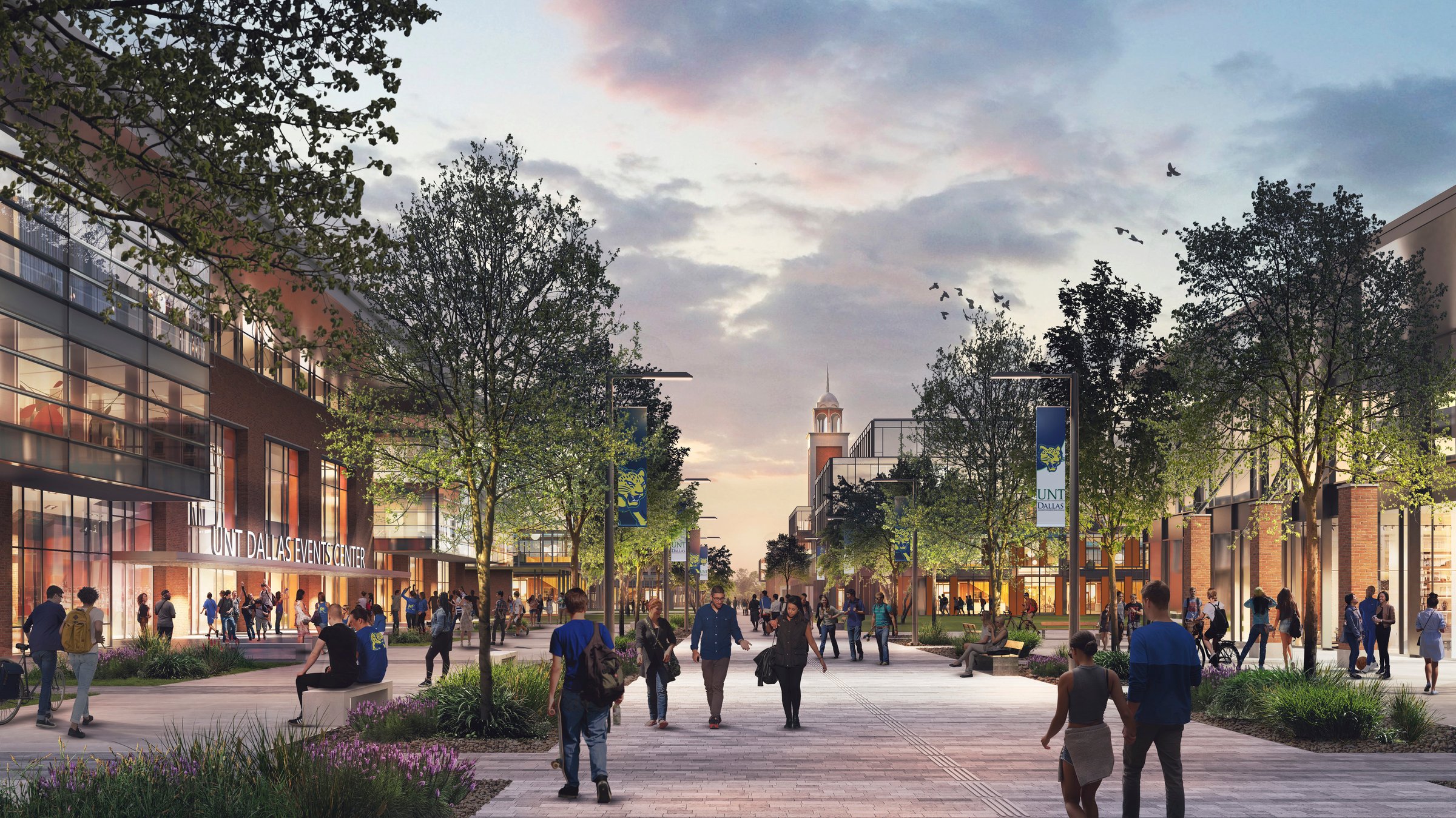
The Campus Master Plan at the University of North Texas at Dallas outlines a clear path for growth, supporting partnerships that advance public health, workforce development, and educational access in southern Dallas. The College of Law’s downtown location extends these efforts, connecting students to broader opportunities across the city. Rendering of UNT’s South Campus Gateway in Dallas, TX.
A successful innovation district isn’t generic; it’s grounded in the university’s existing strengths. “The key question is,” says Beth Foster, principal and director of campus planning at Page, now Stantec, “What areas of the university’s expertise are already aligned with potential workforce demand?”
These districts should extend, not dilute, the university’s mission. When aligned with institutional strengths such as life sciences, advanced manufacturing, or entrepreneurship, they become incubators for opportunity, connecting students and faculty to regional industries while attracting investment and talent.
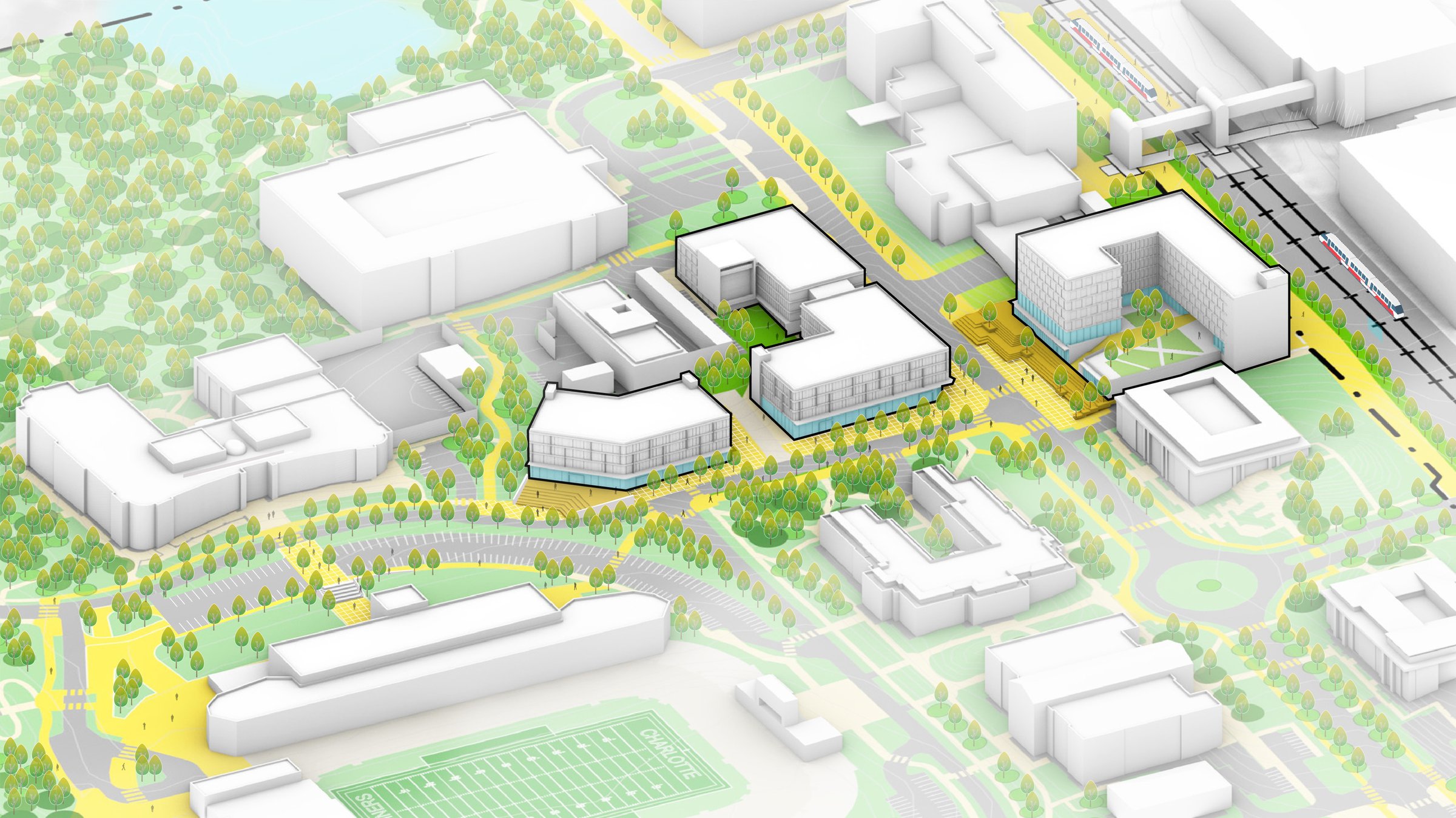
The UNC Charlotte Campus Plan 2024: Great Horizons builds on the university's "Shaping What’s Next" strategic plan, guiding capital investments that support student success, academic excellence, and an enriched campus experience. The plan prioritizes academic and research expansion, with a focus on the Dubois Center in Uptown—positioning it as a catalyst for interdisciplinary collaboration within Charlotte’s growing technology district. Rendering of the University of North Carolina Charlotte Campus Master Plan in Charlotte, NC.
Too often, universities risk replicating the single-use suburban office park or apartment complex that fails to generate long-term activity. The focus should be on layered, diverse environments that encourage vibrancy across hours and user groups.
“You want it to be visible, you want it to be accessible, and you want a range of amenities around, so you don’t have to start from scratch,” says Foster. “You also want it to be a place where the university and business partners truly come together.”
By integrating office, residential, retail, and public spaces, designed for both the campus and the surrounding neighborhood, innovation hubs foster street life, engagement, and economic dynamism. “We don’t want a neighborhood that just goes dark at 5 p.m.,” Foster adds.

Page, now Stantec, worked closely with Appalachian State University and its market and economic advisor to prepare master plans for sites, on and off campus, that position the university to generate mission-sustaining revenue by creating vibrant, mixed-use districts. These district plans identify how best to utilize the identified land holdings to capture financial and strategic value through development. Rendering of Appalachian State University Innovation District Master Plan in Boone, North Carolina.
“Design alone doesn’t make a place successful—programming is essential to activate these spaces over time,” explains Robert McClure, design director at Page. Innovation hubs need to offer more than square footage; they should cultivate culture, foster collisions, and create value.
Imagine the trajectory: what will unfold on Day One, and how will it evolve over five or ten years? Programming, such as entrepreneurial incubators, co-working memberships, public events, and mentorship opportunities, must be curated with care to ensure that spaces stay relevant and welcoming.
These elements also play a critical role in making equity tangible: open workshops, training partnerships, job fairs, and community programs are just a few examples of how programming can connect local residents with new opportunities.
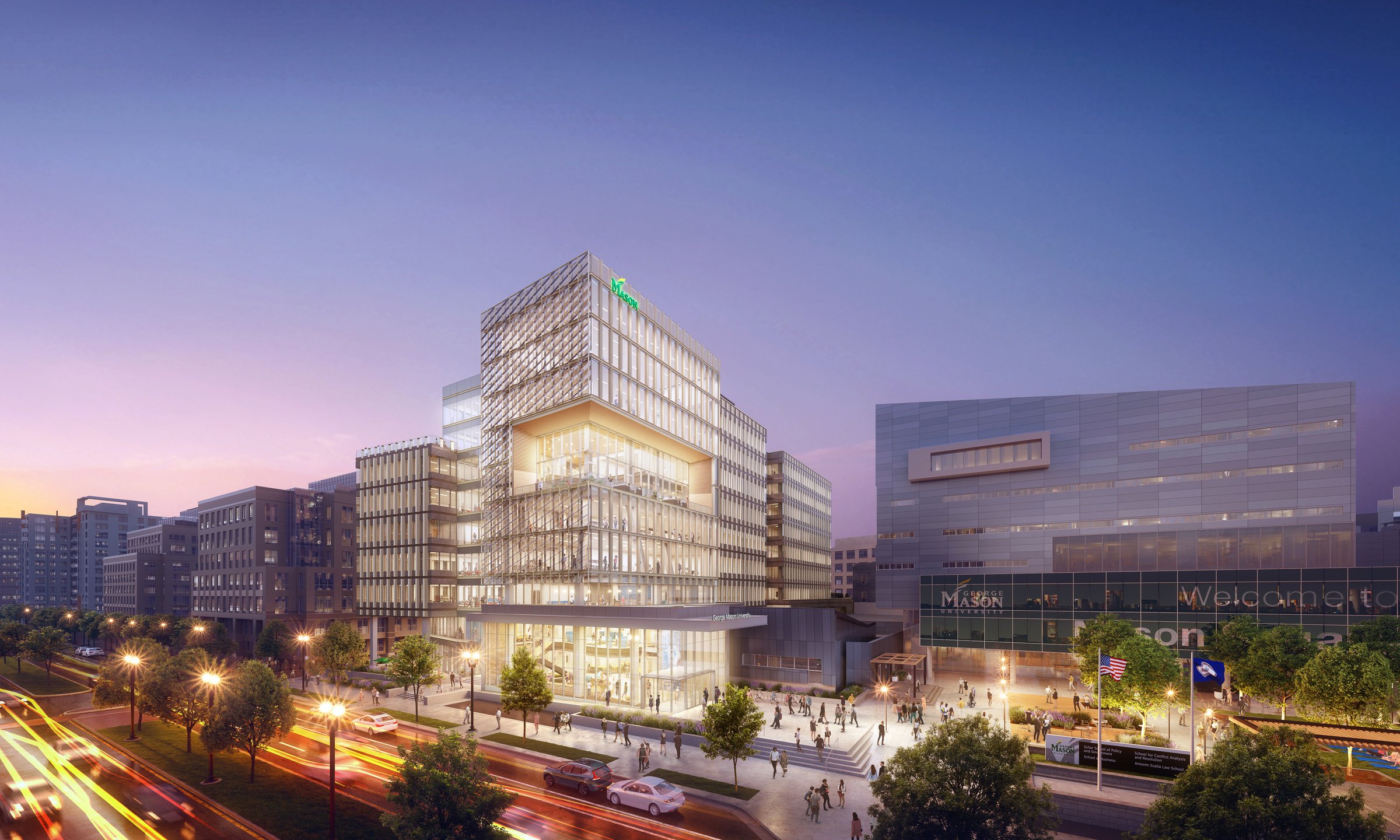
Dedicated to creating the next generation of Northern Virginia’s technology workforce, Fuse at Mason Square will house graduate-level education and interdisciplinary research in a broad range of programs, including computing, artificial intelligence, data analytics, and cybersecurity, among others. Rendering of George Mason University Fuse at Mason Square in Arlington, VA.
Innovation districts also challenge traditional assumptions about what functions belong at the campus core. Foster notes that part of the planning effort involves rebalancing what must remain close to students versus what can be shifted outward into the community.
“We’re always talking to campuses about what’s essential in your most precious real estate and what can be located farther out,” she says. “Outlying functions can be drawn in, and administrative uses moved out, freeing up land for housing and mixed-use programs that benefit students and the community alike.”
This reallocation of campus uses is a strategic act—making way for growth without sprawl. It involves creating the best possible space for students, faculty, and the community, with a focus on planning efforts that enhance their well-being and sense of belonging.
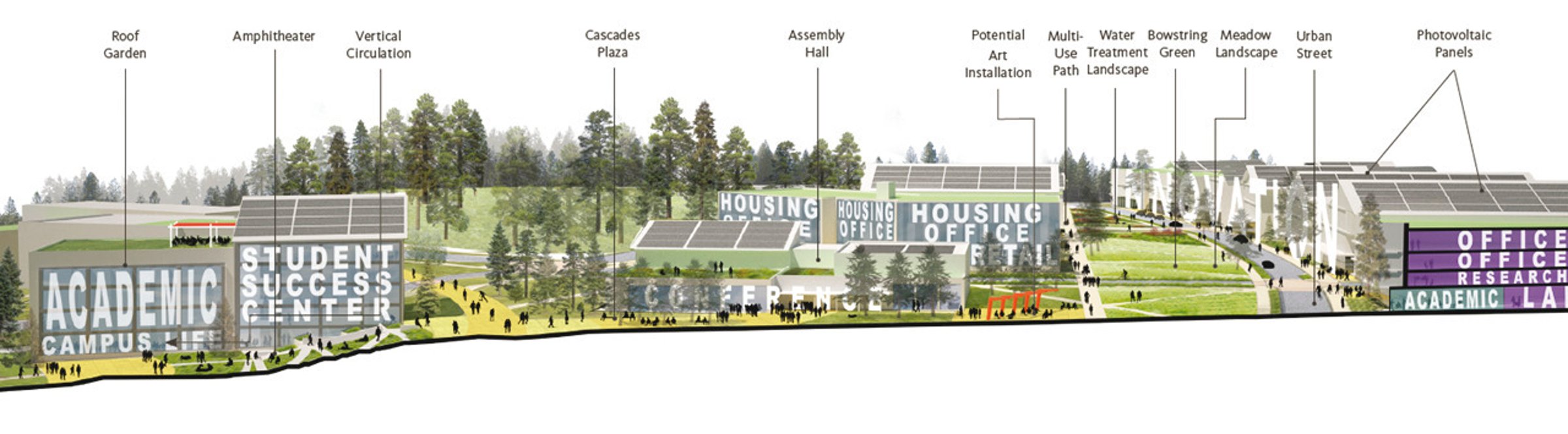
The Innovation District is a vibrant, mixed-use district that blends housing, small-scale retail, and academic space with industry partner office and research space. Industries and organizations with complementary missions are invited to develop in partnership with the University. Co-locating these partners leverages proximity to university resources and innovation and enriches the University’s academic and experiential learning opportunities. Rendering of Oregon State University-Cascades Long Range Development Plan in Bend, Oregon.
These projects are not just about real estate. They’re also about expanding access—to education, to jobs, to opportunity. “Our responsibility to the community,” says Foster, “is to connect people, especially those who haven’t historically had access, to growing areas of employment. By creating innovation hubs, we give employers access to students, and students access to employers. It’s a win-win.”
This sense of shared value is especially critical as universities face growing scrutiny over gentrification and housing costs. Many institutions are incorporating workforce or affordable housing into their district plans - both to serve their community and to provide affordable options for graduate students, staff, and essential workers.
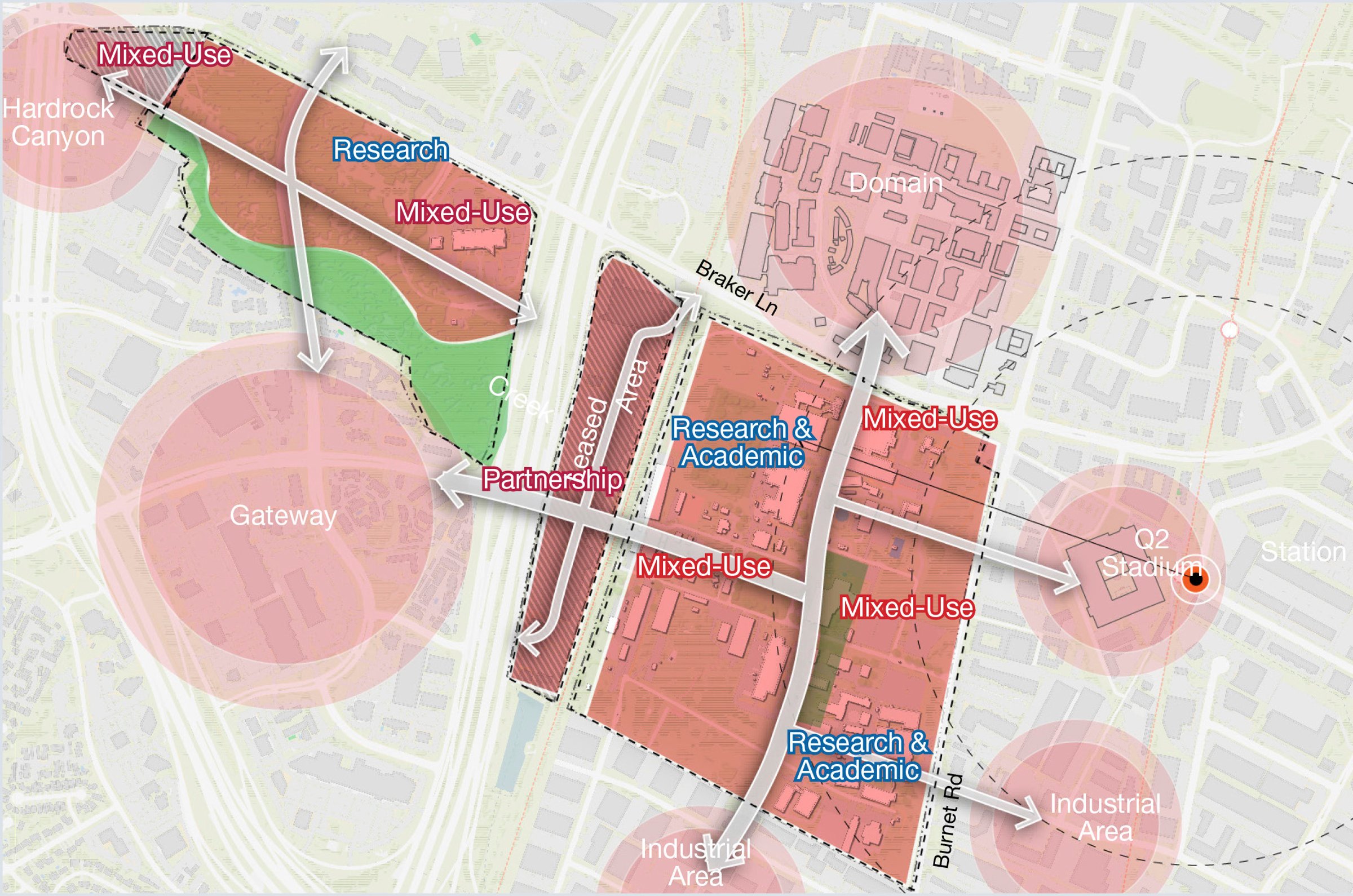
The campus plan envisions a new urban district that is fully integrated with the surrounding North Austin area and includes a mix of uses such as institutional and partnership research space, academic space, service and amenity-oriented retail, and housing that support the innovation ecosystem. Rendering of The University of Texas at Austin Pickle Research Campus Plan in Austin, Texas.
Creating a new district takes time and vision. “Phasing is one of the biggest tasks, but it is a distinct and exciting challenge,” says Ryan Losch, principal and urban design director at Page. “It’s tempting to only think about the end-state, but it’s critical to understand the incremental steps required to get there.”
Phased development allows for course correction based on performance, shifting needs, and new opportunities. But it also requires careful attention to placemaking from day one. “Creating a sense of place can be a challenge,” Losch adds. “We lean into placemaking within the public realm to avoid generic developments that lack intrigue and excitement.”
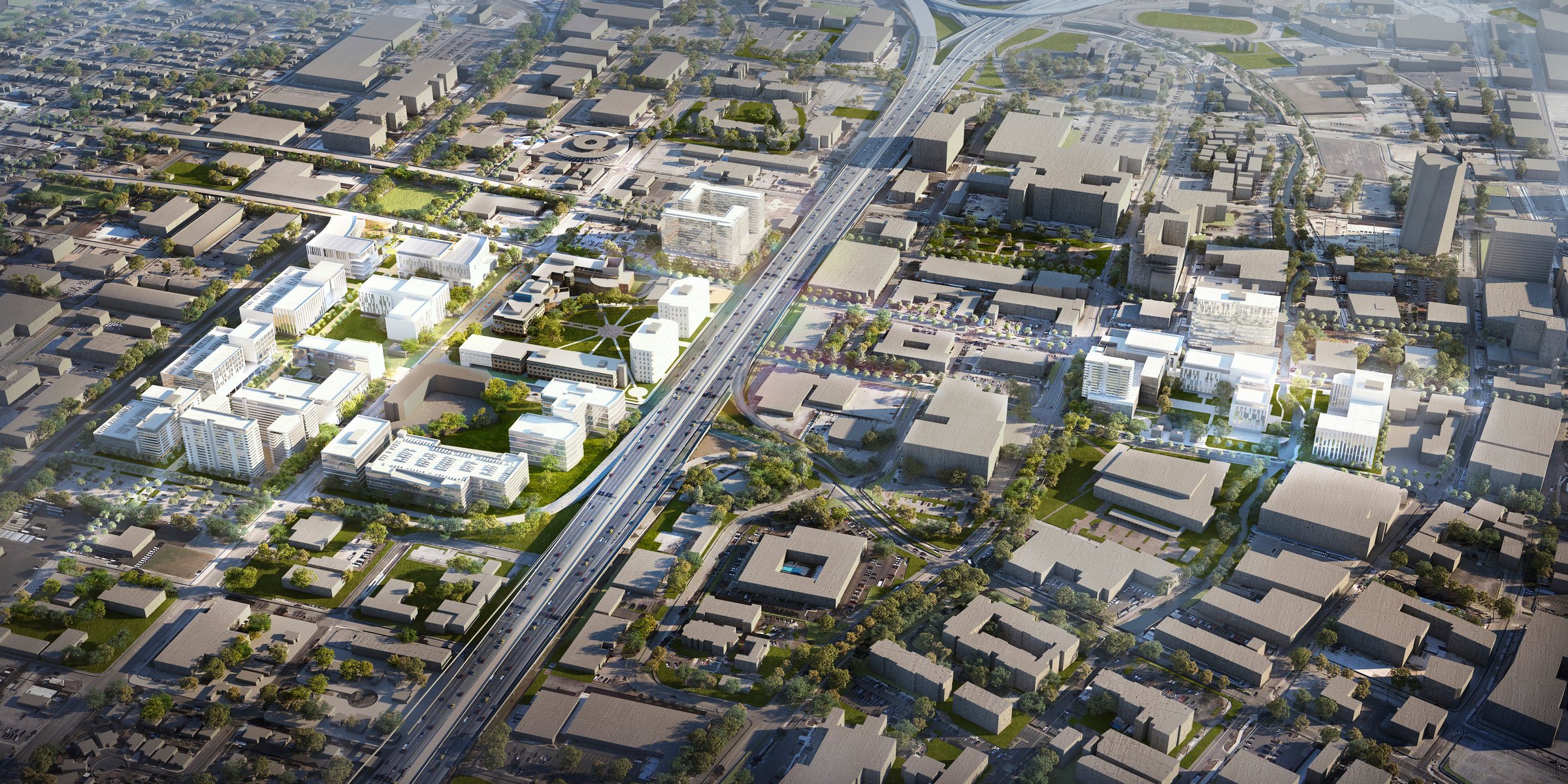
The University of Texas at San Antonio Campus Master Plan provides a vision to support the university’s three primary goals: to be a model for student success, a great research university, and an exemplar for strategic growth and innovative excellence. Rendering of the University of Texas at San Antonio Campus Master Plan in San Antonio, Texas.
Universities play a pivotal role in shaping urban landscapes, but successful mixed-use development requires market awareness and strategic planning. When done right, these projects enhance economic vitality, community engagement, and institutional resilience. As universities expand their footprint, they must move beyond conventional campus planning and embrace integrated, market-sensitive development strategies.
Innovation hubs are more than just development projects—they are expressions of the university’s evolving role as a civic anchor, economic catalyst, and cultural bridge. They require bold vision, but also humility and collaboration. When thoughtfully planned, they allow universities to extend their mission into the public realm, generating shared value and long-term resilience.
This kind of integrated planning, place-based, program-rich, and people-centered, isn’t just the future of campus development. It’s how institutions stay relevant, responsive, and rooted in the communities they serve.

Beth 's passion for campus planning is driven by her commitment to shaping environments that inspire learning, foster community, and promote innovation. With over twenty years in the field, Beth brings strategic insight and a deep understanding of educational spaces to translate her client's mission into place. She leads projects that prioritize sustainability and connectivity, ensuring each campus embodies its unique character and purpose. She is particularly gifted at engaging students, faculty, and leadership in the planning process. Beth speaks frequently at industry events about planning for resilience and campus/community partnerships.

Ryan has a passion for cities and the impact of the urban environment on its inhabitants. He combines his expertise in urban design, architecture, and planning to craft projects that integrate seamlessly across scales. He believes that individual projects cannot be conceived in isolation; it is their connection to the surrounding context that shapes how people receive and interact with place. His body of work includes a variety of typologies and urban conditions, from innovation districts to downtown redevelopments, public realm activation, campuses, and peripheral urban zones, each focused on a human-centered approach to urban design.

Rob has over twenty-five years of experience designing large-scale domestic and international projects. His portfolio includes over 25 million square feet of significant commercial mixed-use, higher education, healthcare, and government projects. He is passionate about promoting a design process rooted in exploration where ideas can come from anywhere. Rob's approach reflects a balanced embrace of new technology and his lifelong passion for hand sketching, which he uses to visualize possibilities in real time. His commitment to an open, inclusive process delivers compelling designs and rewarding experiences for all involved.
More
by Robert McClure, Alison Ledwith, and Mo Elsayed

by Alireza Sedghikhanshir and Raffaella Montelli


Complex challenges need fresh perspectives and deep expertise. Connect with our team to explore how we can help you create spaces that make a real difference.