Publication
Page hosts students in mental healthcare design challenge
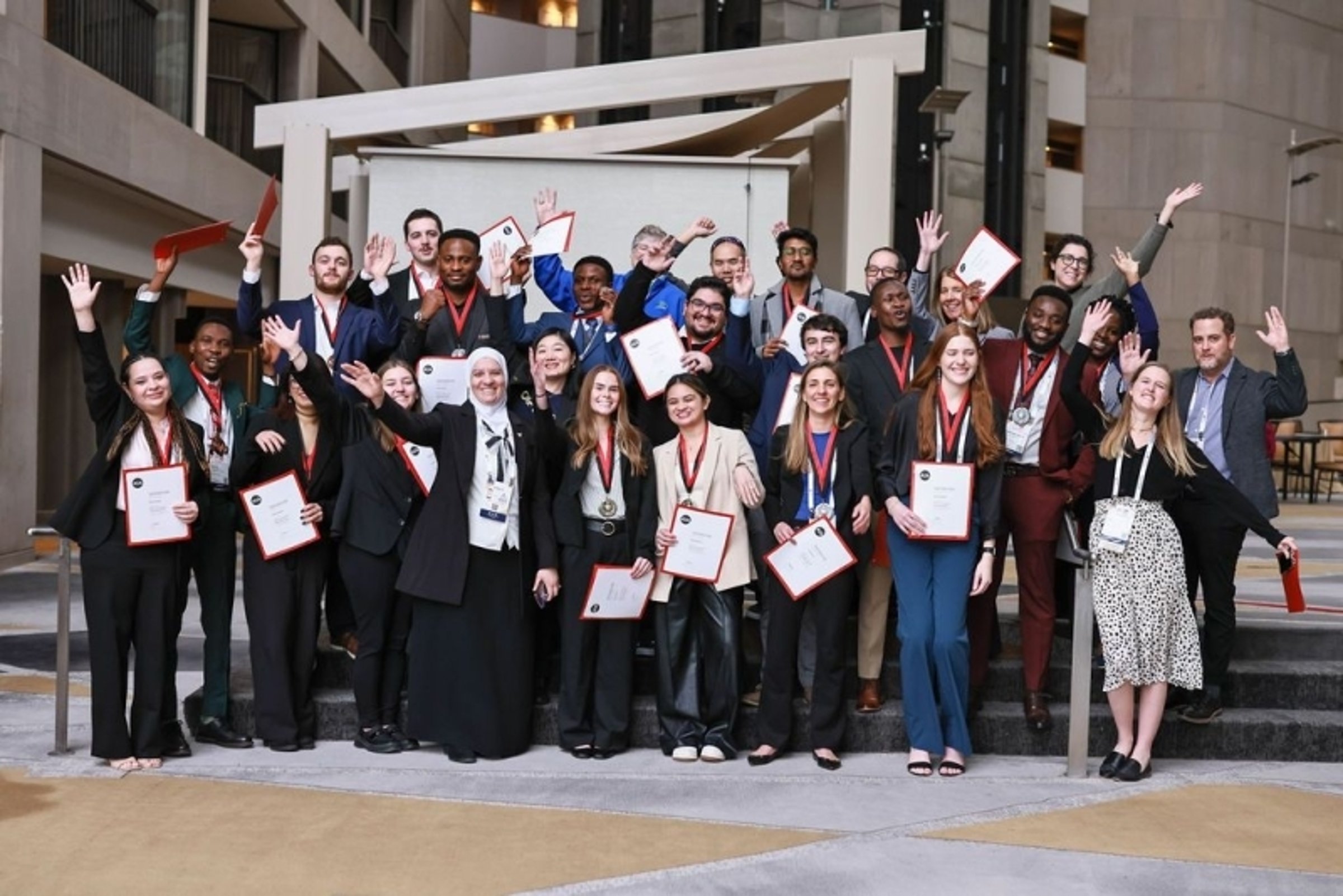
The groggy but excited group of students and mentors gathered early on the morning of Friday, March 7, in Page’s “Mothership” conference room for a breakfast of juice, pastries and coffee and to receive their “project” for the weekend.
These students were participants in the AIA/AAH PDC student design challenge — a multidisciplinary, 48-hour charrette competition in which students receive a healthcare-focused prompt, break into teams, and develop viable designs answering the prompt’s challenge.
Architecture, engineering, construction, and nursing students came to Atlanta from five universities around the country (Ball State, Georgia Tech, Purdue, Drexel, and University of Florida) to take part in the challenge, sponsored by AIA Academy of Architecture for Health (AAH), The American Institute of Architects (AIA), and the American Society for Health Care Engineering (ASHE).
At Page, the host firm for the Atlanta challenge, the group was met by AAH co-chairs Leah Meer, health planner for HDR, Gabe Auffant, healthcare client leader for DLR group, and Chris Ressler, regional healthcare director for Page.
Over breakfast, the students got their first glimpse of the healthcare challenge they would spend the weekend immersed in -- expanding one of the busiest Emergency Departments (ED) in the country at Atlanta’s Grady Memorial Hospital to include a behavioral health ED and an EmPATH Behavioral Crisis Unit. “Sixty million American adults experienced a mental illness in the last year, one in every four,” said Ressler. “And 13 million Americans reported thoughts of suicide. And 20 percent of teens are battling depression. You can see the scope of the problem.”
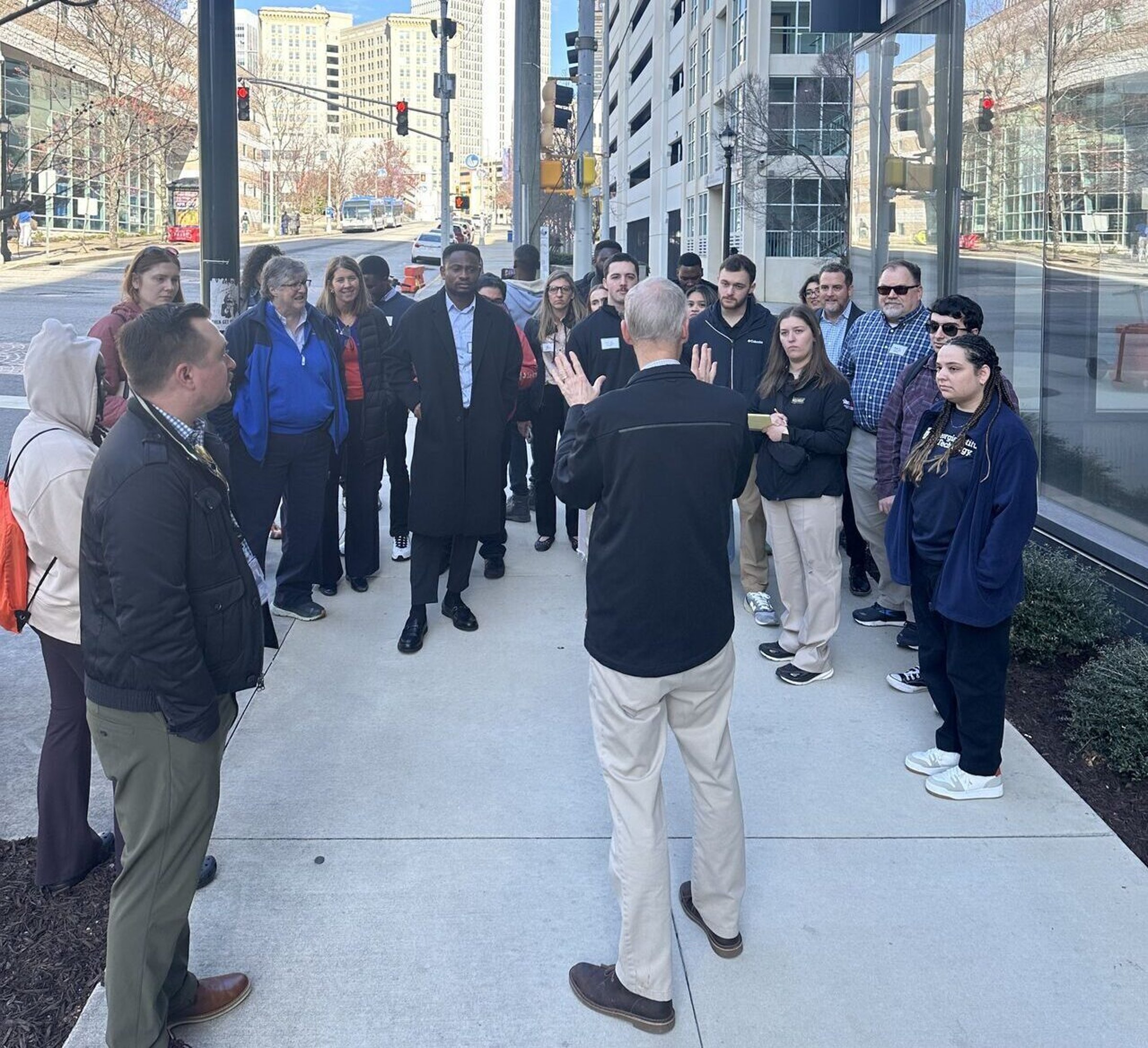
After the presentation, the group walked a few blocks to Grady itself to tour its existing behavioral health unit. Students were particularly interested in the safety mechanisms required for the rooms (no sharp edges, nothing that could be used as a weapon or to self-harm).
Advisor George Smith, senior architectural project manager, led the tour and gave a presentation on Grady history to the group over dinner that evening, including why the Grady campus has changed and grown so much over the last 100 years. “A lot of the students, including the ones from Georgia Tech, didn’t fully understand what Grady is or what it means to the community,” Ressler said. “It really helped them to understand the challenge on a deeper level.”
And advisor Kimberly McMurray, of BHFC Design, who wrote the 2024 Behavioral Health Design Guide, spoke to the group on Saturday on behavioral mental health environments and crisis center design that correlates to the design guidelines. The students also received guidance and education from Stephen Parker, a medical and behavioral health planner from Stantec, who walked them through how to apply the VA design guidelines to create thoughtful and functional spaces.
In between meals and guest speakers, four student teams comprised of five students each (two architecture, one nursing, one engineer, and one contractor) worked diligently on their presentations.
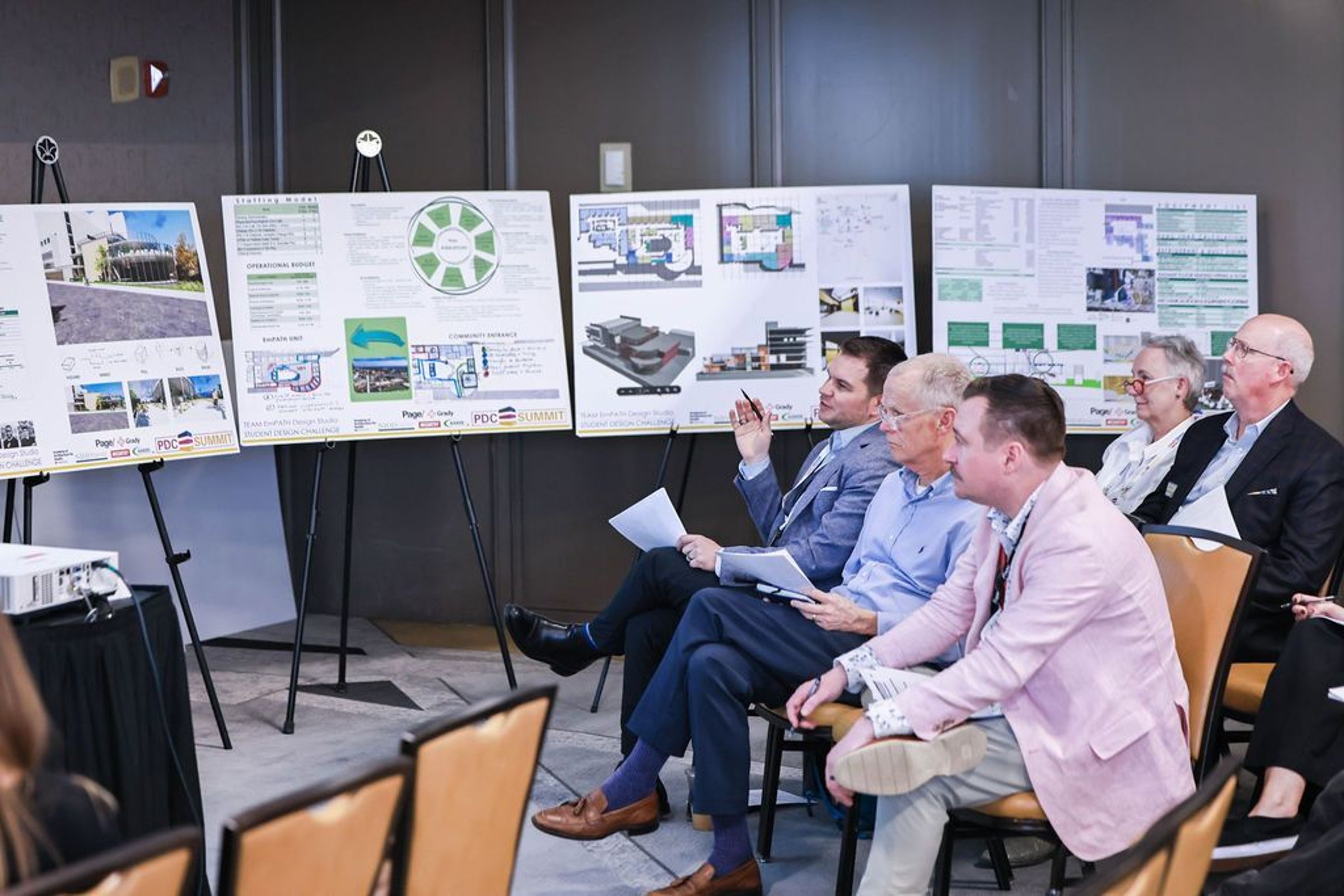
On Sunday afternoon at the Omni Atlanta, the teams presented in front of a panel of judges, exhibiting the familiarity and knowledge they had gained during the challenge. “They all did really well,” says Ressler. “It was a good time for them even though it was a tough challenge – they stepped up to it.”
The first group focused on “Connectivity,” addressing current disconnections in behavioral healthcare; the second on “Elevating” the patient experience through compassionate, stigma-free care; the third on “EmPATH,” balancing the staff and patient experience while planning for a continuum of care from arrival to discharge; and the fourth on “Nurture/Nature,” including patient well-being, staff safety, family needs, and sustainability. Ultimately, Team Connectivity was recognized by the jury as the winning presentation for its focus on collaboration, integration of design, and understanding how the spectrum of care extends beyond the walls of the hospital and into the community.

Talk with us
Complex challenges need fresh perspectives and deep expertise. Connect with our team to explore how we can help you create spaces that make a real difference.