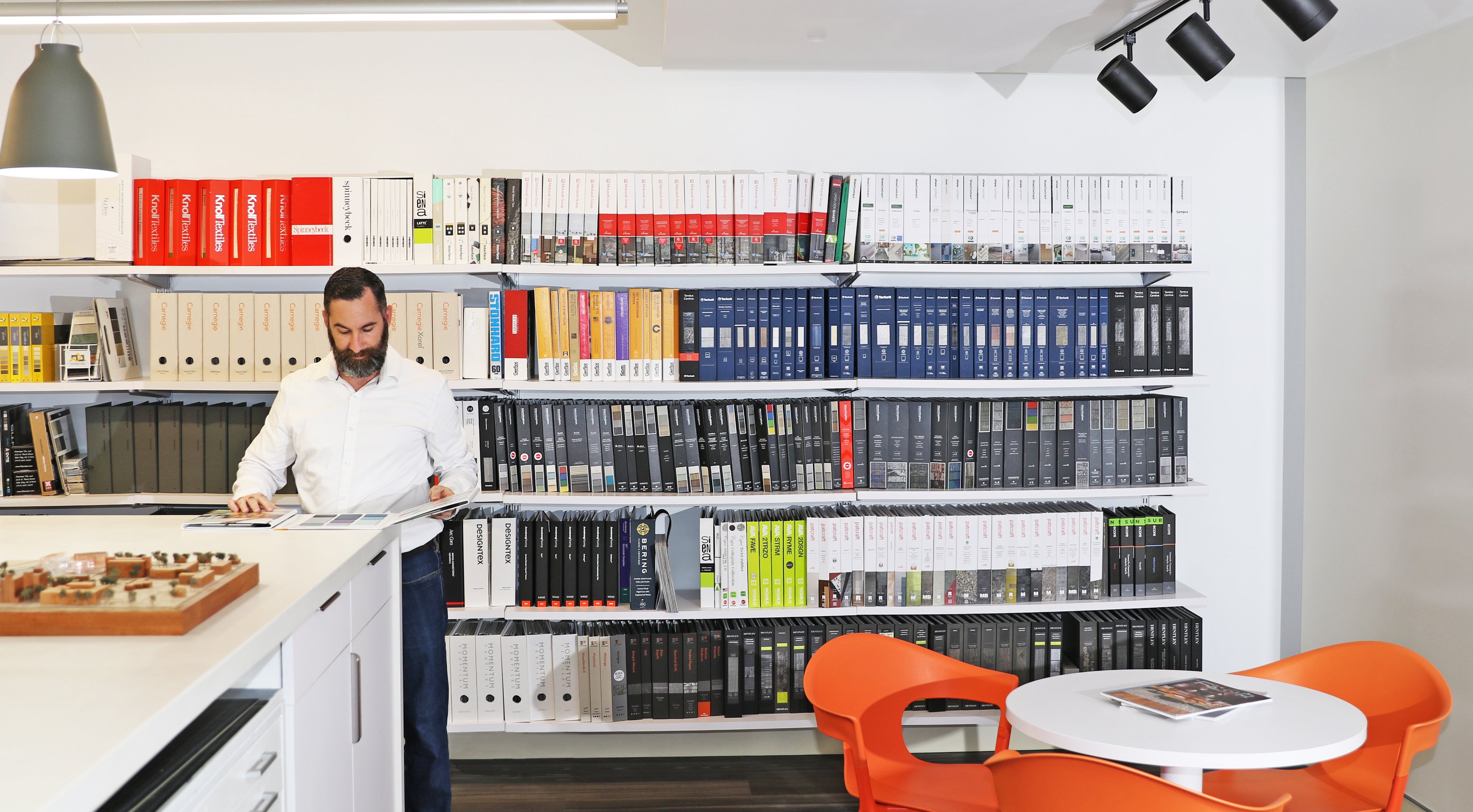
No on-ramp needed: Interns merge into Raleigh’s fast lane
by Charles Barrett

In Raleigh, interns don’t have the luxury of starting slow or taking small steps. They have to run—because the city isn't slowing down. The Raleigh metro is one of the fastest-growing regions in the country. Between 2023 and 2024 alone, it added more than 39,000 residents, pushing its population beyond 1.6 million.1 Since 2020, North Carolina’s population has increased by over 573,000 residents, with more than 15% of this growth resulting from net migration into Durham, Wake, and Orange Counties. In Wake County specifically, approximately three-quarters of the population growth was due to people relocating there, rather than natural increase.
This surge drives unprecedented demand for housing, infrastructure, and the built environment, and it means firms like Page, now Stantec, have no time for a leisurely internship on-ramp. The same dynamic fostering Raleigh’s expanding skyline influences how Page’s teams and interns develop their ability to think, design, and deliver.
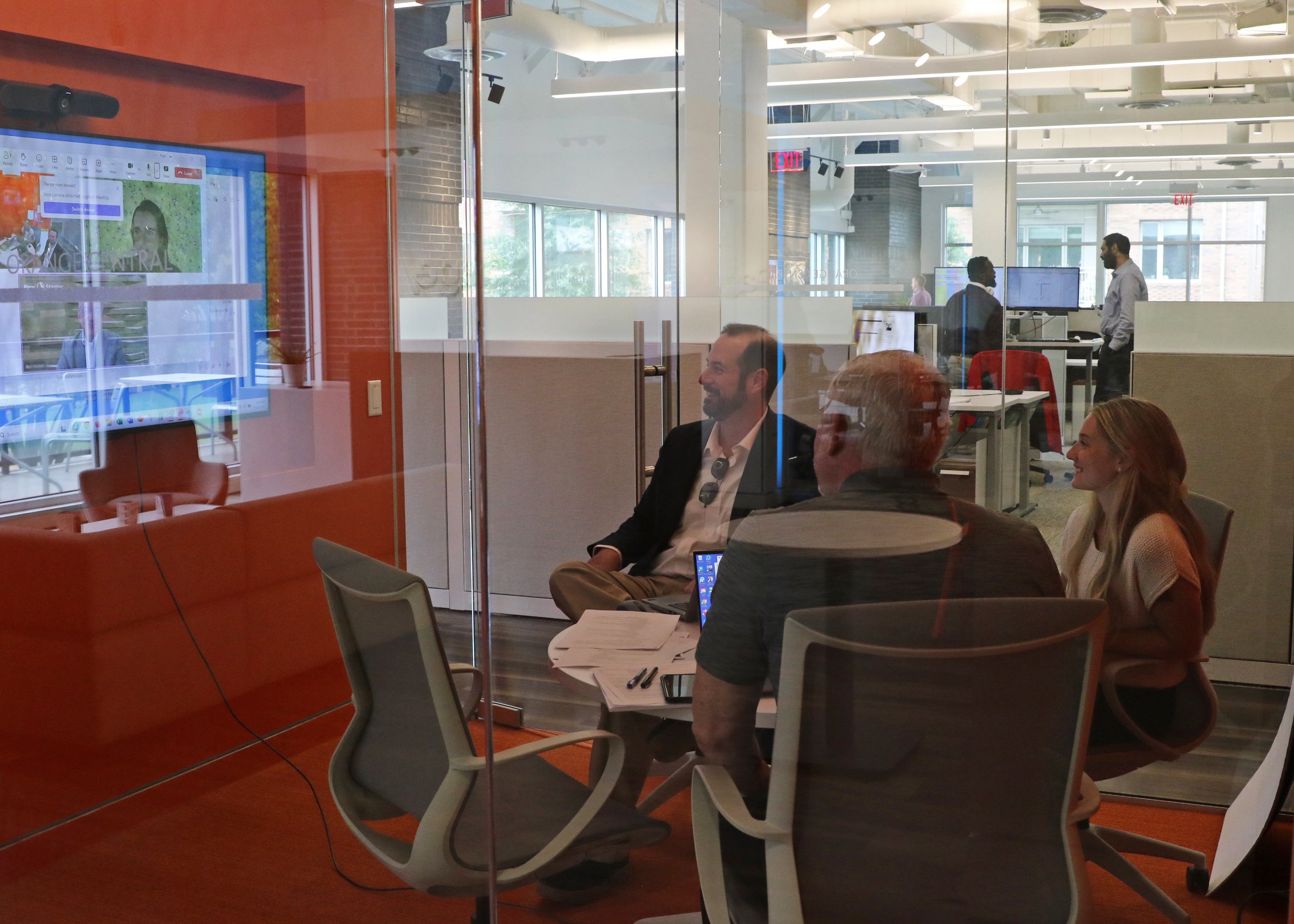
Lauren George (seated right) participates in a planning call at Page, now Stantec’s Raleigh office for a significant project pursuit. Photo/Charles Barrett
Fast city, faster learning
That reality set in immediately for Lauren George, who joined Page as an intern over the summer. Unlike some of her peers elsewhere who reported spending their summers on internal research projects, she was immediately immersed in live client projects and pursuits.
She quickly learned high-stakes performance, from developing a smart fee calculation spreadsheet and serving as the primary contact for consultants on a billion-dollar project to quality-checking deliverables before they were sent out.
“From day one, I wasn’t just watching,” George said. “I was helping with real deliverables, involved in client calls, and working alongside the team in many ways. It gave me a much clearer sense of what the job is like, seeing it from all perspectives.”
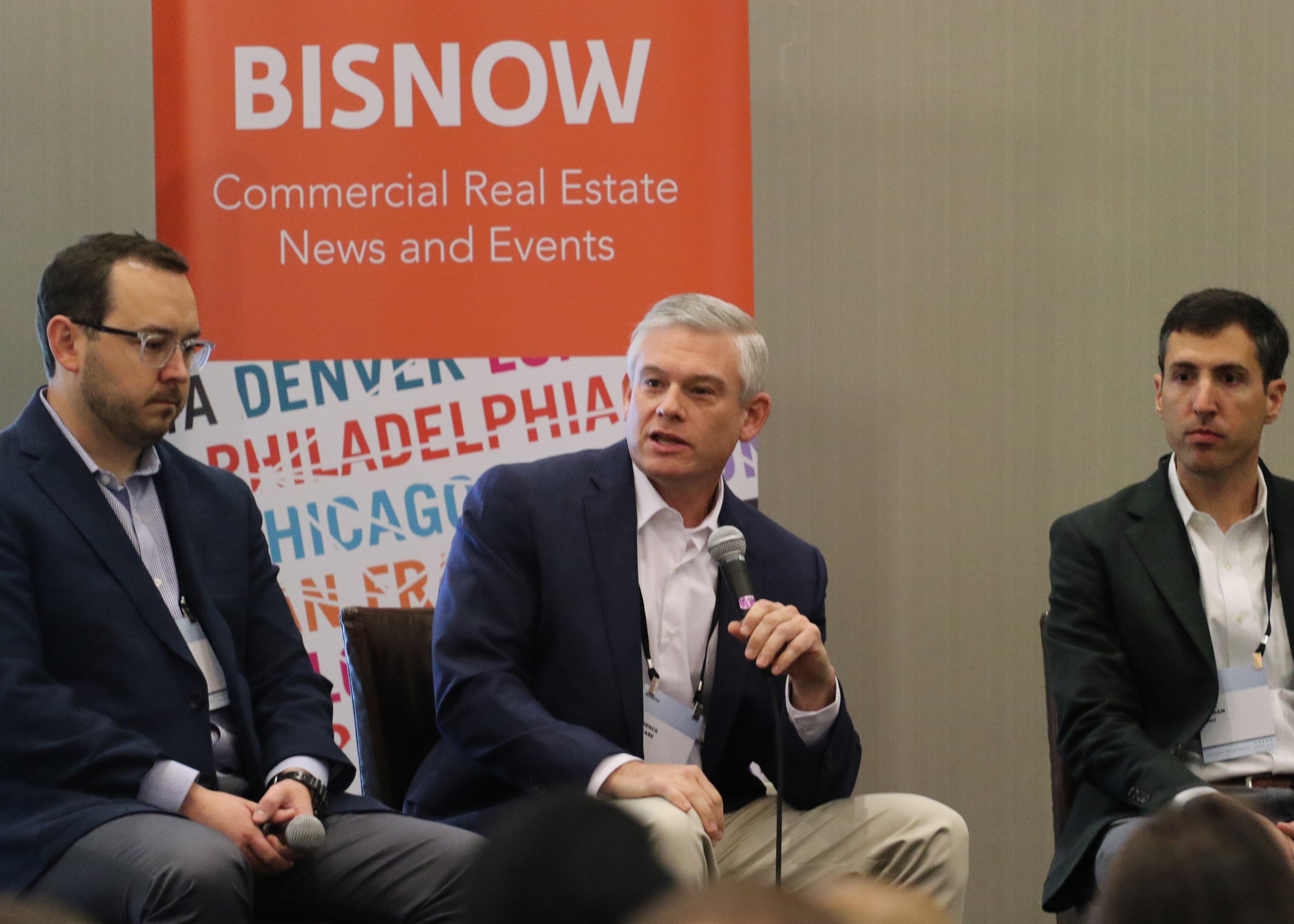
Terence McCabe (center), managing director of Page's Raleigh office, speaks at a Bisnow State of the Market event in Raleigh, NC. Photo/Charles Barrett
Terence McCabe, managing director of Page’s Raleigh office, sees that as intentional. The city’s boom creates opportunity and urgency, where performance and growth never pause.
“The next generation will shape the built environment in ways we can’t predict,” he explains. “In a city like Raleigh, there’s no time for long on-ramps. Interns here get real responsibility because that’s the best preparation for the careers they want to build.”
Learning by doing
In another way, George is also an atypical intern: she came to Page with a business degree, not an architecture or engineering degree. That perspective, focused on efficiency, process, and coordination, proved invaluable. She aspires to become a project manager, and Page’s Raleigh office has given her the opportunity to test those skills in real-world conditions.
“At first, I felt overwhelmed by the technical terms,” she admits. “But I leaned on what I knew: organization, process, and communication, which helped me contribute in ways I didn’t expect.”
George’s story exemplifies how the Page shapes talent development in Raleigh. Interns throughout the firm have similar experiences: learning through action, challenging their skills in real-world situations, and realizing that performance varies across different roles and responsibilities. Responsibility is often assigned quickly, frequently shaping their career paths.
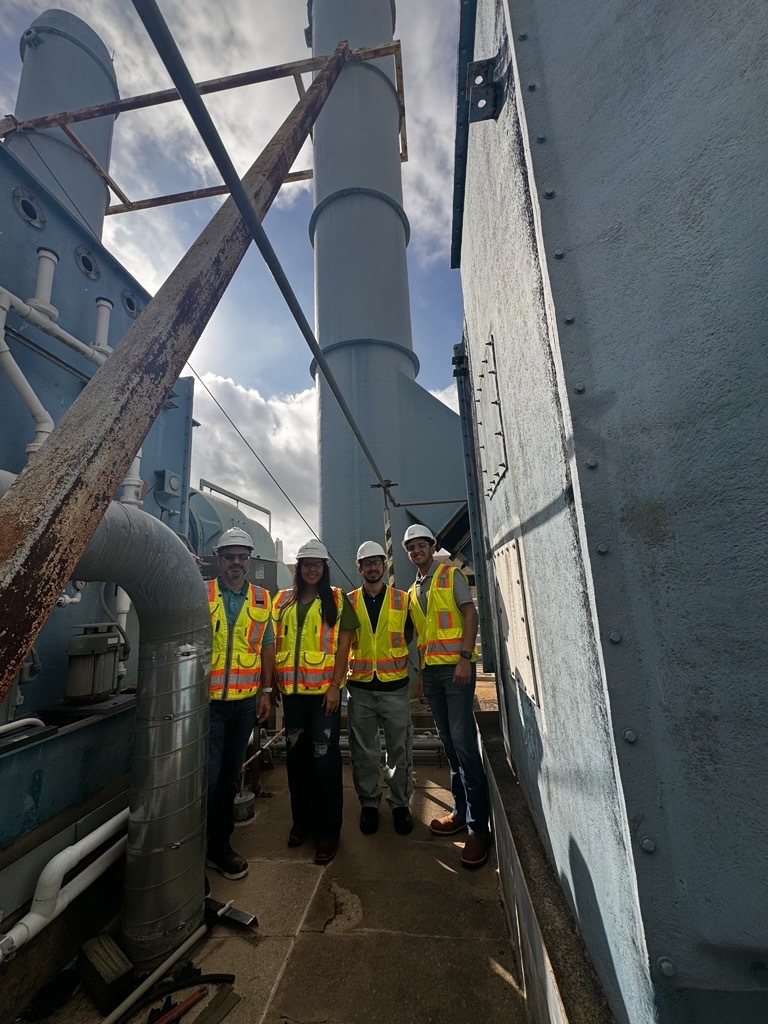
Ryan Galvan (right) joins the project team on an advanced manufacturing facility tour. Photo courtesy of Page, now Stantec
Different path, same pace
In Austin, mechanical engineering intern Ryan Galvan points to the balance between structure and hands-on responsibility.
“While some of my peers at other companies were assigned to a single project, Page gave me the chance to contribute to several projects at once,” Galvan said. “That variety, combined with structured training in software like Revit, gave me a broader perspective on how teams collaborate and how projects move forward. It made my experience more diverse and well-rounded.”
He stated that Page’s methodology accelerated his transition into practical engineering tasks more than expected, underscoring the importance of delivering performance through collaboration, accountability, and precision.
“I was learning to coordinate with electrical and architectural teams and getting up to speed on new software under pressure. It taught me how to think like an engineer in ways some peers weren’t experiencing at other firms.”
Curiosity as culture
Addison Henson, an architecture intern in Austin, echoed that sense of variety and ownership.
“I expected a more formal environment, but instead, I found this perfect balance of structure and creativity,” Henson said. “I joined the Austin Convention Center team, helped with renders and sustainability graphics, and even worked on branding materials. Page listened to what excited me and helped me grow in that direction.”
For Henson, the biggest takeaway wasn’t just what she designed, but how she grew.
“The culture here encourages curiosity,” she said. “I learned that speaking up and asking questions doesn’t interrupt the process—it enriches it. That mindset changed how I see collaboration and what kind of designer I want to be.”
No on-ramp needed
Georgia Lupton, intern program coordinator at Page’s Austin office, said she designs the internship program to immerse interns in real projects from day one. As full team members, they gain hands-on experience, explore the profession, collaborate across disciplines, and learn from peers and mentors.
Back in Raleigh, George recalls being asked to introduce herself to consultants not as an intern, but as an assistant project manager.
“That was the moment I realized I was trusted as part of the team, knowing just how much responsibility I was given as an intern,” she says.
That trust wasn’t symbolic. She also led a review of project files before a critical data migration, catching errors that could have delayed delivery. This was more than an assignment for an intern—it was high-stakes work that required precision and foresight, demonstrating she belonged in the role.
For McCabe, that’s the point. “We can teach technical skills,” he says. “But when interns show adaptability, problem-solving, and leadership under pressure, we see their potential to shape projects and eventually lead them.”
The internship program is a mini reflection of Page's culture, where talent and performance are closely intertwined.
Putting skills to practice
Raleigh’s growth shows no signs of slowing down. According to the Bureau of Labor Statistics, total nonfarm employment in the Raleigh-Cary metro reached 760,000 in April 2025, a 1.9% increase compared with April 2024.2 That growth fuels demand for AEC professionals and pressures firms to recruit and retain top talent.
The internship program at Page doubles as a pipeline. George has already accepted a full-time role in Raleigh, proof that responsibility and trust gained during an internship can lead directly to career opportunities. Ryan Galvan will continue working part-time in Austin while attending The University of Texas Rio Grande Valley. Addison Henson is pursuing graduate studies at Columbia University in New York; her experiences at Page exposed her to various project and studio types, enhancing her understanding of the profession.
In a city with relentless growth, interns step directly into meaningful work. For Page, that’s not a challenge, it’s an advantage.
Wilder, K. & Mackun, P. Some Metro Areas’ Population Gains Reversed COVID-19 Era Trends. (April 17, 2025). U.S. Census Bureau.
U.S. Bureau of Labor Statistics. May 28, 2025. Metropolitan Area Employment and Unemployment — April 2025. (News Release).

Talk with us
Complex challenges need fresh perspectives and deep expertise. Connect with our team to explore how we can help you create spaces that make a real difference.