The good performance room
by Tully Mahoney in conversation with Daisy Houang and Carl Krebs
Designing a performance venue is an art in itself—one that demands more than just technical expertise.

Designing a performance venue is an art in itself—one that demands more than just technical expertise. Join Carl Krebs and Daisy Houang as they dive into the interplay of community engagement, artistic collaboration, and leading-edge design. From acoustics that amplify every sound to stages that adapt to any creative vision, discover how thoughtful design empowers performers and captivates audiences.
/
Senior project manager Daisy Hoang and design director Carl Krebs join host Tully Mahoney on The Good Room.
I'm Tully Mahoney, and I'm excited to welcome you to The Good Room. Today we're thinking about the good performance venue in both academic and professional settings with Daisy Houang and Carl Krebs. Daisy is a senior project manager, and Carl's a design director, both at Davis Brody Bond, which is a Page company.
So, Daisy and Carl, could you both please share with me your passion about creating performance venues and these civic buildings?
So I think as an architect, we always find public buildings the most interesting, the most appealing projects, they're buildings that really engage in the life of communities, and they work in the civic realm.
But I think what's been interesting about working on performing arts venues, which Daisy and I've, I've done several now, is that it's another dialog that we have that you don't normally get, which is with artists who understand these spaces in a way that's quite different.
And they allow you to see what you're designing in a new way. In many ways, what we're designing is a canvas for them, and they bring an entirely different perspective to how people can perceive and live in these spaces.
So to elaborate on what Carl said, and I absolutely agree with his view on these performing arts spaces, and spaces for the arts can just bring people so much joy.
They also can bring a community together. And when you see the people who that you have worked with build these spaces and actually use them, you can tell that they're very passionate about it.
They're actually not only being in the space, but the space and all the components that we have created they're actually being used as tools for what they love and enjoy in life.
And to me, that's very fulfilling to design spaces like that.
Both very beautifully described. So kind of looking at this topic broadly to start off and then we'll narrow in. Thinking about these facilities becoming community hubs and places for community engagement, how do you think about that space being a suitable representation of the community that it might live in or sit in?
So I was thinking about that, and I think the the way you start is you actually have to understand the institution because it's the institution that's going to ultimately lead the engagement with the community, whether it's through their programing or their outreach.
And so you really have to understand who are they trying to reach, what are they trying to do, what is that mission and that helps you understand a little bit more about, you know, are you dealing with an underserved community where the feel and the character of the space needs to feel perhaps welcoming in a different way than it might.
So I think that really starts the whole process and then the program and what you're actually building will in some degree reflect that mission.
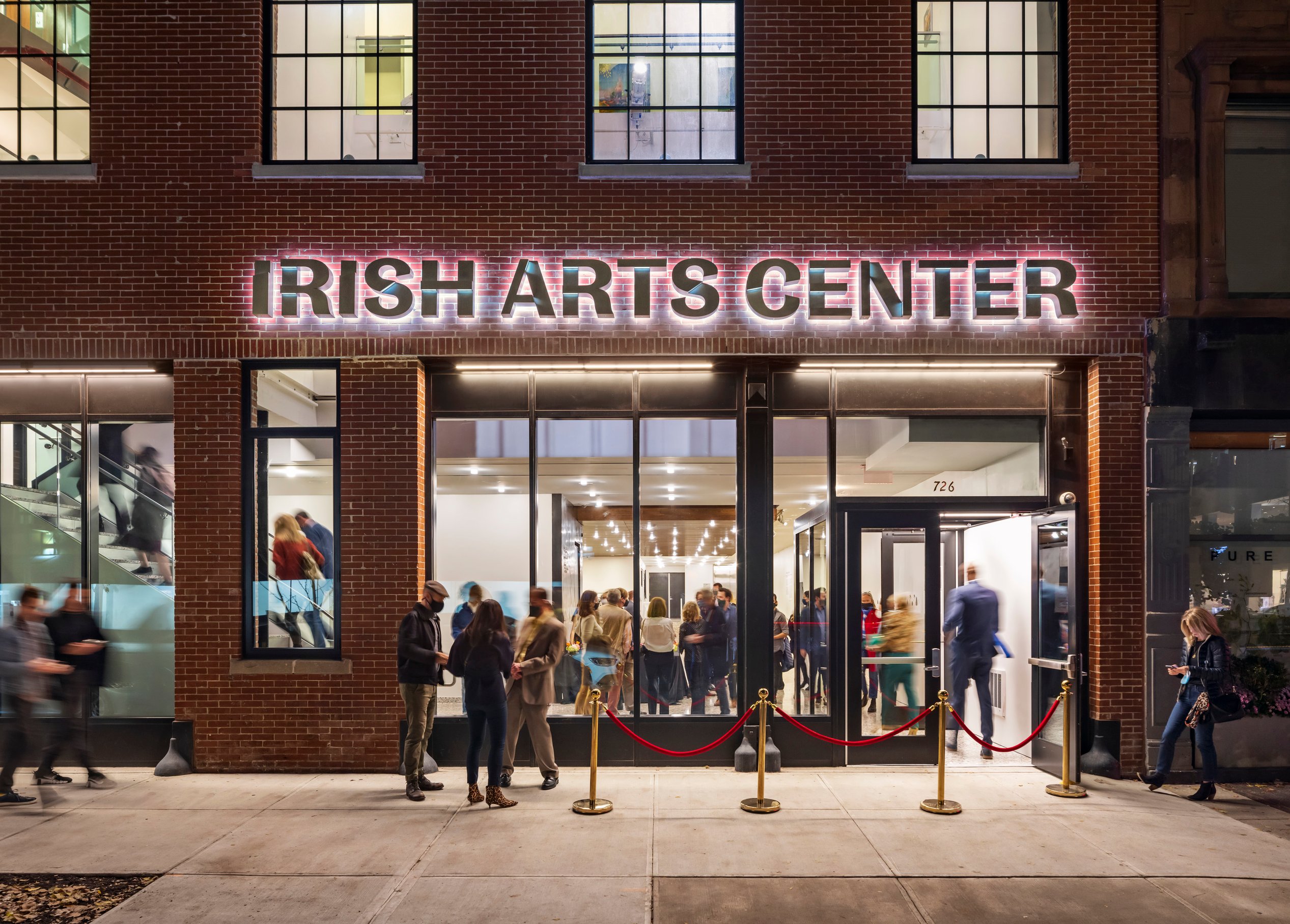
So, for example, we were working for the Irish Arts Center, which is an institution that's designed to really promote the exchange of of all kinds of artistic endeavors from Ireland to the United States.
But they're also very interested in it being an active facilitator of arts center change and catalyst. So they're constantly thinking about way of doing workshops or bringing in different artists to collaborate together.
But for them, they said in the very beginning that hospitality was going to be an essential part of that experience. And so it was very important that the sort of opening experience of that place was not a box office, but it was actually a café, a hub, a gathering space, a space that could even be used for performance.
And the front of the building, you know, it was plenty of glass and opening and accessibility. So people might come in just to use the café or to hang out and certainly to hang out after the show, which happens all the time.
So that was really their vision. And once we could work with something like that, that really became critical in terms of how we work and the building where we put things, how much emphasis we placed on the prominence of some features of the project.
There's so much opportunity with these public facilities in terms of connecting to the community. It's just a question of really making it consistent and supportive of what that institution's values are.
One of our clients said something to us that was just very wonderful. She basically said that performing arts venues, whether they're theaters or other types of spaces, their value is not only as a place of joy and community connection, but they also bring a community together in times of turmoil.
She had noted an example of during 9/11, for example, in New York City, people were looking to the arts and the arts community to put something out that would help to connect people and also use these spaces to help connect people.
I think that's a really powerful thing that these spaces for the arts can do, and they also can be incredible outreach or educational facilities.
A lot of our clients, they open their spaces to high school students, host summer programs. They do things like that to really engage with the younger generation.
The arts and that type of training is really training you to creatively solve problems. It's not just about expression, but you're using a process or iteration or different kinds of creative skills that you've developed to really try to solve problems.
And but these spaces opening up to the community, you have the potential also to start to connect people in the arts with people who might not be in the arts, such as scientists or business people or, you know, all sorts of different types of disciplines and people with different types of focus.
And that's when you get those moments of real creativity and collaboration, when you start to bring people together that have very differing views, but in some way can connect in these spaces and start to solve some, some real problems.
Sometimes the arts can kind of speak to you in a way that words can't. And it reminds me, I was reading a New York Times article about Perlman and they had mentioned that the site could be a contributing factor to this neighborhood becoming a living, breathing neighborhood again.
And that that could be the greatest memorial of all, which I thought was a really beautiful spin on the impact of community and arts programs.
I want to also just transition towards the audience engagement. So when you're in the audience actually watching a performance, how might the design help create a connection between the audience and the performance?
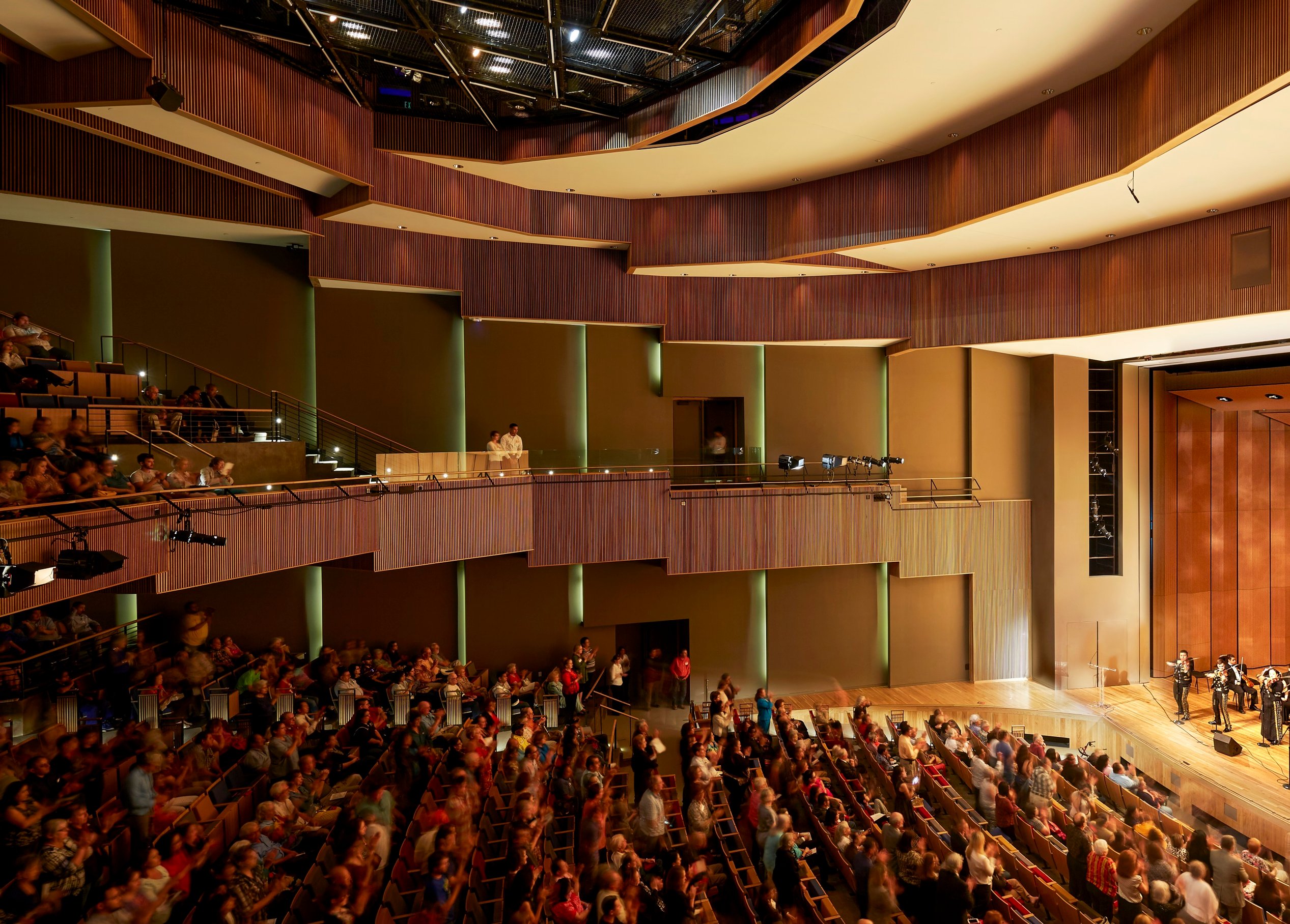
We think about a lot of different aspects when we design that audience experience. The first part is understanding why they are coming into this space and when they come into the space, the actual performance or the stage part of it looks different.
The house lights are on, the architecture is very apparent. You can see the color of the seats. There are just certain components of when you enter into a venue that is about that architectural factor, the design.
But when someone then makes it to their seat and the performance has started, it's a totally different environment, right? It's about the production and the architecture then falls to the sidelines essentially.
And I think for me in designing these spaces, it's understanding the different experiences that an audience member might experience in the space at these different moments was actually really quite enlightening and makes these spaces very unique than other spaces.
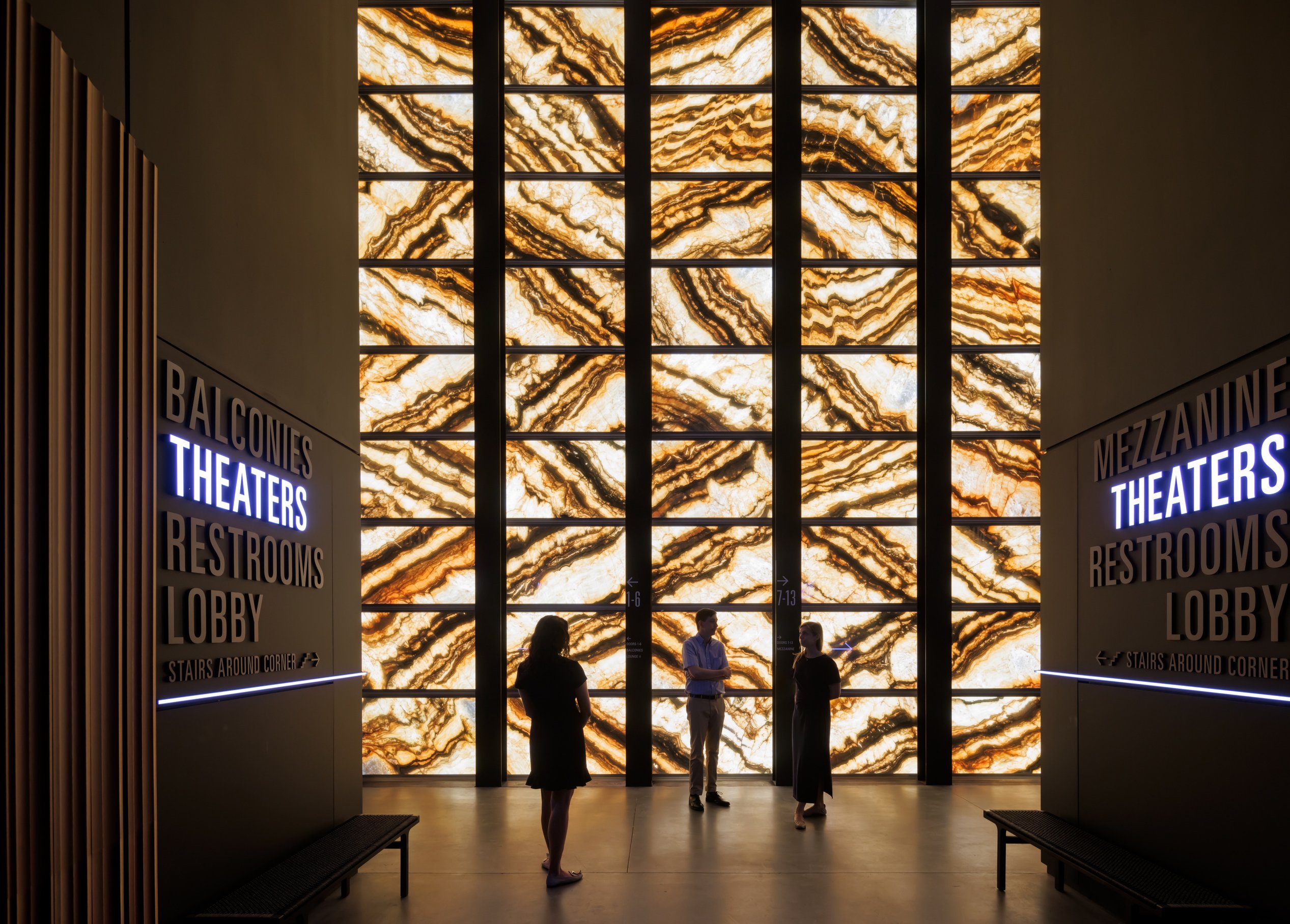
There's a sort of progression through the space. It's almost a little bit like a museum, right? An exhibit design. You're sort of designing an immersive experience that is guiding people through different parts of the space.
You, you know, I would say just to add to that, the part of the experience that we actually have, possibly the greatest control is that sense of arrival and everything that happens up until that moment that you're sort of in the performance venue.
And it's a pretty, I think, important part of that experience, because the first thing you're doing is whether you're getting out of your car or you're coming off of the streets, you're leaving the world behind, and you're going to be entering this sort of magical or transformative experience.
And what you are doing initially is you're just trying to make that transition, whether it's away from the sound, the light, the busyness, or going into a different world.
And to bridge there, I think, you know, you're obviously very focused on the scale and the character of those spaces that take you into the theater, but at the same time, you're also trying to create a sense of anticipation and excitement.
The delight that, you know, is part of that, that architecture. And I think in some ways we can do that through sectional excitement. Like you come in and you have multiple stories or overlooks, or views, and that's actually something that's very interesting, because it does often build to the idea of the venue itself, which is typically often a multi-height space with balconies or catwalks.
So you're finding ways to extend that encounter into the sort of public realm. And then, of course, recognizing that after the performance, you know, you're potentially affected in some way, and then you're released into an environment back that brings you to the city.
That's always been the unique part of its character, is that these Broadway theaters have very little lobby space. When you're finished with your show, you're just sort of like thrust out onto the street in a very sort of jarring, but very New York, kind of way.
But I think, you know, we have the opportunity to think about how you leave a space or how you linger in a space. And I think those are great opportunities for architecture.
In addition to that challenge of creating a space that both has character and authenticity, but is also, in some degree, that canvas for the artist.
Yeah. And I think also going back to some of our discussions about community and community engagement and allowing for people to feel like they're part of the larger picture.
I think that's also the importance of that, you know, theater environment and some of those spill out spaces that are either in the theater or outside of the theaters.
It's going to these performances or experiences and feeling like you're experiencing it with your fellow people. And I think that that is also an extremely powerful thing for us as designers to think about.
Where are those people spilling out? How do they enter? How do they then engage with their fellow audience members to really make people feel connected?
Thinking of this idea of feeling close to that performance, do you find that there's a trade off between intimacy when you have the larger scale performance venue, are there still opportunities to make somebody feel immersed, even if they're the farthest seat at the large facility?
There are challenges there, and it's hard to describe. It's sort of an art, but sometimes the use of a balcony can actually take a larger venue and create a more intimate character or feel to a space.
And so a lot of times that section and those sightlines can be altered or manipulated in the design to, to preserve that.
I mean, it's a pretty common refrain from our clients that intimacy is a priority. It often also affects the kinds of venues that you are doing.
So if you want a musical theater venue or something specifically for orchestral work, then you know you really resigning yourself to a different kind of space and volume than you would be for theater.
So those two don't necessarily always marry so well.
I also think the idea of space and volume and intimacy is not purely an audience consideration.
So what we've also heard is that, you know, the size and scale and intimacy of that audience chamber also affects the performer.
If you're someone on stage performing your art, having a large volume, a space where there might not be that many audience members watching you do it can also be a bit off putting.
So that's also important to consider it on those different sides of how space and scale can affect people who use the space.
It even expands into even the technical stuff. You know, if you design a space that's overly complicated or involves too many moving parts or too less moving parts, or, you know, things like that, that can also affect the way that those technical folks are also using the space.
So there's there's just a lot of different factors to consider when when we're talking about size and scale and intimacy and, and all of those factors.
I think related to this topic of intimacy and space and the audience engagement is the ability for these performance venues to transform and be reconfigured to fit the needs of a particular performance. And off of that, I'm curious, how do you optimize these transitions between stage formats and venue organization?
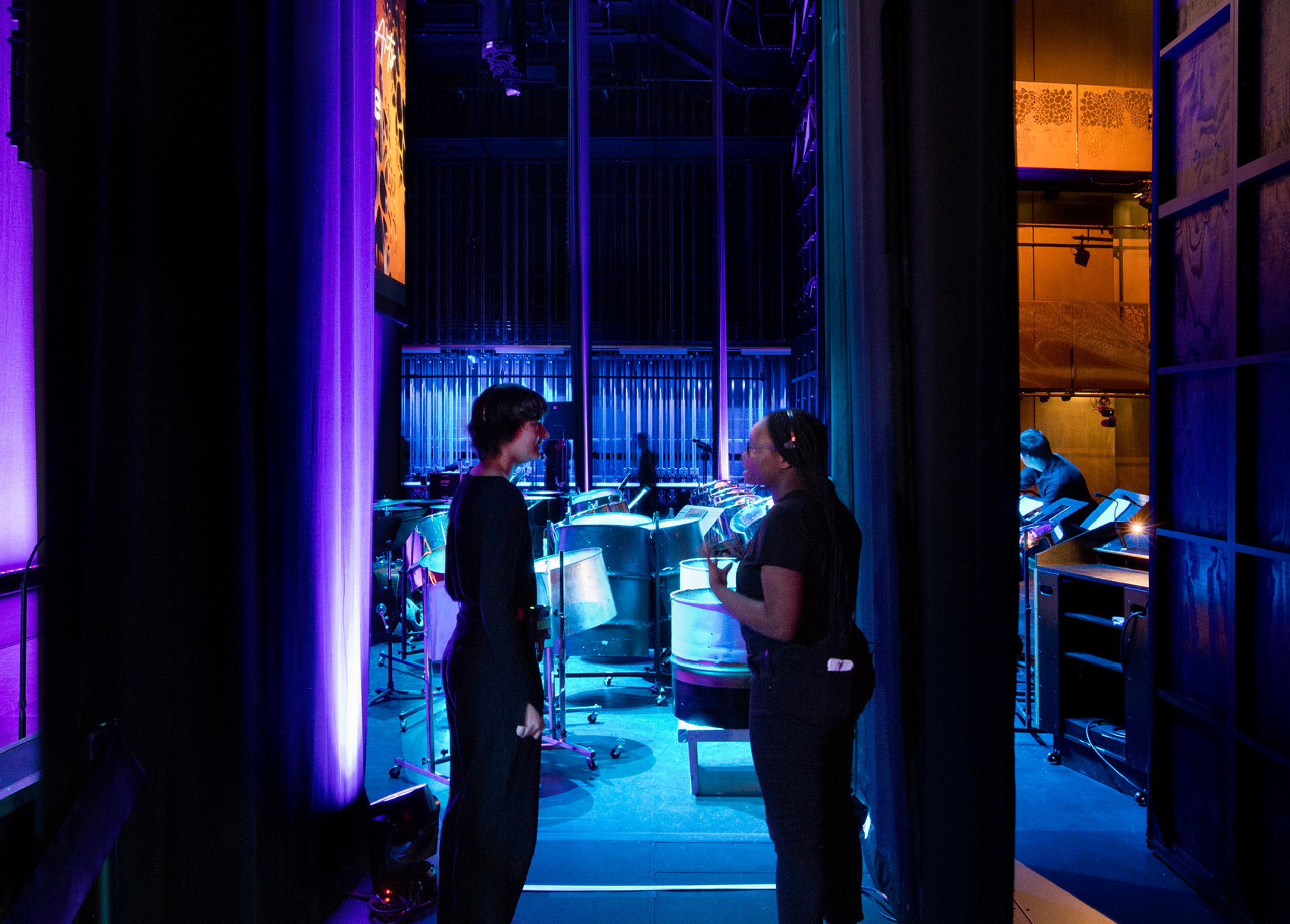
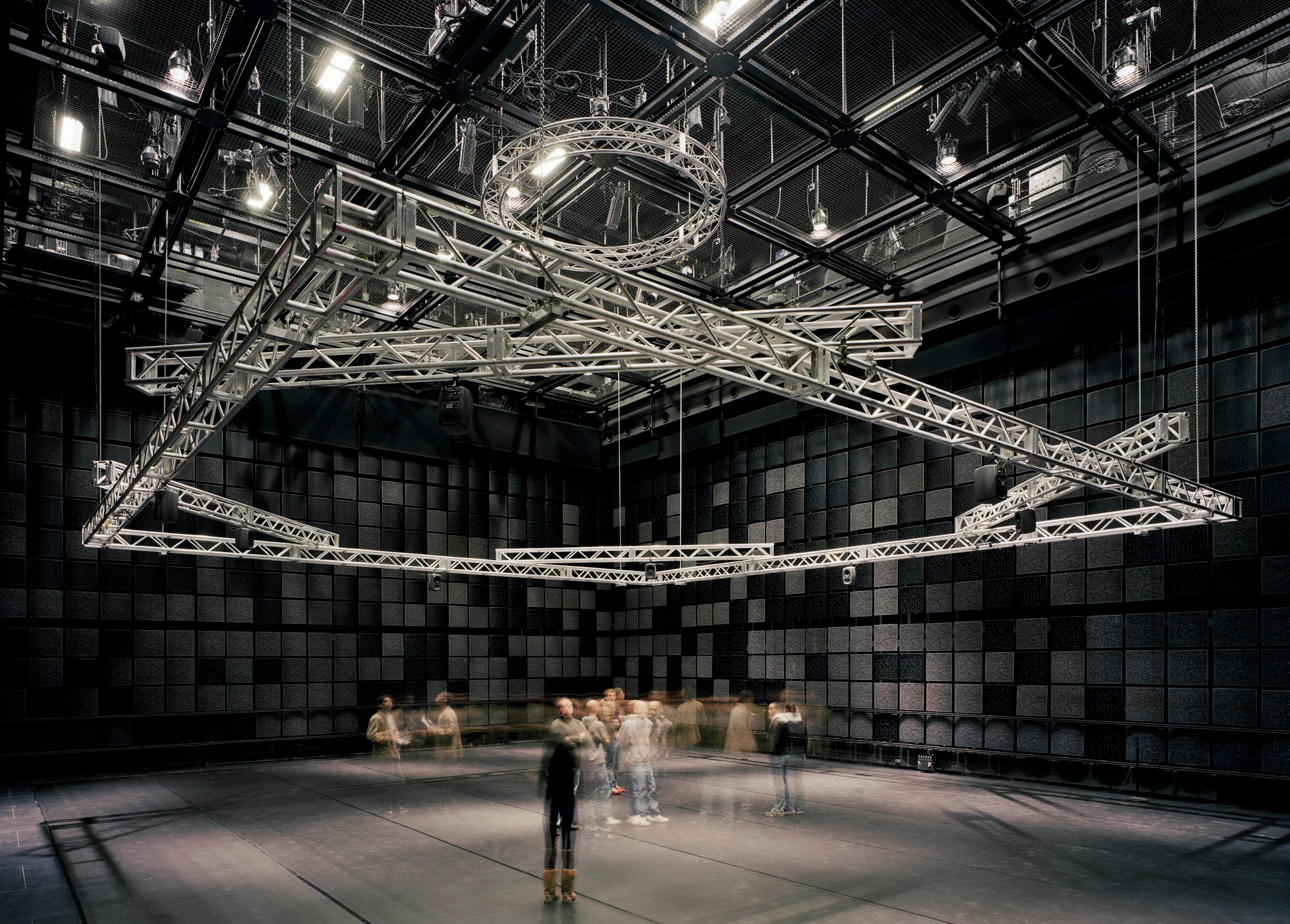
Well, you know, I think Perelman is an example that takes some of the tools or the devices that we see typically in all kinds of theaters and just employs them on a mammoth scale.
So that takes really three things. One are the idea of a stage lift, which are very common in almost all performing arts spaces. It allows you to lift and extend the edge of a stage that allows you to lower or create an orchestra pit.
But at the Perelman Center, the entire sort of stage floor consists of these movable platforms, which allow you to adapt the steepness of a rake.
It allows you to create rings or horseshoes or even theater in the round. You know all of these configurations are programed in to the sizes and layout of these lifts.
That obviously was a challenge only because it's being done such a large scale. But then that's combined with the idea of a retractable wall.
That's what Perelman we have these pairs of guillotine walls that are, you know, enormous walls that go up into a ceiling space and can descend and compartmentalize a space into not only three theaters, but with sound and light locks.
So it's a series of pairs of doors and these all have to be acoustic separations so that you can have two performances going on in adjacent spaces.
They have to meet all the fire codes. And so once again, that combined now with the floor lifts, creates this ability to shape different sizes, venues with different configurations of the floor plan.
And then the last tool is not as typically used, though there are some precedents. And it was the idea of I'll call them balconies that are portable. They're really stage towers or seating towers.
They have three levels and they can roll around on wheels and be connected to an existing balconies to either extend the balcony to create a wrap, or a horseshoe for a balcony, or to even growing an entire space and create a theater in the round.
Even though they're portable, almost like pieces of furniture or stage scenery, they need to be architecturally performative. They have to meet the codes.
They have to meet the rigidity of the structural requirements. They have to plug in to the fire and life safety and electrical systems.
So these three things together actually allow this sort of quite unlimited configuration capacity.
It's a really great question about how much flexibility is too much flexibility. I think we talk about this a lot because we think, as Carl said before, it can't necessarily do everything with one space, right.
There's going to be priorities. And so I think what's unique about these types of spaces in terms of flexibility, though, it's not only what we integrate into the design that changes the space, it's also the set of users that are using these spaces that can completely transform it.
And so they have this specific vision as well. That from production standpoint is different from the architectural or the technical rigging components.
Right. And I guess I would also add that flexibility doesn't always necessarily mean a highly mechanized component.
Certainly those orchestra lifts and those motorized rigging components provide an easy way to transition.
But sometimes we've designed spaces to just have very simple ways to adapt to space. For example, it could simply be a set of curtains that get manually drawn across.
It could be a series of, you know, shells or other things that come out manually into space that recreate that area.
It's really about how the components are flexible and can change, but it also a big part of that are the people who use those spaces, the creativity that they have in their minds to to transform a space.
We've been very fortunate to have designed and constructed several of these theaters, and each time I go back to one of these spaces and I see a production, I'm always shocked by what has happened in that space.
The users have sort of exceeded what we thought they could do.
You often have opportunities when you're able to design more than one venue for a client. Obviously, that we at NYU, the graduate acting program, they had two distinct theater types, so not one theater that had to do everything.
Another one of my clients were in the process of developing a phase two to create a second venue, and the idea for them was this second venue would be a little bit smaller, a little less complex, and it would allow them to actually have artists who couldn't sell out the main venue for a week, but would actually do really well for 1 or 2 nights.
But they needed to turn the space over more quickly. They needed to operate it at a slightly less expensive set up.
So that's the other factor, is, is there a way to scale your venues and their technology to different purposes, so that you don't have to do everything in one space.
Also, that the really interesting aspect that I never considered prior to working on spaces for the arts is that acoustics is also flexible, and it's part of that flexible environment for these spaces.
So you can integrate things that tip and fly or roll up and down or are on hinges that turn one way and is very reflective on one side versus absorptive on the other side.
And prior to designing these types of spaces, I didn't understand that that is also a component that can be integrated in a very flexible way for these spaces to do different things.
You know, or even just to tune the space for slightly different composition.
Right, exactly. That's also extremely critical for for these spaces.
So I think acoustics is so vital that there's not a single venue that we design, that we don't have an expert acoustician as a key member of the team early on, and the selection of that acoustician often depends on the primary use of the space and their impact is sort of throughout the project, not only at the sort of the scale of the overall shape and form of the building, but a lot in terms of the secondary detail that that helps us to abolish the profiles of the interior room as well as the absorptive or reflective qualities of those surfaces.
So it's really a dialog or an interaction collaboration between us.
I would also point out that in addition to just the acoustic quality of the finished in the room itself, there's a, you alluded to sort of isolation, which is the other big challenge in many of these venues is that we're working very early on with our structural engineers, because they’re really the key first step for success is an isolated environment.
So that often means that the venue is a separate box within a box that's not actually connected physically to structure that would transmit noise.
We were building the Paulson Center on top, we were really almost adjacent to a New York City subway.
You know, that was a huge initial effort before we could even begin to think about the qualities of the interior surfaces.
Right. And I think also importantly, these types of technical components, acoustics, rigging, audio visual, they're so integrated into the spaces that they have to be thought of as part of the architecture.
And we design these spaces. We don't just say,
hey, there's the architecture, here's the AV, here's the theater rigging, here's the acoustics.
We really, you know, like I was saying at the beginning of the project, really looked to these components as part of the architecture.
And so that's why it's really critical for us to work early on with our experts and our consultants to really define these components so that they're integrated well.
I think a perfect example, Daisy, is in the African Grove Theater. It's a theater that it's semi flexible, but it's designed to be experienced a little bit like a traditional proscenium.
and so we have wood paneled walls. And integrated with those wood panel walls are a series of vertical pipe rails that are actually part of the aesthetic paneling sort of rhythm.
And those are there to attach anything at any point if you need to, in the future to clamp onto them.
But they're actually an aesthetic component of the interior finish, because that was identified as sort of an important technical priority early in the design for the reasons you mentioned.
And that's exactly I agree. We sort of joked around with the team, the client team that we worked on, that the concept for the space was technically sophisticated, and we do this a lot for a lot of our spaces.
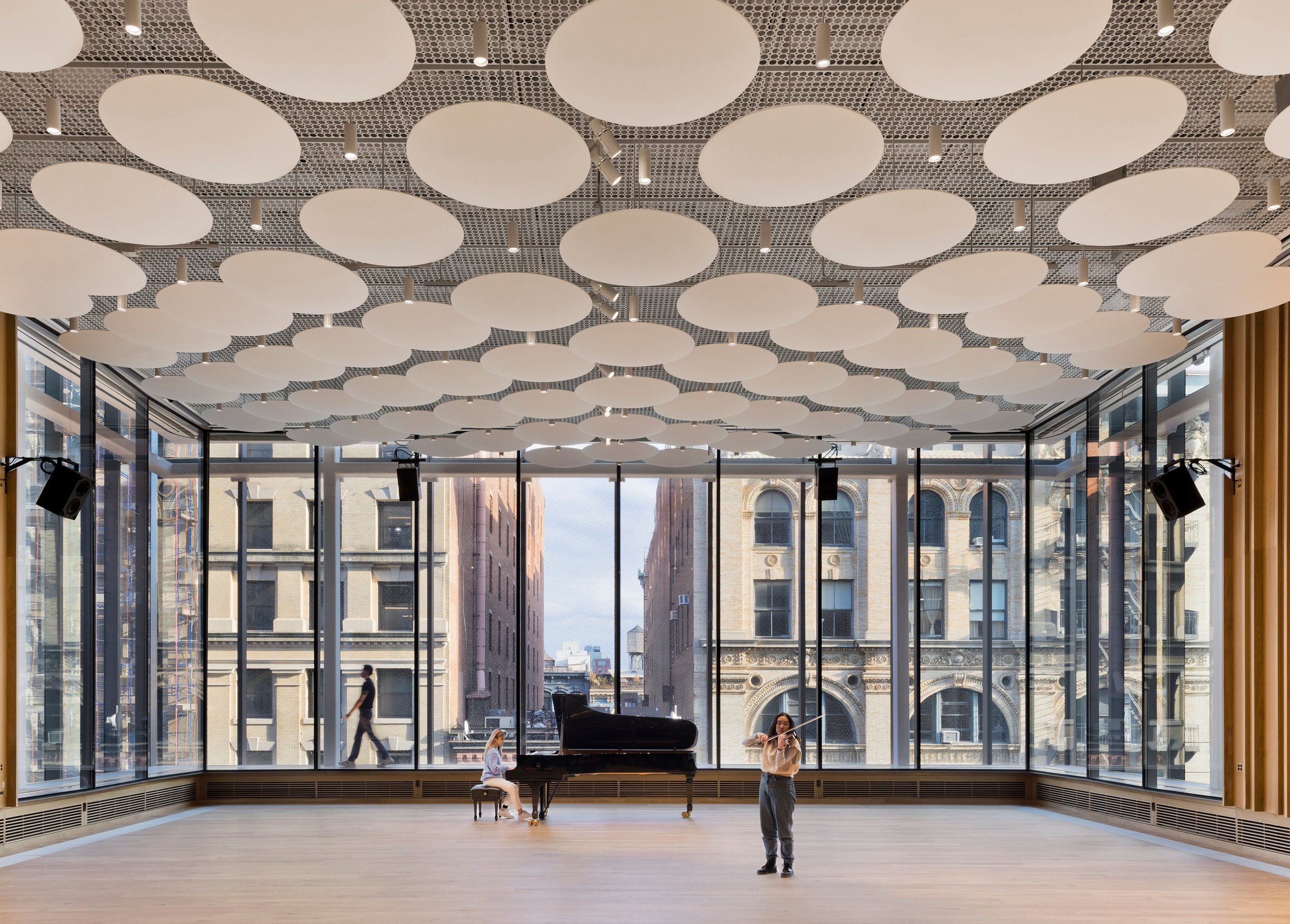
We have an orchestra rehearsal room in the Paulson Center that has a series of vertical slats that are on angled panels.
And, you know, when you first entered into this space, you sort of you think that it's really predominantly an architectural or an aesthetic decision.
But those panels have very specific acoustic purposes in terms of absorbing and reflecting different frequencies of sound in order to better tune the space.
So there's absolutely things like that we think of that is not readily apparent to, to people who walk into that space that helps to make the space function technically well.
Yeah. And, Daisy, you had brought up rigging and lighting systems and back of house functions. I'm curious, how do you think of these technical and back of house needs in the design.
To talk about the back of house in general I think one has to acknowledge that it's always a struggle in designing these spaces, especially when you're dealing with urban sites such as we have, that you're just competing for so much real estate.
And ultimately the public side typically trumps the back of house.
So often what we're really trying to do is to be really creative and adaptable, to make those back of house spaces do as much as they can, whether it's double triple duty spaces, I mean, whether you have rehearsal spaces that are behind the public side, that can end up being an expanded dressing room for a huge company, whether the shops, if you have shops and many of our theaters do not have shops, you know, can they be flexible and adaptable and, you know, and how far away can things go?
Can we use section in the upper levels? And we have plenty of situations where dressing rooms are not located on the same floor. It's always a challenge.
And then I think you combine that with the idea that your space is so flexible that you have no idea where the stage might be in one show or the other, and that the audience might enter from one side or from another side.
So I think you just really have to be very nimble about how those spaces work.
And also, you know, really, as Daisy alluded to, you know, with a great dialog with your client because they're going to live in that space and they have a host of experiences and they are always telling you about what, what they saw in some other theater and how that might give us a clue to solve a situation that we're dealing with.
I've enjoyed working on ground up, performing arts building because you start to integrate components about inclusivity and accessibility into these back of house spaces, that I think that a lot of existing performing arts projects can't do.
For our Paulson Center project, when we started to look at the different venues and the fact that the building was essentially a learning space for all sorts of different types of faculty and student, you know, people have different mobility issues, just all sorts of different types of people that will be using these spaces.
It was really important for us to think about these back of house spaces as accessible for all.
We made moves such as aligning even the catwalk levels with the levels that had elevator access, because we acknowledge that someone with mobility issues might want to learn about rigging a light fixtures on their catwalk, they might want to learn about other components that are accessed from those technical levels.
These sorts of universal design aspects extend into even the dressing rooms. For example, you know, there's actor equity regulations about how wide your dressing station should be, you know, to to provide sufficient space for people of different needs.
I think that is really great for us to remember the opportunity of these new buildings to make those spaces universally accessible.
Yeah. Daisy, I'm so glad that you brought up that point. I was originally thinking of inclusivity and accessibility from the audience perspective. So thinking about advanced technology that can enhance the user experience for those who might need it.
But I'm glad that you brought it up from this back of house perspective as well, and how this should be an emerging consideration in both portions of the facility.
And I think on that note this is a really great place for us to wrap up this conversation. So I want to thank you both, Carl and Daisy, for joining me to talk about what makes a performance room good.
And for everybody who's listening, please don't forget to subscribe to The Good Room to get notified when we release our future episodes.
Thank you, Tully.
Hosts

With expertise in crafting compelling narratives that engage diverse audiences, Tully blends creative flair with a keen eye for detail to develop impactful content across platforms. Her work includes award-winning podcast production, content development, and copyediting large-scale documents, all while enhancing brand voices and driving audience engagement. Tully also supports data visualization efforts by transforming complex information into clear, actionable insights through engaging storytelling.

Talk with us
Complex challenges need fresh perspectives and deep expertise. Connect with our team to explore how we can help you create spaces that make a real difference.