
Humanities and Social Studies Center
What happens when 15 humanities departments come together under one roof? Innovation, collaboration, and a dynamic learning experience.
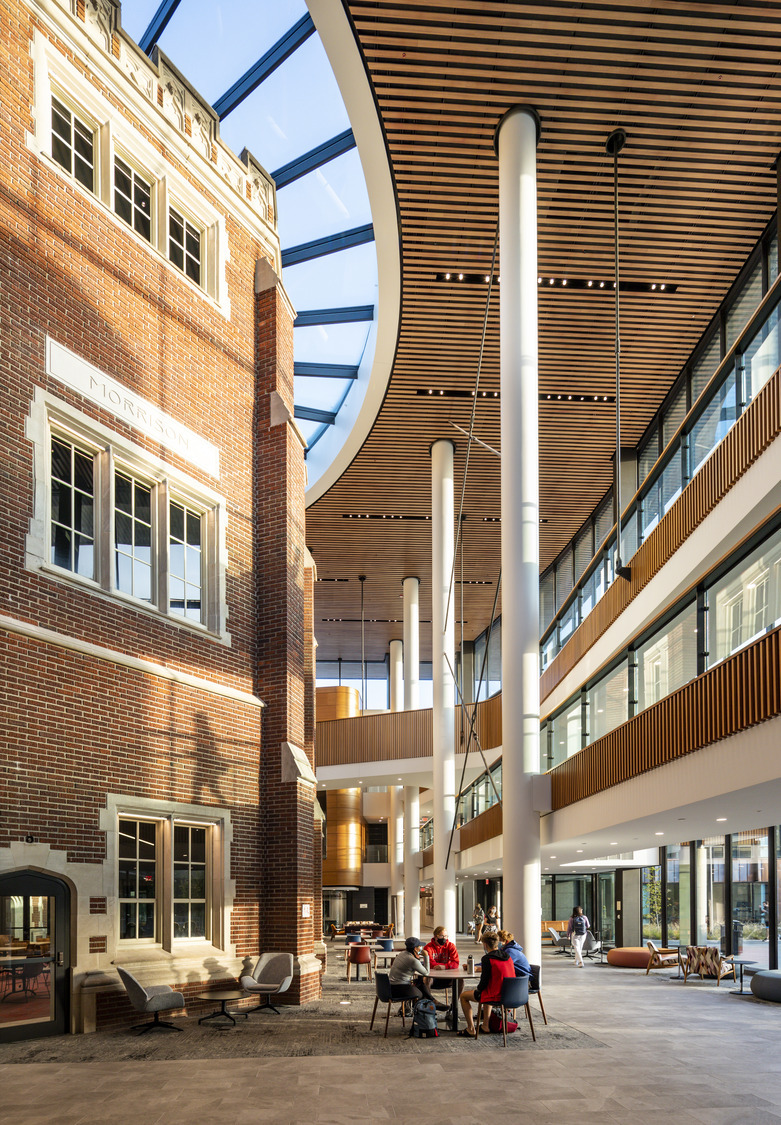
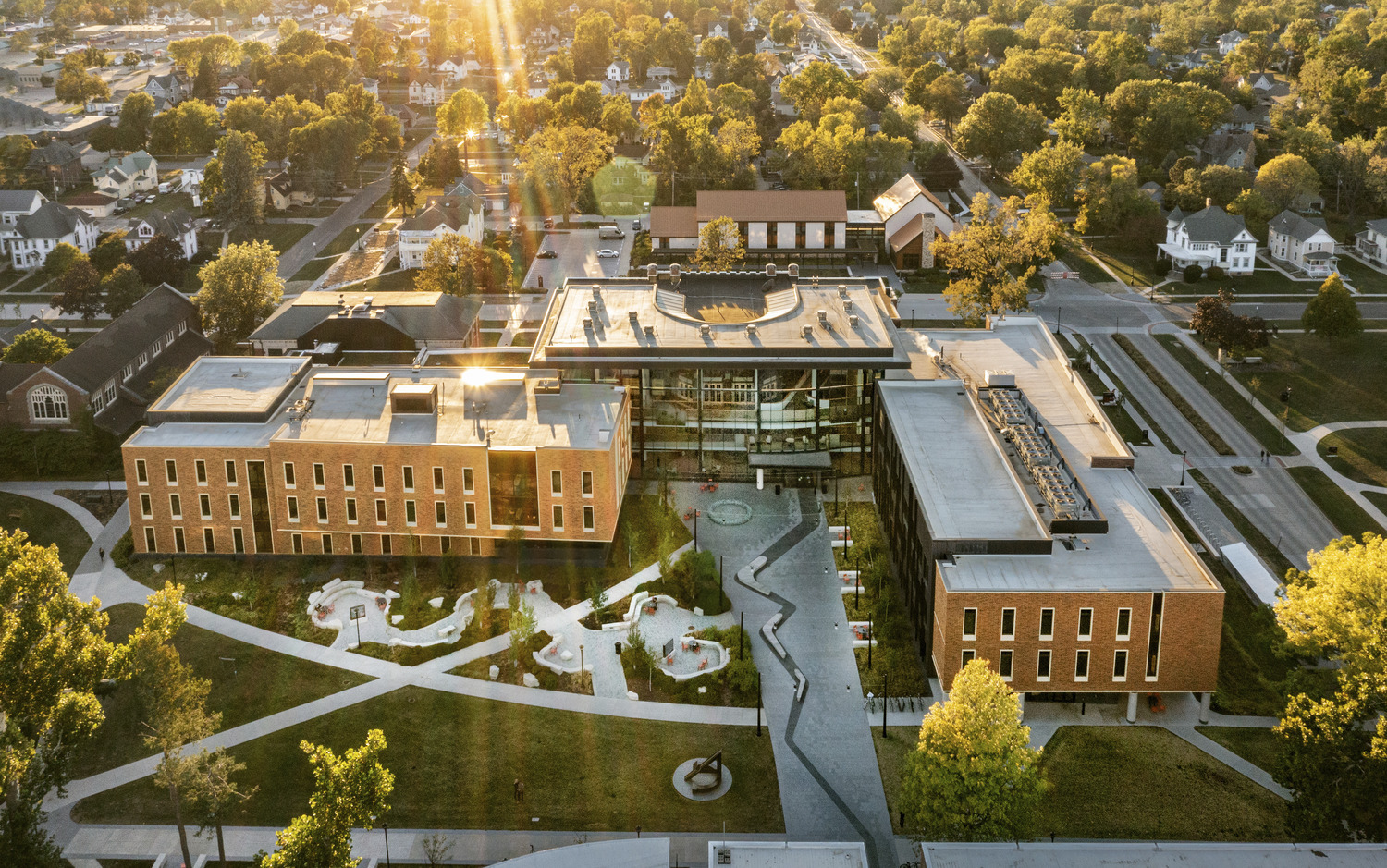
Designed by Page, the Grinnell College Humanities and Social Studies Center (HSSC) is an academic powerhouse where history meets economics, literature intersects with political science, and sociology thrives alongside philosophy. The design links new and historic spaces through a bright, central atrium—fostering intellectual exchange at every turn. With modern technology, flexible learning spaces, and an inclusive design that welcomes all, the HSSC is a bold step toward the future of liberal arts education, built on Grinnell’s rich academic tradition.
Awards
-
12023 Architecture Award, Copper Development Association (CDA)
-
22023 Excellence in Architecture for Building Additions, Renovation, or Adaptive, Honorable Mention, SCUP
-
32021 Design Excellence Award - Environments Designed for Learning, American Society of Interior Designers (ASID) Washington Metro
-
42020 Brick in Architecture Awards, The Brick Industry Association (BIA)
-
52020 Community Enhancement Through Architecture Awards, Iowa Architectural Foundation (IAF)
Academic planning
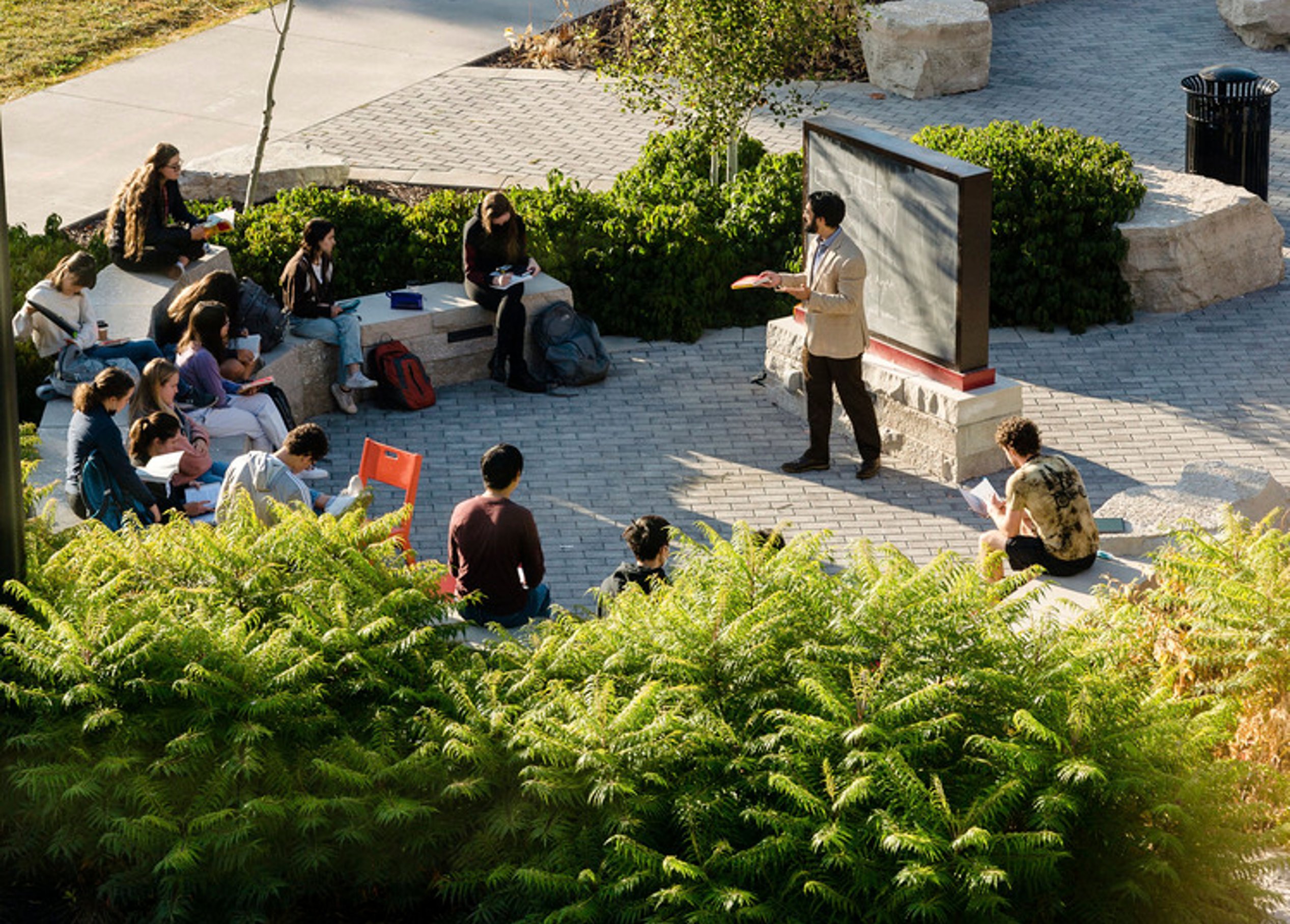
Early Page-led conversations asked, “What makes a great academic neighborhood?” This question shaped a design centered on Grinnell’s vision of a future-ready, community-centered hub—one flexible enough to adapt to evolving learning models and teaching pedagogies while intentionally breaking down academic silos.
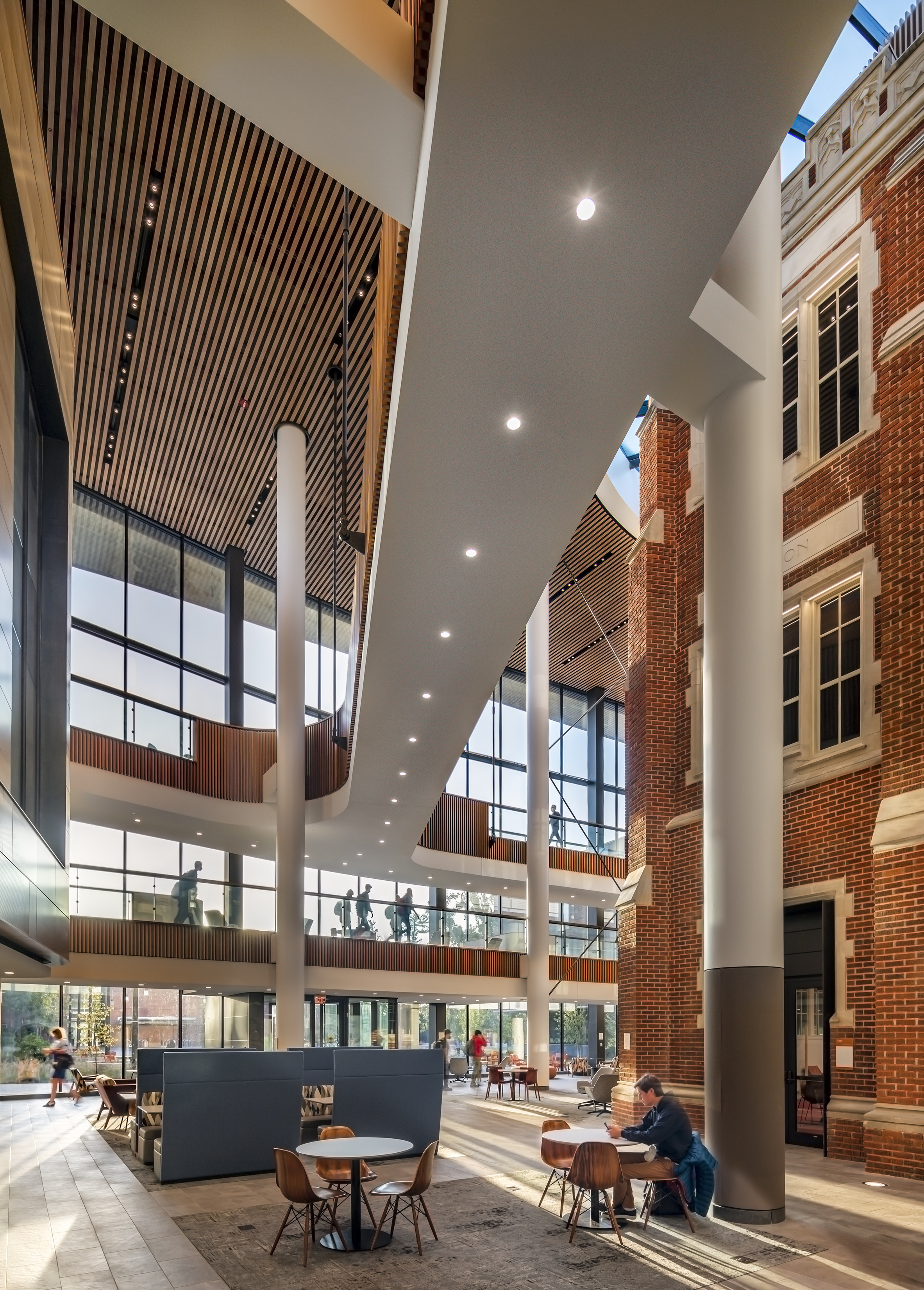
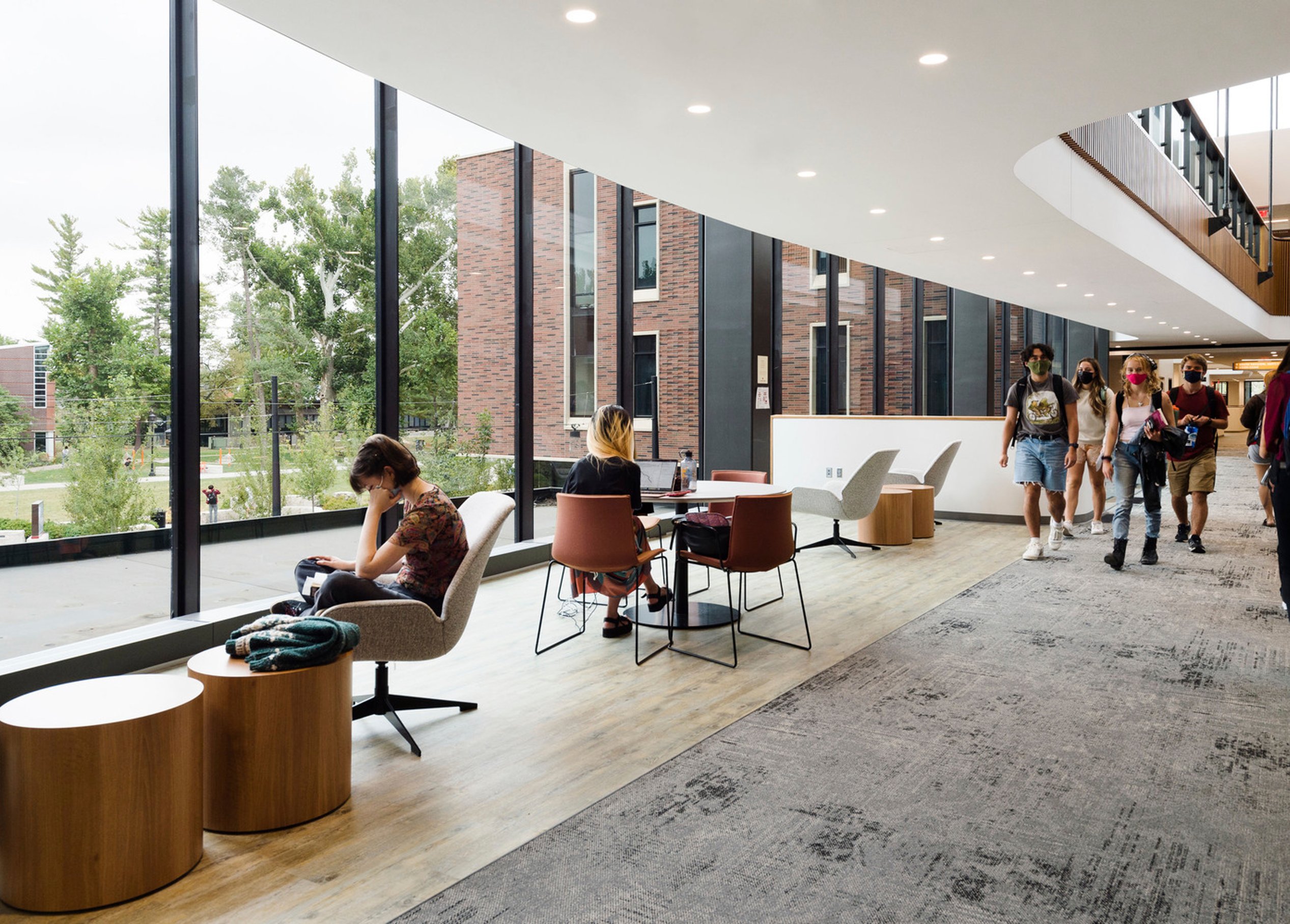
Blending 148,000 square feet of new construction with 53,000 square feet of renovated space, the new center unites 15 departments into an interconnected, interdisciplinary environment. At its heart, a vibrant, multi-level atrium serves as a crossroads where students, faculty, and ideas intersect. Overhead bridges physically and symbolically link classrooms, disciplines, and the broader Grinnell community, fostering collaboration beyond traditional academic boundaries.
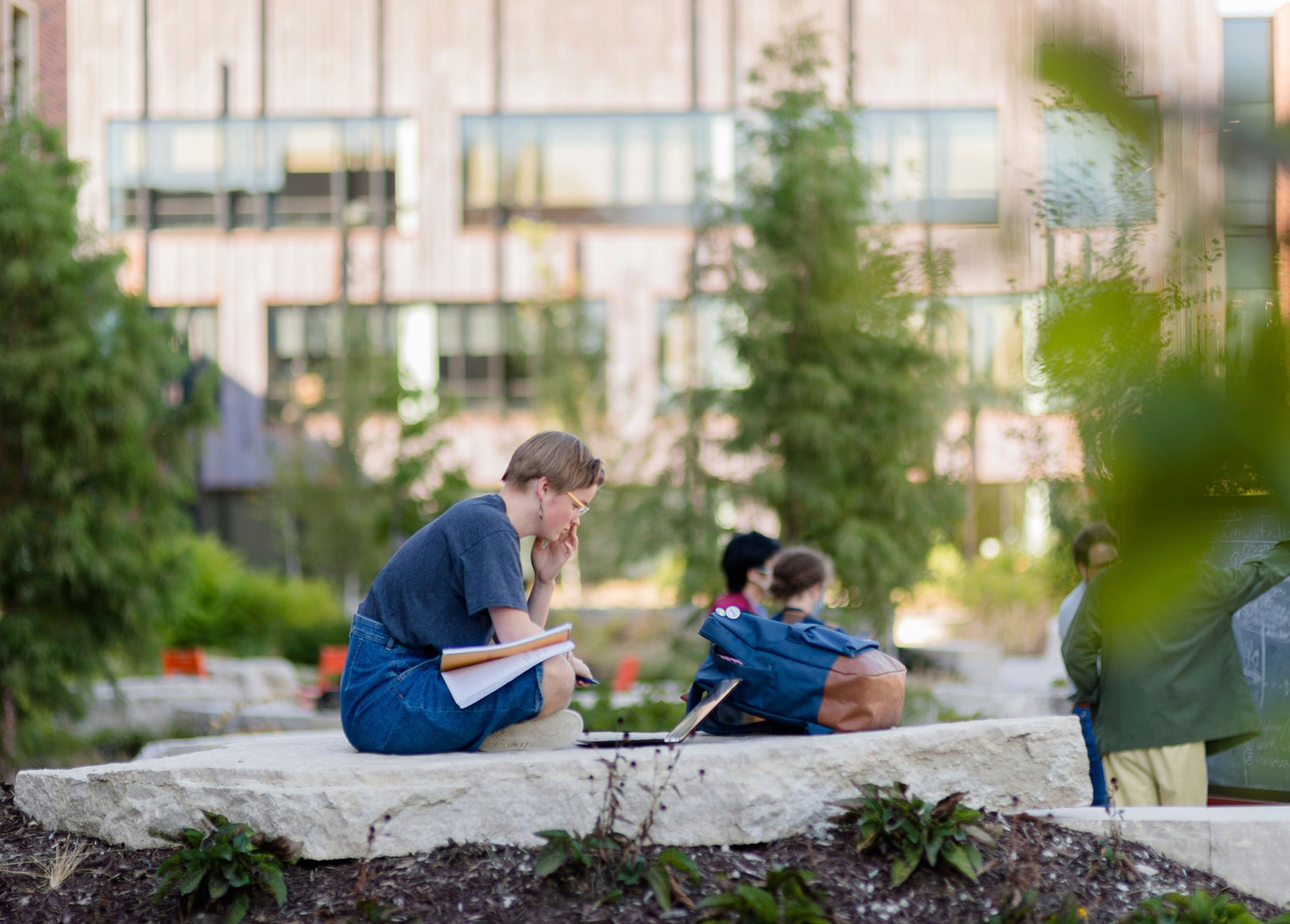
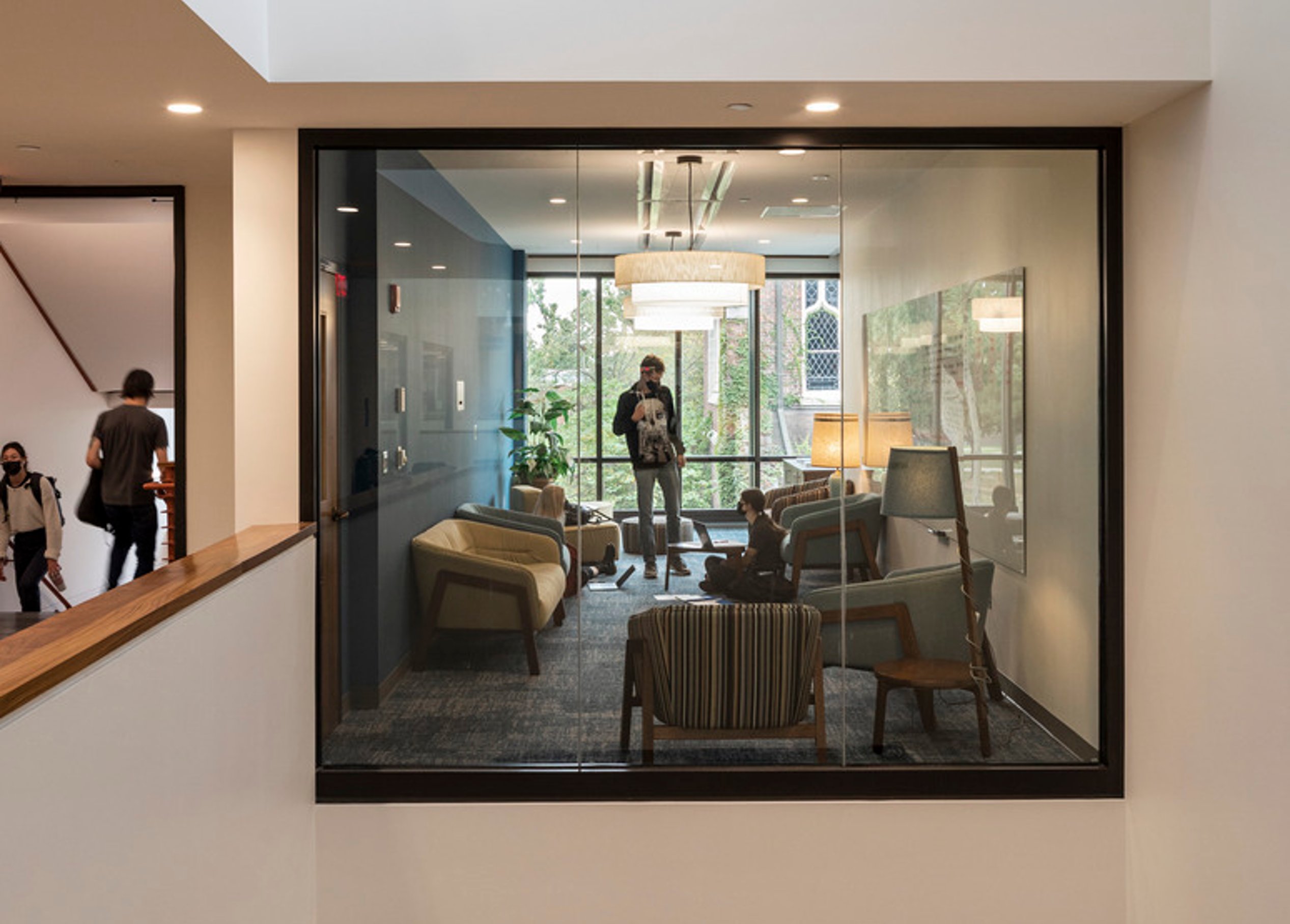
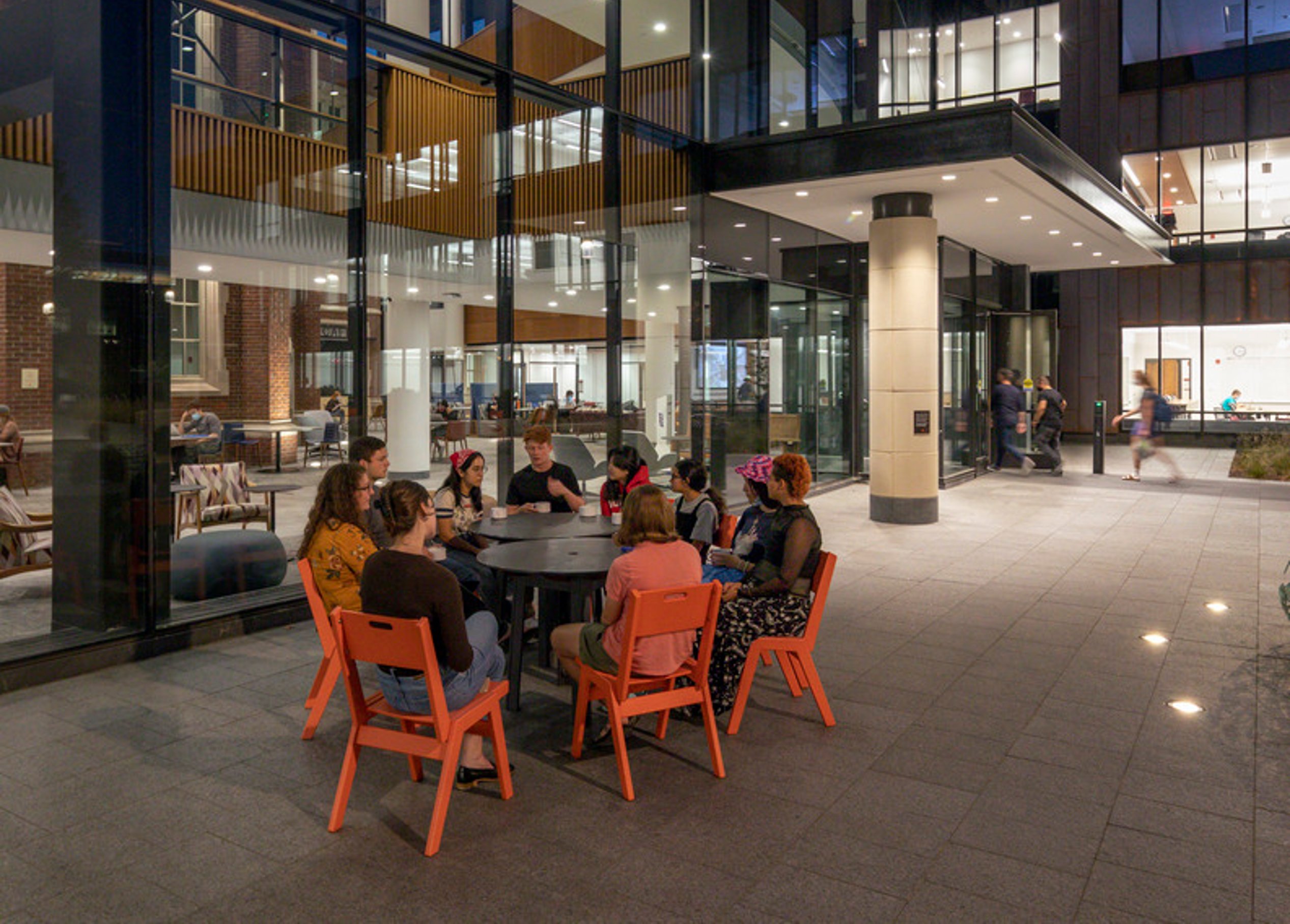
Designed to dissolve barriers, the center replaces isolated departments with shared research spaces, interdisciplinary classrooms, and flexible work areas. Here, ideas flow freely, expertise overlaps, and moments of connection transform into new discoveries. Informal gathering spaces throughout the building encourage conversation, sparking the intellectual collisions that drive innovation.
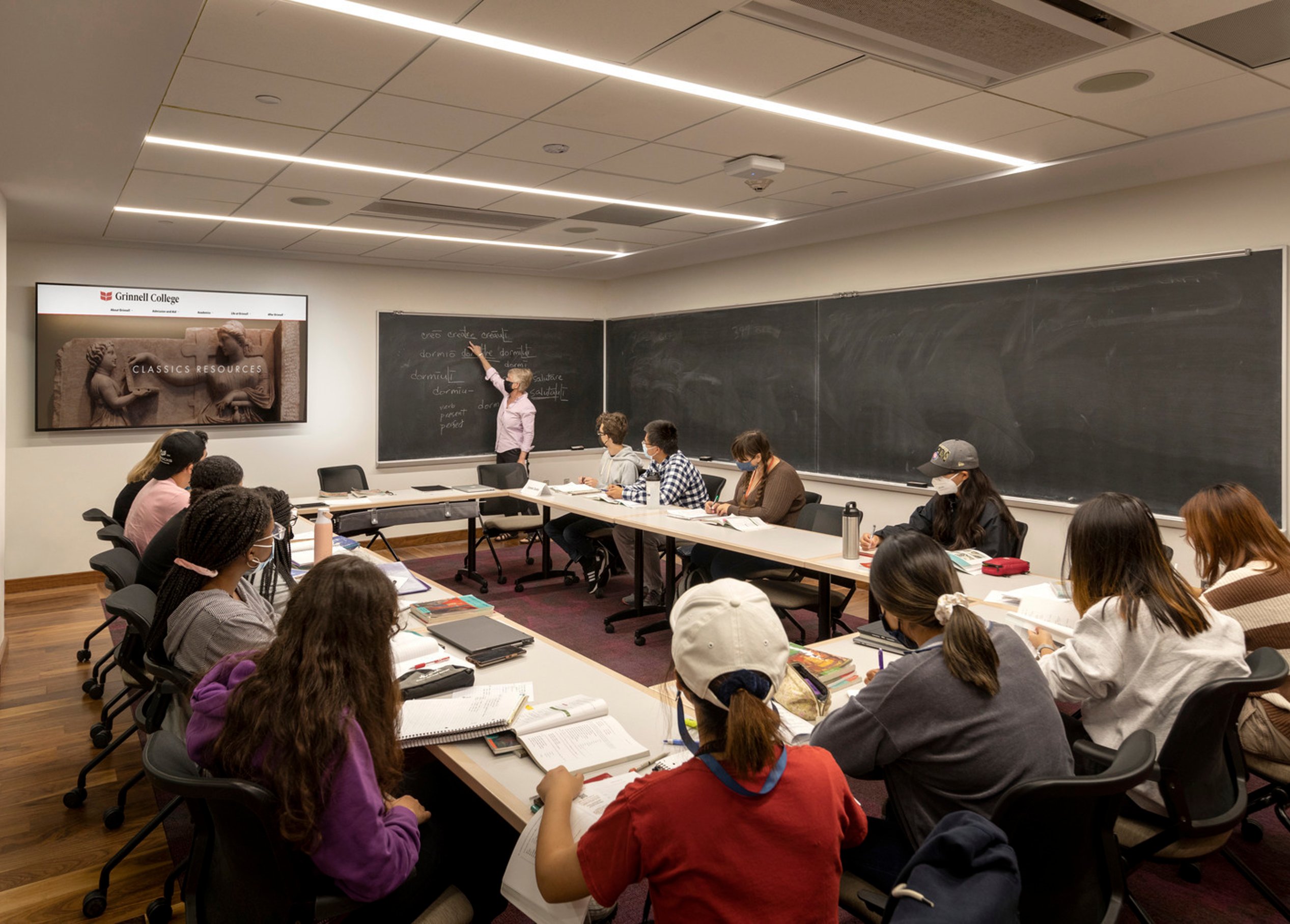
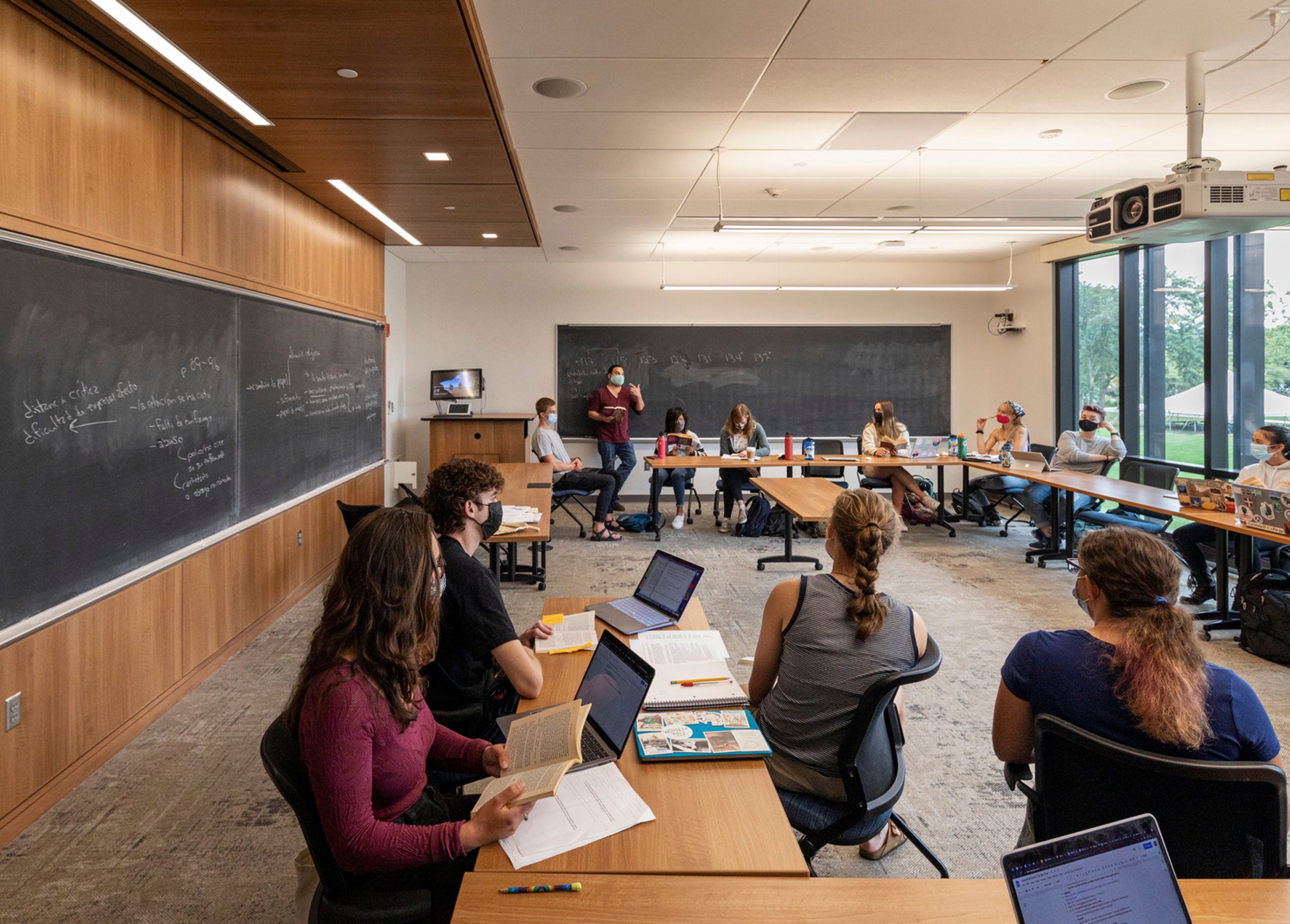
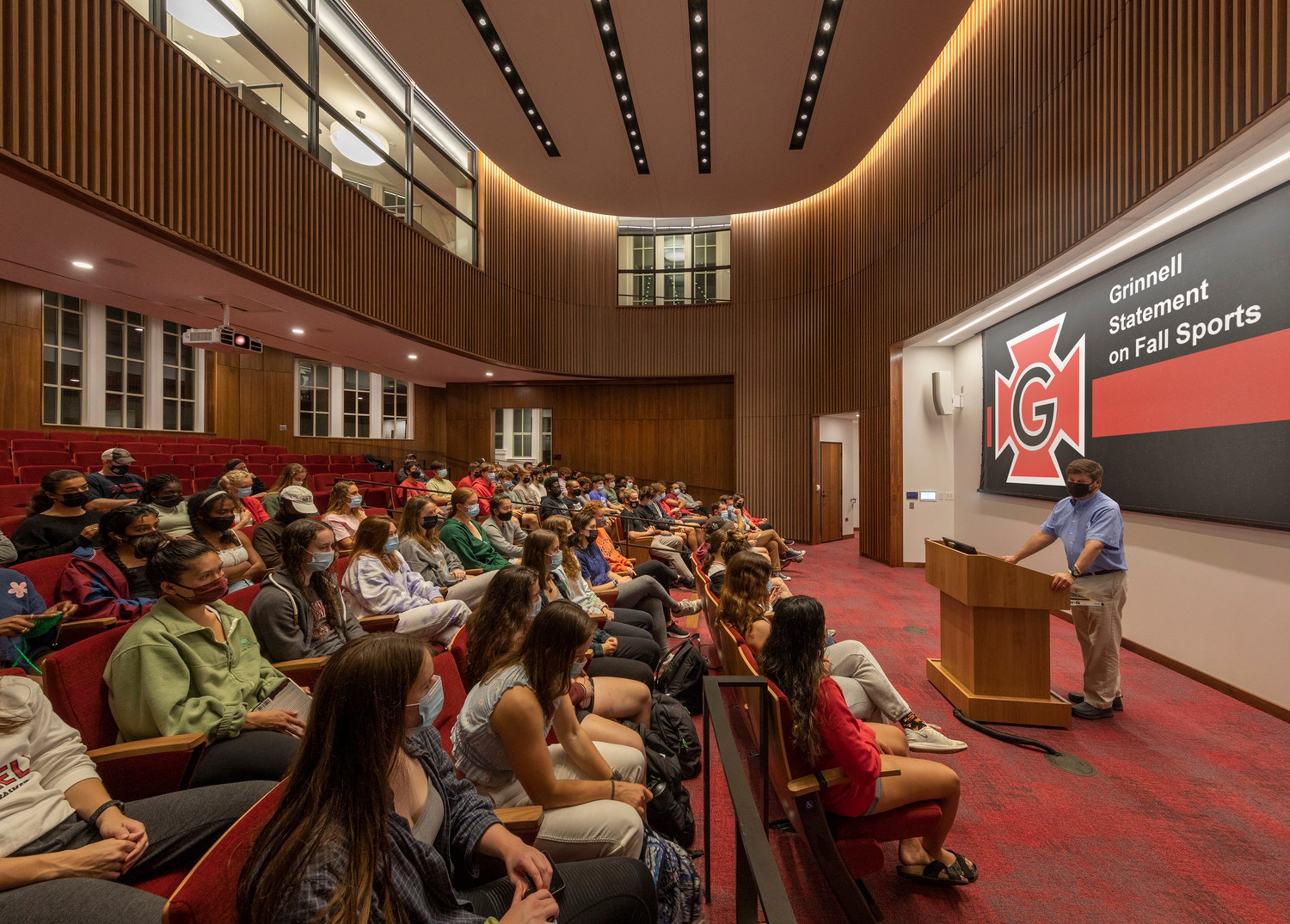
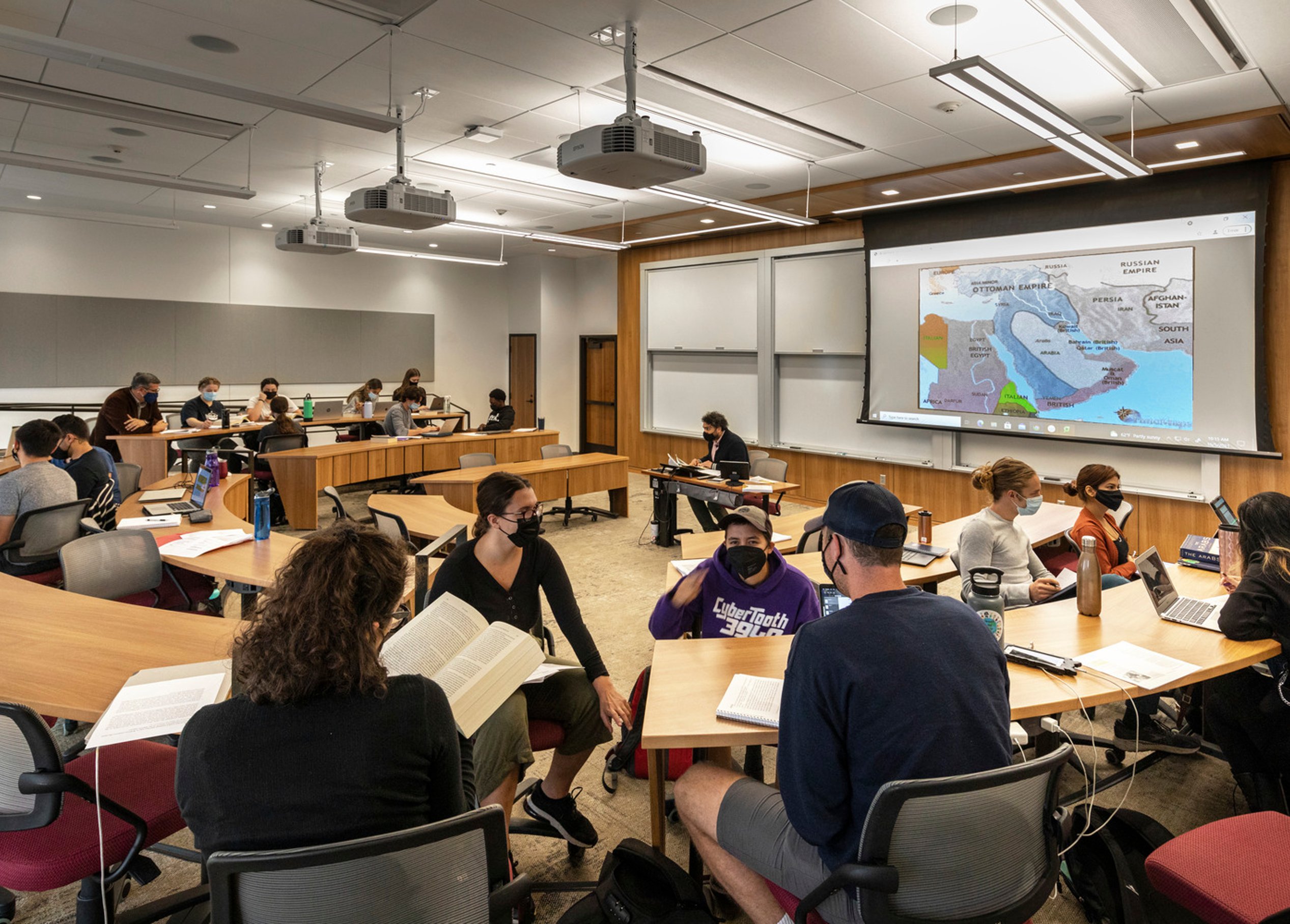
With a focus on adaptability, the center features 40 reconfigurable classrooms, scalable AV technology, and leading-edge Inquiry Labs, ensuring learning remains dynamic and deeply connected across disciplines.
Here, departments don’t compete—they converge. Knowledge isn’t siloed—it’s shared. This is where interdisciplinary discovery thrives.
Innovative teaching spaces




/
Boldy inclusive: designing spaces that empower everyone
Page partnered with a human-centered design consultant to create a space that is boldly inclusive, going beyond ADA compliance to ensure universal accessibility without barriers. The design prioritizes equity and belonging, fostering an environment where all students and faculty can thrive with confidence.
Human-centered design
At Grinnell College, social responsibility isn’t just a value—it’s an active commitment. Reflecting the school’s student-driven culture, the HSSC’s design was shaped through 200+ meetings, focus groups, and open forums with leadership, faculty, students, and staff.
Creating meaningful connections across disciplines takes more than proximity—it requires an intentional design that respects different ways of thinking, learning, and engaging. The HSSC achieves this through a layered approach that supports a range of sensory, cognitive, and social needs:
- Main Street: A dynamic hub where learning is on display, designed for those who thrive in high-energy, social environments while incorporating sound-absorbing materials to manage noise levels.
- Side Streets: Defined departmental spaces that offer structured collaboration in semi-private settings, allowing students to engage without the intensity of open public spaces.
- Neighborhoods: Adaptable areas that support both teamwork and solitude, designed with low-stimulation zones for deep focus and neurodiverse users who may experience sensory overload.
Beyond spatial organization, the design embraces universal accessibility. Expansive pathways, intuitive wayfinding, and strategically placed elevators ensure seamless mobility. Thoughtful lighting strategies minimize glare and provide adaptable illumination, enhancing comfort for those with light sensitivities or vision impairments. Acoustically balanced spaces allow students to focus.
By recognizing that students interact with their environment in unique ways, the HSSC fosters a truly inclusive space—one that empowers all learners to navigate, connect, and thrive on their own terms.
Boldy inclusive: designing spaces that empower everyone
Page partnered with a human-centered design consultant to create a space that is boldly inclusive, going beyond ADA compliance to ensure universal accessibility without barriers. The design prioritizes equity and belonging, fostering an environment where all students and faculty can thrive with confidence.
Performance-driven results
Grinnell’s inquiry-driven, data-rich philosophy shaped every aspect of the design, ensuring a high-performance learning environment built on real-world insights. Page used proven strategies from our post-occupancy research program, optimizing spaces for engagement, comfort, and adaptability.
Two key drivers guided the design: the strong link between natural light and student satisfaction and the need for diverse study spaces that support different learning styles. Benchmarking academic projects informed classroom sizing, while full-scale faculty office mockups brought educators into the planning process—ensuring an inclusive, collaborative approach.
A phased construction approach allowed students and faculty to occupy new spaces while renovations continued, providing real-time feedback that fine-tuned learning environments for peak performance.
Daylighting
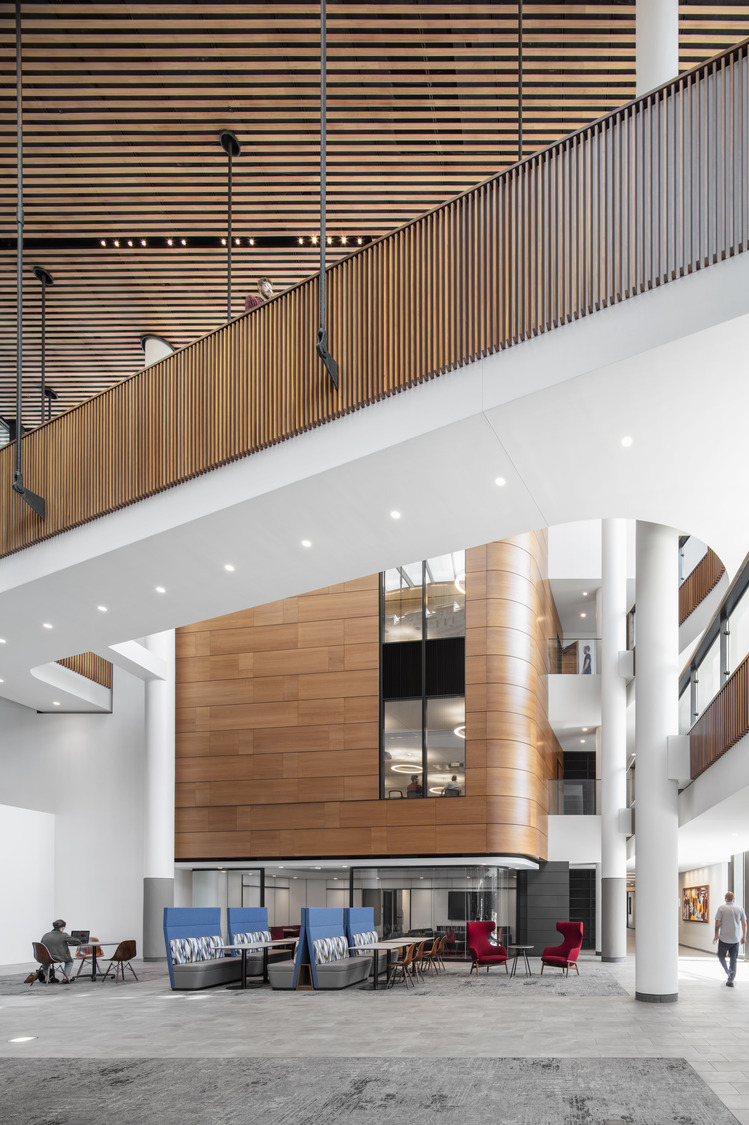
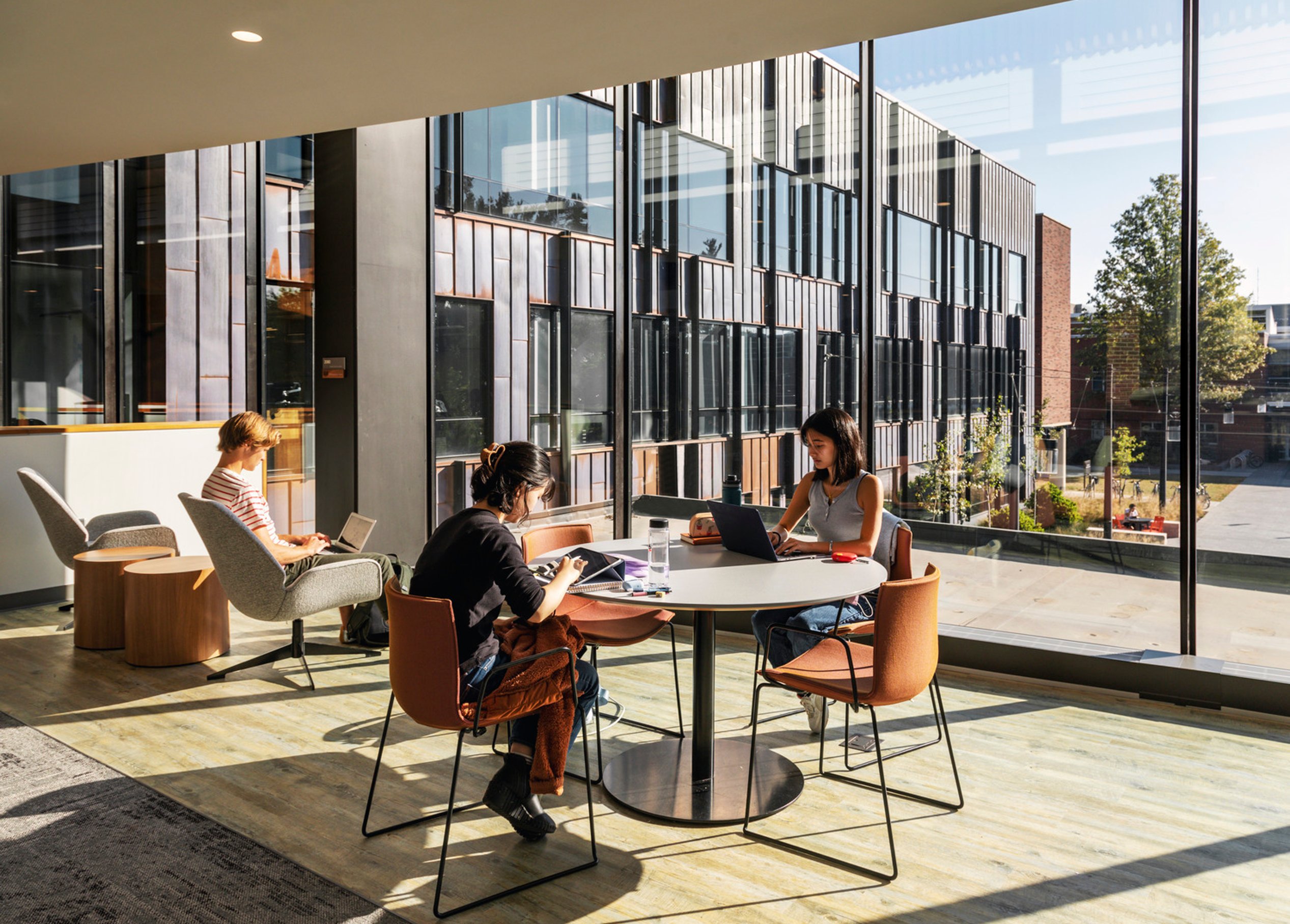
Designed to elevate well-being in a high-performance learning environment, the central atrium is more than just a gathering space—it’s the heart of a campus experience where students and faculty feel energized, focused, and connected. Infused with natural light, warmth, and acoustic comfort, it fosters collaboration while creating a sense of calm and belonging.
Expansive windows and halo skylights reduce reliance on artificial lighting, boosting energy levels and enhancing productivity. Across the building, 51% of regularly occupied spaces receive sufficient daylight, ensuring a bright, stimulating atmosphere that reinforces well-being. Positioning classrooms along the building’s perimeter maximizes daylight, allowing natural light to filter through glass partitions, skylights, and interior light wells. This seamless integration strengthens students’ connection to their environment, improving concentration and engagement.
Thoughtfully placed wood slats enhance acoustics, shaping a quiet study space that balances openness with intimacy.
Energy-efficient chilled beams ensure year-round comfort while reinforcing sustainability, creating a resilient, future-ready academic setting where well-being is built into every design choice.
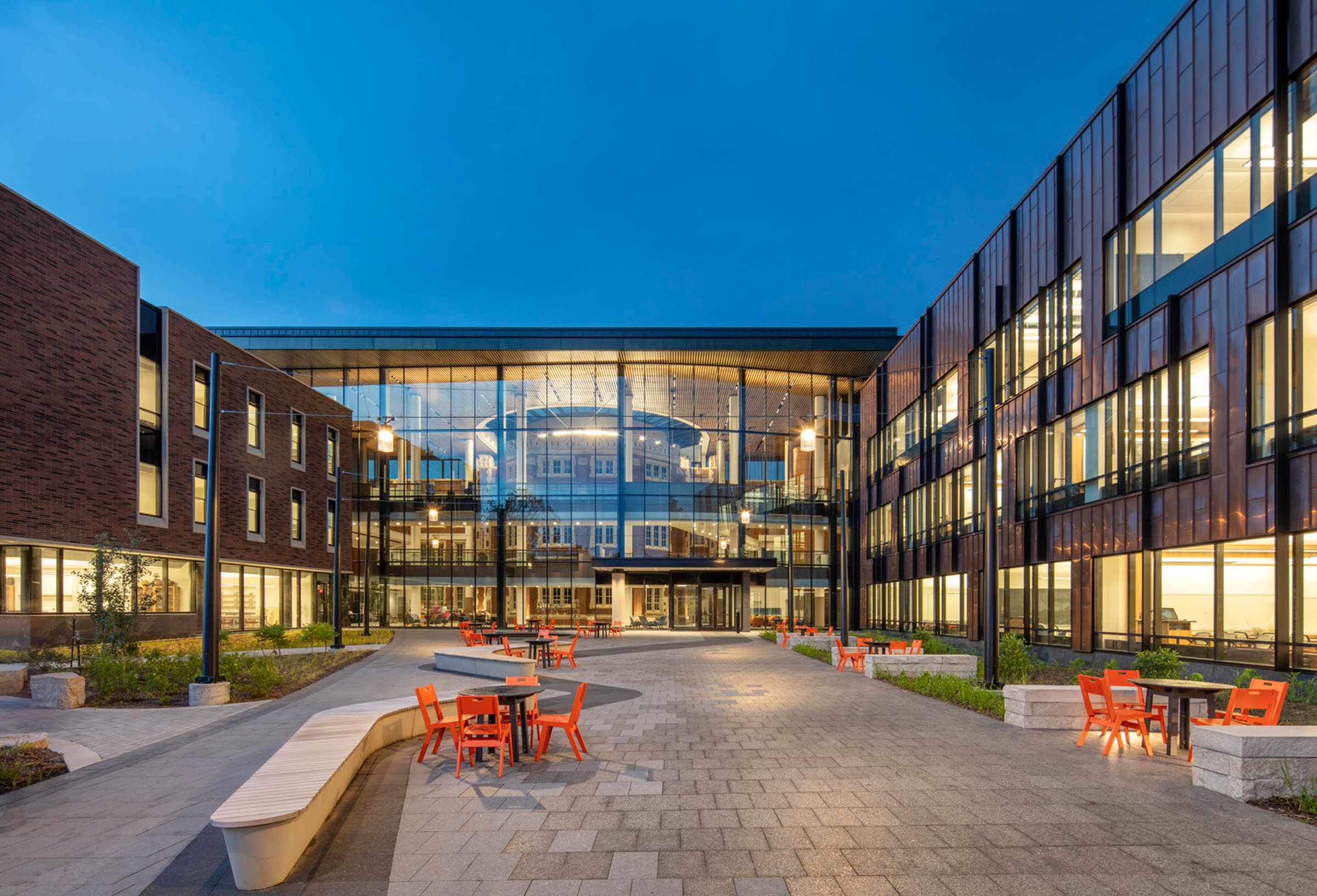
This intelligent, data-driven approach delivers a highly efficient, adaptable, and student-centered academic experience—one that sets a new standard for performance-based design.
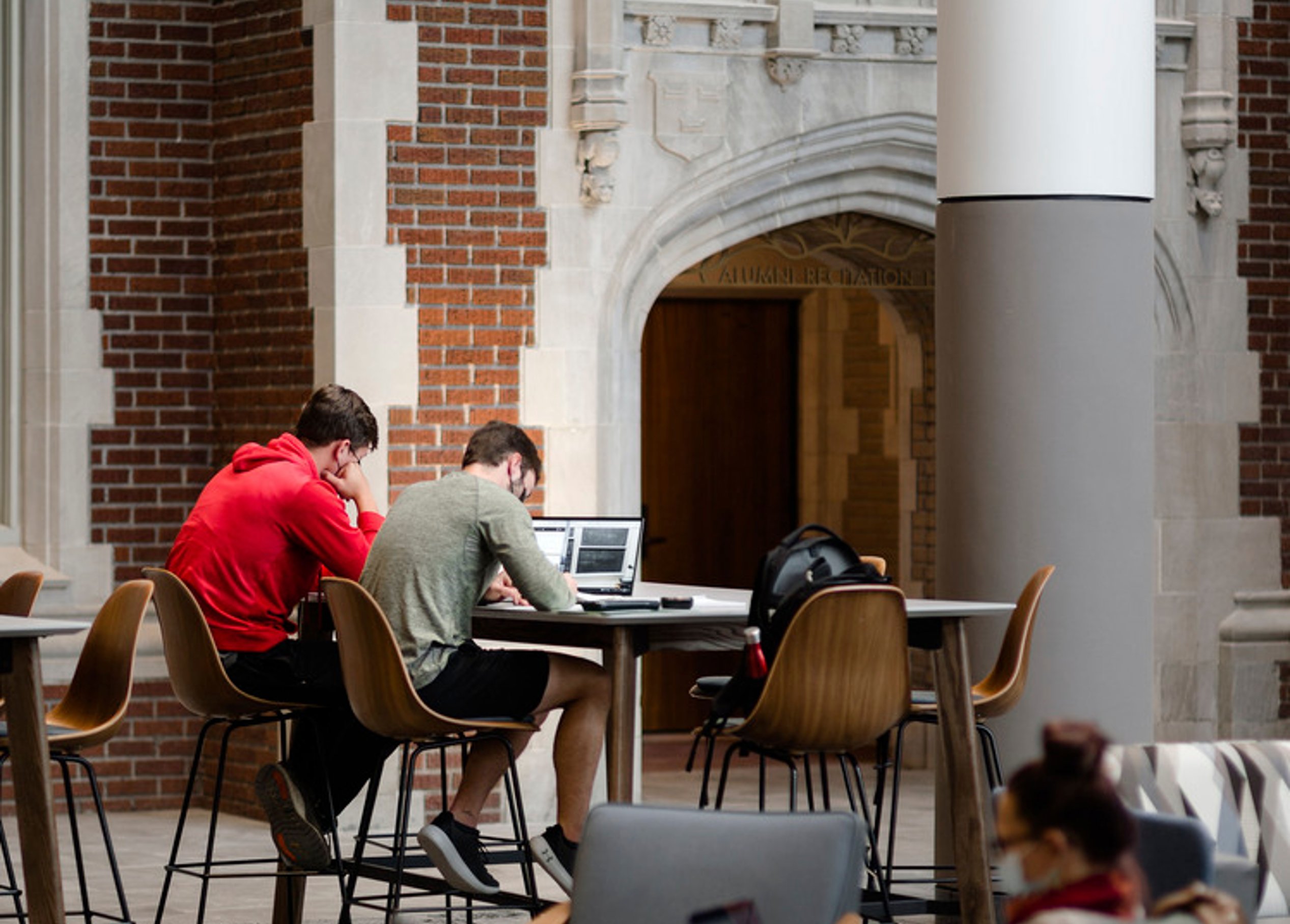
Stay, collaborate, create



/
Similar projects

/

Talk with us
Complex challenges need fresh perspectives and deep expertise. Connect with our team to explore how we can help you create spaces that make a real difference.