

by Robert McClure, Alison Ledwith, and Mo Elsayed

Prior to COVID-19, classroom overcrowding and a lack of flexible non-classroom space were common complaints in schools, particularly those designed with a more traditional pedagogical approach. Now that schools are looking more closely at their spaces – where students can go and how many can safely occupy various spaces – they need tools to effectively and correctly identify these spaces and calculate their capacity. A detailed space utilization and capacity study can inform these decisions and help schools make larger choices about renovations, expansions, and/or schedule changes. According to Page Academic Strategy Specialist Sheri Offenhauser, many schools already have enough space and need guidance on using it more effectively.
The first steps are to use school data and 21st-century learning environment benchmarks to calculate the functional capacity of an institution. Offenhauser explains that schools often operate under the policy of “adjust as necessary” as issues develop. Furthermore, organizations often fail to reassess their spaces after the initial programming and design phase. Instead, they tend to make minor modifications over the years, which can dilute the original purpose. This results in either overuse or underuse of the spaces, along with a diminished understanding of their actual capacity for programs.
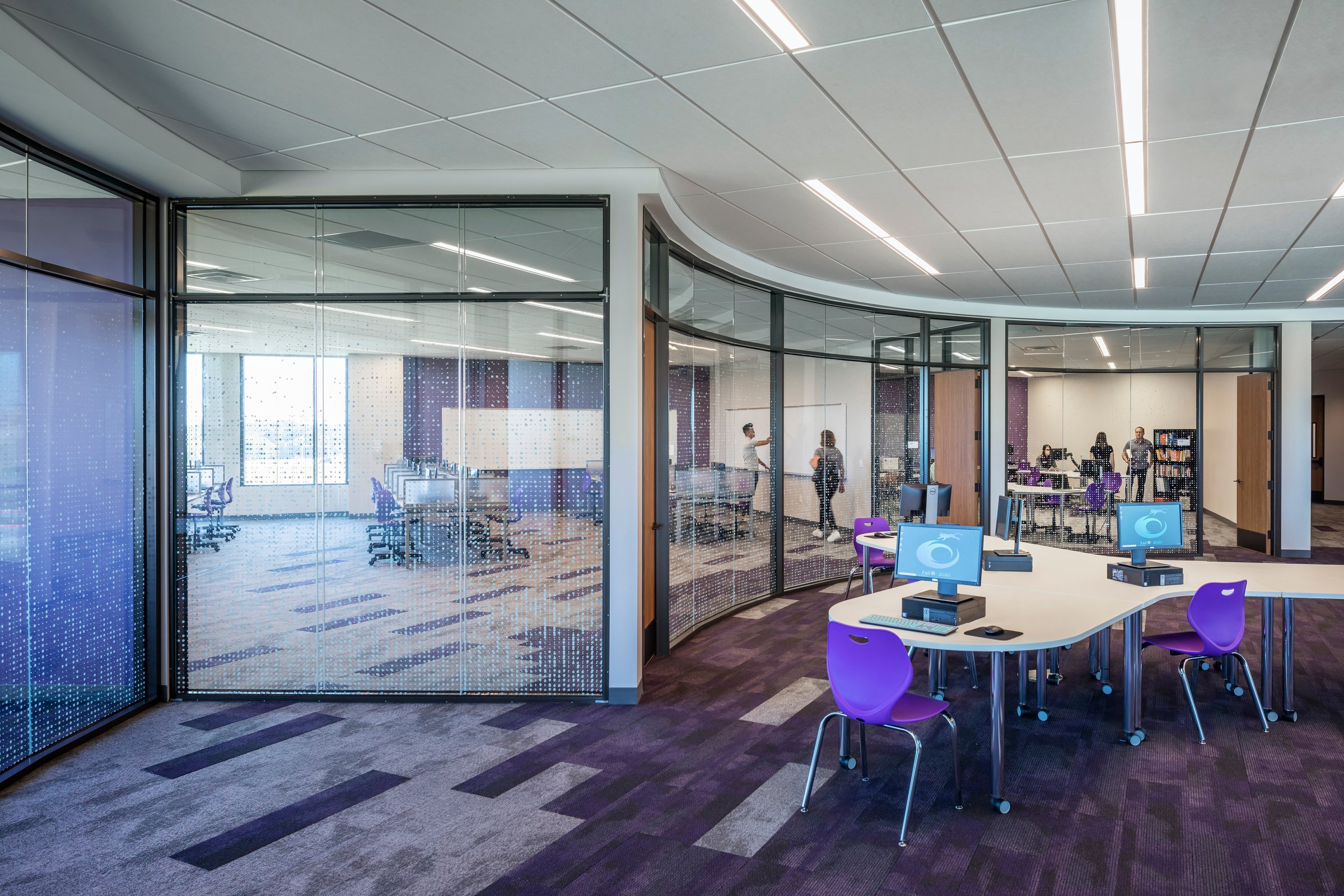
Flexible, tech-rich spaces support evolving learning needs at Collin College Wylie Campus. Space utilization studies help schools adapt, expand programs, and maximize existing capacity. Photo by Albert Vecerka/Esto.
A space utilization study can also help schools identify increases in overall program capacity if buildings are inconsistently used. This can yield cost-saving opportunities such as space consolidation or closure. Additionally, as schools move to expand CTE courses or consider adding specialized courses to the curriculum, a space utilization and capacity study can help administrators identify existing spaces that are currently not programmed for educational use, which can be adapted to increase capacity without adding additional square footage.
Academic institutions can benefit from assistance in identifying and measuring their educational and support spaces against state or local standards and best practice benchmarks. This evaluation allows schools to compare their spaces to similar institutions with comparable pedagogical approaches. It is important to note that metrics are influenced by school schedules and each institution's unique vision and goals, meaning that no two schools will share the same data or objectives. The insights gained from these assessments often help schools in their current and future planning efforts.
To learn more about the work Offenhauser and her colleagues do in the education arena, watch a video of her remarks at the 2021 Building Solutions HPC (High Profile Client) Retreat by clicking here.
More
by Robert McClure, Alison Ledwith, and Mo Elsayed

by Patrick Markley and Tully Mahoney

by Page, now Stantec Staff In conversation with Brian Tucker

Complex challenges need fresh perspectives and deep expertise. Connect with our team to explore how we can help you create spaces that make a real difference.