

by Robert McClure, Alison Ledwith, and Mo Elsayed
by Patrick Markley and Tully Mahoney

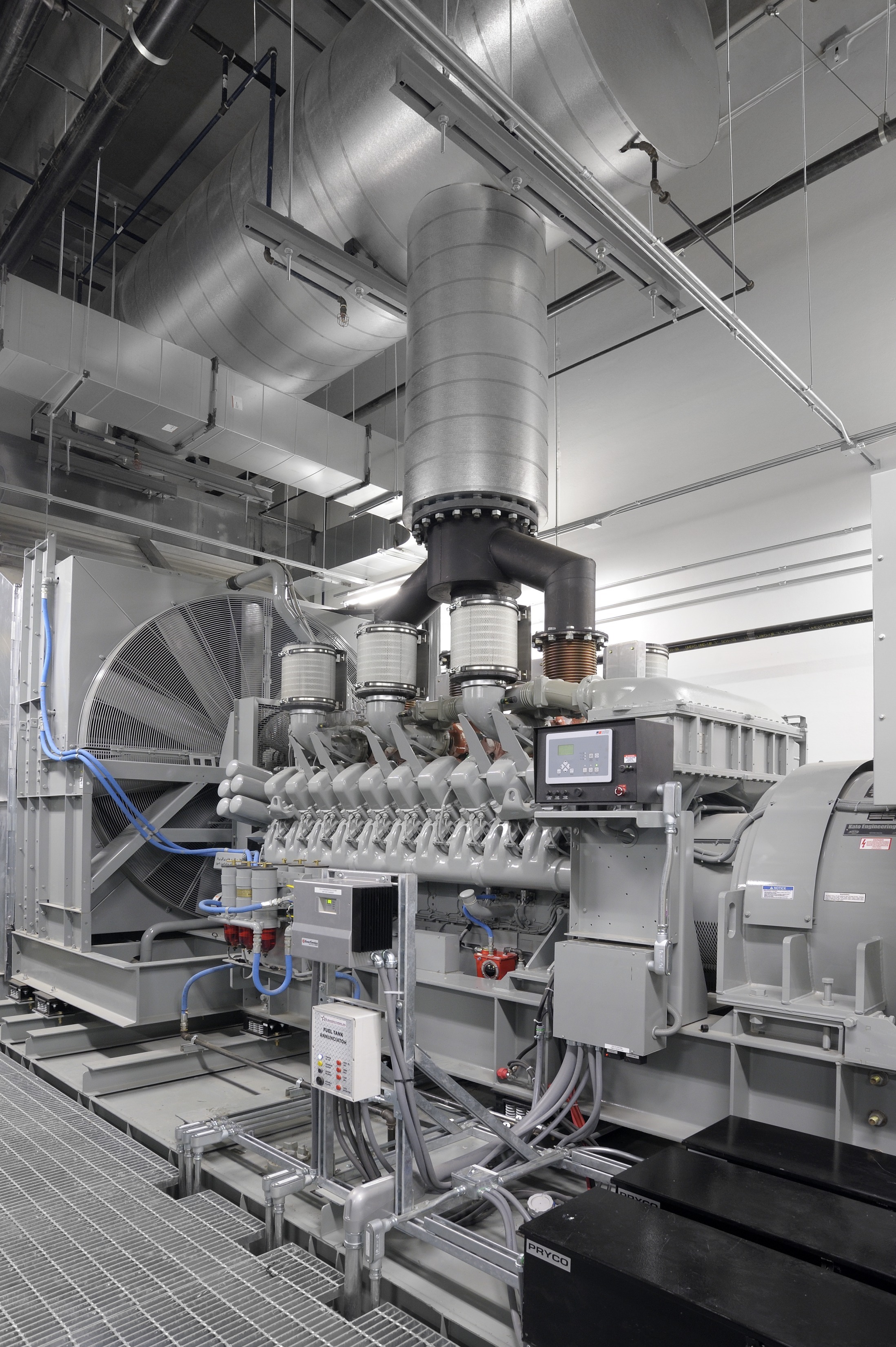
Cogeneration is more efficient than traditional power generation, reduces carbon emissions, offers high returns on initial investment, improves reliability, and provides a platform for integrating additional renewable resources and energy storage within a facility. But what exactly is cogeneration? And is it suitable for all facilities?
Cogeneration—or combined heat and power (CHP)—creates multiple forms of useful energy from a single source. Combustion engines use natural gas to power a generator and create electricity. In a standard generation system, the waste heat from producing electricity is released into the atmosphere. A CHP system captures and converts the exhaust to produce even more energy in the form of heating, cooling, or hot water.
A cogeneration system converts 100 units of fuel into 35 units of electricity and 50 units of heat, while losing only 15 units of energy. Comparatively, a traditional generation method requires 165 units of fuel to produce the same amount of electricity, and additional sources are needed for HVAC purposes.
The technology in CHP uses waste heat recovery devices, such as waste heat boilers, to create thermal energy or additional electric power from the exhaust. This system significantly improves energy efficiency by using less fuel per unit of energy, which dramatically reduces CO2 emissions and other pollutants. Specifically, the carbon dioxide emission factor of a cogeneration system is 48.9% lower than that of conventional systems.1
A cogeneration system is more reliable as it operates in parallel with utility sources, using a power grid to supplement power generation. In the event of a grid blackout or for storm avoidance measures, a cogeneration plant can operate independently, enabling the facility’s operations to continue uninterrupted.
In many instances, CHP systems provide a quick return on the initial investment.2 Cost savings can be significant by leveraging various energy sources against one another, specifically natural gas against electricity. Further savings result from the decreased cost of producing heating or cooling.
Cogeneration is most appropriate for industries that operate on a large campus, such as healthcare facilities or university and college campuses. These facilities operate on a near-continuous basis and have large electricity demands, resulting in significant levels of waste heat that can be recycled.
Healthcare facilities are a particularly distinguished candidate for cogeneration, as hospitals spend an average of $3.16 per square foot on energy costs each year.3 The transition to CHP would benefit the environment and healthcare facilities with nearly 40 to 50% savings in energy costs and more reliable power sources.4 Healthcare, including hospitals, medical facilities, and medical supply chains, accounts for 4.4% of global emissions5 and almost 8% of US emissions.6
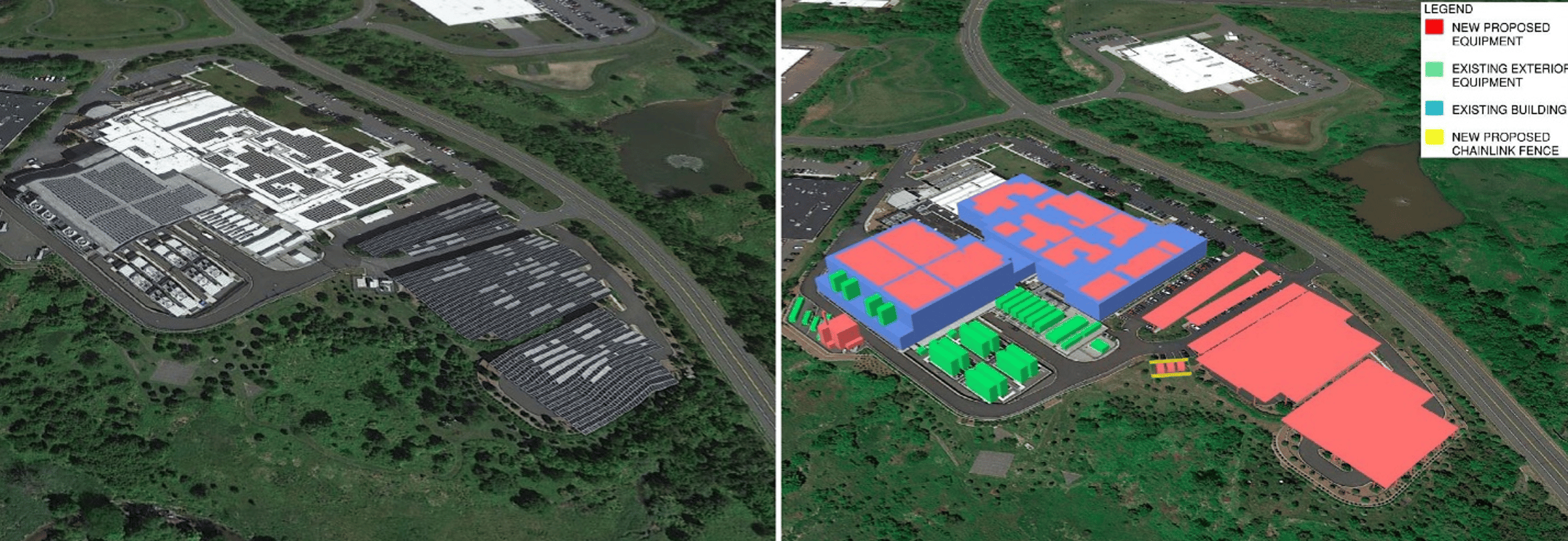
Verizon Wireless Equipment Center
A facility’s geographic location is also an important consideration. Depending on weather patterns and climate, some areas may require more thermal energy. Facilities operating in an environment that requires a thermal load—whether heating or cooling—on a near-continuous basis will have increased benefits from cogeneration. For example, in the Northeast, space heating, summertime reheat, and process needs are present year-round, so CHP may have significant positive economic benefits by eliminating the additional operating costs for these systems.
Page, now Stantec collaborated with Renova Energy & Infrastructure to compile a report for the Verizon Wireless Equipment Center, investigating opportunities for a local microgrid installation—containing CHP and battery storage—at the Network Equipment Center in New Jersey. The study proposed a CHP system that utilizes a combustion engine-generator (CEG) to make electricity. The generator features an exhaust and jacket-cooling system, which captures waste heat through heat exchangers to produce both hot and cooled water.
Page recommended a single, nominal 4050 kW engine for this site with the goal of optimizing the cost of delivering electricity and chilled water to the large facility. The team selected the system's size and composition based on cost-effectiveness, the available natural gas pressure requirements, and the need for redundancy and reliability.
When cogeneration is applied in suitable industries and geographic locations, it can offer significant advantages, ranging from financial savings to reduced carbon emissions. Page makes deliberate recommendations in accordance with its clients’ facility needs, geographic location, and size.
What are the benefits of Cogeneration systems (CHP)? (April 11, 2022). Engineer’s Notebook.
Flexible Combined Heat and Power (CHP) Systems. (January 2018). U.S. Department of Energy.
Combined Heat and Power Fact Sheet Series. (n.d.) CHP Market Sector: Hospitals. U.S. Department of Energy Better Buildings Solution Center.
Budd, K. Hospitals race to save patients — and the planet. (October 15, 2019). AAMC News.
Seervai, S., Gustafsson, L., Abrams, MK. How the U.S. Health Care System Contributes to Climate Change. (April 19, 2022). The Commonwealth Fund.

Patrick ’s background in martial arts reflects his engineering philosophy: lifelong learning, discipline, and a relentless drive for improvement. For 25+ years, he’s designed electrical systems ranging from 40-megawatt campus co-generation plants to conditioned power medical imaging at some of the most remote U.S outposts. Patrick’s deep expertise in system implementation and renovation within mission-critical environments equips him to skillfully navigate the complex demands of sensitive facilities. Prioritizing simplicity, effectiveness, and maintainability, he consistently delivers high-quality projects that surpass client expectations.

With expertise in crafting compelling narratives that engage diverse audiences, Tully blends creative flair with a keen eye for detail to develop impactful content across platforms. Her work includes award-winning podcast production, content development, and copyediting large-scale documents, all while enhancing brand voices and driving audience engagement. Tully also supports data visualization efforts by transforming complex information into clear, actionable insights through engaging storytelling.
More
by Robert McClure, Alison Ledwith, and Mo Elsayed



Complex challenges need fresh perspectives and deep expertise. Connect with our team to explore how we can help you create spaces that make a real difference.