
by Robert McClure, Alison Ledwith, and Mo Elsayed
by Jennifer Wegner
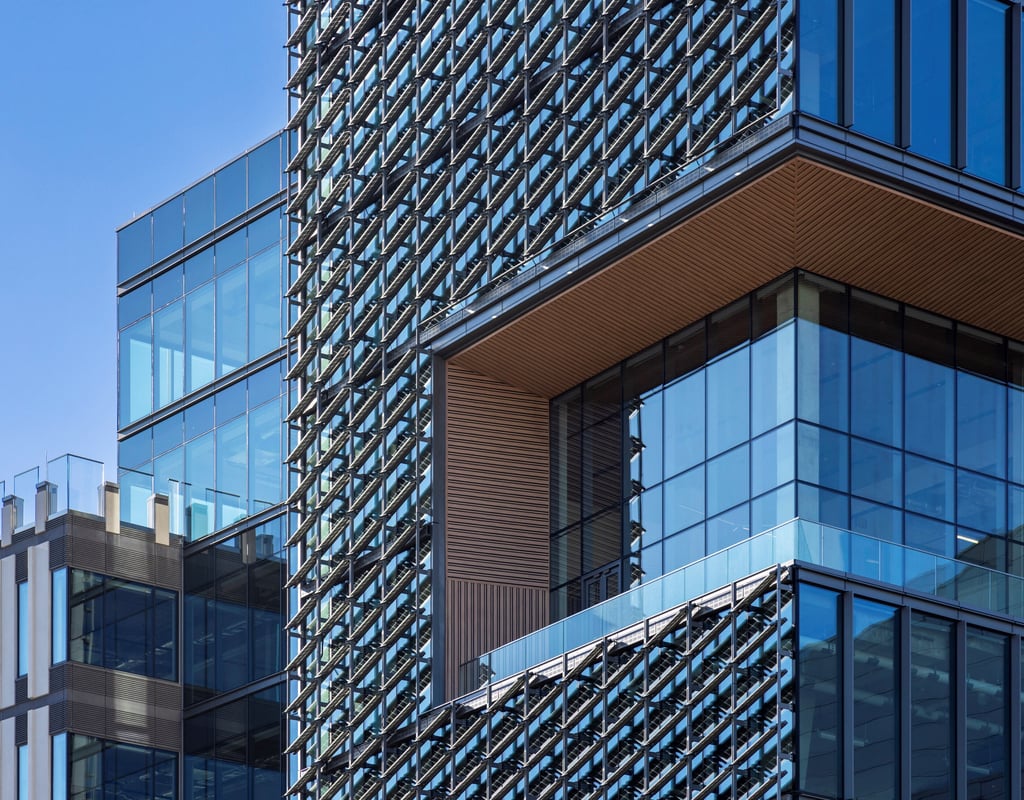
As climate change accelerates the frequency and severity of environmental disruptions, the role of a building's exterior has transformed. It is no longer just a barrier but a vital part of climate resilience, protecting occupants, maintaining operations, and reducing long-term risks. Today’s high-performance envelopes are designed to ventilate, adapt, and respond effectively. The future of resilient buildings relies on flexible, energy-efficient exteriors that manage moisture, respond to solar conditions, and address climate threats like heat waves, flooding, and power outages.1
Passive ventilation and breathable envelopes are key to managing indoor environments during extreme climate conditions. Double-skin facades, operable louvers, and ventilated rainscreens promote air circulation within the envelope cavity, helping to prevent heat buildup and support passive cooling.2 These systems reduce a building’s reliance on mechanical heating or cooling, which is especially important when the grid is under stress from climate disruptions. In urban heat islands, passive ventilation is crucial for maintaining comfort during increasingly intense and frequent heatwaves.
Adaptable photovoltaic systems are a key component of flexible building envelopes and energy generation.3 While traditional fixed-panel arrays are common and effective, their static nature limits performance as they cannot adjust to daily or seasonal solar variations. Modern solutions integrated into facades or mounted on sun-tracking frameworks allow buildings to maximize solar energy capture throughout the day and seasons. Features like tilt-adjustable panels, kinetic shading devices, and solar-responsive surfaces transform the building envelope into an active energy producer.1 These advancements boost energy independence and enable buildings to better adapt to changing climate conditions over time.
George Mason University’s Fuse at Mason Square, designed by Page, now Stantec, showcases an innovative photovoltaic envelope. Its façade features diagonal photovoltaic fins, a departure from traditional vertical or horizontal layouts. This angled design maximizes solar exposure year-round and reduces shading between fins, achieving both climate and architectural goals. Created as both an energy solution and a visual statement of sustainability, the system was refined through over 300 design iterations and produces about 50,000 kilowatt-hours annually. Integrated wiring and control systems hide technical elements, maintain clean interior views, and underscore the building's role as a hub for innovation.
Envelope permeability is equally vital in managing excess water during intense rainfall. Rainscreen systems with drainage channels, porous cladding, and water-dispersing designs quickly evacuate water, easing pressure on mechanical systems. Materials like permeable concrete, porous terracotta, and fiber-reinforced composites used in vertical applications absorb, redirect, or evaporate water, reducing damage and accelerating drying. These features are especially valuable in flood-prone areas, where envelopes must withstand and recover from repeated moisture exposure and deliver without loss of performance.
An emerging resilience strategy involves embedding thermal-responsive materials into building envelopes. Phase-change materials, thermochromic coatings, and smart insulation systems respond in real time to external temperatures, solar radiation, and humidity. These materials reduce thermal bridging and help maintain interior stability as external conditions change, enabling buildings to stay habitable with lower energy use. In areas with large daily or seasonal temperature variation, their passive ability to absorb, store, and release thermal energy enhances occupant comfort during energy supply disruptions.
Flexible envelopes also play a crucial role in protecting building systems and occupants from the impacts of climate change, such as wildfire smoke and urban air pollution. Advanced façade systems with integrated filters, automated sealing mechanisms, and operable skins that respond to air-quality data enable buildings to effectively control air infiltration. When combined with sensor-driven controls, these envelopes can automatically adjust ventilation and filtration to maintain healthy indoor environments during environmental crises.
When integrated with building systems, flexible envelopes improve responsiveness and resilience. Sensor-equipped facade elements monitor conditions like solar intensity, wind pressure, and humidity in real time, allowing the envelope to coordinate with HVAC and lighting systems. For example, high solar gain can trigger shading, reduce HVAC demand, and adjust lighting levels simultaneously. This real-time coordination helps lower system strain and extends functionality during disruptions.
Notably, flexible envelope systems also support long-term adaptability. As building uses transition over time, from commercial to residential, or from open office to hybrid space, envelopes that allow for new penetration points, reconfiguration, or integration of future technologies ensure buildings can evolve with minimal material waste or structural changes. In this way, adaptable envelopes turn flexibility into built-in future readiness.
Several projects designed by Page, now Stantec, demonstrate how flexible building envelopes enhance resilience. The Houston Methodist Centennial Tower uses vertical fins and solar shading to reduce heat, improve daylight, and ensure comfort in a hospital environment where climate control is vital. Similarly, the IAH Terminal transformation in Houston features adaptive curtainwall systems that handle regional temperature extremes while maintaining views and natural light. These examples show that responsive envelopes can boost resilience without sacrificing performance or aesthetics.
As climate change intensifies and becomes an ongoing design consideration, building envelopes need to be seen as living systems rather than static barriers. Future resilient buildings will be those that breathe, flex, and evolve. By investing in adaptable envelope systems that can sense, respond, and recover, architects and building owners can significantly boost energy efficiency and ensure the long-term safety and sustainability of their spaces. In a changing climate, flexible envelopes must go beyond a design approach and represent a new form of structural intelligence.
Matheou, M., et al. Adaptive high-performance and multifunctional façade systems. Front. Built Environ. 2026;11.
Cuce PM, Cuce E. Ventilated facades for low-carbon buildings: a review. Processes. 2025;13(7):2275.
Barbhuiya, S., Das, BB., Adak, D., Rajput, AS. Next-generation building envelopes: smart materials, energy efficiency and environmental impact. Next Materials. 2025;9:101226.
More
by Robert McClure, Alison Ledwith, and Mo Elsayed

Complex challenges need fresh perspectives and deep expertise. Connect with our team to explore how we can help you create spaces that make a real difference.