Feature
March 30, 2026
How employers are tackling the child-care crisis to support today’s workforce
Across the United States, the child-care system shows clear signs of strain. Child Care Aware estimates that costs have increased nearly 220% since 1990, outpacing general inflation, while wages for child care workers stay near poverty levels.1 A study by the Center for American Progress, covering 22 states, finds that more than half of all Americans live in child care deserts where supply cannot meet demand.2 The impacts go beyond families; they influence the economy.
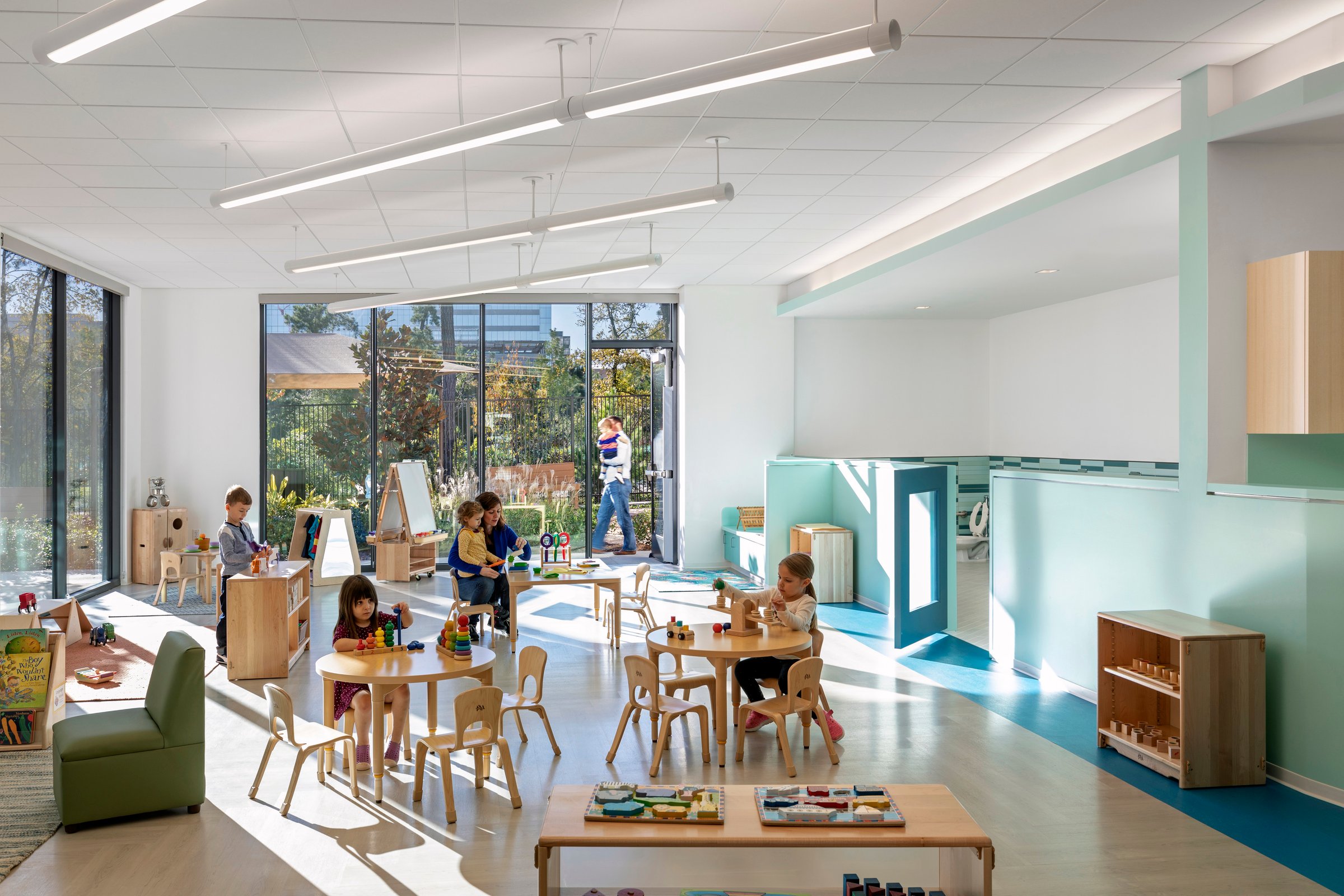
For ExxonMobil in Houston, TX, the Pioneers Club Child Development Center creates a village-like collection of small-scale buildings that spark curiosity and foster connection. The 20,000-square-foot facility serves 140 children and can expand to 31,000 square feet to accommodate 250 children without disrupting operations. Spacious corridors act as learning zones, and a full-service kitchen with a viewing window turns daily routines into educational moments. Designed for flexibility and filled with natural light, the center shows how thoughtful architecture can improve early learning and staff well-being. (Photo by Albert Vecerka/Esto)
A Council for a Strong America, Ready Nation report found that breakdowns in child care now cost U.S. businesses $122 billion in lost productivity each year.3 At the same time, employers compete for talent in a tight labor market where flexibility and family support matter more than ever. To meet that challenge, many companies are rethinking child care not as a benefit but as infrastructure, a critical part of how people work, live, and thrive.
Rethinking child care as a business strategy
The child-care crisis is often described as a “trilemma” where affordability, availability, and high-quality care rarely coexist. Yet some organizations are proving that integrated, employer-driven models can align all three.
“For over 35 years, Bright Horizons has been committed to providing the highest quality early education and care to support working parents and their families,” said Priya Krishnan, Chief Digital and Transformation Officer at Bright Horizons. “Employers are uniquely positioned to provide child care solutions for their working parent employees.”
“For many companies, child care is part of their workforce attraction and retention strategy,” continued Krishnan. “When companies invest in care, they’re positioning themselves as an employer of choice by investing in the stability, performance, and loyalty of their people.”
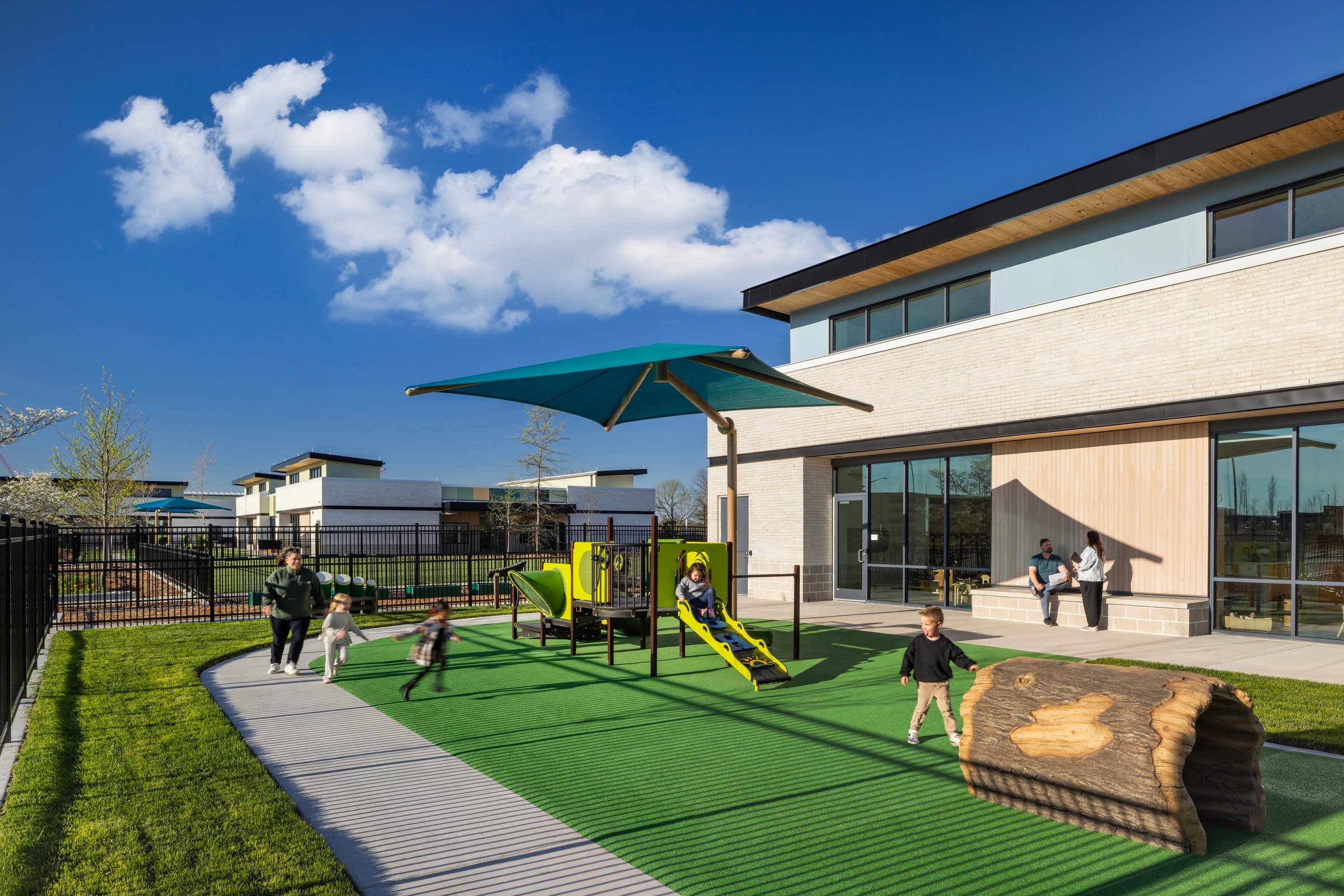
For Walmart’s Home Office campus in Bentonville, AR, the Little Squiggles centers reimagine child care as an integral part of the workplace infrastructure. Two 36,000-square-foot buildings house classrooms for infants through kindergarten prep, organized around a central parent plaza that fosters daily interaction and visibility. Dedicated STEM and art studios promote enrichment, while daylight and transparency create an inviting, uplifting atmosphere that supports focus and creativity. (Photo by Albert Vecerka/Esto)
Research by Boston Consulting Group and Moms First found that when companies offer child-care benefits such as on-site or near-site centers, the investment can pay for itself. In one case, the return on investment reached 425%, driven by gains in retention and a reduction in absenteeism. Even a 1% improvement in employee retention was enough to cover program costs.4
Krishnan noted that while Bright Horizons’ approach centers on access and financial support for high-quality early education and care, its more profound impact is cultural. “We work with employers who want to make child care part of their DNA,” Krishnan said.
Krishnan explained that child-care benefits have become a differentiator in recruiting and retaining employees. “If wages and salaries are similar, and you can provide these supports, it’s a differentiator,” she said. “When parents know their children are well cared for, they stay longer, and that stability benefits everyone. Families build roots in these centers, and that sense of stability supports the entire organization.”
Designing for care and connection
From the design side, Page, now Stantec, collaborates closely with Bright Horizons to create centers that respond to the needs of children, parents, and educators. Luisina Basilico, principal and design lead at Page, said the team tailors each center to the operator and the client workforce. “We’re always learning from the many centers Bright Horizons has done and refining the best practices,” she said. “The design isn’t static; it evolves with changing needs.”
Basilico described examples like Walmart’s Home Office Little Squiggles childcare centers, where the team incorporated parent touchdown spaces that allow flexibility around pickup and drop-off times. “If a parent has a meeting near pickup, they can take that meeting within the center instead of rushing,” she said. “Those small design choices make a big difference for working parents.”
Safety, comfort, and visibility emerged as key themes across the interview. Security is built into every center, from double-entry vestibules to directors’ offices with complete visibility to reception.
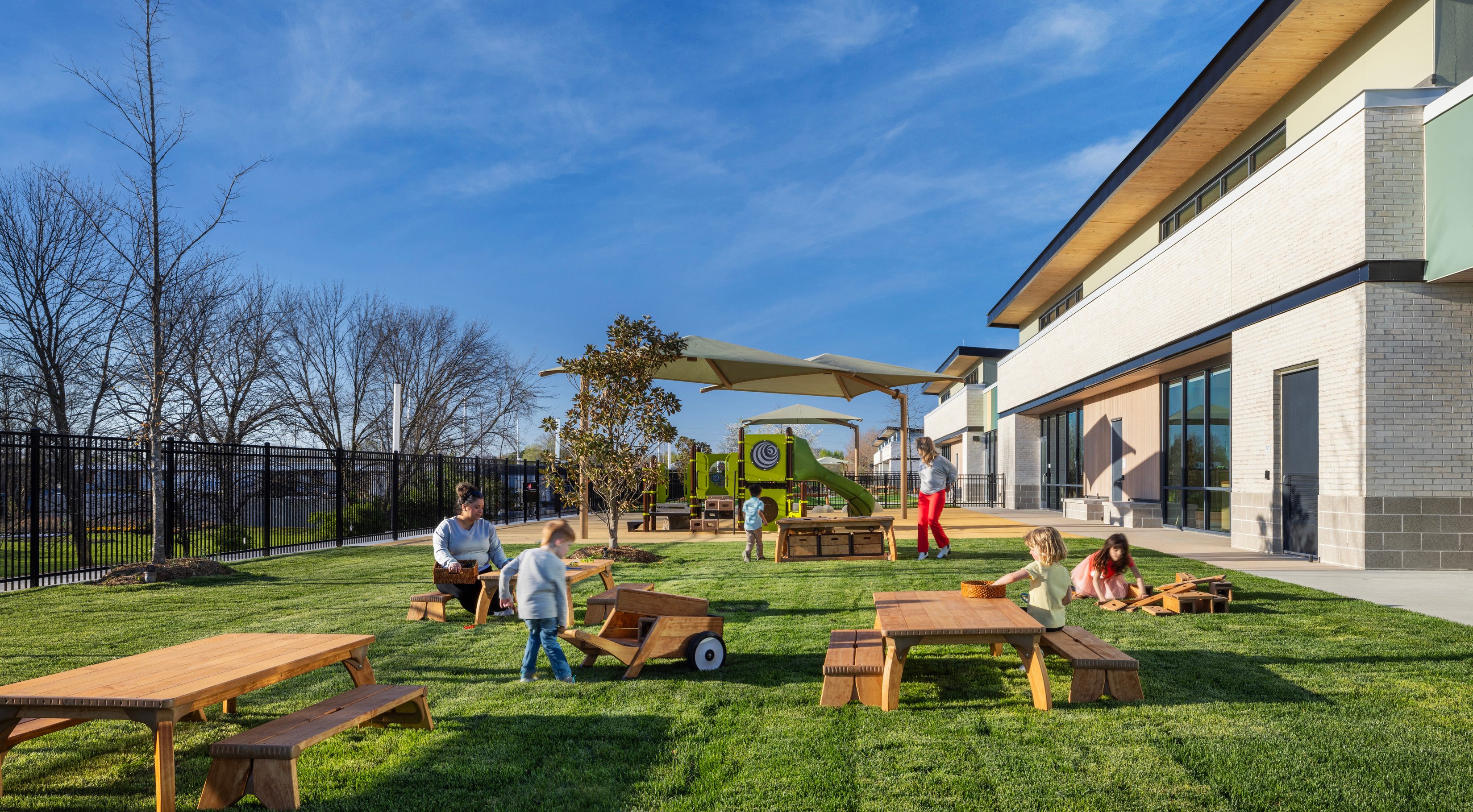
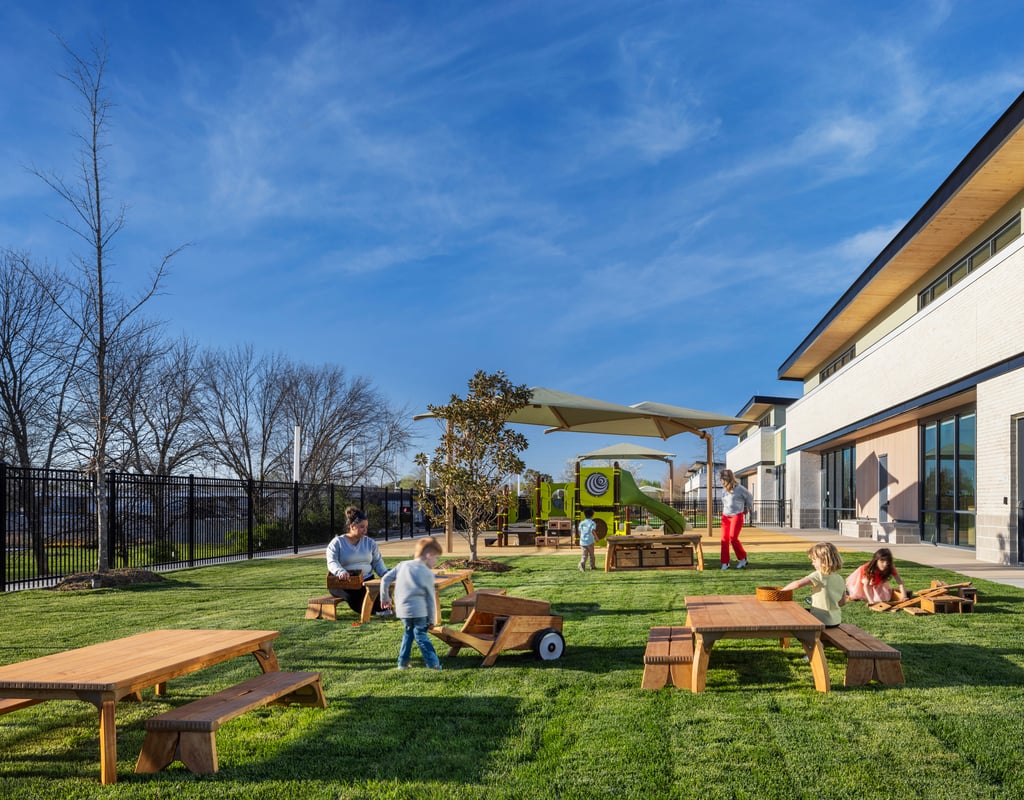
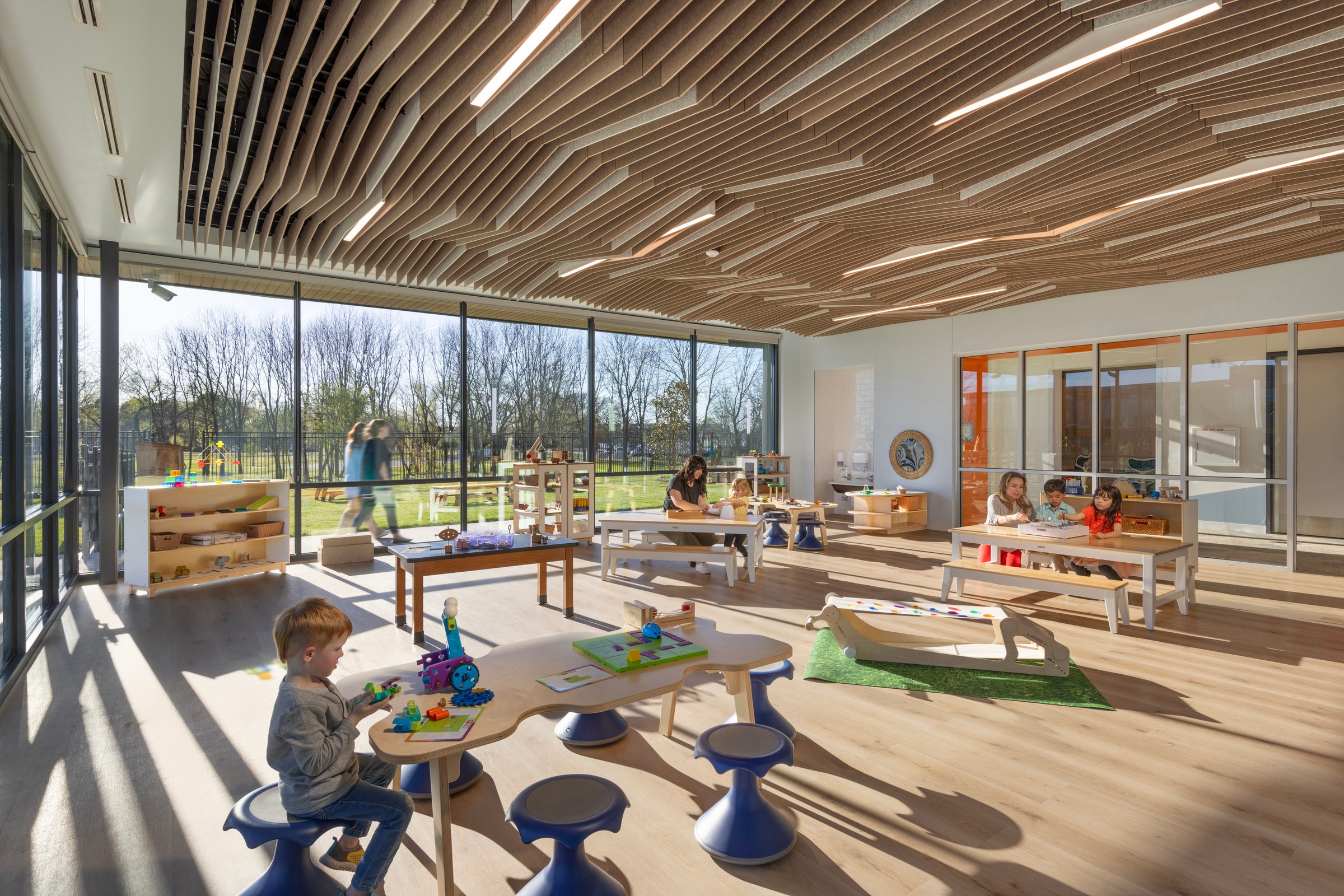
Designed for Sam’s Club in Bentonville, AR, the Kids Club Child Development Center emphasizes flexibility and connection. Classrooms open directly to outdoor play yards, extending learning into nature. Expansive windows bring daylight deep into the plan, supporting comfort and engagement. At the same time, durable finishes and clear circulation paths contribute to safety and longevity — essential qualities for high-performing childcare environments. (Photo by Albert Vecerka/Esto)
The design also supports educators, who are often described as “the third teacher” alongside the environment and the curriculum. “Everything is developmentally appropriate,” she said. “When teachers have the right tools and visibility, children thrive, and classrooms run more smoothly.”
A long-term investment in quality
The physical environment reflects years of refinement. “The color palettes have softened, and classrooms are designed for supervision without requiring teachers to turn their backs. Safety features, from vented diaper stations to rubberized playground surfaces, have reduced injuries. Even small design improvements have made centers safer and more supportive,” explained Krishnan.

For Houston Methodist in Houston, TX, the Child Care Center translates the precision of healthcare design into a nurturing environment for children. Each classroom connects to an age-appropriate play area that supports visibility and safety. The one-story plan simplifies supervision and movement, while resilient materials and warm finishes create a setting that balances durability with comfort for staff and families. (Photo by Slyworks Photography, Inc.)
High-quality care requires long-term commitment and investment. “Our focus is on partnering with organizations that see child care as essential to their people and their culture,” Krishnan said.
Basilico echoed that sentiment from a design standpoint: “We’re not just repeating past designs. Every project builds on what we’ve learned to improve the environment for children, parents, and teachers.”
The data supports what practitioners have long observed: quality child care delivers measurable returns. According to BCG, 88% of employers said child care benefits boost productivity among working parents.4
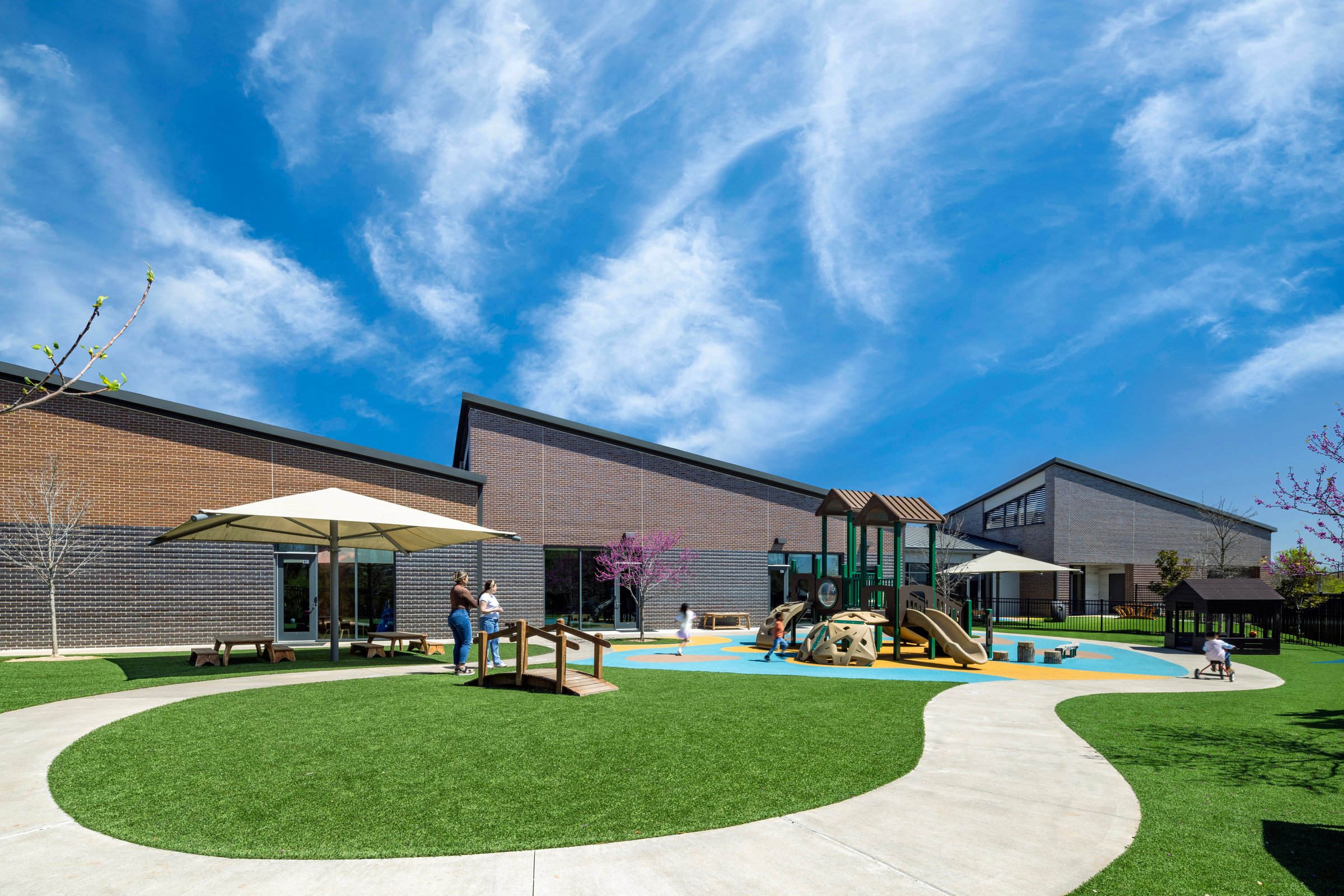
The Sam’s Club Kids Club exterior in Bentonville, AR, conveys simplicity and approachability using natural materials, expansive glazing, and a low, child-scaled profile. The design enhances wayfinding and brings in daylight, illustrating how architecture can reduce stress and help establish a daily rhythm for parents, children, and caregivers alike. (Photo by Albert Vecerka/Esto)
Taking the crisis out of childcare
The child-care crisis did not appear overnight, and no single model will solve it. But companies are proving they can lead the way. By aligning design, operations, and policy and treating child care as essential infrastructure, employers can support their working parent workforce and help turn a national problem into a shared solution.
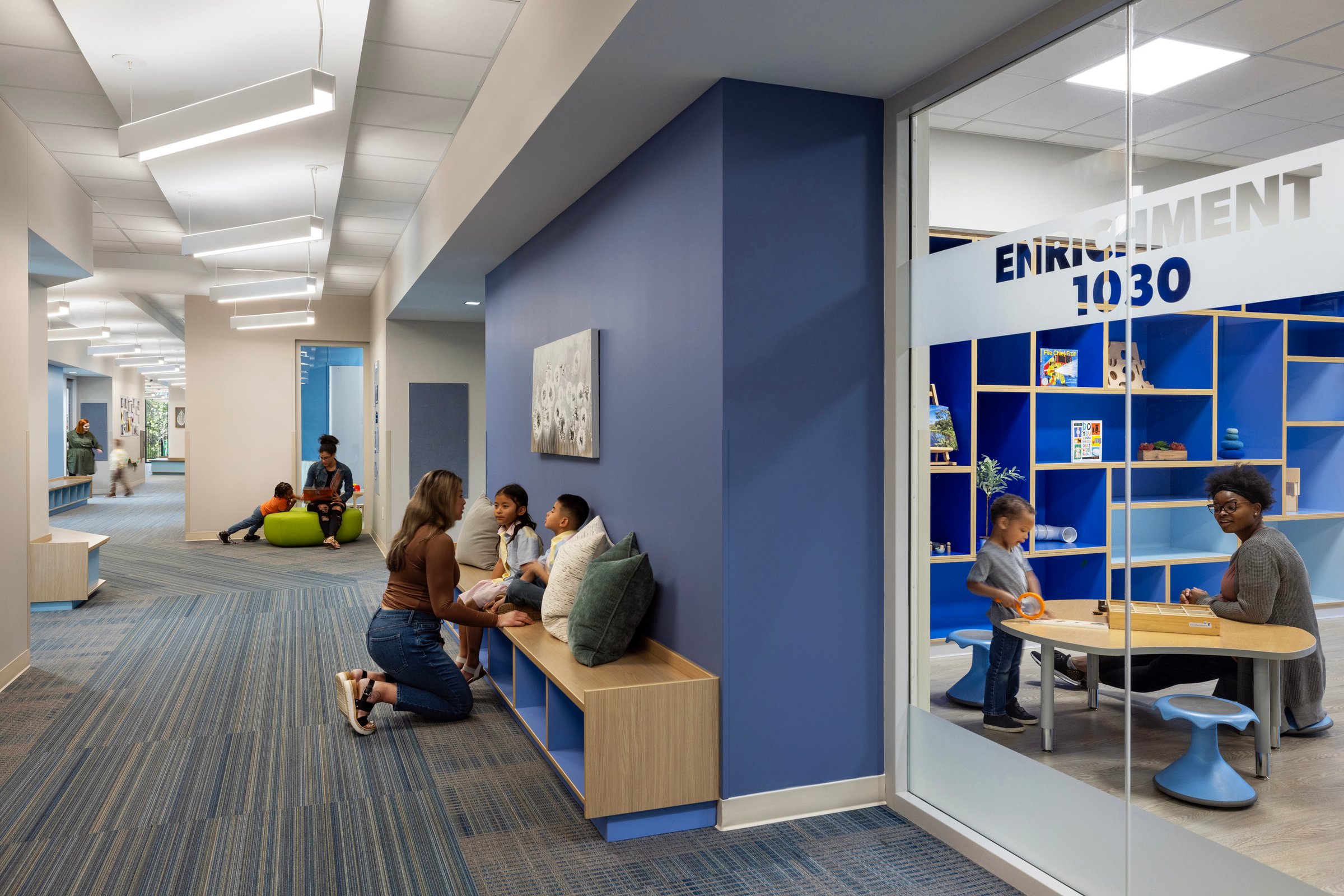
Inside Walmart’s Little Squiggles centers in Bentonville, AR, color, texture, and proportion create a calm yet stimulating learning environment. Flexible classrooms adapt easily to different age groups and teaching styles, and integrated storage supports safety and independence. The design exemplifies how small architectural choices can turn childcare into an enriching, future-ready experience. (Photo by Albert Vecerka/Esto)
From the architect’s desk to the executive boardroom, the message is the same: quality care is not a luxury, it’s an investment in people, performance, and the future.
References:
1.
Child Care of America. (September 2016). Child Care Deserts: Getting a Handle on Child Care Supply and Demand. [Newsletter].
2.
Malik, R., & Hamm, K. (August 2017). Mapping America’s Child Care Deserts. Center for American Progress.
3.
Bishop, S. (February 2023). $122 Billion: The Growing, Annual Cost of the Infant-Toddler Child Care Crisis. Council for a Strong America.
4.
Kos, E., Clark, K., De Santis, N., Joseph, T. (March 2024). Childcare Benefits More Than Pay for Themselves at US Companies. Boston Consulting Group and Moms First.
Contributors

An award-winning architect with over 20 years of experience, Luisina brings a dynamic blend of creativity, technical expertise, and strategic insight across a wide range of projects—from international master plans to child development centers, pediatric hospitals, and major airports. As co-leader of Page’s Houston design studio, she fosters collaboration, mentors with empathy, and brings curiosity and care to every design. Committed to innovation and human-centered solutions, Luisina is proud to help shape a practice that challenges convention and strives to improve lives through thoughtful, future-focused architecture.
More



Talk with us
Complex challenges need fresh perspectives and deep expertise. Connect with our team to explore how we can help you create spaces that make a real difference.