
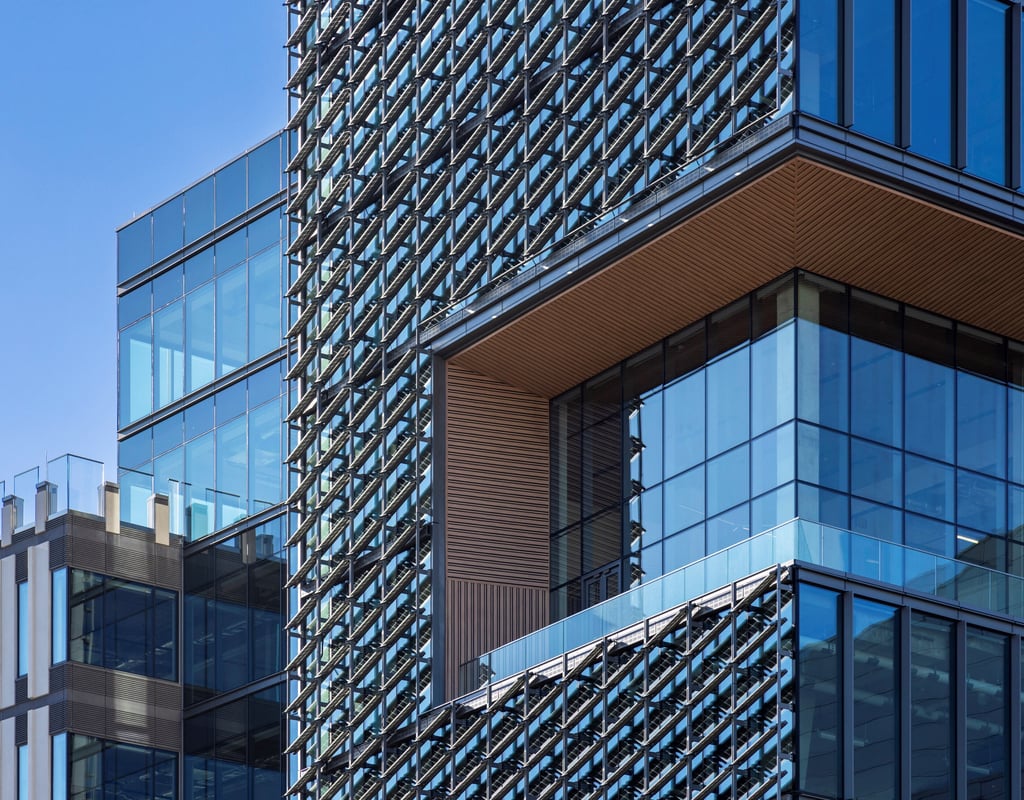
by Robert McClure, Alison Ledwith, and Mo Elsayed
by Jennifer Wegner

Performance-based design has become central to modern architecture, valued for optimizing energy efficiency, improving occupant well-being, and future-proofing buildings for changing climates and regulations. However, a less discussed idea remains: who is truly driving the shift to high-performing buildings? Are tenants demanding wellness, sustainability, and quality workplaces? Or are owners and developers motivated by operational efficiency, asset value, and long-term profits?
The answer is both, but not always equally.
Recent industry data shows that workplace priorities are reshaping real estate decisions. Nearly one-third of companies now manage their corporate real estate under the auspices of a human resources department.1 This shift highlights the growing focus on employee well-being and organizational culture. As a result, performance-based design is no longer about systems. It is about people and how they perform in a space.
In recent years, tenant demand has led to higher performance expectations. As organizations become more environmentally conscious and aware of how the built environment affects health and productivity, they ask more detailed questions about their spaces. A 2025 report states 43% of companies view a building’s sustainability features as influential in rent negotiations.2 Certifications like WELL and LEED symbolize quality and performance in many Class A buildings. Data from the California Sustainable Building Task Force shows improved ventilation, lighting, and indoor quality can add $37 to $55 per square foot in value through reduced sick days and increased productivity.3
For many Class A office tenants, performance metrics now rank equally with rent, location, and amenities. A recent survey found that 55% of organizations agree that green certification influences their choice and their willingness to pay.4 In sectors like technology, healthcare, and life sciences, where competition for talent is fierce, the quality of the environment increasingly reflects a company’s brand and values. A 2022 survey of over 6,000 employees shows 64% consider hotel-style amenities influential in choosing an employer, with more than 10% viewing a lack of proper amenities as a deal breaker.5
While tenant preferences influence expectations, owner priorities determine the implementation of performance-based design. Owners often decide to invest in smart tech or energy modeling based on ROI,6 focusing on lower energy costs, less maintenance, and stable leasing benefits.7 When framed as long-term cost savings or increased asset value, owners are more likely to invest. In competitive urban markets, high performance can be the deciding factor for tenants. For owner-occupied buildings, the focus may be more on climate resilience and operational autonomy.8
Still, there's often a gap between tenant desires and owner priorities, especially in retrofit projects with limited budgets and less clear ROI. Facilities Dive reports JLL research shows demand for high-performance workplaces is outpacing owners’ willingness to upgrade aging assets.9 Features that do not lower costs or extend asset life are usually cut, even if they improve tenant experience.
There are cost-effective retrofit strategies that can jump-start the process, such as automated energy management platforms and AI-based monitoring systems. These systems provide quick efficiency gains, long-term savings, are easy to install, and are becoming more compatible.10 With sensors tracking foot traffic, airflow, and environmental conditions, they automatically adjust lighting, ventilation, heating, and cooling—delivering precise performance without manual effort.11
The most successful projects align both interests by making performance visible and measurable. Systems that monitor energy consumption, air quality, and occupancy deliver real value by improving efficiency, reducing utility costs, optimizing space utilization, and enabling predictive maintenance. For tenants, these systems show a commitment to wellness, comfort, and sustainability. Digital dashboards and interfaces enable occupants to see real-time environment data, fostering transparency and trust. These tools do more than connect owners and tenants; they create a shared understanding that performance is about experience, not just systems.
Performance-based design is most effective when integrated throughout the entire project scope, from early programming to ongoing operations. When owners and tenants collaborate to define success, shared priorities guide smarter investments in systems such as HVAC and facades—reducing costs, improving indoor air quality, and maximizing energy efficiency and daylight.12 Starting the dialogue early and maintaining it after occupancy ensures performance remains a dynamic goal, not a fixed standard.
As the industry shifts toward outcomes-based design and transparency, the focus is on mutual success. For owners, performance goals often support cost efficiency, reduced risk, and long-term asset value. High-performing buildings lower operating costs, extend system lifespan, and enhance market competitiveness. These are not just sustainability benefits but financial necessities.
For tenants, performance goals center on comfort, wellness, and sustainability. Occupants want spaces that boost productivity, minimize environmental impact, and reflect their values. Ultimately, the future of high-performing buildings depends on strong partnerships that align both owners and tenants, not just on tenant demands or owner efficiencies.
Cushman & Wakefield and CoreNet Global Release New Survey Results on “What Occupiers Want.” (June 18, 2025). Cushman and Wakefield.
Downes, S. CBRE: Why Sustainability Matters to Tenants Choosing Offices. (August 14, 2025). Sustainability.
Burns, J. Healthy buildings offer bottom-line benefits to building owners, report finds. (September 23, 2025). Facilities Dive.
Sustainability is a Key Factor in Making Office Space Decisions. (October 11, 2024). CBRE.
MRI Software research reveals two-thirds of employees want 'hotel-style' amenities at the office. (December 13, 2022). MRI Software.
Froehlich, A. 3 Steps to Calculate the ROI Smart Building Technologies. (August 9, 2024). Buildings.
Grayson, B. & McLaughlin, E. Embedding Sustainability in Real Estate Transactions. (n.d.) Urban Land Institute.
Sustainability Sells: How Greener Buildings Attract Premium Tenants and Higher Rents. (February 3, 2025). Georgetown University McDonough School of Business.
Burns, J. Owner-tenant green retrofit investment boosts value: JLL. (September 25, 2025). Facilities Dive.
Glubiak, O. Harnessing smart energy retrofits and AI to decarbonize existing office structures. (October 24, 2023). Buildings.
HVAC Building Automation: The Brain Behind Smart Building Climate Control. (May 17, 2025). Industrial Build-news.
Freihaut, J. & Pavlak, G. How smart buildings use AI to cut energy use and improve health. (November 20, 2025). Penn State University Institute of Energy and the Environment.
More
by Robert McClure, Alison Ledwith, and Mo Elsayed

Complex challenges need fresh perspectives and deep expertise. Connect with our team to explore how we can help you create spaces that make a real difference.