
IAH Terminal B Transformation
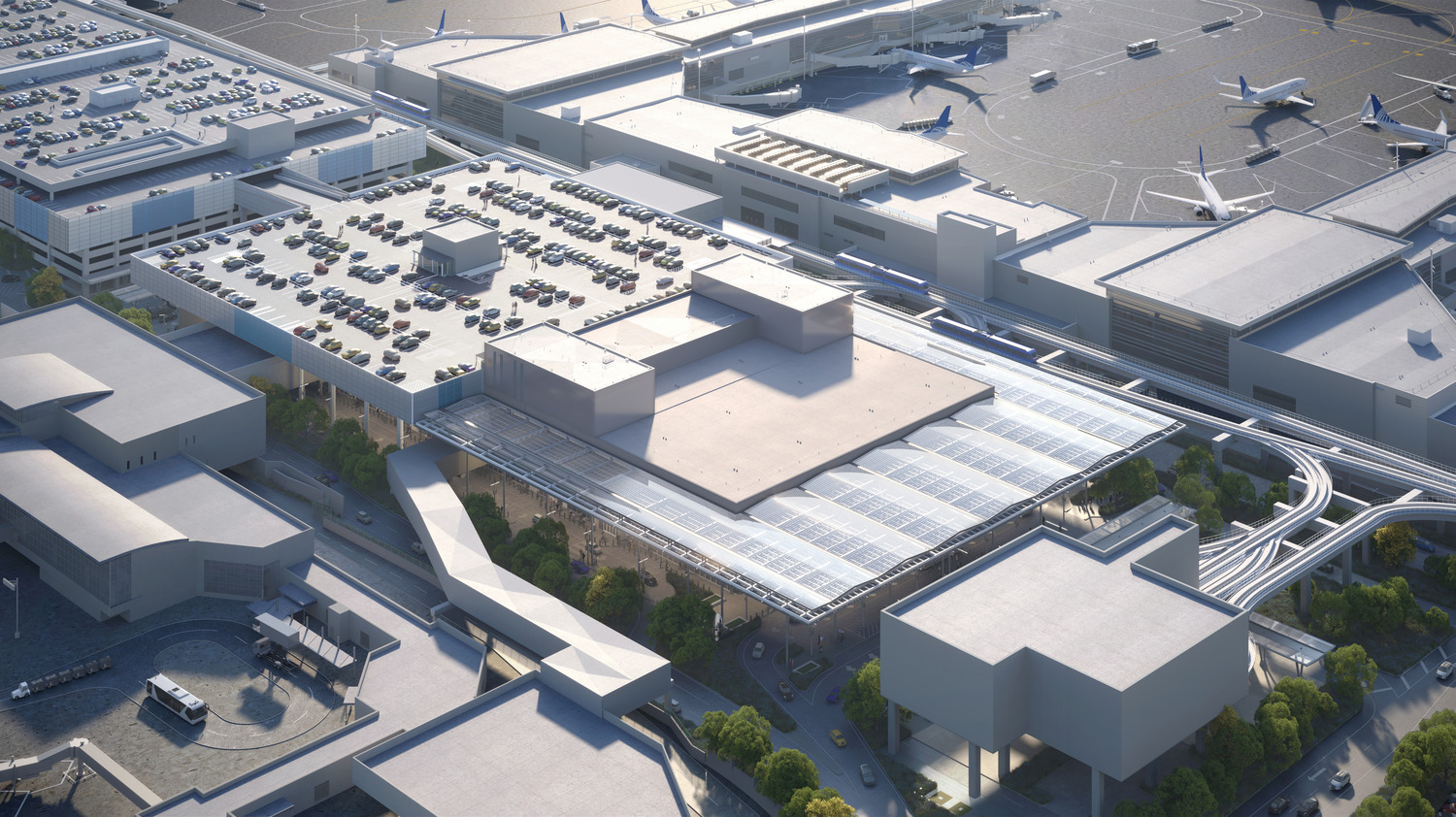
Page, in collaboration with Grimshaw, is working with United Airlines to redefine the passenger experience at George Bush Intercontinental Airport (IAH), reinforcing Houston’s role as a global aviation hub. Designed to serve 36 million passengers annually, the Terminal B renovation project aims to create a new, state-of-the-art headhouse, enhancing efficiency, capacity, and connectivity.
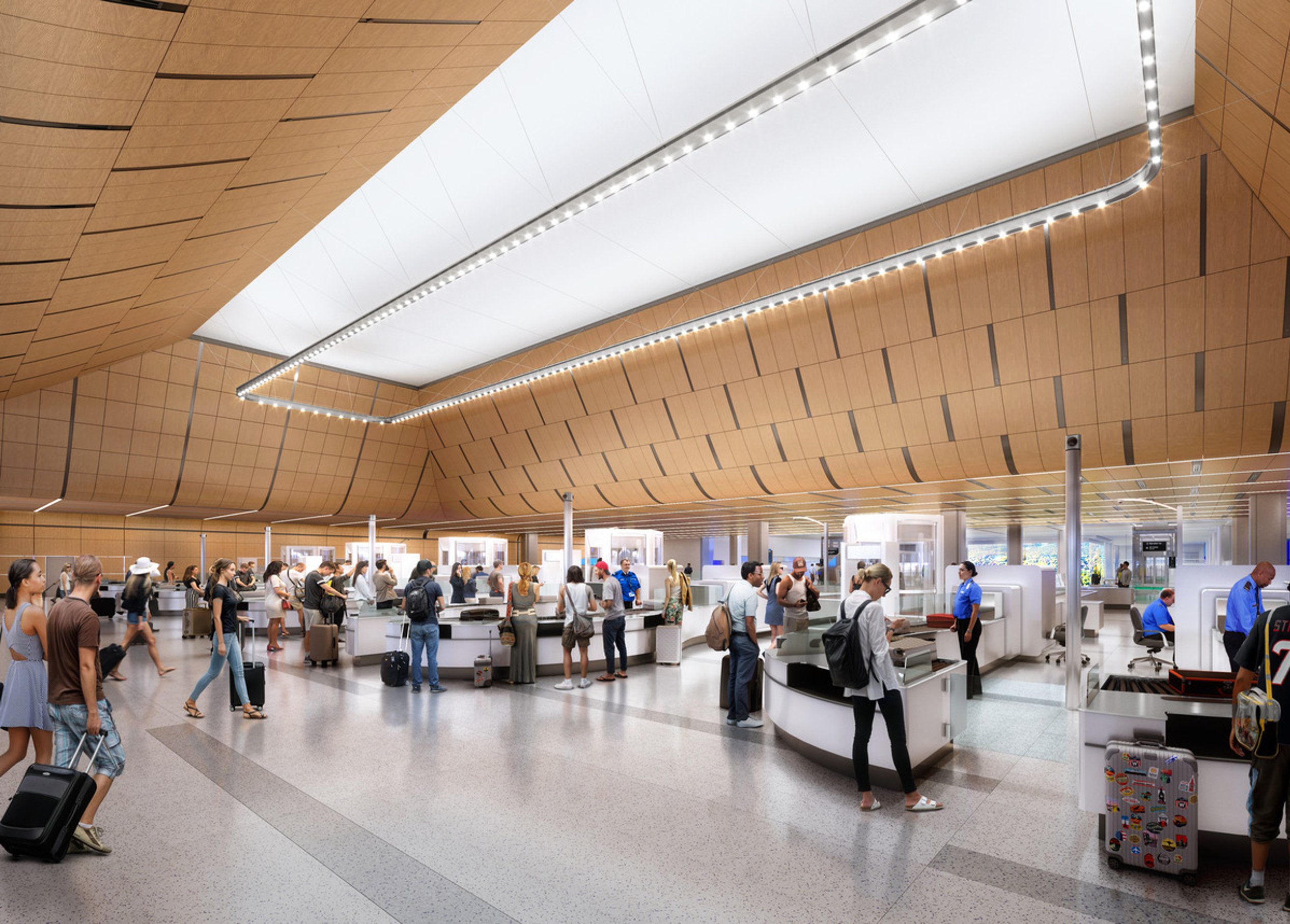
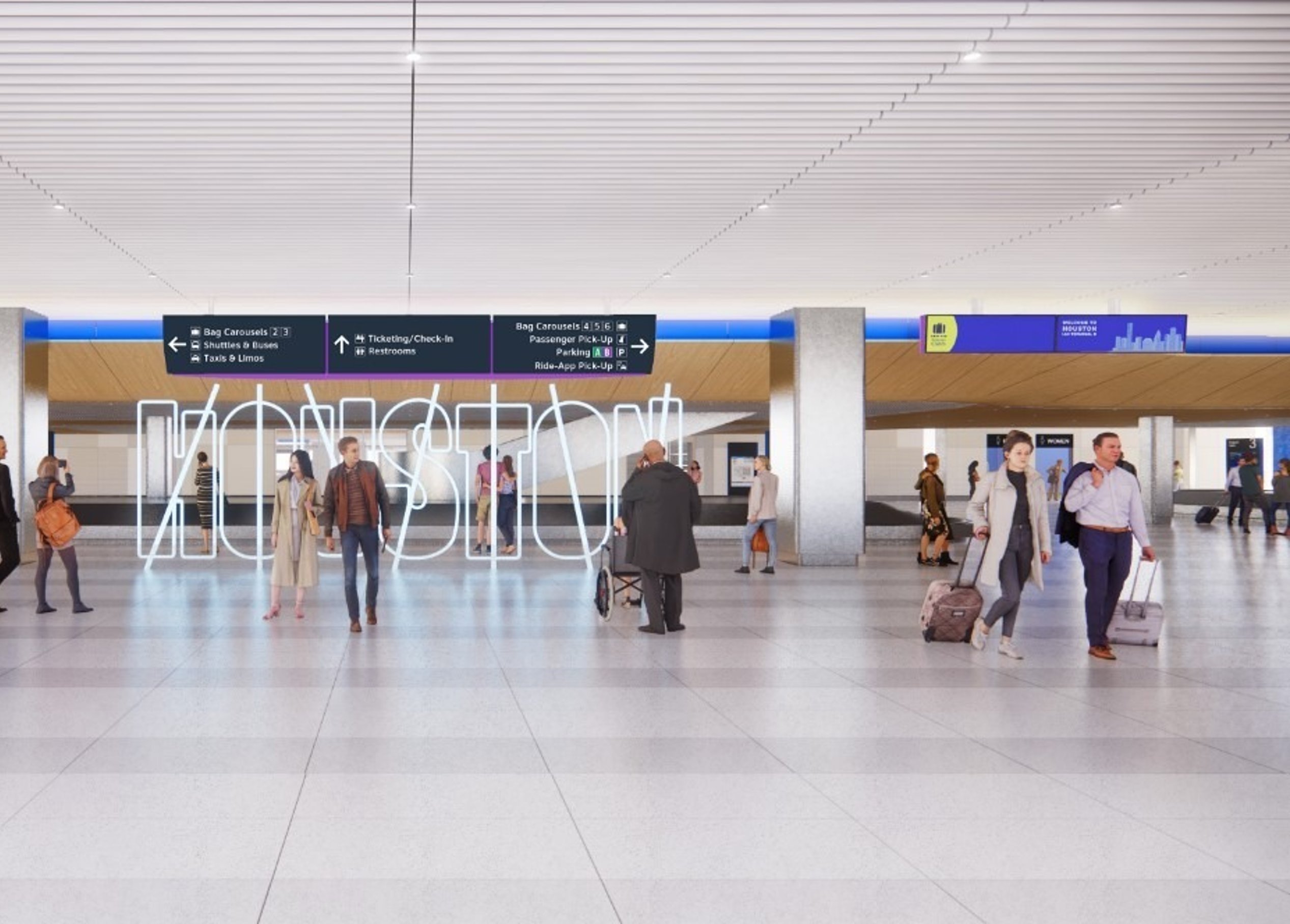
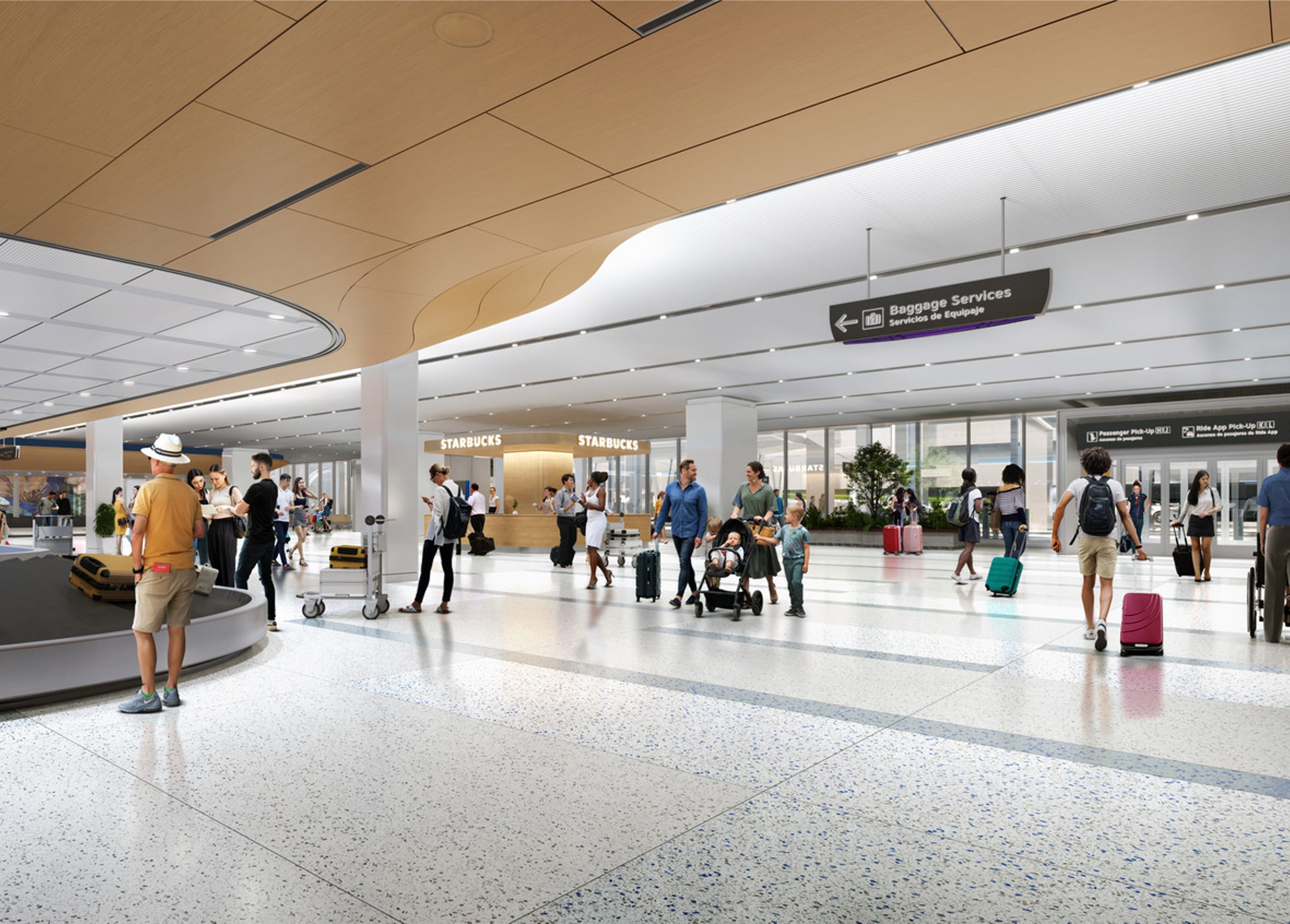
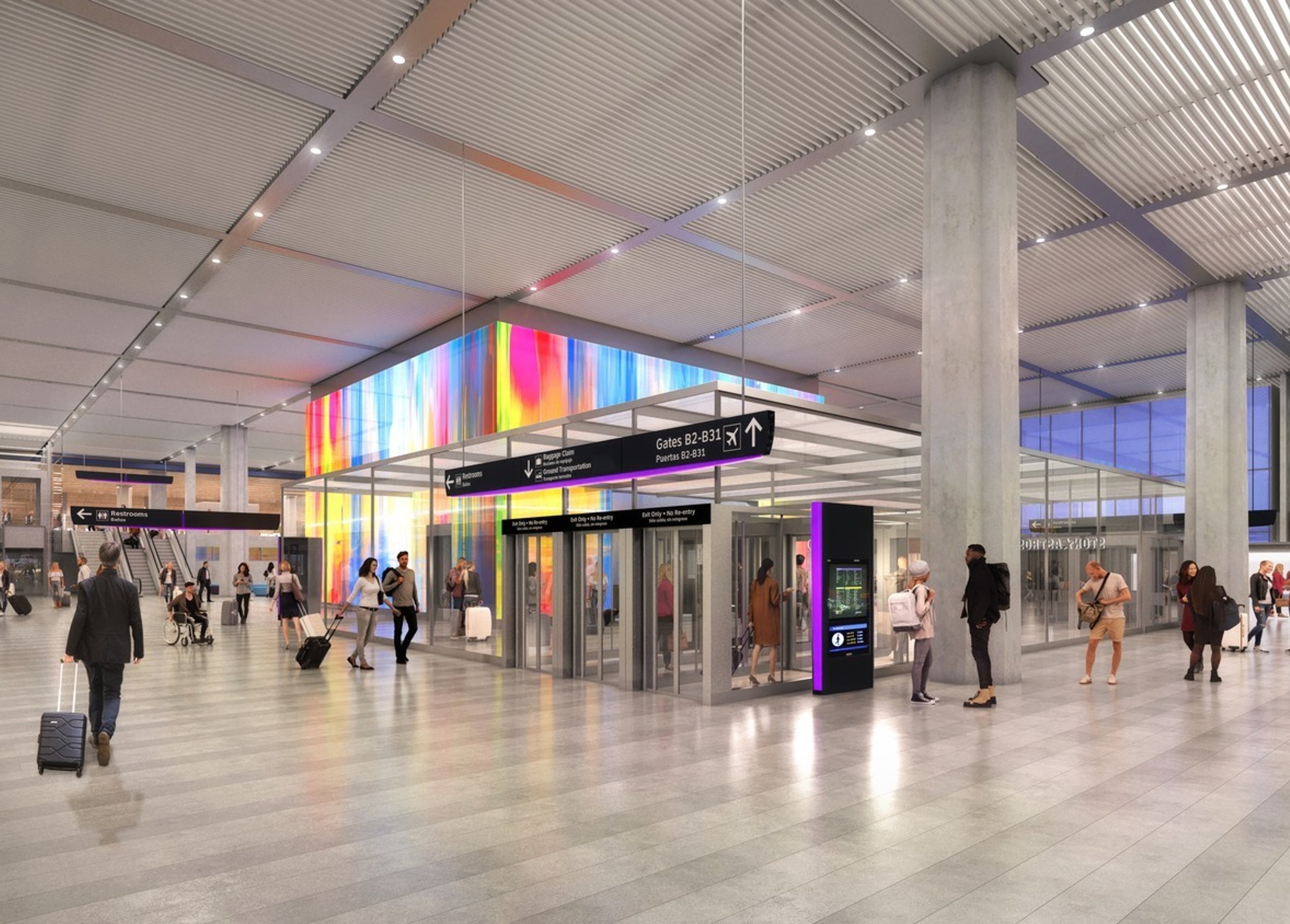
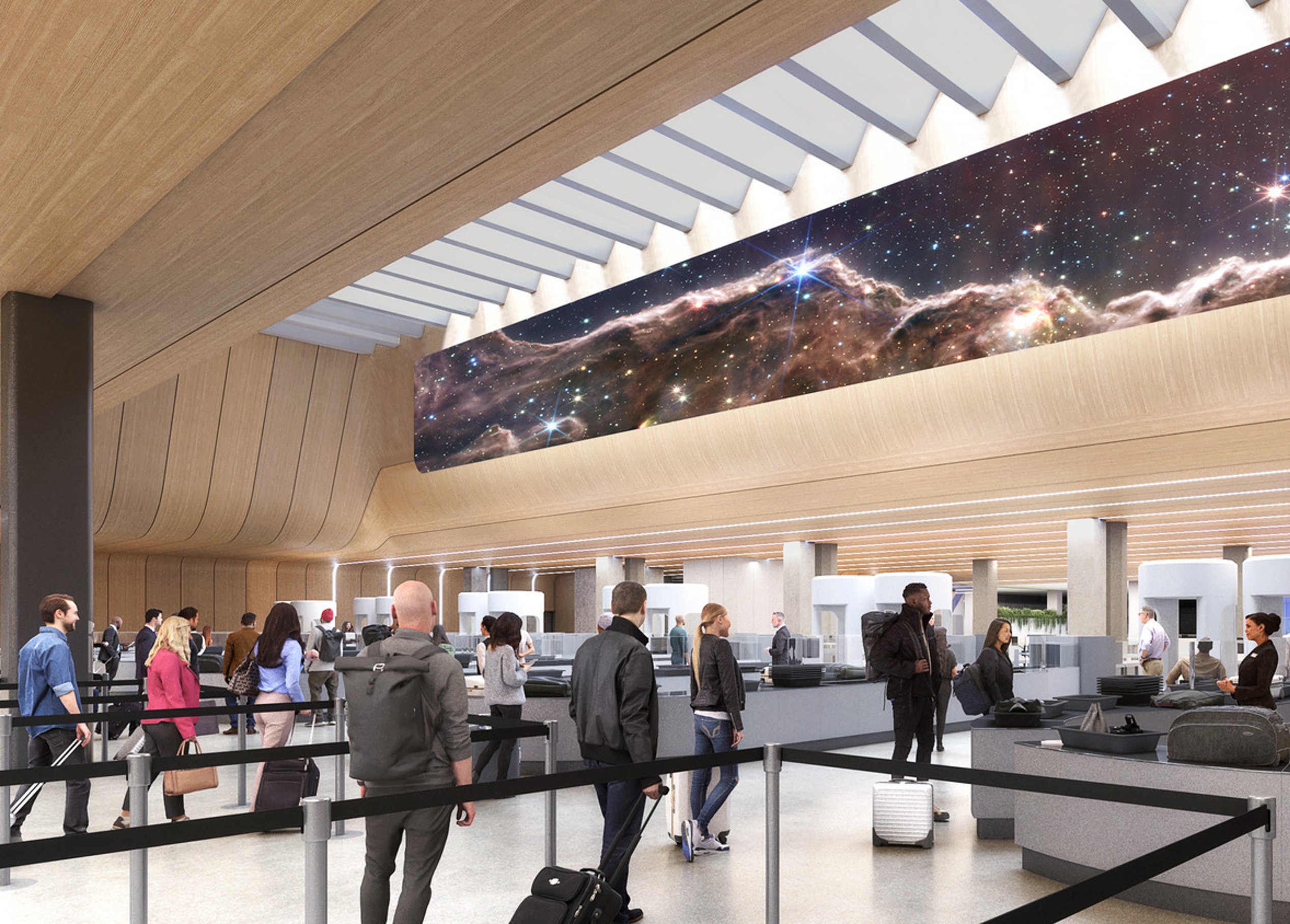
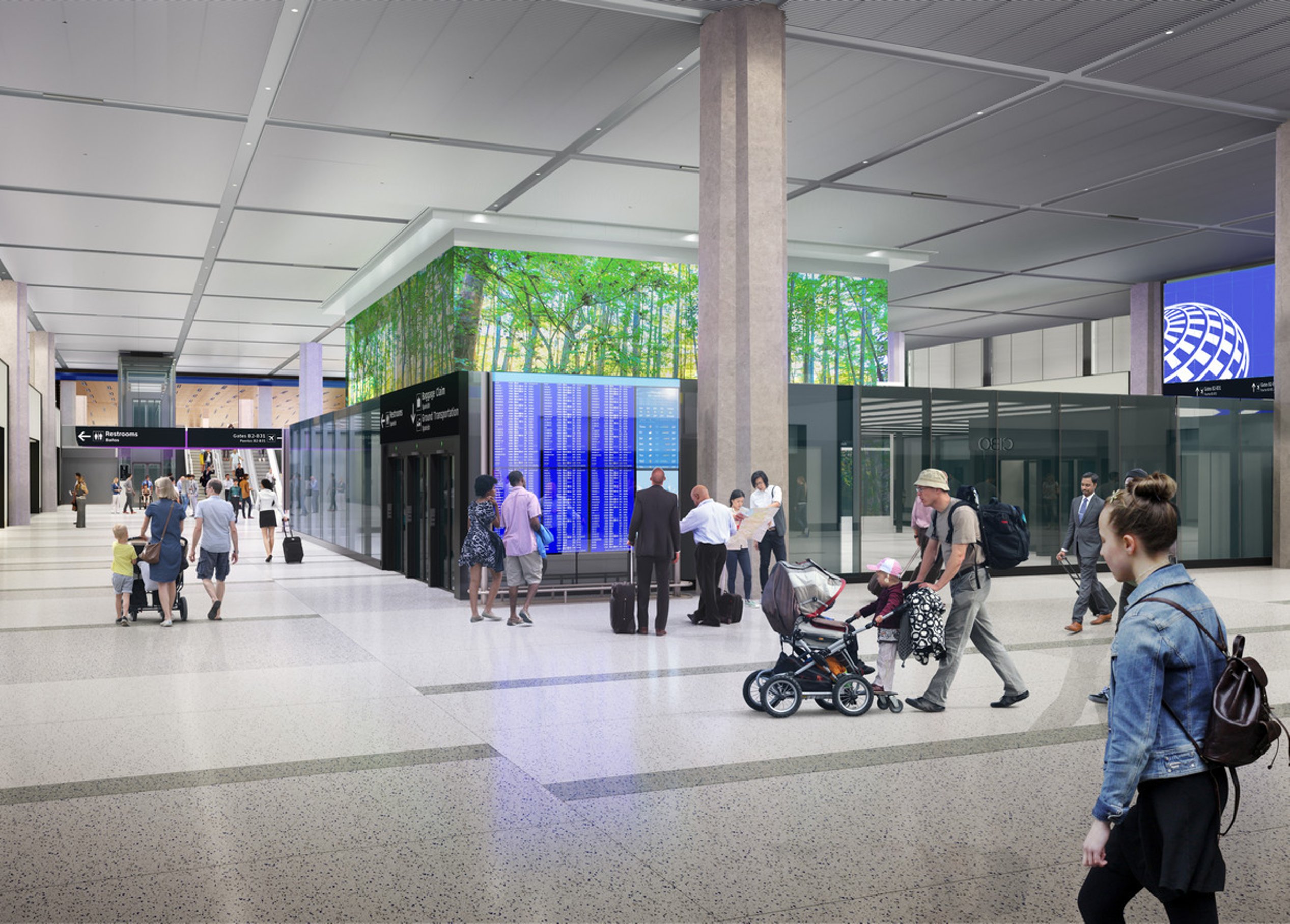
The project will deliver a streamlined, intuitive journey from curb to gate. Key enhancements include consolidated ticketing, self-service bag drop, and an upgraded Security Screening Checkpoint (SSCP)—all designed to reduce wait times and optimize passenger flow. The relocation of the airport police facility, a complete replacement of building systems, and the integration of dynamic electronic art installations will strengthen security and elevate the traveler experience. We’re reorienting passenger arrivals and curbside departures to optimize vehicular movement. The new headhouse will provide seamless connectivity to two adjacent gate concourses, ensuring efficient circulation and reduced travel time within the terminal.

/
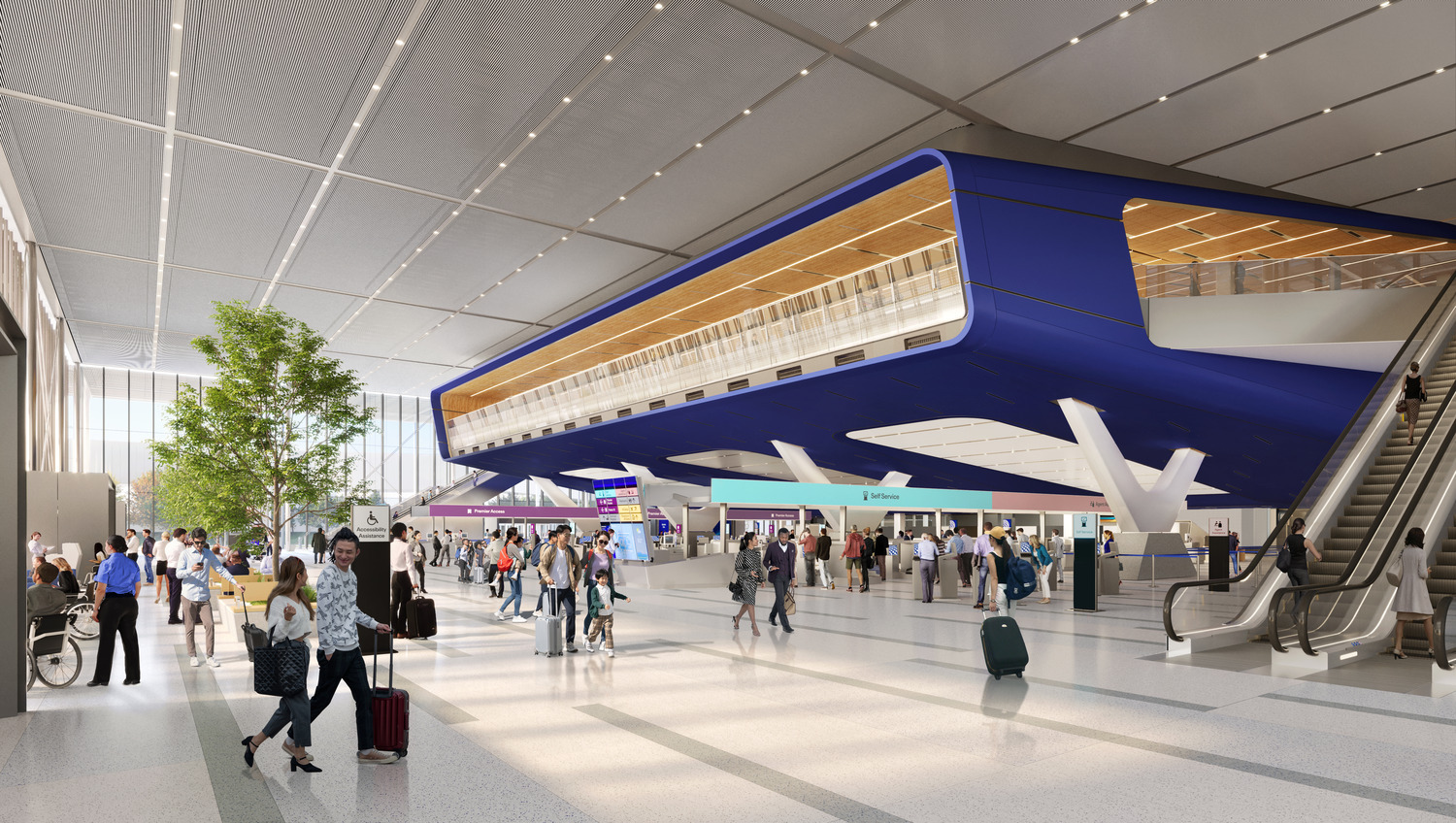
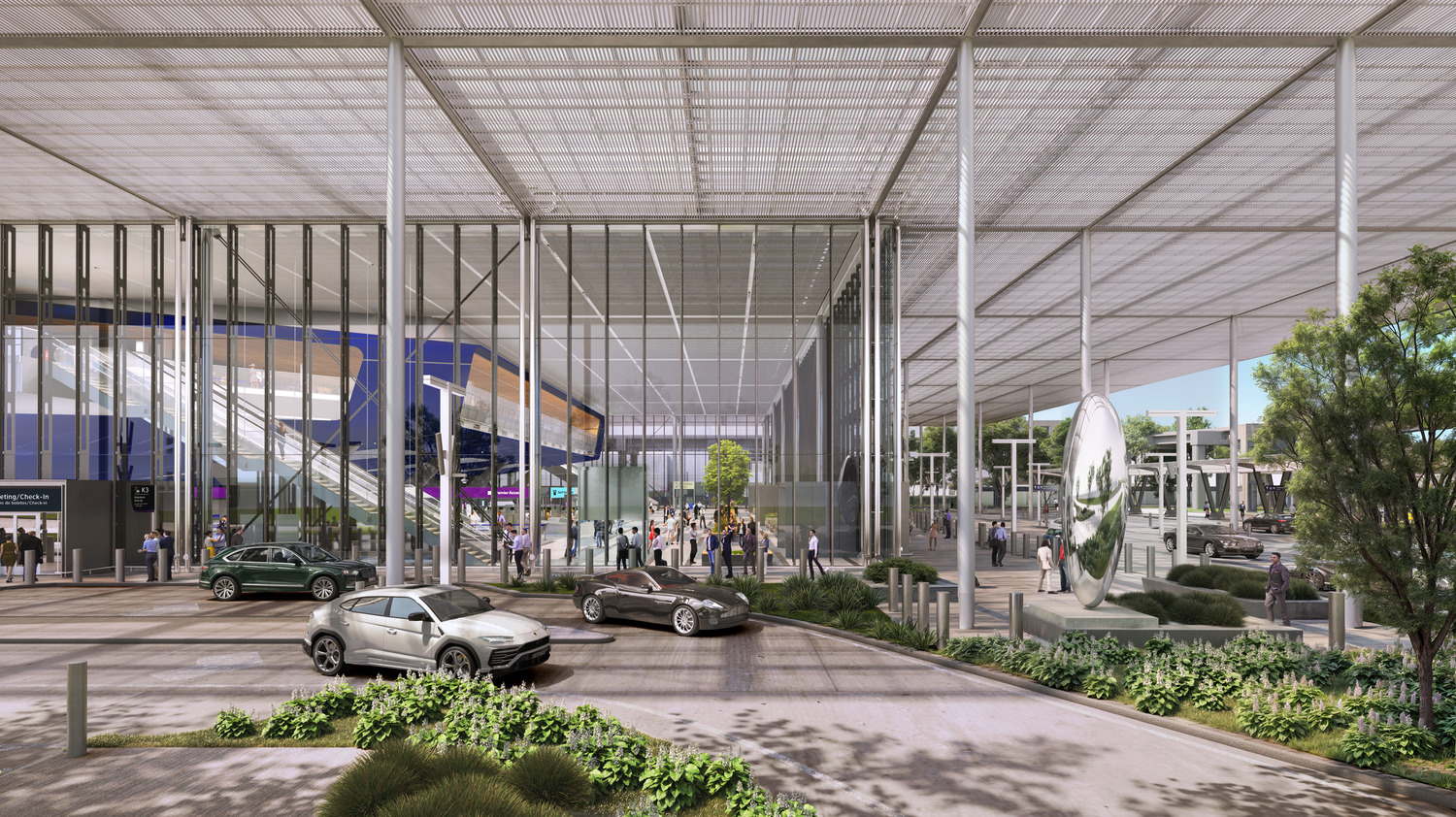
The United Airlines terminal reimagines a 1960s modernist facility as a seamless extension of a new public concourse, minimizing material waste and maximizing performance. From the curbside drop-off, travelers enter a glass-enveloped hall and ascend an escalator into a bold, United-blue volume that houses TSA screening. This element also serves as a deliberate bridge between the light-filled new construction and the re-envisioned existing structure.
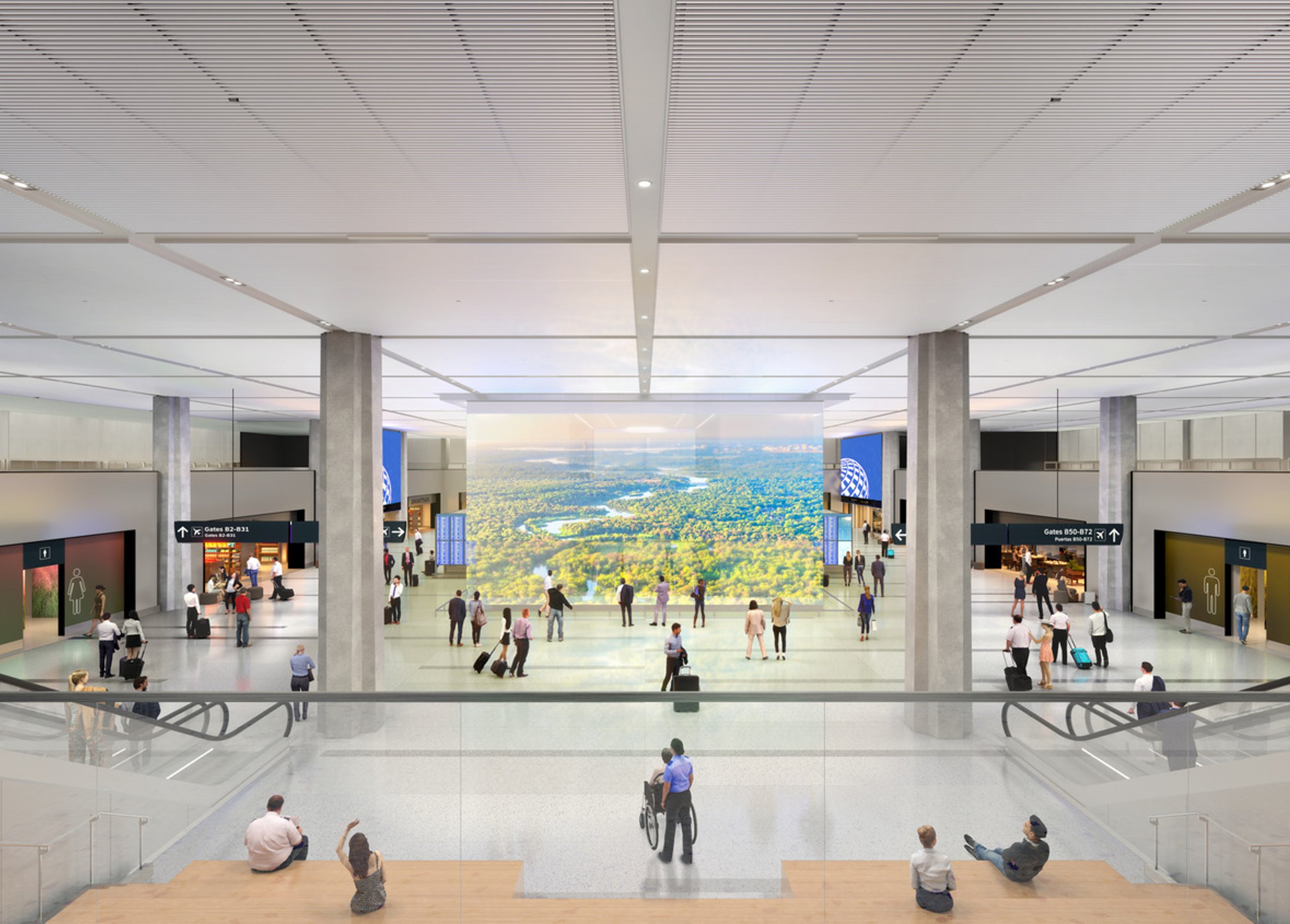
After passing through security, passengers enter the original terminal that was once marked by low ceilings, cruciform columns, and scarce daylight. What could have been a harsh contrast is instead transformed into a deliberate transition, orchestrated through light, material, and proportion. The design uncovers the aggregate texture of sandblasted columns, reinstates rhythm by repainting the waffle-slab ceiling, and introduces a floating veil beneath it to capture and reflect light. Fluted-glass storefronts and crisp white walls amplify brightness, while the elevator core, wrapped in LEDs with custom content, adds a soft, ambient glow, completing a sequence that transforms heaviness into continuity and clarity.
The project’s adaptive reuse approach achieves a 39% reduction in embodied carbon and equips the terminal to welcome 36 million passengers annually into a unified, 21st-century travel experience.
Landscape architecture
Sustainable, native landscapes:
All plant selections are native or adapted to the region, reinforcing a strong local identity and introducing travelers to the distinctive Houston landscape the moment they arrive.
The distinctive landscape design for Terminal B seamlessly integrates interior and exterior environments to create a cohesive, biophilic experience.
At the east-side drop-off, raised planters with integrated seating define the space, transforming it into a welcoming, plaza-like arrival zone. These planters feature native Houston trees with low ground cover, enhancing the sense of place while providing shade and comfort. Indoors, the design language continues with matching raised planters in the ticketing area and real tree trunks with artificial leaves.
On the west-side arrival, the same raised planters maintain a unified aesthetic between departures and arrivals, ensuring a seamless transition for travelers.
Sustainable, native landscapes:
All plant selections are native or adapted to the region, reinforcing a strong local identity and introducing travelers to the distinctive Houston landscape the moment they arrive.
MEP engineering
Page is providing the mechanical, electrical, plumbing, and fire protection engineering design services for the IAH Terminal B renovation and expansion. Maintaining uninterrupted flight operations throughout construction is a critical success factor, requiring a carefully phased design and construction approach. A key challenge is ensuring a secure, climate-controlled passenger connection through the active construction zone to the elevated automated people mover station serving Terminal B. Strategic planning is currently underway to achieve this vision.
The mechanical systems are designed to provide approximately 2,000 tons of cooling capacity for the renovated terminal and new building addition, with an additional 3,500 tons allocated for the concourse expansion. The existing chilled water and hot water supply from the IAH Central Utilities Plant (CUP) is being evaluated to confirm sufficient capacity for expansion. Technologies, including thermally active slabs and ceilings and a dedicated outside air room to direct systems, are being assessed to reduce the overall cooling demand and energy consumption. This project is projected to achieve over 20% energy savings beyond ASHRAE 90.1-2013 requirements.
Major aviation facilities
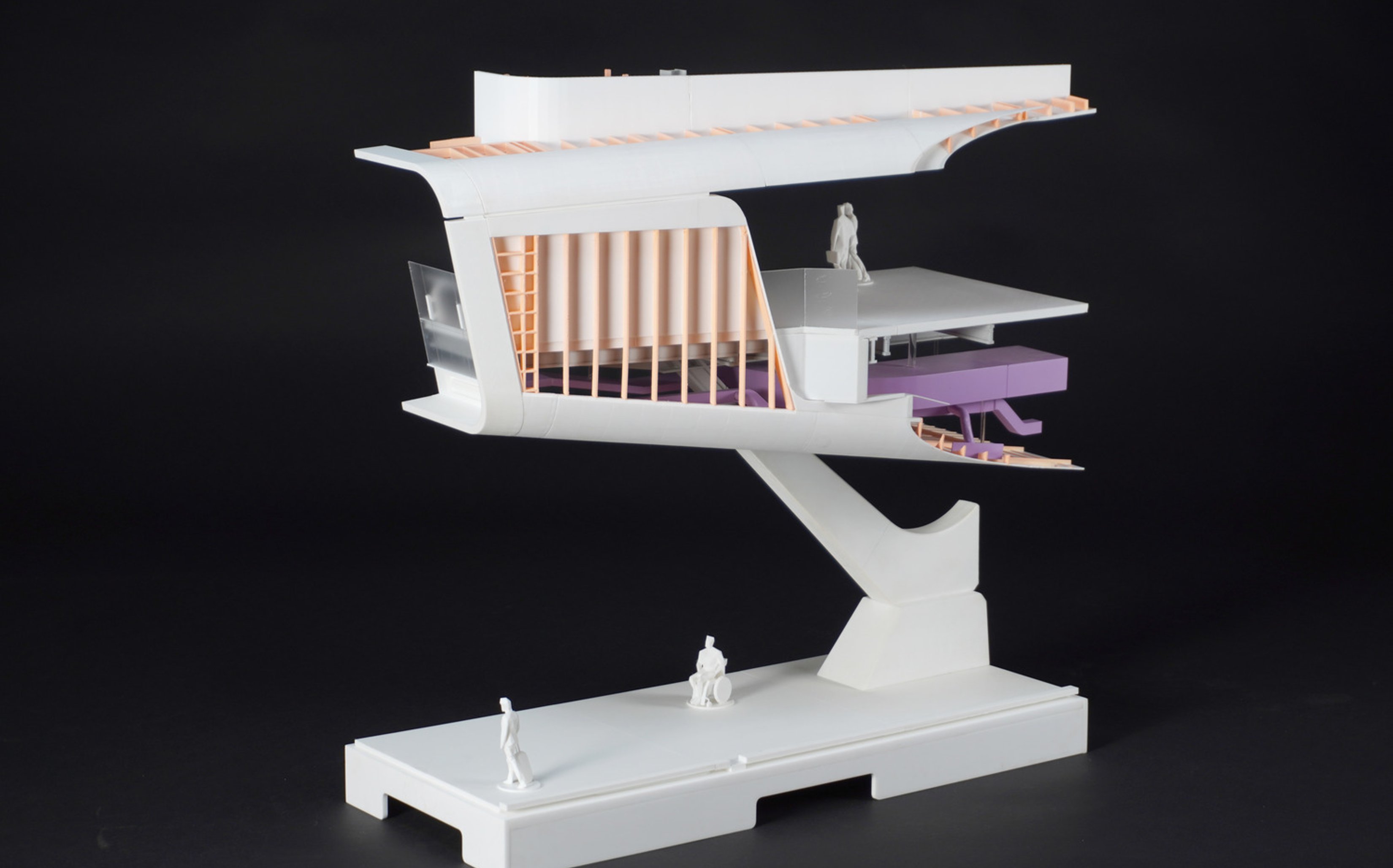
To support the model’s analytical goals, color was used to distinguish various systems: purple for mechanical, orange for framing, and grey for structural elements. The model was fabricated using 3D-printed parts.
Effective architectural models are essential for communicating complex design concepts. For the United Airlines IAH Terminal B redevelopment, the project design team partnered with Page Fabrication to produce a sectional study model. The goal was to support the breakdown and visualization of the mechanical, structural, and architectural systems. Featuring clearly defined diagrammatic colors and capturing the scale of a critical moment in the project, the model enabled stakeholders to streamline detailing and enhance construction coordination.
Similar projects


/

Talk with us
Complex challenges need fresh perspectives and deep expertise. Connect with our team to explore how we can help you create spaces that make a real difference.