Feature
March 11, 2026
Over capacity in the ED
by Akshay Sangolli, Christopher Ressler, and Charlie Prats
For many in the United States, an emergency department (ED) serves as their first option for medical care. A third of Americans have no primary care physician.1 There were 155 million emergency department visits in 2022, the last official benchmark by the CDC,2 up from 130 million in 2018.3
Despite the increase in outpatient and urgent care centers, patient volumes and acuity continue to rise. Many EDs are reaching or exceeding capacity, straining under growing throughput demands. The American College of Emergency Physicians calls prolonged ED ‘boarding,’ with patients on stretchers in hallways, a public health emergency.4
EDs are the front door to hospitals for many patients, and are essential support facilities for communities. They must be designed to support quick triage, be efficient in patient flow, and be responsive to a broad array of injuries, illnesses, and situations.
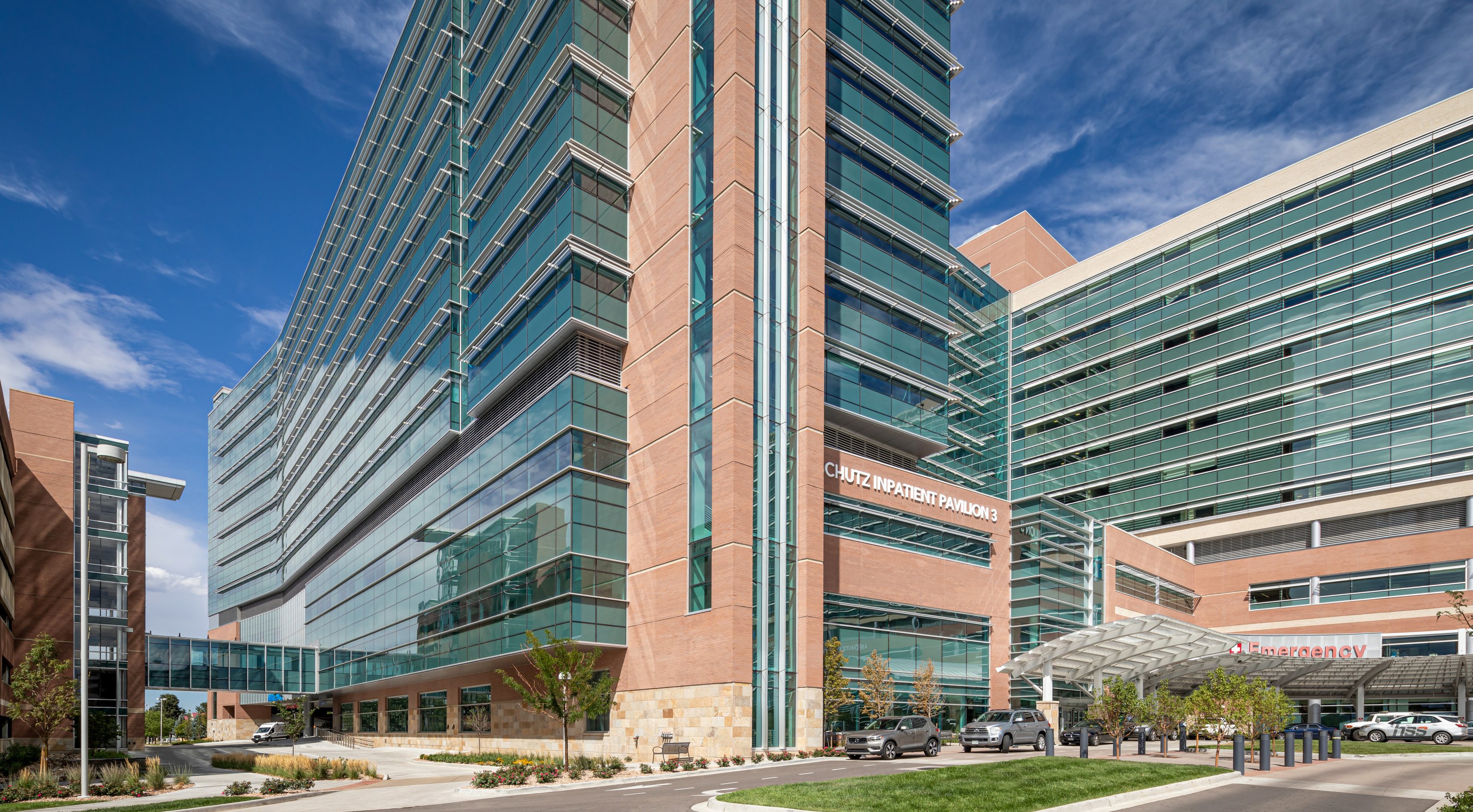
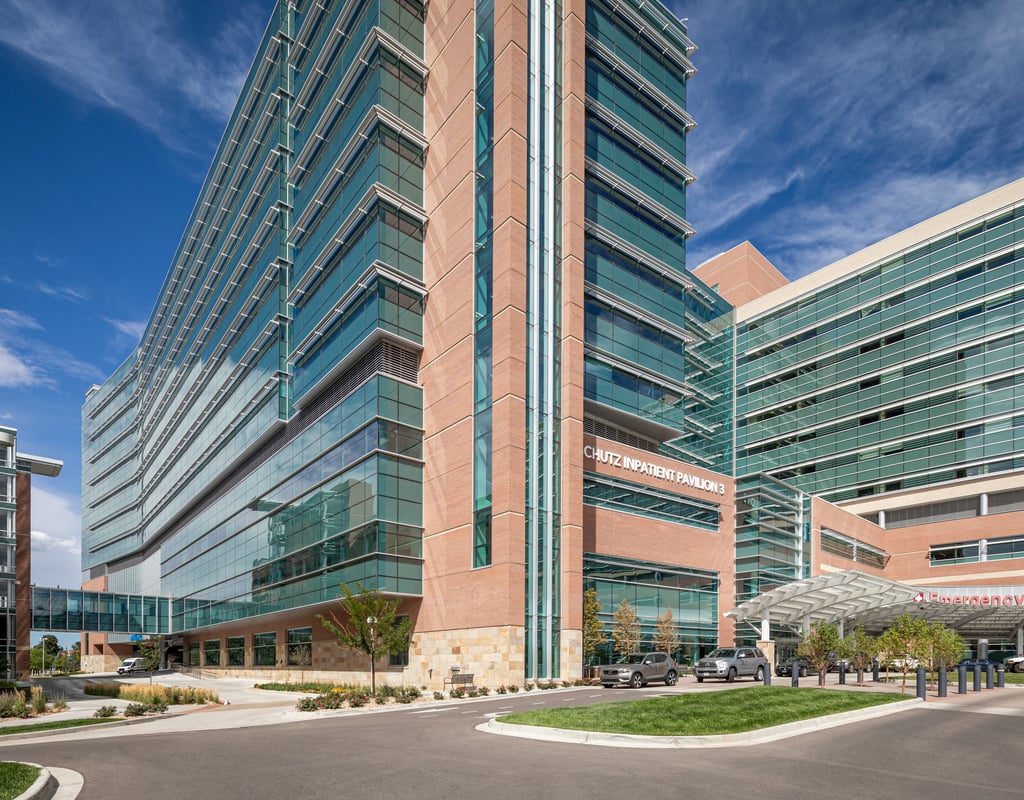
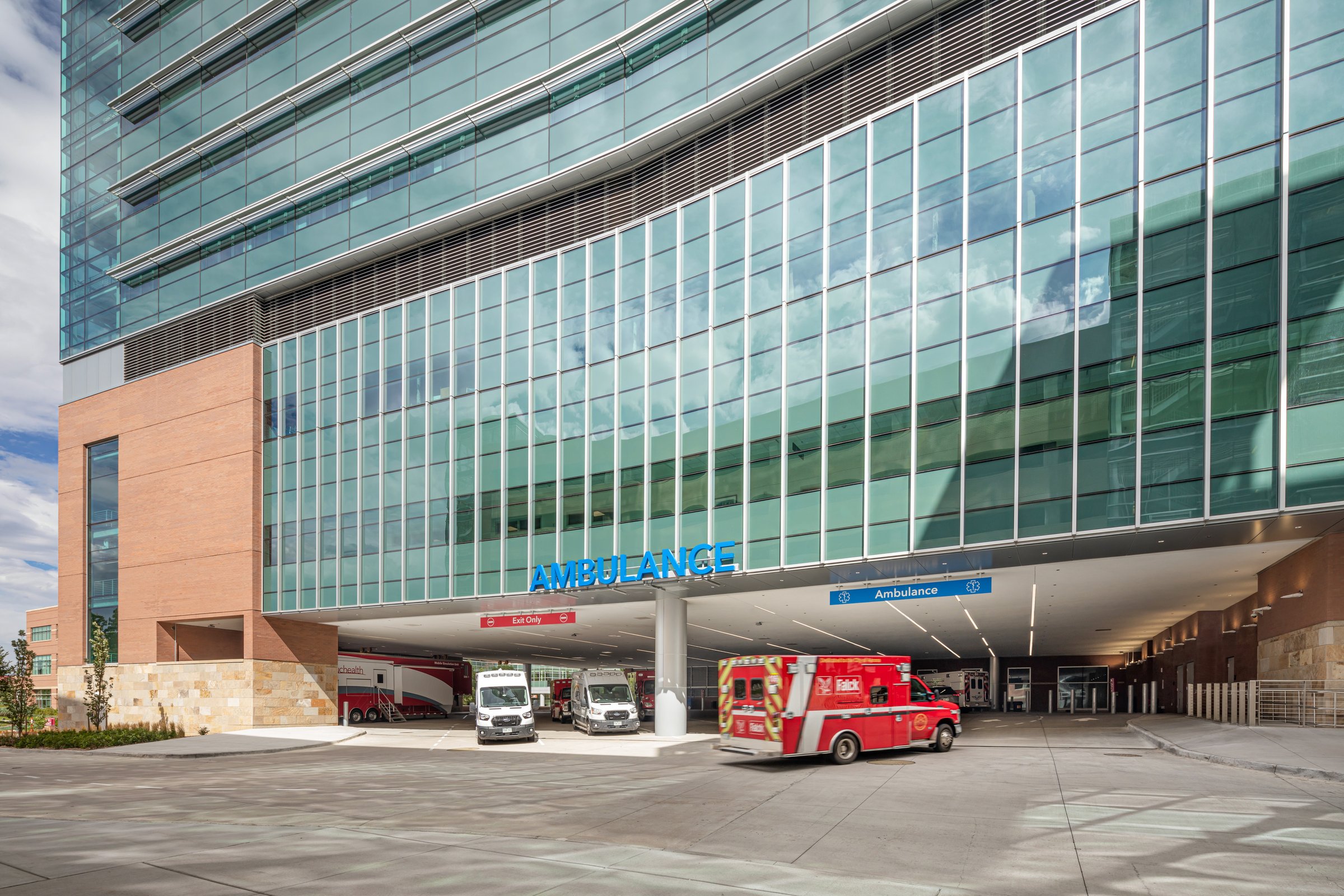
UCHealth Anschutz Inpatient Pavilion
Photo/Caleb Tkach
Immediate triage
Nationwide, the average amount of time a patient spent waiting in an ED in 2024 was 161 minutes.5
One of the most important considerations is how to triage each patient upon entering the ED. The goal: treat and discharge them or get them into a hospital bed, freeing up space for more emergent patients.
Is this someone who has the flu, a broken arm, a cardiac event, or a behavioral health crisis? The ED is the most unpredictable part of the hospital. The key challenge is to quickly support diagnosis and guide patients onto the right path for their needs.
The provider-in-triage model places a clinician directly at the front end to start diagnostics right away, requiring a dedicated workspace integrated into or near the triage area.
“Aging facilities, increased patient demand, and evolving care models are leading to a wave of emergency department expansions and renovations. How can good design support the unpredictable nature of emergency departments and offer quick and effective treatment? ”Akshay SangolliPrincipal, Lead Healthcare PlannerDenver
Increased efficiency and optimized flow
ED expansions could simply mean adding more space, but that is not always the best solution. EDs also need better organization and smoother patient flow, especially during high patient volume situations, to avoid bottlenecks in areas like triage, fast-track, and vertical care.
Today’s EDs often divide patients by needs, placing high-acuity patients in one area and low-acuity patients in another.
A "split-flow" design strategy uses dedicated physical zones, specific room configurations, and flexible spaces. A designated triage section is helpful, where a nurse or doctor can perform a quick examination of a patient as soon as they enter the ED, and color-coding specific tracks to clearly mark the path to, say, cardiac or trauma care.
Vertical treatment areas, often called "fast or super tracks,” help move non-urgent patients through more quickly. These spaces use chairs instead of beds, which saves room and speeds up the care delivery process.
Some EDs also add separate hallways for low-acuity patients to avoid slowing critical care traffic. In one project, designers reorganized the entire ED flow so that adult walk-in, pediatric walk-in, and ambulance/helicopter patients all have their discrete trajectories. This type of improvement requires early planning, detailed simulations, and careful attention to layout and visibility so the ED runs efficiently.
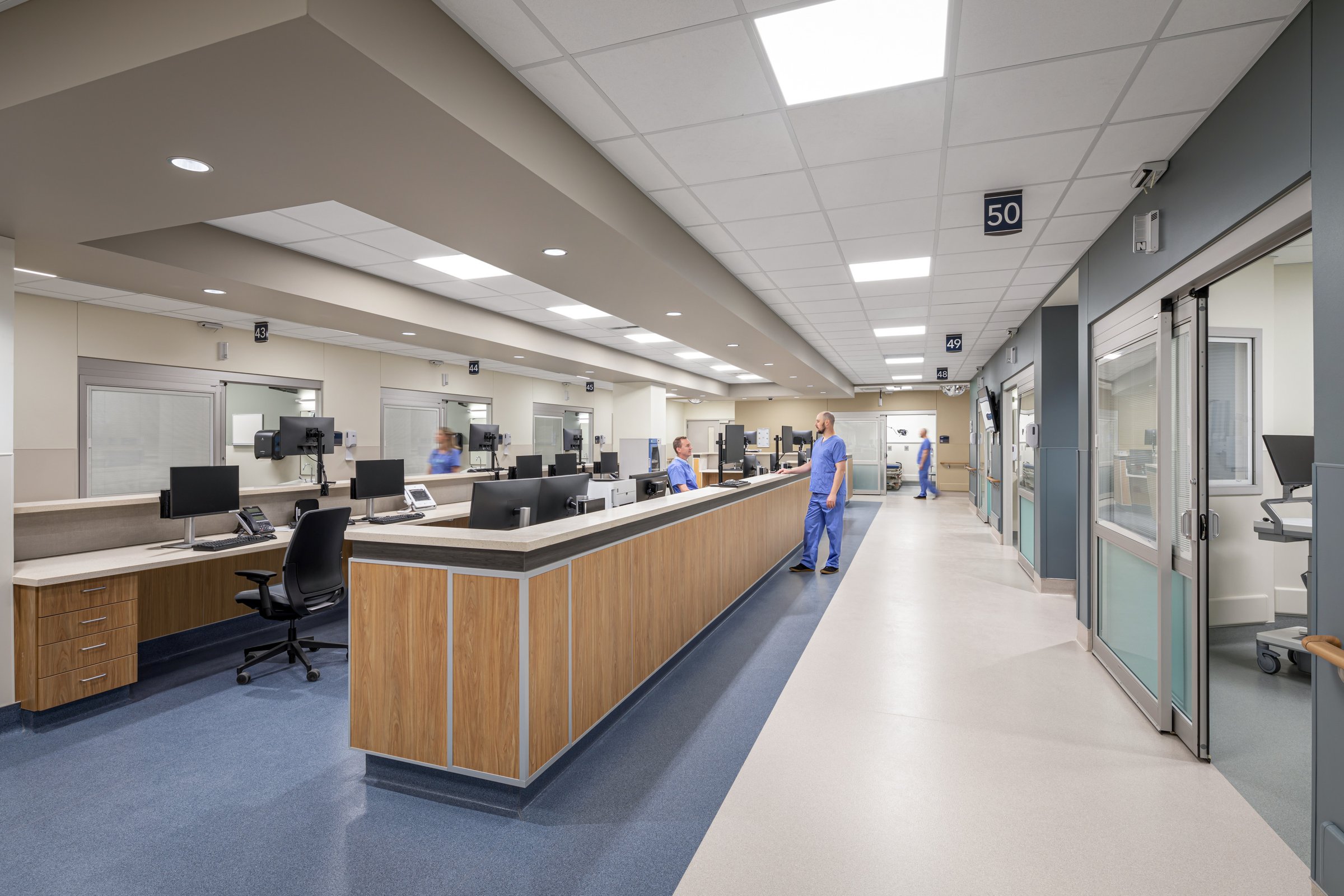
UCHealth Longs Peak Hospital
Photo/Jim Roof
Infection control and disaster responsiveness
Flexibility is more important in the ED than in any part of the hospital. The COVID-19 pandemic raised the need for stronger isolation measures, negative-pressure rooms, and flexible spaces. These features are now standard as hospitals prepare for future surges, disease outbreaks, and large-scale emergencies.
This underscores the inherent unpredictability of emergency care, where the next patient may arrive with a severe anxiety attack, a gunshot wound, a minor illness, or a highly contagious disease. In response, Page designed a portion of an ED to be compartmentalized, with dedicated isolation exam rooms for patients who may have infectious diseases. In another ED project, the waiting areas are fully exhausted, an approach that helps the environment adapt quickly to changing clinical and safety needs.
Overall, EDs require infrastructure that can support the full range of patient acuity and severity. Many older EDs were never built to accommodate today’s radiology, telemetry, and infection-control demands, let alone to modern healthcare standards. As a result, expansion and renovation efforts often involve significant retrofitting to increase flexibility, strengthen safety and security, and ensure the department can adapt to evolving care models over time.
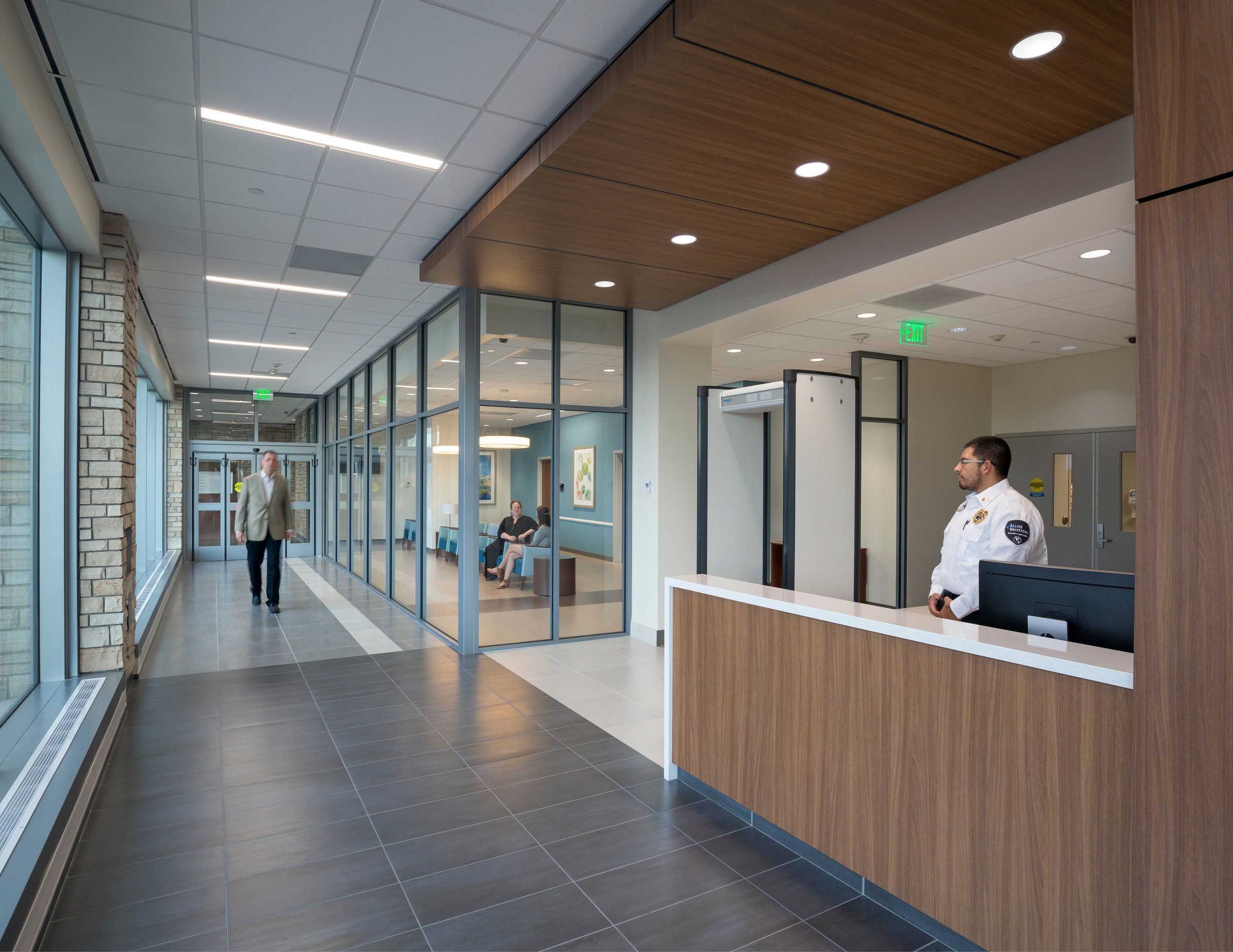
UCHealth Anschutz Inpatient Pavilion
Photo/Caleb Tkach
Rising behavioral health needs
In a behavioral health crisis, many families and individuals don’t know where to seek help. Usually, their only option is the nearest emergency department (ED), or the crisis has become severe enough that first responders take them there. This represents a large portion of potential patients: one in 10 adults in 2024 reported experiencing a mental health crisis in the past year, according to the CLIMB study.6
But most EDs are not structured to provide the level of behavioral health care these patients need. The range of conditions is varied. Some patients arrive in physical and mental distress, such as an overdose or a suicide attempt. Others may look physically fine but are overwhelmed with anxiety, panic, or racing thoughts. Some may be a danger to themselves or others, or may be experiencing psychosis or PTSD.
The physical organization of most EDs also falls short. Traditional EDs were not built to support a fast, safe response to behavioral health emergencies, which is one reason so many hospitals are planning expansions or renovations. One promising trend is the establishment of EmPATH units, specialized emergency department extensions that offer immediate, compassionate care to individuals experiencing psychiatric emergencies.7
Enhanced patient experience and staff well-being
The ED should feel as welcoming as any other area of the hospital. Patients and staff expect good lighting, comfortable furniture, clear wayfinding, calm waiting areas, private rooms, and spaces where staff can rest.
Being close to other hospital areas can improve a patient's emergency room experience. We focus on three main areas: radiology, critical care units, and surgical units. Having a clear path to these areas lowers patient stress, makes things safer, and helps staff work better. In some cases, locating the ED and radiology together can reduce patient waiting time by almost 19 minutes.8
Technology is another key factor. Patients and staff benefit when digital tools are easy to use and well-integrated into the space. Designers need to plan for flexibility so the ED can adapt as needs and technologies change. For example, many EDs now include flexible diagnostic spaces that can support point-of-care testing, portable imaging, or telehealth consults.
On an ED project in Colorado, Page designed the Clinical Design Unit (CDU) rooms to mirror the ED exam rooms at the edge of the department. Additional shell space was also provided to accommodate future growth. When demand increased, the shell space was built out, and the new CDU adapted the old CDU rooms into a contiguous ED expansion, allowing the facility to respond efficiently without disrupting operations.
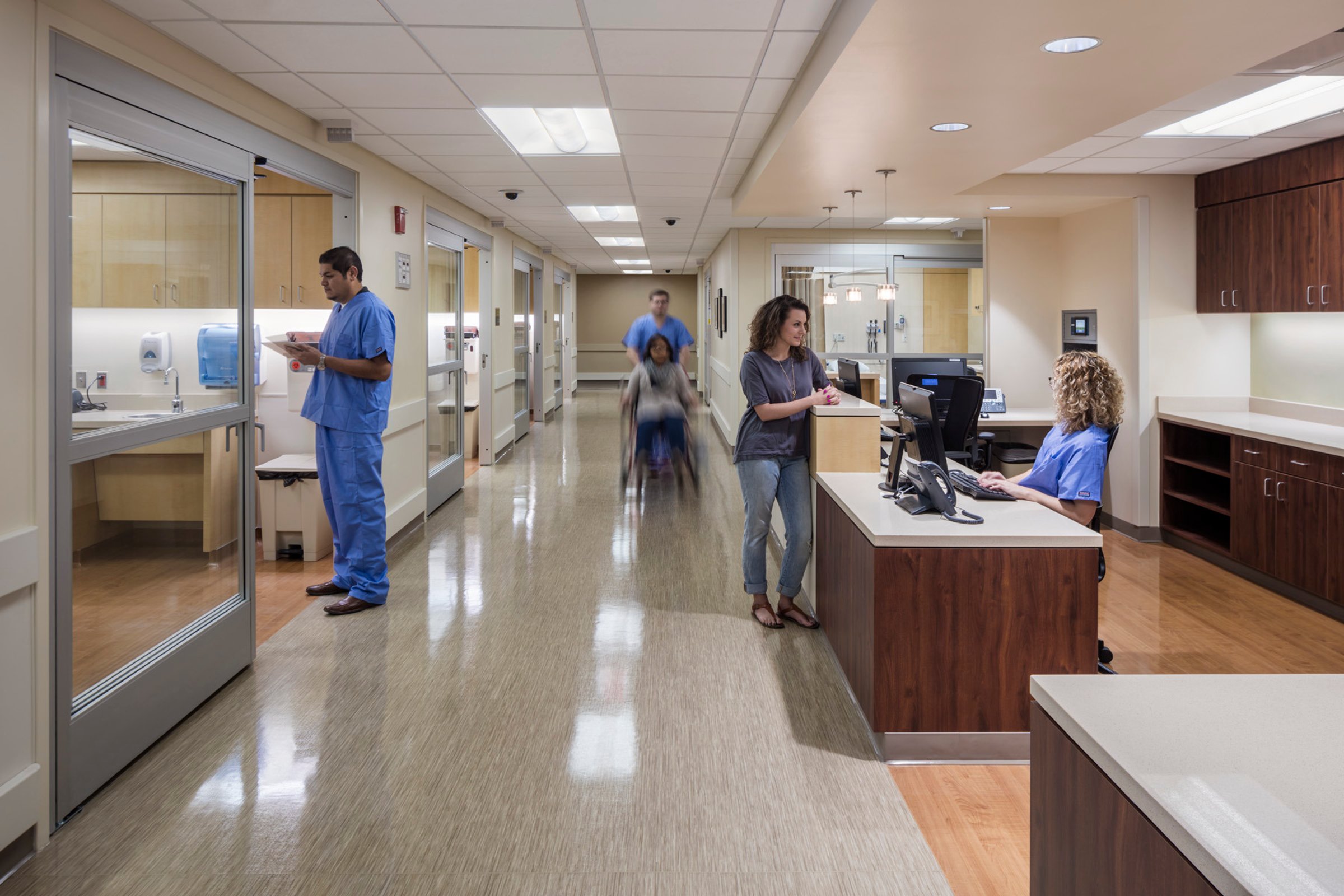
Houston Methodist Hospital
Photo/Joe Aker
Common problems, different variables
ED expansion and renovation projects are growing as hospitals face capacity limits, evolving care needs, and updated operational requirements.
We look at successful EDs from hospitals across the country, since health systems everywhere face similar problems. Still, the most common challenges of each particular hospital can be unique. Designers must consider factors such as patient demographics, site constraints, security needs, and the most common injuries/illnesses.
It is also essential to involve the ED’s current medical staff in expansion and renovation planning from the beginning. They have a keen understanding of the daily challenges with their department because they have firsthand experience of using the space in high-pressure, fast-moving situations.
For architects and designers, ED renovations are complex, detailed, and highly impactful. The most successful solutions focus on reshaping patient flow, incorporating flexibility, and designing spaces that can adapt over time. But most importantly, providing confident responses to whatever unfolds by supporting patients and staff through even the most unpredictable moments.
If that also means a patient no longer has to spend the worst night of their life on a stretcher in a brightly lit hallway, feeling like an obstacle instead of a person who deserves dignity, then it’s a meaningful sign of the difference thoughtful design can make.
References:
1.
Trinoskey-Rice, G., Simmons, A., Dunn, J. Closing the Gap: How Community Health Centers Can Address the Nation’s Primary Care Crisis. (February 2023). National Association of Community Health Care Centers.
2.
Cairns, C., Ashman, JJ., Kang, K. Emergency Department Visit Rates by Selected Characteristics: United States, 2022. (August 2024). Centers for Disease Control.
3.
Cairns, C., Ashman, JJ., Kang, K. Emergency Department Visit Rates by Selected Characteristics: United States, 2018. (March 2021). Centers for Disease Control.
4.
Emergency Department Boarding and Crowding. (October 2024). American College of Emergency Physicians.
5.
Bean, M. (January 2, 2026). ED visit times, by state. Becker’s Hospital Review.
6.
Anderson, A., Eisenberg, MD., Kennedy-Hendricks, A., Castrucci, BC., Galea S., Ettman, CK. Mental health crises and help-seeking among US adults in 2024-2025. Health Affairs Scholar. 2025;3(9):qxaf166.
7.
Kim AK, Vakkalanka JP, Van Heukelom P, Tate J, Lee S. Emergency psychiatric assessment, treatment, and healing (EmPATH) unit decreases hospital admission for patients presenting with suicidal ideation in rural America. Acad Emerg Med. 2022;29(2):142-149.
8.
Dang, W., Kielar, AZ., Fu, AYN., Chong, ST., McInnes, MD. Does distance matter? effect of having a dedicated CT scanner in the emergency department on completion of CT imaging and final patient disposition times. Journal of the American College of Radiology. 2015;12(3):277-283.
Contributors

For Akshay , the connection between people and design holds the power to inspire, heal, and transform. With over a decade of experience, he has led numerous high-profile projects, blending evidence-based design with sustainable practices to enhance patient and staff experiences. Recognized on AIA/AAH’s prestigious Under 40 List in 2018, Akshay is actively engaged with AIA-AAH, ASHE, and ACHA, and contributes as a speaker and writer in national forums. Known for his collaborative approach and meticulous attention to detail, Akshay helps clients transform visions into human-centered spaces that promote health and well-being.

Chris brings a dynamic mix of leadership and technical expertise honed through decades of shaping architecture for complex healthcare projects. He has overseen projects at all scales including the execution of Lee Health’s OB Masterplan as well as system-wide master planning efforts. He has led over 100 AHCA-reviewed projects, including pharmacies, laboratories, behavioral health, and cancer care services. He is proud to have achieved Florida's first LEED certification in healthcare. Chris is committed to new design thinking and regularly speaks on the upcoming trends and how they will transform patient-centered care in our lifetimes.
More

by Alireza Sedghikhanshir and Raffaella Montelli

by Vanessa Lampe Heimbuch and Portia Ellis as interviewed by Mary Loftus

Talk with us
Complex challenges need fresh perspectives and deep expertise. Connect with our team to explore how we can help you create spaces that make a real difference.