The good collaboration room
by Tully Mahoney in conversation with Jen Bussinger and Melissa Burns
How do you and your team best collaborate?

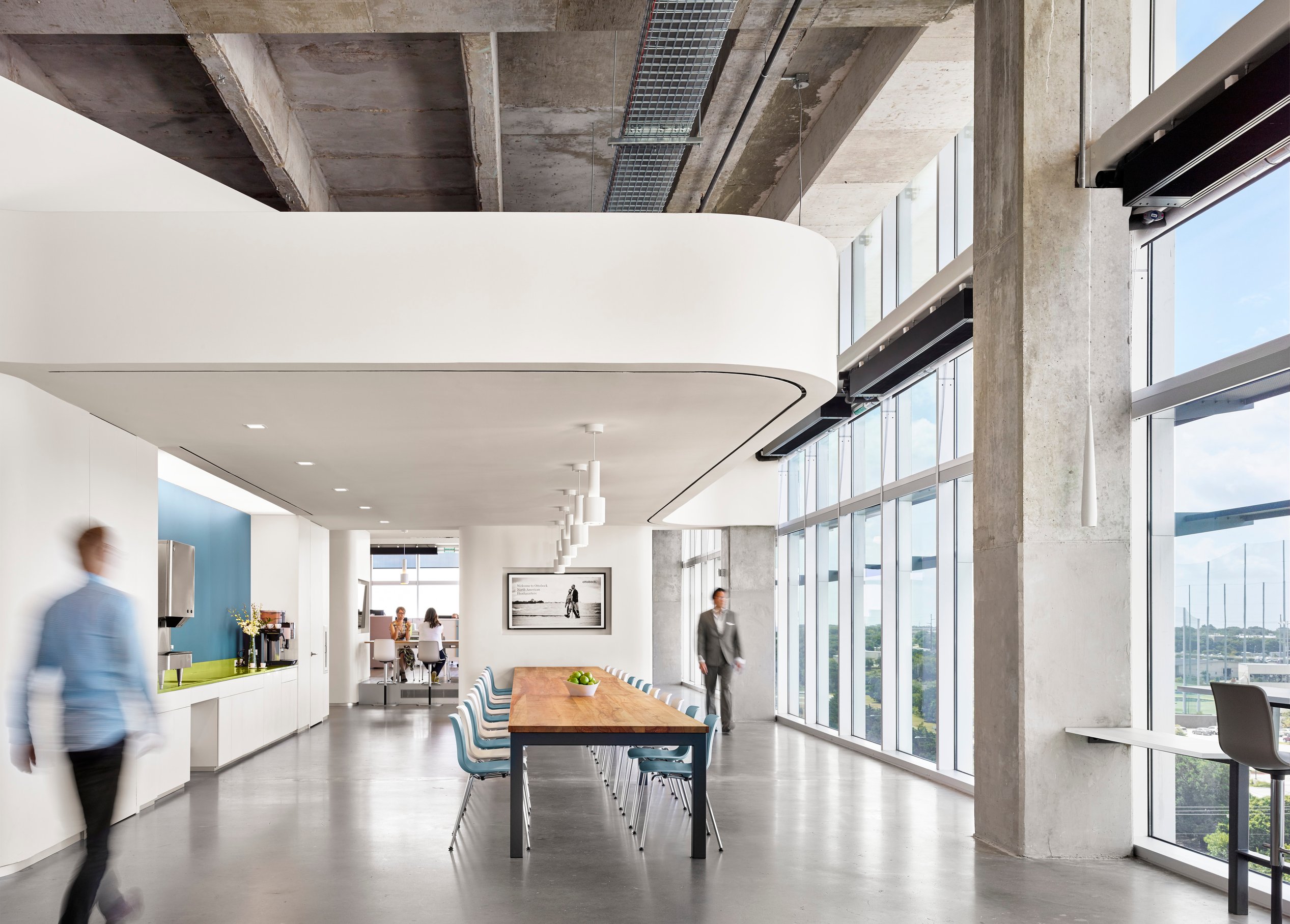
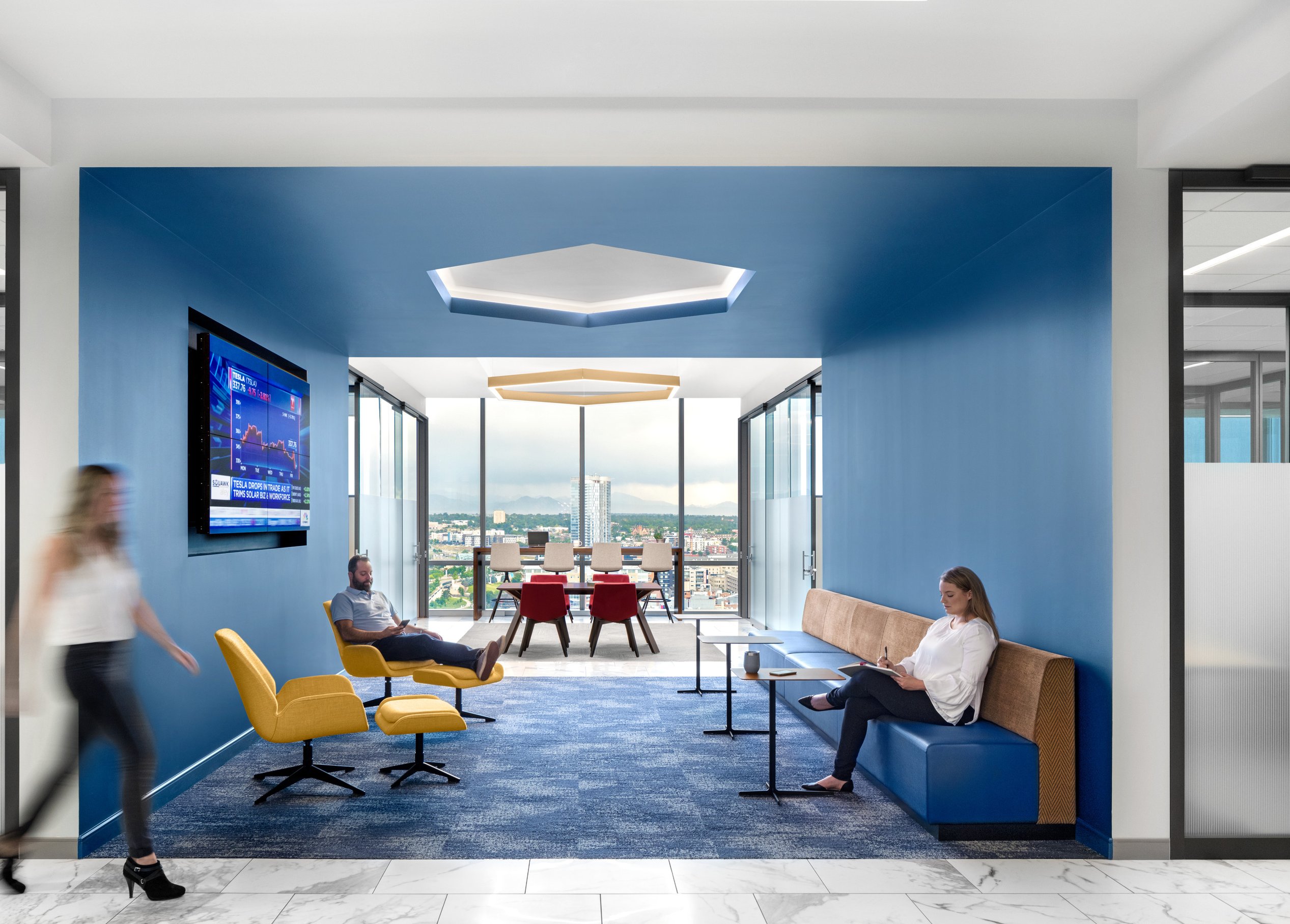
How do you and your team best collaborate? In this episode, host Tully Mahoney dives into the future of collaboration spaces with Jen Bussinger and Melissa Burns. Whether you're designing for higher education or the modern workplace, discover how technology, flexibility, and thoughtful design can transform the way we work and learn together. From private focus rooms to dynamic outdoor spaces, this conversation is packed with insights on creating environments that inspire connection, creativity, and productivity.
/
Interior Design Director Jen Bussinger and Lead Academic Planner Melissa Burns join host Tully Mahoney in The Good Room.
Welcome back to The Good Room. I'm Tully Mahoney, and today we're talking about good collaboration rooms in higher education and workplace settings with Jen Bussinger and Melissa Burns.
Jen is an interior design director with over 25 years experience. She's passionate about workplace and its effect on an individual, with her work including both institutional and corporate headquarters.
Melissa Burns is a lead academic planner with a range of experience in academic buildings, whether it's student services, integrated science complexes, engineering teaching labs, or makerspaces, she's in.
So Melissa and Jen, can you please tell me some about what drew you towards academic or workplace design?
I actually explored a number of different areas of architecture and client types before I got into the higher ed market. Some of those were government and public institutions, and what I liked about the higher education sector is just that there is a tremendous amount of variety, even though the kind of main direction is similar.
So a campus is going to have lots of different building types, and each institution has its own identity. But we're always trying to create long term building solutions and really robust buildings and responses. And so there's a technical piece that comes with that, as well as just the engagement with the client that has come to be the sweet spot for me.
Excellent. Let's see. Workplace took a little bit of time for me to get to as well. Early in my career, dabbled in a couple different things, including health care and some even long term facilities. Little bit of institutional work.
And it was really when we started doing some deeper diving into the early stages of programming on workplace projects. It just really struck a chord with me on what is the company's vision and then how it relates to each individual's daily life in a workplace, if they're in an office, essentially is really how it started.
And then from there having been well over two decades at this point, workplaces really evolved into so many different types, choices. All of those ideas and items are very exciting to me. So from the individual's experience to the team's experience to the company's overall mission and goals is really just what makes me tick.
Jen, you had just touched on the evolution of the workplace and how it's kind of constantly changing, and I think that's something we also see in academic, especially with when classes move to online. I'm curious if any of the recent changes in workplace or academic has created a greater need for collaboration spaces, or they're used in a different way than beforehand.
I think definitely one of the simplest ones for workplace is prior to the pandemic, we had focus rooms where you could go to see quiet, to do heads down work. Those focus rooms have turned into presentation rooms, where an individual is on a mic and presenting to a client, but they need to be supported through technology in a different way than you were in a focus room or a phone room where you need 2 to 3 monitors to effectively present and to collaborate. And that's just one of the examples.
We're so ambidextrous now in the way that we collaborate with both in-person, hybrid, all virtual, and so being savvy in that way is really important. But that just continues to evolve and change really monthly.
You know, it's interesting on the education side, the piece of technology, I think also comes into play in collaboration spaces much more now than it did five years ago. Some of that is Covid.
Some of that is just because technology evolves and is ubiquitous now. But as we plan projects, it's sort of amazing to me, the amount of solutions where we talk about, well, how are we going to get power there? You know, there's a little bit about the number and types of spaces, but it's also in each one of those students are going to have a laptop, a phone, and then you get into other peripherals as they're presenting or, you know, in a team environment.
And how many of those things need to get power and data connections with it, you know, are we overpowering Wi-Fi and other things where some of the the technical side of what we do comes into play. It's not just what it looks like and feels like, but can you do what you need to do in there? And it's interesting.
There's been sort of an evolution in the way classes are taught, too. That it's not just an individual's work, it's very often teams or group work. So that group then needs to get together.
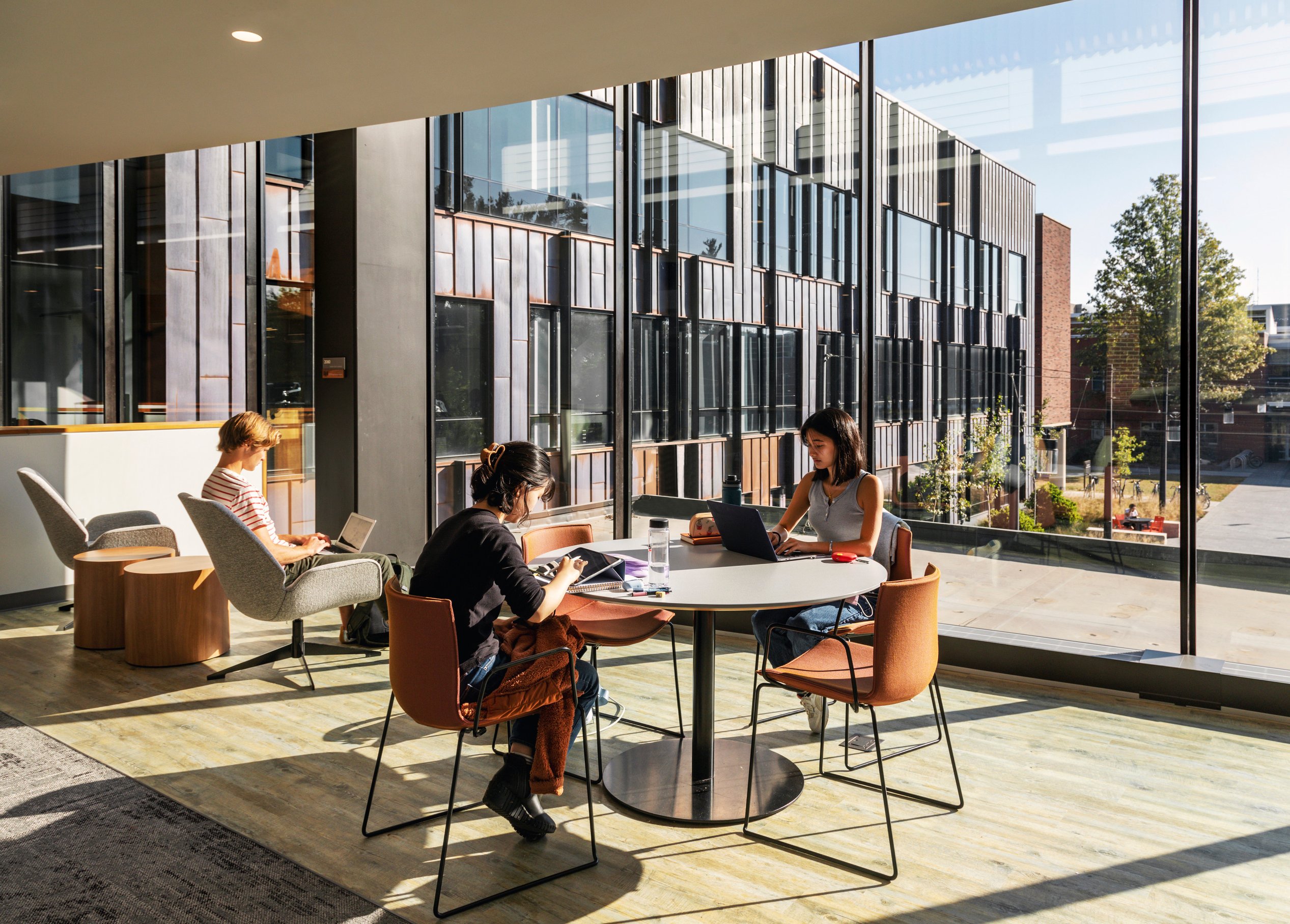
And so finding places in the library or in the academic building that the class is being taught in are really helpful. So that's where the scale and whether they're enclosed. If you have a group that's trying to meet over zoom, for example, you don't want to be doing that in the middle of an atrium. You're not going to be able to hear and you're going to be interrupting other people. So that human etiquette component. But so having that variety of spaces and where they're located. But students are always on the hunt for them.
And, you know, we're working on a library renovation at a smaller institution right now, and it's fascinating the way that students find their place. It's a very complex building, and they might spend their whole first year learning the library and finding their place. And then they've got their carrel. That's like where they sit for for the remaining years, but they have more technology in their huddle rooms and other things. Now to be able to have multiple students gathered together, instead of it being a singular kind of student working by themselves.
I think the students, when they hit the workforce then, are also really good at finding places with their in their own offices as they move into it and really become drivers into what's next for the workplace as they're coming from whatever institution that they were in. It really seems that our higher education does really well in supporting students with what they need, the tools they need, the spaces they need, or they make the spaces they need, and they have the freedom to do so on a campus.
Whereas when you move into a workplace, if there's not that freedom, it's like, well, this would work for what we want. So this is what I would like to use this room for. Can it and so to me, it's really kind of exciting to see even what kind of platforms or technologies or softwares that the students are utilizing and how that will change what is happening in the workplace and change what's next.
You know, I think back to really when I first started coming out of architecture and design school with these exciting ideas on what your environment can be in a workplace and then being hit with the reality of a bunch of private offices without any natural light and just like nightmarish, almost awful spaces you wouldn't want to spend any time with and thinking, whoa, what? This? This could be so different.
And that it was really a slow evolution. Or at least it felt slow from someone coming right out of college going, could we maybe put some windows and color into this space? Can we maybe think about the companies vision and mission and branding? You know, when a branded space kind of came online, it was revolutionary and it seemed pretty logical. But all of these things are here for the taking. It's just a matter of pulling those things together.
I like the way that you put it, because I think of academics kind of gearing us up to go into the professional world, and the impact is more in that direction that professional life is impacting academic. But I like reframing that. It's not necessarily that case.
It kind of comes around full circle, too, in terms of you have the students that are coming into the workplace, but then you also have faculty and staff that are comparing their options, working at a university with working in industry and, you know, the freedom and the flexibility that comes with some of those workplaces and trying to think about how much space do we really need to dedicate to offices and that ownership piece, which sometimes becomes the thing that faculty really hang on to, that I need somewhere for my books and I need somewhere for that's my students know where to find me. That is my place.
But they still want to get out. And you know, have that collaboration with their own departments. And then also that interdisciplinary nature of being able to run into somebody from a different department and start talking about something that they didn't know that they even had in common. So it's been fun to see that kind of coming into the the mix as we think about how to design and program buildings that are heavy office components within the higher ed world.
At my campus, we had one building that was connected to faculty offices, and then there was kind of an open area where a lot of the students would work. I saw a lot of teachers were also using that. So they would go there and they would talk to other teachers. And it was helpful. As a student, sometimes you'd see the teacher that you were working on that homework and you're having trouble with it, and they walk by and you can flag them and have them come over.
Another thing I was thinking about is there's, kind of, different types of collaboration. So we might meet to brainstorm something or we might meet because we have targeted metrics to hit today, or we're presenting something. And I imagine that each type of collaboration needs may need a different type of room. How do you think about the different types of collaboration people might be doing?
That's a really good question. In the workplace world, the first thing that we need to do is understand what does the employee need. And that will vary depending on what their role is, what their job is, what their team does, how their team works list goes on and on and on.
And from there, you're taking those pieces and putting together this puzzle of, all right, what are the types of spaces that are necessary? And then giving choice from some that might have three walls of whiteboard and a video on one side. The table might be rotated depending on how people are collaborating in there. Are they content sharing or are they connecting with people from another office? So they got a hybrid might be both. That room could, of course could handle either. The acoustics should be pretty good. We want to think about camera angles when it is a video conferencing type room.
But then we also have spaces where people are pulling out materials and are sketching over their computer generated drawings, and then also walking through a model on a screen. And so it was a very collaborative work session that multiple people are inputting into and is maybe not remote at all, but all within that space. But it's still combining both technology and analog.
And then we also create spaces that are for just let's go sit and have conversation. And those could be both private, just in a pleasing room. Maybe the color scheme is different. Maybe we've got lounge furniture versus task seating for doing more intense jobs, or it could be an open seating in the break area. So it's understanding the need and then beginning to put together these different tools.
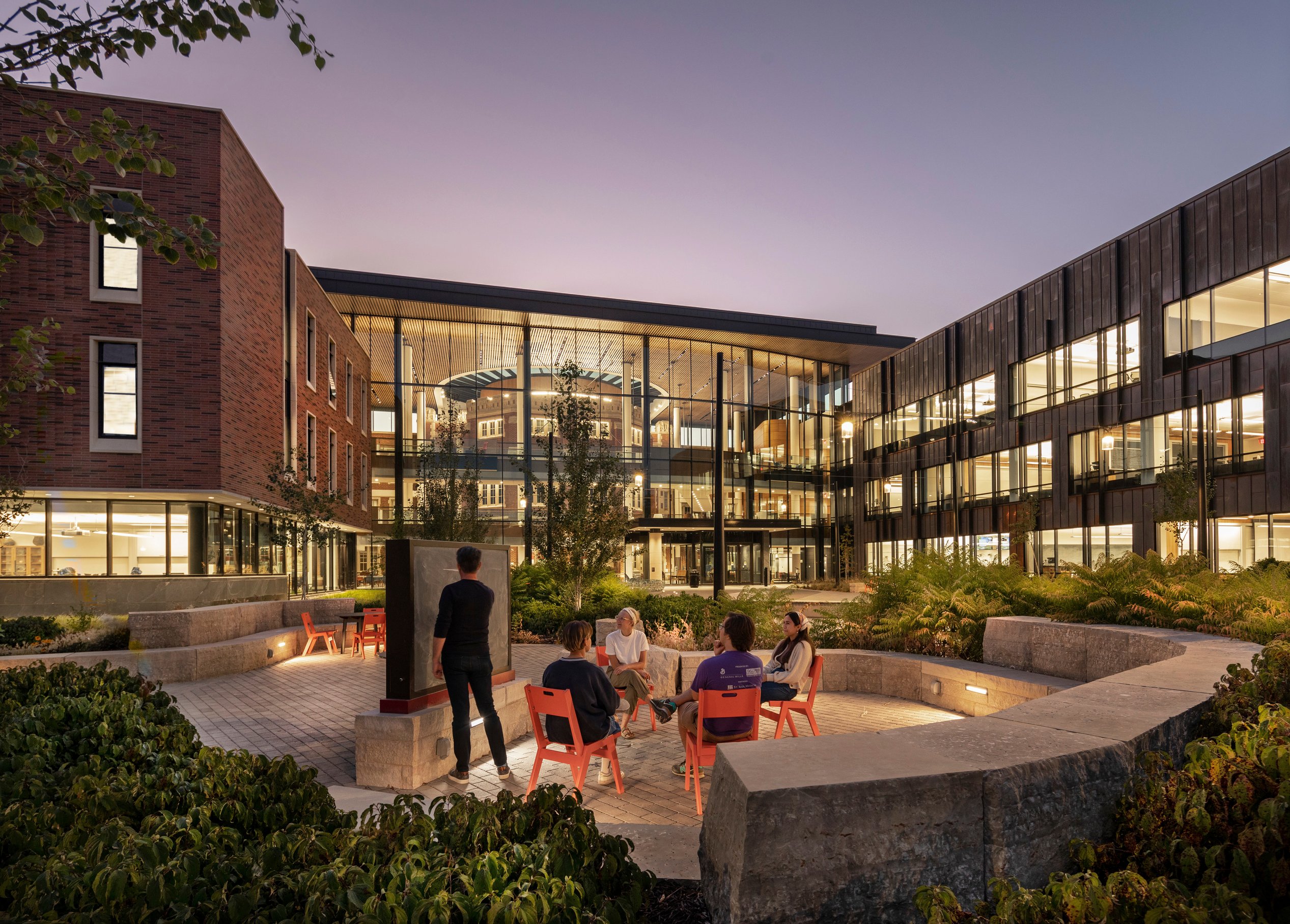
I think it's so similar. It's interesting as you were talking through that, I'm like, oh yeah, that's the space, the space, the space. Often in the work that I'm doing, at least we want to make sure that we've got like that kind of public piece. So we'll often break down the collaboration portions of the building into maybe 4 or 5 parts. So you've got like large, medium and small and then enclosed and open and you want some mix of all of those things.
And we'll look at usually the full program of the building to make sure that some percentage of that is allocated to those collaboration spaces. So sometimes your classroom may become a collaboration space at night. If it's not scheduled. And students know that they have a lot of technology to come back to that space.
But we'll look at sort of the whole inventory of the building and then make sure that we've got categories that go with that. So whether it's big public spaces that could be used for poster sessions in a science building, but is the atrium with coffee on a 99% of the time, and then those open and closed spaces and the mix of them where they're located, so that you get that feel of the activity like Jen was talking about.
For each of those specific needs, we might then size them accordingly. Of is this a group of 4 or 6? Is it a department meeting? So we need to make sure that there's room for 20 people in there, like understanding those needs of why and how people are getting together to size them. But thinking about the inventory of the full building as well as by floor or by suite.
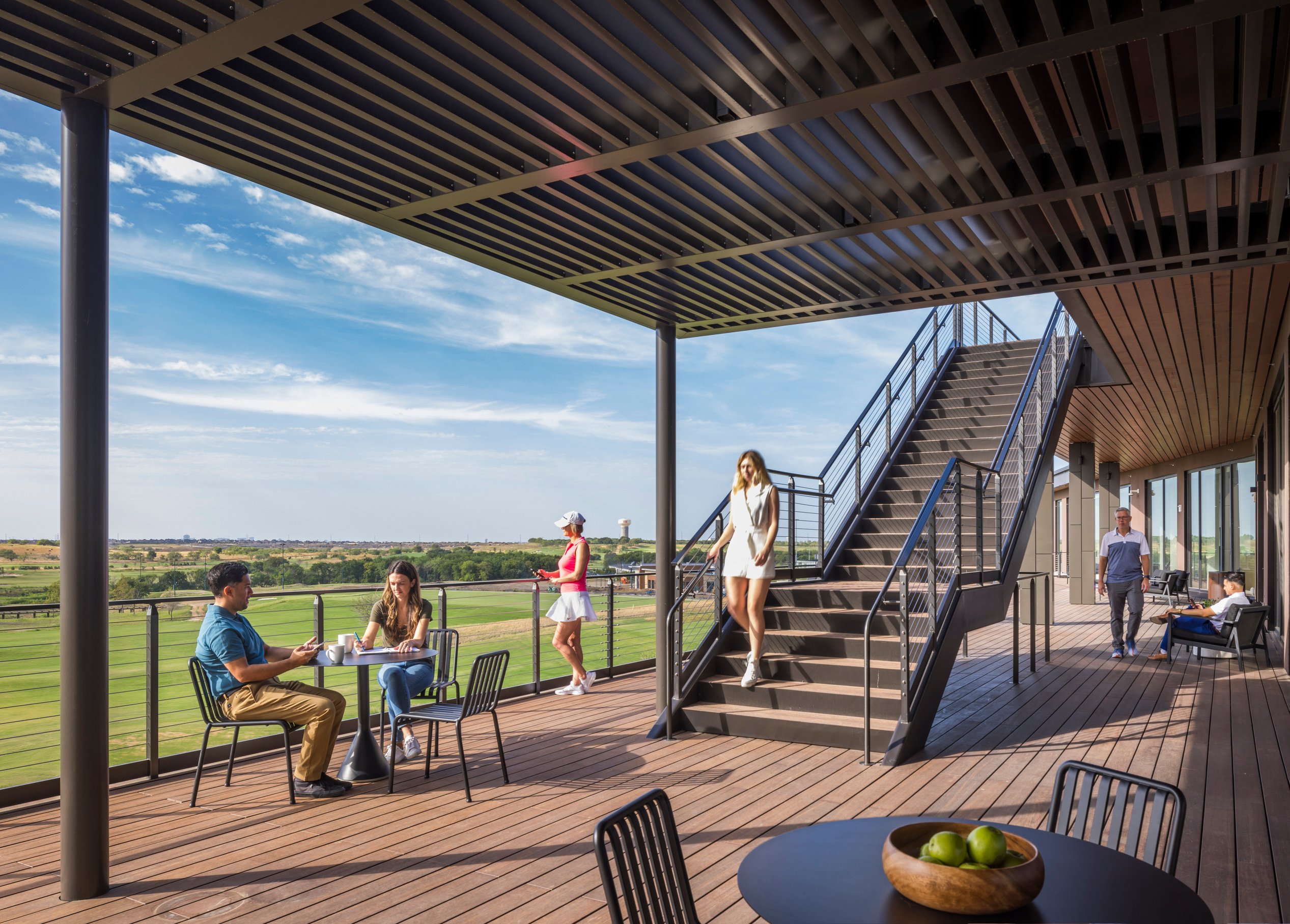
What are your thoughts on outdoor collaboration spaces? Kind of knowing all the facts that it helps with not only just making us happier people being outside? But there are some studies that say it boosts creativity and productivity as well.
Absolutely. When there's the opportunity, if you're working on a first floor, if you're working on a full building project, both having immediate access to the outside and creating spaces within that, or having balconies off the other floors.
Being in a high rise and having a balcony is a great opportunity, but if there isn't, actually scoping the space out and finding is there opportunity outside of that? We do have several clients who they are, let's say on the 18th floor and there isn't an immediate balcony, but is there any other building amenity that has that, or even is there a park space or something immediately adjacent just to know that it's there?
But absolutely, the studies and just getting access to natural light, access to natural air is a huge boost to the human thought process.
Because we work nationally, it's always funny the difference in climate and what that means for the opportunity for outdoor spaces and not.
One institution in Florida, there were a number of buildings that were smaller because they use the outdoor space to kind of connect them, and that was really like their atrium space, but it was outdoors, so you could have tables and other things that were part of that circulation path. The see and be seen, kind of, portion of the building, because the weather was beautiful.
Conversely, in Buffalo, where we have a project under design right now, all the buildings are connected with bridges and like internal corridors because it is really uncomfortable a lot of the year to be going outside and they don't get a lot of sunlight in other pieces. So then you have to find other ways similar to the 18th floor that Jen was describing of like, what are the views or the things that you can build in to kind of mimic that, to help with that wellness component when being outdoors during the academic year might not be so comfortable.
Yeah, I could definitely see that. It's very climate driven. Do you also think about sprinkling private spaces so people can move from a collaboration zone and then move into more of a private work session and move back and forth between those? What are the private spaces looking like?
There do still tend to be some private offices. It's necessary for some people's job. That's one thing we're really trying to focus on, though, is what does your job require? In some cases, it is a private office that the door can close, and there's collaboration within it because they're meeting so constantly with other department heads or other team members that it just makes sense that their private space have both.
However, there's many where the open office environment having immediate adjacency to small conference rooms for certain staff members, and they may have a more limited ability to be scheduled by others, that there's maybe only five people that use that one room or something like that. So there is a sprinkling of these focus or even presentation rooms.
And then one of the other areas that we're really test piloting in a couple of places is that in the open office environment, it's tends to be a bit of a buzz, right? It's not loud, but there are conversations and people are working with one another next to you that you may have your headsets on when you're doing heads down work, but sometimes there's a need for just kind of complete silence. And if people have a flex schedule, they may choose to work from home that afternoon as they know they're going to be able to get that quiet at home.
But some people also don't have quiet at home as well. So we're also creating these. Well, taking a nod from our academic partners, library spaces that are “Cone of Silence,” if you will, where you enter that space. Your cell phones are off. You're not on phone calls on your laptop, but you have the ability to plug in and have your desktop set up in a very quiet space. If there's other people working in that room, you know they're there for the same reason. Those tend to not be sprinkled, but are very intentional. I'm going to it's kind of your do not disturb visual cue as well to the entire office.
One of the things that we tend to do is to make sure that those enclosed study and meeting spaces have some elements of glass in them, so that even though that might be private acoustically, that you can still, from a safety factor, be able to see in and see out.
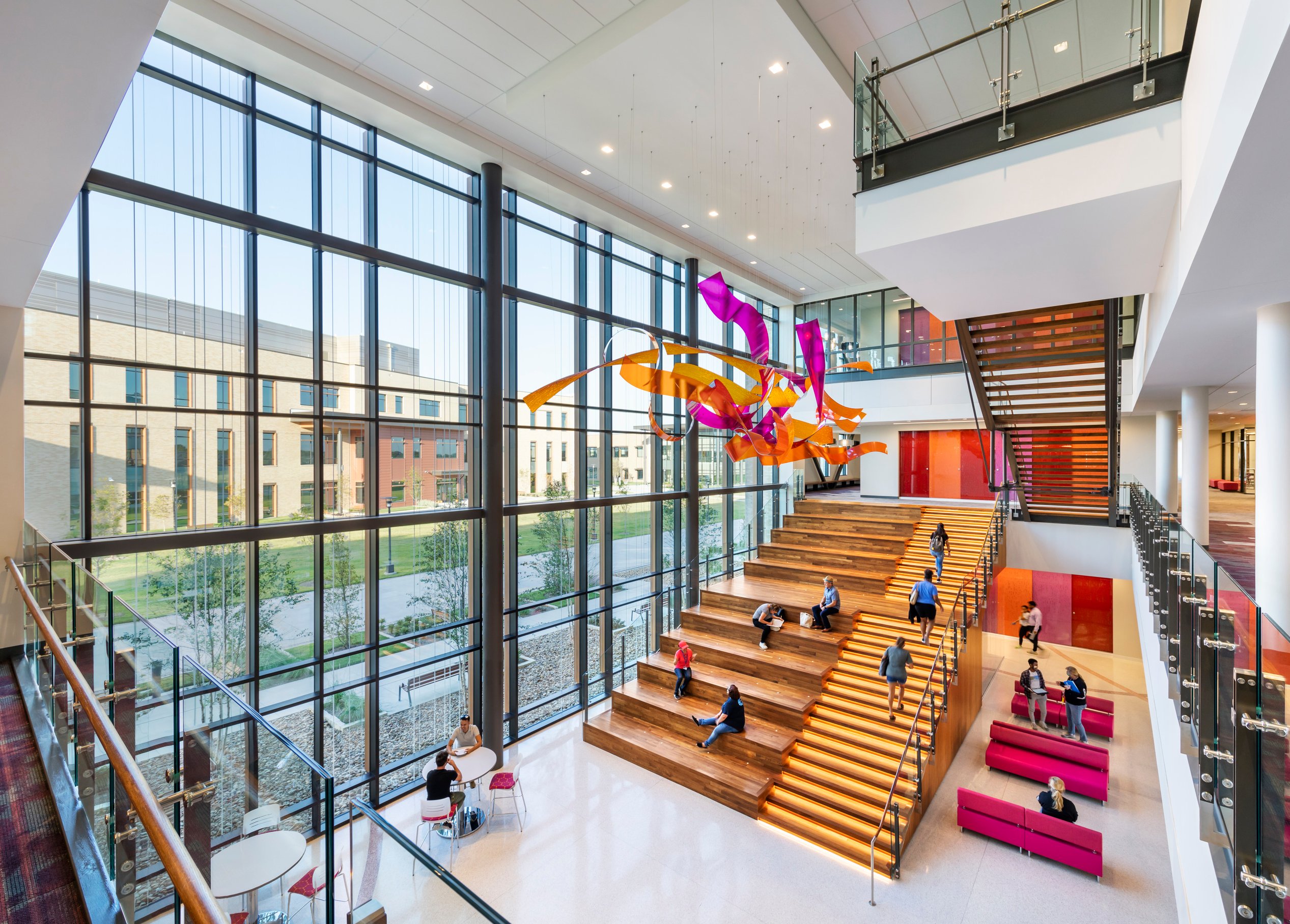
One thing that I have seen a lot, and this really is going back even eight years or so, is I call them the social stair. So inside, you know, an atrium or a large public space, the occupied stairs. So the ability to have students meet in groups or individually, it becomes an option for seating for a performance or something else that kind of has this multiple use.
But the thing that surprised me the most was when we installed one, was that students would sit there individually, and it almost felt like to them that they could disappear, whereas I was thinking of it as more of if you're the one person sitting on the stair, like you're the one person on the stair, like you're more obvious. But it didn't seem that that was the way students operated. So it was an area for them to be able to be individual, to be alone in an environment where there are lots of people going around without necessarily feeling like you're sitting at a table by yourself. And that was very interesting to me.
That is that's fascinating. And one other question off of this space planning topic, how do you think about the connection of collaboration space to the main working section?
I think that might be one piece that’s a little different between the two, because in academics you've got spaces where people are gathering for a specific purpose.
Sometimes a large number of them in a teaching lab or a classroom or an auditorium. And so a lot of times the collaboration space wants to be proximate to that, so that it's a little bit of a waiting area so that you've got a space where if you are doing group projects one day and your team needs to meet up before class, that you know everybody's going to be there right outside the teaching lab, and then you go in.
Then afterwards, by having that space right outside, you're more apt to continue that conversation because you're right outside the door, as opposed to if you go down the hall or you're a floor below. There's so many distractions and interruptions between that point that you're not likely to come back to that conversation. So we're trying to think about extending that academic environment in a collaborative, fun kind of way. But that's where the location matters with those pieces.
And then there's another type of space that we like to provide near faculty offices. So that, as you were describing Tully, you know, that you could flag a faculty member to help with your homework, that if you had a set of math problems that you were working on, then you know that there's a study area that's near the math department.
You might go work on that work near them so that you can ask questions. There might be TAs or tutoring sessions that happen as well. So knowing those different sort of planned but yet unplanned interactions that you might have in each of those spaces comes into play. When we think about the location.
In work, workplace, if we're working in an open office environment primarily, let's say, and you're working within teams, you'd like to be able to have those presentation or focus rooms pretty immediately adjacent to those areas. So they might be pods every certain number of people are small and medium conference rooms that are easily accessible as well.
Then some of those larger spaces or you're training rooms or collaboration cafes, places that generate more noise, do tend to have buffers between them and the workplace. So we'll have some of that open seating or reception might be off of that. Something that creates that sound buffer away from the open office environment, but that accessibility and then accessibility to the different types is really what we're looking for.
Well, we've kind of had all of the topics that I was thinking about. Is there anything that you feel that I should have asked and I didn't, or any final notes?
It feels we're in a little bit of that transition stage again when pulling people back into the social settings of the campus, the workplace and coming out of our homes again, where we had been during the pandemic, and we learned a lot about ourselves during those years, and now really maybe challenging ourselves as to what did we learn, what is our most effective way of working, but also communicating and collaborating and then taking that next step of and and recognizing what really resonates and works with individuals on my team or the team as a whole.
There are often times I'll use some of my own teams as an example. We even sit right next to each other, but some of our meetings are still all on the Teams, because we're focused on sharing our screens and flipping back and forth quickly, or drawing on one another's. We kept thinking, well, we're all here. Let's go meet in person. But it became clunky. It really wasn't the most effective way to do it.
On the flip side, there are other project teams that it is so hands on and we're using physical things in front of us as well, or it's easier to sketch and draw over things that that transition of, oh, I'm going to switch. I've got to work from home day on Wednesday, I'm switch that to Monday or something because the team tends to work the most together, say on a Tuesday through Friday or something like that. So that next level of recognition is my hope for what will be trending is this realization of how, as a community, we can collaborate more effectively.
Yeah, that's an interesting point. And it definitely takes kind of almost another level of emotional intelligence to know what everyone needs and then find how that impacts the overall team. Great. So thank you both so much for joining. It was a really fun conversation. You to both have a great week.
Hosts

With expertise in crafting compelling narratives that engage diverse audiences, Tully blends creative flair with a keen eye for detail to develop impactful content across platforms. Her work includes award-winning podcast production, content development, and copyediting large-scale documents, all while enhancing brand voices and driving audience engagement. Tully also supports data visualization efforts by transforming complex information into clear, actionable insights through engaging storytelling.

Talk with us
Complex challenges need fresh perspectives and deep expertise. Connect with our team to explore how we can help you create spaces that make a real difference.