The good makerspace
by Tully Mahoney in conversation with Robert McClure and Laura Vargas
The education paradigm is shifting, and makerspaces are at the forefront of this transformation.

The education paradigm is shifting, and makerspaces are at the forefront of this transformation. No longer limited to traditional STEM disciplines, these hands-on environments are expanding their reach through strategic campus placement and transparent designs.
Rob McClure and Laura Vargas take us to ecosystems filled with the hum of 3D printers, the chatter of student-industry collaborations, and the clatter of tools bringing ideas to life. Discover spaces designed to turn curiosity into action in a world of constant change.

/
Science and Technology Director Laura Vargas and Design Director Rob McClure join host Tully Mahoney in The Good Room.
Welcome to The Good Room. I'm Tully Mahoney, and today we have Rob McClure and Laura Vargas here to talk about makerspaces. To kick us off, can each of you please share a bit about your background and how you came to designing makerspaces?
Yeah. Rob McClure. I'm a design director at Page. I've been in the industry for about 25 years. One of the things that I started off doing was a lot of corporate commercial work, and then I moved to Page because I was really interested in starting to look at projects for colleges and universities, because I just I remember when I was a kid, I remember like, hands on learning, building things. I remember in middle school, actually that's where I got the bug, and I decided I had to be an architect because I was building, you know, and problem solving in my tech class.
I think what really makes me get up in the morning and I'm really passionate about is helping students see that and experience that and, you know, build a spaces where they can tinker and they can kind of just have fun and realize that they might be interested in a profession or pursuing a career in something STEM related or in the design.
But that's said, I also think that one of the best things about these makerspaces that we do is we really try to make them inclusive, and we make them accessible to anybody and everybody, not just the traditional majors that would typically use a fabrication lab or a makerspace.
I'm Laura Vargas, I am a science and technology director at Page. I actually started my career in laboratory planning and have kind of evolved into just focusing on spaces that support STEM, support innovation in the science, advancement in science, medical education, and in those types of areas.
And I really see makerspaces as sort of a another laboratory typology that exists where just like in a lab, students can use a makerspace to test their theories and to kind of get their hands dirty and try things out. And it's really intended to be the sort of platform for them to explore and create and innovate and discover.
And I think that with the right tools and the right design of a makerspace, I mean, it really is the sky's really the limit for what these students can create. And I think it's really exciting that more and more institutions are implementing these sorts of spaces, not only in science buildings or in engineering buildings, but you're starting to see them in different spaces where you may not have seen them before, like fine arts spaces and humanities and things like that. And I think that having these sorts of spaces where you can create and test your theories is, is really important, and it's really helping drive education beyond the classroom.
So you both mentioned the idea of broadening the makerspace outside those typical STEM fields. Are there any design details or considerations that might help draw somebody in, whether that's from zoning or location to transparency?
There's a lot of different types of maker spaces. There's makerspaces that are very specific to say like one discipline, right. Engineering schools have always had, you know, these labs and places to build and test. Think of structural engineering where they're building a bridge and they're testing what the capacity of that bridge is going to be.
But if you're really trying to open it up to more people, it's about reducing that inability for someone to access it. Right. And that really comes down to location as well as the design, as you mentioned, Tully.
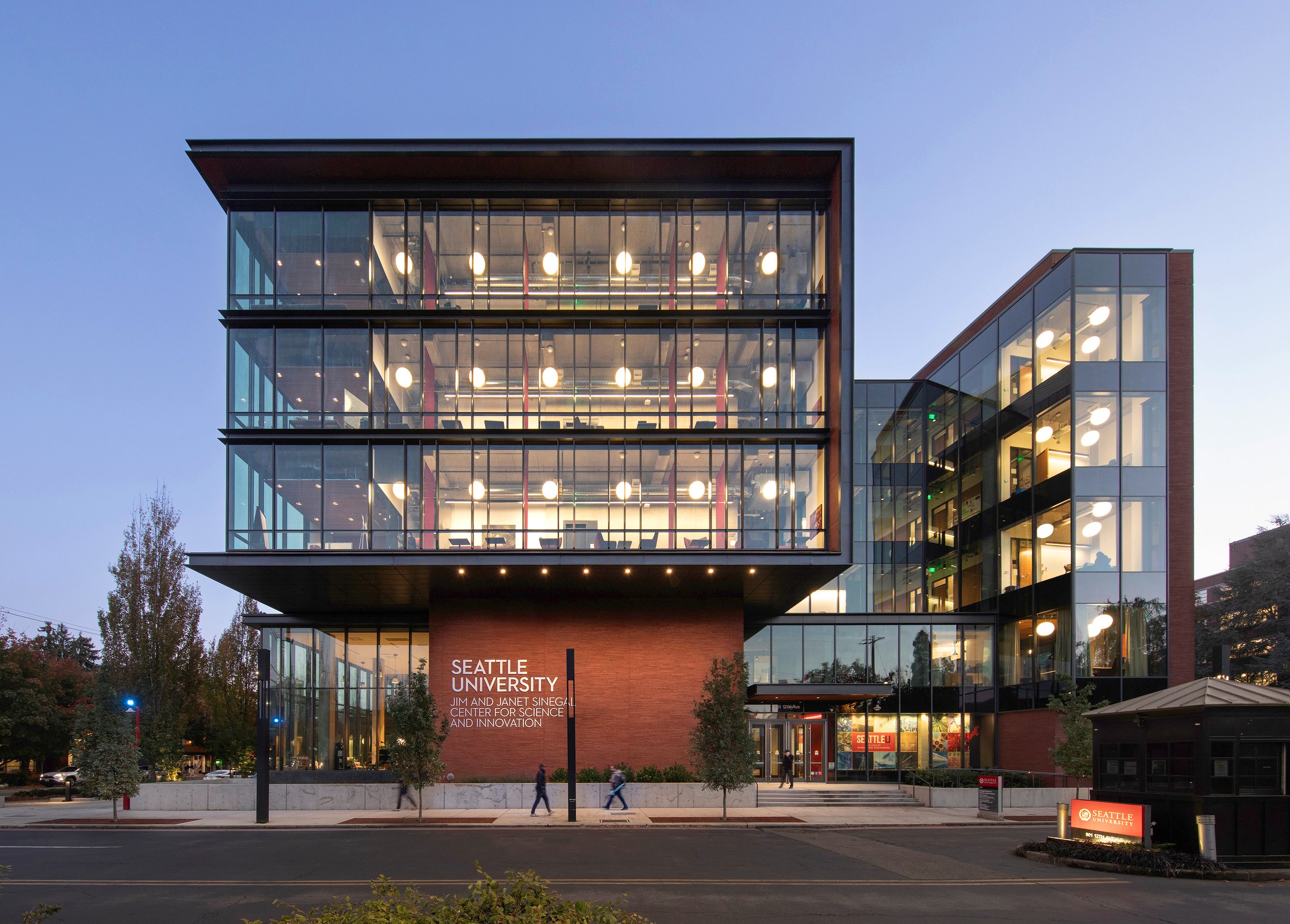
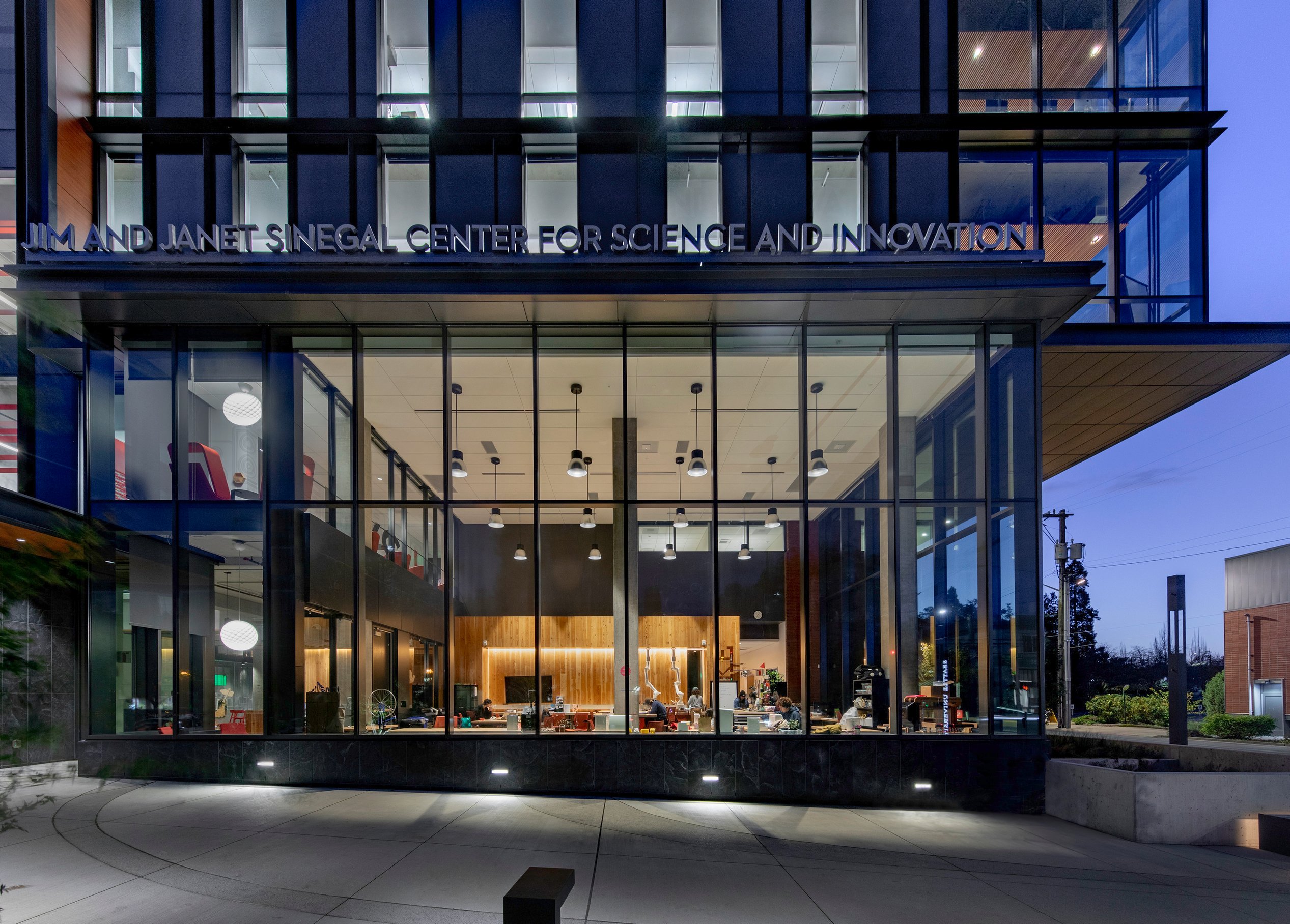
So location: traditionally in a lot of these things back in the day, we're kind of in the back lots of universities where it was, again, it was very specific to a discipline or a major. Now we're seeing them being placed front and center on campus, and Seattle University is a great example of that.
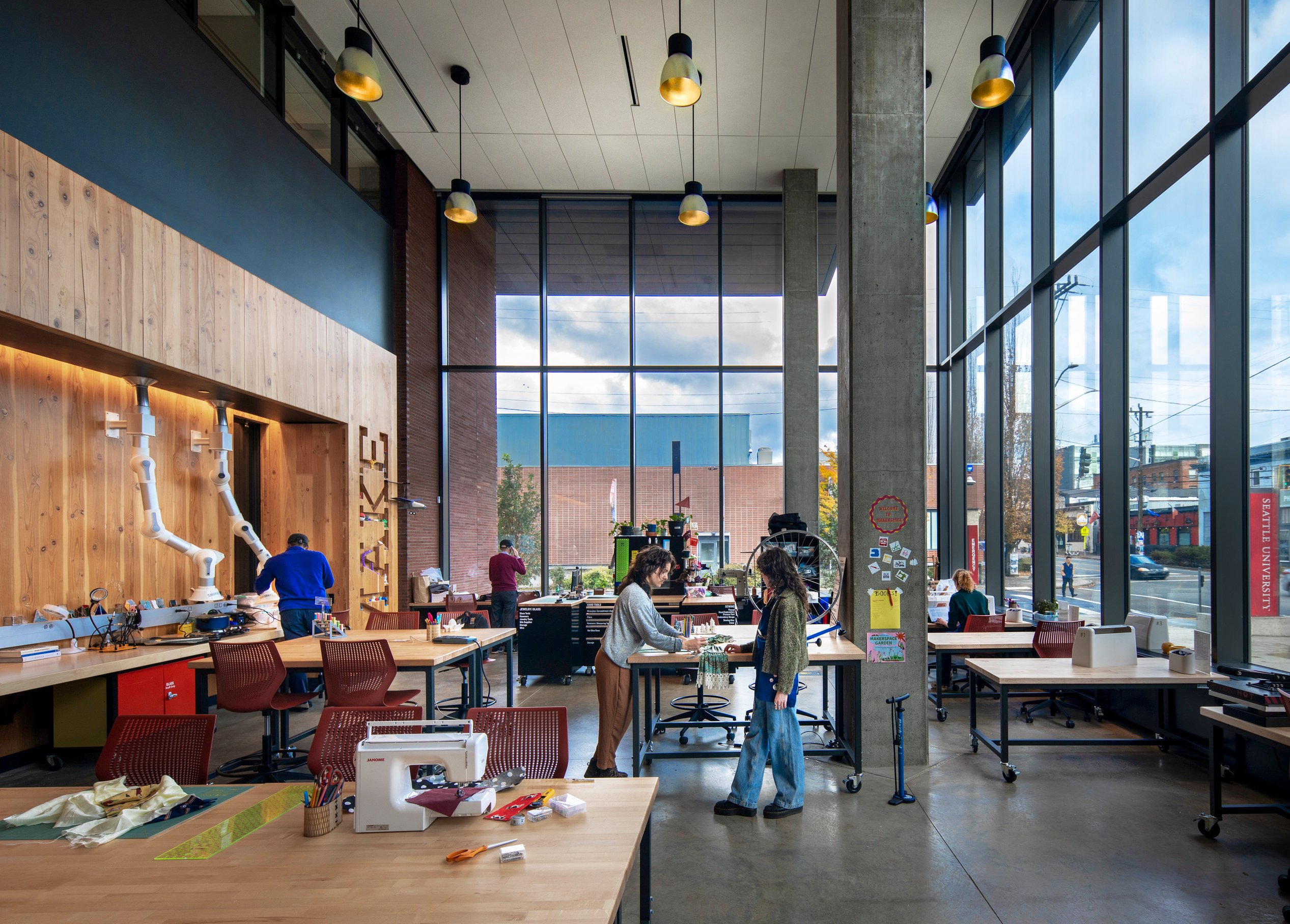
We designed The Center for Science and Innovation there, and they decided to put the makerspace literally right at the front corner of the building, like the main corner, and not just the corner of the building, but at the main entrance to the campus. So when you come to Seattle University, the first thing you see is that makerspace. And we intentionally made it all glass. So in essence, you walk by it and it's not like things are hidden away and you can't see it.
You see everything that's happening in those spaces and the other great thing about that is they're not like, you know, a 9 to 5 kind of space. They're in their late into the evening building things and really starting to kind of showcase all that innovation that's happening in the space.
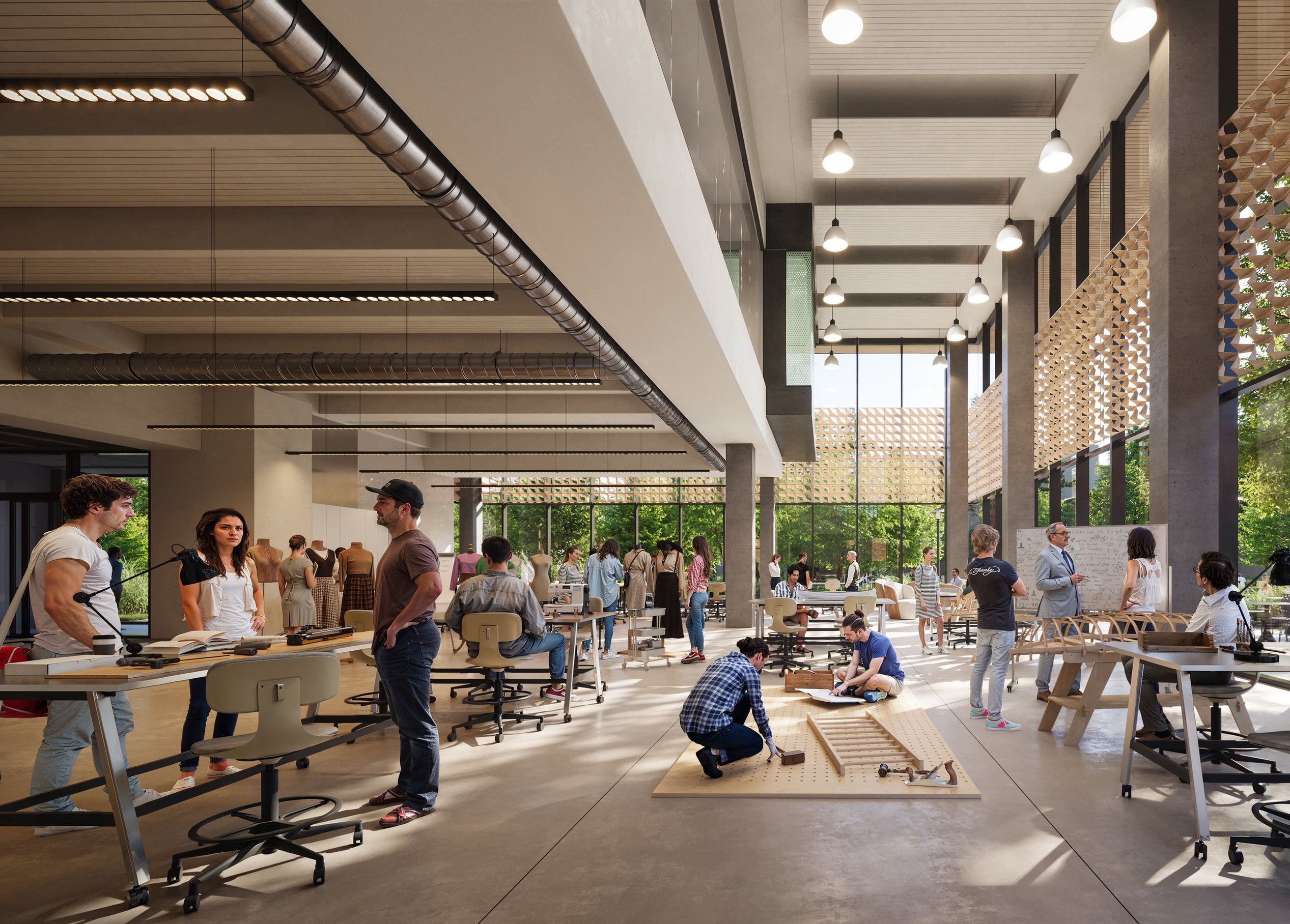
Also, just the idea of making it like accessible to multiple people. One of my favorite things is sometimes you go to this space and someone might be like doing something very serious. Like they might be like modeling a new robotic arm for a robot that they're designing and prototyping. But then right next to that person, there also could be a person embroidering a baseball cap for their, you know, intramurals, ultimate Frisbee club or something.
So it's like you have all these different types of people kind of adjacent to each other with a lot of different missions in terms of what they're trying to do. And it's it's awesome because the guy that, you know, embroidering a hat, as you might see, the woman who's doing the the robotic arm, and there might be some kind of symbiotic relationship between those two things.
You wouldn't typically think that there would be a relationship to that, but that person see someone else doing something and again, it all comes back to this idea of people seeing other people succeeding in terms of their studies, as well as just their social life and social interaction on campus.
Expanding on the idea of transparency and celebrating what's going on inside the makerspace, a couple of very similar but different examples within Texas A&M University, we're wrapping up an engineering building out on the Galveston campus, and this engineering building is for both teaching and research.
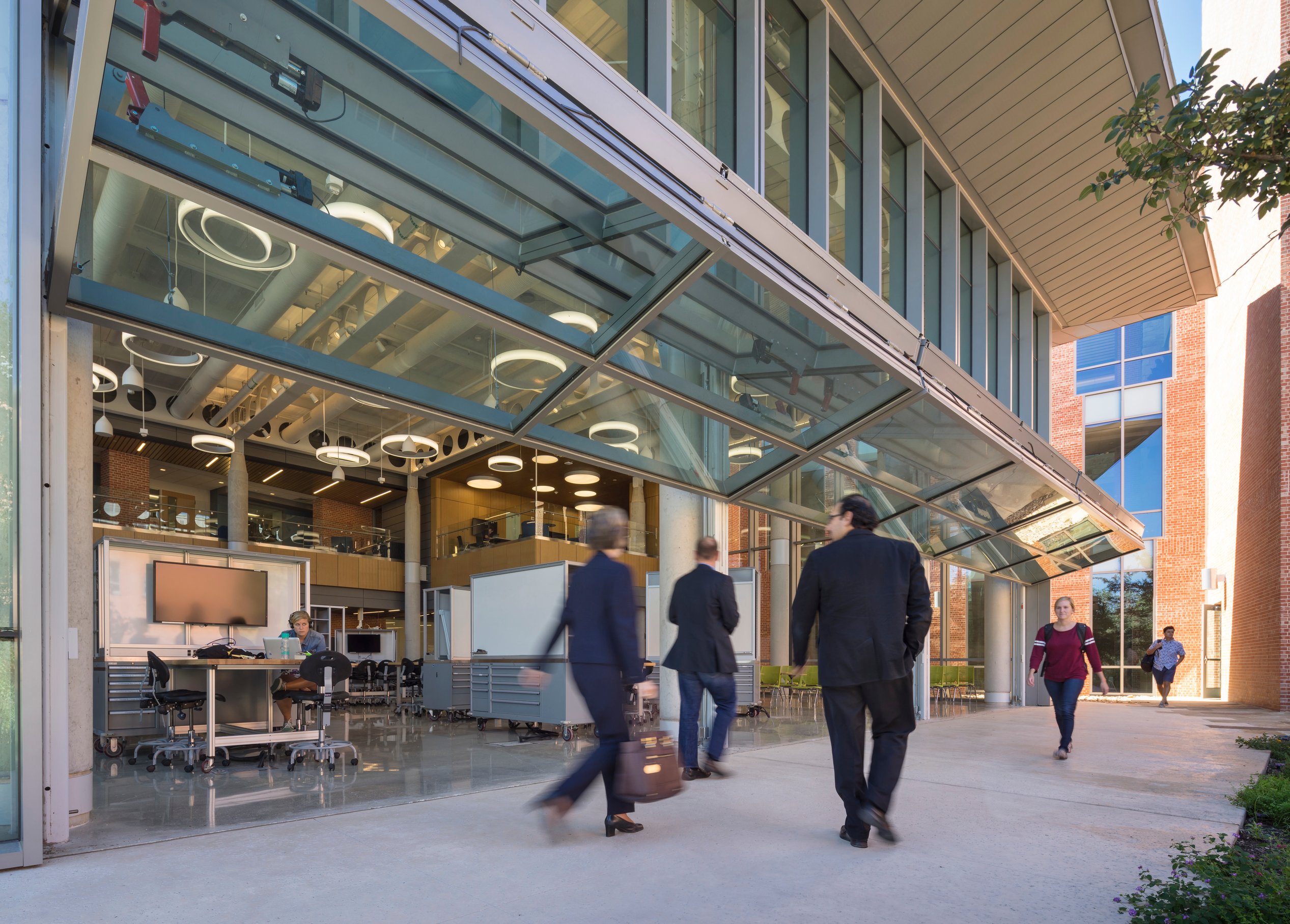
In a similar way, as Rob described, we place the makerspace kind of right at the entrance. It is literally a jewel on the building right as you walk in. It's surrounded by glass. The entire campus can see this makerspace. It really is kind of a highlight as you're approaching the new engineering building. And the idea there is, is really to get students excited. Those who are passing by, walking around the campus, get them excited and help celebrate all that engineering is and what engineering is doing on the Galveston campus for the blue economy.
On the flip side, Texas A&M also has engineering medicine, which is located in Houston in the Texas Medical Center. And so that too is sort of a makerspace and making and thinking on display. It too, is surrounded by glass, but your public passersby are not necessarily students. You're in the Texas Medical Center, and so most of those passersby are the general public. And a lot of those people are physicians and people in the medical field.
And so you're looking at more professionals as well as patients who are in the area. And so that's another way of celebrating what's going on and celebrating kind of the visionary aspect of engineering medicine and, and promoting their program outwardly.
One of the things we've been seeing recently is the audience isn't a specific group, it's the entire campus. And in some cases, it's not just the campus, it's the community. A lot of these makerspaces are great places to take, you know, kids that are in grade school and walk them through and have them see, you know, someone building a robot.
What happens is you get that spark, right? All of a sudden, someone, you know, it's almost like retail. It's like when you're walking through a city and you're window shopping. That's what these spaces are becoming. And it's like academic retail. You're like walking through and you're seeing things. You're seeing just students having fun or building something or doing it like a pitch to an industry partner. These spaces have become a great recruitment tool to kind of get the next generation of people to really engage in fabricating and making, in pursuing a career that they might not otherwise have thought about.
Getting people in the door. It's almost like a gateway drug or catnip where you get the bug right, you build something and you get that bug, and all of a sudden it's like it just sparks all these other ideas, and students keep coming back to do more things.
So as the popularity of these spaces rises on all these campuses is, how do you actually accommodate the population that's trying to access, access these spaces so at Seattle, their makerspace, the one that we design, you know, again, is front and center on their campus.
One of the things they've done is they've actually been able to tie that to other spots on campus that you could do more things and different things, right, and work with the different colleges and majors on the campus.
So an example at Seattle is know they have a costume shop as part of the theater department, and they have a lot of sewing machines. And, you know, someone might go to that, the makerspace that we designed and want to do more. And the equipment's not there, but then they can find out the resources and then access those resources across the campus.
So it's almost like a hub and spoke kind of diagram, right? Like, you know, you have that kind of the makerspace is front and center, that is, you know, very visible, super accessible. And then the students go in there, they do one thing and they realize they want to do something else, and then they can start to access and really leverage the campus wide resources. So that's something that, you know, maybe we'll start to see is these spaces are going to be sprinkled throughout campuses, not just centrally located.
Along with that idea of connecting students with resources, you both mentioned industry professionals being in this space, whether it's those who are passing by or industry pitches that you mentioned, Rob. So off of this, I'm curious if you're creating intentional zones or spaces that might help support these student-industry partnerships.
Yeah, absolutely. So at at EnMed the people who are walking by kind of on the outside are literally just passersby on the sidewalk. Because it abuts a very dense area of the medical center and you're right along a major artery in the med center.
But on the inside of the building, they definitely have a strong focus on bringing in industry partners and bringing in people in the medical community and the engineering community to come in and critique the students work and collaborate and teach seminars. And all of that can happen directly inside the makerspace.
And so a professor or a physician can come into the makerspace and look at an artificial lung that a student is working on, or a device to help heart surgery or something like that. They can come in and look at it in real time, and look at the various prototypes that the student has created and give them feedback on case study number one or case study number four. You know, and help them kind of guide toward the right solution or the final solution for their design.
Yeah. I mean, one of the things that we learned when we were designing the Center for Science Innovation at Seattle was that the students were meeting with industry partners often before the project, but they didn't have a space. They said, we don't have a space that we can go to, like a conference room that's equipped and looks serious enough to, like, do a pitch to an industry partner.
So part of that project is a series of conference rooms that are basically like a place to take an industry partner that are really, you know, well equipped in terms of technology, but also just look the part honestly, previous to that, that building, you know, they were just doing it in a classroom or, you know, a space that was just kind of like available, right. Now, they have this space. That's it looks the part, right. It's like, you know, we're we're serious. And here's our pitch.
One of the things that Seattle also is that they did a really good job of reaching out to industry partners during the design process to get them to be involved with the building. And we looked at a lot of different spaces. We went out to the Microsoft campus and Amazon and, and engaged with them to help shape the building. And ultimately, what was really nice about that is, you know, they actually sponsor the building. They have a in that building right next to the maker space, in fact, they have the Microsoft Cafe, which is, you know, a place you can grab a coffee.
The dean there always says that that's where innovation happens. It's when you're waiting in line for a coffee and you run into someone you wouldn't expect to. And you talk about what you're working on, and all of a sudden that person has an idea that sparks another idea.
And then also they had the Center for Computer Science was, you know, sponsored by Amazon, and the actual plaza was sponsored by Paccar. They make the big rigs. They're working on the autonomy semi trucks.
So there's it's just fun because you see what happens if you engage early with those, especially locally in Seattle, because it's such an amazing ecosystem of all these different, amazing companies. They really doubled down on that, you know, during the process. And I think it was fruitful in the end because now having those names associated with their buildings, it brings a level of validity to the project, the university, and most importantly, all the great things that students are doing there.
And one of the things that I would add is at, at EnMed, one of the components of that program is actually learning entrepreneurial skills. And it's the idea that if a student, let's say, they create some sort of groundbreaking medical device while they're in school, and it's been vetted with, you know, whoever their industry partners are, they're partnered with Houston Methodist Hospital as an example.
If a student creates some sort of groundbreaking medical device, they're trained in how to basically expand that, and that student may decide not to go into traditional medicine or even engineering in the future. That student might patent that idea and then expand it and turn it into a business when they graduate.
And so having those partnerships and having that visible is a really great thing for their program, and being able to test it and kind of pitch it to people who are actively working in the field, I think, is it only makes those students stronger. Their possibilities really expand.
So I want to switch gears slightly, where we've been talking about the location of the makerspace on campus. I want to think about the design and layout of the makerspace itself. So are you aiming to design that space in a way that guides the students through a maker process?
I think as far as taking users through the process of a makerspace or designing a makerspace, it's important to recognize that the process is not necessarily linear. Meaning when you're designing a makerspace, you're not designing it with a step one, step two, step three sort of mindset.
It's more intended to be a space where students can test their theories and test their ideas in a variety of capacities, and sometimes it's a little bit of a zigzag. Sometimes it's two steps forward, one step back. And so the space wants to kind of support the evolution of whatever it is that the student is testing.
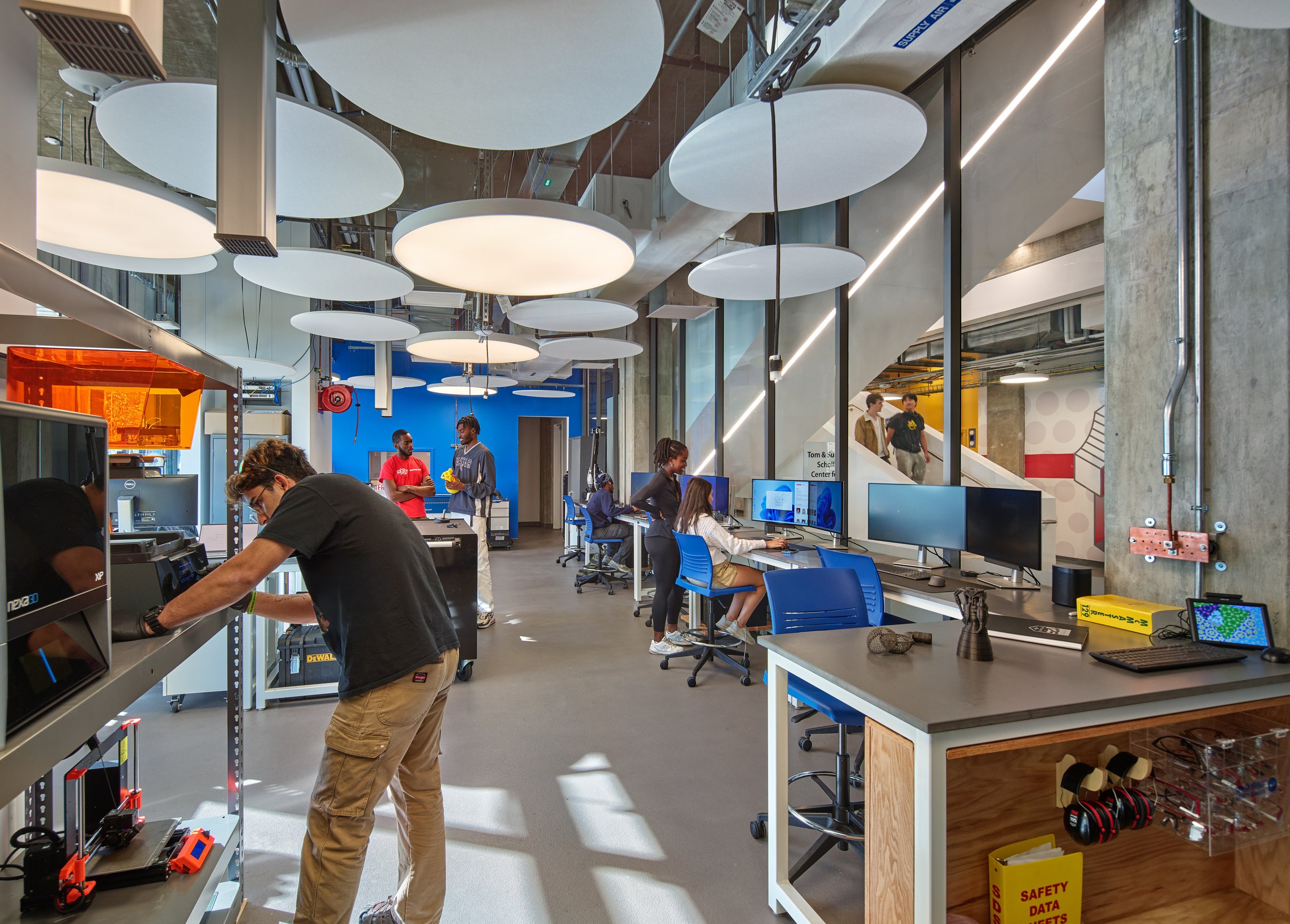
And so as an example, a makerspace might have space that is open bench work with utilities, where tables are movable and they can kind of build with whatever their materials are in an open space, spread out with physical models.
There also might be an area where a lot of what they're doing is digital, and so it's more computer based.
They're 3D printing, they're laser cutting and that sort of thing. And sometimes they might have a machine shop where they're using larger materials and actually using a bandsaw or a router or something like that to physically make something themselves. And so sometimes those students are bouncing between all of those areas into crit spaces. It's really more of a an area for discussing or presenting and so I think that when it comes to the zoning of a makerspace, you kind of want all of those areas to be within proximity so that students can bounce around as they're working through their designs and working through their concepts and adjust as they need to and as their designs are evolving.
Yeah. I mean, I would follow up with just we're designing a project for University of Houston right now and their mascot’s the Cougars. And so we have this space that we're calling the den, because it’s a Cougar Den, which is this big open area that's meant to be really flexible. The idea there is that space could be used for putting something together, getting all the parts and putting them together.
It could also be used as like for a poster session where they have people come in and do critiques or they have industry events. So it could almost be a multi-purpose room in some cases. And what we did there or what we're doing there is having it almost like that's the that's the kind of center of gravity for the maker space.
But then almost like satellites around that space are all the different types of fabrication spaces. You need some of which, you know, woodshop has fairly substantive requirements for mitigating the dust and all the fire protection stuff that you need to do. And there's a metal shop which doesn't want to be part of that. There's also an area where there's, you know, the 3D printers and other expensive equipment that wants to not be near any of the dust that the woodshop is.
And all those things kind of act as these like these areas around that central hub or den. To Laura's point, it's like people moving across these different thresholds, but they're all kind of coming to the center, which is the University of Houston.
And that's again, super transparent. In the case of that project, it's almost perfectly in the center of their campus. So it's like no matter what, people are going to be walking by it.
But again, that flexibility is super important. But also, as Laura was saying, like, how do people kind of maneuver in and out of this space? And how does that space allow for multiple different functions and multiple different activities?
Yeah. And I think the other thing I would add is, I guess the concept overall of the makerspace is to really give the students all the tools that they need to create. And one of the other tools that is critical, especially moving forward, is the concept of virtual reality and extended reality.
And so some of the examples that we were talking about are more of the physical, you know, their hands on machine shops and materials that they're fabricating. But also this idea of how is AI improving or impacting the way that students create is definitely prevalent, and it's becoming more and more prevalent.
We're starting to see users and, and institutions really have dedicated space for virtual reality technology and AR technology and, you know, stages that kind of create that simulated environment and again, create that sort of extended reality environment for students. And so those just from a you know, an idea of how do you do this without creating friction or disruption?
Those types of spaces all kind of need different, I guess, built environments. Your extended reality space is going to look very different than your machine shop, and you generally want to make sure that you're designing so that one's not disrupting the other, but they still want to kind of center around that sort of Den or that hub that that Rob was referring to.
And so there is some strategic thought about how you kind of organize those spaces and give them the environmental kind of safety that each of them needs, but also allow for that cross collaboration and ease of accessing all of the various types of tools that that are available.
The other thing I would add, when thinking about just the growth and the number of users, a makerspace has over time, is really to not underestimate the importance of storage, just basic storage rooms and spaces for students to put their prototypes and their projects, and put extra materials and extra equipment that needs to be tucked away because they're not using it for the semester or whatever it is.
Having a dedicated space that is large enough to grow with them, with the program over time, I think is important, because the more you can keep those unused items out of the way and keep the maker space open and maintain that physical flexibility, the better.
As soon as it starts to become cluttered, because there's not a place to put the projects or put the extra equipment and that sort of thing, you start to see a decline on sort of the utilization or the ability to utilize those spaces effectively. It wants to be busy without being cluttered.
And to Laura's point, it's not just about the stuff that’s being made. It's about the flexibility, the space, being able to, like, change at a moment's notice. And so you can't have enough storage. The projects we did at Trinity University in San Antonio, their central makerspace, they call it The Cube.
It's this big double height space and everything's pretty much on wheels or movable. And so multiple different scenarios. And we've seen like a lecture, we've seen they have benches that come out where students will meet as a group. We actually did a custom design for the bench and the area that where students would sit. So there's like an integrated LED screen and those things can move basically on casters and then they can set it up, they can clear it out, which again storage is important where you put that stuff.
And then they they set it up for a lecture. They set up for a symposium or set up for a poster session. So storage is always just something that's, you know, mandatory to have these spaces really kind of maintain that flexibility.
Yeah. We've had a few other episodes where we talked about storage as almost the unsung hero, because it's not necessarily the most exciting thing to talk about, but it's really important for making that space function properly and allow it to have a better or a longer life for those students. On another note, you we're talking about flexibility, and I'm curious if there's any trade offs when you have an increased level of flexibility in these spaces.
So the idea of flexibility is always key. And balancing what we really mean by flexibility in terms of the budget, which generally will have limitations on it. Ultimate flexibility comes at a premium in terms of cost, for sure.
And so the goal for any project in any institution is how can we maximize the flexibility while also meeting the budget? As a very simple example, if you've got a movable bench or a space of several movable benches in an open area, having utilities that are readily available at those benches, whether they're suspending from overhead or coming off a wall or something like that is pretty common.
But thinking about, I guess, the capacity of those utilities and what types of utilities need to be available at every bench versus in the room itself, are kind of some decisions that institutions will generally need to make. And so as an example, having compressed air or multiple types of power or data or things like that, thinking about the presence in the space is one thing.
But having it so flexible so that it's at every single bench or at every single seat or something like that, has a different cost impact to it. I guess the key is, is it really comes down to balancing what are you trying to do 90% of the time versus what is that extra 10% that is kind of above and beyond that adds cost.
It's funny, Laura, you're talking a lot about flexibility, almost the stuff that we can plan for. One of the things that I always love about these spaces is we have no idea what people are going to be doing in them, and also the technology changes. I mean, we we've had projects, you know, we're during the design phase, we don't even know, like exactly what's going to happen. And then we find out that a new group is really interested in something new. Right. And we have to plan for that during the design process.
But if you take that out, you know, over the lifespan of these spaces, we all know technology is going to change. And so we have to make sure that these spaces have the ability to pivot as it happens.
So it's it's not just even about planning for what we know. It's planning for, you know, a future, that it could be some new way of fabricating that we don't even know about. These spaces have to have that flexibility that they're going to change over time. And what that means is really big spans. So you don't, you know, have columns interrupting the space and also just, you know, making sure that how we design the structure and how we design the kind of way out of those spaces can shift and can change to accommodate all those different things in the future.
And with this more advanced or new equipment coming in, I'm sure there's a focus on safety and training. How do you think about safety in the design of the makerspaces?
I think every makerspace that I've worked on or seen generally has somebody who is kind of in charge of the space, whether that be a student aide or a tech person or somebody who is in charge of managing that makerspace.
And the reason is because of a lot of the things that we've said today is that they're using tools. In some cases, those tools can be very dangerous. And so just like in any machine shop that you go into, if you're working with something that can hurt you, it's important that there be somebody on staff 24/7 who is monitoring and making sure that the students are trained in how to use those tools appropriately and be this pair of eyes on hand just in case something happens.
So safety is really important not only in the personnel, but just having enough space to move around. Making sure that that the students aren't bumping into each other or bumping into equipment. They've got enough room to move around there are safety stations in appropriate locations for fire extinguishers, for safety showers, for eye washes, all the things that could potentially happen in spaces where you're using heavy machinery or even hand tools. You definitely want to work those aspects into the space.
As I mentioned before, you know, these spaces used to be owned and operated by a certain discipline, like engineering or architecture or whatever program it was. And now trying to make them more inclusive and having a broader audience of people that could use them.
The training definitely is much more difficult, because it's not like you can say, oh, we have 40 people in this major. We're going to everyone's going to go through the training. You have the entire population of the college or university that potentially could use the space. So training is definitely something that I think colleges and universities can struggle with because they're trying to make it more inclusive, which. So it's kind of like a catch 22 more people use it, but you have to train more people.
So that's something that I think that, you know, a lot of different colleges or universities, you know, do it differently. And there's also tiers, someone that's going to come and do like 3D printing, you know, that's not something that you really have to worry about that much. It's low risk. You upload your file into the into the computer and you you hit print versus, you know, someone is doing welding.
That's a whole other level of training. So there's definitely different tiers to how the institutions train. But it's all back to this whole idea that these spaces aren't for just a limited population. They're for the broader population on the campus.
Especially given that these spaces are starting to bring in more people who might not have seen themselves as makers before, and how AI and virtual reality might impact these spaces in the future. I'm excited to see how they evolve in the coming years, but for now, I want to thank you both for joining today and thinking about what makes a makerspace good.
Hosts

With expertise in crafting compelling narratives that engage diverse audiences, Tully blends creative flair with a keen eye for detail to develop impactful content across platforms. Her work includes award-winning podcast production, content development, and copyediting large-scale documents, all while enhancing brand voices and driving audience engagement. Tully also supports data visualization efforts by transforming complex information into clear, actionable insights through engaging storytelling.

Talk with us
Complex challenges need fresh perspectives and deep expertise. Connect with our team to explore how we can help you create spaces that make a real difference.