The good flight training room
by Tully Mahoney in conversation with Pete Stavenger and Elizabeth Slyziuk
Pete Stavenger and Elizabeth Slyziuk explore the design of flight training environments built for precision and preparedness.

Pete Stavenger and Elizabeth Slyziuk explore the design of flight training environments built for precision and preparedness. Think full-motion simulators, layered redundancies, and hyper-realistic mockups—all engineered to keep teams sharp, safe, and always ready. Join us to learn how these spaces support continuous readiness and evolving technology.
/
Managing Director Pete Stavenger and Mechanical Engineer Elizabeth Slyziuk join host Tully Mahoney in The Good Room.
Hi I'm Tully Mahoney and welcome to The Good Room. Today we're thinking about the good flight training room with Pete Stavenger and Elizabeth Slyziuk. So, to start off the conversation, Elizabeth and Pete, could you both please share your background and how it relates to the flight training room?
Yes. So I am Elizabeth Slyziuk. I also go by Biz, which is a nickname that a lot of people at Page know me by. I’m a mechanical engineer, and spent a lot of my career working on mission critical projects. And so the mission of the facility is really of the utmost importance.
It lended itself really well into working on flight training centers, because the whole facility around it is supporting the training activities and the pilots and the machines. It was an organic introduction to the building type.
I'm Pete Stavenger, architect by training, and my role at Page is the managing director for our Denver office. And I've actually spent most of my career involved in aviation projects of one kind or another, and started early in my career with large scale terminal design and redevelopment.
And so it's been really awesome to experience this side of the aviation industry and get some exposure to the types of facilities and spaces that are required to train pilots. I think it's something we, as just commercial travelers, sort of take for granted. So to get some insight into that side of airline operations was really cool.
Just to build some context. Could you describe what an user's experience is when they get to the flight training center?
With the campus work that we've done, it really is kind of a corporate campus, but it's also everything that an airline, particularly flight attendants, pilots, and mechanics, and others, all of the types of spaces that they would need to practice and train to be the best that they can at their job.
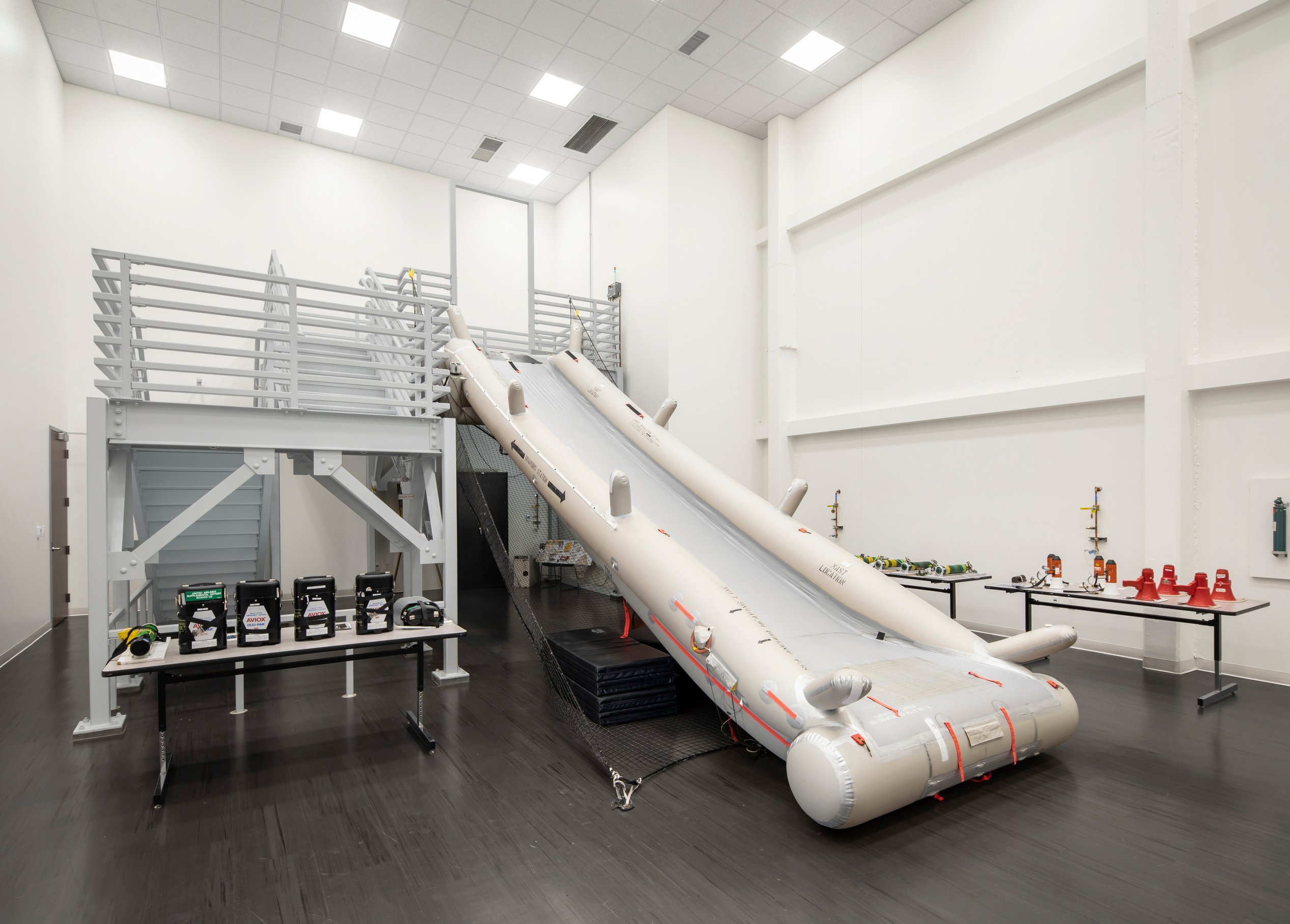
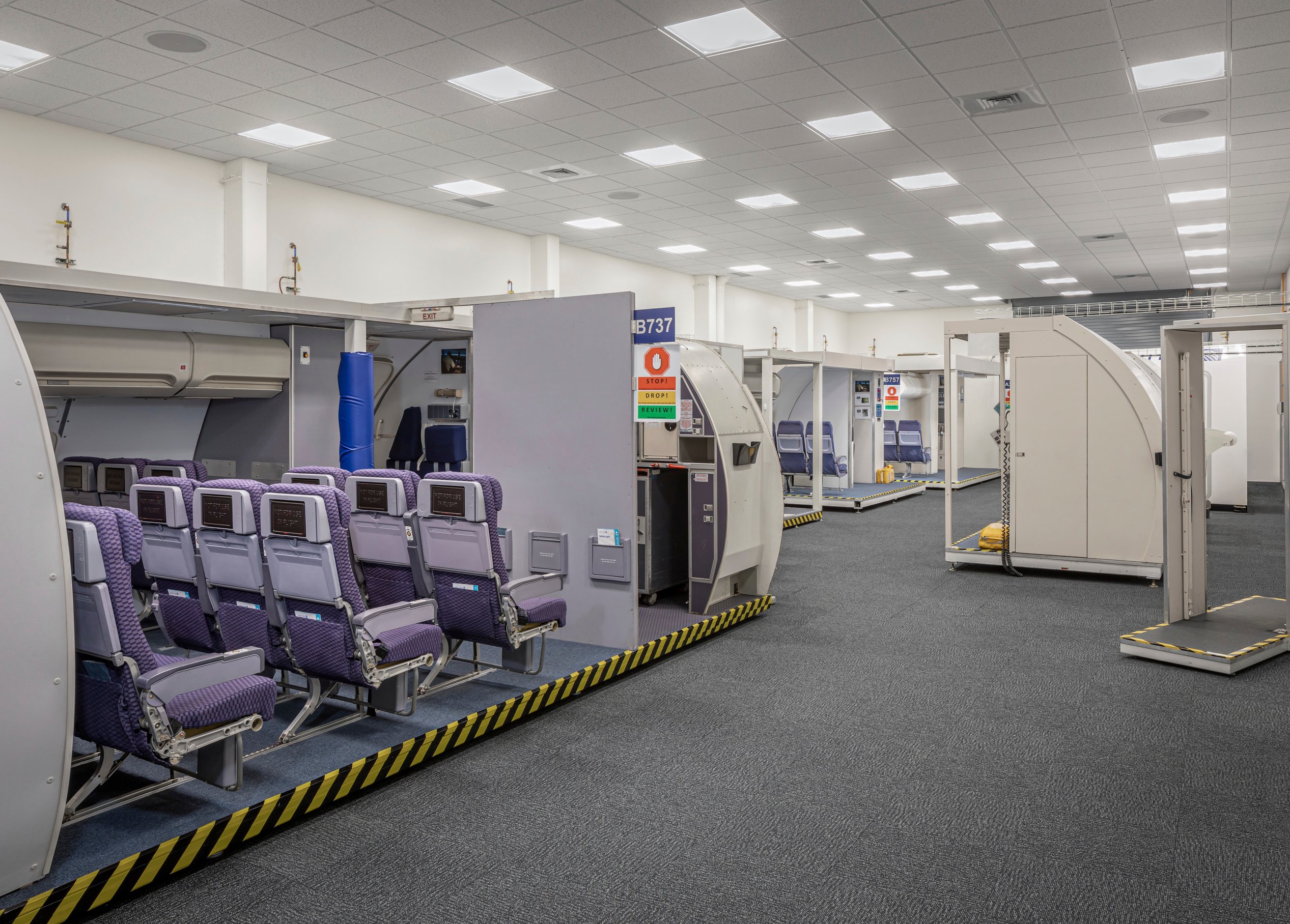
And obviously, it's high stakes when you're flying a plane or operating an airline and you have other people's lives at stake, right? And safety is of the utmost importance. And so everything at these facilities is rooted in rigorous training to ensure that the pilots and flight attendants are all very comfortable should something unexpected happen during a flight and so the types of spaces, I mean, it's everything from mock ups or vignettes of all of the doors for all of the different airplanes to how to operate oxygen masks and rehearsing the flight safety speech that we've all heard a thousand times.
And then the types of training devices for pilots are specific again, to each aircraft type or each type of airplane. And they include some devices that are fixed that don't move, but they have all of the functional switches and buttons from a working aircraft or a full motion devices which actually simulate flight.
And the instructors can simulate any kind of weather environment, any kind of malfunction on the aircraft, and sort of put the pilots through the paces. And it's all governed by the FAA in terms of recurring training. And also the airlines have their own policies.
Yeah, Pete covered it all. It's a very interesting facility with a lot of different spaces and types of training. Like Pete was mentioning, with a lot of simulation and a lot of hands on training. And then there's a large area where there's a lot of classroom training and conference rooms, and it's very diverse space that all the employees go through.
So you mentioned the flight simulators or the full motion flight simulator, and I'd like to dive into those a bit deeper. I think that there is a lot going on that's really interesting architecturally and from the engineering systems. So could you briefly explain what a flight simulation is, what that might look like for somebody who doesn't have a picture in their mind?
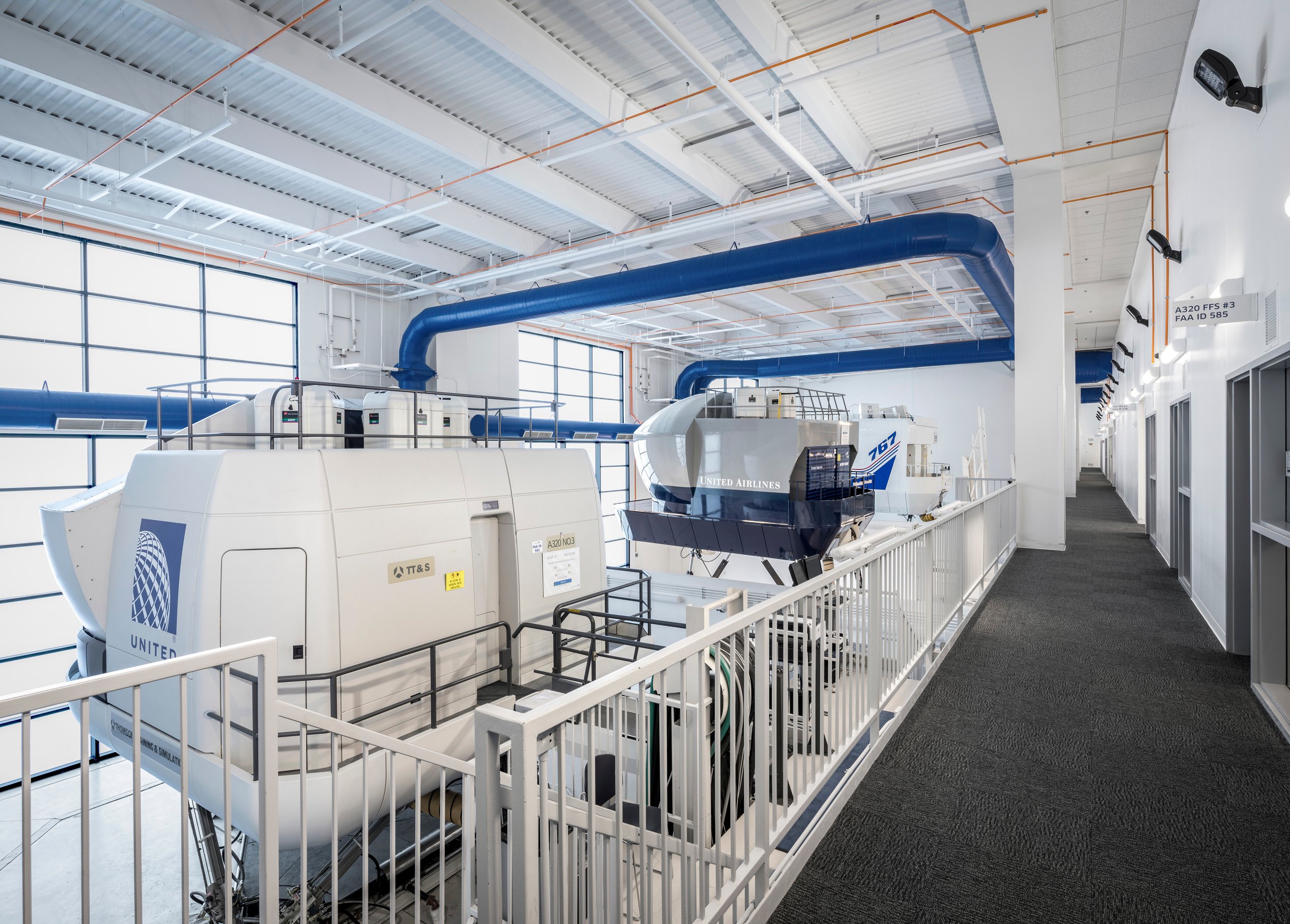
Yeah, I think we could describe it as somewhat of a pod that pilots and the instructors will walk into over a bridge. So it's elevated. It has feet that it's standing on. And then they walk into this pod, and within this pod is a mock up of a cockpit with a full screen for visuals.
Once they're in and training starts, the drawbridge goes up, and then this pod is completely able to move around, change the angle, and going up and down to simulate takeoffs and landing and any kind of flight, turbulence, anything like that. It is very immersive training.
The screen, you can dial in any airport, do a take off or a landing at any airport or program in different routes, and then all the knobs and buttons and devices in there are used to replicate actual aircraft as well.
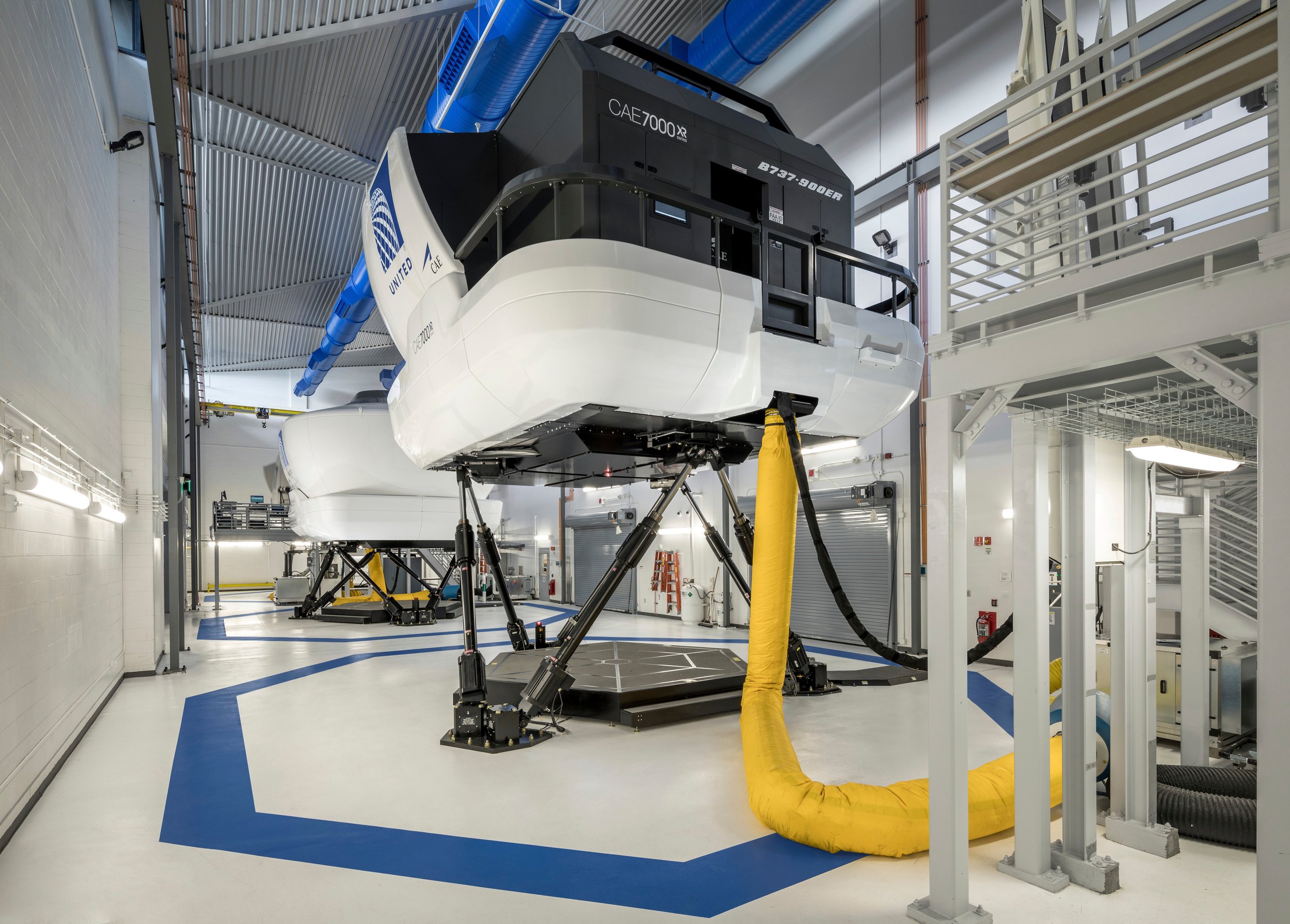
There are two main types of full flight simulators. The kind of older generation are driven by hydraulics, so those feet and the legs that Biz was talking about are either driven by hydraulics, or the newer devices are electromagnetic motion or EMMs. And from the exterior there's very little difference in the two.
But as you can imagine, these things, when Biz mentioned a pod, I mean, think of it as a fully functional cockpit that's then wrapped in a shell, and the pilots can sit in front and they're looking at the screen. So up on top of the pod, or a series of projectors that are projecting down into the screen.
And so the space that we need for these devices is quite tall, like a high bay type space, usually with a minimum of about 35ft of vertical clearance. A lot of times there will be an a rail crane that might span across there to assist with lifting the heavier projectors or taking the shell off for maintenance and other things. And so typically, each of these, they’re referred to as simulator bays. So each full flight simulator has its own space.
And typically the ground floor where these devices are sitting is reserved for the simulator technicians who are supporting the training. All of the computers and equipment exist within a computer room, almost like a data center type environment where it's clean and all of the cooling and other systems are there to support continuous operations of this equipment.
And then the second floor often is where the pilot training, the briefing rooms exist adjacent to these simulator bays. And then access to the simulators typically happens from that second level. And then usually there's a third level that's above the training area, just due to the volume of space that's needed for each of these devices.
And then in some cases, you may have 1 or 2 full flight simulators in a single space. It might be four, it might be eight or 10 or 12. It really depends on the airline and their particular risk profile, right? If you can imagine something happens or there's an event fire or a spill of some kind in one space, they want to be able to maintain training operations. And so sometimes these high bay spaces are subdivided to help mitigate risk.
When we work with a design, we're working really closely with the manufacturer of the simulators, and they have a pretty tight range of requirements for the temperature and humidity, for the simulators, for the supporting equipment that's in the computer room that Pete described, and other engineering systems that play into the simulator.
So the powers were obviously very important. And there's a lot of components that need dedicated power connections. And then the fire protection is also very interesting component of it, where it's so much depends on the jurisdiction, because these are very unique facilities and unique operations there. And we've worked a lot on this flight training center in Denver. And with the H.J. to come to a solution where we're adequately protecting space, and the device, and the people with these simulators that take up a lot of volume. And we need to protect what's underneath that volume as well.
So on the engineering side, it's very important that we're protecting or we're conditioning for the 24/7 operation. So we get pretty detailed in terms of the design and the redundancy to ensure that there is that uptime and continuous training available. And then same on the power side. There's uninterruptible systems that support the EMMs serving the simulators and batteries that go with that. So it's complex. It's really fun because we work so closely with the manufacturer and, you know, design the right system to support that mission there.
And they really are. I mean, think of them as a really big, expensive piece of furniture. So it's everything that comes with the simulator to make it work. It's our job, as you know, architects and engineers, to have the building ready. So when that device shows up, it's kind of plug and play.
And again, the stakes are high. There's tight schedules for installation, and so the device will show up in multiple crates by the manufacturer and their team. They work closely with the airline and airline representatives to ensure that everything is functioning properly. Before it can be used. The FAA actually has to come out and inspect it and certify it that it meets all the requirements for training. As one might imagine, it's not the easiest thing to schedule the FAA to come visit your facility.
And so again, the stakes are pretty high in terms of needing to turn over the building in time for the simulator to be delivered and assembled, and then in time for it to be commissioned and then ultimately inspected. And if you missed that, and we've never, we've never missed a date.
But if you were to miss that, then, you know, the FAA has to come back and it is likely weeks or months before that can happen. And now your training schedules thrown off. And then in a worst case scenario, you could actually have to start to cancel or disrupt flight operations in the real world with real pilots, and real planes, because people aren't current on their training. So pretty high stakes. And that's the kind of stuff that we like.
You also mentioned the shift from the hydraulic to the EMM simulators. With that transformation, are there new design considerations that you need to think about in these facilities?
Yeah. So the switch from the older legacy hydraulic full flight simulators to these EMM driven simulators has a significant effect on the engineering systems. For one, adjusting where that power and movement is coming from. So with a hydraulic system, we're looking at a large hydraulic skid that is placed somewhere in the facility nearby, where we can hide the hydraulic fluid from that skid up to the simulator. And with that goes a lot of protection around that equipment and clean up and provisions to maintain a safe and clean environment.
When we switch to an EMM, all the hydraulic fluid and equipment really goes away. And so we're looking at a much more computer, electric driven equipment. And so that really shifts a lot of the heat load to these computer rooms that are adjacent to the simulator. So now we're looking at pretty specific environmental conditions for these computer rooms to maintain the right conditions for that equipment is an interesting transition.
We've done several simulator conversions where we did convert hydraulic to the EMM type. So we're pretty familiar with all the different components that need to be considered for that. It's a great change seems like in the industry to kind of work towards that electric driven system instead of hydraulic. I know there's a lot of considerations for this facilities team when they're and maintain and operate hydraulics systems.
Yeah, I think it's obviously easier to fewer parts generally are easier to maintain. And there's not the concern around fluid leaks and so things like that there were safety trenches around, you know, underneath the simulator to collect fluid in the event that there was a hydraulic spill. Right. So those are largely not needed once it's converted to an EMM.
And the other thing is the you know, each of these devices is anchored to a concrete slab with, you know, very large bolts and the forces that are created by the EMM motors are greater than the hydraulic devices are capable of. And so what that means is there's usually a need for a second slab. And so when we've done some of these conversions it's cutting out existing concrete slabs. That may have been a slab on grade of 7 or 8in thick and really getting to in some cases 24 or 30 or even 36in thick of concrete, really, to just help the overturning and prevent the overturning of any kind of accident or anything that might be created by those greater forces.
From an acoustics perspective, think of it like an electric car. The hydraulic devices are a little louder, they're a little more noisy, but the EMM devices are really quiet. So when they're in use, they're typically flashing lights mounted on the underside of the simulator. The underside of the simulator, when it's flying is probably 12 to 15ft in the air. At times it can come lower than that, but there's warnings, you know, on the ground for anybody who might be walking around that, you know, indicated the devices and use their safety striping and paint on the ground to kind of give everybody a sense of the full motion envelope that this device can move in to ensure that if you're walking around it while it's in use, that you're outside of that safety area. So there's a number of other considerations that are taken into place to not only maintain safe operations for those who are in the device, but also for those who are outside it and around it.
And that motion envelope is quite expansive. That really plays into our design when we're looking at the volume of the space and the clearance required from any adjacent wall or adjacent ductwork serving the space or stair structure up to the drawbridge. When we look at the design of the space, we have a full flight simulator sort of sitting in the middle of this bay, and then a large motion envelope that we factor into our design, and that really sets the parameters of any of the closest equipment or walls that we can have.
So somewhat switching gears a bit, but we were talking earlier about the motion and how realistic they are to simulating those real world events. Are there any other ways that you have, like specialized system that help create realism, whether that's in these pods or in another area of the facility?
Yeah, I can touch on some of the systems that feed the full flight simulators, which are interesting. So each full flight sim comes with an associated small air handling unit that sits on the ground in the SIM bay and that pumps air into the cockpit of the simulator. And so that's providing conditioning, but also providing realistic air supply that they would have in that space as well. The other interesting utility that the simulator requires is breathing air.
So we have a breathing air compressor and piping system that supplies air to the full flight SIM. That system is used if they're practicing or simulating a mask, loss of air pressurization. And so there are some very unique and interesting systems that make simulation components and parts and pieces, and the movement of what a pilot would be doing in that space very realistic.
And then there are other spaces outside of the full flight that maybe are more geared towards flight attendants, but the pilots also have to be trained in, aware of them. So there's a space at the campus we've worked on here that has a mock up a fuselage of an airplane. It's also in its own high bay space. And what they can do is, is simulate water landings, simulate crash landing, and then in some instances, what they can actually do is flood the room with the simulated smoke to simulate, okay, there's been a fire and they have to go identify and look outside of the windows on the doors. And is this a safe place to exit or not? And so they're trained on that.
They're trained on if smoke starts to appear in the cabin how can you navigate that. Right. And we've all heard about the emergency lighting that comes on inside of aircraft. So their training literally on all of these things in a controlled environment.
And so there's, you know, HVAC systems that help evacuate that simulated smoke after that training and some facilities around the world, they actually have similar type mock ups that are sitting in or near a pool, a swimming pool, so they can actually discharge the slide out of the door on an overhang or an exit and slide down into a water environment, or discharge the raft safely in the water and simulate what that's like.
And I touched on it earlier, but every flight attendant, every pilot, at least to my knowledge, has to at least once a year extinguish a live fire. There's a space where they can take something like a seat cushion and train the flight attendants and the pilots, and they'll set it on fire, basically on a gas grill, and then they've got to disengage the actual extinguisher that's on their particular aircraft from the clip or the mounting, and actually operate it so that they're current on how to use those devices as well.
So shifting gears slightly, I want to think about the future of these spaces. How do you see a flight training center evolving in the next 5, 10, 15 years?
With those facilities, I mean, even the existing facilities, the technology continues to evolve. And so there is a need and there will be a recurring need for updating spaces within these facilities to meet the evolving demands of whether it's the FAA or the mix of aircraft that are in any airlines fleet. It's important that obviously these facilities stay ahead of that curve. And as airlines continue to grow and acquire more aircraft and more pilots, then the training operations need to scale accordingly to support the real world operations of the airline.
And so as an industry, you know, I think across most major airlines, they're all generally in a state of growth. The facilities of the future, you know, I think will continue to be heavily amenitized. I think there will be a continued focus on the experiences outside of the training spaces, the full flight simulators and all of those. I mean, they're fairly heavily governed by the nature of what the training needs to be.
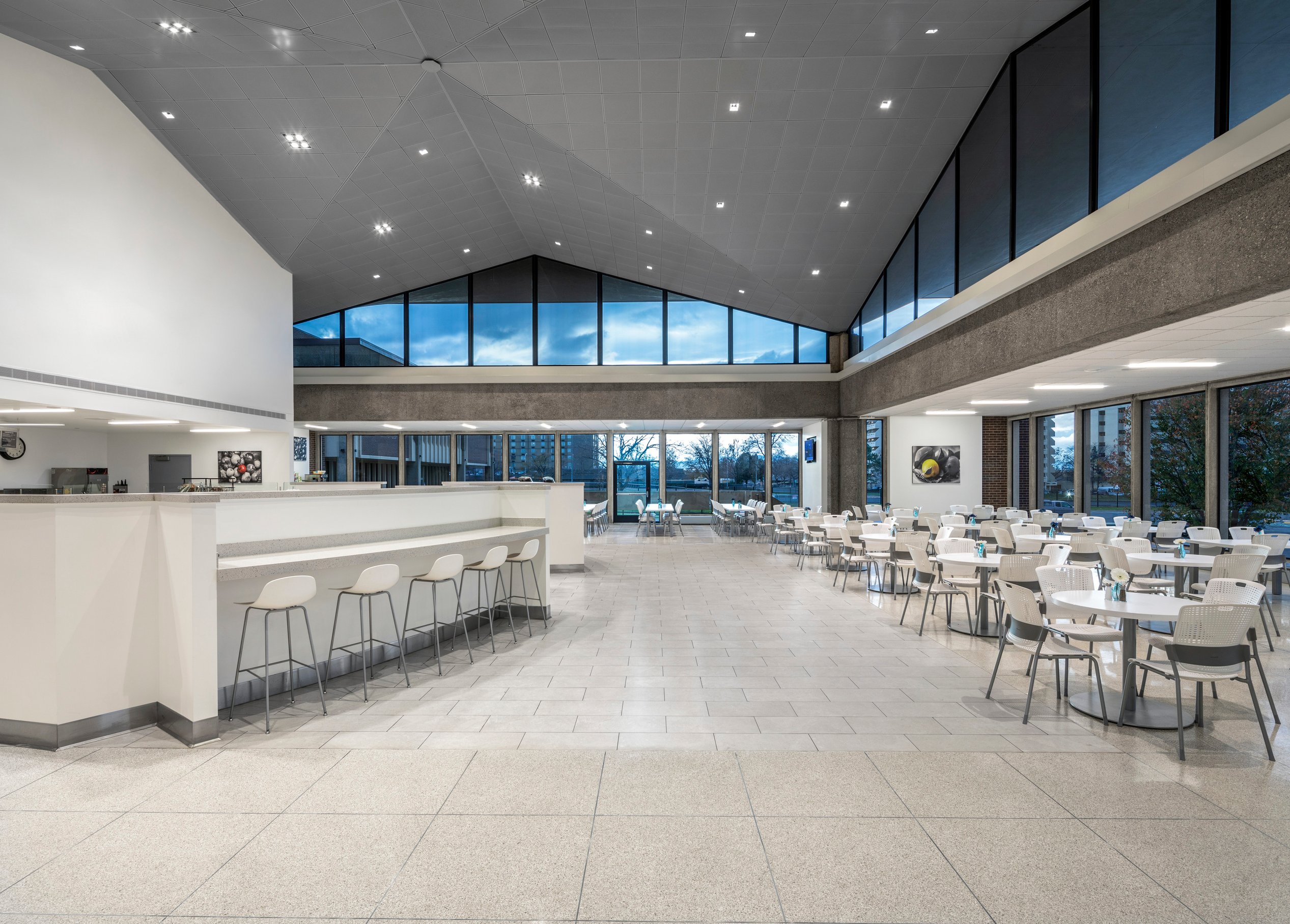
And so it's a function of how can we create spaces that reflect the brand of the airline and the experience that they want for their pilots and flight attendants. And as they're trying to grow and recruit new talent, right, the facilities in the places where these pilots and flight attendants will be spending their time, they matter, right? Having spaces where they can step away and alleviate stress or have a positive experience.
Yeah, and I’ll say too, the planned lifespan of these facilities is a really interesting design challenge. Like Pete was mentioning, some of these simulators are decades old and the building is even older or if we're looking at a greenfield, we're looking at a facility that can last upward of 50 years and that can remain flexible and adaptable as all this technology that Pete was describing changes throughout the years, and so that influences our design for a facility like this to make sure we're future proofing in terms of the engineering systems that support this facility, in terms of the architecture or planned growth on a campus, it's an interesting design challenge to plan for something that you know will be in operation for so many years.
You know, the facility suited for this very specific training and service and mission. But the planning is really for decades and decades in the future, is when we look when we're designing something like this.
In terms of an ability to maintain operations, resiliency will continue to be an important factor with these facilities. You know, I've toured 4 or 5 of these facilities and there are certain commonalities, and then there are certain unique aspects, and some of that is driven by the location of the facility. So there's a facility in Miami that's obviously prone to hurricanes and higher winds. Dallas has training facilities. And you know, tornadoes are a concern.
So whereas facility here, the briefing rooms and classrooms and other things tend to be internalized in the simulator bays or on the outside of the building, that's really inverted in environments where you have concern for tornado or hurricane activity to try to protect those valuable assets. And there in the middle of the building. There's one other space that we didn't talk about, you know, at the facility that we designed, there's basically a kind of a command center room that can function as a conference room on a daily basis. But should there be a situation on a live flight, whether that's some kind of mechanical emergency, weather emergency, terrorist activity, whatever that might be, there's a room where people can assemble and they can, you know, patch into any, any flight around the world.
And, you know, they have the instructors and they have ground personnel and other people who have that knowledge or who have that experience that can talk them through, be supportive from a distance. And that sometimes requires a small army of people. And so sometimes that happens at an airport, but it can also happen at these training facilities, depending on what what need arises. So it feels a little safer just knowing some of the redundancies and getting to meet some of the people who are behind all of these training operations and their commitment to excellence and their commitment to our safety as commercial passengers.
Awesome. Well, we've covered a lot of ground in this conversation. It's been really interesting for me to learn from both of you. So thank you for doing this.
Hosts

With expertise in crafting compelling narratives that engage diverse audiences, Tully blends creative flair with a keen eye for detail to develop impactful content across platforms. Her work includes award-winning podcast production, content development, and copyediting large-scale documents, all while enhancing brand voices and driving audience engagement. Tully also supports data visualization efforts by transforming complex information into clear, actionable insights through engaging storytelling.

Talk with us
Complex challenges need fresh perspectives and deep expertise. Connect with our team to explore how we can help you create spaces that make a real difference.