
by Robert McClure, Alison Ledwith, and Mo Elsayed
by Charles Barrett

On most job sites, you won’t find Steve Correll in the spotlight, but you’ll feel his presence. He’s the one catching the problem in a shop drawing before it turns into a real-world delay. The one walking a site and asking the question no one else thought to ask. The one quietly making sure that when a building opens, it works the way it was promised.
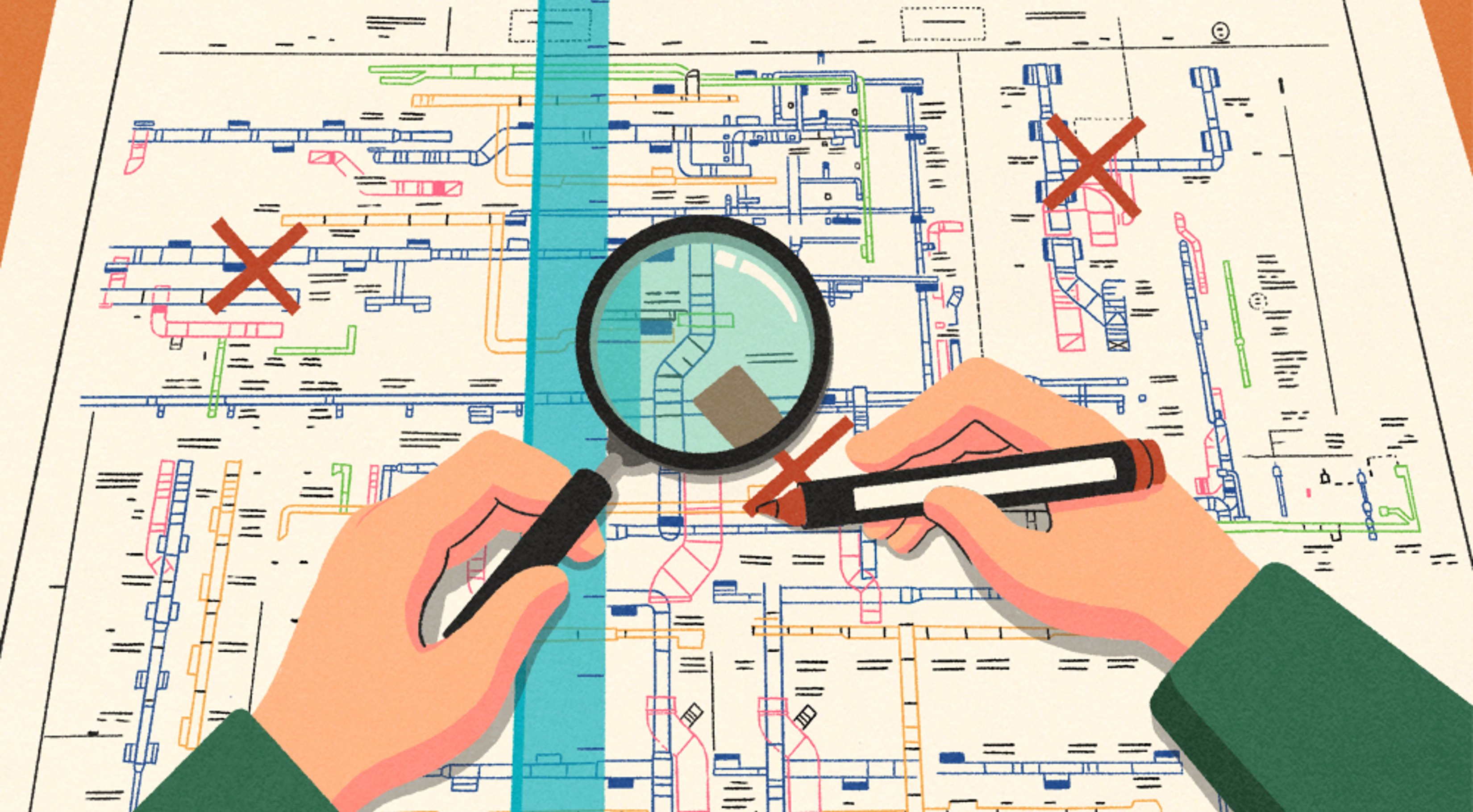
Correll is a senior construction administrator at Page; a role that might not make headlines but is recognized as a crucial strategic lever for achieving high-quality outcomes. Given that rework accounts for at least 5% of total construction costs,1 Correll’s position is designed to safeguard everything from design integrity to safety and performance.
“Every project is someone’s mission,” he said, “and every decision I make is about getting them there.”
His approach is less about reacting and more about preventing. He’s built a career with foresight, quality, and precision, the kind of care you don’t always see but notice if it’s missing.
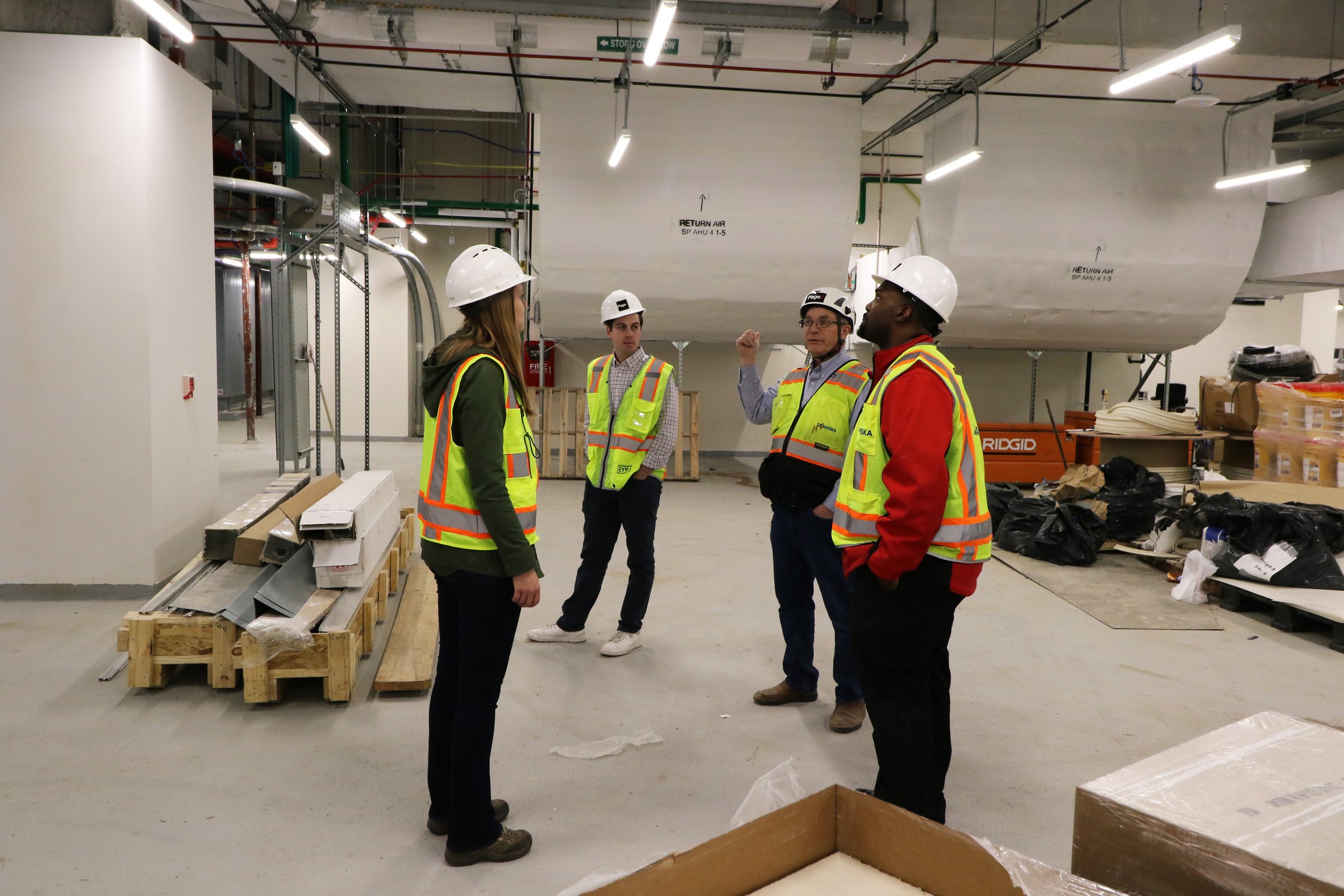
Steve Correll (second from right) discusses the construction and design of the University of North Carolina Surgical Hospital project with colleagues during a tour. Photo/Charles Barrett
Construction contract administration often works behind the scenes, but when done correctly, it keeps everything connected. Correll’s role is to ensure a project’s promise endures despite the complexities of construction, which requires foreseeing issues before they arise. His prevention-first approach directly addresses industry inefficiencies.
“It’s not glamorous work,” he said. “But I’d rather catch an issue in a submittal than in the field. Bad news doesn’t get better with time.”
He emphasized that rework is not merely a minor schedule disruption but a chain reaction: one mistake triggers delays, increases costs, erodes trust, and may even compromise the quality of the final result. His insights highlight that construction administration extends beyond coordination; it is about ensuring performance and delivering excellence.
“No one dreams about drywall,” Correll said. “But if it doesn’t perform, you’ll hear about it fast.”
He often cites what he calls the “three knowns”—cost, time, and budget. Rework impacts all three. In his experience, it’s almost always avoidable when construction administration is treated as a priority rather than an afterthought.
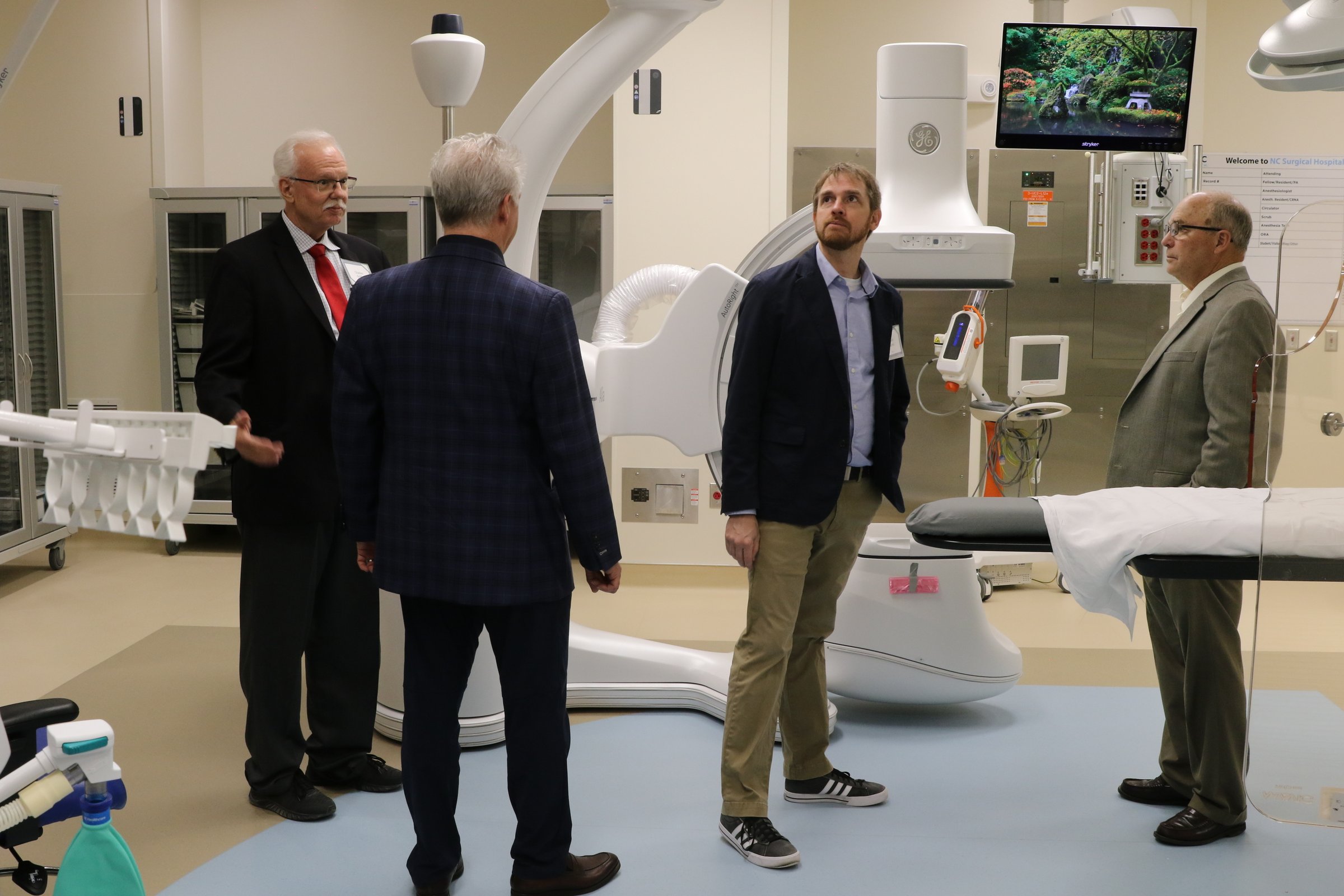
Steve Correll (right) joins a tour of the UNC Surgical Hospital at its dedication ceremony. Photo/Charles Barrett
Correll brings another critical strength to his work: deep local knowledge. Based in Raleigh, he leads projects across North Carolina and throughout the surrounding region, drawing on a strong understanding of the Southeast’s building culture, code requirements, and contractor networks. That familiarity gives him the ability to anticipate issues others might miss—and to resolve them faster when they arise.
“We’re not just out-of-town consultants,” he said. “I live here. I drive past these projects. That matters to me.”
One recent example is the UNC Surgical Hospital in Chapel Hill, where Correll’s early coordination helped maintain performance expectations despite a range of construction challenges. From catching discrepancies in mechanical systems to guiding discussions between subcontractors, his work helped ensure the hospital met its performance expectations and timeline.
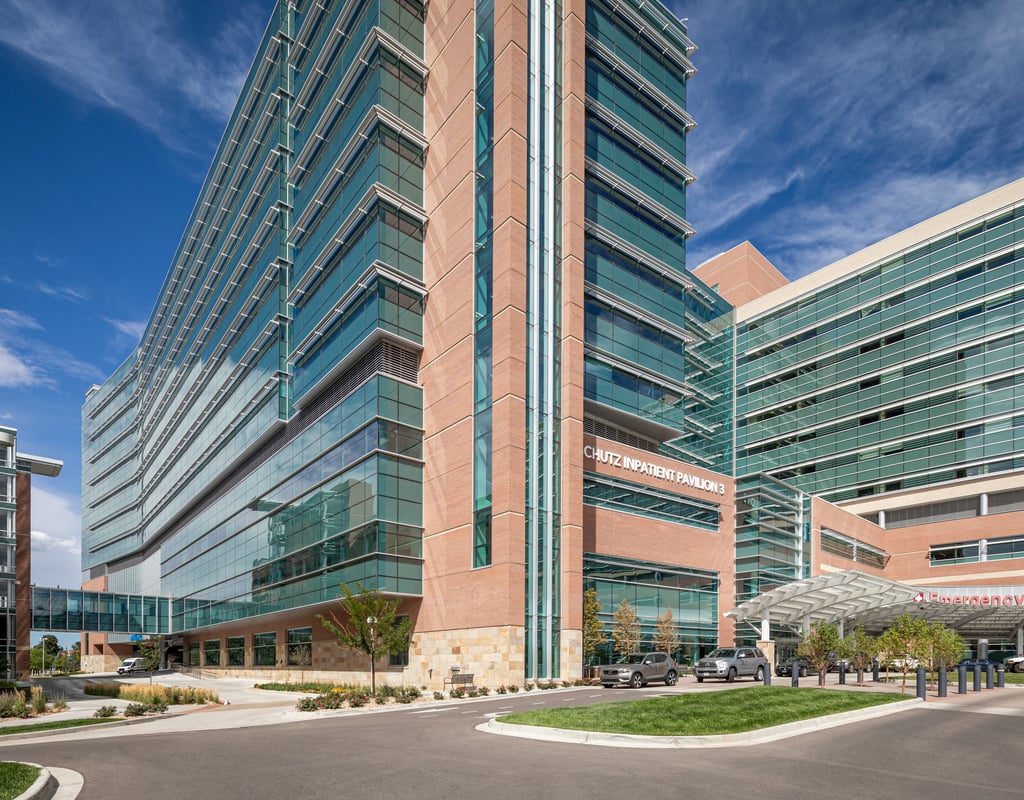
Correll has also contributed to other healthcare, education, and institutional projects across the state, such as the Harold L. Martin Sr. Engineering Research and Innovation Complex at North Carolina A&T State University—a $90 million, 130,000-square-foot facility designed to advance STEM education and research. Additionally, he played a role in the Integrated Science Center Phase III at the College of William & Mary, a 113,000-square-foot addition that supports interdisciplinary research in applied science, biology, chemistry, and psychology.
He says each one has its own pressure points, but the through line is always the same: protect the vision and deliver the promise.

Science Center Phase III project at the College of William & Mary. Photo/Robert Benson
The precision behind Correll’s work isn’t accidental. Earlier in his career, he helped start three nuclear submarines during President Reagan’s push for a 600-ship Navy. The stakes were higher, but the mindset stuck.
“You don’t get to cross your fingers on a reactor startup,” he said. “Everything has to work the first time — and you make sure it does.”
Today, he brings that same level of discipline to project delivery. He approaches a control room with the same care he once brought to propulsion systems. He checks details with the kind of urgency that comes from knowing failure doesn’t wait for paperwork to catch up.
“You don’t have to know how the engine room works to appreciate a smooth ride,” he said. “But someone’s got to make sure the systems hold.”
For Correll, construction isn’t just a technical exercise. It’s personal.
He’s seen a lot of drawings and punch lists, but what sticks with him are the people who benefit from the buildings he helps deliver: the mother walking into a new hospital for treatment, the student arriving on campus, and the nurse using a space designed with her work in mind.
“You have to see what the building is really for,” he said. “And then you do everything you can to protect that.”
That sense of mission is what drives his work, not perfectionism, but responsibility. A well-run project isn’t just a technical win. It’s a commitment kept.
Correll knows that when construction administration is successful, it’s often invisible—the systems function smoothly, the materials perform as intended, and the building opens without any noticeable issues. Achieving this seamless operation relies on early-stage coordination and process improvement, which are essential tools for enhancing project reliability, minimizing rework, and ensuring timely, within-budget results.
But he remembers, and understands how fragile a great outcome can be if it isn’t safeguarded early.
“My job isn’t to be seen,” he said. “It’s to make sure what needs to happen actually does, the first time, and every time after.”
Hwang, BG., et al. Measuring the impact of rework on construction cost performance. Journal of Construction Engineering and Management. 2009;135(3): 187-198.
More
by Robert McClure, Alison Ledwith, and Mo Elsayed

by Alireza Sedghikhanshir and Raffaella Montelli

Complex challenges need fresh perspectives and deep expertise. Connect with our team to explore how we can help you create spaces that make a real difference.