
System-Wide Facilities
The VISTA team worked closely with Page’s Campus Planning team to develop a comprehensive system-wide facilities plan for the HCC System.
The team conducted a holistic and data-driven review of campus differentiation across the system, provided recommendations for available land, and produced a master facilities plan for each campus location based on physical conditions in place, projected enrollment, and program needs. The plan leveraged previous HCC initiatives and studies, including the most recent strategic plan, recent capital projects, a comprehensive facility condition assessment, deferred maintenance surveys, and an instructional space utilization study.
Our work engaged key staff, campus and college leadership, trustees, and faculty and student representatives. We synthesized extensive quantitative and observational research into an objective analysis of each facility location’s current condition and effectiveness. Directional recommendations then informed specific plan intervention strategies for each site to comprise the system-wide facilities plan.

Value
“The Page team is adept at comprehensive analysis of complex facility networks and real estate considerations and can bring a depth of local context awareness that enables them to provide exceptional strategic value in their agile approach and targeted, practical recommendations.”Marshall B. HeinsSenior Vice Chancellor and Chief Financial Officer/CBO Finance & AdministrationHouston Community College System 2017-2024

Process development
We began with a clear framework for delivering objective recommendations across the 18 campuses, outlining the key analyses we planned to conduct. To answer the core question—which campuses are best positioned as full-service versus satellite—we defined a quality weighting by location type. The team also layered in an operations and maintenance priority analysis to sharpen our understanding of campus-specific needs. As we refined the data through the lens of these priorities, our process evolved and became more focused.
Objective campus evaluation
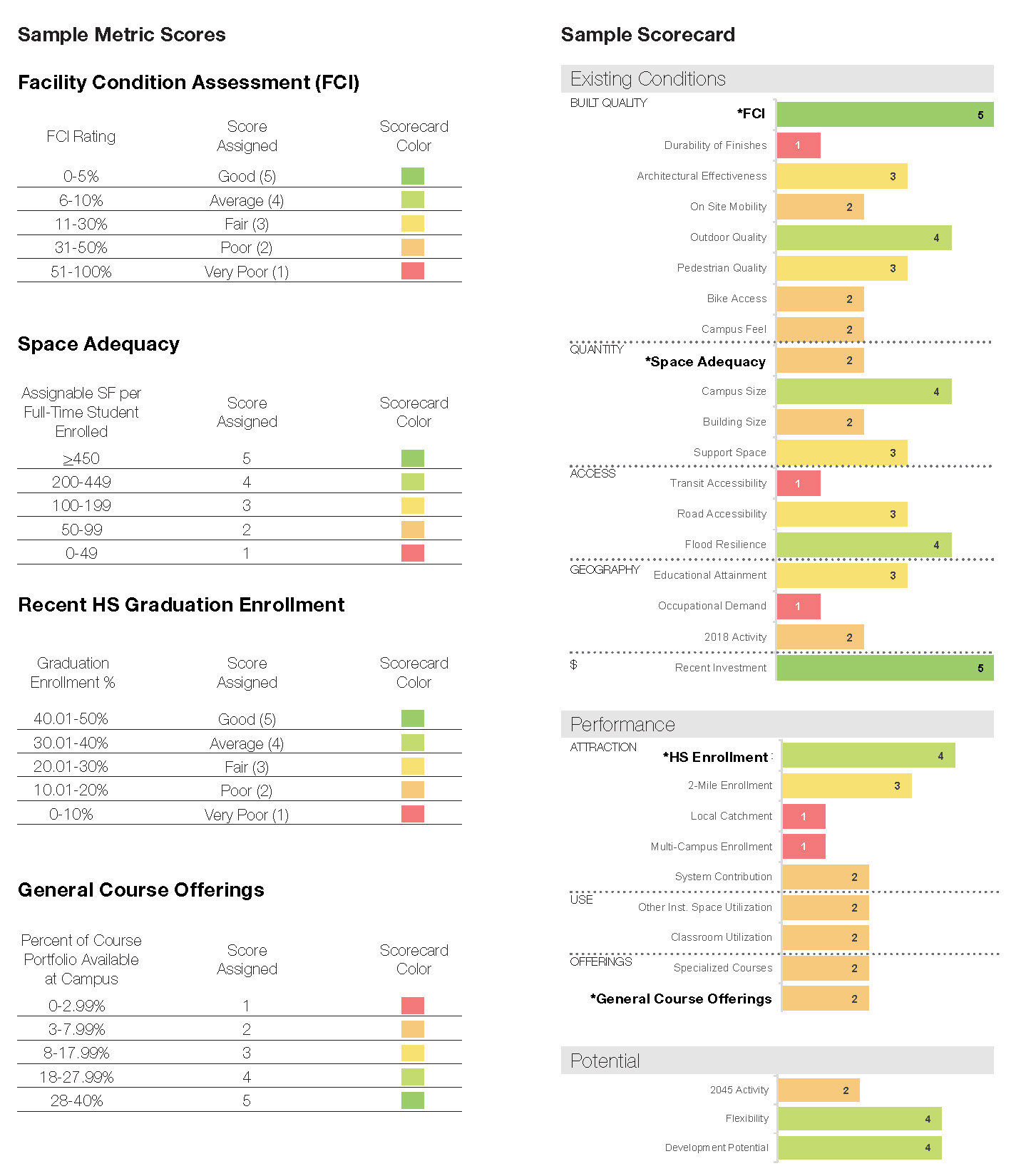
To objectively assess each campus in the HCC system, we identified a tailored set of relative measures organized into three categories: Existing Conditions, Performance Indicators, and Site Potential.
Existing Conditions capture the fixed characteristics of each campus’s physical environment. Performance Indicators reflect how the campus functions in relation to students, the surrounding community, and overall performance. Site Potential evaluates the opportunities for physical transformation based on current constraints and possibilities.
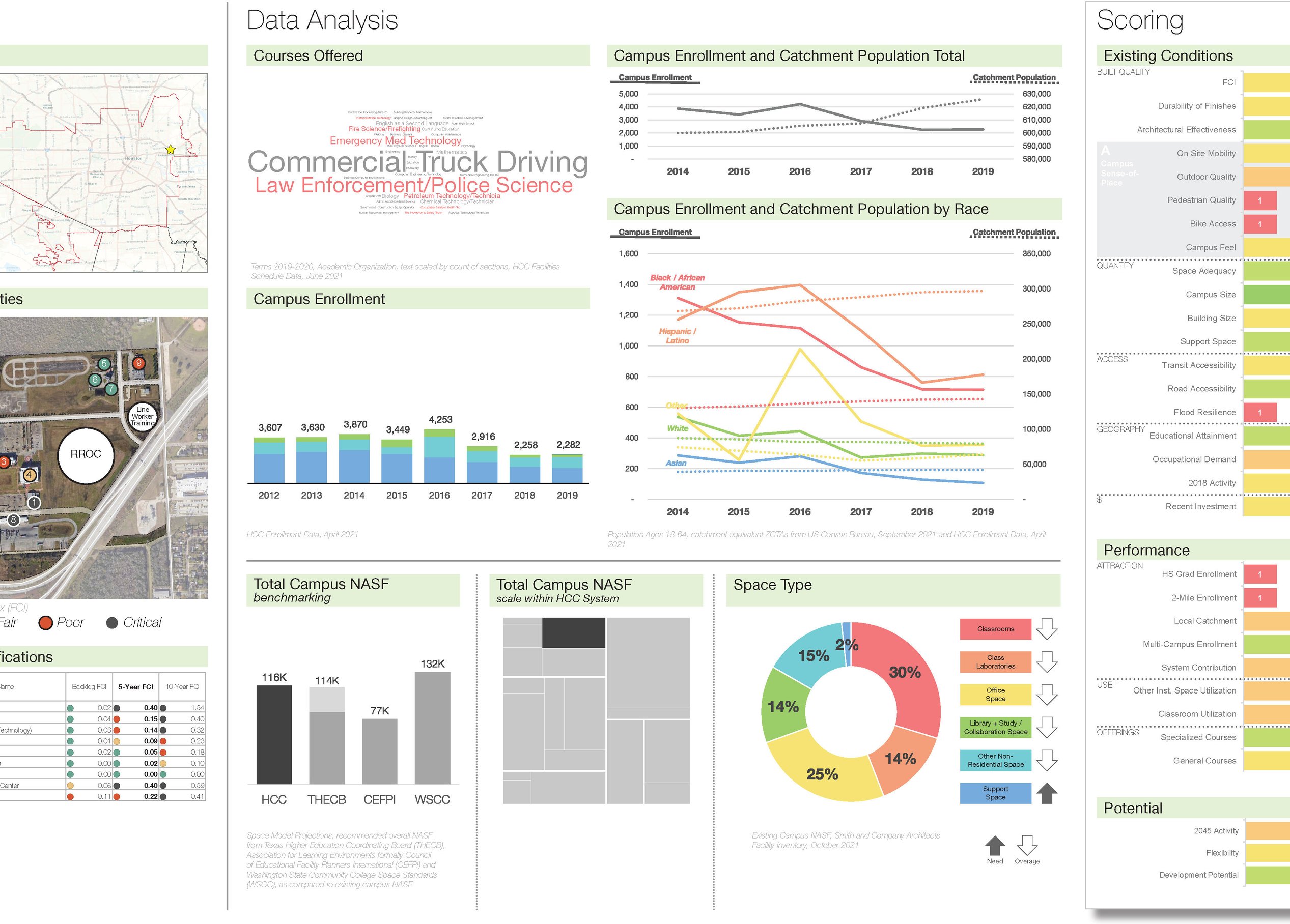
These measures were developed with specialized consultants who brought focused expertise to each site. The team scored each metric on a consistent scale from 1 to 5, with 5 representing high performance or opportunity and 1 indicating significant limitations. Each campus’s results were compiled into a clear and concise scorecard that turns complex data into actionable insight.
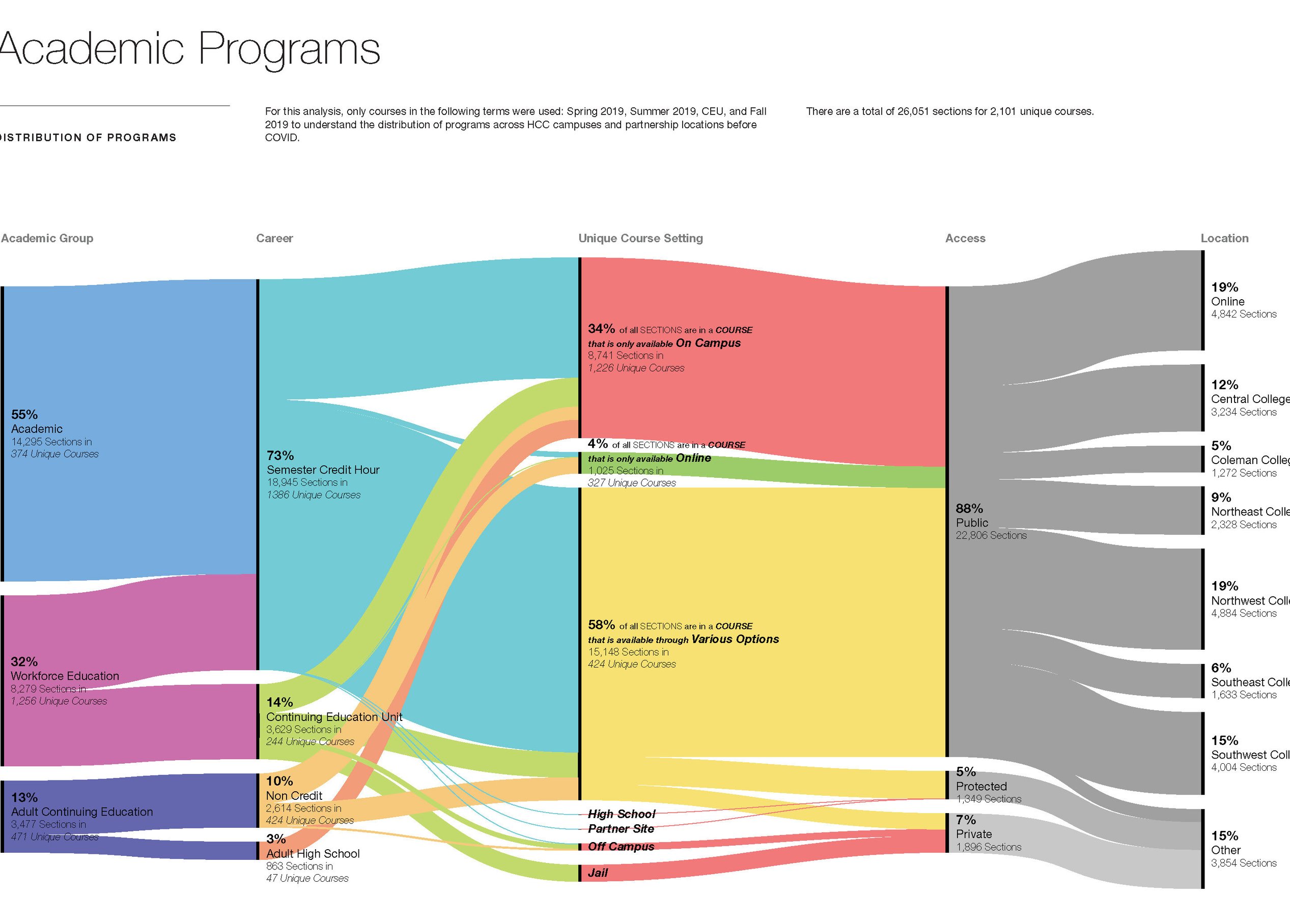
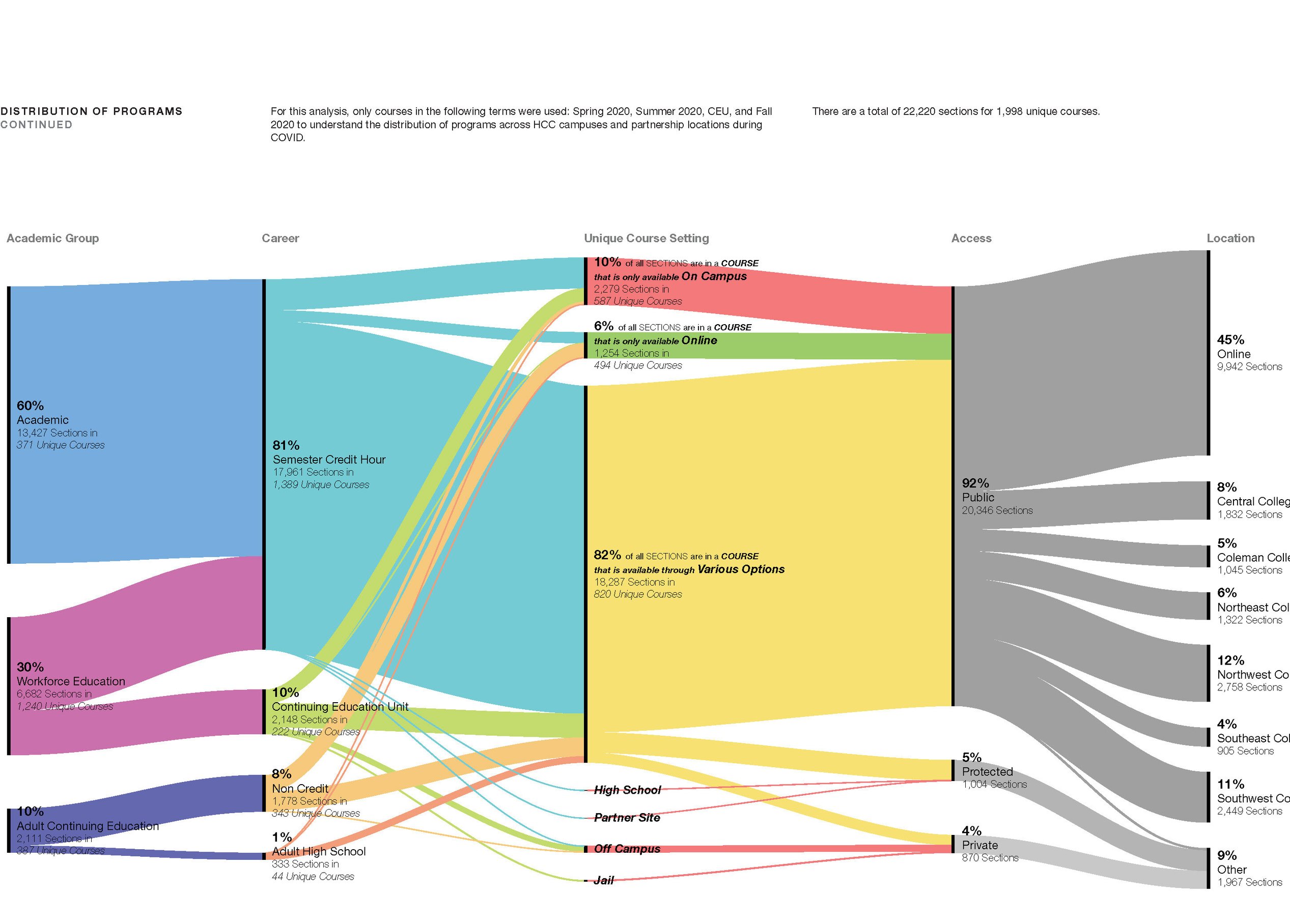
Data visualization/summary

/
Campus categorization
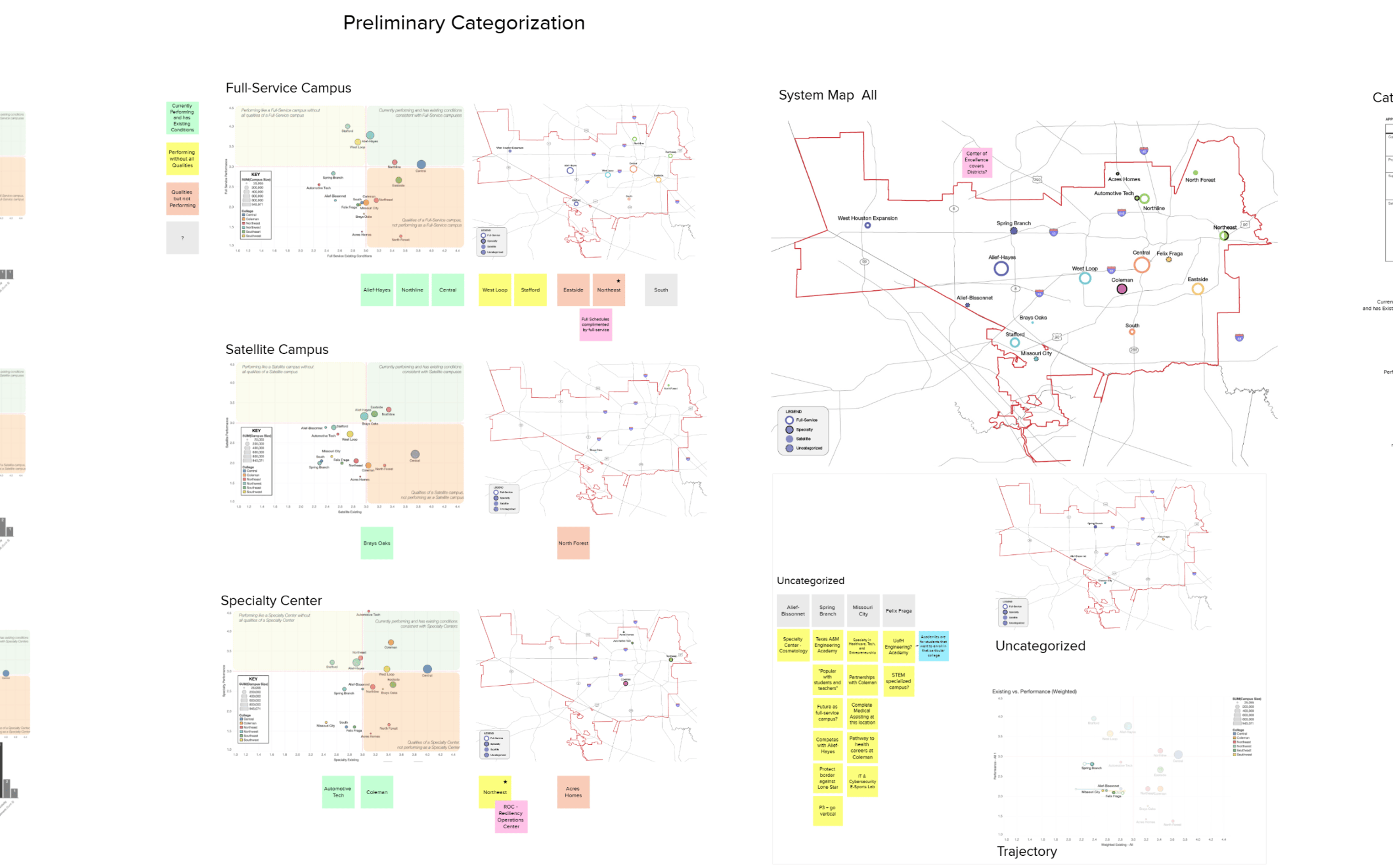
Virtual whiteboard used collaboratively with client during meeting
We used a virtual whiteboard to explain our approach and work collaboratively with the client steering committee, building consensus around the categorization of each existing campus.
A central question for HCC in planning for the future is how to prioritize investment across campuses. Our scope included identifying which locations should serve as full-service campuses—positioned for comprehensive, campus-scale investment—and which should operate as specialty campuses with more focused support. To guide this decision, we built an objective framework that plotted existing conditions against performance measures, enabling direct comparison across the system. We then tested the framework using tailored weightings that reflected the distinct priorities of each campus type.
Similar projects


/

Talk with us
Complex challenges need fresh perspectives and deep expertise. Connect with our team to explore how we can help you create spaces that make a real difference.