
Feature
November 17, 2025
The power of the central activity district
by Jennifer Wegner

Listen to this story
AI powered reader
/
Year after year, national holidays from Memorial Day to Labor Day, winter holiday celebrations, and more inspire citizens to gather in city centers en masse. These special occasions are often synonymous with parades, fireworks, live music, food festivals, and shopping, contributing to crowded sidewalks and bustling downtown areas and transforming them into lively hubs of celebration and commerce. Such festivities not only create a festive atmosphere but also serve as prime examples of how well-designed central activity districts can foster lasting benefits for downtowns and city centers across the country. With thoughtful planning that focuses on vibrancy and accessibility, cities can leverage these annual gatherings to catalyze ongoing economic growth and community revitalization, transforming one-time holiday foot traffic into sustained urban vitality.
Recent reporting highlights the connection between design and the economic health of the municipality where the central activity district is situated. A 2022 Brookings Institution analysis reveals that activity centers deliver not only convenience but measurable economic benefits, such as stronger local economies, more productivity, and more inclusive growth. Housing near activity centers also reaps the rewards for their proximity: in some areas, housing is worth a weighted average of 26% more.1 A 2024 report from Deloitte states the lesson is echoed in how cities and sports organizations are approaching central activity districts with attached stadiums. These districts are being developed to encourage longer visits and enjoy a diverse range of music, food, culture, and social spaces catering to different types of fans.2
Walkability for everyone
Central activity districts flourish when built on walkability and human-scale design. Pedestrian-friendly streets—lined with retail storefronts, public art, and shaded, accessible seating—encourage lingering and exploration beyond holiday celebrations. Public plazas, animated by performance spaces and local vendors during events such as national holidays, serve as everyday gathering spots that promote community engagement. Cultural institutions such as museums, theaters, and heritage landmarks reinforce a sense of place while contributing to ongoing civic and economic activity. National and state holidays highlight these features of well-designed central activity districts, prompting citizens to revisit these spaces even after the celebrations end, making them magnets for people and businesses alike.
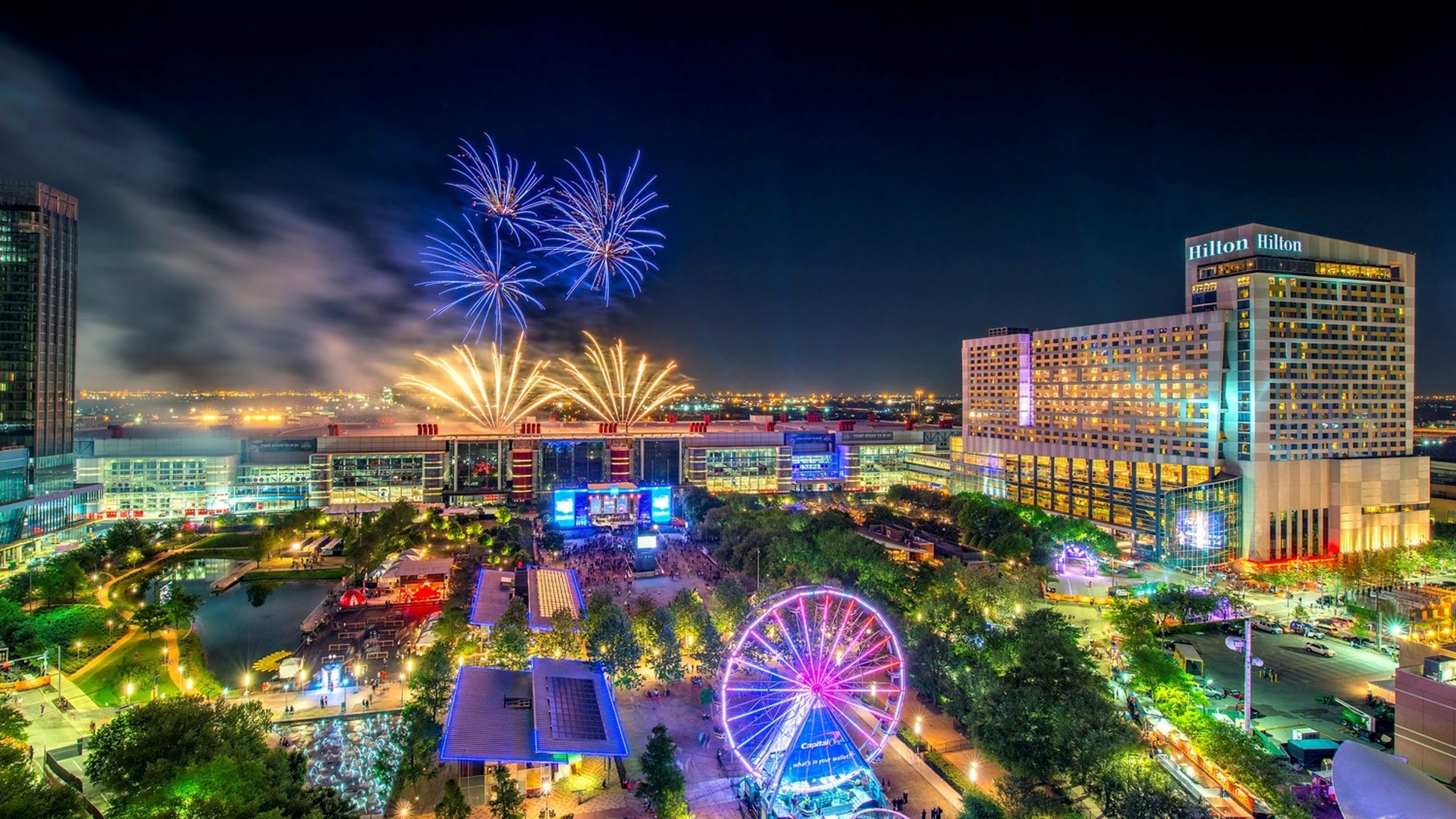
Discovery Green and the George R. Brown Convention Center (GRB) Renovation in Houston, Texas
Once a 12-acre parking lot, Discovery Green now draws over 1.5 million visitors each year, fueling more than 1.25 billion dollars in local economic development in Houston.
Event spaces as economic engines
Event space, both fixed and flexible, plays a critical role in this transformation. The same plazas that host Fourth of July festivities, winter holiday markets, and local civic pride celebrations also accommodate farmers’ markets, art walks, and neighborhood festivals throughout the year. When designed as adaptable infrastructure, these spaces keep central activity districts relevant year-round, supporting small businesses and local entrepreneurs. Transit access ensures equitable participation, linking districts with surrounding neighborhoods and reducing reliance on cars. Mixed-use developments, where housing, retail, and office space coexist, create round-the-clock activity that sustains local businesses long after the fireworks end.
Transit as a foundation for equity and growth
Transit access is one of the most powerful tools cities can use to expand the reach and promote equity within their central activity districts. A well-connected public transportation system, including buses, light rail, subways, and regional trains, ensures that residents from surrounding neighborhoods, such as lower-income and historically underserved communities, can access the cultural, economic, and recreational opportunities of the urban core. Multimodal transportation options, like protected bike lanes, pedestrian greenways, and micro-mobility services such as scooters and bike-share programs, further improve accessibility while helping to reduce traffic congestion and emissions. During holidays or when large events occur, when parking is scarce and streets fill with pedestrians, a strong and reliable transit infrastructure becomes not just a convenience but a necessity. More importantly, planning this infrastructure with long-term daily use in mind creates a reliable foundation for year-round foot traffic, economic engagement, and environmental sustainability. By making sure that central activity districts are accessible to everyone, regardless of zip code or income level, transit becomes a tool for both inclusion and economic growth.
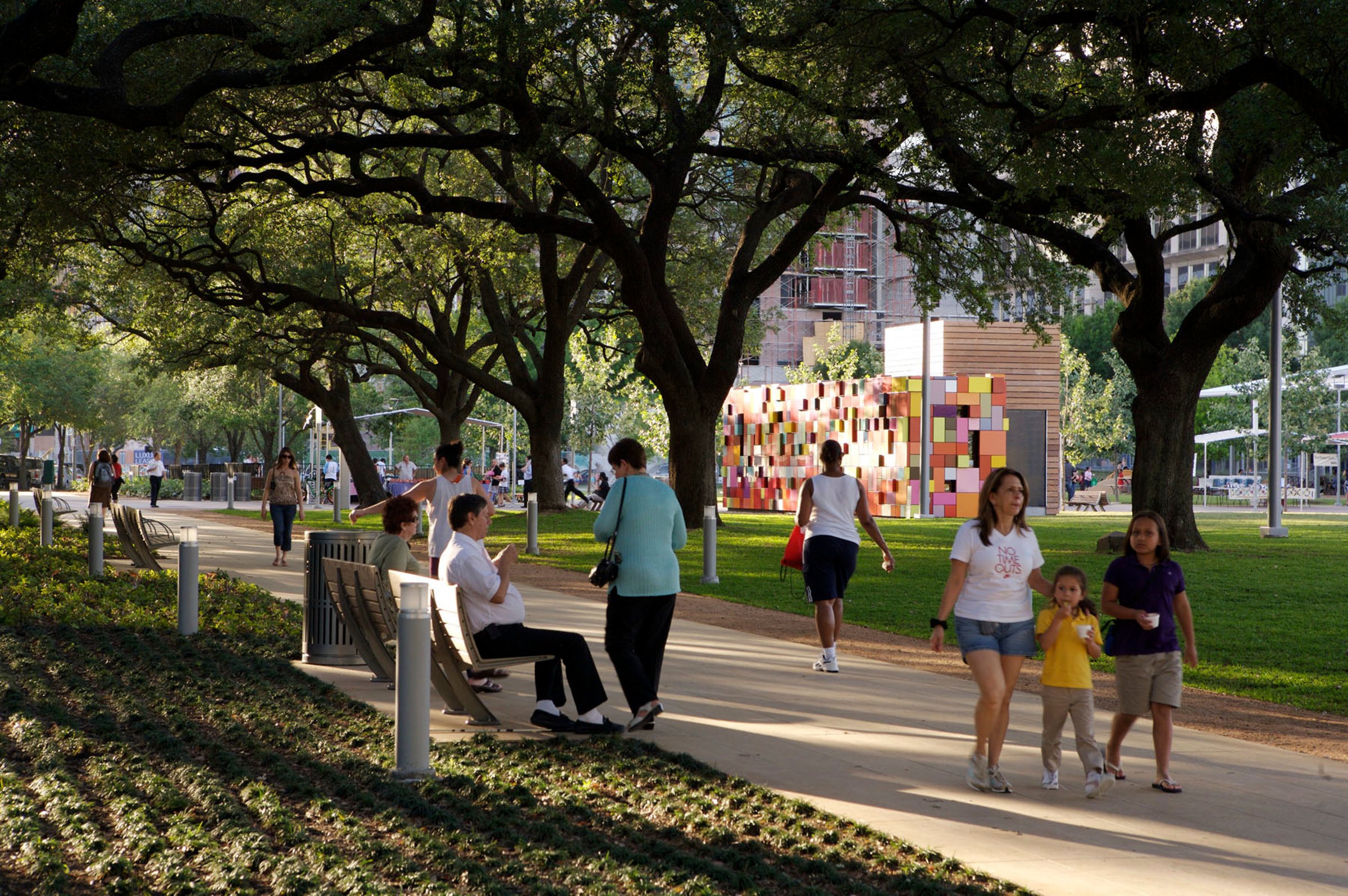
Discovery Green and the George R. Brown Convention Center (GRB) Renovation in Houston, Texas
Comfortable seating and shaded areas help encourage dwell times, foot traffic, and economic activity in central activity districts.
Mixed-use development for round-the-clock activity
Mixed-use developments are equally vital in transforming central activity districts from single-purpose destinations into vibrant, multi-functional neighborhoods. When residential, retail, office, and recreational spaces are integrated within the same block or even the same building, they create a density and diversity of activity that keeps the area lively from morning to night. Residents can walk to work, shop during lunch, dine locally after hours, and enjoy community events on weekends—all without leaving the district. This close proximity not only reduces car use but also boosts the local economy by maintaining steady demand for services and amenities. During holidays, this mix of uses accommodates the sudden rise in visitors, while on regular weekdays, it fosters a sense of place, routine, and familiarity that defines a successful central activity district.
From holidays to habits
The challenge for cities isn’t just how to attract people downtown during major holidays, because in most cases, that will happen naturally. The real opportunity lies in intentionally capturing that energy and designing for it, as seen in projects like Discovery Green and the George R. Brown Convention Center (GRB) Renovation in Houston, which utilize proven features of central activity districts to convert annual surges in foot traffic into lasting, everyday vitality. Picture a typical holiday outing: families arriving early to secure a spot for the holiday parade, first stopping at a local coffee shop, browsing nearby stores, and then settling in for lunch or a snack at a café or restaurant. After the main event, they might walk into shaded or heated plazas, enjoy live music, or visit a local museum, staying late into the evening for the fireworks or holiday tree lighting. These behaviors, strolling, exploring, and visiting multiple establishments, are exactly what thriving downtowns rely on. They increase “dwell time,” a key measure of economic health in retail and service districts, and demonstrate how smart urban design can promote repeat visits and higher spending. Streets built for walkability, with ample seating, shade, visible storefronts, and easy access to food and entertainment, all support these activities. When cities plan for this kind of comprehensive experience year-round, not just during holidays, they transform downtowns from transient destinations into enduring hubs of economic and cultural life.
Well-designed central activity districts offer cities a unique chance to turn the fleeting energy of national holidays into lasting urban vitality. The crowds, commerce, and cultural engagement seen on the Fourth of July or during winter holiday celebrations don’t have to be once or twice-a-year events. They can be signs of what’s possible when public spaces are intentional, accessible, and engaging. By investing in pedestrian infrastructure, multimodal transit, mixed-use development, and adaptable public spaces, cities can foster environments that support economic growth, cultural expression, and community well-being all year round. The goal isn’t just to bring people downtown once a year but to give them reasons to return again and again.
References:
1.
Hadden Loh, T., Rowlands, DW., Tomer, A., Kane JW., Vey, JS. (October 22, 2022). Mapping America’s activity centers: The building blocks of prosperous, equitable, and sustainable regions. Brookings Institution.
2.
Haskel, J., Giorgio, P., John, A., Westcott, K., Bucaille, A. (November 19, 2024). Ambitious stadium projects aim to bridge public-private investment goals. Deloitte.
More
by Jennifer Wegner
by Ginny Chilton and Ryan Losch

Talk with us
Complex challenges need fresh perspectives and deep expertise. Connect with our team to explore how we can help you create spaces that make a real difference.