
by Robert McClure, Alison Ledwith, and Mo Elsayed

Aligning values and vision yields outstanding spaces for innovation
Makerspaces hum with robotics, 3D printers, and engineering projects. Seattle University students bounce ideas off each other while waiting in line for lattes. Then, they will join their mentors in state-of-the-art teaching labs and meet with representatives from PACCAR or Microsoft in high-tech conference rooms. Page Design Director Robert McClure, AIA, shares insights into how this seamless blend of innovation and real-world connection fuels the power of these partnerships.
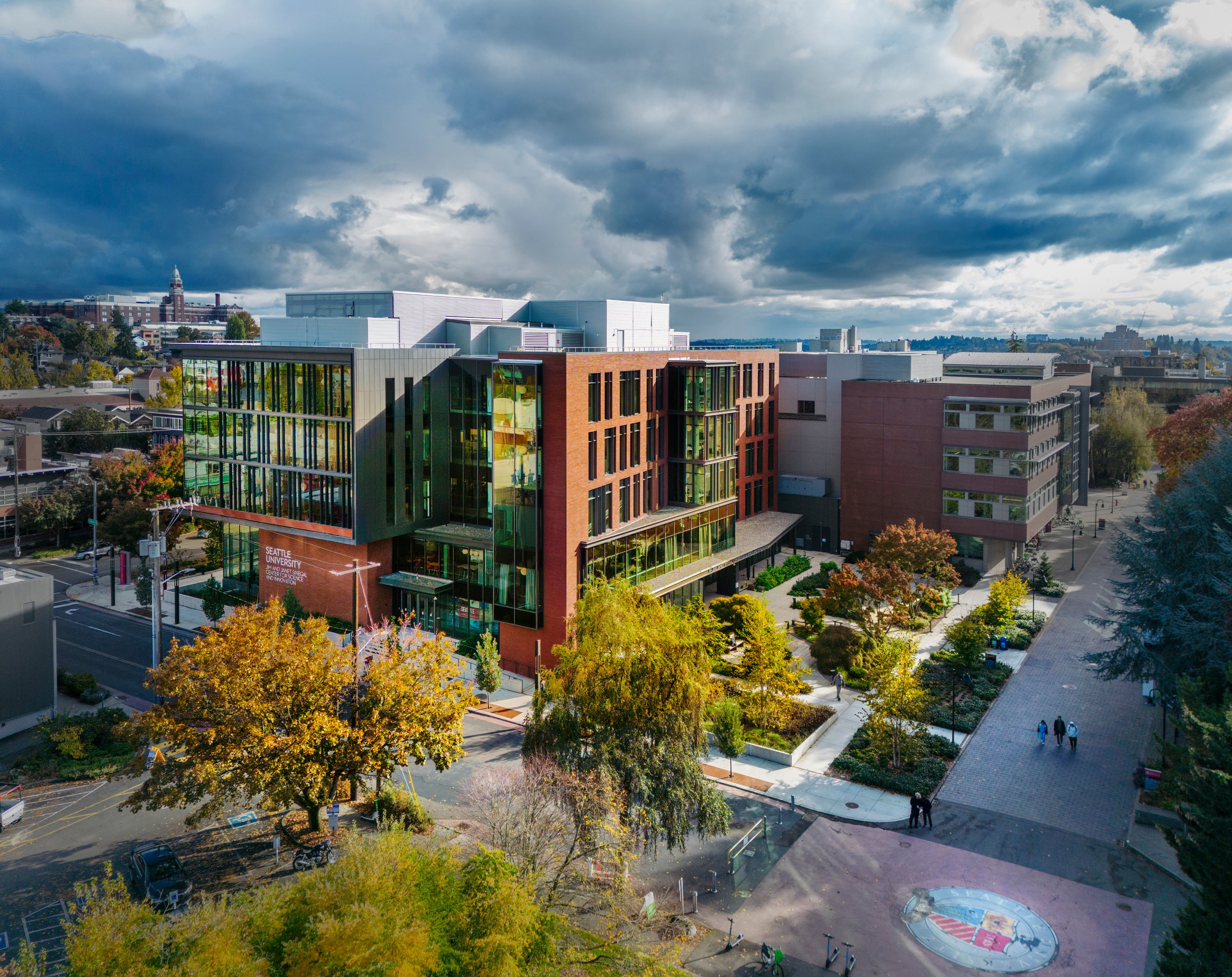
Seattle University’s Jim and Janet Sinegal Center for Science and Innovation offers a warm, inviting environment where students and professionals can come together to collaborate and learn. Photo by David Sundberg/Esto.
Designing the future of STEM for Seattle University
Together with renovations of the university’s Bannan Center for Science and Engineering, the new Center for Science & Innovation (CSI) creates a 275,000-GSF STEM complex. Designed by Page in partnership with Mithun, the local associated architect, the CSI celebrates science and engineering and connects Seattle University’s brightest with local industry and entrepreneurship.
Home to PACCAR Engineering Innovation Center, Amazon Computer Science Project Center, and the Microsoft Café, this STEM complex offers a gateway between university talent, resources, and the private sector — but courting these industry partners was no small task.
Seattle University’s Michael J. Quinn (now Dean & Professor of Computer Science) explains that developing partnerships relies on strong relationships, but “it’s so much more than networking.” So, what were the keys to success for Seattle University and the CSI?
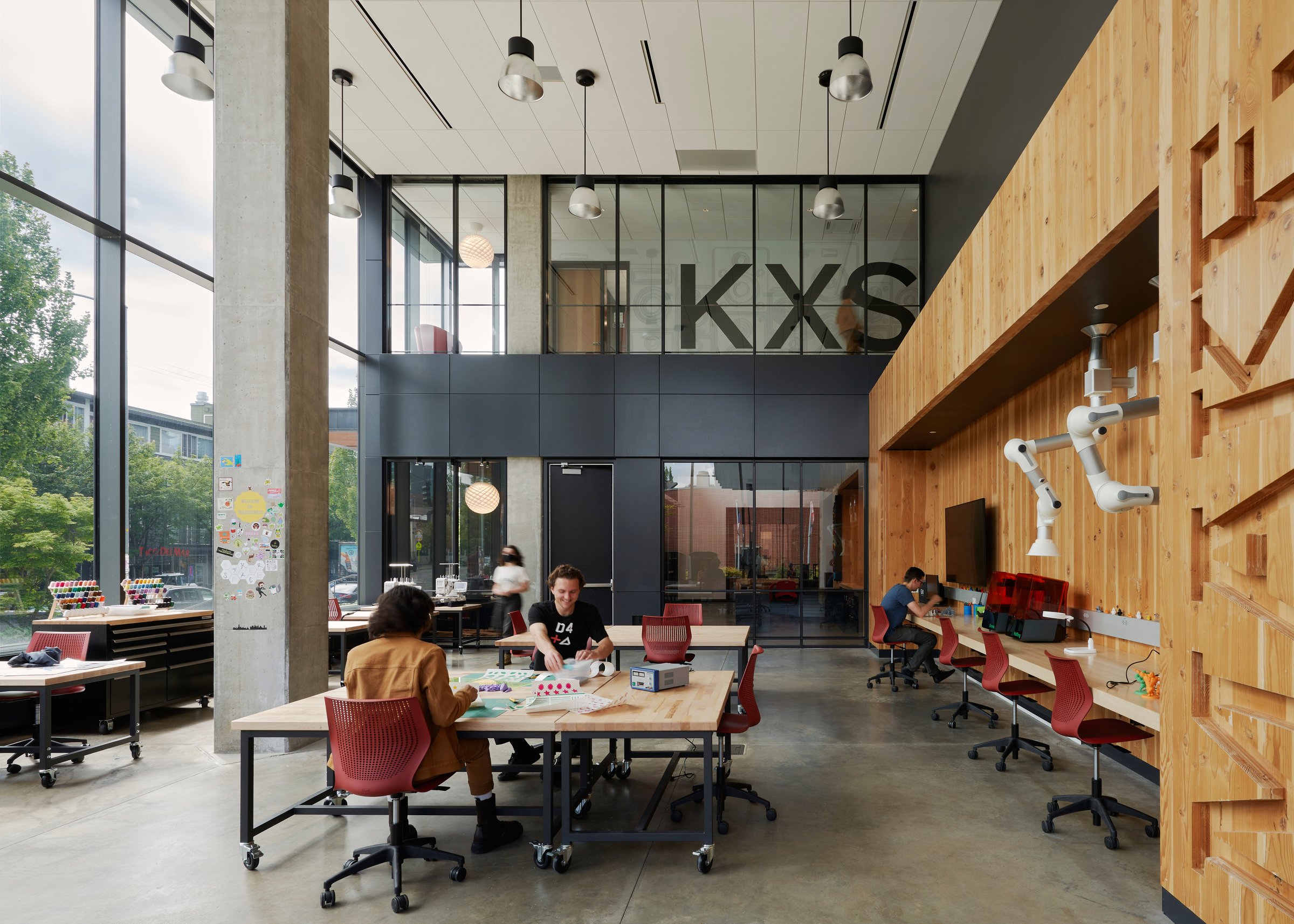
With an eye on connection and collaboration, Seattle University’s Jim and Janet Sinegal Center for Science and Innovation creates open, flexible spaces that bring people and ideas together. Photo/Kevin Scott.
Aligning values and vision
Industry partners support colleges and universities for a host of reasons, but successful relationships begin with aligning values, visions, and goals.
Seattle University is committed to achieving and engaging diversity among students, faculty, and staff in its STEM program. In 2019, its College of Science and Engineering reported that 40 percent of its full-time faculty and 43.5 percent of its students were women. Amazon contributed $3 million to the CSI, becoming one of several leading industry partners whose investment helped connect students with real-world opportunities and emerging technologies.
Likewise, Seattle University’s Jesuit values emphasize critical thinking, and their ethics align with Microsoft. According to Quinn, “Microsoft’s President Brad Smith has a strong interest in ethics. That helps us because we require ethics courses as an integral part of our Jesuit education.”
Showcasing students' work for future employers
Experiencing students’ work firsthand creates a tangible connection between potential partners and programs. Dean Quinn found, “An essential early step was bringing executives to campus and having them meet our faculty and students. Often, students were the most compelling part of the engagement.”
Until recently, the culture of undergraduate research did not exist. “Now, students are manipulating genes, which would have been science fiction 40 years ago,” says Quinn. “For a 60-year-old executive, seeing firsthand what 20-year-old students are doing with science is compelling.”
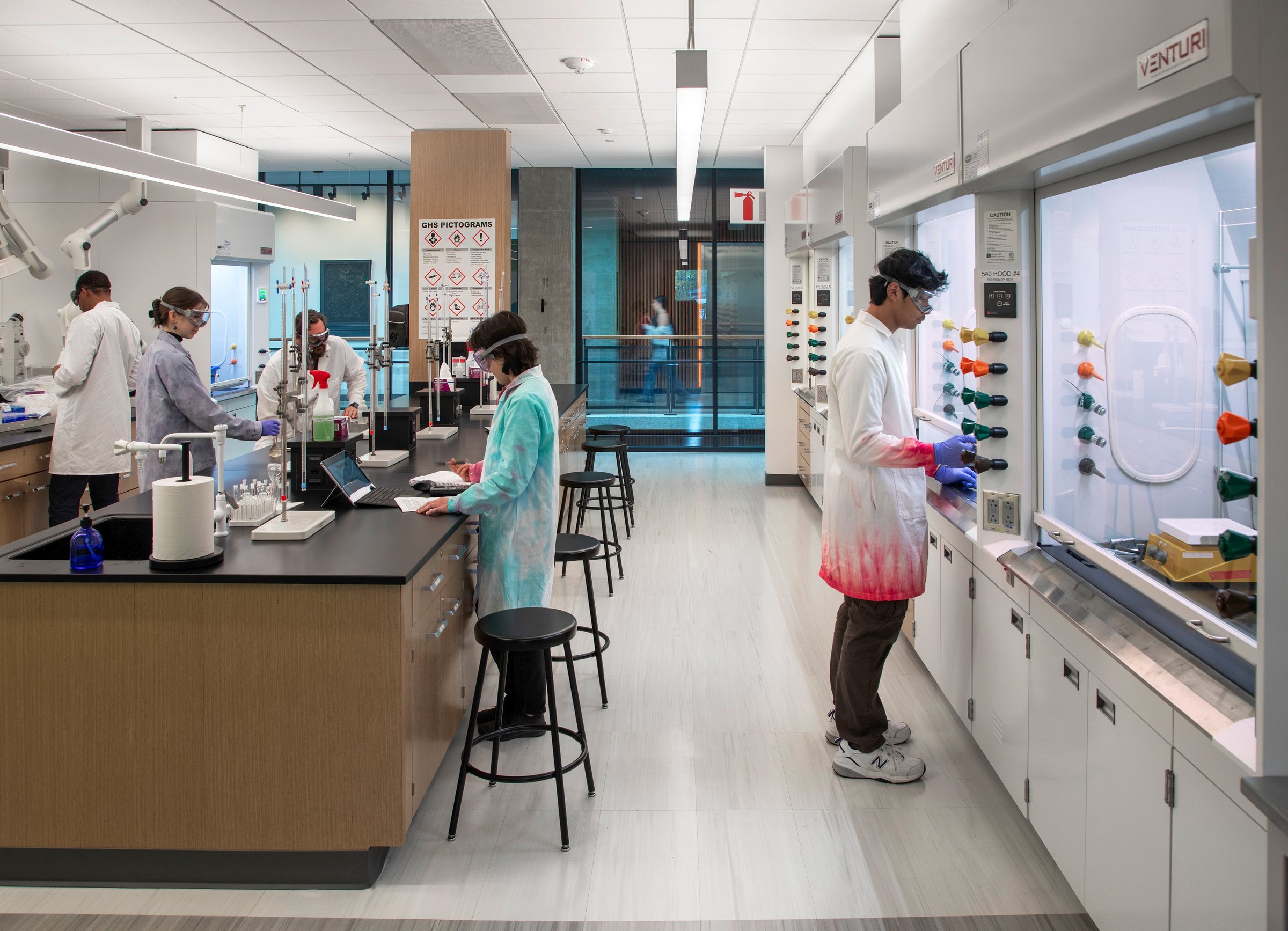
Collaboration flows effortlessly from laptops to lab benches in this next-generation research environment at Seattle University. Photo by David Sundberg/Esto.
Differentiating through design
Does industry partnership impact design choices, or does design enhance the ability to attract local industry? It’s a bit of a ‘chicken or the egg’ question, but Dean Quinn’s answer is “it’s both.”
The Page and Seattle University team wanted experience to inform design, so the stakeholders visited universities, corporate offices, and industry facilities like Microsoft’s Innovation Lab. Intending to meet future partners’ needs, the group assessed layouts, evaluated materials, and most importantly, had meaningful conversations. Page’s Design Director Rob McClure found this process invaluable in “helping faculty understand what industry is doing and helping to inform space planning.”
These interactions led to design elements like open spaces and windows that put science on display and illuminated study spaces jutting out on the north side of the CSI, visibly communicating a students-and-studying-first mentality. The design offers insight into the quality of students that local corporations might recruit.
Mentoring spaces help facilitate research
Dean Quinn also found he could “clearly see how corporate connections would influence design. The way we are creating the computer science space on the first floor – it’s one big room. That’s how programming gets done in startup companies. It’s a corporate-style space where teams take a hoteling approach, using available tables for workspace and lockers for storage.”
“We want it to be easy for Microsoft or Amazon executives to come into the main street, walk a few steps, and have a really nice space to engage with a computer science project team,” said Quinn.
Collaboration spaces outside the classroom encourage students to engage with each other, and amenities like the café or coffee shop promote real-world intellectual collisions. Now retired PACCAR Chief Executive Officer Ronald E. Armstrong told Dean Quinn, “You’ll get so many innovative ideas out of the people engaging each other in that space.”
But it’s not just about attracting big industry. The CSI embraces the city through the Center for Community Engagement – the home of the Seattle University Youth Initiative that provides a pathway of support for local children and their families. The Center is located prominently on the first-floor entry terrace and connects to the building’s café, creating a dynamic public concourse.
Telling a great story
Multiple campus visits and workshops led to a focus on spaces where students make connections and ideas are turned into solutions — project space, makerspaces, meeting areas, and coffee shops — but the location of those spaces is part of a larger story. Everything about the CSI was purposed, programmed, and designed to bring the city of Seattle into the building.
“Seattle University directed the design team to animate the connection between the university and the city. Community engagement elements are located on the city-side of the building, academic spaces face the campus, and shared areas like the café, radio station, and huddle spaces purposely blur boundaries between town and university. It’s a melting pot,” said McClure.
Sharing this narrative became an essential tool when attracting potential partners and donors. According to McClure, “We developed collateral to help explain and excite people about this project — physical models, prototyping, animations, website content — but more importantly, we hosted interactive storytelling sessions to help the university share CSI’s impact on potential partners.”
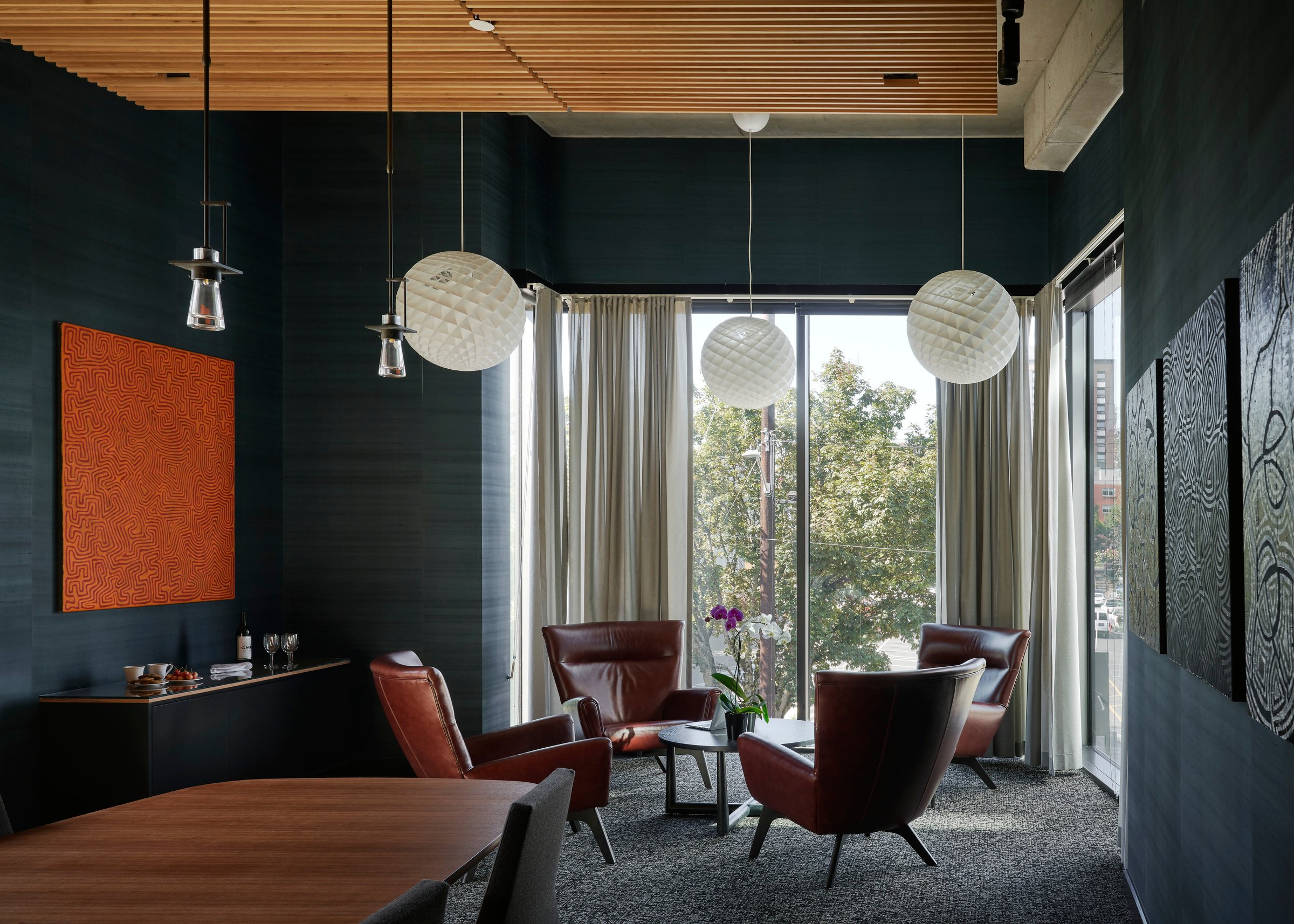
Cozy spaces throughout Seattle University’s Jim and Janet Sinegal Center for Science and Innovation offer moments of pause and mental refresh. Photo/Kevin Scott.
Committing for the long haul
Dean Quinn’s best advice? “Be patient.” Establishing relationships with industry partners is not an overnight process. It takes time and a team. He explained, “We worked with Microsoft for years. They have to get to know you and gain confidence in you. With Amazon, over 50 people on campus had some role — communication, contributing to presentation, or meeting with Amazon personnel.”
Ultimately, industry and academia benefit from reciprocal, long-term relationships and cooperation. Students gain access to real-world scenarios and mentorship; companies gain access to research and talent; universities garner financial support and projects that can make a difference to the community. These relationships begin by getting out of the lab and in front of potential partners. Where do values and goals align, how will innovative design contribute to your success, and what story will you share that highlights the potential value of a future partnership?
Editor’s note: This article was initially published in 2023. It has been updated in 2025 for accuracy and clarity.

Rob has over twenty-five years of experience designing large-scale domestic and international projects. His portfolio includes over 25 million square feet of significant commercial mixed-use, higher education, healthcare, and government projects. He is passionate about promoting a design process rooted in exploration where ideas can come from anywhere. Rob's approach reflects a balanced embrace of new technology and his lifelong passion for hand sketching, which he uses to visualize possibilities in real time. His commitment to an open, inclusive process delivers compelling designs and rewarding experiences for all involved.
More
by Robert McClure, Alison Ledwith, and Mo Elsayed

by Alireza Sedghikhanshir and Raffaella Montelli


Complex challenges need fresh perspectives and deep expertise. Connect with our team to explore how we can help you create spaces that make a real difference.