

Feature
June 24, 2025
Futurism, human factors, and design - The trinity redefining healthcare
by Tushar Gupta along with Rubin Pillay

Listen to this story
AI powered reader
/
Healthcare is on the precipice of a revolution. No longer confined to sterile white walls and outdated practices, the future of healthcare is vibrant, dynamic, and deeply human-centered. This transformation is being forged in the fiery crucible of futurism, human factors, and design – a trinity that promises to redefine how we experience health, healing, and well-being.
Imagine hospitals infused with augmented reality, guiding surgeons with holographic overlays or calming anxious patients with immersive virtual landscapes. Picture AI-powered diagnostics analyzing vast pools of data to predict and prevent illness before symptoms even arise. This is the realm of futurism, where technology pushes the boundaries of the possible, shaping a healthcare landscape woven from science fiction and cutting-edge innovation.

But amidst the gleaming gadgets and dazzling algorithms, the future of healthcare remains firmly rooted in human needs. Empathy-driven design will take center stage, prioritizing provider and patient comfort and emotional well-being. Buildings will be infused with natural light and greenery, fostering healing environments that soothe the mind and body. Every touchpoint, from interactive check-in kiosks to intuitive health trackers, will be designed with usability and inclusivity in mind, ensuring no one is left behind on the path to health.
Design is where the trinity truly converges. Design becomes the bridge between futuristic possibilities and human-centered care. Essentially, this is what designers have been trained for: to be problem seekers and problem solvers. Architects will craft holistic spaces that nurture both physical and mental health. Graphic designers will craft accessible interfaces that empower patients to actively participate in their care journey. Product designers will develop wearable technologies that seamlessly blend into daily life, unobtrusively monitoring health and offering personalized interventions.

Healing must be embedded in a hospital’s very structure and, ideally, should begin when you walk through the entry door—or even before—with clear wayfinding and thoughtful landscape design. Not only physical needs but also spiritual and emotional needs must be met.
A people-first approach to healthcare, which focuses on the interests of the patient, family, care provider, and community, is ever more important in a future driven by data, tech, and artificial intelligence. Imagine AI assistants managing administrative tasks, freeing doctors to focus on what truly matters: human connection and compassionate care. Imagine streamlined workflows and intuitive tools that reduce stress and burnout, fostering a happier and more engaged workforce.
Of course, this transformative journey presents challenges. Ethical considerations around data privacy and access, navigating the human-technology balance, and ensuring equitable access to these advancements are crucial hurdles to overcome. Yet, the opportunities far outweigh the obstacles.
By embracing the trinity of futurism, human factors, and design, healthcare can be redefined as a holistic and empowering experience. The future of healthcare can be one where health is not just treated but nurtured, where technology elevates care, and where every individual feels empowered to take charge of their well-being.
Dive deeper into what’s possible for the future of healthcare at Health Forward.
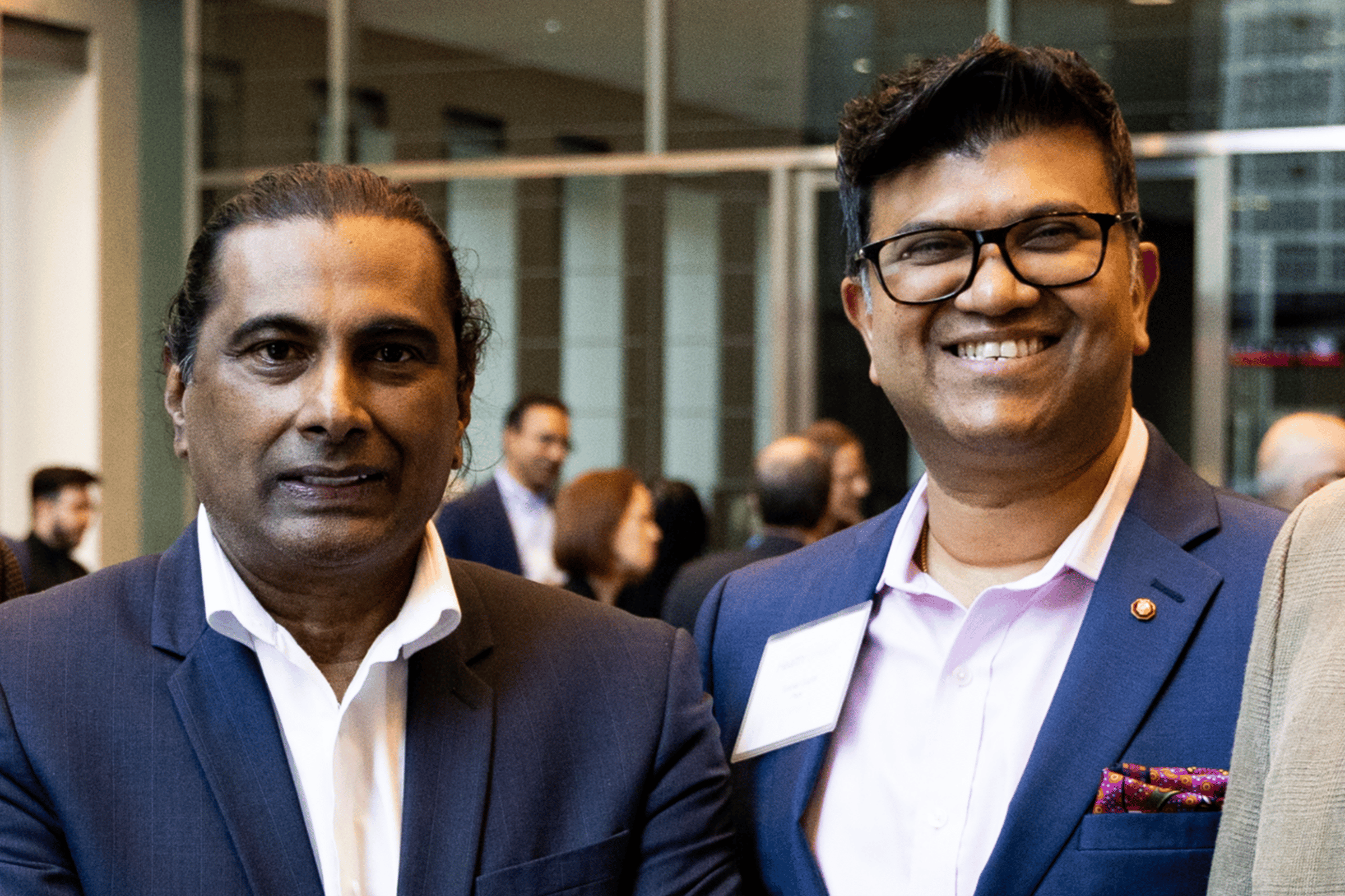
Tushar Gupta, FAIA (right), and Rubin Pillay, MD, PhD, MBA (left). Pillay is a medical futurist, professor, and chief innovation officer at Heersink School of Medicine, University of Alabama, Birmingham, as well as a family physician and clinical pharmacologist.
Contributors

Design has the power to uplift a person’s healthcare journey—that’s why Tushar has dedicated his career to creating empathetic and life-enhancing environments. People are at the center of everything he does, which drives him to become an effective leader and inspires him to be a thoughtful designer. Tushar learned critical thinking, the value of sharing ideas, and social responsibility growing up in a household with an engineer and a professor. These principles serve him well during this stage of his career, where he balances leading the Healthcare Sector with creating a new generation of healthcare facilities.
More

by Alireza Sedghikhanshir and Raffaella Montelli


Talk with us
Complex challenges need fresh perspectives and deep expertise. Connect with our team to explore how we can help you create spaces that make a real difference.