
by Robert McClure, Alison Ledwith, and Mo Elsayed
by Mo Elsayed, Justin Shultz, and Jill Kurtz

The Building Performance group at Page, now Stantec, is launching a three-part series on the redefinition of the design process, showcasing its newly developed AI-driven framework for rapid energy modeling and how it is transforming building design into a faster, smarter, and more performance-driven process.
A new era of design is emerging where building performance and creativity are evaluated in real time, delivering benefits to the planet and to the designers shaping it. Imagine if an architect could test dozens of building design ideas before lunch, instantly assessing each for energy efficiency and carbon impact with reliable accuracy. This scenario highlights a pivotal moment for architecture and engineering as research and technological advancements combine to create high-performance, sustainable buildings with measurable benefits for people and communities. Buildings are significant contributors to energy use and emissions, prompting tighter regulations and standards, so balancing innovative design with strict sustainability goals is more important than ever. Traditional workflows that often involve late-stage energy analysis can come too late or slow decision-making. To meet climate targets, the industry needs a more integrated, iterative approach to energy modeling throughout the design process. Now, with the advent of generative AI, Page, now Stantec, is revolutionizing the design process, enabling rapid iteration with real-time feedback on building performance through an AI-driven framework for rapid energy modeling. Detailed energy modeling is just too slow and specialized to keep up with fast-paced design deadlines, with some models taking up to 80 hours to work with significant expertise. As a result, early energy analysis has often been seen as a luxury or a roadblock when traditional building energy modeling (BEM) workflows struggle to match the accelerated pace of modern design development driven by computational design tools and value-engineering pressures.
Contemporary architects and engineers face a dual challenge: create innovative, visually appealing spaces while also meeting increasingly strict sustainability and energy goals. Buildings account for a significant portion of global energy consumption, about 37% of CO₂ worldwide.1 In response, building energy codes and green standards are becoming stricter, requiring project teams to optimize factors like insulation, glazing, and HVAC systems to reduce energy use and carbon footprint. Climate action is now integral to design decisions, which must be considered from the start. However, traditional workflows haven’t made this easy. BEM, which uses software to simulate a building’s energy performance, has historically been time-consuming and requires expert knowledge.
Conventional design often can be siloed, with architects planning form and features first, and engineers conducting energy analysis later, sometimes only to meet minimum energy code requirements. This separation misses opportunities for synergy, as small decisions (like window sizing and HVAC layout) can greatly impact energy efficiency. When evaluated only at the end, performance improvements are often too costly or impossible due to long lead equipment. The industry recognizes that an integrative design approach creates right-sized systems and reduces both upfront and operational costs, but more importantly, these tools and processes need to evolve to better facilitate this process.
To truly achieve performance by design, project teams must iterate and test design options and evaluate their performance results throughout the design process, not just at the end. The American Institute of Architects (AIA) now explicitly recommends “performing iterative energy modeling throughout the design process” as a key strategy for reaching efficiency and zero-carbon goals.2 Ideally, every major design decision, like shifting a building’s orientation, increasing window size, or modifying materials, would be immediately followed by a building performance analysis to inform that choice.
“Solutions for the future require rapid, smart iteration of building design, and the energy performance feedback loop needs to move just as fast.”Mo ElsayedSenior Building Performance Analyst
Generative AI refers to artificial intelligence – often powered by advanced machine learning models like large language models (LLMs)—that can do a variety of tasks. It is rapidly transforming the architecture, engineering, and construction (AEC) industry. Tools like Stable Diffusion, Midjourney, and other AI image-generation models now enable designers to translate simple prompts or rough sketches into rich architectural renderings, massing ideas, or mood boards in seconds. This has opened new possibilities for creative exploration, allowing architects to iterate visually at unprecedented speed. A designer can now type in “A sleek, futuristic office building with glass façades,” and receive multiple design interpretations instantly, something that would have taken hours or days using traditional tools.

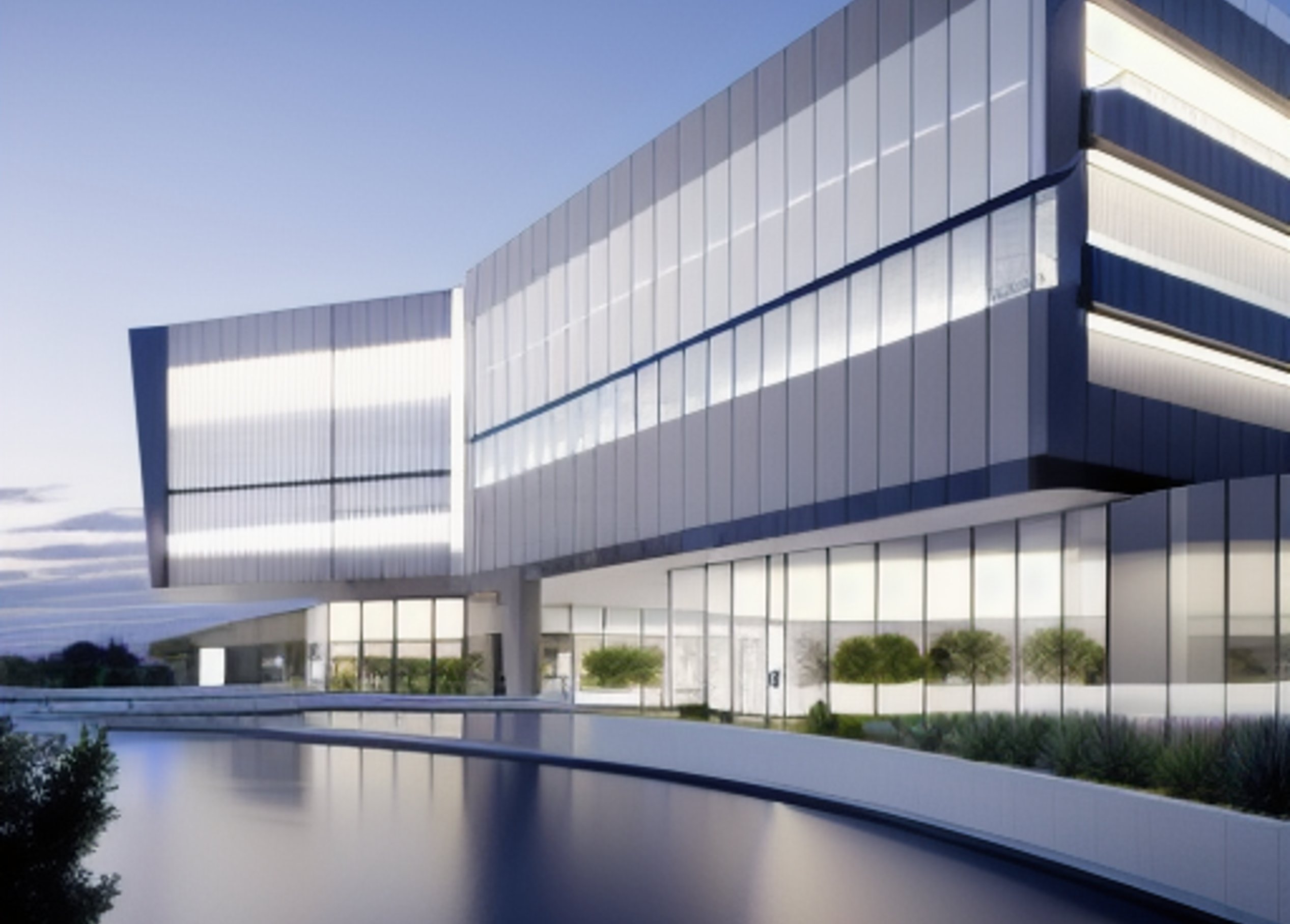
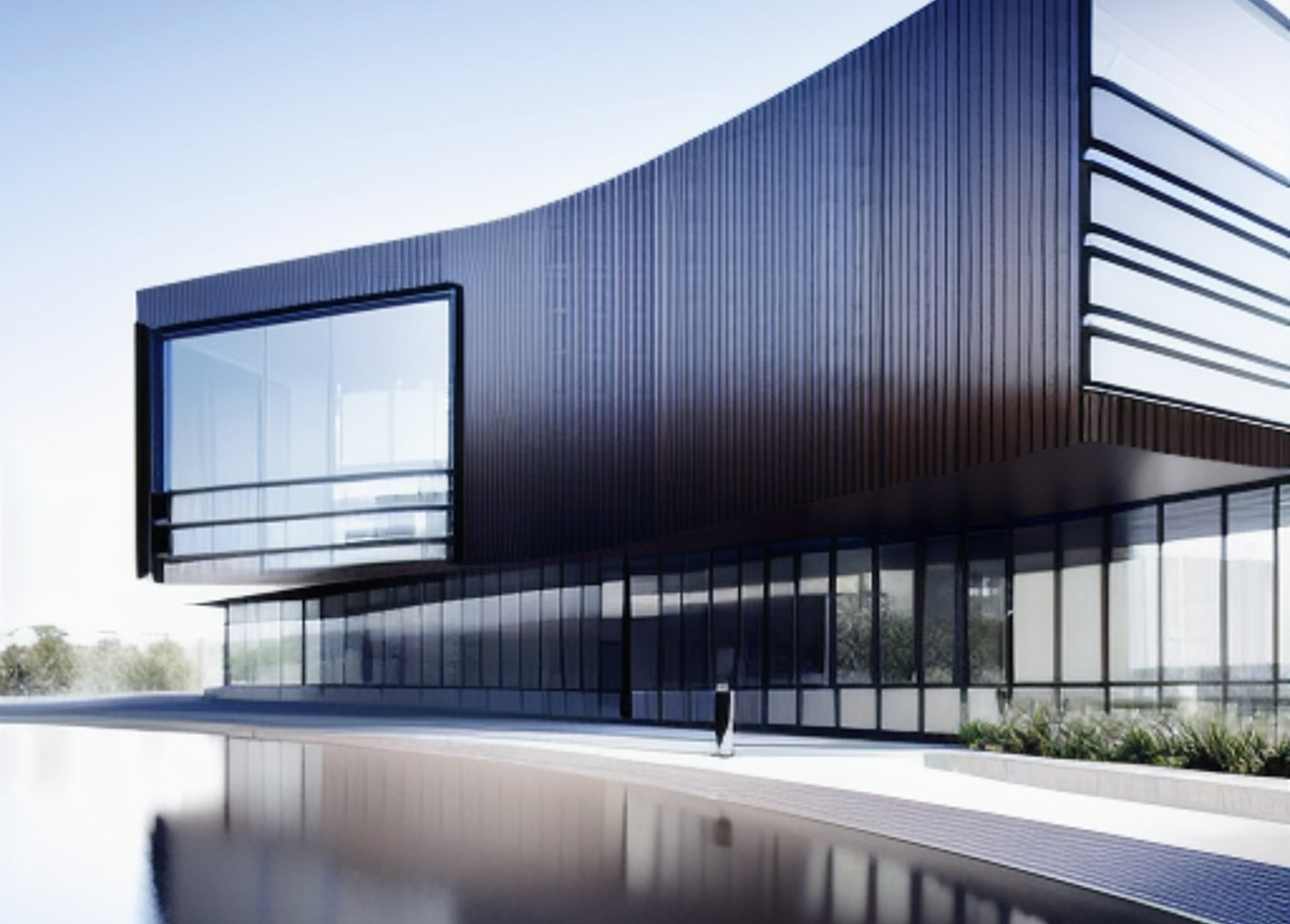
These renderings showcase Page’s AI framework, which quickly generates a multitude of designs from a single sketch or prompt. If a sketch or prompt is loaded in the morning, around 200 new designs are generated by lunchtime, thanks to the AI's ability to operate at low frame sizes, allowing rapid iterations within minutes.
/
While this new wave of AI tools has simplified the aesthetic aspects of iteration, a critical piece has often been overlooked: performance. Visual outputs can spark bold ideas, but they don’t show how a building will perform, i.e., its energy use, daylight penetration, or performance against climate goals. Recognizing this gap, Page developed an AI framework that extends the power of generative tools beyond form-finding. Instead of just creating renderings, this innovation bakes building performance directly into the design process.
“Page’s method ensures that performance is no longer an afterthought, it’s embedded in the first sketch.”Mo ElsayedSenior Building Performance Analyst
In a peer-reviewed study published in 2025, Page’s Building Sciences team unveiled an AI-driven framework for rapid energy modeling.3 The AI is integrated with parametric design tools (such as the Honeybee/Ladybug toolkit popular in architectural modeling), so that architects don’t have to stop their design process and wait; the iterations can happen in parallel with creative exploration. The results of this approach are promising to say the least. In their tests, the Page team reported a 100% success rate in automatically generating functional energy models from a variety of text and image prompts. This shift means that while others use generative AI to explore what a building might look like, Page’s approach helps teams understand how that building will perform without breaking the creative flow. By integrating AI with parametric design tools, performance feedback is delivered in real time alongside form exploration. The outcome is more than a beautiful concept; it’s a smart one, too.
What does this AI-enhanced iterative design look like in practice? This AI-enhanced iterative design process helps visualize a typical early design scenario, such as an architect modeling a new building in a 3D software environment, exploring different massing options or façade configurations. Traditionally, assessing energy performance on each option would require interrupting the workflow, getting a specialist involved, and waiting for results, by which time the design might have progressed. Now, with an embedded AI assistant, the architect can describe adjustments in natural language or feed in a quick sketch, and receive immediate feedback like, “Option A is projected to use 15% less energy annually than Option B, mainly due to better daylight usage and a smaller cooling load.” This quick insight guides further iterations, fostering a unified loop of design and analysis that boosts creativity and performance accountability. Automating the routine tasks frees experts to focus on refining strategies and interpreting results, rather than drawing geometry or transcribing data. Because it’s automated, this approach scales easily, from a single building or hundreds, enabling analysis at an urban scale or testing many design alternatives in a fraction of the usual time. In short, generative AI acts like a force multiplier for sustainable design: more ideas tested, more insights gained, quicker and faster. The core theme is “rapid iteration without incurring time penalties,” removing the historical trade-off between designing freely and rigorous analysis.
This breakthrough aligns with the shared responsibility and collaboration in the building industry. High-performance, low-carbon design is no longer the domain of specialized consultants or energy engineers; it’s becoming part of everyone’s role. Industry guidelines emphasize that “everyone on the team should understand a project’s energy benchmark and goals” from the outset. That includes architects, clients, engineers, contractors, i.e., all stakeholders. Page’s integrative approach embodies this, making energy modeling user-friendly and accessible. Generative AI allows more team members to engage directly with performance data, transforming energy and carbon considerations into creative parameters alongside cost, aesthetics, or program needs, which designers can manage in real time.
“When a tool is easy and fast, people are far more likely to use it.”Mo ElsayedSenior Building Performance Analyst
AI is democratizing building performance analysis, fostering an integrative design culture where owners, architects, and engineers collaboratively set performance targets from the outset. These tools result in a more informed design process where sustainability is baked in by design, not applied as an afterthought. Crucially, AI doesn’t replace human ingenuity or the need for expert oversight; instead, it enhances the team’s capabilities. Designers are still needed to define high-performance goals, such as energy efficiency, superior daylight, or net-zero carbon, and interpret the results in context. Energy specialists are still vital for refining advanced analyses and ensuring accuracy. With AI handling the heavy lifting of model generation, these experts can focus on higher-level optimization and innovation. It’s like having a super-fast calculator that reduces grunt work, but while it won’t design the building for the designers, it frees the team to focus and prioritize creative problem-solving.
The introduction of generative AI into Page’s design workflow transforms a previous challenge (slow, complex energy modeling) into an opportunity to innovate. AI is now the catalyst to enable faster, smarter iterations that integrate sustainability at every step. Page’s pioneering research paper, “User-friendly AI-driven automation for rapid building energy model generation,” shows this isn’t a distant dream but a current reality backed by data. By pre-training an AI on building science knowledge and coupling it with design software, the team showed that even complex tasks like EnergyPlus simulations and Radiance daylight analyses can be streamlined instantaneously into part of the design cycle. This advancement comes at a critical time for the AEC industry. With climate goals on the horizon (2030 and 2050 benchmarks for emissions reductions), the outdated paradigm where performance analysis is too slow or optional is no longer feasible. Generative AI offers a way to meet that demand by collapsing the timeline between idea and feedback. It transforms energy modeling from a bottleneck into a source of inspiration, another dimension in which to innovate. Architects can ask “What if…?” and actually get an answer while the idea is fresh.
Page's approach builds on its history of combining design excellence with technical rigor. The firm was among the first to develop in-house engineering capabilities to handle the increasing complexity of high-performance projects. Today, this dedication continues through the use of advanced tools, including AI, which improves the understanding of how design choices influence performance outcomes from the initial concepts onward. This evolution demonstrates how technology, such as generative AI, informs and supports the developing framework for sustainable and efficient building design, where creating a building is not just about form and function, but about guaranteeing measurable performance results from the earliest sketches.
To learn more about Page’s performance-driven approach leveraging AI, see here.
United Nations Environment Programme, & Global Alliance for Buildings and Construction. (March 7, 2024). Global Status Report for Buildings and Construction. United Nations.
American Institute of Architects. (n.d.) Design for Energy-Framework for Design Excellence. AIA.
ElSayed, M., Shultz, J., Kurtz, J. User-friendly AI-driven automation for rapid building energy model generation. Energy and Buildings. 2025;345:116092.

Mo integrates emerging technologies into sustainable building practices, focusing on energy efficiency, decarbonization, and net-zero strategies. Mo specializes in integrating AI and machine learning into sustainable building practices, energy efficiency, daylight, decarbonization, and net-zero strategies. With a Ph.D. in Engineering from McMaster University, his work spans autonomous systems, drones, optimization, CFD, Carbon impact, digital twins, robotics, and fabrication, bridging the gap between research and industry. His work spans high-profile projects across the USA, Canada, and the Middle East.

Justin has a passion for problem-solving. Working alongside his design colleagues, Justin uses computational analysis to answer our most pressing sustainable design questions. In his role, he partners with clients and design teams to set bold sustainability goals and map out clear, effective strategies to achieve them. He provides performance-based recommendations through climate, building energy, building envelope, daylighting, computational fluid dynamics analyses, and more. With a Ph.D. in Arch. Sci. and a certificate in Building Energy Modeling, understanding complex problems and providing simple solutions has defined Justin’s career.

Jill 's mantra is “intention requires rigor,” an apt phrase for someone committed to leading Page's efforts to embed sustainability into every project. Leveraging her strengths as a systems thinker and ability to work across disciplines, Jill combines 20 years of sustainable design experience and a client-centric mindset to her leadership of Page’s Building Science practice. The creator of Page's "Design for Impact" framework, Jill has led our firm-wide strategy on environmental and social responsibility, defined our project best practices, and helped design teams realize meaningful value and measurable impact towards their sustainability goals.
More
by Robert McClure, Alison Ledwith, and Mo Elsayed


Complex challenges need fresh perspectives and deep expertise. Connect with our team to explore how we can help you create spaces that make a real difference.