
by Robert McClure, Alison Ledwith, and Mo Elsayed
Biophilic design has become a cornerstone of health-supportive architecture, praised for its ability to reconnect with nature and foster psychological well-being, faster recovery, and reduce stress.1 Research across disciplines has validated the benefits of incorporating natural elements such as indoor plants, daylight, natural materials, and nature-inspired imagery into hospitals, clinics, and long-term care facilities.2 These interventions not only enhance aesthetics but also improve outcomes for patients, staff, and caregivers.3 However, while the value of nature in design is well-documented, the application of biophilic design in real-world healthcare settings often remains inconsistent and overly focused on appearance. When misapplied, biophilic design can undermine its very purpose, reducing nature to mere decoration rather than a source for healing. Simply adding greenery or mimicking nature without understanding how and why these elements influence psychological restoration, stress reduction, and overall health often leads to underwhelming results or even unintended consequences.
The benefits of biophilic design are well established, yet few guidelines exist to direct designers toward interventions that truly fit each space and its users. Still, design decisions are too often driven by feasibility or fashion rather than by measurable impact on stress recovery, staff well-being, and patient outcomes. In healthcare settings, for example, infection control protocols, maintenance challenges, and space constraints may rule out certain natural elements like living plants.4 In these situations, should reliance be placed solely on window views for end-users? Can high-quality imagery or immersive digital environments provide similar restorative benefits? These are not easy questions, and the answers depend greatly on the intended users, the spatial context, and the desired outcomes.
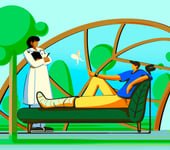
Healthcare environments are uniquely complex. Patients, staff, and caregivers experience the same space through very different lenses and under different types of stress. (See Figure 1 below.) Patients may benefit from calming, immersive natural exposure that supports rest and healing. Nurses, physicians, and other staff require environments that sustain attention and resilience, ideally offering moments of restoration without creating distraction. Family members and caregivers in public areas, such as reception, waiting spaces, lobbies, and cafeterias, often face their own emotional situations that require comfort and soothing during periods of uncertainty. Biophilic design must account for these differences, tailoring interventions to match each user group’s specific needs.
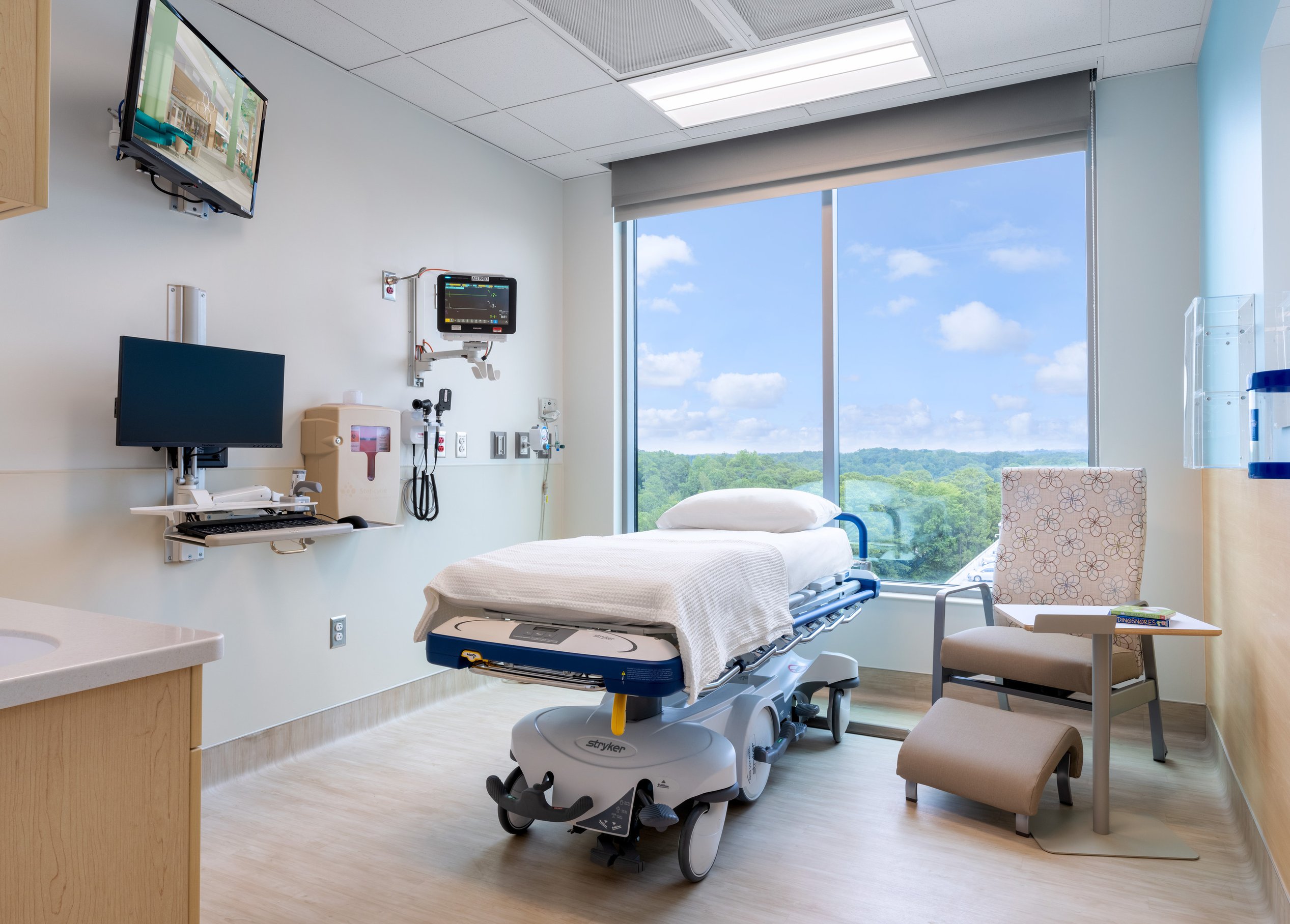
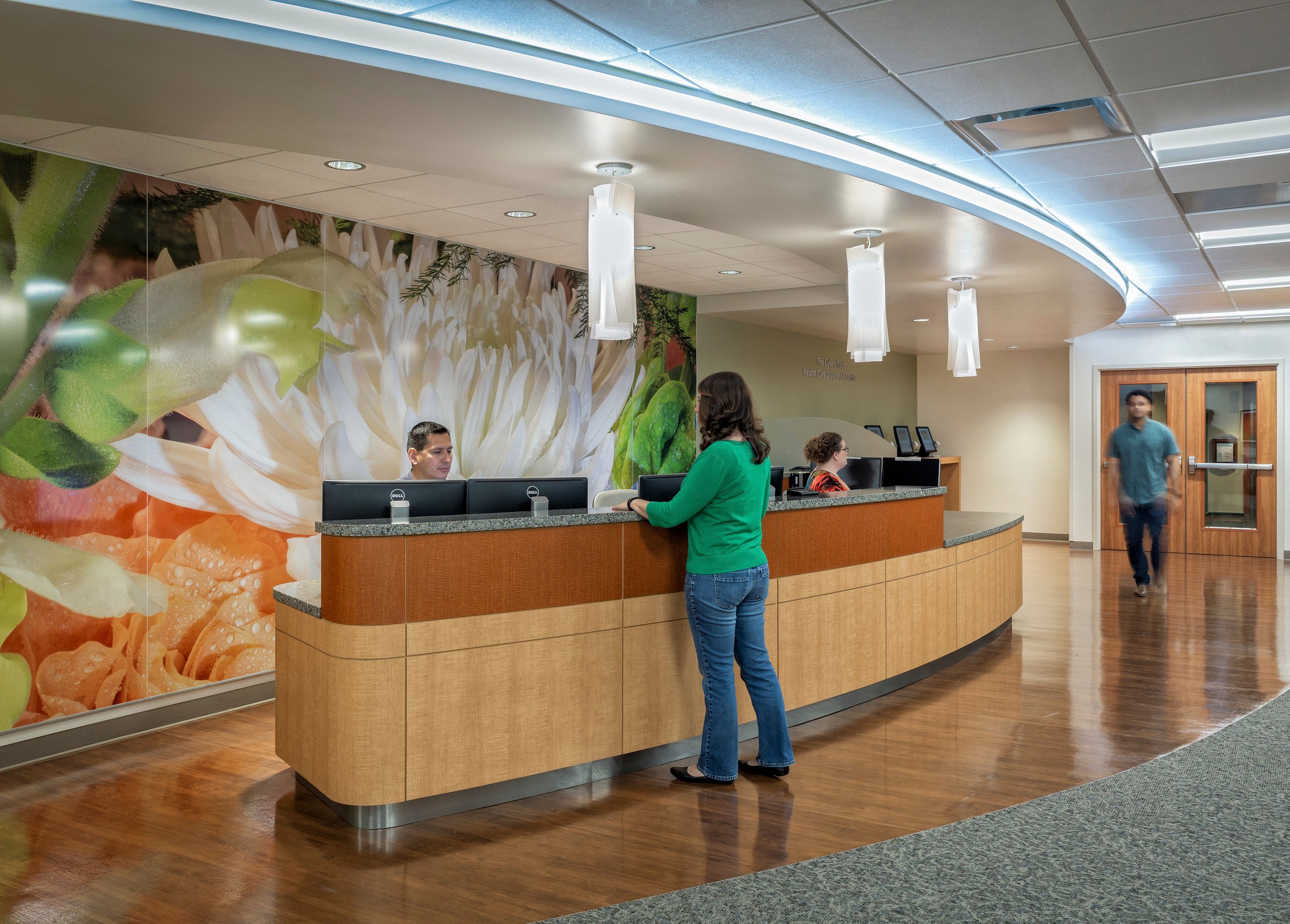
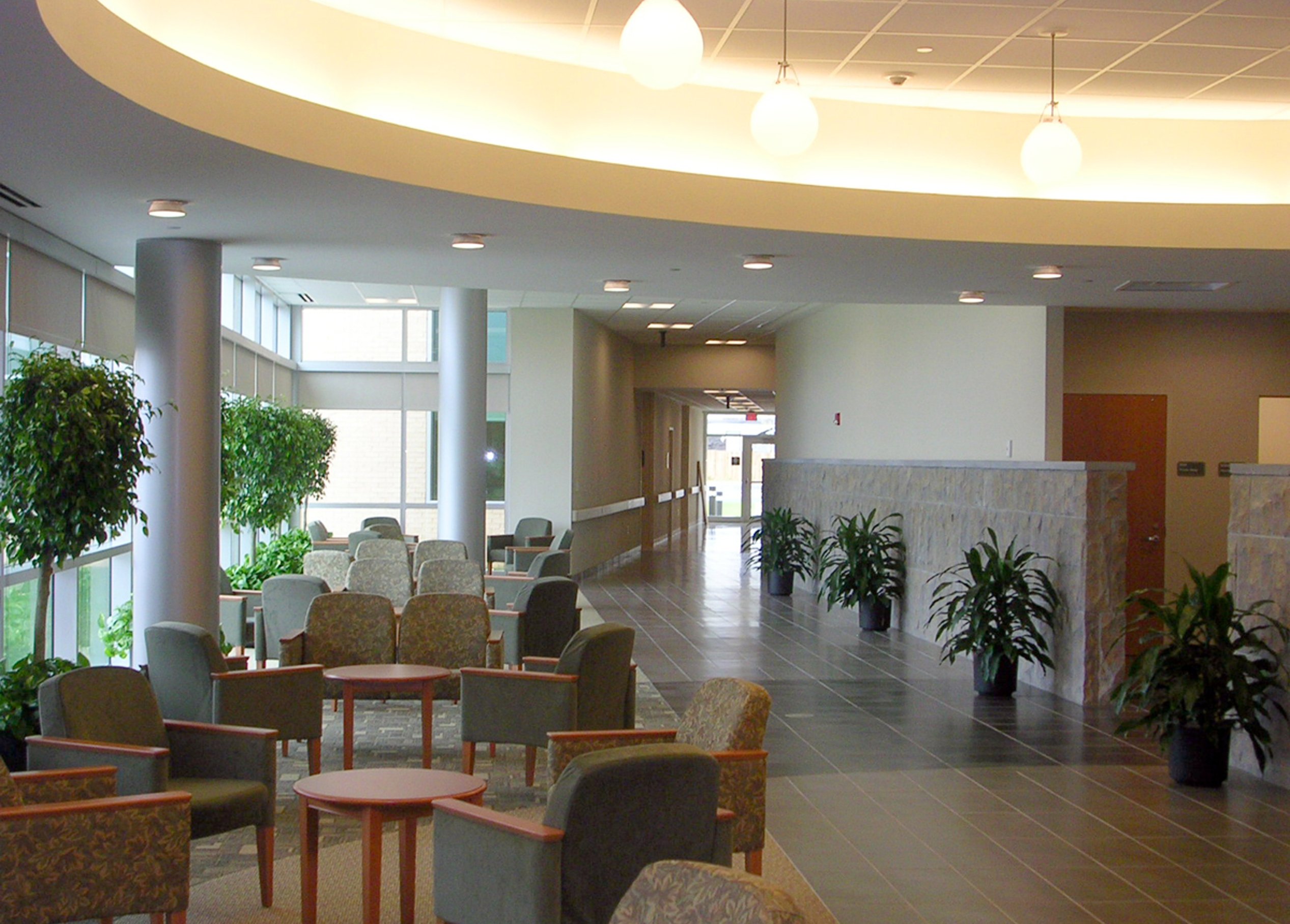
Biophilic design in healthcare buildings.
/
Moreover, not all biophilic elements work the same way. Plants in passive spaces, like break rooms, may look impressive but have a limited effect if those spaces are underutilized by staff.5 A small nature-inspired painting placed directly in a patient’s line of sight may offer greater impact if supported by natural light and a background of nature-inspired texture and patterns. Design properties such as color, scale, placement, and lighting play a critical role in shaping users’ psychological responses.6 Too often, these features are applied uniformly across spaces, rather than being adapted to different use cases.7,8
To address this, biophilic design must shift from intuition to evidence. Experimental studies are needed to better understand how people respond to various biophilic interventions and how these responses differ across different types of features, such as plants, green walls, natural light, and water, each with distinct design properties including size, color, and texture. For instance, restorative effects vary among three types of biophilic environments: indoor greenery, outdoor views, and their combination.9 Regarding design properties, two studies investigated the impact of green wall size on human responses, finding that even smaller-scale interventions can evoke measurable restorative10 outcomes.11
In terms of research methodology, mixed-method approaches can be employed to capture both physiological and psychological responses. Wearable sensors can record physiological indicators such as heart rate, heart rate variability (HRV), and electrodermal activity (EDA), while self-reported surveys such as the Restoration State Scale (RSS) and Perceived Stress Scale (PSS) assess subjective experiences of restoration and stress. In addition, virtual reality (VR) offers a valuable tool for testing design scenarios before implementation, allowing users to explore how variations in size, placement, or combinations of natural elements influence users, particularly in healthcare environments where prototyping is challenging.12 Finally, innovative methodologies such as eye-tracking can be integrated into both real and virtual environments to analyze attentional patterns and visual engagement with biophilic features.13
Looking forward, biophilic design in healthcare must evolve from an intuitive approach to evidence-based disciplines. While nature-inspired elements are often integrated based on aesthetic appeal or convention, ensuring their true restorative impact requires a deeper, data-informed understanding of how people interact with these environments in real time. Page, now Stantec’s research is beginning to address this gap by combining physiological monitoring, behavioral observation, environmental sensing, and immersive simulation to evaluate the actual effects of biophilic interventions across different spatial typologies. By applying these methods not only in healthcare but also in education, workplace, and community environments, researchers are uncovering patterns of stress, engagement, and recovery that reveal when and how biophilic strategies are most effective. This approach moves beyond static post-occupancy evaluation toward continuous, evidence-driven feedback loops that inform design decisions throughout the project lifecycle. As these insights accumulate, biophilic design can evolve into a more rigorous, adaptive practice, one that ensures its strategies genuinely support human well-being and environmental connection across the full spectrum of built environments.
Xing, Y., Stevenson, N., Thomas, C., Hardy, A., Knight, A., Heym, N., & Sumich, A. Exploring biophilic building designs to promote wellbeing and stimulate inspiration. PLOS One. 2025;20(3):e0317372.
Browning, WD., & Clancy, J. (2014). 14 patterns of biophilic Design: Improving Health & Well-Being in the Built Environment. Terrapin Bright Green.
Kalender-Smajlović, S., & Dovjak, M. Advantages of greenery in hospital environment - a literature review. Sanitarno Inženirstvo International Journal of Sanitary Engineering Research. 2023;16(1), 4–13.
Wijesooriya, N., & Brambilla, A. Bridging biophilic design and environmentally sustainable design: a critical review. Journal of Cleaner Production. 2021;283:124591.
Hähn, N., Essah, E., & Blanusa, T. Biophilic design and office planting: a case study of effects on perceived health, well-being and performance metrics in the workplace. Intelligent Buildings International. 2021;13(4):241–260.
Sedghikhanshir, A., Zhu, Y., Beck, MR., & Jafari, A. The impact of visual stimuli and properties on restorative effect and human stress: a literature review. Buildings. 2022;12(11):1781.
Khatib, I. A., Samara, F., & Ndiaye, M. A systematic review of the impact of therapeutical biophilic design on health and wellbeing of patients and care providers in healthcare services settings. Frontiers in Built Environment. 2024;10:1467692.
Tekin, BH., Corcoran, R., & Gutiérrez, RU. A systematic review and conceptual framework of biophilic design parameters in clinical environments. HERD: Health Environments Research & Design Journal. 2023;16(1):233–250.
Yin, J., Yuan, J., Arfaei, N., Catalano, PJ., Allen, JG., & Spengler, JD. Effects of biophilic indoor environment on stress and anxiety recovery: a between-subjects experiment in virtual reality. Environment International. 2020;136:105427.
Yeom, S., Kim, H., & Hong, T. Psychological and physiological effects of a green wall on occupants: a cross-over study in virtual reality. Building and Environment. 2021;204:108134.
Sedghikhanshir, A., Zhu, Y., Chen, Y., & Harmon, B. Exploring the impact of green walls on occupant thermal state in immersive virtual environment. Sustainability. 2022;14(3):1840.
Mollazadeh, M., & Zhu, Y. Application of virtual environments for biophilic design: a critical review. Buildings. 2021;11(4):148.
Sedghikhanshir, A., & Zhu, Y. Computing in Civil Engineering 2021-Exploring the impact of visual properties of natural objects on attention in both real and virtual office environment: a pilot study. Computing in Civil Engineering 2021. May 2022;1384–1392.

With a Ph.D. in Construction Management and a background in architecture and design, Alireza explores how biophilic interventions enhance health and well-being in indoor environments by analyzing psychological and physiological responses, including eye-tracking and other methods. At Page, he translates research into practice, bridging design and data through AI and machine learning. His work leverages emerging technologies to develop predictive tools and create environments that are both human-centered and performance-driven.
More
by Robert McClure, Alison Ledwith, and Mo Elsayed



Complex challenges need fresh perspectives and deep expertise. Connect with our team to explore how we can help you create spaces that make a real difference.