The good big room
by Tully Mahoney in conversation with Kurt Neubek and Margarita de Monterrosa
Ever wonder how teams deliver complex, multiphase projects on time and under budget?

Ever wonder how teams deliver complex, multiphase projects on time and under budget? It starts with the environments and behaviors that shape how people collaborate.
With Kurt Neubeck and Margarita de Monterosa, we’re exploring Lean delivery strategies, like the Big Room, where team spaces, shared tools, and structured workflows drive smarter decisions and faster alignment.

/
Healthcare director Kurt Neubek and lead architect Margarita de Monterosa join host Tully Mahoney in The Good Room.
Hi, I'm Tully Mahoney, and welcome to The Good Room. Today we're thinking about The Good Big Room with Kurt Neubek and Margarita de Monterrosa. We'll be exploring how lean delivery methods and tools like the Big Room can create spaces that help us collaborate more effectively and efficiently. We'll be focusing largely on the Texas Children's North Austin Campus, which is a project where we used lean to complete a four building master plan, design, permitting, and construction, all in under four years.
So, without much more further ado, I want to introduce Kurt and Margarita.
So could you both start with a quick introduction and share a bit about your involvement with Lean?
Thank you, Tully, for having us here today. My name is Margarita de Monterrosa. I am a healthcare lead architect and project manager with Page, now Stantec. I consider myself a strong supporter of lean principles, and my exposure started over five years ago when I was the lead project architect in this project that Kurt was leading as the principal in charge and the lean champion.
This was a Greenfield hospital in Austin, and from that moment, it felt like everything that was implemented during that project aligned so well with my ideal of making a project happen, and I was immediately hooked. So in mid 2022, Kurt reached out to a group of us here in the office to ask if we were interested in helping the Houston Lean Interest Group recover its title of Community of Practice, COP.
These are formerly organized groups that have been created in different cities of the US and other countries, and they follow guidelines established by the Lean Construction Institute. Of course, I raised my hand, and since then I have been part of the— of the core team that managed that group, and we were able to regain the status of community of practice in 2024.
Since then, I have been serving as the co-leader of the COP here in Houston, and we continue to work to grow the community here in town. And the interest and everything. And it's something that has really made me very passionate about the topic and the approach of projects.
And I'm Kurt Neubek, I'm an architect with Page, now Stantec, been here for 31 years. I was actually getting involved in lean before it was called that in the 80s, early 90s, mostly early 90s for for me, it started before that, but I got involved in what was known at the time as the quality movement, and someone had introduced me to it said, I think you'd be interested in this, and I was, and using it for the architectural consulting work that I was doing.
And then over time, oh, probably ten years ago now. I said, I think this is really going to make a difference. I think this is going to be a very important movement in design and construction. I really want to learn about this. So I found a program where I could do self-study and get a Lean Six Sigma Black Belt.
And went through that program, and then I found out about the Lean Construction Institute took all their courses and became an instructor for them. And then when CoA, the Construction Owners Association of America, I was also an instructor for them already, and they decided to come up with a joint lean for owners course with the Lean Construction Institute, LCI.
And so then I helped put together that course and have presented it all around— across the country many, many times. And we've updated it a few times over the years. And and I also teach various courses for the Lean Construction Institute. So that's— that's my background and connection to lean and project delivery. And then, as Margarita said, have been using it on projects for oh, 6 or 8 years now.
Awesome. Both great stories. So what is lean and how might it differ from other traditional delivery approaches?
Sometimes people see it as the tools. There is a set of tools and an application to the tools, but really the heart of Lean, what makes it work is when you can create a culture. And I want— I’ll just pause there.
It's about creating the right culture. A culture of respect for people is a foundation. You got to have this respect for people because if you lose that, the rest of the tools don't work. They fall apart. But then there's— you're increasing value and reducing waste. So you hear a lot about those things. And as architects we're applying these things not only in planning the building.
So when we're planning the layout of a hospital or, or campus looking at how do we increase the flow and reduce the congestion and things like that. There's the application of lean to thinking about how the design will happen, the how the building will work. But then there's also the processes we use during the design phase and construction working with the contractor.
So big focus on increasing value, reducing waste, focusing on flow, keeping things moving, reducing the gaps. Optimizing the whole is another part of it because, you know, it's easier to sub optimize if you say, well, we can make this better. Yeah, but it hurts this other thing, you're not being lean. You have to look at the whole picture.
And then finally the sixth tenet, as they call it, is continuous improvement. That means at the end of nearly every meeting, you might have what are called plus deltas, for example, or periodically throughout the project, have a retrospective where the team gets together and say, all right, what's— what's working, what's not working, what do we need to improve?
And then, you also asked, how does it differ from more traditional project delivery methods? Well, first of all, it's much, much more collaborative. This idea of creating a culture means working with the owner, the architect, the engineer, the design team and the contractor. And as many of the subcontractors and the suppliers. We're creating greater opportunities for those people to collaborate and talk about things early.
You're also intentionally looking at how do we reduce the waste? Where is the waste? In design, for example, a lot of the waste is in rework and in waiting, gaps. So some of the tools that are created uniquely for design and construction directly address those things. Because design projects or design construction projects historically 70 to 75% are over schedule, over budget, or both, meaning only 25 or 30% are really successful.
And so the people who studied design and created lean and came up with these things said— really focused on what’s causing those things and how do we address that?
To me, it's a way of bringing order to a very chaotic situation where you're trying to put a project together and by keeping this order, it brings the efficiency to each and every part of the project as individual parts and as a whole.
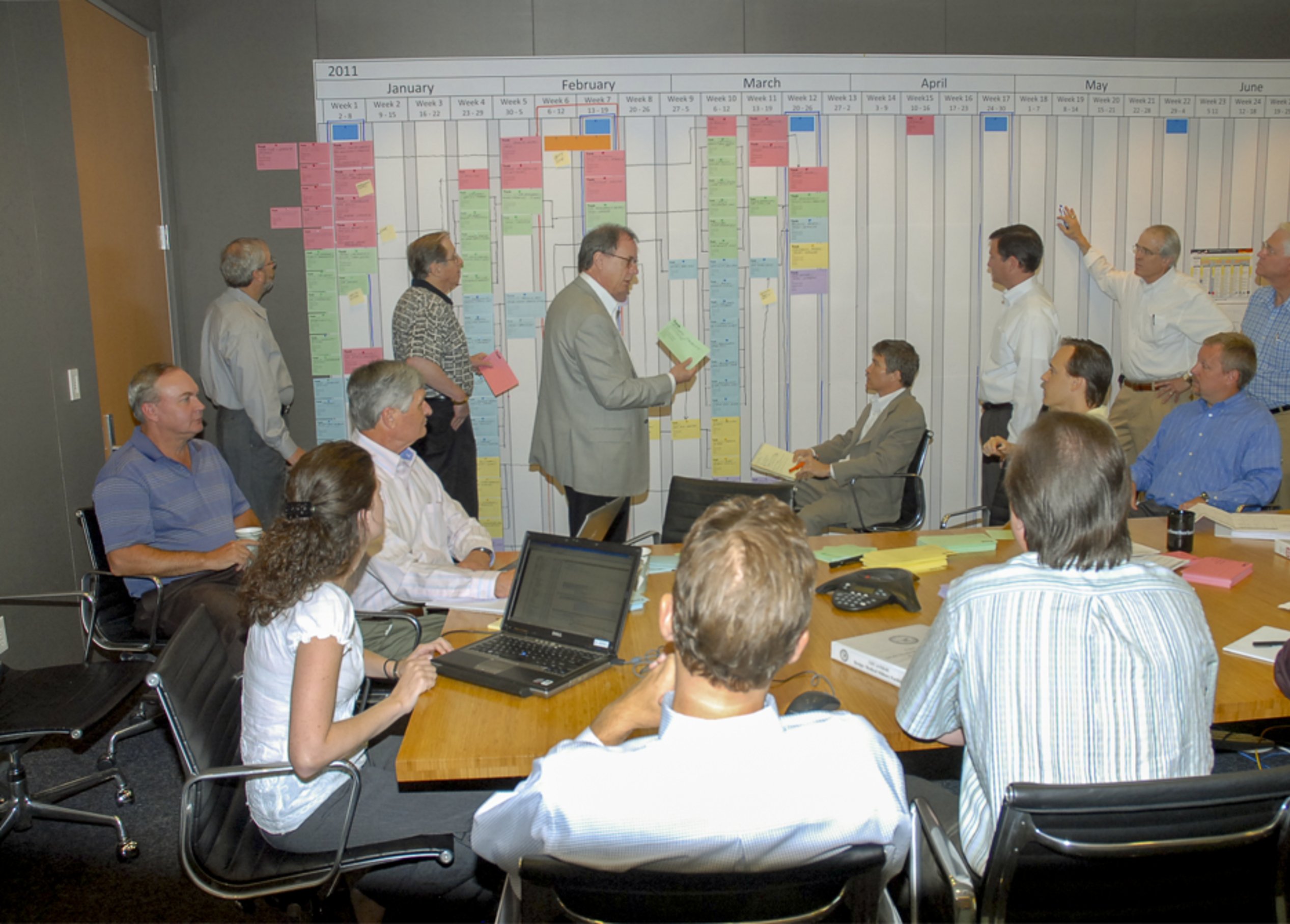
So yes, I think in the traditional way, there's a lot of waste generating incredible amount of phone calls to check—is this done? When are you going to have it ready? When, right now, if we work in the big room and do poll planning, for example, all the people who will be involved in the decisions or commitments that are made will be present so we can have a conversation all together and we can figure out commitments that will be made and we can make them accountable for that within the group.
So that just— that session was a two hour meeting that we had on a weekly basis. There were so many decisions and commitments made that otherwise would have taken lots of hours just from emails and phone calls. And, you know, all those conversations that get simplified and efficiently in a meeting like that. Right. Kind of breaking down those silos in communication.
I do want to step back quickly and somewhat define what the big room is, and then talk more about all of this mindset and culture and what that feels and looks like. So I guess my question is, could you please define what the big room is?
So big room, it comes again from the Japanese, Obeya, if anybody wants to look that one up.
But people even in English, we would call it a project room. Or sometimes people call it a war room. But it's kind of a dialed up version of that. It's a very rigorous form of of a project or team room where you're creating a room specifically designed to advance the work. So there's a lot about the design and the proxemics and everything to make it much more effective.
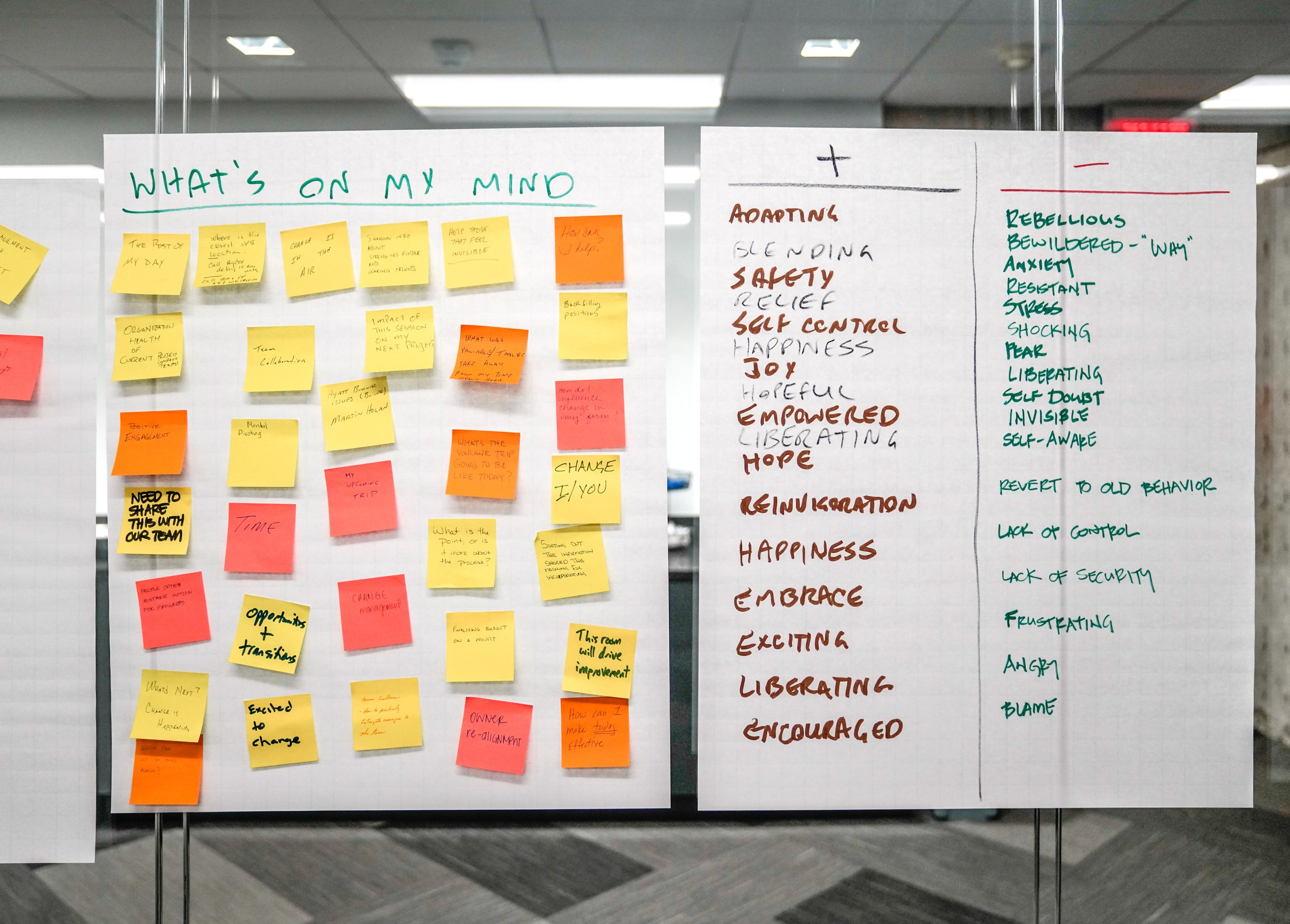
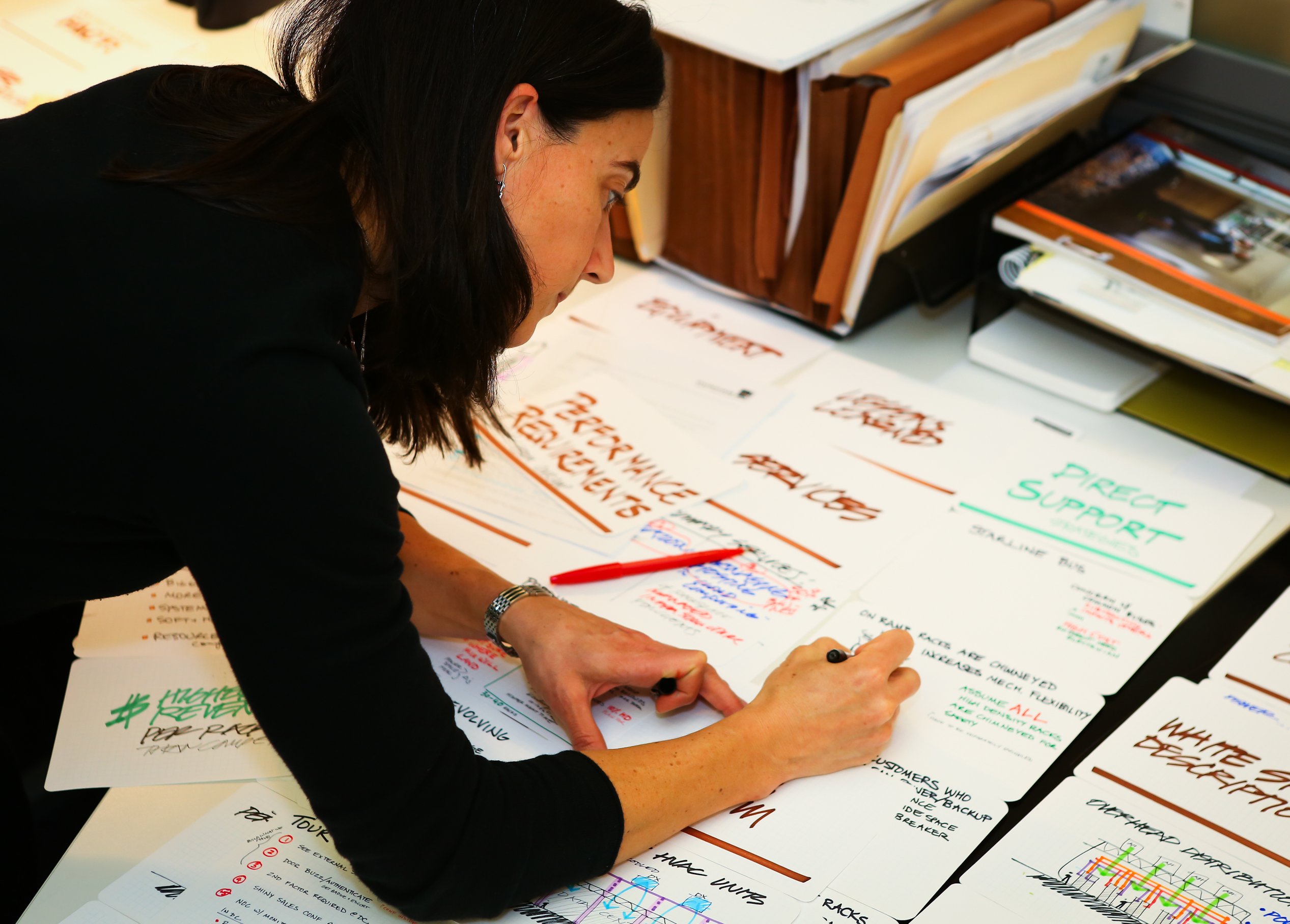
It's very much about visual management. You want to design a room in a way that there's a section that always has a schedule. One has the budget, one has the plans, might be phasing plans. There's an area for whatever is a kind of the working topic of the day. So it's— it's intentionally designed to foster collaboration and to advance the work.
So that's there's the physical aspects of the room, things like breakout rooms nearby. And you want to have comfort and convenience. You know, supplies, drinks, restrooms, movable furniture, flip charts and markers and smart boards and Wi-Fi and all those things people need to be able to be very productive the moment they walk in the door. So there is certainly a lot about the design of the room.
And then it's not only the physical part of the room, but also the agenda has to be rigorous so everyone's clear about these are the topics for today. People can prepare. We know we're not going to leave until we work through this. It's intentionally fostering that cross functional collaboration. Some of the main benefits are problem resolution, problem identification, problem resolution, and decision making.
Informed decision making is a really big part of that because it improves alignment and definitely improved transparency. That room is like a real time dashboard, a project dashboard of all the things that are happening. It should be the most up to date source. So that's a pretty quick overview of how a big room is used, and the features and benefits.
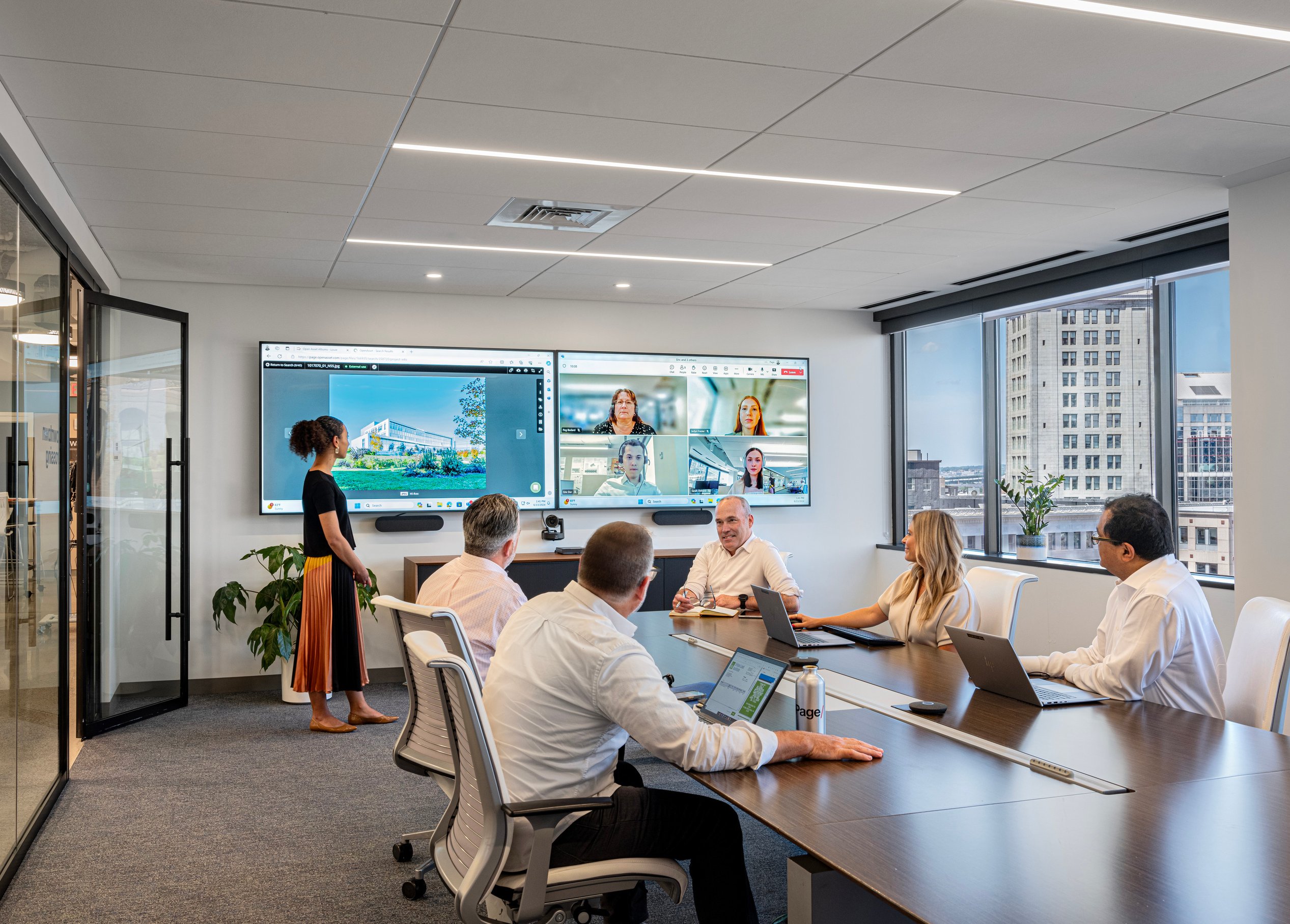
To add to that, Kurt, when we were working on this project, we started early in 2020 and then March of that year, you know, the pandemic, well Covid hit. And we didn't know at that point how long that was going to last. But it turned out to be a pandemic. So we all had to regroup and replan everything to be able to work on a project virtually.
So everything that was done for the project was pretty much through a computer and zoom pretty much all the time. But speaking specifically about the big room, we actually had platforms online where we could all join the zoom call. Somebody— somebody would share the screen, and we had our board, you know, with all the timeline and the sticky notes, which is pretty much what you do on— when you do poll planning in a real big room on a big, big wall.
That's one of the requirements, have really open walls to be able to post all the information that you have. So in this case, we had the virtual way of approaching the case, and every party of the project had their own color. So it was very clear to see right away who had tasks, due for when. And when they were crossed out, it meant that they were completed.
And you didn't want to show up that day and not have your task complete because, you know, you were hurting the project. So there was that incentive, if you want to call it, you know, but, it was a way to keep things flowing. And in the world of, you know, schedules and budgets and all that, it was respect for people that really was the guiding light to everything that we did.
Respect for people is one of the six tenets of lean, and just that. It has such a large context in ways of being applied in different formats, that it really helped us get there. So intentionally, we worked from the very beginning, taking assessments to understand the strengths of the— each of the team members that were conforming the team.
So we would have a better understanding on how to approach communication and how to connect with them. So that was a very intentional thing that we did. And this of course, helped create that culture. So all this approaches that were done initially was to build trust within the team. Trust was a very strong foundation that I think was the success of our group.
And with the trust, it it allowed us to have conflict and by conflict I'm not saying confrontation, but I'm talking about having the difficult conversations because I'm not going to say we didn't get through the thick and thin on this project. There were difficult moments, but everybody was so engaged and so on board and so committed to being one team and having one goal, achieving the best outcome possible.
We were able to get through those conversations. So, and I'm referring here to the dysfunctions of a team that are traditionally discussed. And there's an author that wrote about that. So if you have trust you can have the difficult conversations. If you can have those conversations, you can get the commitment for people to deliver what they say they're going to deliver.
If they say they deliver, if they don't, you can make them accountable for that. So I think this is a lot of what we implemented during our process to engage people in a certain way, to get people to connect and everything, you know, starting from that intangible thing, which is respect for people that led us to implement the other tenants, like the continuous improvement, the optimizing of the value, generating value, eliminating waste, focus on flow.
There's so many things that we did to implement this regularly. You know, it was not just a one time thing. We kept going back and checking and making things better. And I think that's what kept people really happy and fulfilled.
That respect for people part of it, too, just to give you some examples, what was the impact? Well, we would say things every meeting, people learned to say like, okay, how can we help you succeed?
Those of you who are on a critical path or when you have something to do, or if you say, I can get you that by Tuesday, as long as I have these three things done by tomorrow, then okay, then we all turn our attention. All right. How do we make sure that that person gets those three things? What do we need to do?
So everyone is helping everyone succeed and we're all acutely aware of the time. But we would also do things in the— in the theme of respect for people, we would say things like, how do we do this more respectful, what would be more respectful. One was respectful is we want to make sure that we're not cutting to people's personal time.
We know our industry design and construction. It's not 8 to 5, but we try to make it very reasonable. We don't want people to miss birthdays and holidays and, or their kids baseball game or recital or whatever it is, because they had a deadline. That's just disrespectful. And so how do we cut out things like that that are all too common in the industry?
And as a team, we just said, okay, then let's not do that. Instead of having a— an internal deadline where we'd say, right, let's have that do Monday so people have the weekend in case they need it. We said, no, we're not doing that. Let's move that deadline up to Friday morning. That way— And then we make sure people have what they need and they have enough time.
We didn't reduce their time. We was just planning how much time you need. And let's make sure we're not unduly putting a deadline that really pretty well forces you to work over the weekend. Let's move that up. So simple things like that.
Along the lines of respect for people and how these sessions can be several hours at times, I'm curious if you implemented any strategies to make those sessions more engaging or more effective for those who were attending?
We did have enormous number of meetings early on, especially during the planning phase. We would have weeks of all day meetings back to back. It was— And the meeting fatigue was very real. So we said, well, how do we— what are we going to do to change that? So we changed the schedule a little bit. We also had— one of the benefits of doing these virtual meetings was we could have 70 people on an OAC call, for example, which was way more than you can get in in a physical room and have a meeting happening. But we also said people— people were saying do I need to be at this meeting.
So we clarified, no, it's a good point. Every time we have a meeting, there's the people who are on the agenda. They're the main speakers or they're the decision makers, or they have some topics they're going to cover. If you are on, if you're on the agenda, you have to have your camera on. The secondary, there's, in a standard owner architect contractor meetings, there's always a second row of people in a conference room, maybe the engineer who's— they’re there for agenda item 13. They're checking their email throughout the day waiting for agenda items 13. If they're on the second tier, they're in the room, but they don't have to have the camera on until it's their time. So if you're doing other things but you're listening, you can do that.
But then we created this third category, which we'd call the just the learners and lurkers, people who would not normally be invited to that meeting. We said, hey, if you're a drafter or, young architect or engineer or designer who doesn't normally get invited to these you can sit in on this. We would, we think would be beneficial to you, to the project, to your career, to understand, just sit in and how the sausage gets made and and hear how that how that decision got made.
In order to bring a little bit of kind of a soothing environment, you know, we implemented a lot of things that would make it more enjoyable. We had music that was being played at the beginning of the meetings, and whenever we had a celebration moment, we had a virtual confetti that would fall on the screen. So everybody would really look forward to that. It was a very big thing and only a few people could control it.
So whenever you would see confetti was like a moment of celebration. We had occasional celebrations, Halloween or any other things that we'd talk about. Everybody would kind of would relax and would get out of that constant meeting. I think with the continuous improvement, we understood that it was a little bit exhausting to have back to back meetings. So we started implementing, maybe allowing a little bit of a recess in between one meeting and the other one, because everybody had their needs, you know, grab a cup of coffee, water, bio break, you know, anything.
So we understood and were adjusting to the situation as we continued to live it and as we realized that it was going to be there for a while. So that, I think, contributed to that meshing and weaving of the relations within people's because it took it to a different level. It became very personal, and we were all living it together.
We were all leaving the situation, but we were all also contributing to that big effort, which was putting the project together. So I think it became a very meaningful and very, and very important.
Yeah, there's a piece of this, part of the story we haven't told yet, which is at the very beginning of the project, we got the team together.
Part of that creating the culture is we did personality tests and we had discussions about, as Margarita said, about powerful conversations. That's the name of a book now, but topics like trust and vulnerability and conversations that you don't often have in business settings and people really, really respond and said, oh, this is, this is a different project. We don't normally talk about things like this.
But then we also said, in addition to the owner's goals about schedule and budget and scope and all those things we said, but what else are we— do we want to do as a team? When projects go well, what are the other team members do or not do? And then we had another list, which was when projects don't go well, what do other team members do or not do?
We said, can we just do that list and not do that other list? And we talked about what do we have to do differently to help make sure we get that list and not the second list, so that’s when we came up with what it called conditions of satisfaction, they're more like the secondary goals that are codifying the culture of the team.
It was very important and valuable because as a team grows over time, as you keep adding more people and especially as you move into construction and you can have a great culture going through the design phase, and then you're getting it outnumbered by people who bring their own culture or bring different cultures from the last projects they were on.
So the idea of onboarding people to say, here's the culture you're joining, this is what we do. We don’t stab each other in the back. We don't make each other look bad. We have very organized— but these are the tools, the processes. And people responded so well to being onboarded to, oh, I like this culture because part of the culture we created was in the conditions of satisfaction among the things we said, along with transparency and being honest and open, but we said we want to have fun and finish as friends.
And so then we said, okay, that's a great goal. How are we going to do that? This team, you won't find this in any lean book, well, maybe you will now because the story's gotten out. This team said, okay, let's come up with CFOs. So we had a committee called the CFOs, the chief fun officers, and they went about saying, how are we going to have fun and get things done of course? It didn't slow us down, but how do we have fun along the way?
I love the tenet of continuous improvement. It seems, as you're talking about, that you are so open to changing the status quo or not sticking to the way that things have always been done and saying, you know, let's change the way that we do meetings and how people are invited and how they're expected to show up to that meeting, which I think is powerful.
Also, to your point, you mentioned bringing in people that might not typically be invited to those meetings, which makes me think of mentorship. How do you think about mentorship contributing to this success?
Giving the opportunity to these people was very meaningful. And, you know, as they say, you are as strong as your weakest link. It wasn't just about improving the whole and improving our team, but it was to give an opportunity of all of the emerging professionals that we had in the team to be exposed to situations that they wouldn't be able to have an opportunity to participate in.
Like Kurt said, we had the learners and the lurkers. They were working in the background, but they were listening to people have discussions and conversations, negotiations, you know, styles of presentations, so many things that they could hear and learn about. And they could also hear about decisions directly from the people who were going through. And they learned about all the processes that led to that decision.
So it really was a great opportunity. And I guess one of the silver linings of the situation that that the pandemic forced us to follow. I want to— I want to say that mentorship was a big thing, also, in helping create that high performing team at every level, not just the leadership, but all the way to the lower ranks in our group, because a lot of people claim they have a high performing team and they or they are high performing, but there's a lot of oppression and a lot of burnout and a lot of imposed deadlines that don't consider that human factor, especially in the— in the times that we were living. Right.
So I think with our group, we were able to achieve a high performing team that found the psychological safety to be able to bring questions whenever they had them, and to be able to be heard whenever there was a need of receiving opinions on things that were being decided. And also there was a lot of emotional intelligence that was brought to the table to be able to maintain that level of respect. So mentorship was important because, again, we created the environment for people to ask the questions. A lot of times when it's young professionals, they don't want to ask anything because they're afraid for people to know that they don't know something.
And I've told them many times, just like a teacher, the— the worst— There's not a dumb question, but the one that doesn't get asked. And it's better to for it, because those are the moments that bring the teachable opportunities, where if they're interested in learning about more, that's when you can give them that lecture or you can teach them about something, even if the whole thing is running really fast, fast and we're working hard, we still take the time to prepare them and to make them grow as persons.
And we had a lot of people that enter a very green level, and whenever the project was finished, they were at a higher level of experience and understanding and and knowledge in their profession. So and those people were then helping the rest of the people that were coming up. So it was like a chain of professional growth.
And I'm sure once you experience it in a project like this, the lean delivery and you're like, I want to do this on all of my projects, how can I do it at some level or whatever the scale is?
And sometimes you may not switch to a project that may be implementing lean fully, but if you're— if your mind is convinced that that's the way that it works, then at least you try to implement it at your level and with the people that you're directly related with.
So just to make their life easier, right? Projects can be complex just by themselves. So why add on that extra drama? You know, because of people not getting along or people not delivering and all that. I mean, it just helps in every way to the mental health of the team. If you want to say.
Yeah, I want to reinforce that because people often ask me, how do you get your whole company to be lean?
I said, I didn't, I don't have to, you know, people who try to take on too much don't do that. Start with your own circle of influence. If that means, for example, on this project, because we get at the very beginning that we got the owner architect contract, the whole design team agreed. Yes. Let's do this. Then we were committed and we were unified and and we could do that for the entire project.
But as Margarita said, if you're already on a project that's, that's way past that. It's too late to try to change the culture of the team. Then at least within your circle of influence on your sub team or your the people who are reporting to you, or maybe in the next phase, let's try some of these things or incorporate more of this. You don't have to wait for the perfect moment. Just start doing it in the ways that you can. Margarita, you want to talk a little bit about the two second lean?
Yes. This is a format that we have, implemented where you actually find solutions to simple things that you do on a daily basis. But when you accumulate, fixing that problem, figuring out a shortcut in the software that you use every day, or just getting something very simple when you add up, there's a lot of time saved and there's a lot of efficiency.
That's added to your daily activities and daily things that you do at work or personally. So it's a way of incrementally implementing that approach, and it makes things a lot more efficient and easy in your life. You know, less headaches to deal with.
I think that makes for a really great place for us to pause this conversation today. I just want to thank you both so much for joining me and thinking about what makes a big room good.
Hosts

With expertise in crafting compelling narratives that engage diverse audiences, Tully blends creative flair with a keen eye for detail to develop impactful content across platforms. Her work includes award-winning podcast production, content development, and copyediting large-scale documents, all while enhancing brand voices and driving audience engagement. Tully also supports data visualization efforts by transforming complex information into clear, actionable insights through engaging storytelling.

Talk with us
Complex challenges need fresh perspectives and deep expertise. Connect with our team to explore how we can help you create spaces that make a real difference.