
by Robert McClure, Alison Ledwith, and Mo Elsayed
by Sophie Martin, Justin Shultz, and Autusa Behroozi

In today’s world, where every dollar spent on energy represents a loss due to inefficiency, the need for smarter, more resilient buildings has never been clearer. Passive house design employs passive strategies, such as robust insulation, airtight enclosures, and reduction of thermal bridges, paired with highly efficient mechanical systems, to deliver substantial energy savings. While the term might suggest it is only suited for homes, there is strong potential for passive building strategies in many project types, particularly residence halls.
Across the country, universities are investing in essential upgrades to their campus buildings. As heating and cooling account for a large share of total energy use, residence halls have significant load reduction potential via passive building strategies. Passive building strategies—such as airtight construction, efficient ventilation, and a well-insulated enclosure—target heating/cooling demand reduction and improve thermal comfort.

A rendering of Catawba College’s new residence hall, estimated to be completed by Fall 2026.
Page, now Stantec, recently completed the design for Catawba College’s new residence hall and has been officially recognized as a Design Certified Phius CORE 2024 project, the leading passive house certification system in the United States. This residence hall is the first in North Carolina to achieve this distinction. With the first of two steps completed for the Phius certification process, the final certification is expected to be finalized in the next few years, once the residence hall is fully operational.1 The building is projected to achieve an Energy Use Intensity (EUI) of 29.7 kBtu/ft2yr, nearly a 50% reduction from typical residence halls across the US. With 40% energy cost savings, compared to the North Carolina energy code, the project is expected to receive a $92k incentive and $19k annual energy cost savings. The design team employed a data-driven, climate-responsive approach to minimizing cooling demand in the warm, humid conditions of climate zone 3A.
Constructing residence halls to meet the rigorous Phius standard can be challenging, but the benefits make the effort truly worthwhile. Some of the hurdles the project team worked through are listed below:

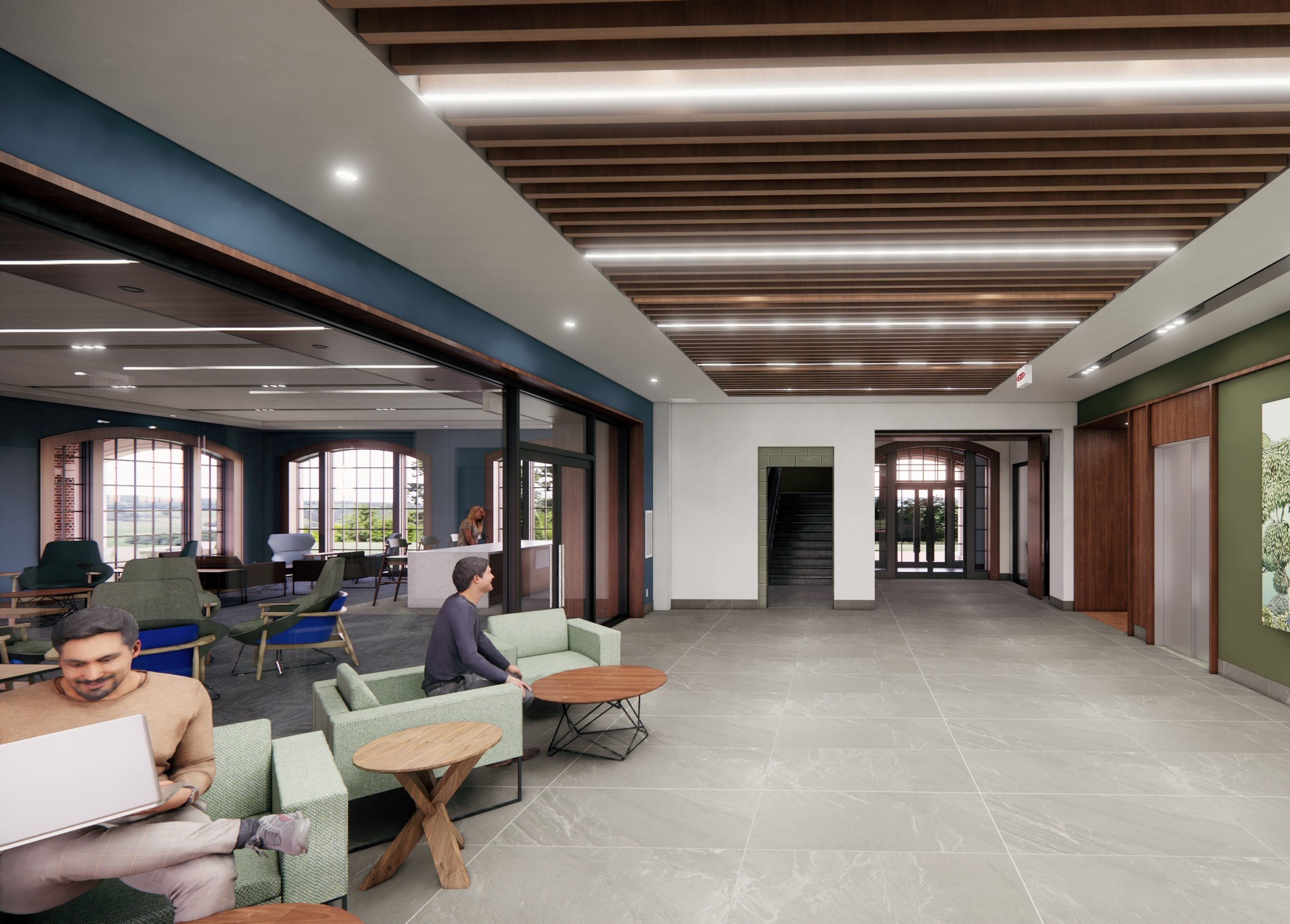
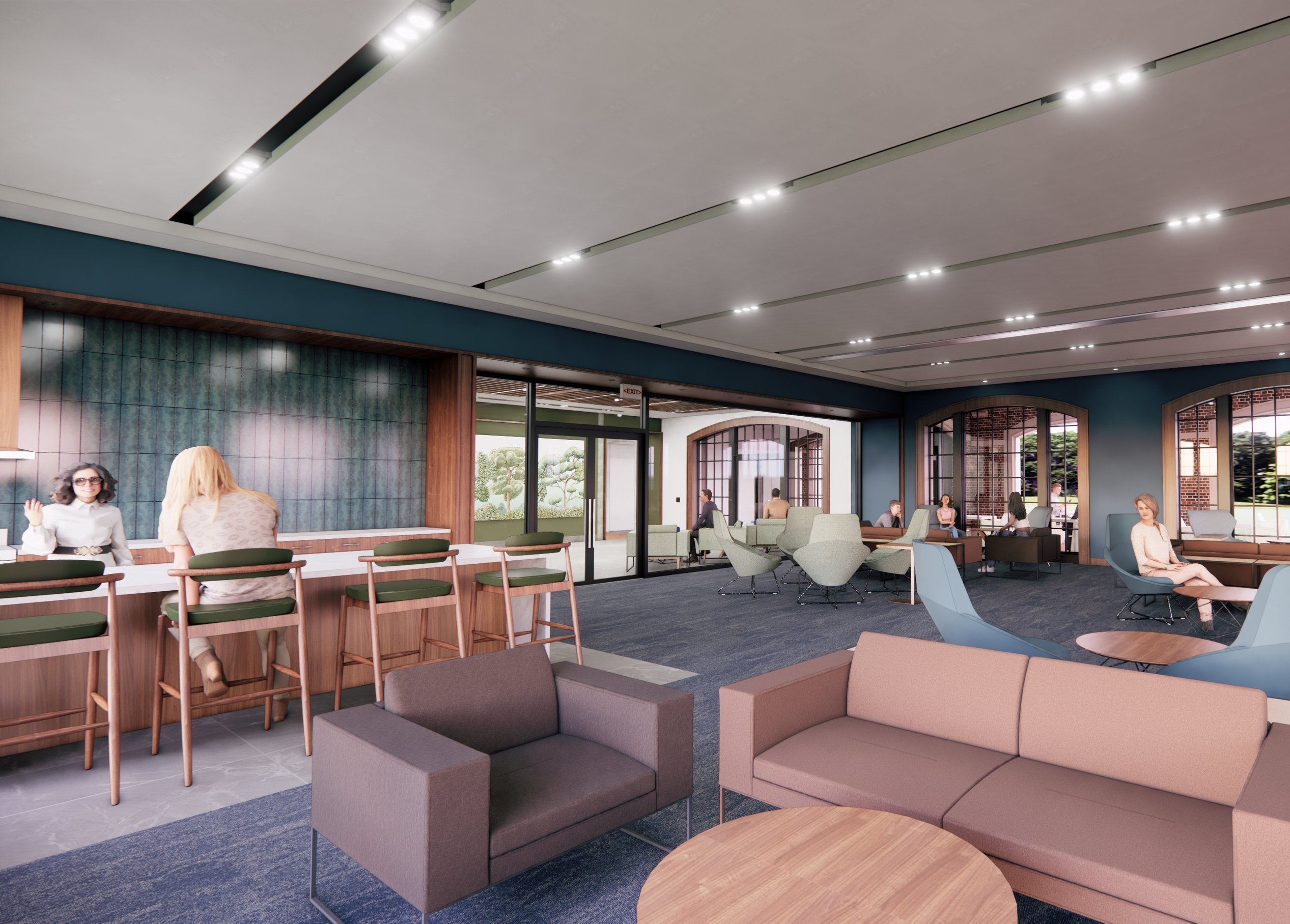

The fundamental objective from the outset for Catawba College's new residence hall is to ensure that every decision prioritizes student well-being and aligns with Phius performance standards. Renderings of the interior of the new residence hall.
/
There are significant advantages to investing in energy-saving building practices through passive building strategies. These benefits enhance the building’s resilience, operational efficiency, and long-term savings.
Passive building offers a proven path to durable, efficient, and healthy residence halls. As the next generation of students move into these resilient buildings, it becomes clear that performance and comfort are not mutually exclusive but mutually reinforcing. This design approach enables universities to future-proof their investments and leave a lasting legacy. Institutions are encouraged to consider passive building for their next project and join the growing movement toward high-performance campus living.
Martin, S., Behroozi, A., Shultz, J. (n.d.) Catawba College’s Commitment to North Carolina’s First Passive House Residence Hall. Passive House Accelerator.
White, Lisa. (n.d.) Assessing Passive Survivability in Multifamily Buildings. Phius.

Justin has a passion for problem-solving. Working alongside his design colleagues, Justin uses computational analysis to answer our most pressing sustainable design questions. In his role, he partners with clients and design teams to set bold sustainability goals and map out clear, effective strategies to achieve them. He provides performance-based recommendations through climate, building energy, building envelope, daylighting, computational fluid dynamics analyses, and more. With a Ph.D. in Arch. Sci. and a certificate in Building Energy Modeling, understanding complex problems and providing simple solutions has defined Justin’s career.
More
by Robert McClure, Alison Ledwith, and Mo Elsayed


Complex challenges need fresh perspectives and deep expertise. Connect with our team to explore how we can help you create spaces that make a real difference.