The good simulation room
by Tully Mahoney in conversation with Mark Vaughan
How can simulation environments create immersive learning opportunities, elevate clinical skills with advanced technology, and support innovation?

How can simulation environments create immersive learning opportunities, elevate clinical skills with advanced technology, and support innovation? Join Jennifer Amster and Mark Vaughan as they explore the design of these transformative spaces. From fostering interdisciplinary collaboration to engaging the community, discover how simulation rooms are shaping the future of healthcare education and driving real-world impact.
/
Director of Academic Planning Jennifer Amster and Director of Healthcare Planning Mark Vaughn join host Tully Mahoney on The Good Room.
Hi, I'm Tully Mahoney, and this is the Good Room, where we have interdisciplinary conversations about what makes a room good. And today, we're talking about a good simulation room with Jennifer Amster, Page's director of academic planning, and Mark Vaughn, Page's director of healthcare planning.
So to begin the conversation, Jennifer and Mark, could you tell me what is the purpose and function of a simulation room in health care and dental education?
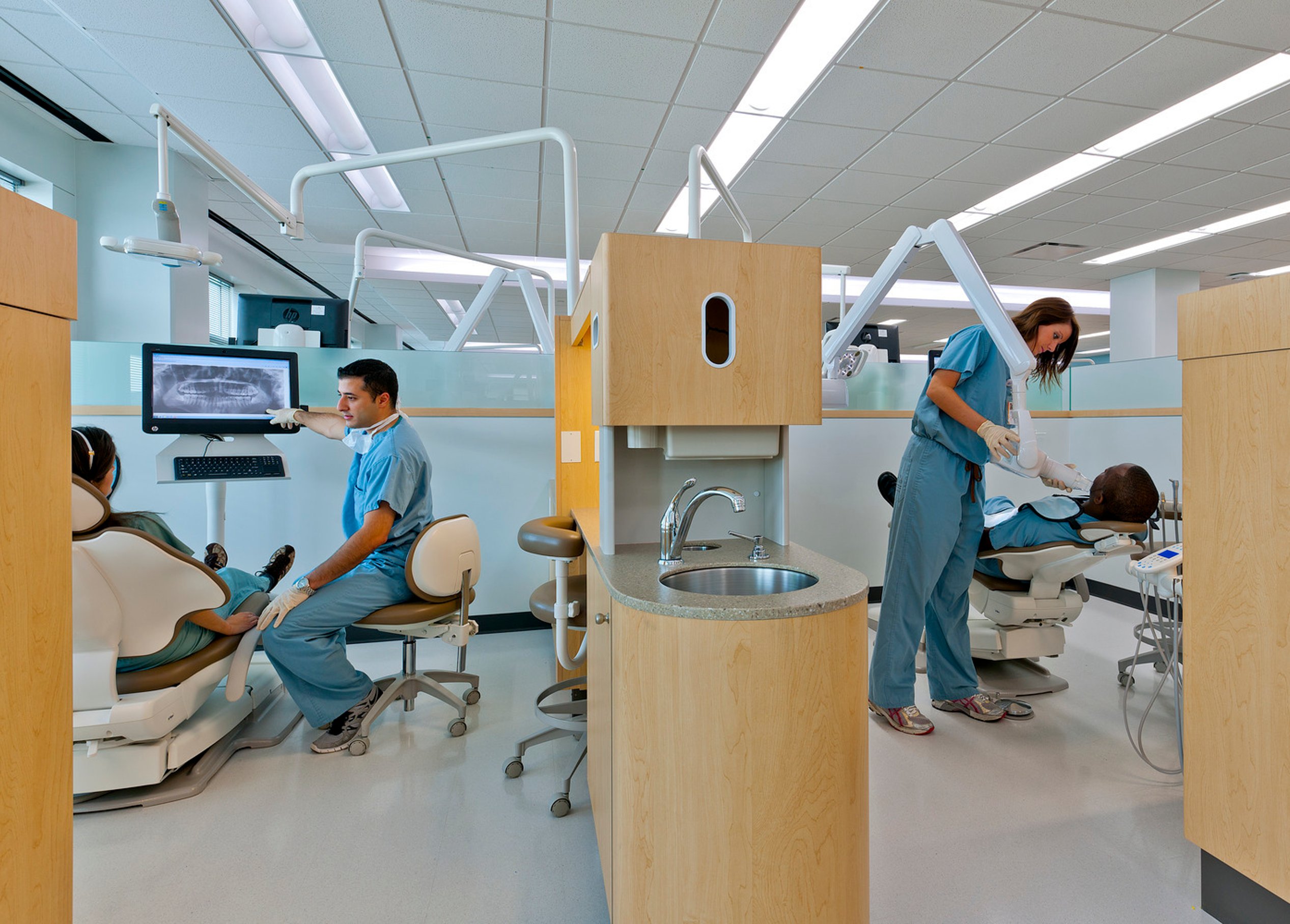
I think we can cover it two ways. One, from the educational standpoint and the other from continuing improvement standpoint. In the educational context, while clinical experience is really the gold standard for health professions education, simulation starts out as being that gateway activity for engaging a student’s professional commitment and helping them gain a sense of professional identity. So practically, it's that bridge from the classroom to the clinic.
We are seeing more and more a trend towards increased amounts of simulations. Educational institutions are doing that because they're getting feedback from the front line that they wish their students had more time in simulation and more practice time before they actually come out in the field. So it's a really important component, along with the formal learning and kind of student support spaces that we provide in health education facilities.
One element to add on to what Jennifer just said, I'm seeing, at least on the healthcare client side, is there's just a shortage of clinical care nurses. And health care institutions are trying to figure out a way to create very attractive educational programs that can help recruit and retain staff, especially those coming out of Covid. And so one of our clients has a very strong partnership with an Allied Health and School of Nursing program, and they use their simulation center to train students from high school into college, and then literally right into their program. They have a number of different programs. They don't charge because they see it as a win.
We have other clients that use the simulation purely for their own clinical education and continually to train and raise the bar in the clinical care work that's being done at the front lines.
So really it's starting with the skills acquisition and really running that whole gamut to continuous improvement by the time you're seeing it in more of the clinical environment.
And what are you finding are the benefits of having the simulation experience? I think you've mentioned some about confidence. Is there any impact on things like patient safety?
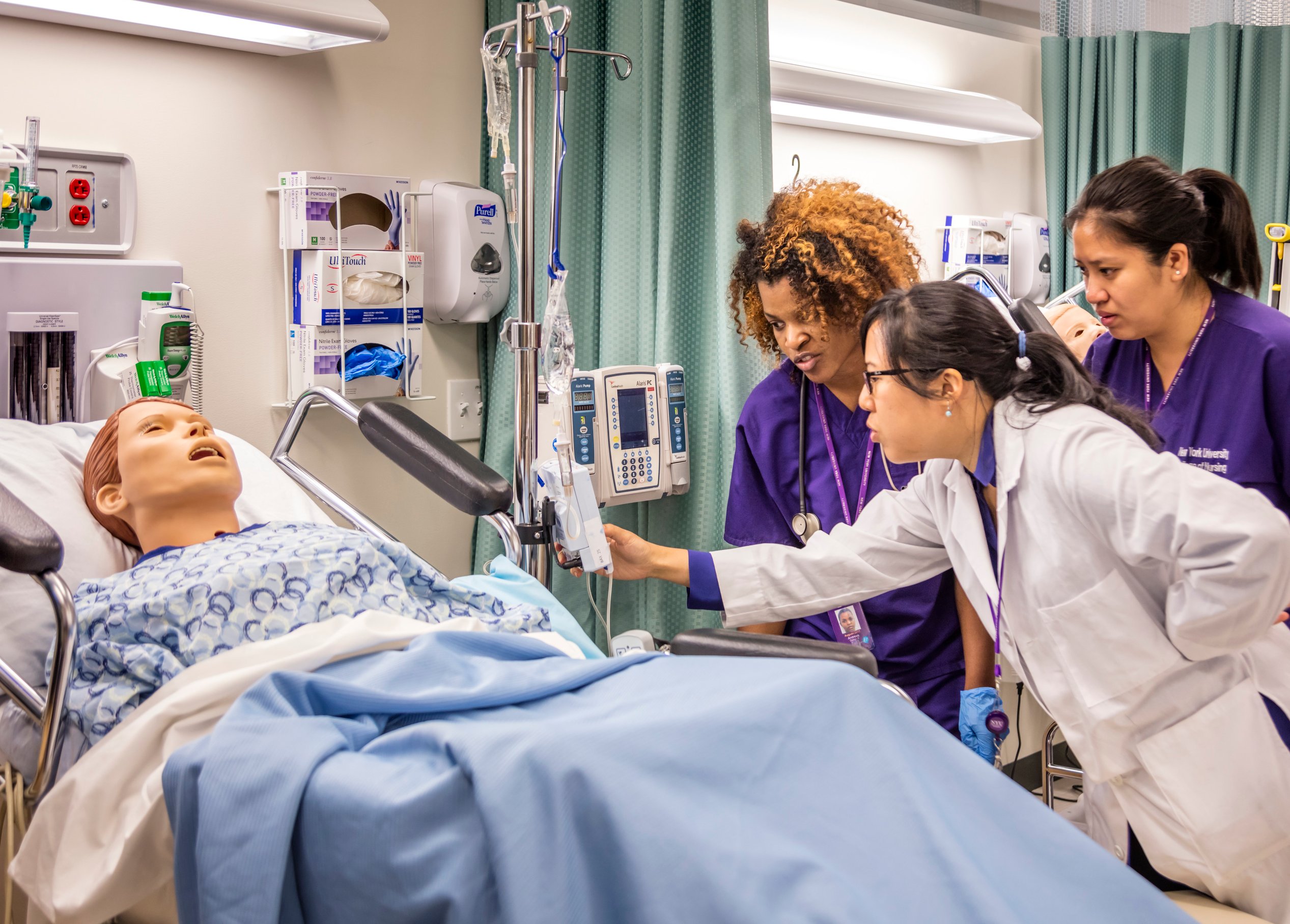
Yeah. So it's really developing the total package. Right. So there's the haptic and skills acquisition of being able to perform specific procedures. But in the simulated environment students get that opportunity to explore the psychosocial side of patient care. They also get to explore the ability to safely work in teams with other health professions, students or providers.
So they're learning the choreograph of working together with others. They're practicing leadership skills. They're practicing a wide variety of skills beyond just the focus on figuring out what's wrong with the patient. That's one big piece of it. In terms of patient safety, something that we've been doing a lot, and it's been kind of working together with our healthcare practice, is looking at what we're hearing on the frontline in the clinical environment that's important to patient safety in terms of providing care.
So for instance, nurses need somewhere to chart that is distraction free or somewhere to do meds that's distraction free. We can take those same components and bake them into simulated, say, hospital rooms or clinical spaces so that they're developing that best practice and the whole muscle memory of doing things right all the way from the very beginning, when they're students.
I think that leads me really well into my next question, where I'm curious about the fidelity of the mannequins, the layout, and how immersive that space should feel. Should it replicate spaces that they're going to be used to so that they can have that muscle memory?
Simulation can be done in so many different ways. And in talking to our clients, you know, they could probably do it out in the middle of the street with nothing. But the better and more realistic the environment is, that replicates the environment that they will work in both and the collaborative work that Jennifer was referring to, as well as the real environment, and simulating the situations that they could expect to find when they get in a real working frontline clinical experience, the more confidence it's going to bring for the staff.
And much of the post educational feedback that they get from, especially young graduates, is just that. They feel like they have entered the professional realm with a much greater understanding and confidence to deliver the care that's being expected of them.
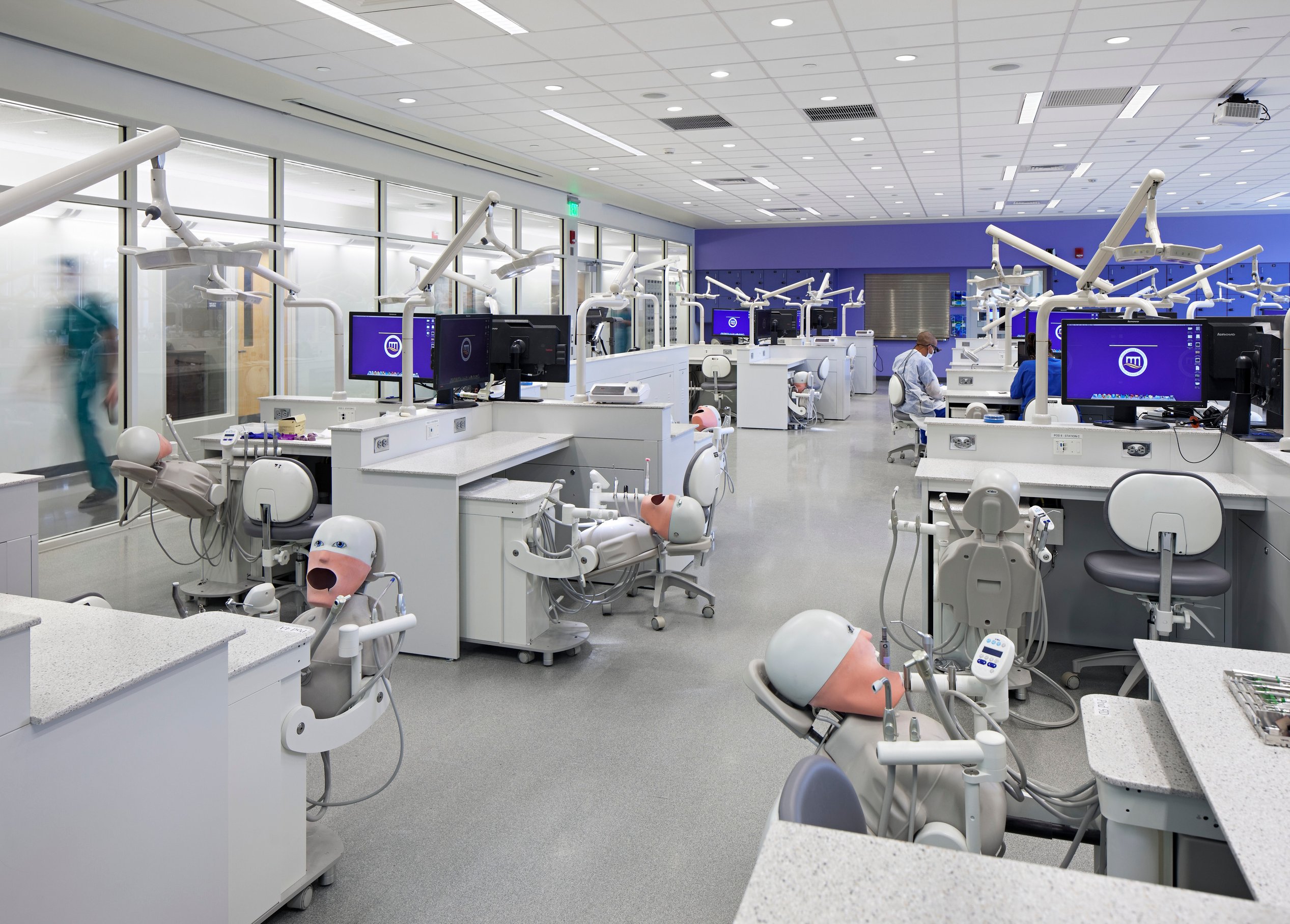
We frequently get this question at the beginning of planning a health education facility. Well, how realistic does this need to be? What sort of investment do we need to make in simulation equipment and the types of spaces? How realistic do they need to be? And what we really find is there's a range. It depends on the acuity of the learner. So novice beginning learners don't really need quite as much bells and whistles and whiz bang, high fidelity simulation because they're really just learning the very basic skills.
When you get into later years and postgraduate continuing education, the more realistic the better, the more impact of having that high fidelity has on the learning experience. I do really want to recognize what Mark said about simulating out in the street, because it's true. The people we work with who run simulation centers are amazingly creative people. They will always find a way, and that's the thing that we sometimes have to challenge them when we're planning a new facility to say, hey, we can think, you know, clean slate here. We don't have to do it the way you've always done it, because it was, say, a workaround, because they are amazing at finding ways to help learners succeed.
One thing to add is, I know you kind of got into the high fidelity mannequin question and really leads into this idea of, you know, how much is enough or what's appropriate with regards to technology. Certainly our clients are using the high fidelity mannequins. In addition to that, as I touch base with a couple of our clients, one client is more tilted towards providing educational content for practicing clinicians and the healthcare environment, and they're getting ready to employ an AI based mannequin that has the capability to learn and continually learn its environment.
Learn the clinical situations, how to challenge the clinicians with new content or make it even more real, as if they're working on a real, you know, person. So that's really interesting. The other is very focused on student learning and their partnership with the Allied Health program that they're affiliated with. That one is employing virtual reality headsets and doing some of the initial training that they've created in, you know, through software where the individual is just sitting in a chair. They said they initially started with them walking around, but they would bump into people, especially if they're all doing it simultaneous. So they just have them sitting in a chair.
And so that's a very different kind of training experience for the people. But I thought that was really interesting that one does it this way and the other one does it really just believes in creating a very non intimidating place that as realistic as possible to allow someone to be successful, including failure, creating a situation where clinical failure occurs, but it's safe and it's okay and then they can just do it again.
You mentioned virtual reality and a lot of people ask about it. It's exciting to me because it's actually going to reduce facility needs in a lot of ways. It allows any room to be a simulation room, which is really going to change the way that health education is delivered. And the thing that needs to catch up is the content. So a lot of people are very interested in it, but there's not a lot of content out there, and I'm sure it's rapidly changing every day. But as that catches up, I think we'll see a lot more of it.
I think we can all appreciate health moments that we've had with providers and we're like, man, I don't know that they were ever trained in bedside manner. Like, what were they thinking when they made that statement? I can imagine the augmented learning environment where and I know and I know they're doing this now. One of our partners, University of Alabama, Birmingham, is testing virtual reality where they create situations. And what I'm talking about right now is not clinical situations, but a personal situation where you have someone that you're talking with, could be a patient or a family member, and they're bringing up a particular question or something that needs to be spoken with them.
And that's the training. So you're training on how best to maybe break news or answer a question or whatever it may be, but doing it in a way that provides dignity and respect and the right kind of helpful response, and that you can imagine would be helpful for someone who's doing a registration, a physician who has to spend time with family talking about clinical care or whatever it may be. But I think that kind of training, when I think about the possibilities of augmented virtual reality learning, I think could be, you know, it's like the sky's the limit.
And I want to point out it ripples beyond just the doctors and the nurses. A lot of the health professions training and simulation that we're seeing is for X-ray technicians, people working in the labs, for a variety of different aspects of what's behind the frontline providers. That also is a skills acquisition aspect of the simulation center.
Changing gears, I wanted to touch on collaboration. How do you design these spaces to support collaboration, especially in interprofessional education?
It's a really important aspect, particularly of more undergraduate education, younger learners and building cohort. Health education is hard. It's a really difficult field of study. So thinking about how students can be set up for success, building community amongst students is really important to a lot of institutions. So they will create cohort for their students to learn together, to study together, and to observe and debrief together.
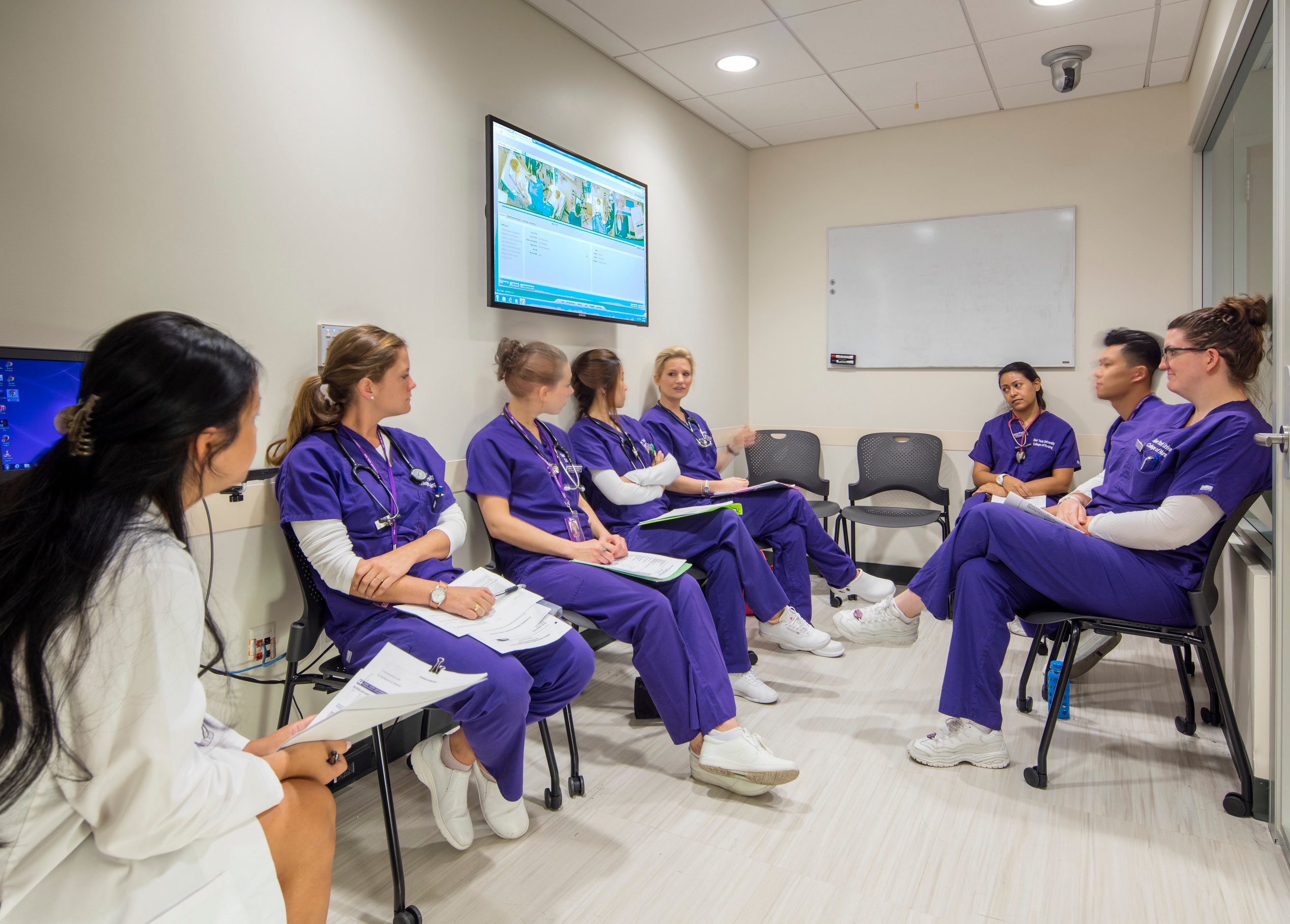
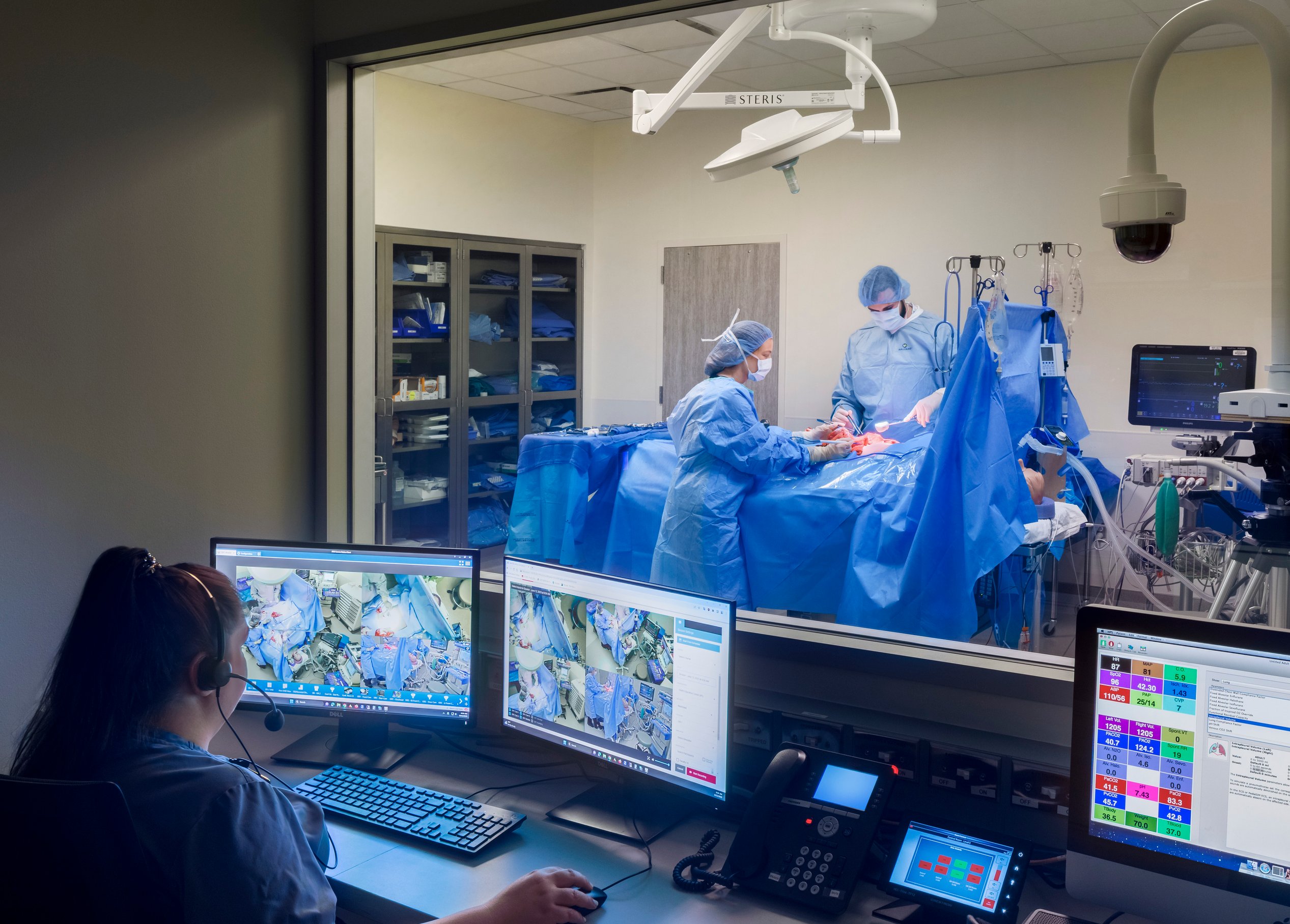
A facility we did for NYU for their nursing school, it was really important to them, for their nursing cohort to actually observe direct observation with a window into the exam room all together and then all debrief in the same room to have that immediacy and kind of build that cohort.
What do you find is the benefit of having a dedicated debriefing space versus doing that just at the bedside?
Talking to some of our clients. These centers are full, and they're providing meaningful education all day long for various groups. And so there's a need for throughput. So the moment they accomplish what they wanted to accomplish, not that they can't stop something to teach, redoing it, or correcting it, but at some point they have to move on because the next group is coming in. So having a place to enhance throughput. So being able to leverage learning moments before you get into the room and conduct simulation, but also learning labs that occur after individuals or a whole team has done their work.
Now we're going to go back and watch it and learn from that on the back end. I think that can certainly foster the ability for the center to embrace more people throughout the day so you're not tying up the critical spaces for too long.
And as you mentioned, so that people can watch, right? So if the event is being filmed, then going to a space where everyone can sit comfortably and actually watch themselves really enhances the educational part of it. It's also a place of respite. It's an ability to get away from what was a potentially a very intense event in a simulated space and be able to be in a calmer, more comfortable environment to talk through performance, too.
Yeah, that's an interesting point to bring up the emotional impact of being in a simulation space. Can you tell me more about that?
You can't underestimate how emotionally invested students particularly get in these events. They want to succeed. They're trying to do well and and sometimes the event is one that I mean, as in real life when you have a loss, it's learning to manage those emotions as well is a really important part of the whole experience.
Yeah. And I think one overarching theme that you'll hear really, by all the folks that run the simulation center, is conveying a very welcoming environment where it's safe to learn, and what happens there stays there. It's like, look, we're all going to learn together. And, you know, failing as a part of learning and Jennifer indicated there's these clinicians are very passionate about what they do. And they can take it personal when they fall short. And that's going to happen from time to time.
Or there's clinicians who cry, you know, they really relate to something they may have done in the past and that they don't want to repeat, but they're trying to work through how to overcome and learn to do it differently. So the environment has to support that. They can let their guard down and do that if that's part of their learning experience, and then that needs to happen. So they want to make sure that they feel safe and being a part of simulation to learn and advance their skills to another level.
Along those lines, I recently got some feedback that really surprised me on a recent facility, the simulation director told me she really wish that they had emergency power throughout the center, because when they had a power loss and suddenly the mannequin or everything stopped working, that was really a problem for students, right? They were impacted by being interrupted or by the patient failing because they had gotten in the moment. So that that was a new one and something that we hadn't really considered before. The need to be able to see a simulation through to the end of the event.
Another thing I was thinking about is that we're seeing more and more centers try to find a way to be a resource for the broader community. So, you know, for instance, we do a lot of work in the Texas Medical Center. As they were conceiving their simulation center, they were thinking beyond their own population to how can we maximize a resource for the broader healthcare community, or how can we help, say, secondary education or a community college or certificate program? So we're thinking about how centers can be accessed and be very universal to allow them to do more.
Thinking about integrating the community, I took a course in high school where we went to Harvard Simulation Lab, maybe once a month, and worked with some of the instructors there. I'm curious, is this a way that you're thinking about integrating the community members into actively engaging with the simulations?
One of the great benefits of simulation is to allow non-health professions students to make important connections about, say, scientific theories. We recently did a center for Science and Health Professions combined at the University of Saint Thomas in Houston, and the feedback that we got was it was not just beneficial to the nursing students to have biology in the building, it was beneficial to the biology students to have nursing in the building, and they would do things that were interactive between the two departments, like a scavenger hunt to bring students through a variety of spaces and find new ways to get concepts across.
Certainly applicable to high school students as well, being able to have access to those sorts of things.
You know, the next, the future generation of people that are needed in life sciences and health care has to start at a much earlier age. We can't wait until they're in college. You know, we got to create opportunities and cast a vision for the possibilities so they can understand, hey, I can imagine myself doing this or this is an area that I'm thinking about, I just didn’t know where, how I could tap into that. So promoting programs at the high school level or at community colleges where some of the classroom training is overlapping into the clinical space and therefore the need for having a better understanding about what does that really look like, how would that work?
And so there's all different types of learning environments from both simulation as well as video or even observation. So there's different kinds of environments, but I think at the end of the day, the big goal, at least from our healthcare clients, is the need to continually think about recruitment and retention.
Yeah. And I'm also curious about the connections between the simulation space and more formal lecture style learning. So I'm reminded in the simulation course that I took we would often have a simulation, so for example, the patient might have an overdose. And then we would transition to a lecture style conversation where we would learn about those receptors and what was happening internally for the patient. And I remember that really solidifying what I was learning in the simulation by pairing that active learning with the formal education.
So I'm curious what types of adjacent spaces are you creating to help support that type of learning?
You know, we talk about it a lot. The relationship between formal learning spaces, experiential learning spaces, and informal spaces and often those informal spaces can really be the glue between the two of them. Certainly in more informal, the experiential spaces that might be a large skills lab. We are generally baking in some space to be able to give instruction in that big skills lab, because it really reinforces the immediacy of the moment, rather than everybody getting up and going back to the classroom.
It's always a balance between having the ability to teach in the lab in the moment and the throughput and utilization that Mark talked about. So having the ability to do both is important. Having the informal space of the collaboration between the two and the visibility into either of those spaces is something that we do a lot to promote engagement and interest, and also to perhaps have you learn something about what was going on in a class that you're not taking, for instance, or in a simulation or a field that you're not doing?
It's a great way to really promote interprofessional understanding of different disciplines. So, there’s, it's really kind of the three part, to be able to get those spaces working in concert.
Conference and meeting space is a precious commodity on most healthcare campuses. And the luxury and the opportunity to create dedicated simulation education space is not the same thing. And what I hear consistently is, you know, we want to make sure that they're embracing the simulation center as something very different, and we don't want to have other things happening. One of the goals with simulation is to create a high degree of focus, and eliminating as many distractions as possible, and to have other outsiders being present, doing other things.
And really, frankly, in a very busy simulation center, it's already very difficult for them just to schedule all of the events and, you know, all the throughput and all the things that need to happen to run it successfully and smoothly and give a great learning experience for everyone involved. So and so, oftentimes, as much as you want to think, maybe at least on a healthcare campus, might the simulation center be more embedded to make it more efficient for the caregivers? And I think consistently we hear, you know, not so much. We really want them to when they arrive here, it's a very different place.
And we're here, you know, to roll up our sleeves and do work. And we don't want to be distracted by everything else that may be on their mind. You know, their day to day job. We want them to come here with the mindset that, you know, this day is about learning and and being present and, you know, giving your all to to make that happen.
It really highlights a key difference, I think, between the continuing education discrete environment and what I just described, which was really putting simulation on display, which we are more likely to do in an earlier collegiate type atmosphere.
We've touched on future trends and what's coming up next. Do you have other ideas about the what's coming in the future for simulation rooms?
I think something that we haven't touched on, that I think about in a more clinical facility is the trend that we're seeing towards not just education, but spurring innovation. So having these simulation centers become a place to experiment, to not just learn, but to try new techniques, not just say, I mean, it could be in a surgical environment, but could also be, say, nursing innovation.
We, we recently programmed a future facility for MD Anderson Cancer Center for their education building, where they envisioned a simulation center that could support just that, that could have surgical innovation, trying new methods, techniques, creating new tools adjacent to a nursing innovation center that was almost like a makerspace. Places where people could tinker with trying to create devices, where people could have project rooms that might be set up like a hospital room where different methods of care were being investigated. So that's, I think, a really exciting future trend beyond just using simulation to learn the skill, but to be able to deliver the care in a new way and bring more health providers together around a problem.
Yeah, that is interesting. What type of design considerations do you need to think about for creating an environment that can handle new innovations, or testing out new ideas? How do you think about that space?
I think creating ways to embrace flexibility, because teaching and education can happen in a variety of ways. It can happen in groups and teams. It can happen in individuals. It can happen in environment that's really trying to convey a very specific space and the things that happen in that space. And then there's other things that are simply trying to track and teach process in a way that embraces safety for both the staff and the patient. So including clinical documentation and the process that goes into all of that.
So flexibility is always the the word that you're going to hear. But you know, we are thinking about it in, in a planning standpoint for how do we create zones of space that can change over time. So not necessarily every day, but to be able to accommodate as things shift, to be able to set rooms up in different ways. I've heard it likened to almost a sound stage type of environment. We talk about it as maybe a loft type space, where different activities can take place and can move in and out.
That's really from a facility standpoint. You know, the thing that we encourage the most is not to get too bespoke in the way that we're looking at laying out simulation facilities.
And I imagine with this flexibility, there must be a lot of equipment that may need to be used occasionally. Is storage the unsung hero as well here?
Oh my gosh, I love the way you refer to it that way. I always say it's like the least sexy thing that we talk about when we talk about simulation centers, but it is absolutely critical and we benchmark that type of space in our facilities. We're seeing like a 1 to 3 ratio. Right.
So for every one square feet we're looking at another third just for simulation space to be able to support those centers. And in talking to clients, that's a benchmark that they find is working well for them.
It's a lot of space and something that we frequently have to muscle into for a program.
Well, on that note, I think we've discussed everything from storage spaces to collaboration and the future of simulation labs. So I think we can wrap up there. And I want to thank you both, Jennifer and Mark, for joining me on this episode of The Good Room. And thank you to everybody who's listening to this episode.
Please don't forget to subscribe to be notified about future episodes.
Hosts

With expertise in crafting compelling narratives that engage diverse audiences, Tully blends creative flair with a keen eye for detail to develop impactful content across platforms. Her work includes award-winning podcast production, content development, and copyediting large-scale documents, all while enhancing brand voices and driving audience engagement. Tully also supports data visualization efforts by transforming complex information into clear, actionable insights through engaging storytelling.

Talk with us
Complex challenges need fresh perspectives and deep expertise. Connect with our team to explore how we can help you create spaces that make a real difference.