Architecture of Buffalo Bayou Park and Cistern
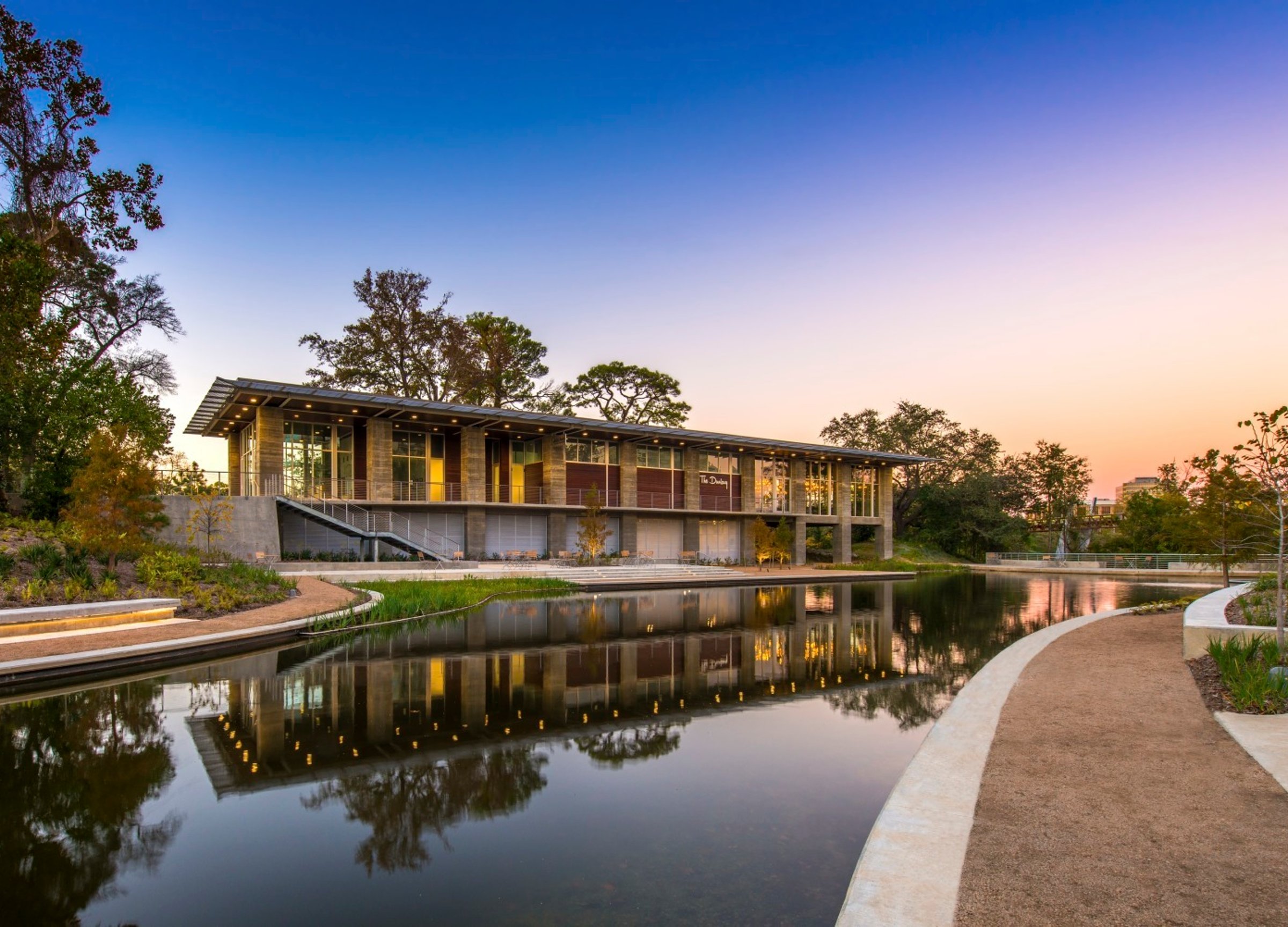
Buffalo Bayou Park spans 160 acres along Memorial Drive between Shepherd and Sabine Street in downtown Houston. Designed by SWA, the park restores the bayou’s natural landscape, which was impacted by decades of channelization. Page contributed two buildings and two large pavilions, enhancing the park’s passive recreation offerings, including hike and bike trails, a dog park, event venues, and food service. These structures create visual continuity from Lost Lake to The Water Works.
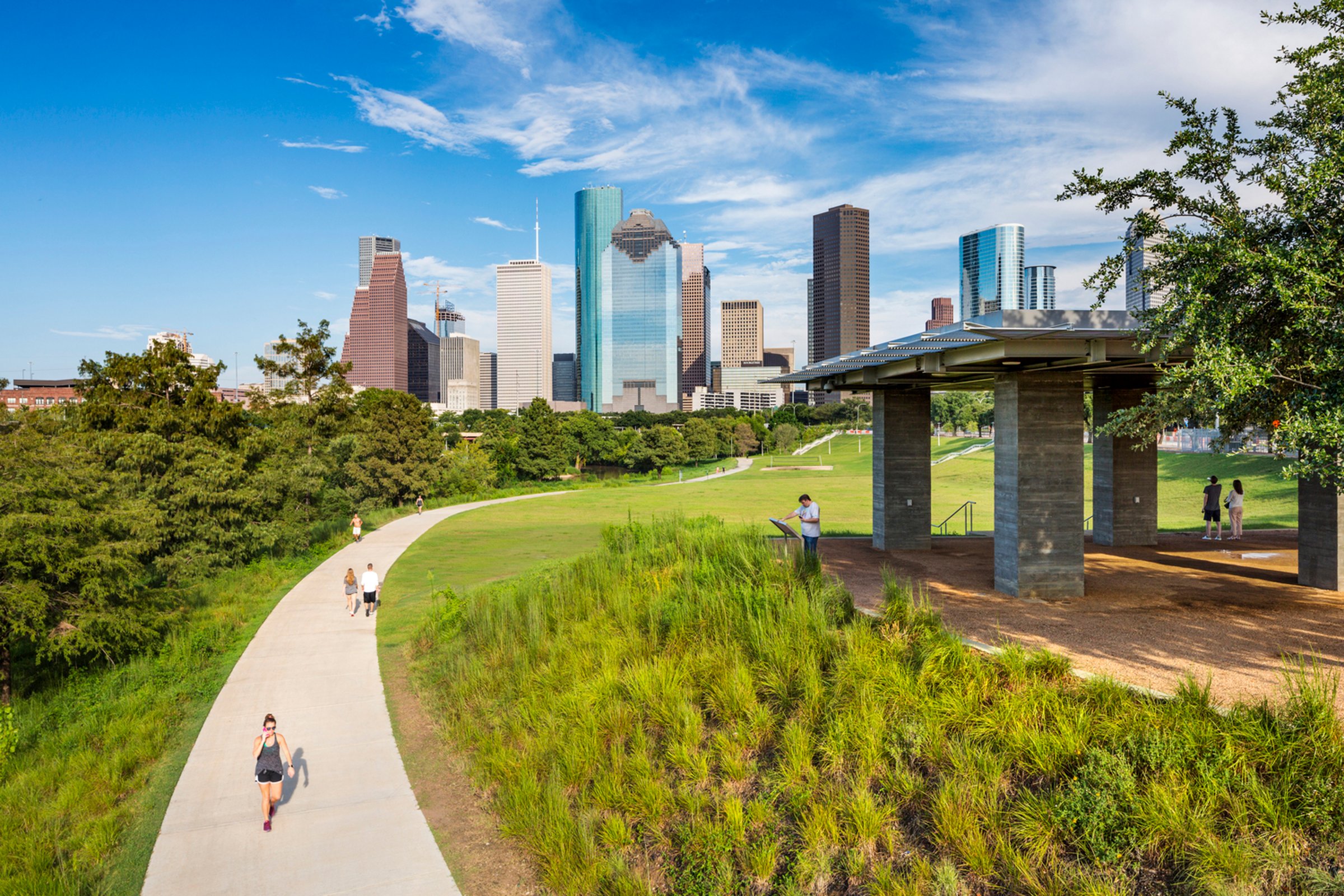
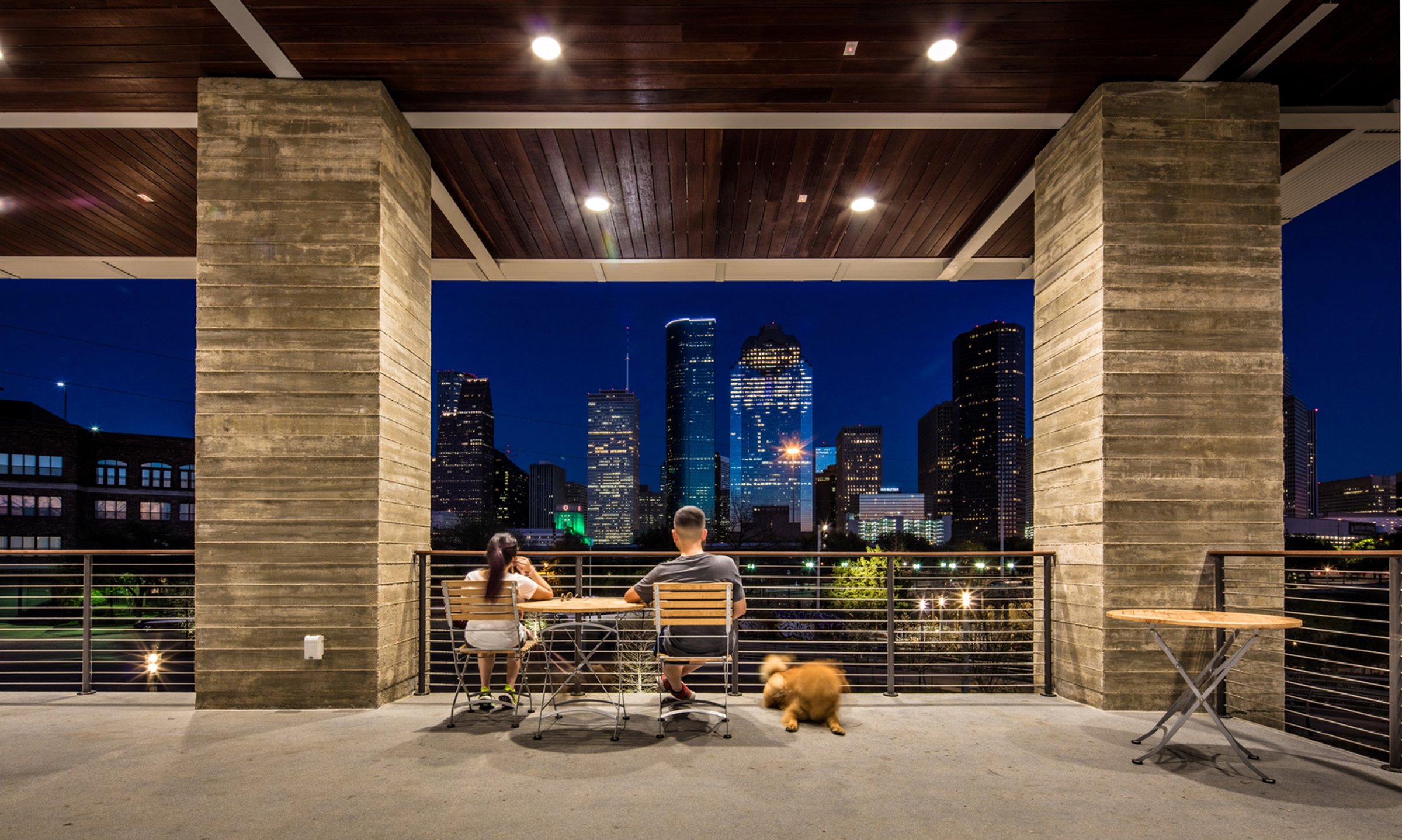
Perched above the Buffalo Bayou Park Cistern, The Water Works provides stunning views of the downtown skyline and a vibrant community hub for fitness classes, concerts, and festivals. Once decommissioned and nearly converted into a parking garage, the Cistern was reimagined as a unique art space. Its vast, industrial interior, rhythmic structure, and remarkable 17-second reverberation time make it an ideal venue for immersive light and sound installations.
Awards
-
1Urban Land Institute (ULI) Global Award of Excellence
-
2Society of American Registered Architects (SARA) Design Award
-
3American Society of Landscape Architects (ASLA) Honor Award
-
4Society of American Registered Architects (SARA) Design Award of Excellence
-
5Architect’s Newspaper, 4th Annual Best of Design Award – Adaptive Reuse Category (Buffalo Bayou Park Cistern)
Lost Lake Building
Landmark Connections
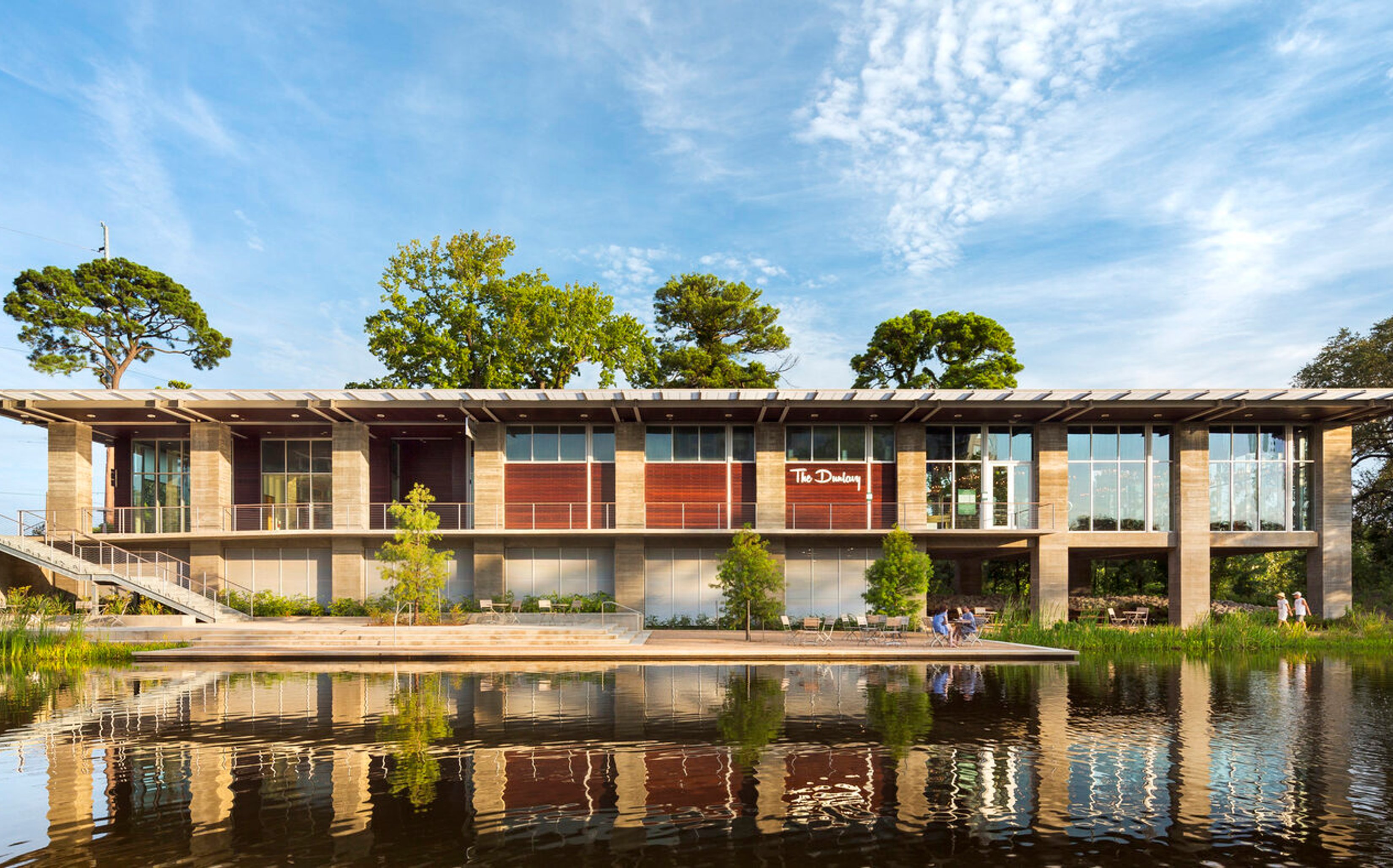
The park’s structures, from simple shade pavilions to larger amenity buildings, have a similar vocabulary that visually connects the park from end to end between Lost Lake and Water Works. They’re visible as landmarks from long distances, and the substantial shade pavilions served as models for additional smaller ones.
Lost Lake Pavilion occupies a high ridge—one of the few places in Buffalo Bayou Park that is out of the flood plain. From the ridge, there are beautiful views to the south over the reestablished lake and equally stunning views northward to the bayou itself. The building takes full advantage of these views, stretching long and thin atop the ridge while at the same time achieving near-ideal solar orientation.
Though the pavilion’s scale is grand, its composition is simple—ten bays framed by bold rectangular piers with a deep roof overhang. The interior of the 3,800-square-foot structure houses a variety of functions that enrich activity in the park. There are public restrooms and a park visitor center that distributes information and serves as a hub for park rangers. The lower level facing the bayou has a rental facility and storage area for canoes and kayaks. Most of the upper level is an events space with a restaurant-grade kitchen and indoor/outdoor dining space that can seat 150 people. Lost Lake Pavilion provides a landmark and an iconic presence for the park.
Materiality
Architecture vocabulary
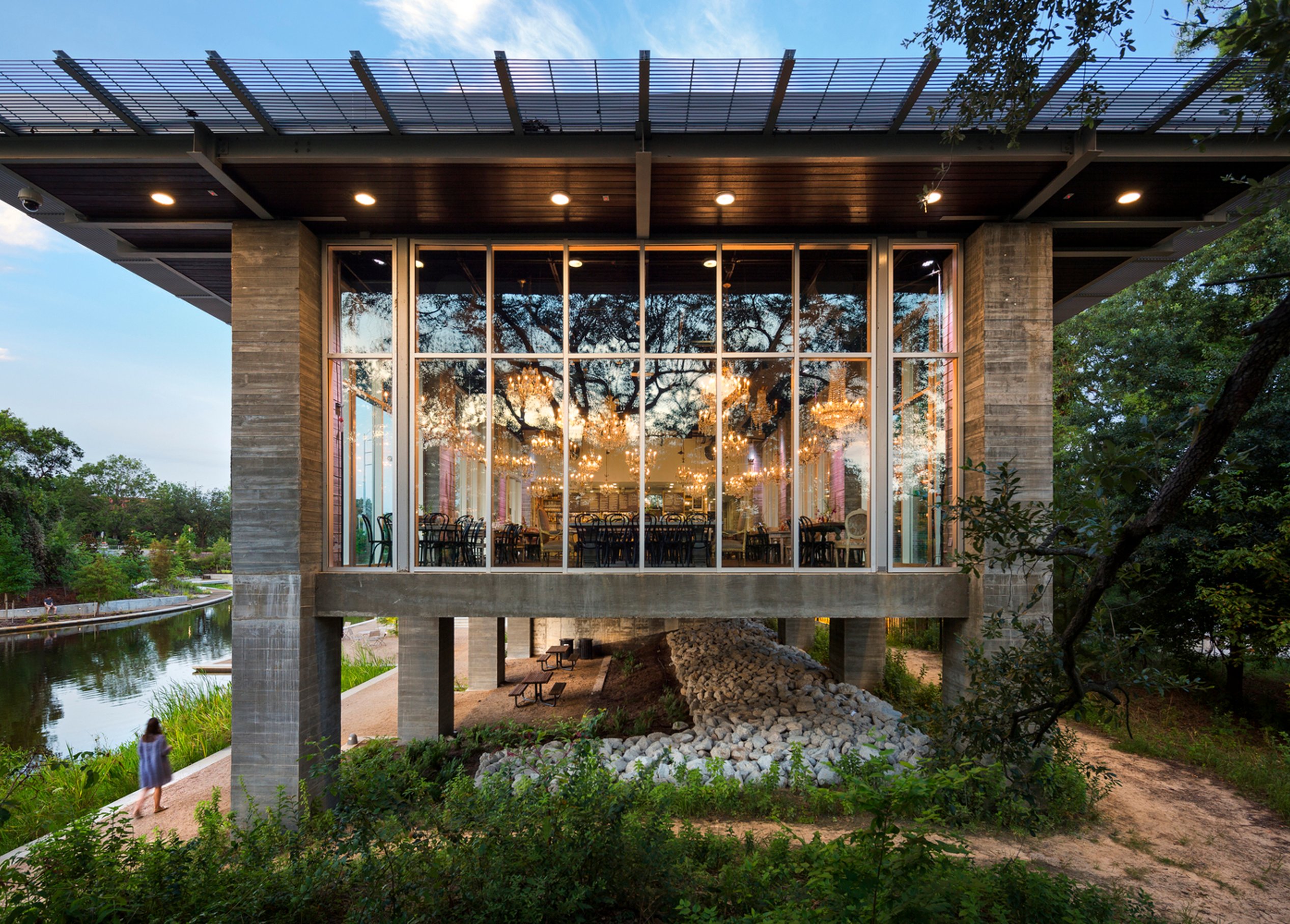
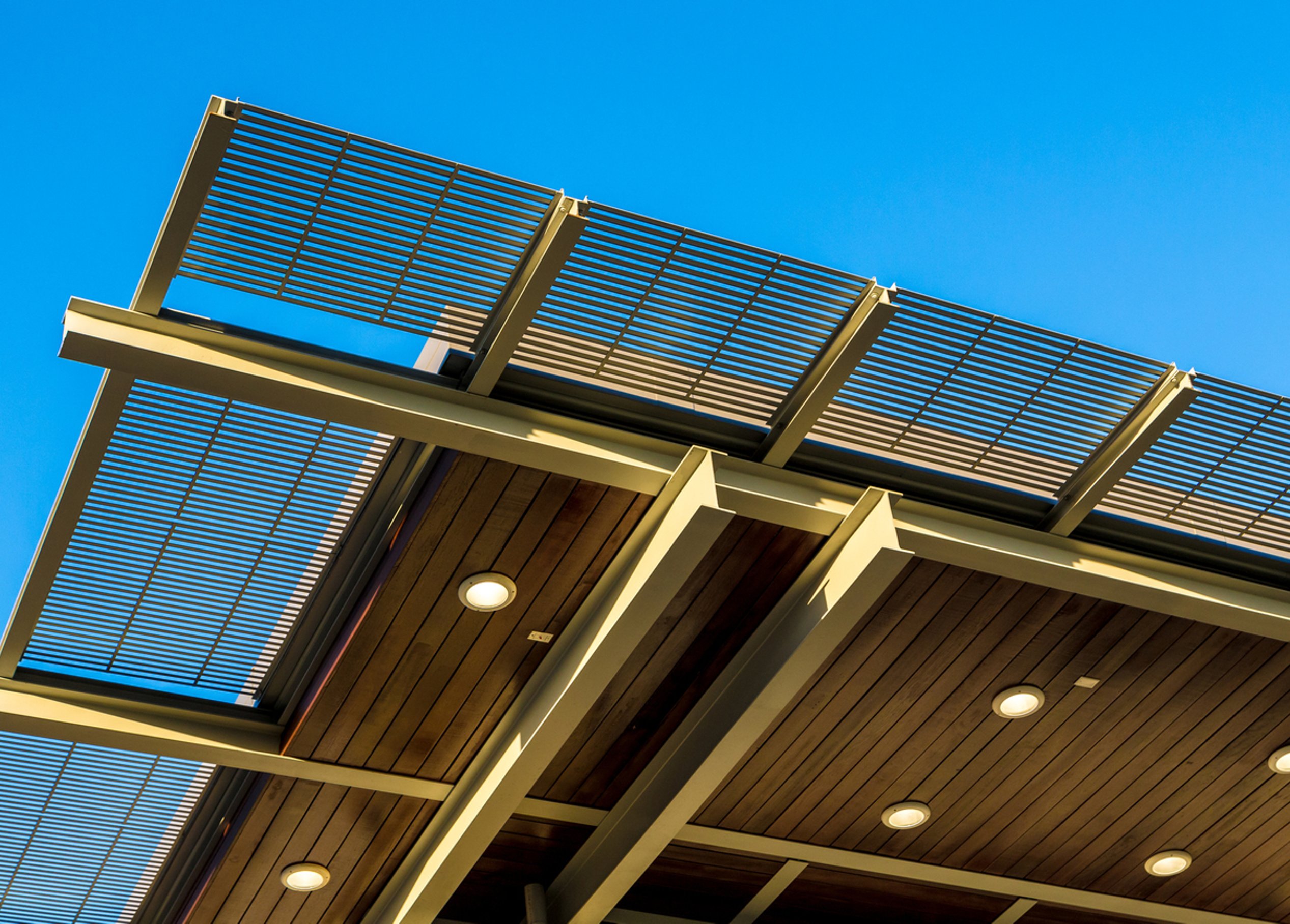
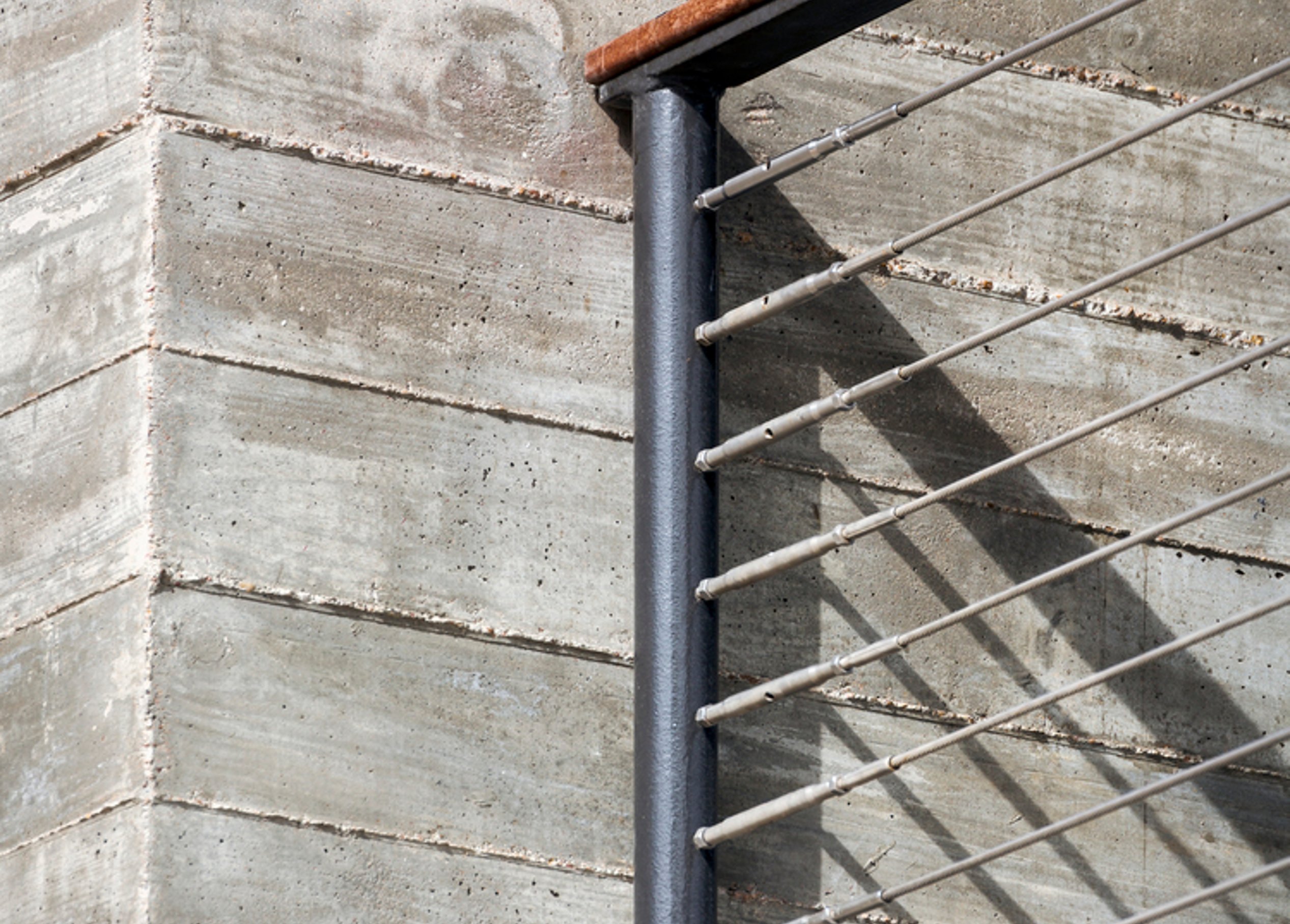
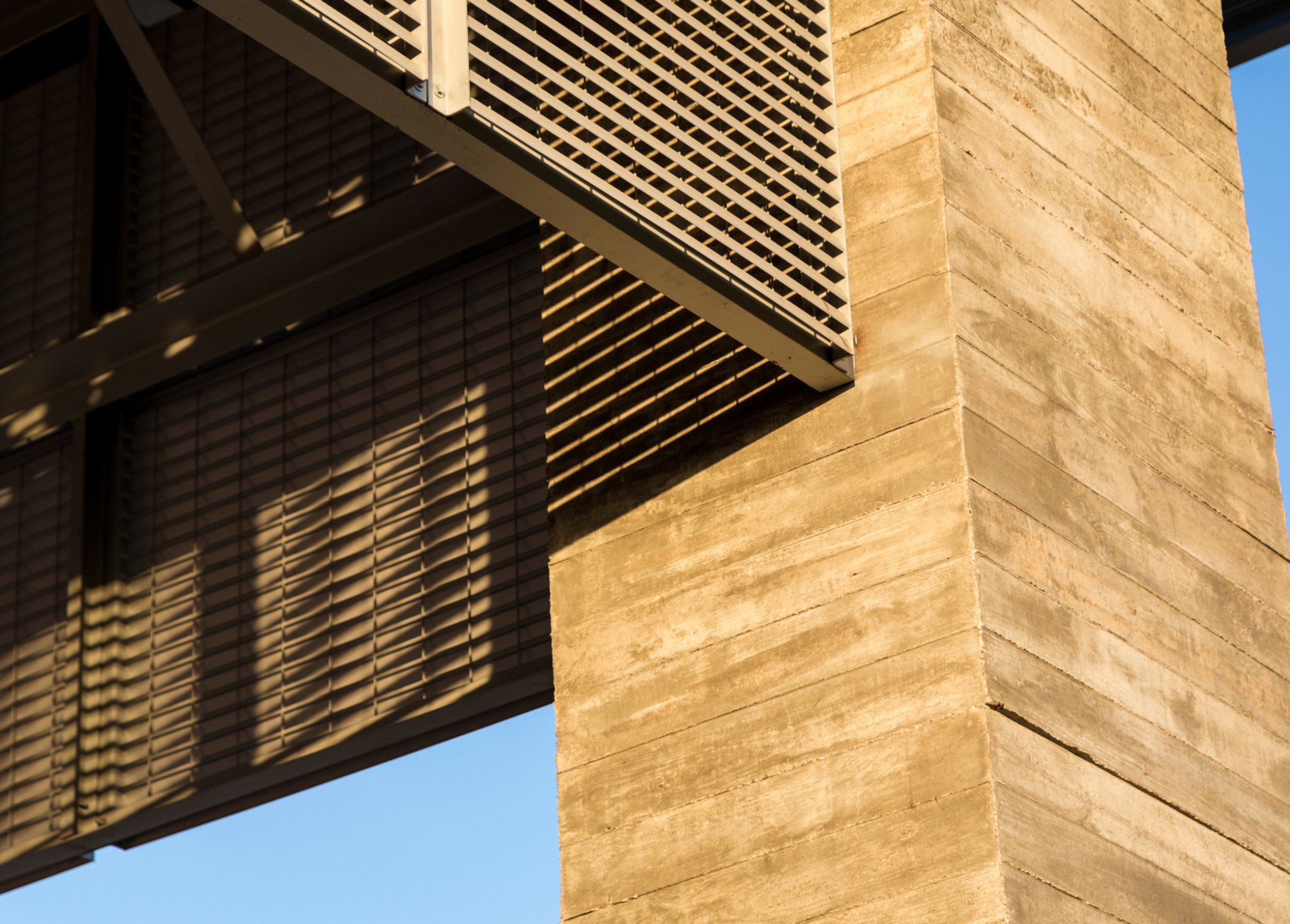
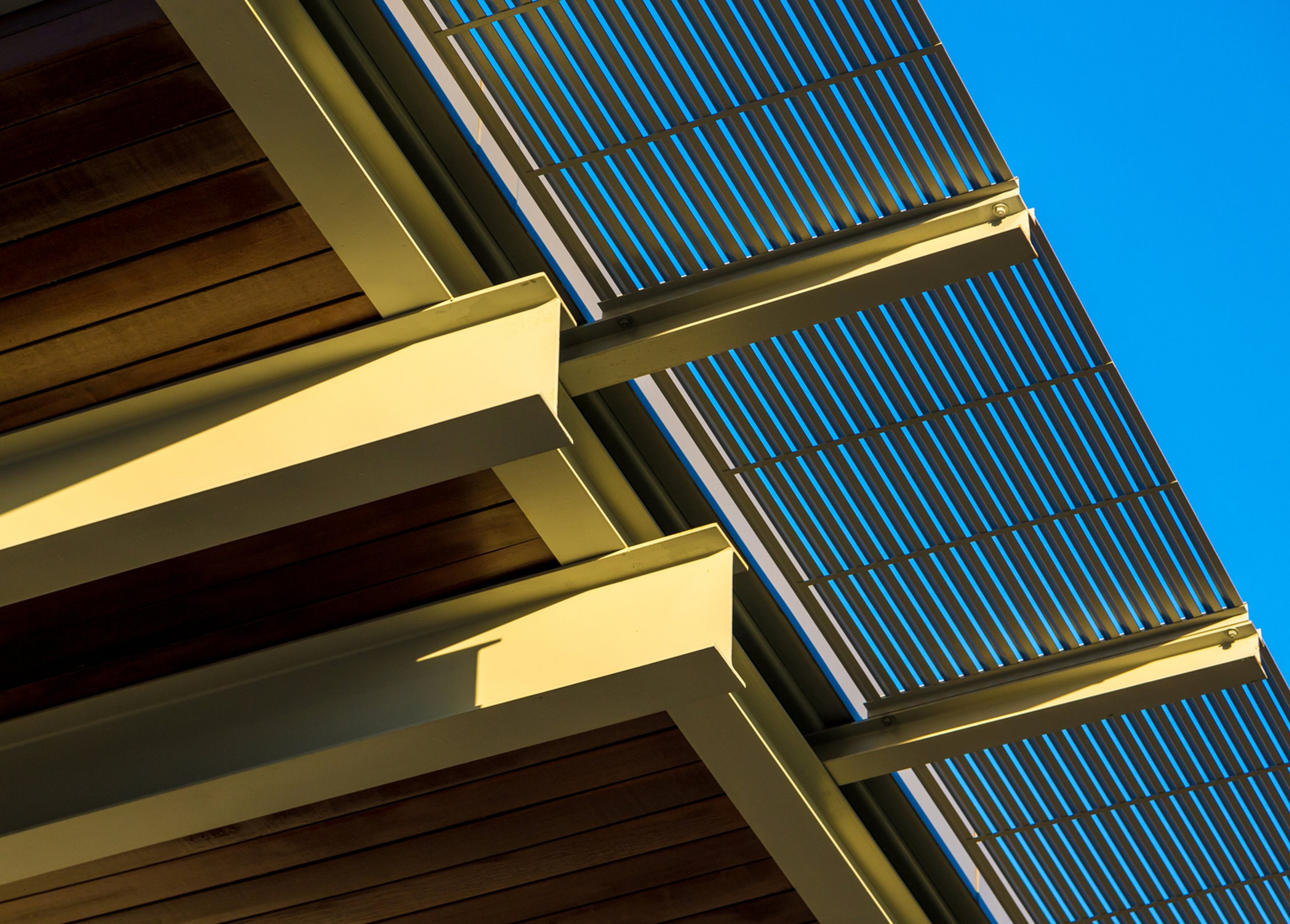
The design vocabulary combines solid board-formed concrete piers with lightweight steel-spanning members, forming modules based on function. Expressive steel frames above the piers are bridged with wood soffits and extend to delicate steel sunshades. Materials are strong yet simple: crafted concrete, exposed steel, and infill panels of hardwood, glass, and metal grills.
/
WaterWorks
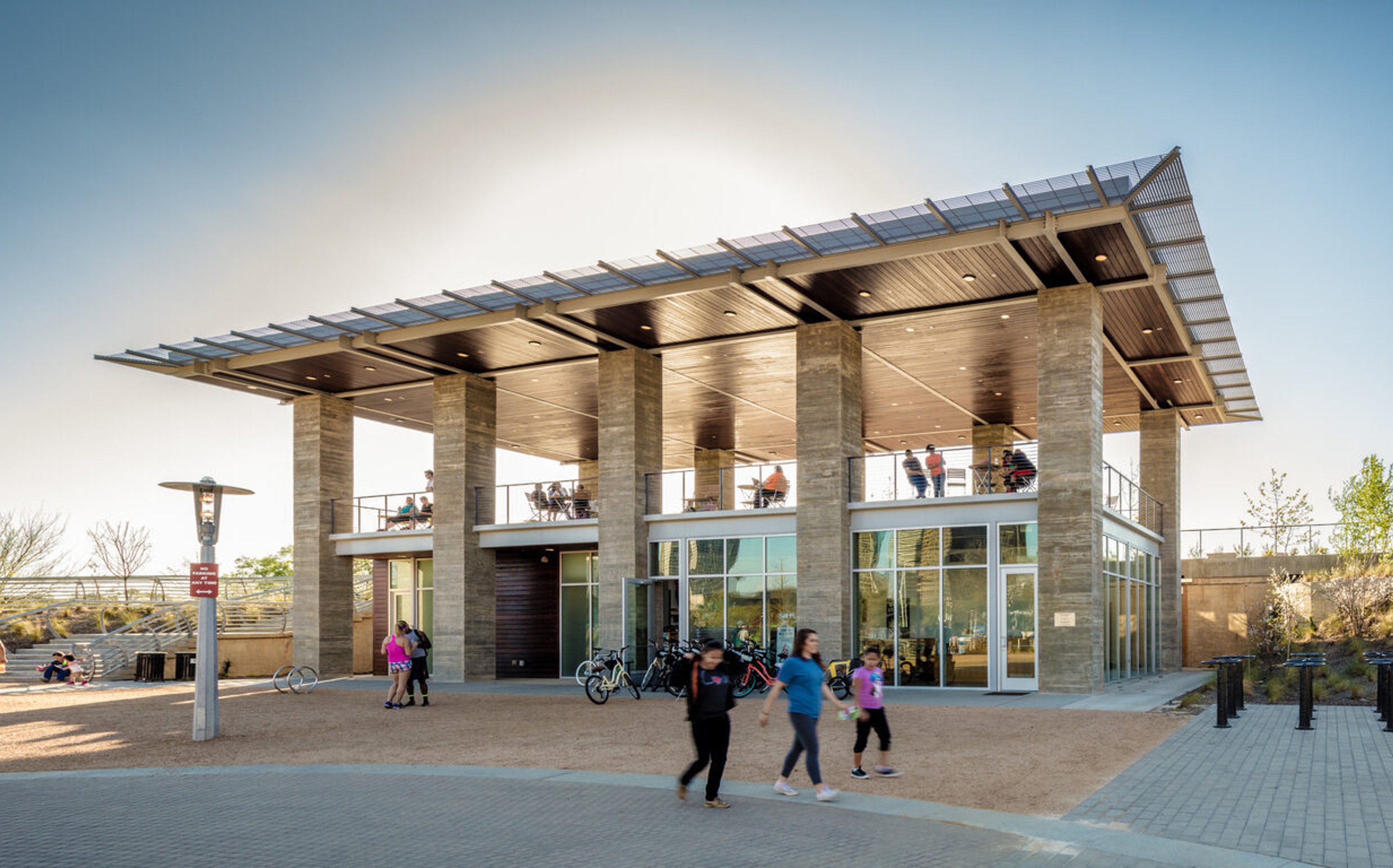
WaterWorks, consisting of the Hobby Family Pavilion, the Wortham Insurance Visitor Center and Terrace, and the rehabilitated Cistern, anchors the park’s southern end. Built on a former water system site, it includes bicycle rentals, a ranger station, public restrooms, and spaces for concerts and fitness activities, all with stunning views of Houston’s skyline.
The project faced challenges, including its location in a 100-year floodplain and the task of revitalizing a 90-year-old historic infrastructure no longer in use. However, it also offered opportunities—connecting to the iconic waterway that shaped Houston’s port and history while providing much-needed open space for the city’s growing neighborhoods.
Cistern
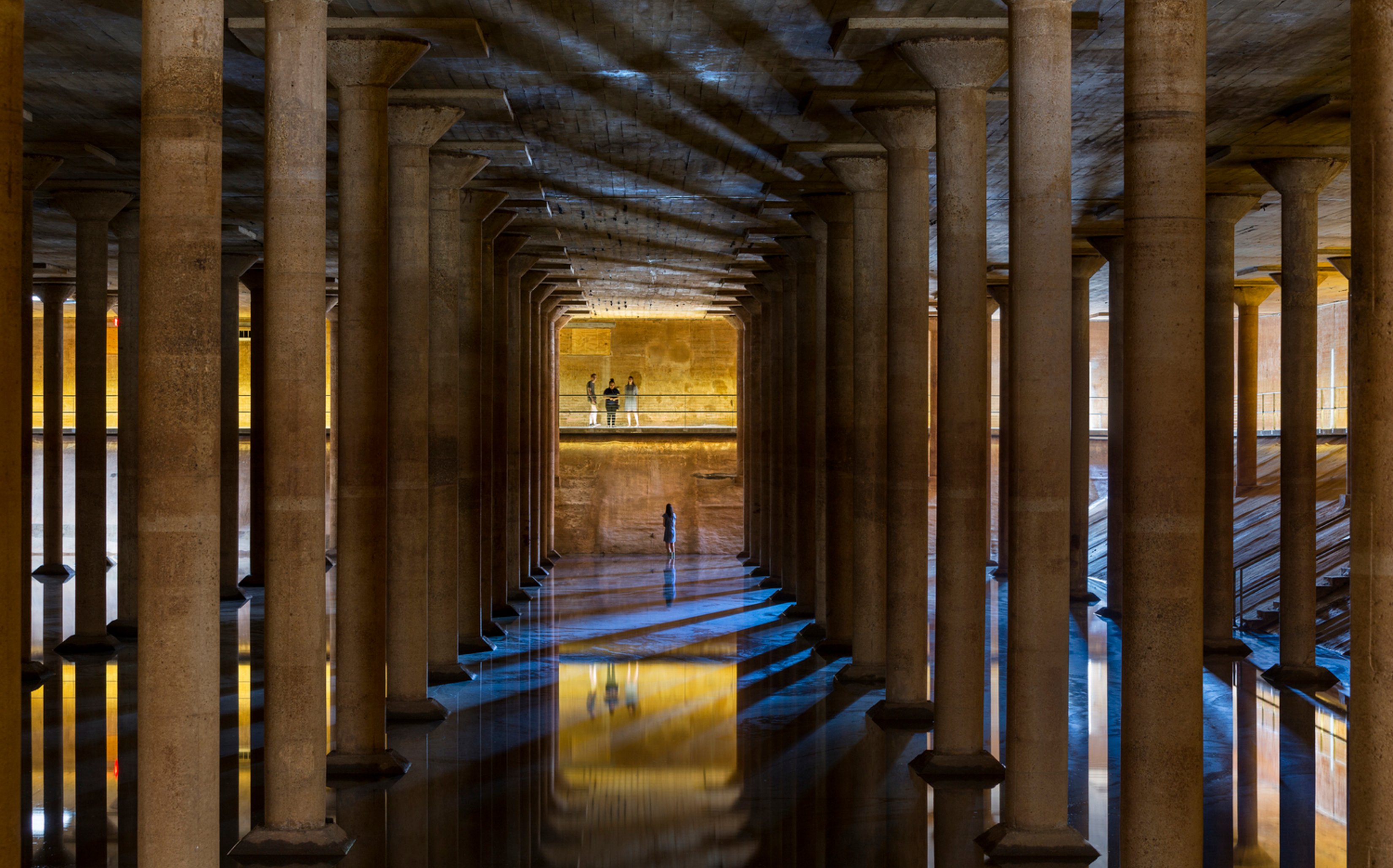
The Cistern encompasses 87,500 square feet, or 1.5 football fields, of interior space. Its 8” thickened flat slab roof system is supported by 221 slender, round concrete columns with belled capitals and square bases. The repurposed space now serves as a unique venue for installation art pieces.
The City of Houston had already decommissioned the Cistern—a 1926 underground drinking-water reservoir—when the design team wrangled an opportunity to drop through a rooftop hatch. Inside, they saw one of the most powerful and memorable industrial structures ever built in the United States.
The vastness of the space, its darkness, the relentless rhythm of repetitive structural elements, and the 17-second sound reverberation time all conspire to create an extraordinary architectural experience.
Today, the visitor entrance is a tunnel clad with splayed board-formed concrete walls. Its path curves within the berm to allow visitors’ eyes to slowly adjust to the dark interior and reduce abrupt light spoilage inside the Cistern proper. A soft line of LED lighting from the tunnel continues in transparent handrails edging a delicate, unobtrusive walkway around the entire perimeter. A constant depth of a few inches of water is maintained on the floor, creating dramatic reflections that emphasize the vastness of the space by making it appear double its actual height.


/

Introducing the human element
The Cistern was never intended to accommodate people—the design team originally had to drop through a roof hatch to view the space. Today, there are numerous ways for eager visitors to access the unobtrusive entrance: an adjacent parking lot, street parking, and bicycle racks that encourage sustainable transportation.

Carbon footprint
The rehabilitation of the Cistern instead of demolition diverted approximately 100,000 cubic feet of 1920s concrete from the landfill and prevented the additional carbon impact of extracting, manufacturing, and transporting materials needed for a replacement structure.
The decision to modernize over new construction resulted in a savings of 4,148 tons of carbon emissions. At the Cistern, the design team sourced every contractor and product within 50 miles of the project site, with the exception of one door manufacturer, which was within 250 miles.
Engineering approach
The Cistern is ventilated with 100% fresh air and the space is tempered instead of conditioned. The few inches of water maintained on the floor are recirculated through a duplex sump pump system containing two sand filters. This approach eliminates the need for detergents, which would pollute the connected waterway.
Resiliency
The impact of Hurricane Harvey
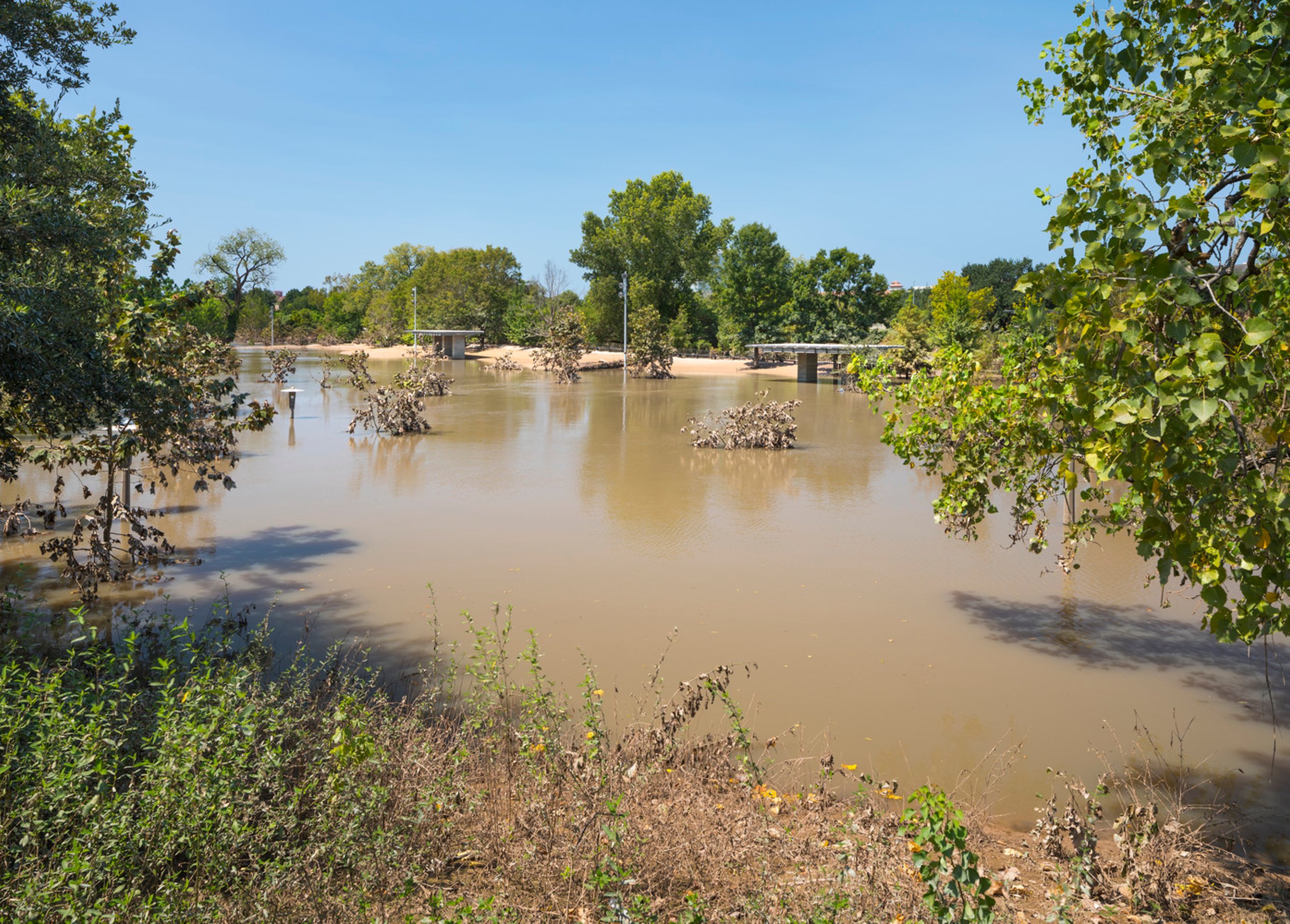
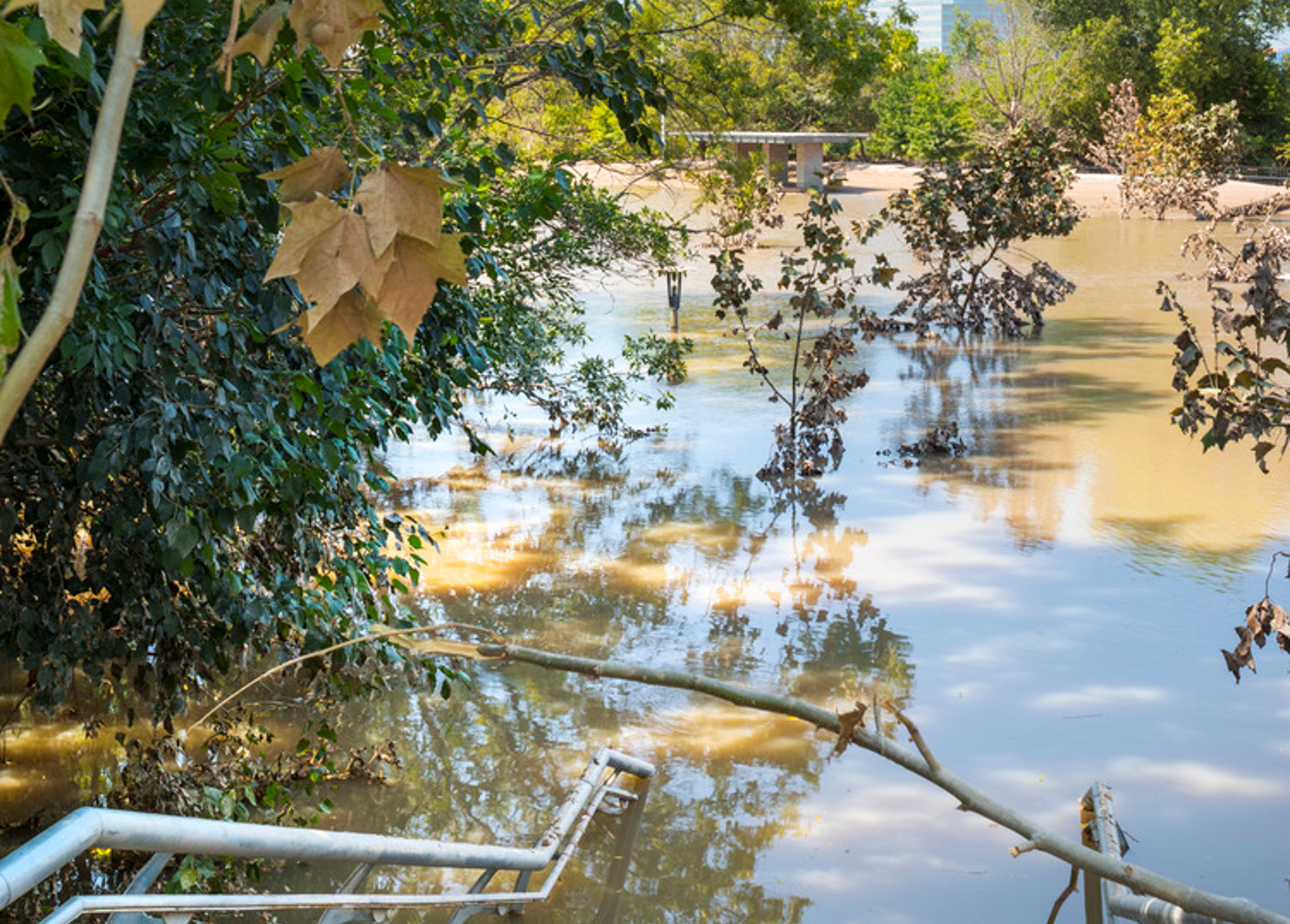
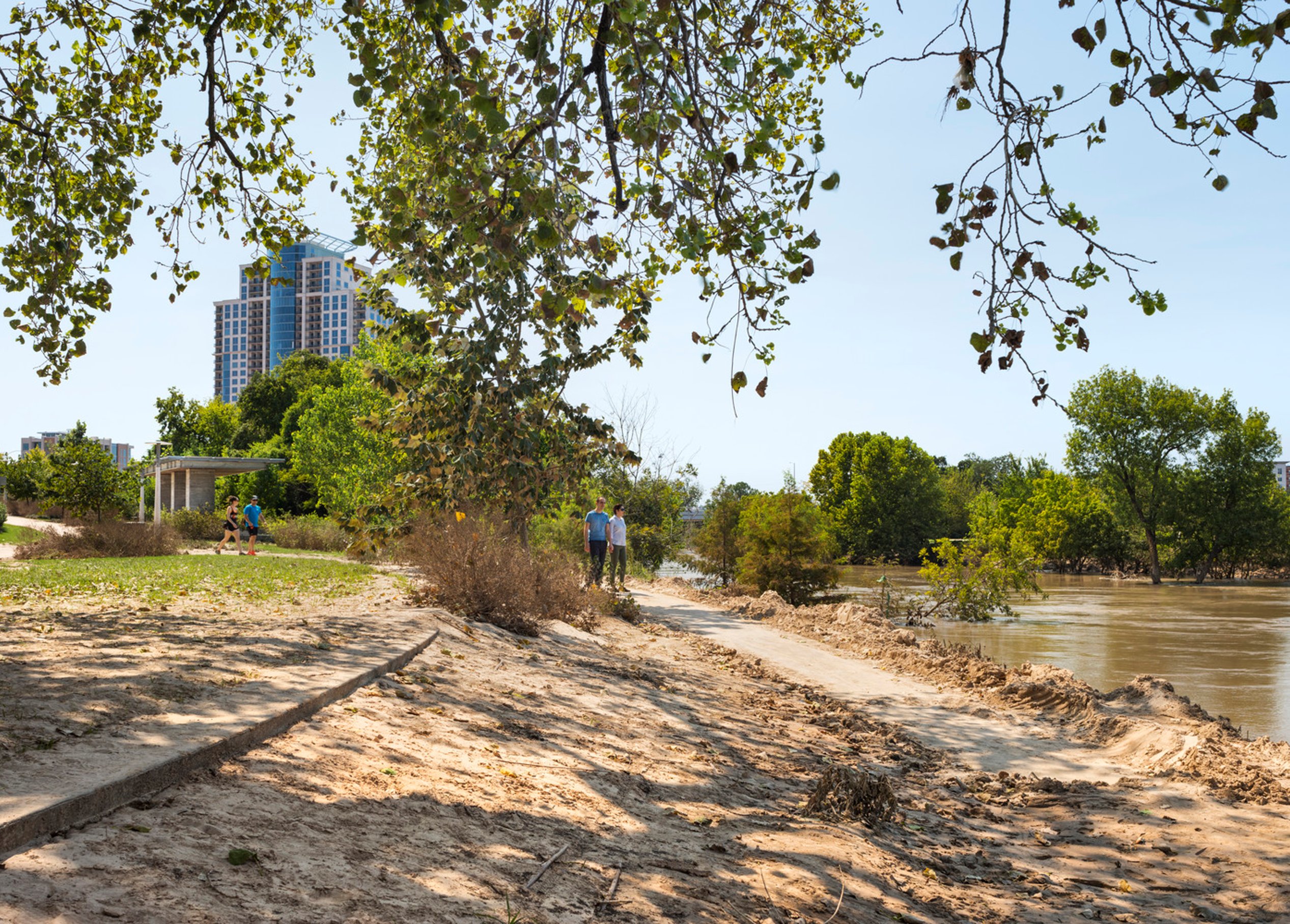
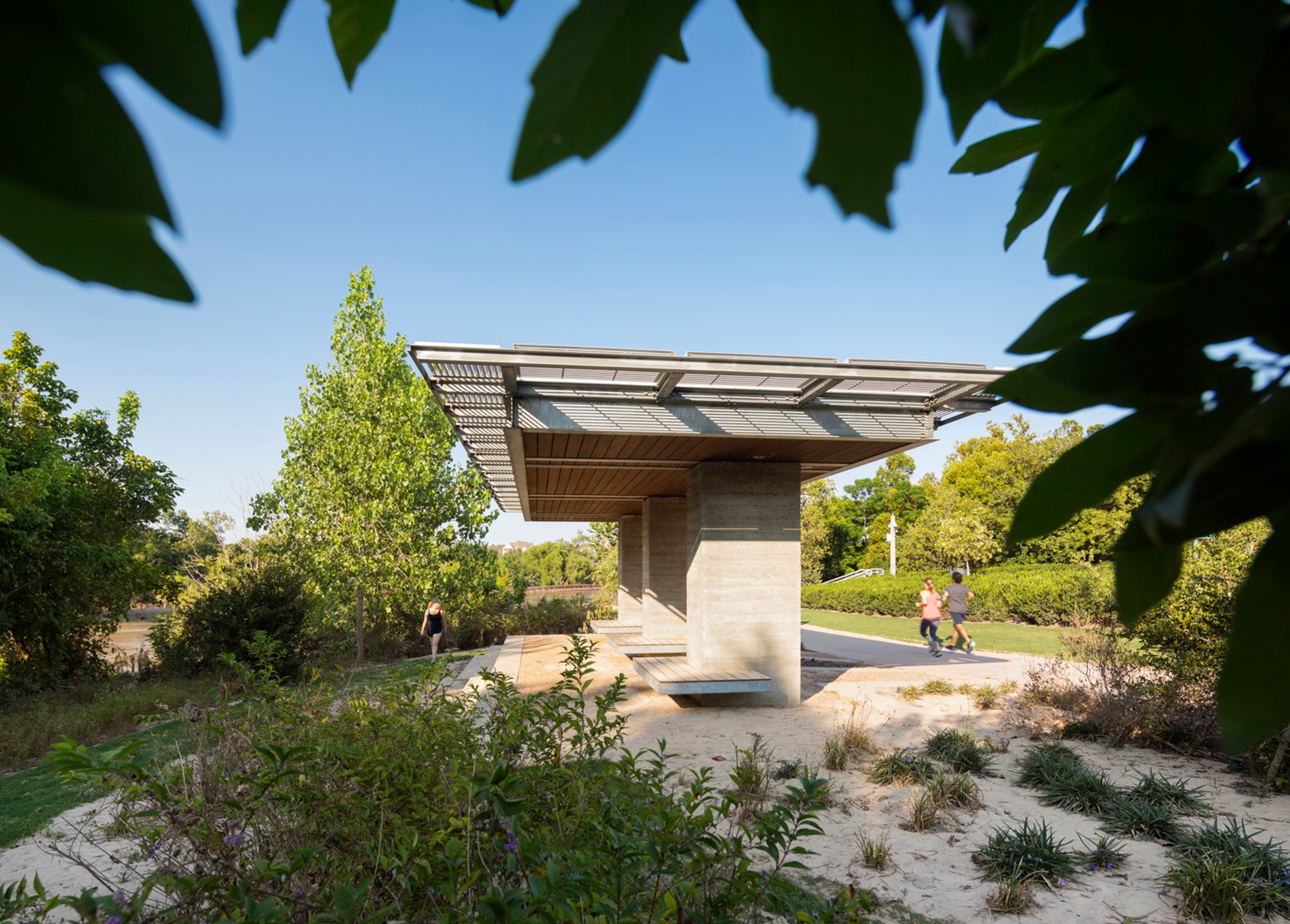
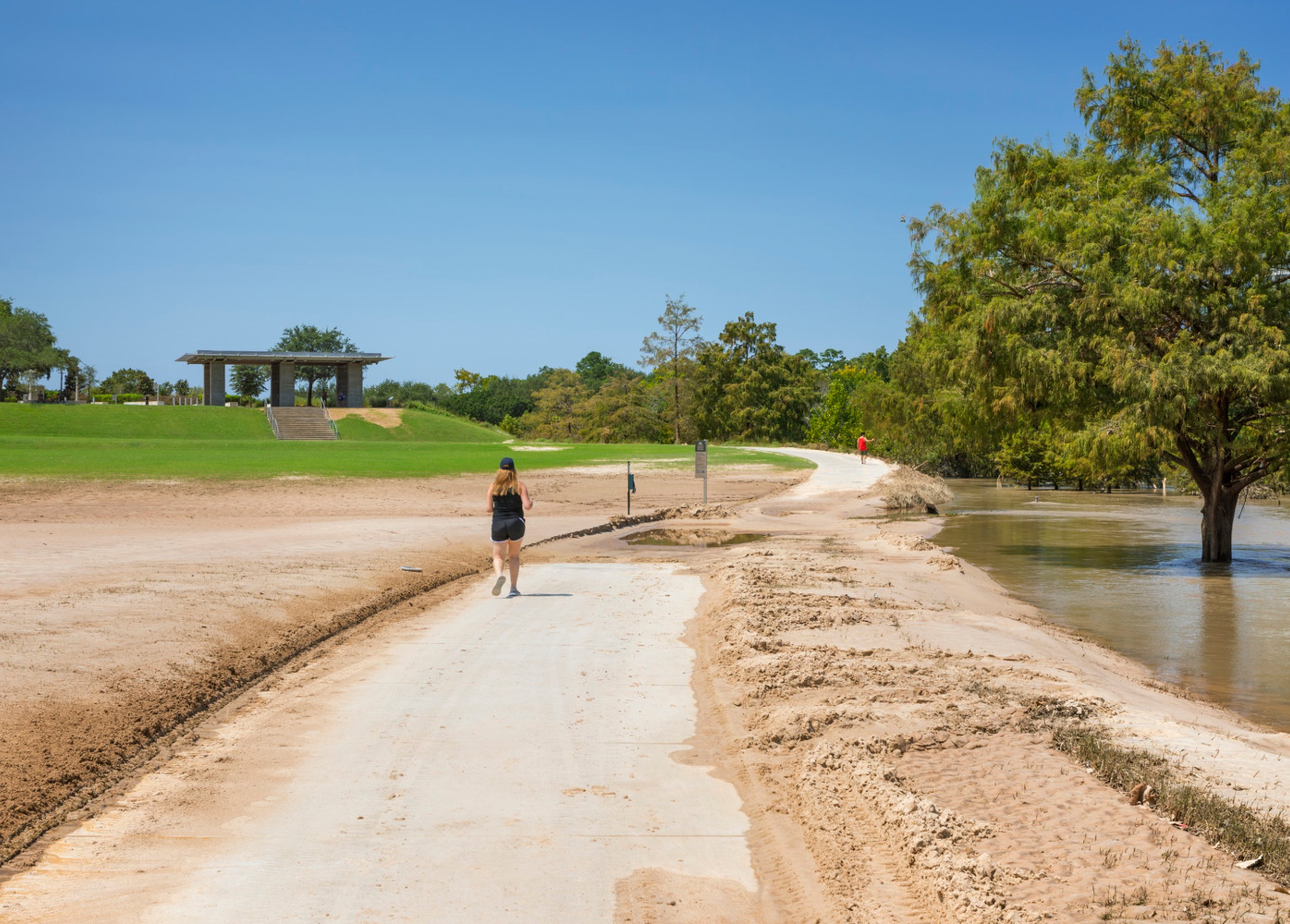
Water levels reached historic heights, exceeding 37 feet in some areas. The park saw minor debris and vegetation damage, but the Visitor’s Center remained dry. Predicated flooding, like Hurricane Harvey, influenced material choices. Concrete piers provide exceptional resistance to rushing water and debris, ensuring the structures withstand severe flooding unscathed.
/
Similar projects



/

Talk with us
Complex challenges need fresh perspectives and deep expertise. Connect with our team to explore how we can help you create spaces that make a real difference.