Citywide Lighting Framework Plan
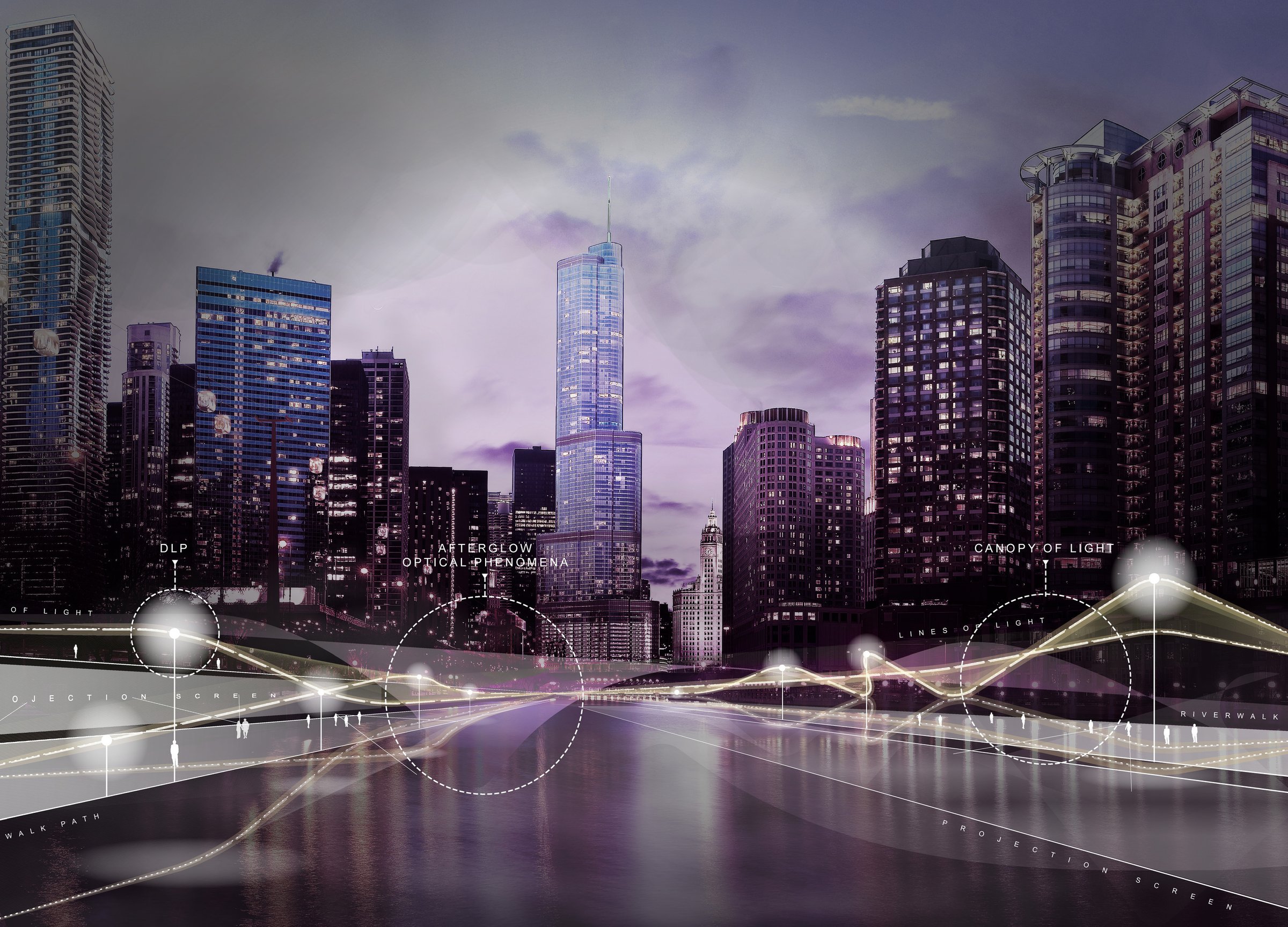
Page led a diverse team of artists and consultants—including Chicago-based architects JGMA, engineers Buro Happold, lighting designers FMS, multi-sensory experience designers Obscura, KSLA, and Pentagram—in the design of a new Citywide Lighting Framework Plan (LFP) for the City of Chicago.
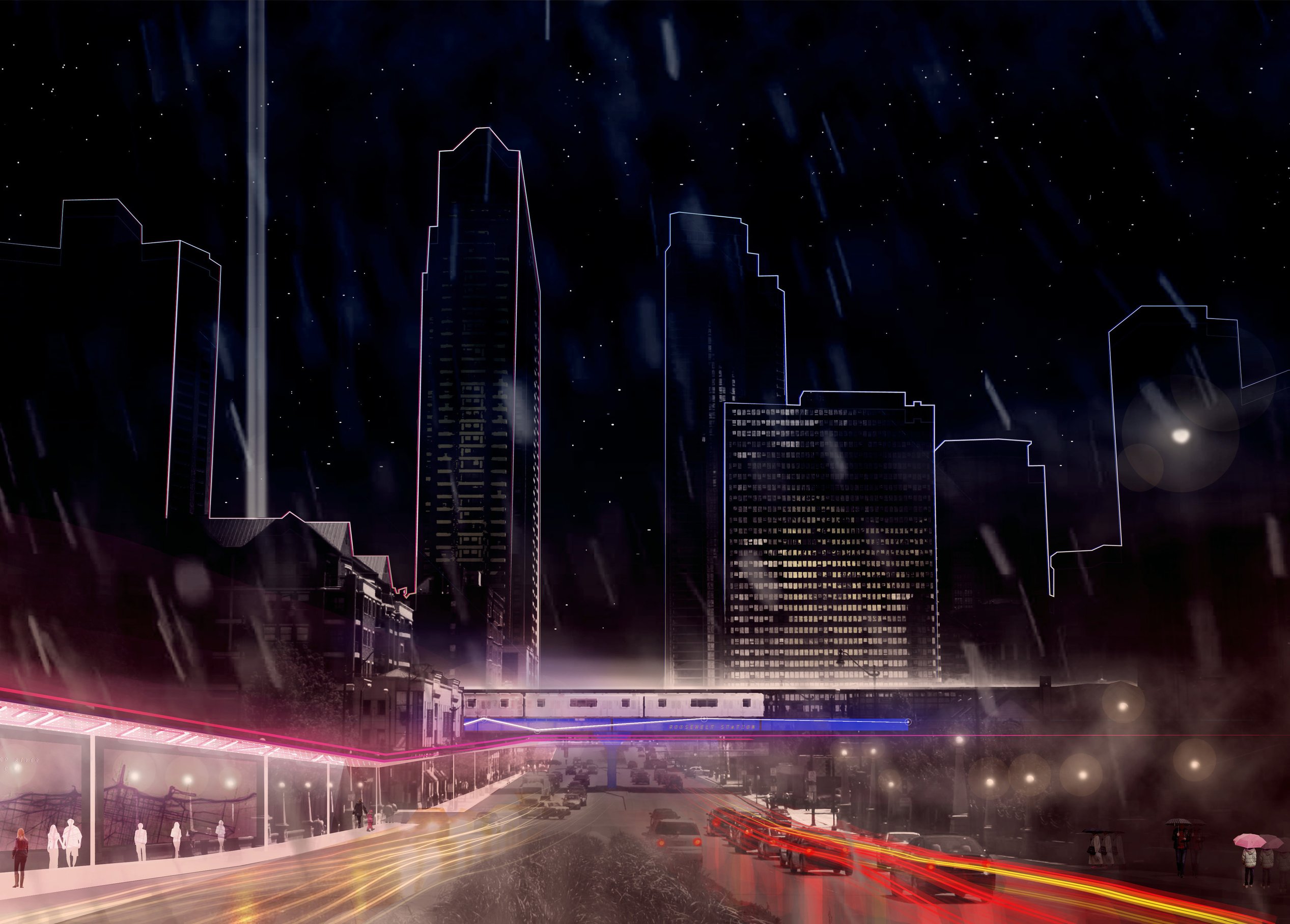
The plan proposes scalable "platforms of light" grounded by the functional understanding of the networks, nodes, and strata that define the city. Through urban design, performance art, activation of the public realm, and a recharge of the city's collective imagination, the LFP will transform the city's atmosphere into a highly interactive, unique environment.
Framework
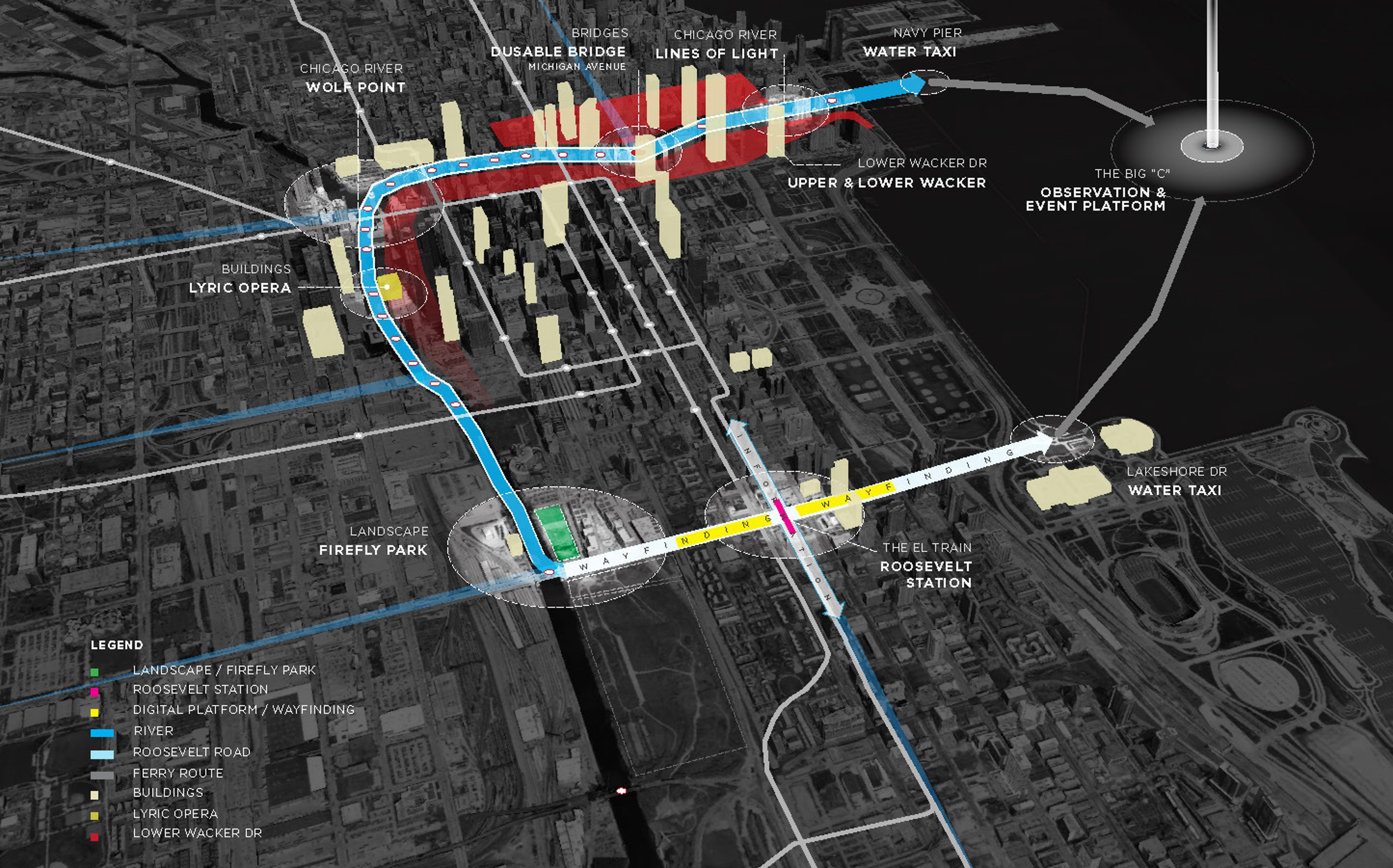
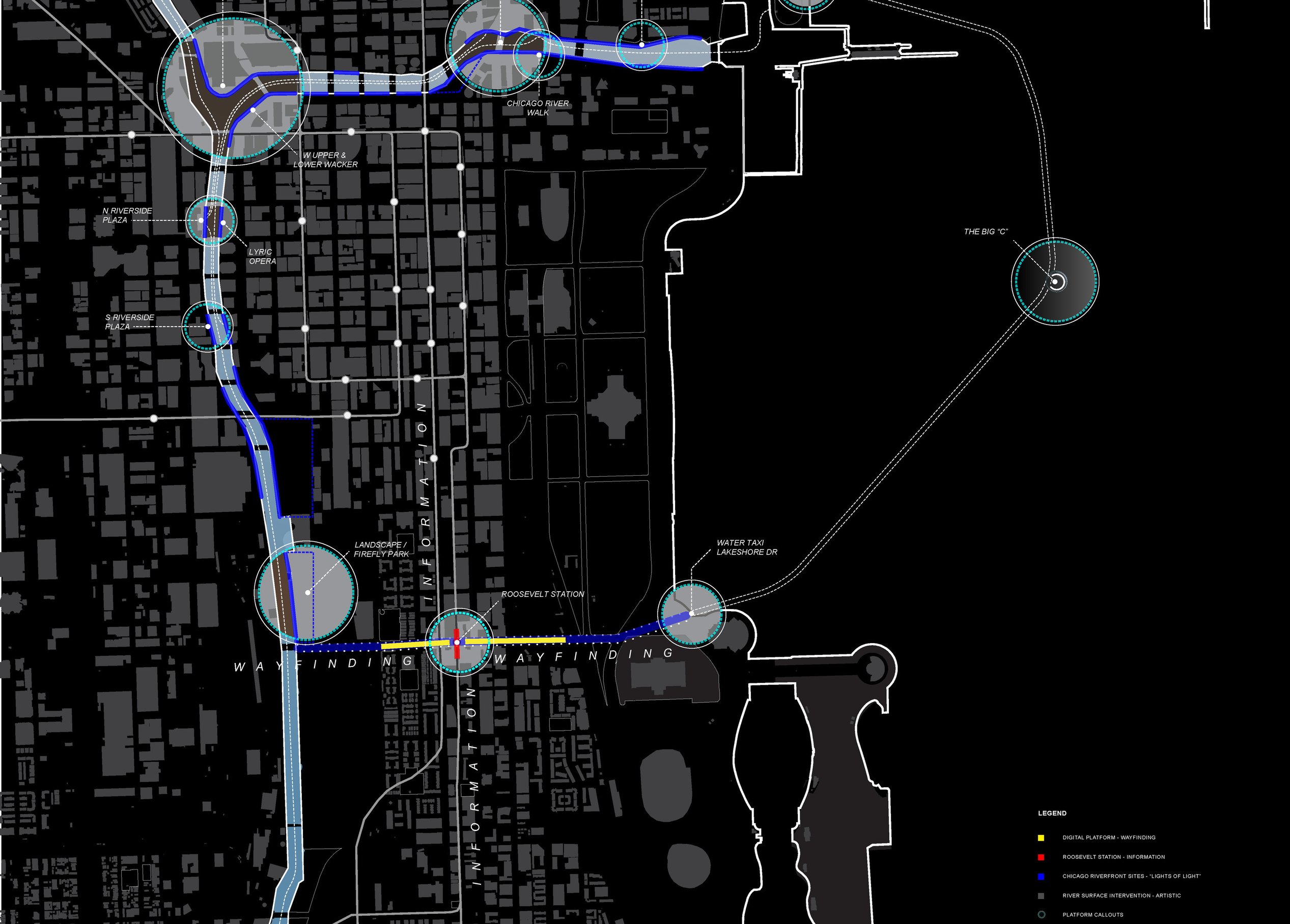
The design team's overarching concept for the LFP is "The Big C"—a territory defined by an offset series of rings that grow dynamically outward from the harbor to the Loop and the ring once imagined by Daniel Burnham. The Big C is populated with both permanent and temporary lighting "platforms" that are flexible, programmable, and multi-functional by design. Platforms include formal street, building, and sidewalk lighting; a series of scalable art and multi-media installations; and light-born from architecture and landscape, which respond to seasonal flux.
The Chicago River forms the project's backbone, providing a full-circle connection from Navy Pier, along the river, to the Museum Campus. This naturally connecting loop integrates the following spectacles of light: the Chicago River, Firefly Park, The El, the bridges, Lower Wacker Drive, the buildings, the observation platform, and the Burnham Ring. The observation platform is situated in the harbor along the ferry route to complete the loop.
The bridges
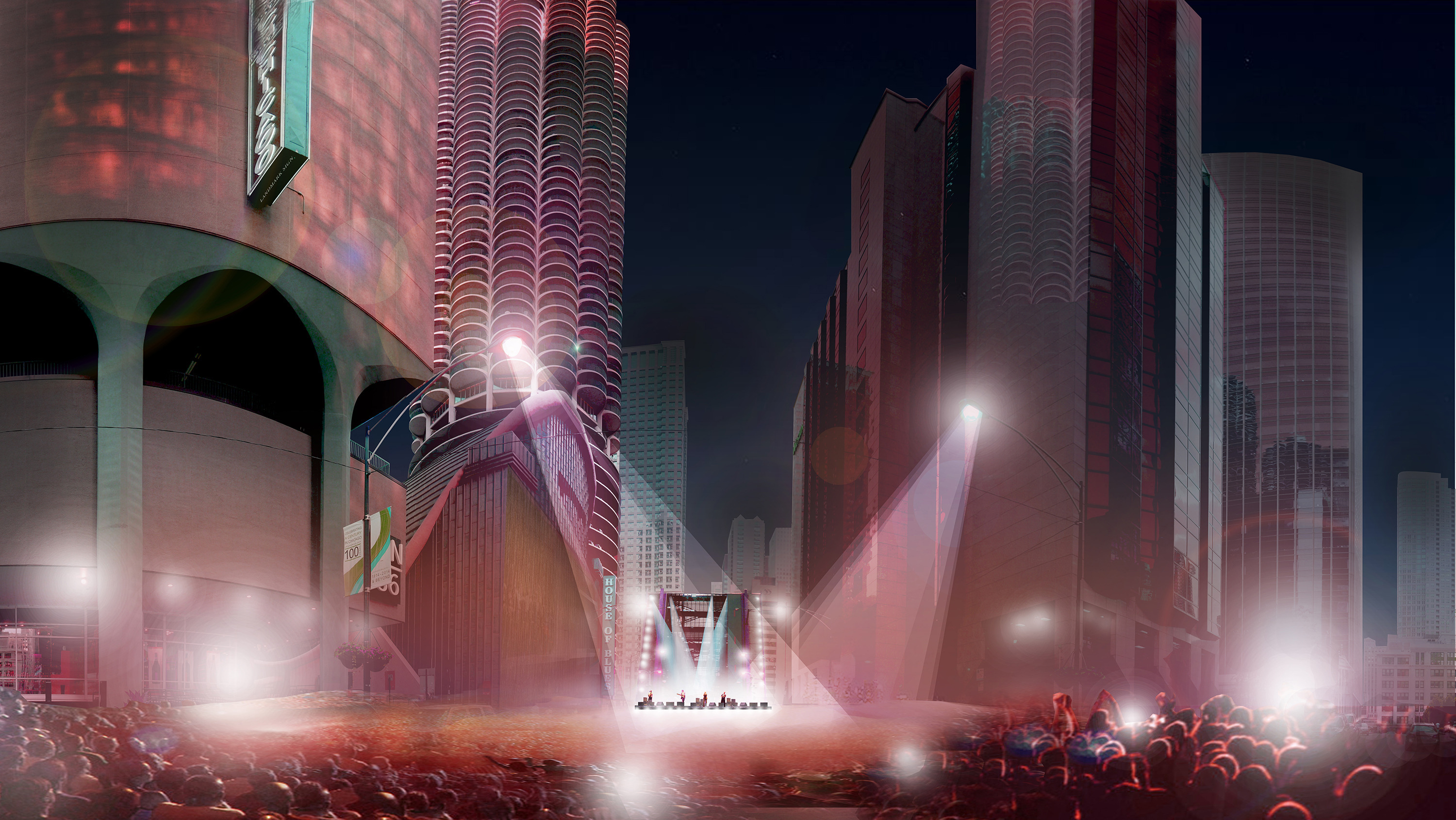
The existing bridges within "The Big C" present a unique opportunity for the LFP, extending beyond traditional lighting to a bold, multi-dimensional experience. By integrating innovative lighting strategies and activating ancillary spaces, these bridges can transform into dynamic event venues, seamlessly blending architecture, illumination, and public engagement. This approach redefines their presence, turning them into iconic landmarks that enhance the city's visual and cultural landscape.

The buildings
By leveraging Chicago’s iconic structures, the LFP creates a dynamic interplay between spectacle, history, event, and architecture. This vision transforms the cityscape into a living canvas, where light, experience, and function converge in bold and unexpected ways. Rooted in flexibility and innovation, the building strategy adapts to various events and activations, making it one of the city's most versatile, thrilling, and immersive design opportunities.
Community platform

This proposal transforms Chicago’s skyline into a dynamic, interactive experience. It uses a radial network of light points strategically placed on public rooftops. By triangulating these beacons, the design creates a scalable, ever-evolving system, seamlessly guiding visitors through the city.
At the intersections of multiple beams, an intuitive wayfinding system emerges, illuminating key event locations and festival hubs. The experience extends beyond the visual—an integrated app syncs with the light patterns, providing real-time event details, navigation, and community engagement, fostering a deeper connection between residents and visitors.
The full scope of this immersive lighting network comes to life from Chicago’s observation decks, offering a breathtaking citywide spectacle that reimagines how people engage with the cultural and social fabric.
Vision



/
Similar projects
/

Talk with us
Complex challenges need fresh perspectives and deep expertise. Connect with our team to explore how we can help you create spaces that make a real difference.