UMLAUF Historic Preservation, Expansion, and Unification Plan
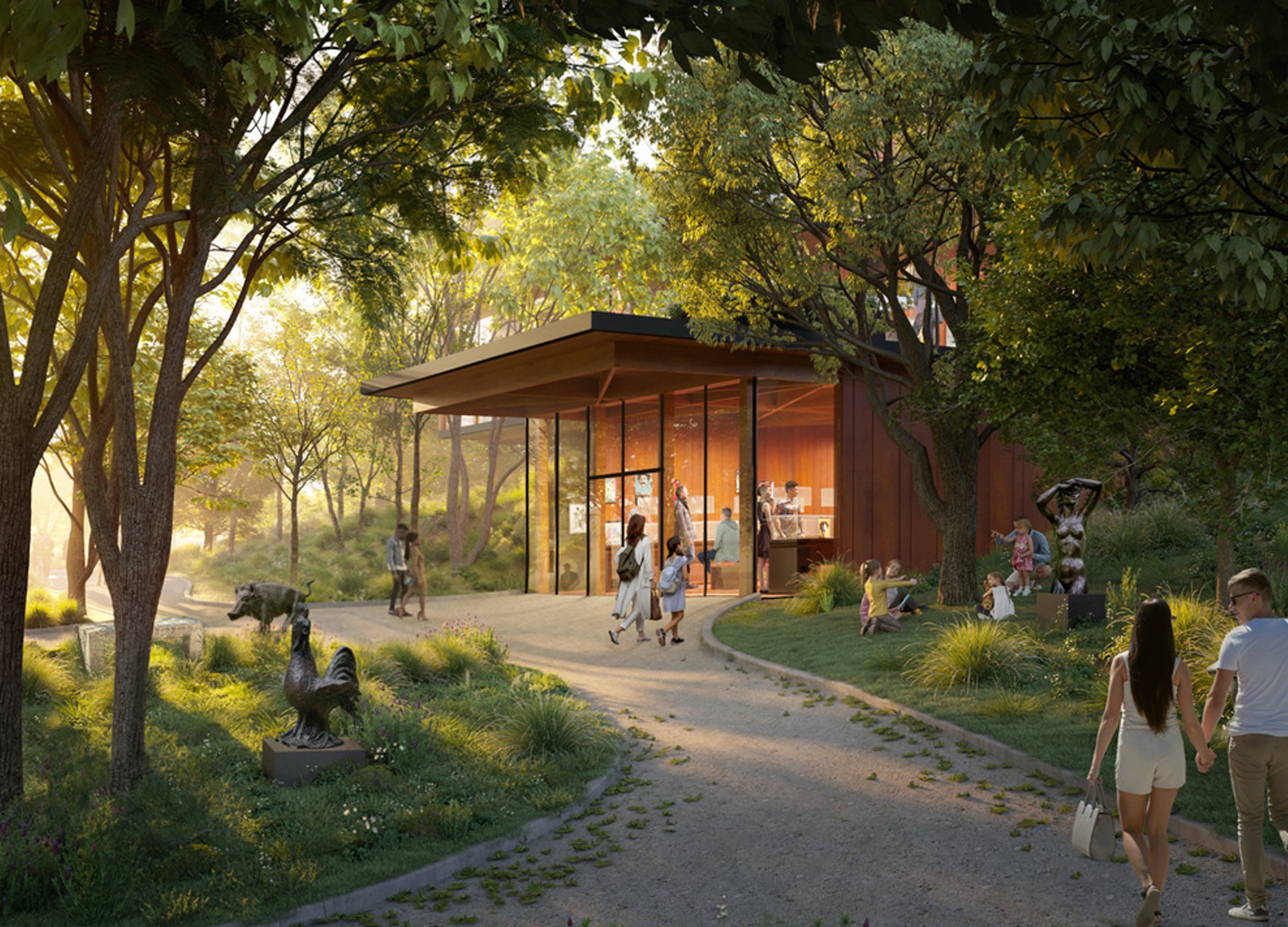
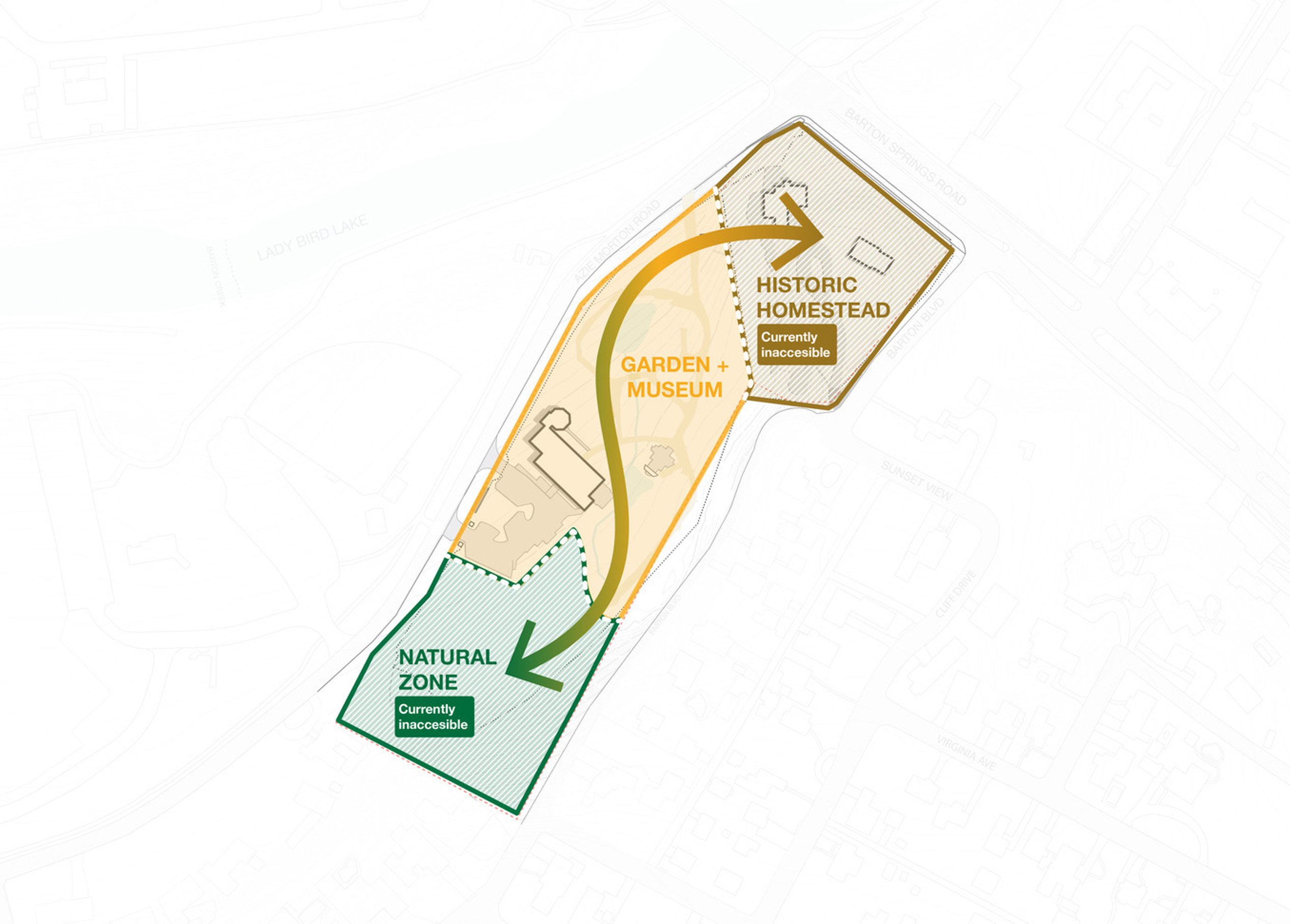
The UMLAUF Historic Preservation, Expansion, and Unification Plan (HPEU) envisions a fully accessible, eight-acre cultural landmark. This plan unites the historic 1985 homestead—a gift to the City of Austin from Charles and Angeline Umlauf— the 1991 sculpture garden, and the surrounding natural landscape into one cohesive experience. Rooted in preservation and innovation, the plan strengthens the UMLAUF’s role as a dynamic community hub where art and nature connect.
By integrating strategic planning, architecture, and landscape design, the HPEU ensures Charles Umlauf’s legacy remains a cornerstone of Austin’s cultural fabric. The plan prioritizes inclusivity, sustainability, and accessibility—enhancing the museum and garden experience while aligning with the City of Austin’s commitment to equitable public spaces.
With a clear, actionable framework, the HPEU will guide the UMLAUF’s growth, deepening its impact for future generations and solidifying its place as a vital artistic and recreational destination.
Plan objectives
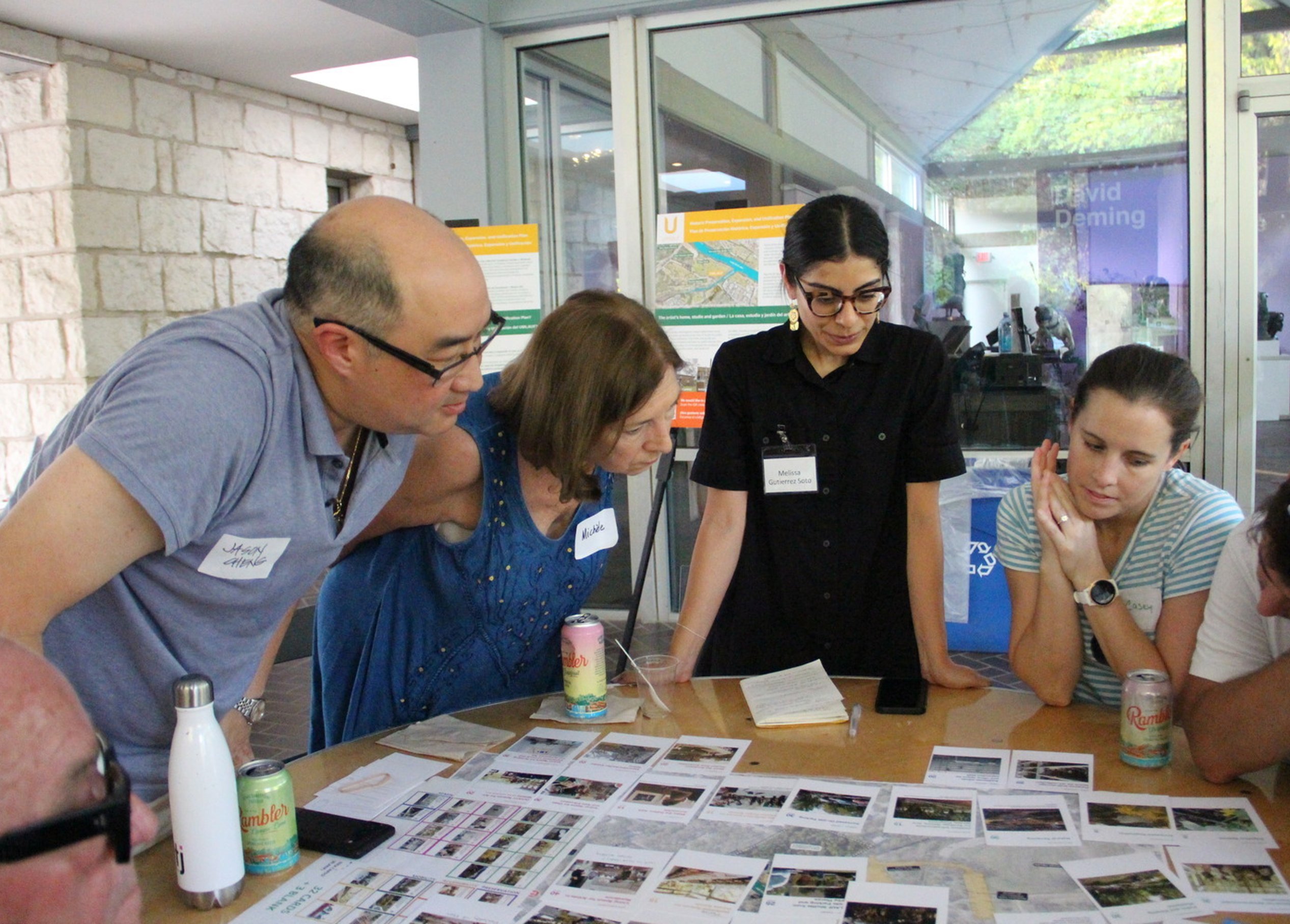
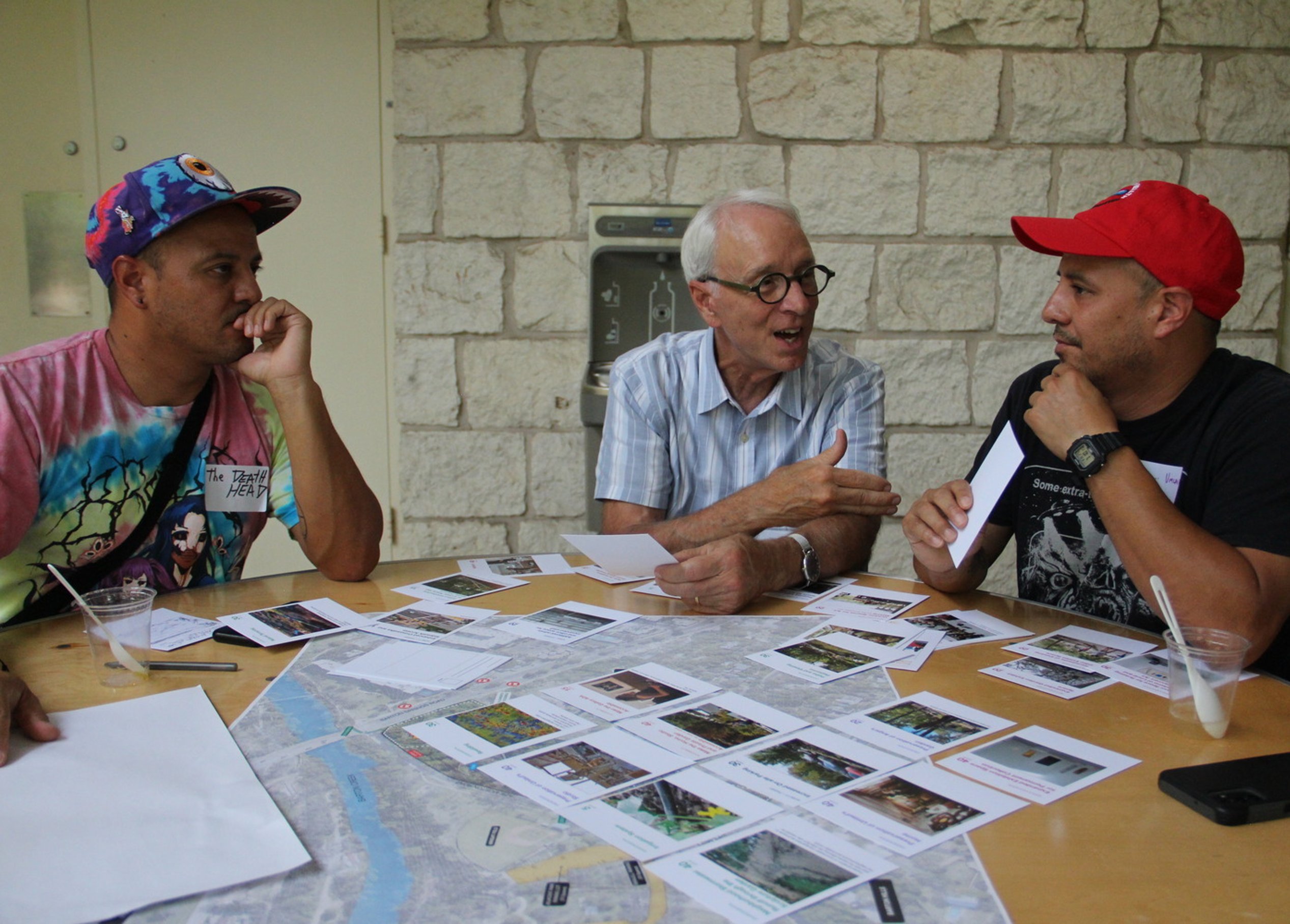
The UMLAUF envisions a welcoming space for people of all ages and interests to connect with arts, nature, and Charles Umlauf’s artistic legacy. A key objective of the HPEU plan is to ensure accessibility for all, making the entire site open and enjoyable for Austin’s residents and visitors. The plan proposes integrating spatial and design strategies with other equity-focused programs to engage communities lacking cultural assets and neighborhood green spaces.
To support this vision, the plan seeks to develop the UMLAUF’s programmatic interior and exterior spaces to attract and connect with a broader audience. This expansion enables the UMLAUF to host a wider range of art exhibitions and offer multiple programs simultaneously, creating more opportunities to reach a diverse audience. Additionally, the proposed strategies aim to facilitate more community gatherings, diverse arts and environmental programs, and a range of activities catering to Austin’s interests—concerts, performances, health and wellness initiatives, and more.
Guiding principles
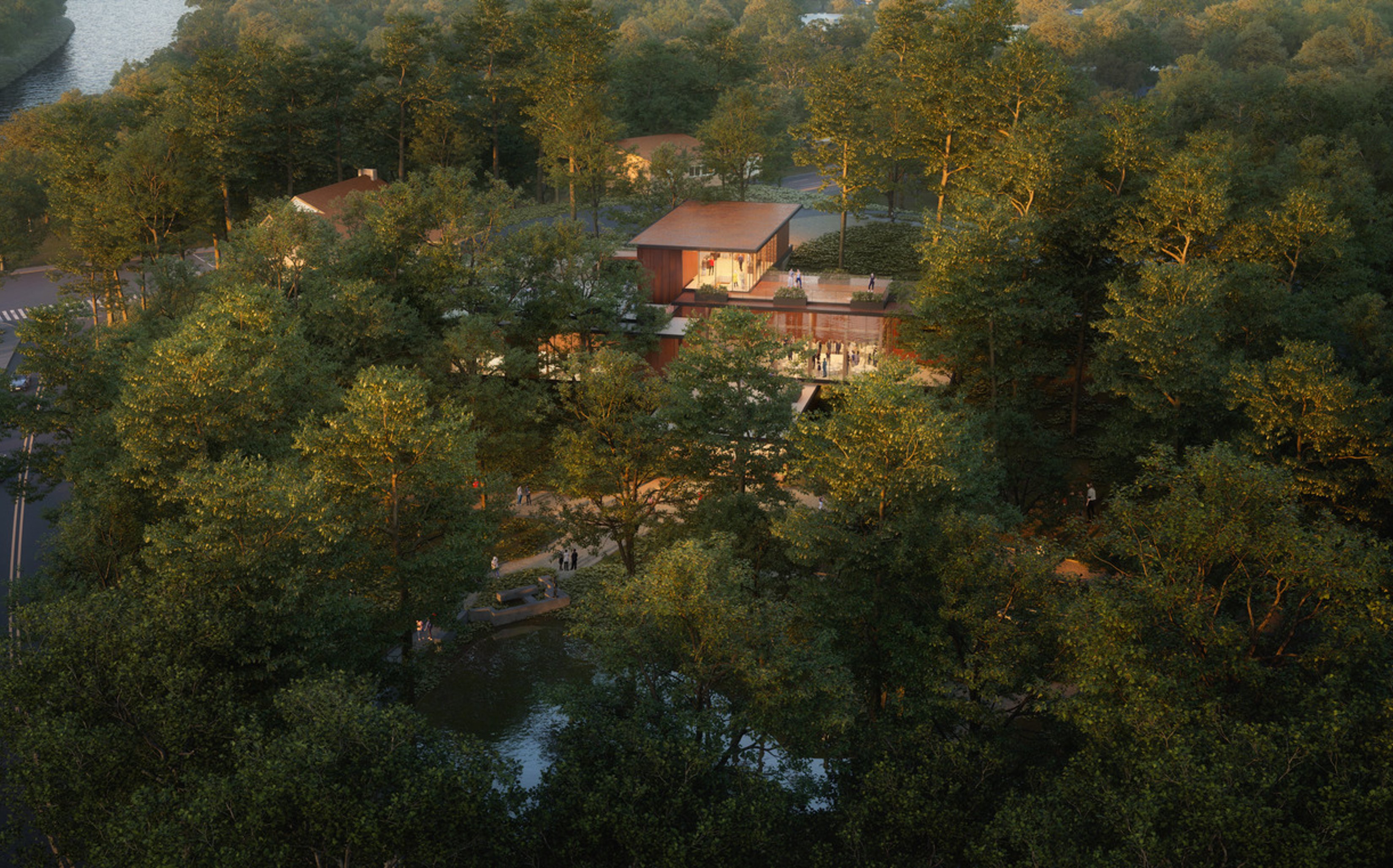
The planning process is guided by harmonizing three principles: Sustainability + Resilience, Community, and Legacy. Recognizing the site’s environmental challenges, Sustainability + Resilience are introduced as core principles, steering the plan’s decision-making. Community envisions an accessible and unified site, expanding the UMLAUF’s reach and fostering deep connections with Austin. Legacy seeks to preserve the historic zone and amplify Charles Umlauf’s artistic heritage, offering art education opportunities for all.
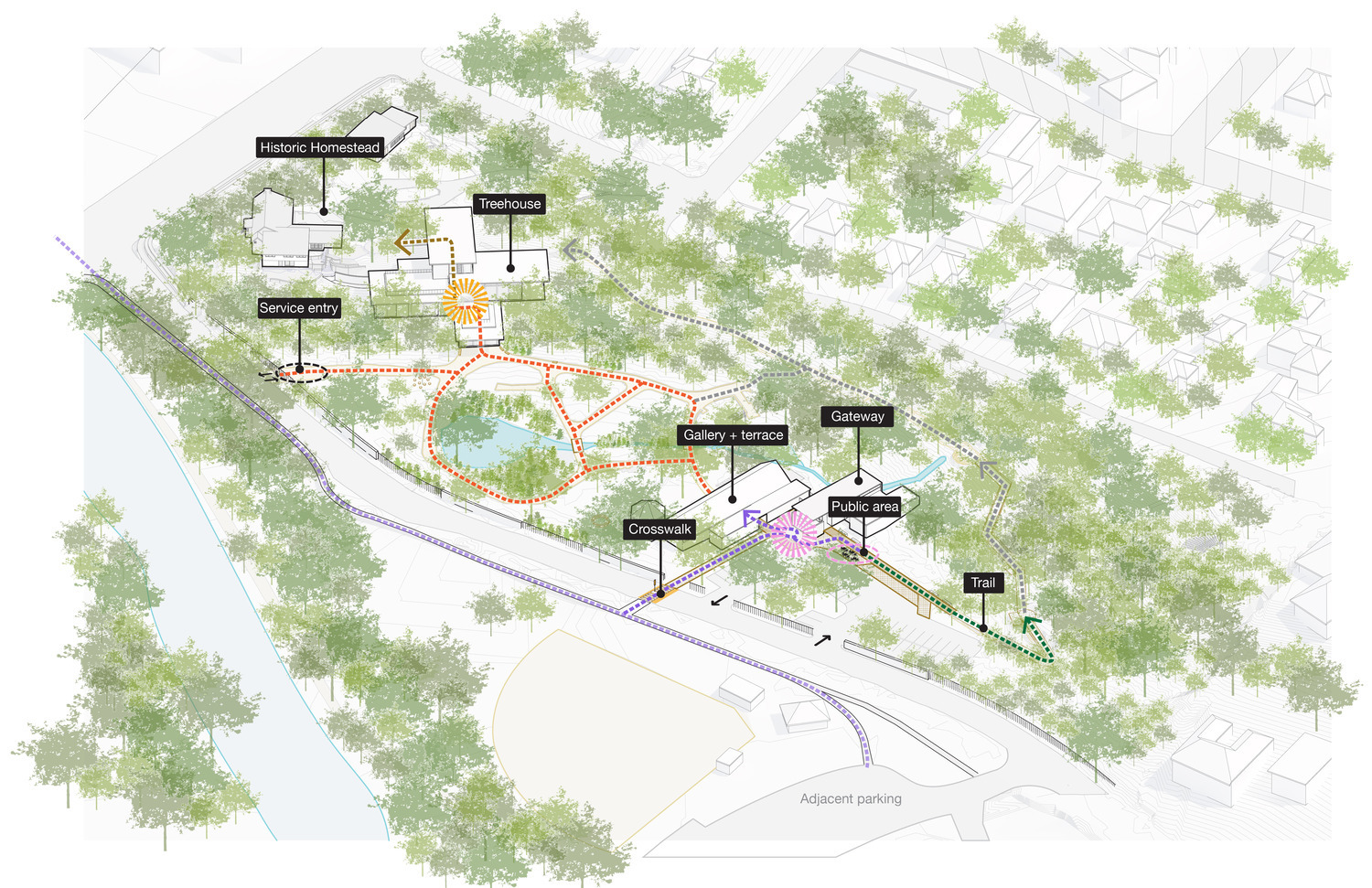
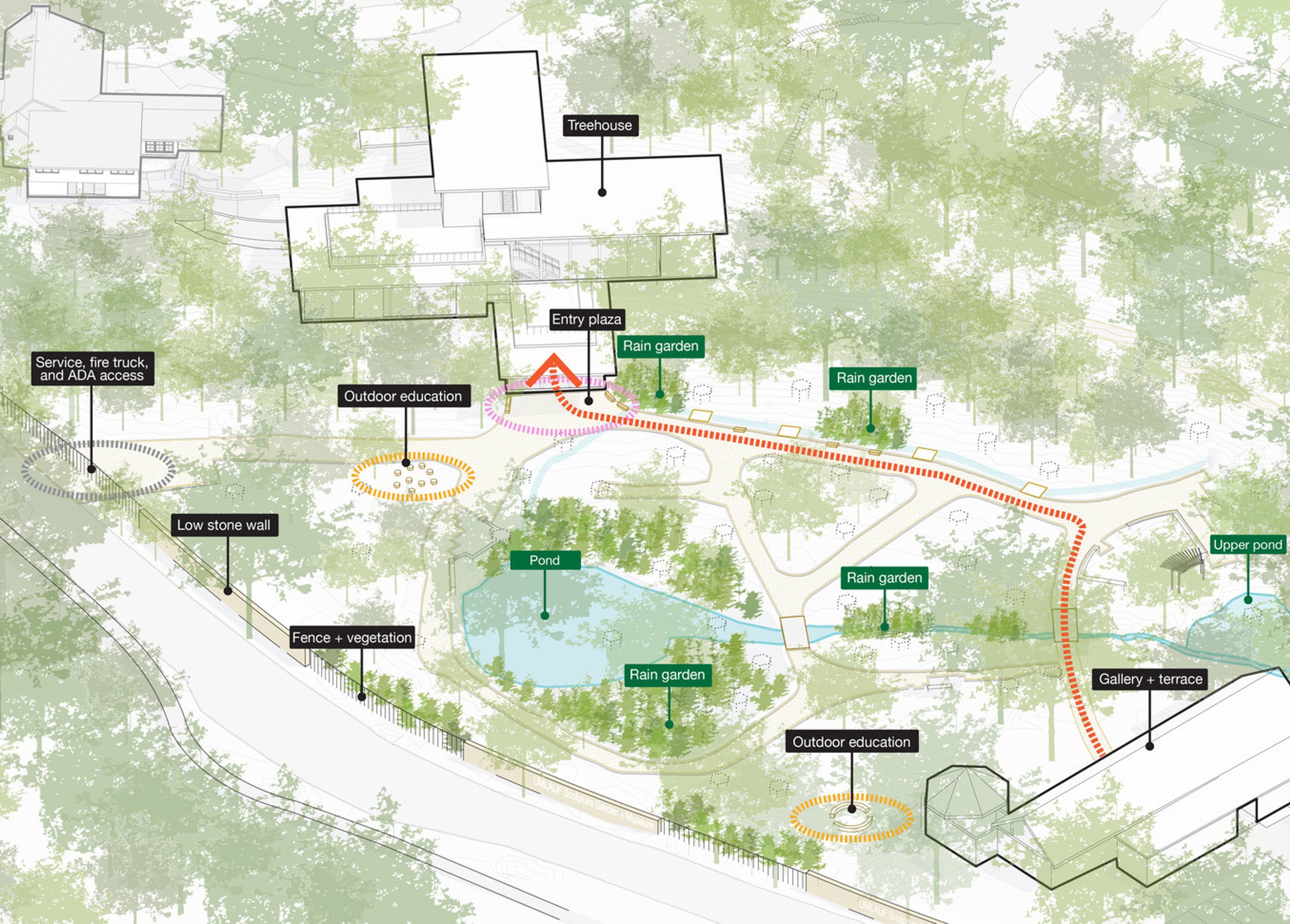
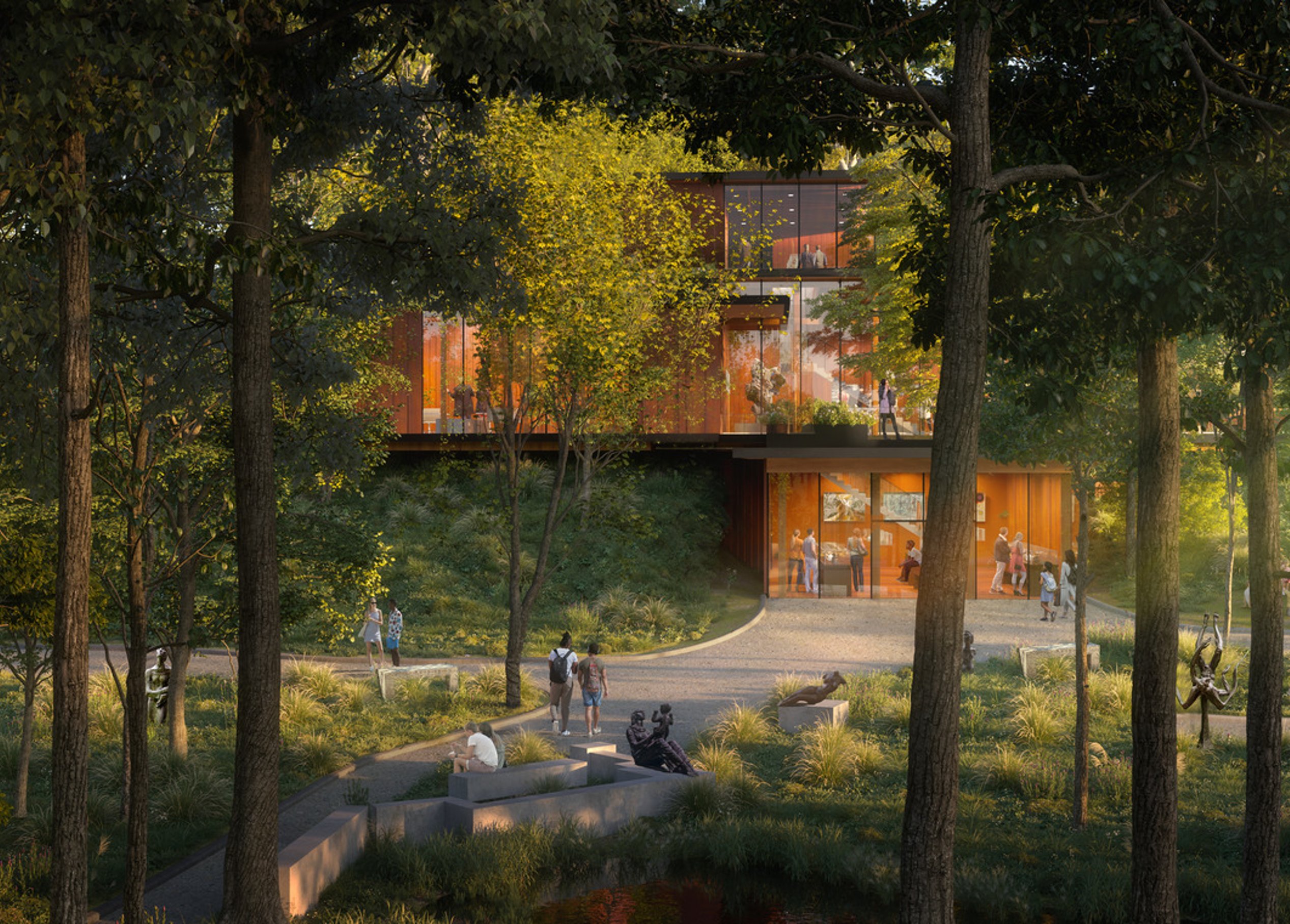
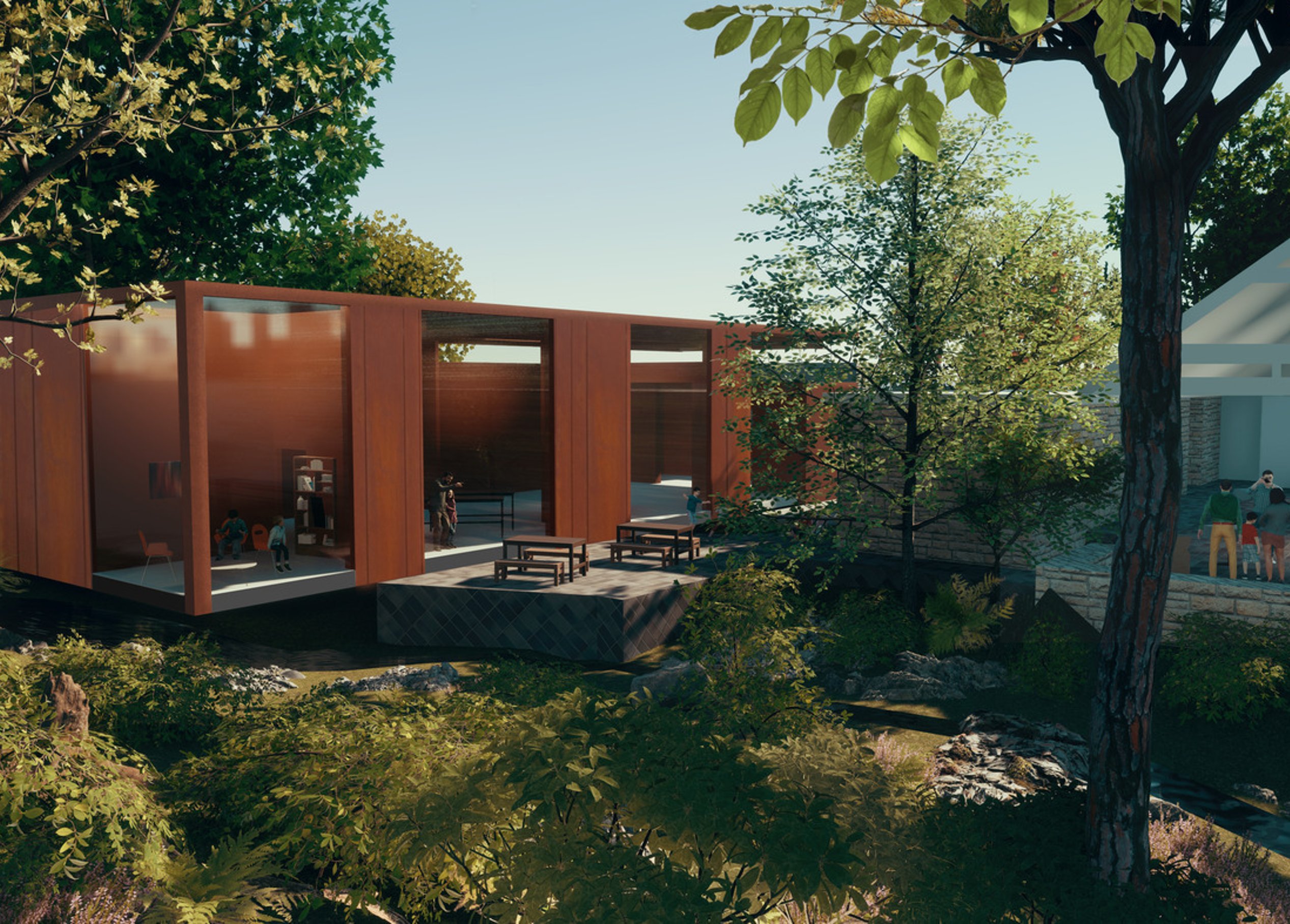
Carefully connecting previously inaccessible areas to the museum and sculpture garden, the plan prioritizes the user experience from the moment of arrival. It envisions a seamless, accessible site-wide experience, offering indoor and outdoor spaces for diverse programming.
Improvements will accommodate large gatherings, workshops, art classes, expanded exhibitions, and a wider range of community events. Respecting existing structures and the natural ecosystem, the design ensures a harmonious integration of new and existing elements while preserving the UMLAUF’s unique legacy and spirit of exploration.
Unifying the site
/
Sustainability & resilience
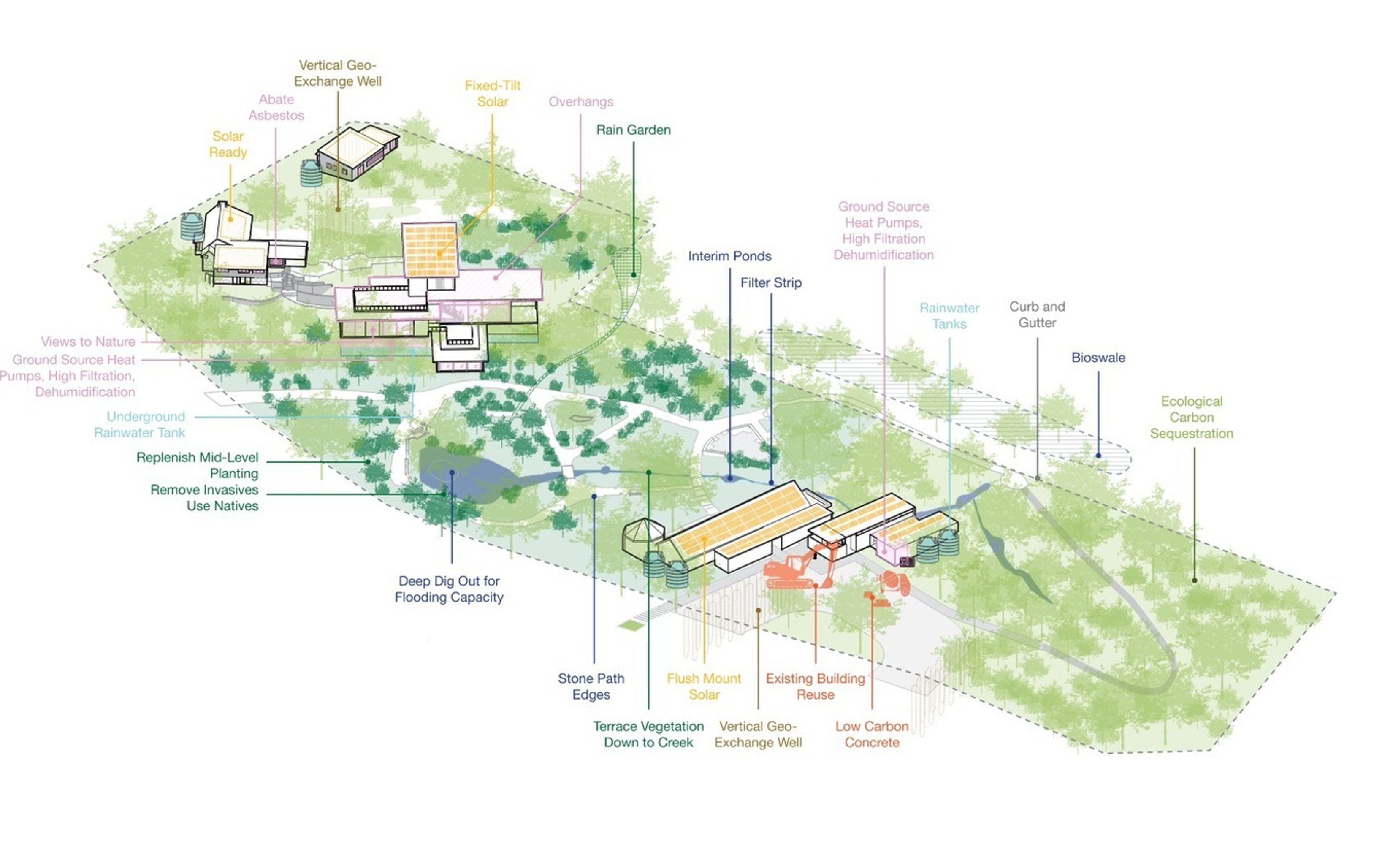
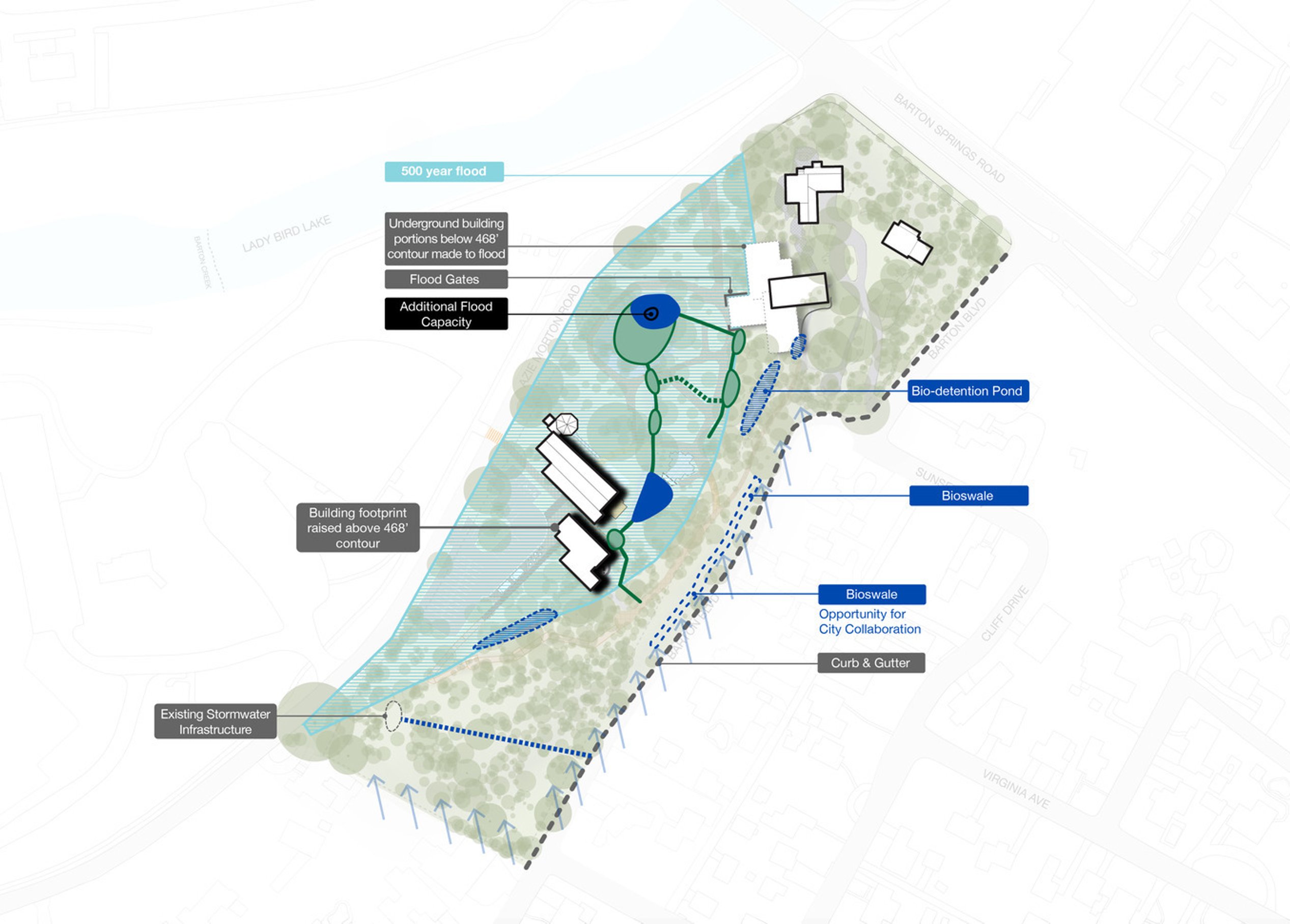
The team developed site-wide sustainability and resilience strategies as an integrated part of the HPEU plan and engagement process.
Sustainability goals are woven into the very fabric of UMLAUF’s guiding principles and priorities. The HPEU plan addressed sustainability holistically through six key impact areas: Health, Energy, Carbon, Ecology, Water, and Resilience. The team analyzed energy, water, and carbon to evaluate existing conditions and develop future-focused strategies.
Page analyzed existing energy demands, future needs, and opportunities for renewable technologies. By improving existing facilities and introducing onsite solar along with a proposed geo exchange system, the team developed a clear path to Net Zero.
A whole life carbon study looked at operational and embodied carbon from materials and refrigerants. Page determined that 150,000 kg CO2e could be saved through the reuse of existing structures, avoided carbon through onsite PV generation, and local carbon sequestration through the landscape.
A water balance study identified opportunities to reduce demand on local potable water sources. The team developed a stormwater and reirrigation strategy to capture runoff and supply non-potable water to nearby sculpture ponds and irrigation systems.
Dedicated to impact-forward design, Page worked with non-traditional stakeholders to further embed expertise and ensure a holistic approach to sustainability planning.
View the plan
Page’s Historic Preservation, Expansion, and Unification Plan reimagines the UMLAUF as an accessible, eight-acre cultural hub—where art, nature, and community unite. Explore the plan and discover how we’re shaping a more inclusive, sustainable future.
Similar projects

/

Talk with us
Complex challenges need fresh perspectives and deep expertise. Connect with our team to explore how we can help you create spaces that make a real difference.