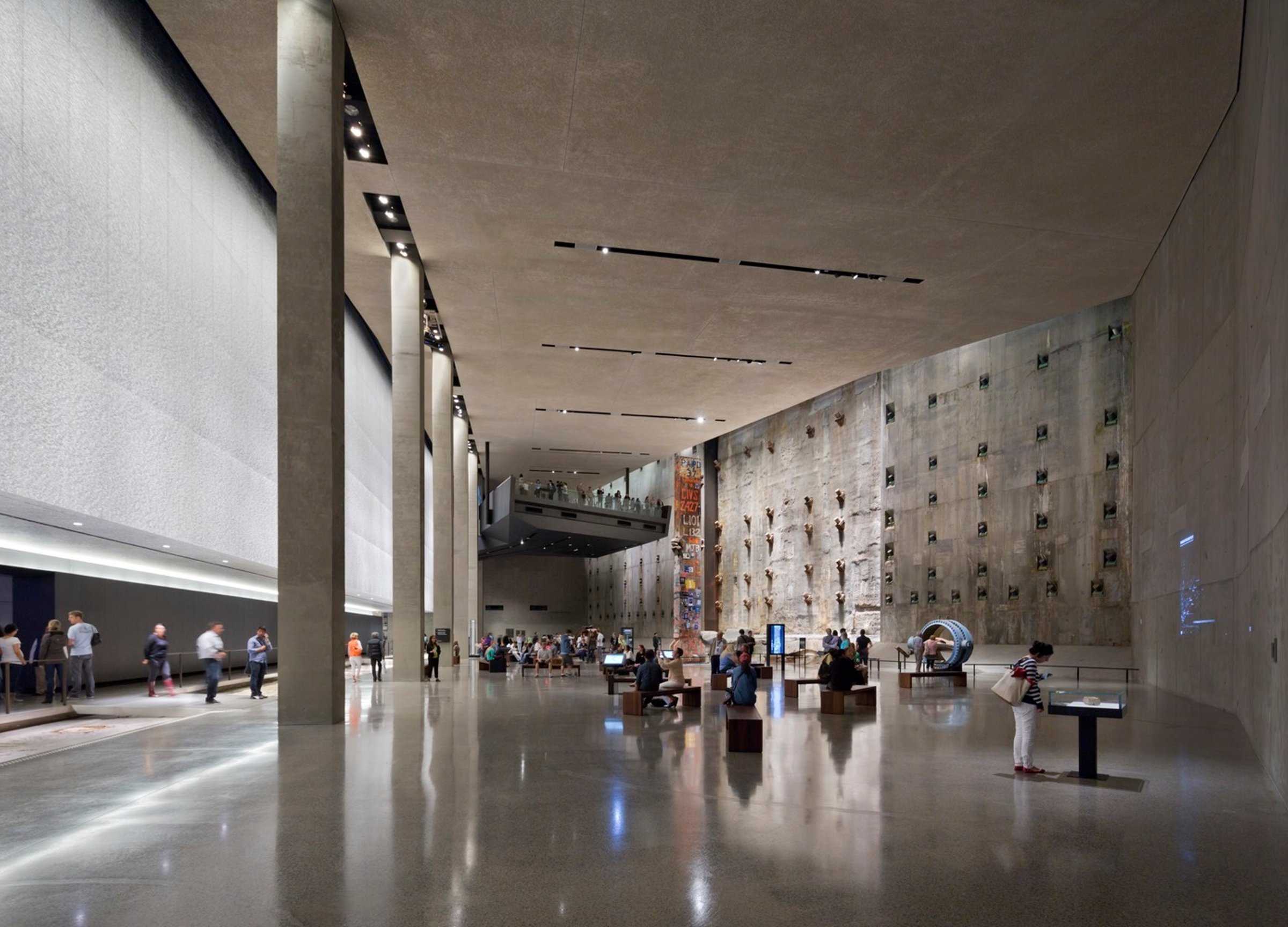
National September 11 Memorial Museum
The National September 11 Memorial & Museum is deeply intertwined with the nation’s cultural memory and emotional reaction to the events of September 11, 2001. Page served a dual role as Design Architect for the Memorial Museum and the Associate Architect for the Memorial Plaza.
Locating the museum at the site of the event creates a vital link between honoring those who perished and preserving the historical narrative. But how do you create a space that resonates with those who lived through 9/11 while conveying the significance and impact to generations that didn’t witness the event firsthand?
A key component of the approach was to capture the site’s emotional gravity. During the initial stages, the team observed hundreds gathered around the perimeter fence, drawn by an instinctual need to bear witness. This insight guided the team’s design philosophy: creating a space where visitors could engage with the memory of 9/11 in a personal and impactful way.
Awards
-
1National AIA Honor Award for Architecture
-
2AIA New York State Design Awards, Award of Merit
-
3Society of American Registered Architects (SARA), New York Council, The Gold Award of Excellence
-
4Architect’s Newspaper, Best of Design Awards Building of the Year
-
5National Trust for Historic Preservation, Advisory Council on Historic Preservation Award for Federal Partnerships
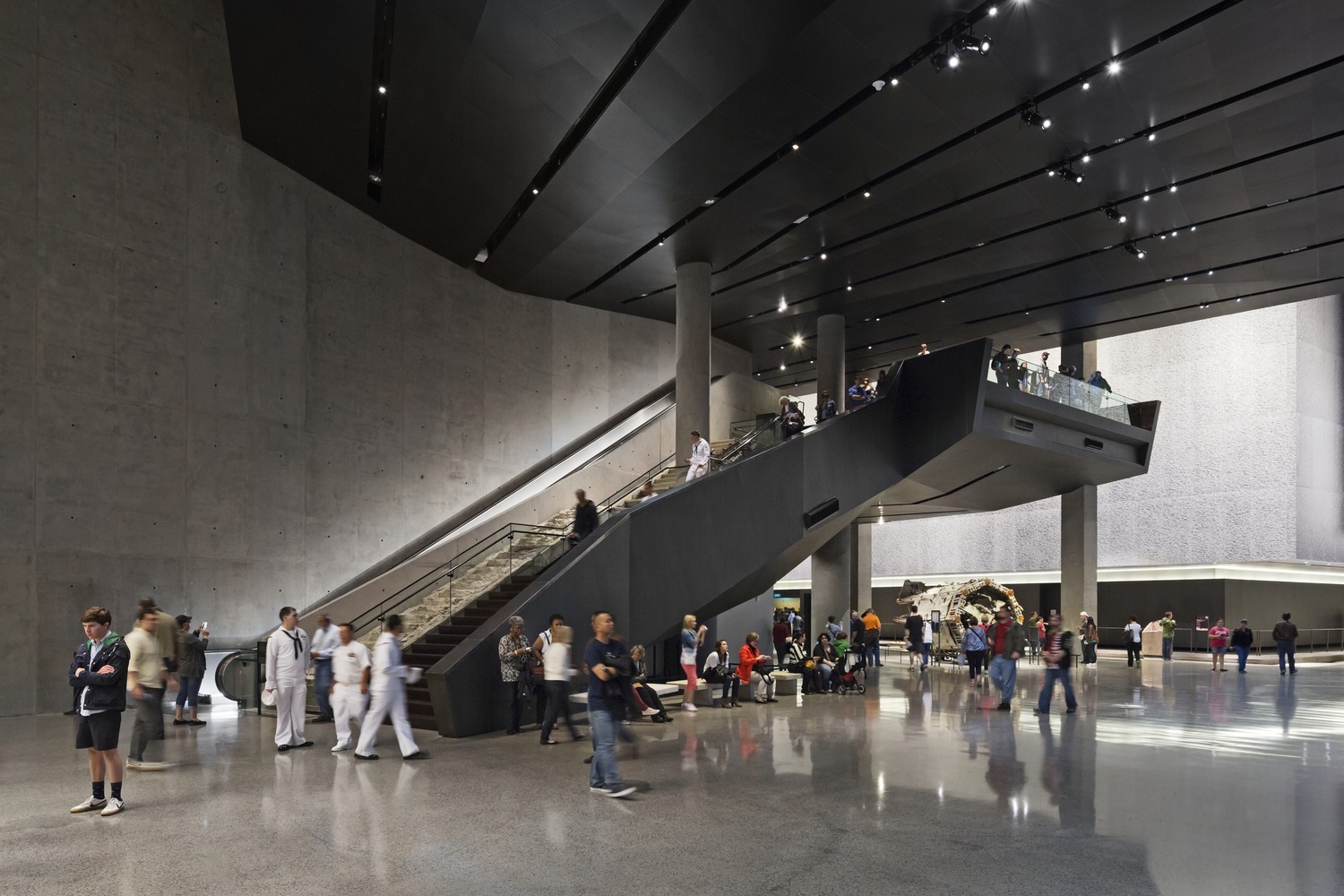
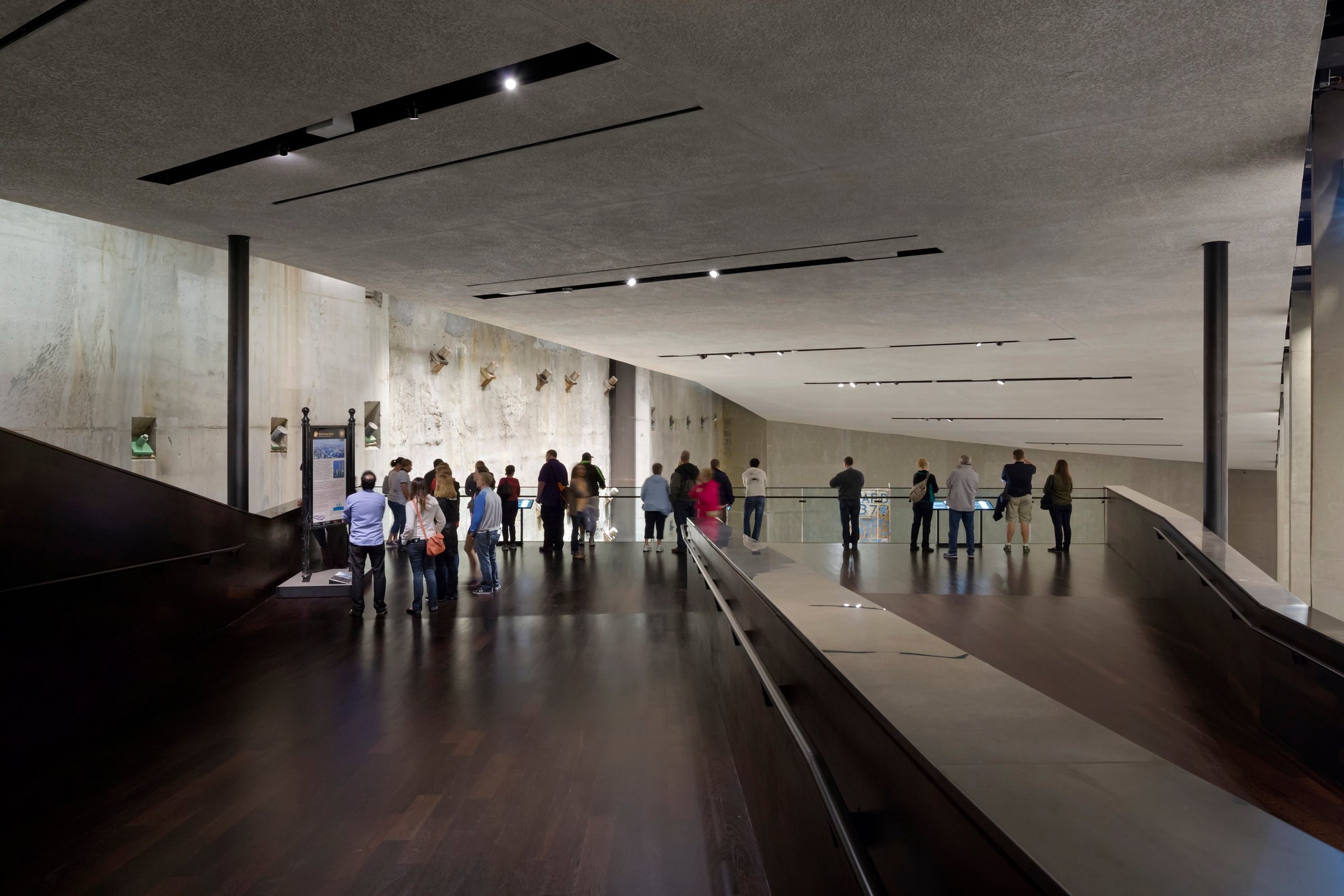
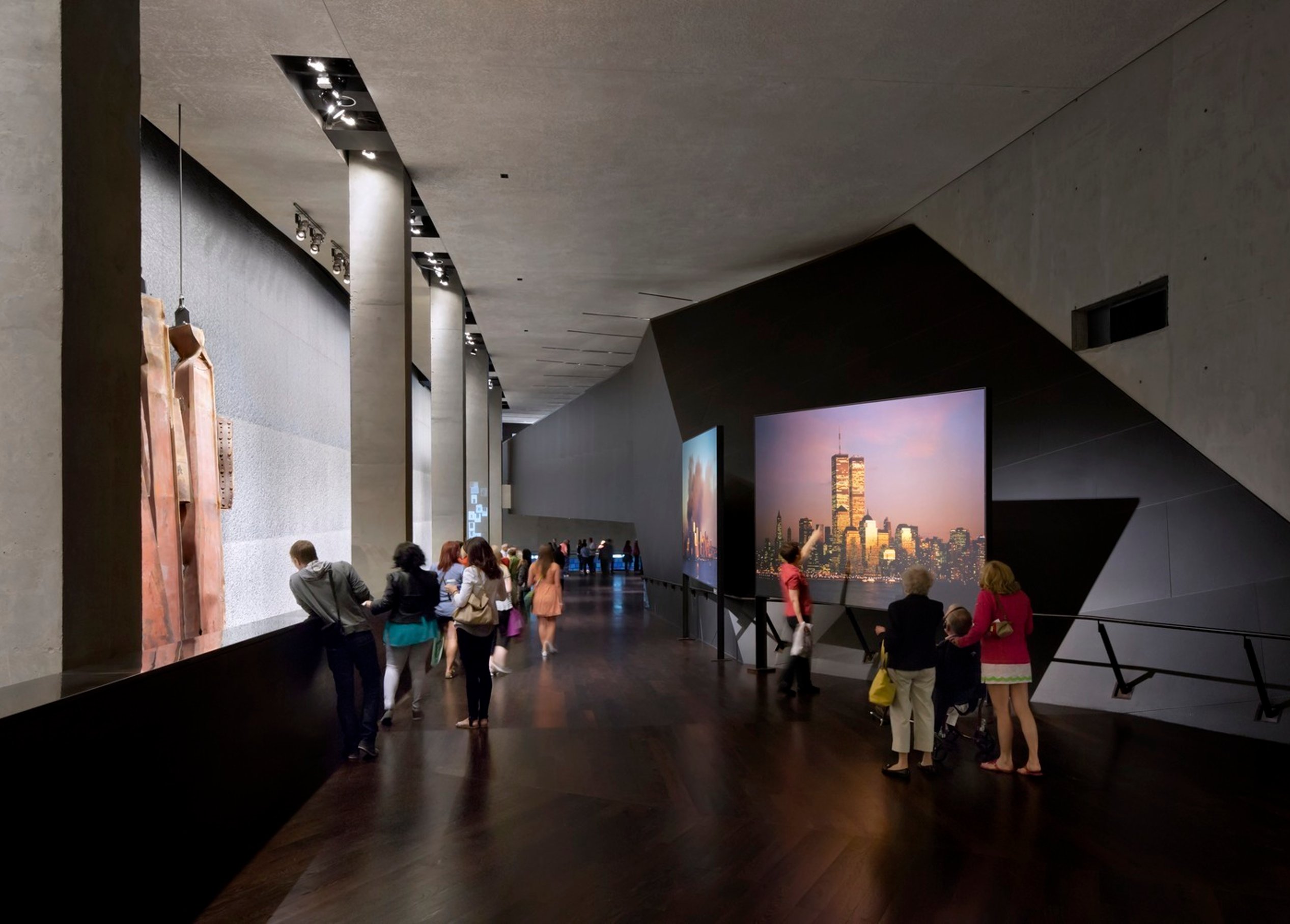
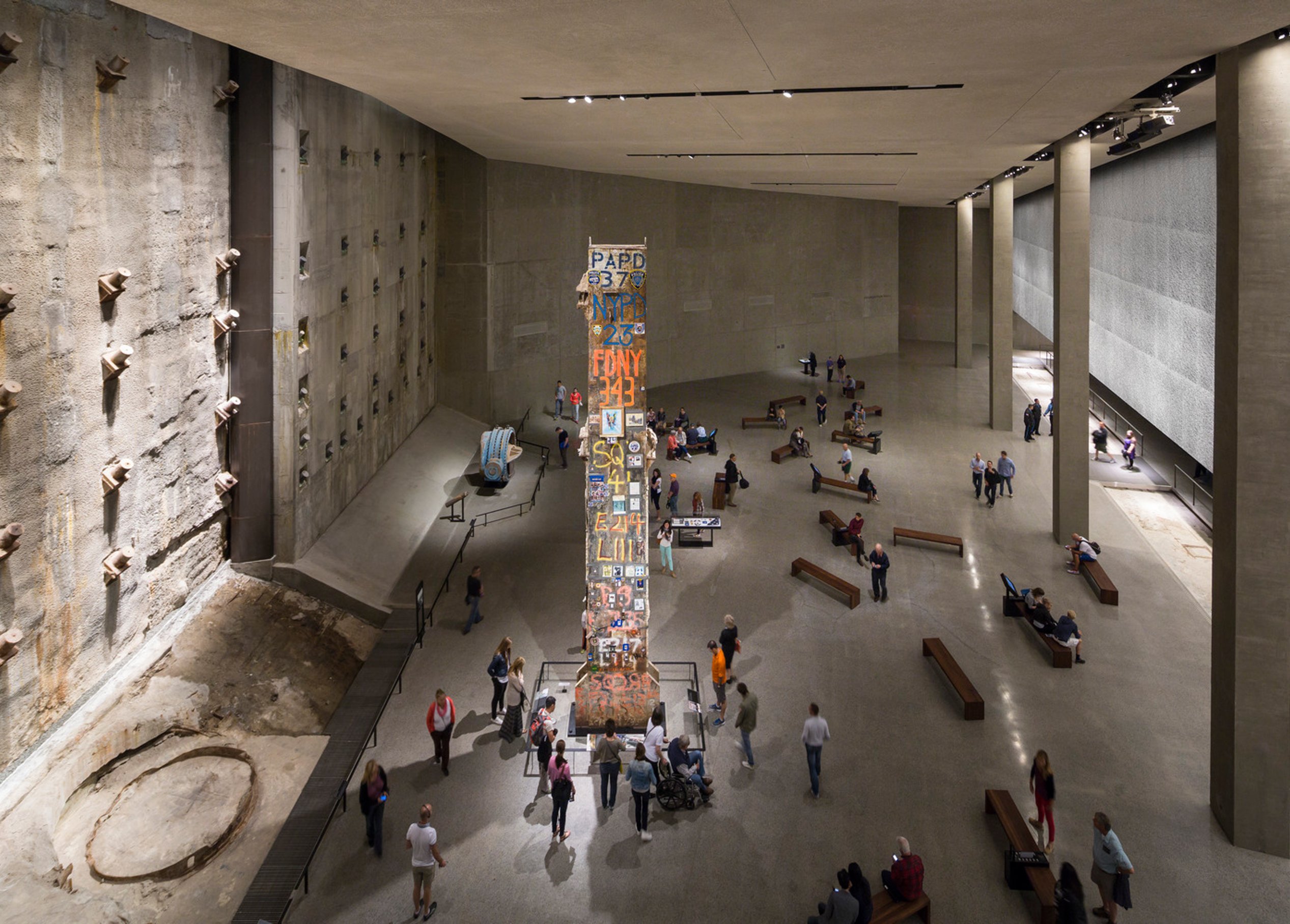
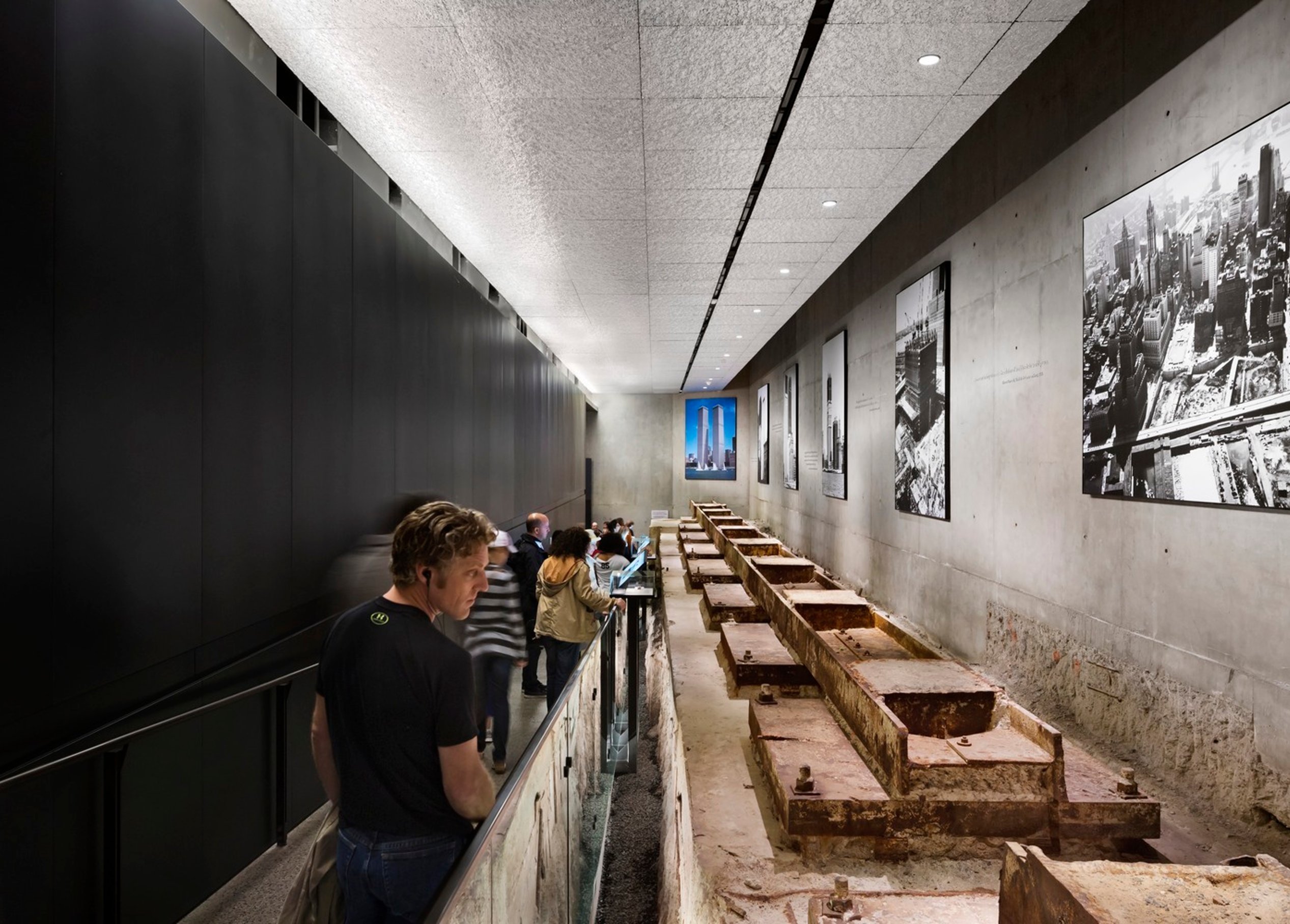
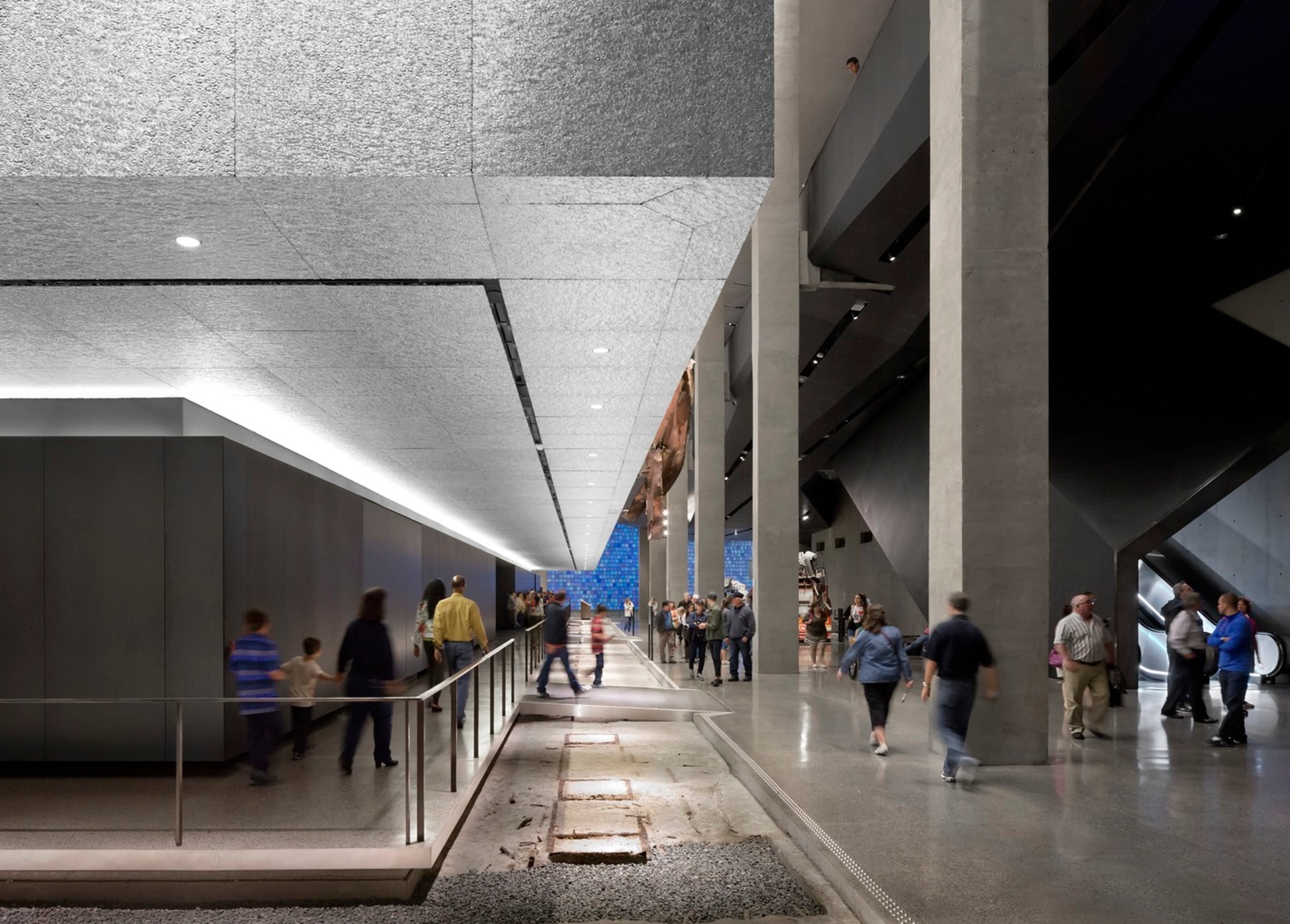
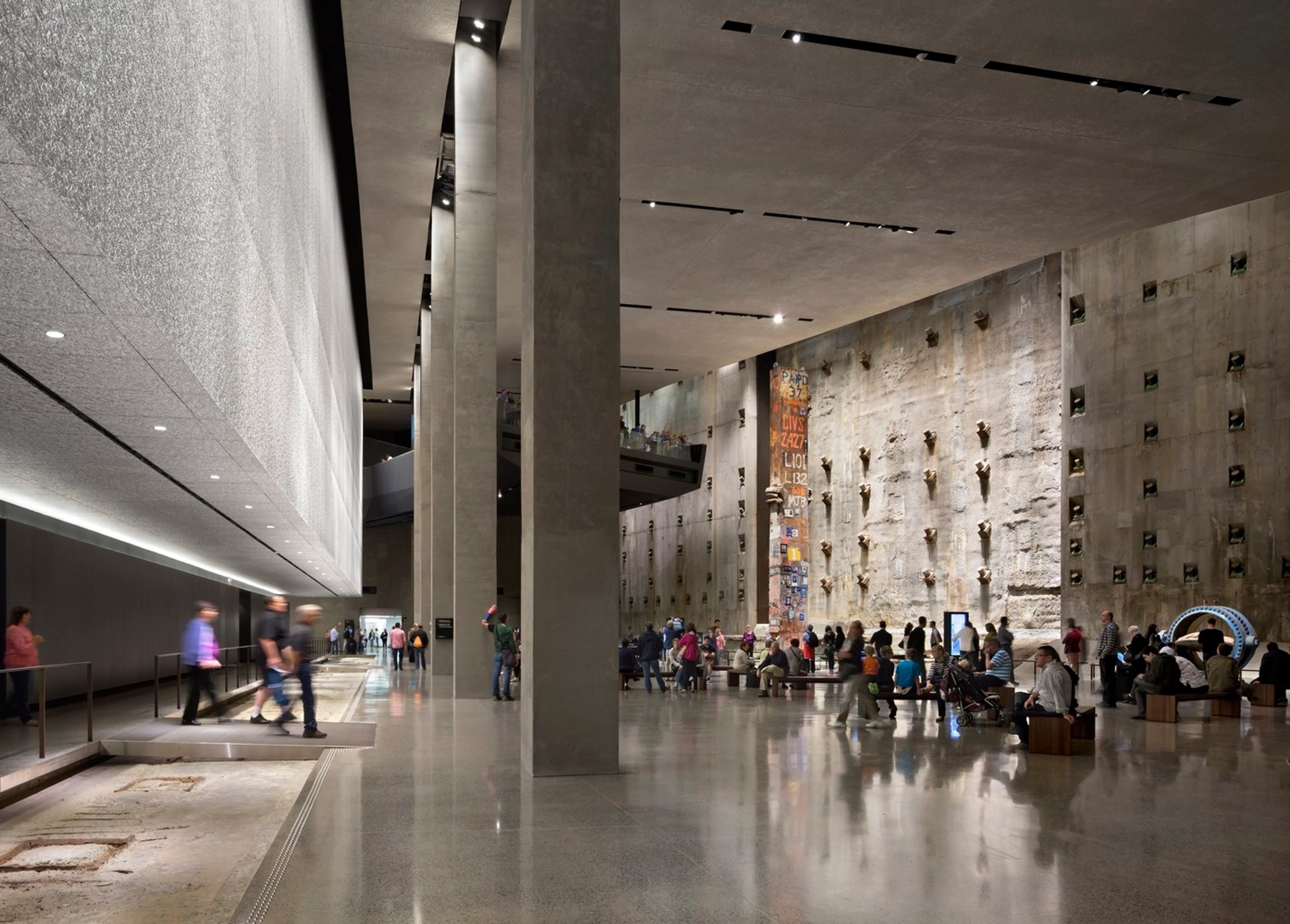
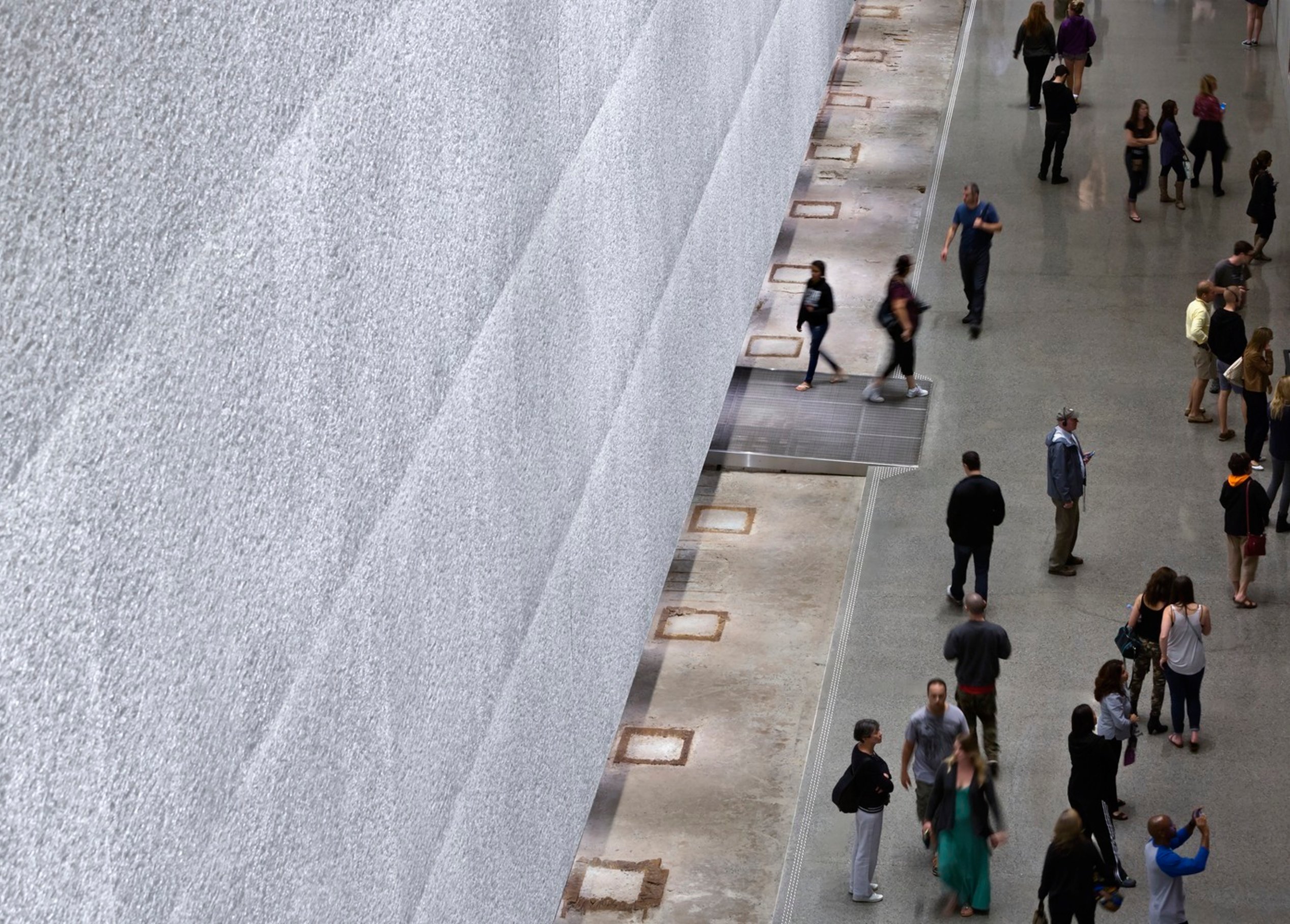
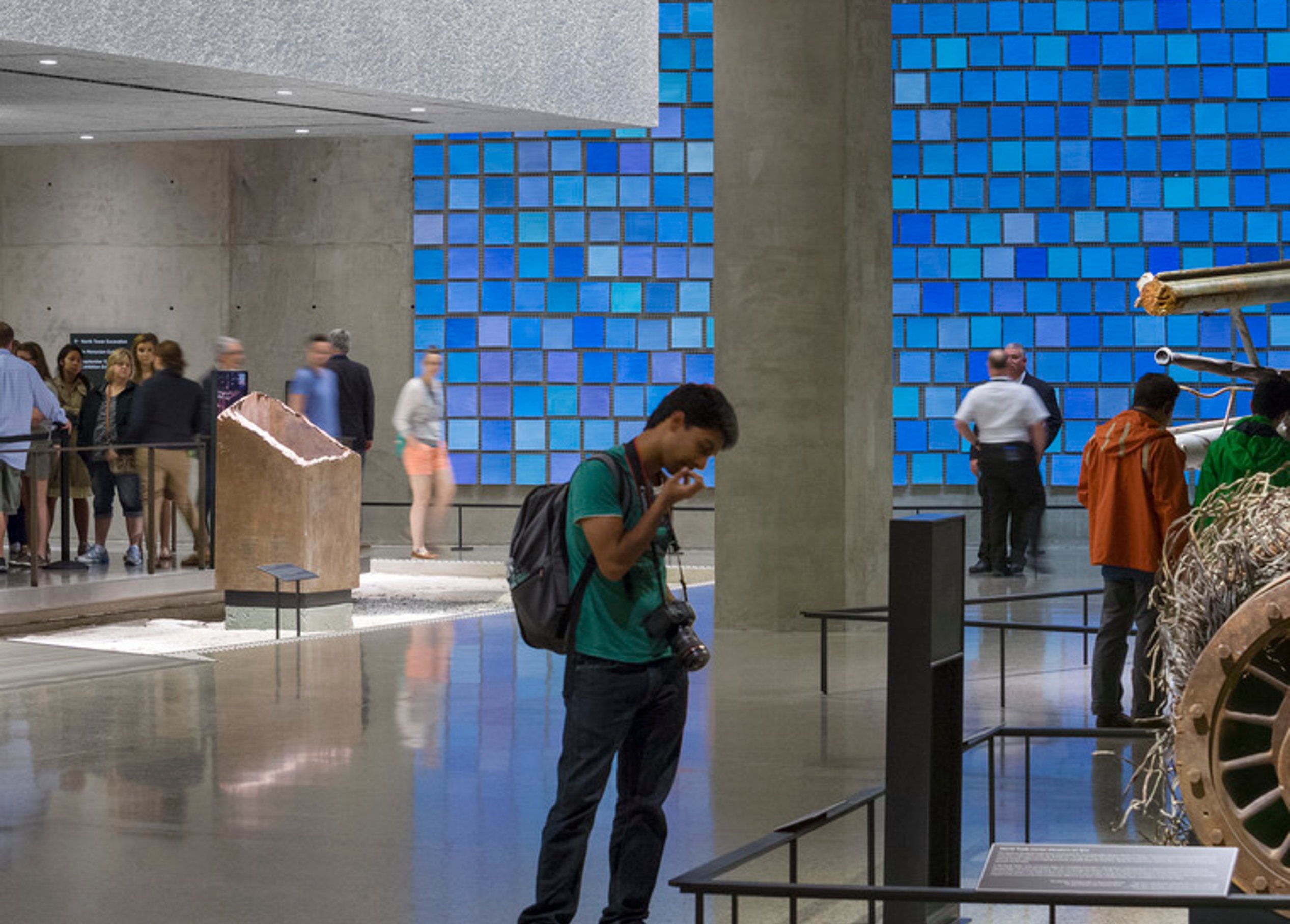
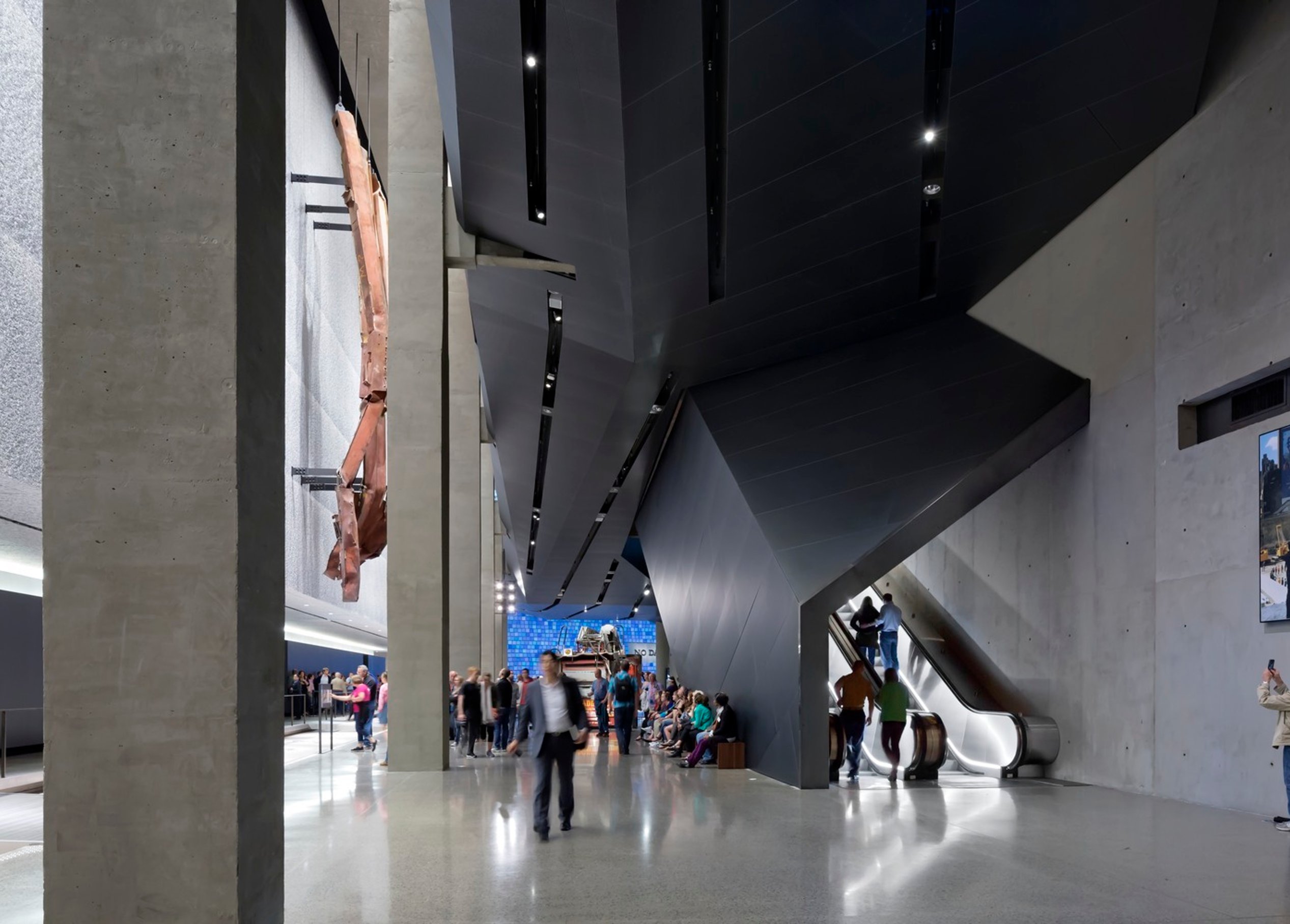
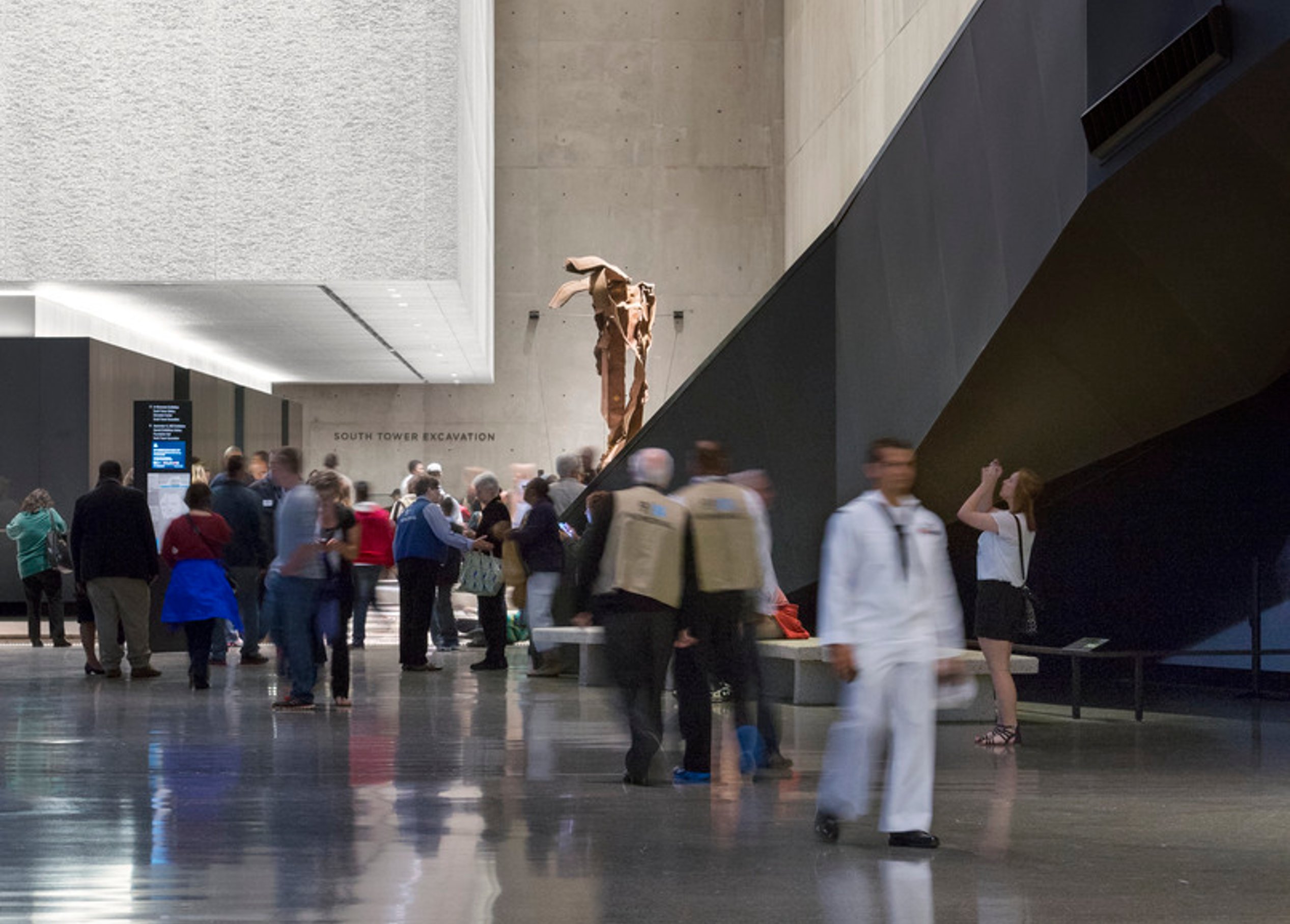
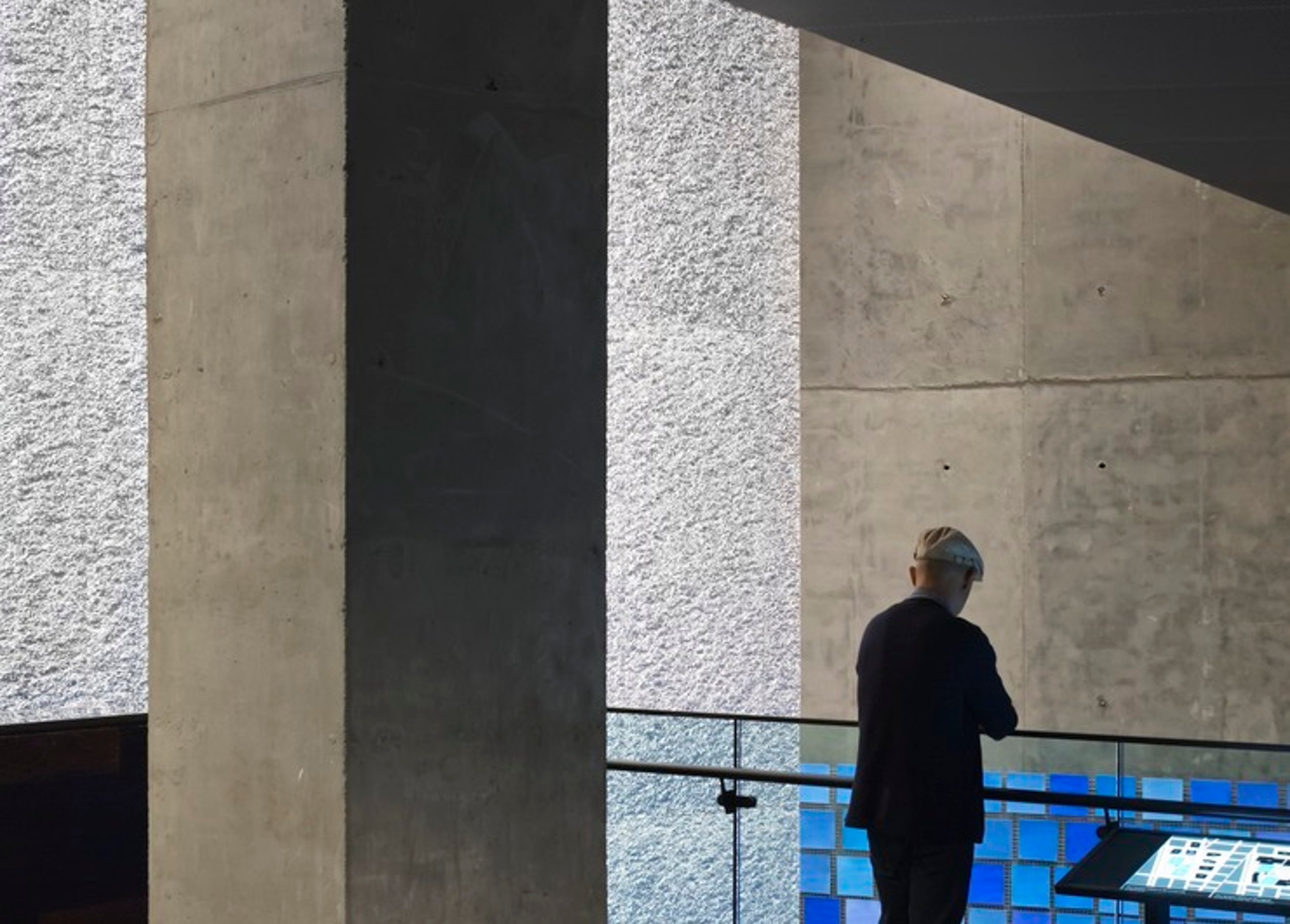
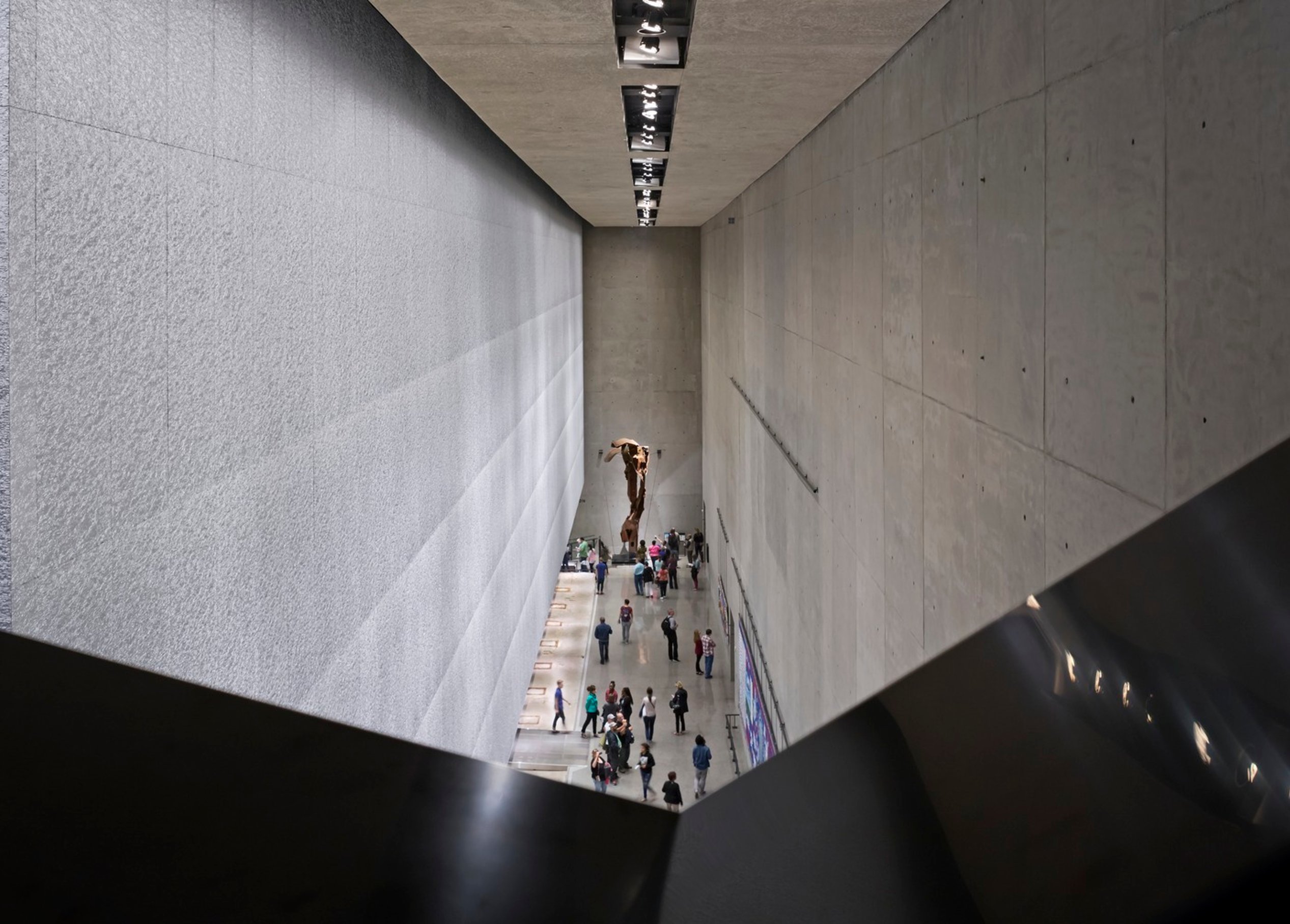
Architecturally, the design team created a powerful, contemplative descent into the site. Concrete—both raw and polished—defines the 70-foot-deep excavation, with two key elements: the Tower Volumes and the Ribbon. The Tower Volumes align with the original Twin Towers' footprints, preserving a tangible link to history, while the Ribbon’s gently sloping descent guides visitors toward bedrock, progressively revealing the space.
This intentional journey transforms visitors’ states of mind, shifting them from the bustling world above to a space of reflection and remembrance. Along the way, visitors experience:
- Memory: Personal recollections of 9/11 shape responses to the site, artifacts, and exhibits.
- Authenticity: Positioned at the attack site, the museum and exposed foundations create an undeniable connection to history.
- Scale: The vast spaces reflect the enormity of the towers, the attack, and the loss.
- Emotion: Designed for private contemplation and collective remembrance, the space acknowledges grief and resilience.
Guided by key artifacts and the in situ remains of the Twin Towers, the design fosters a deeply personal encounter. It provides visitors with a unique experience that allows them to reconnect with memories and emotions while helping the next generation grasp the tragedy’s scale and the human spirit’s resilience.

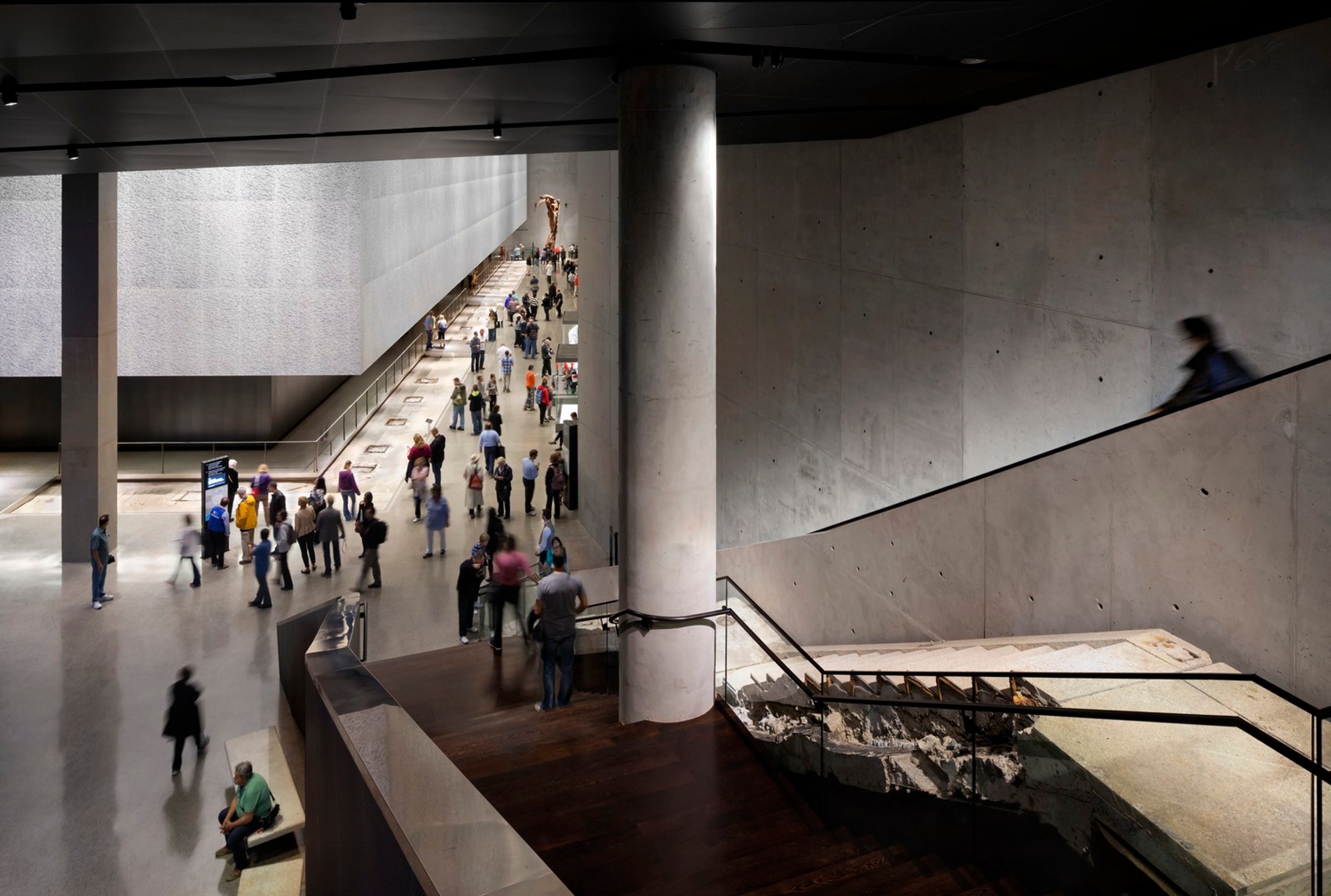
Survivors’ stairs
Visitors descend to the museum’s bedrock level alongside the Vesey Street Stair remnant, known as the “Survivors’ Stairs,” which were used by hundreds to escape to safety on September 11th.
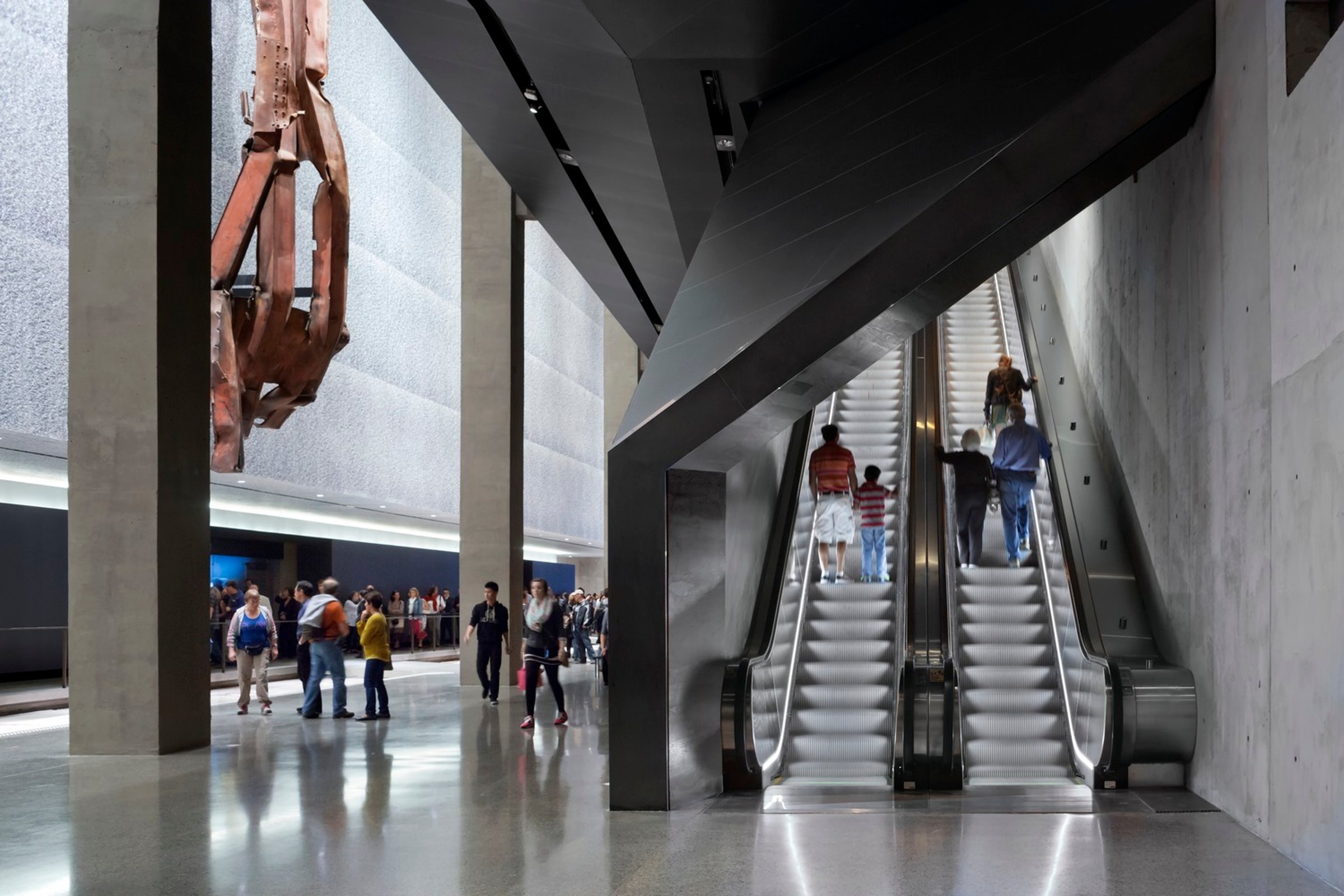
Project context
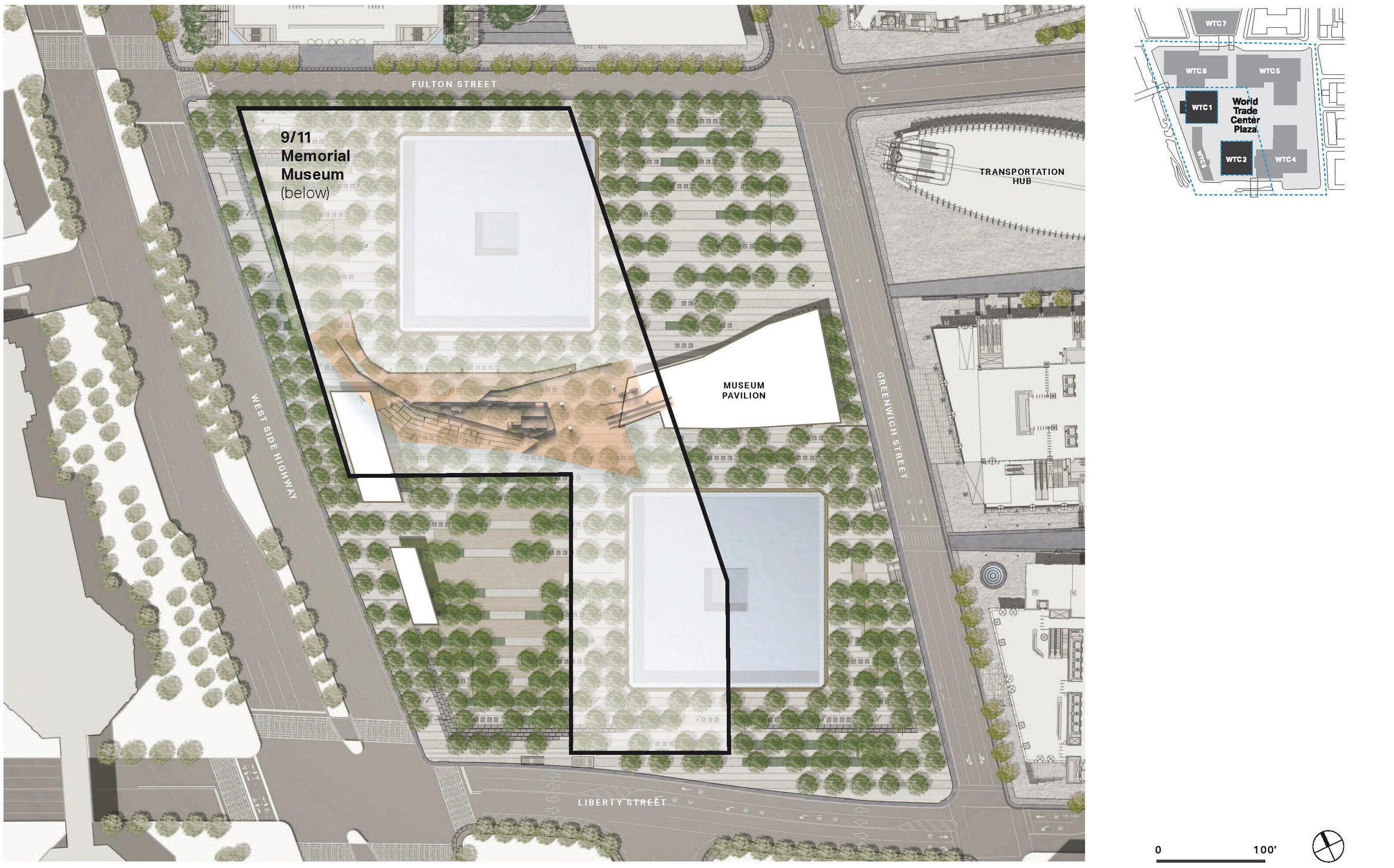
Surrounded by other complex mega-developments directly impacting its design and execution, the museum navigated immense construction challenges. It needed to integrate seamlessly with the 9/11 Memorial, the PATH station and transportation hub, the Central Chiller Plant, and the secure vehicular access system for site-wide loading and servicing.
/
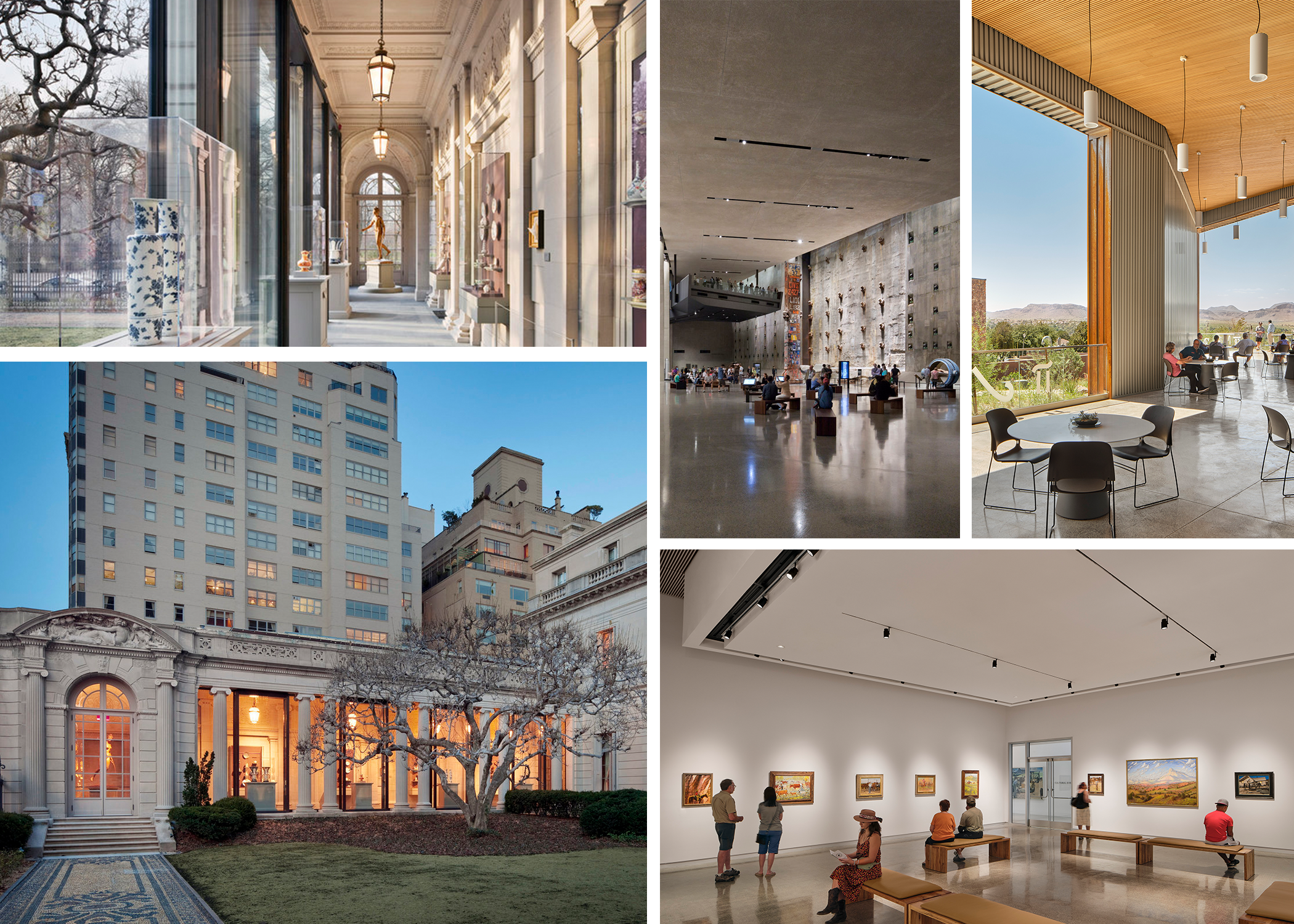
Mark Wagner and Larry Speck unravel the design decisions that shaped some of the most unforgettable museums, including the 9/11 Museum and Memorial, the Frick Collection, the UMLAUF Sculpture Garden and Museum, and the Museum of the Big Bend.
Similar projects

/

Talk with us
Complex challenges need fresh perspectives and deep expertise. Connect with our team to explore how we can help you create spaces that make a real difference.