John A. Paulson Center
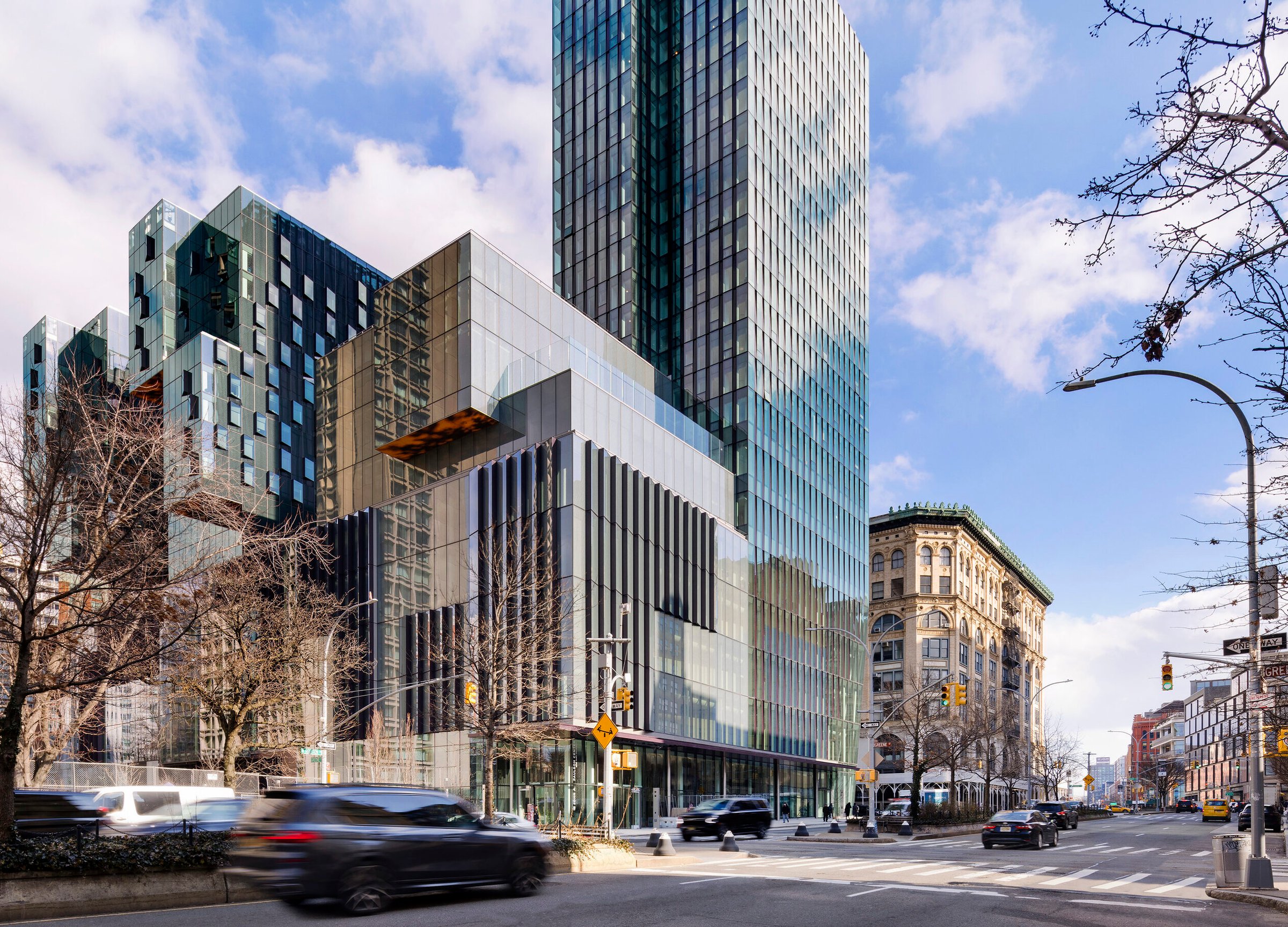
NYU’s transformational evolution into a top-tier global research university demanded a visionary expansion in the heart of Greenwich Village. To support its growing academic and creative energy, we partnered with KieranTimberlake and NYU to create the 735,000-square-foot John A. Paulson Center—a dynamic, multi-use hub replacing the Coles Sports Center.
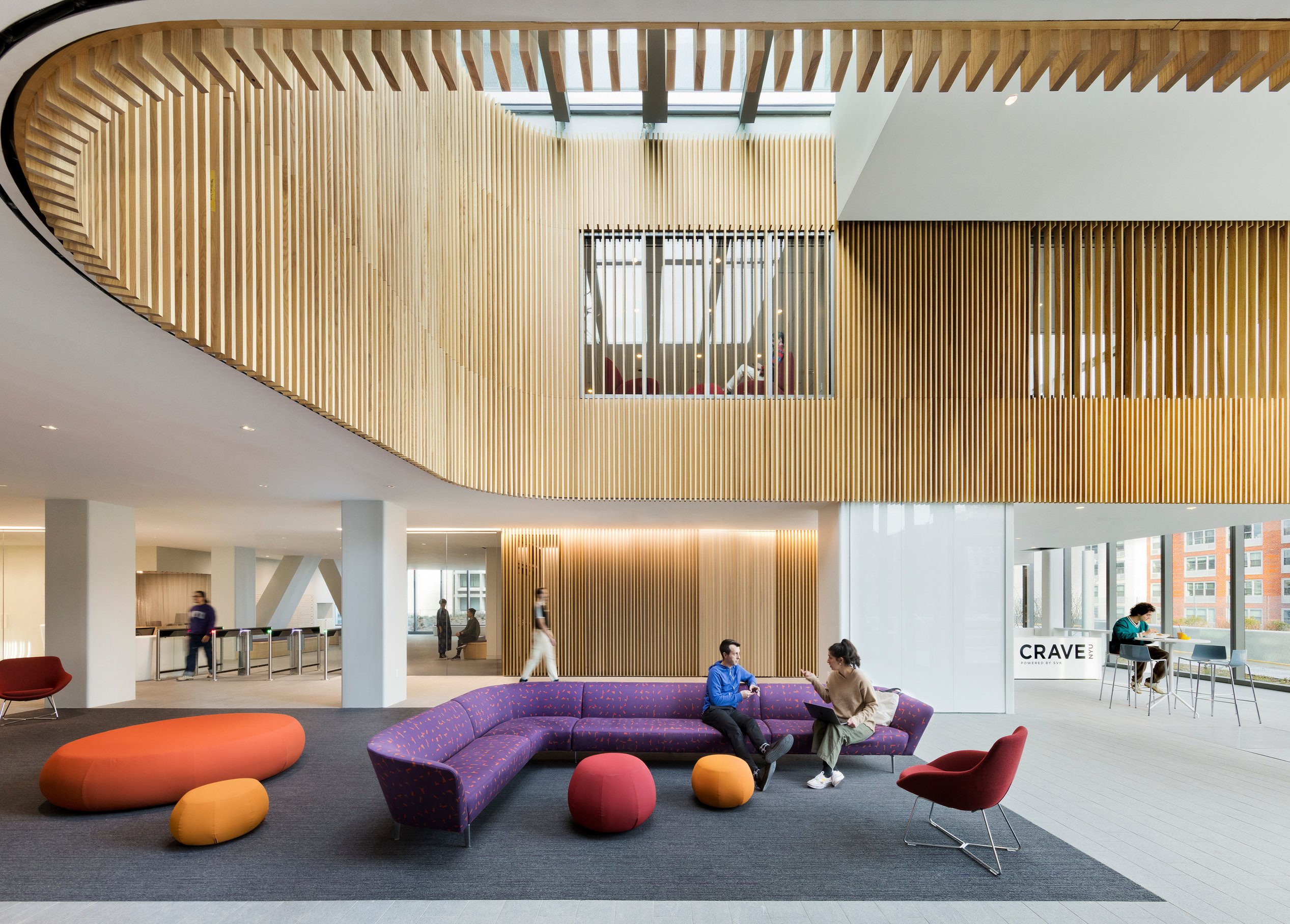
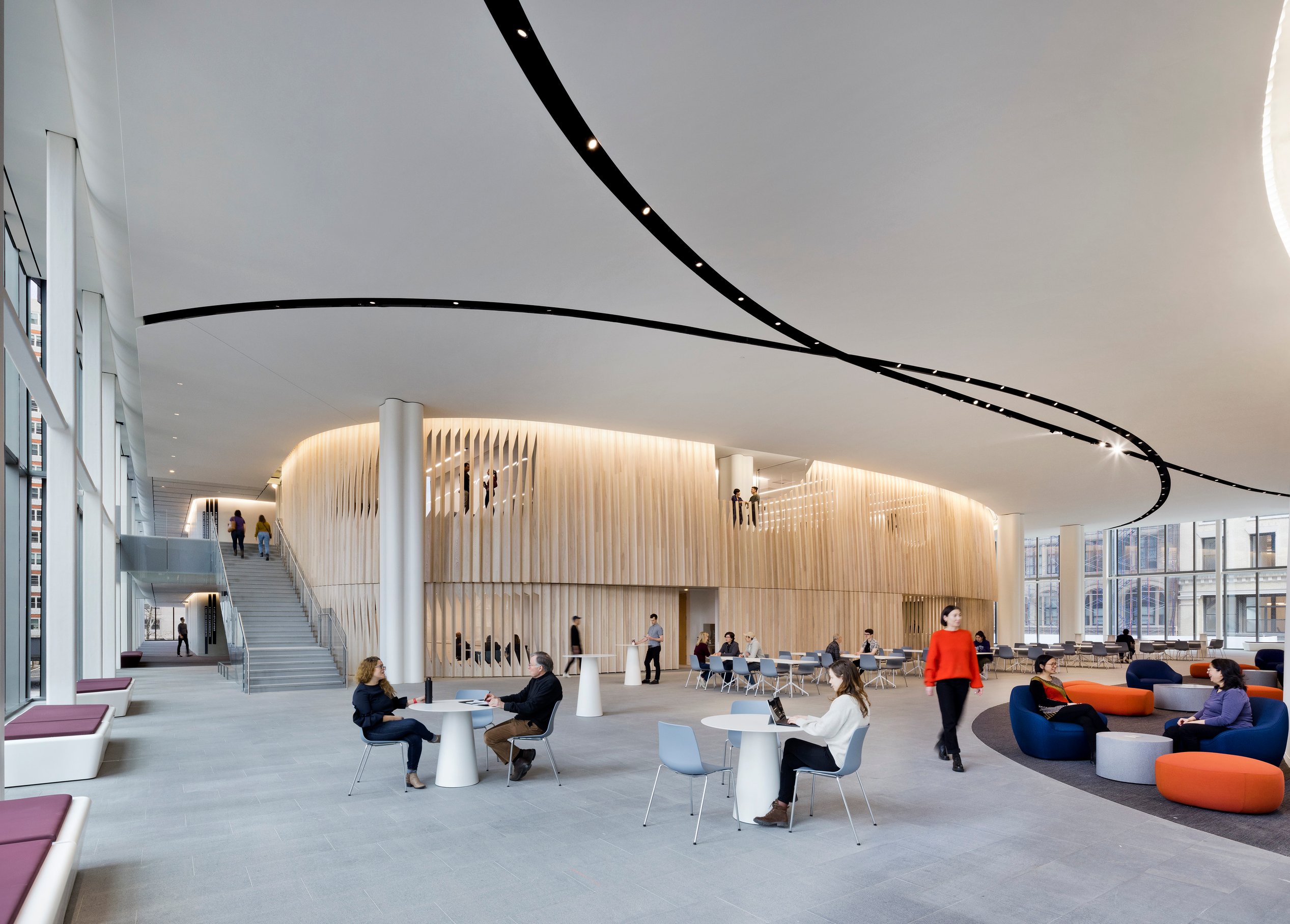
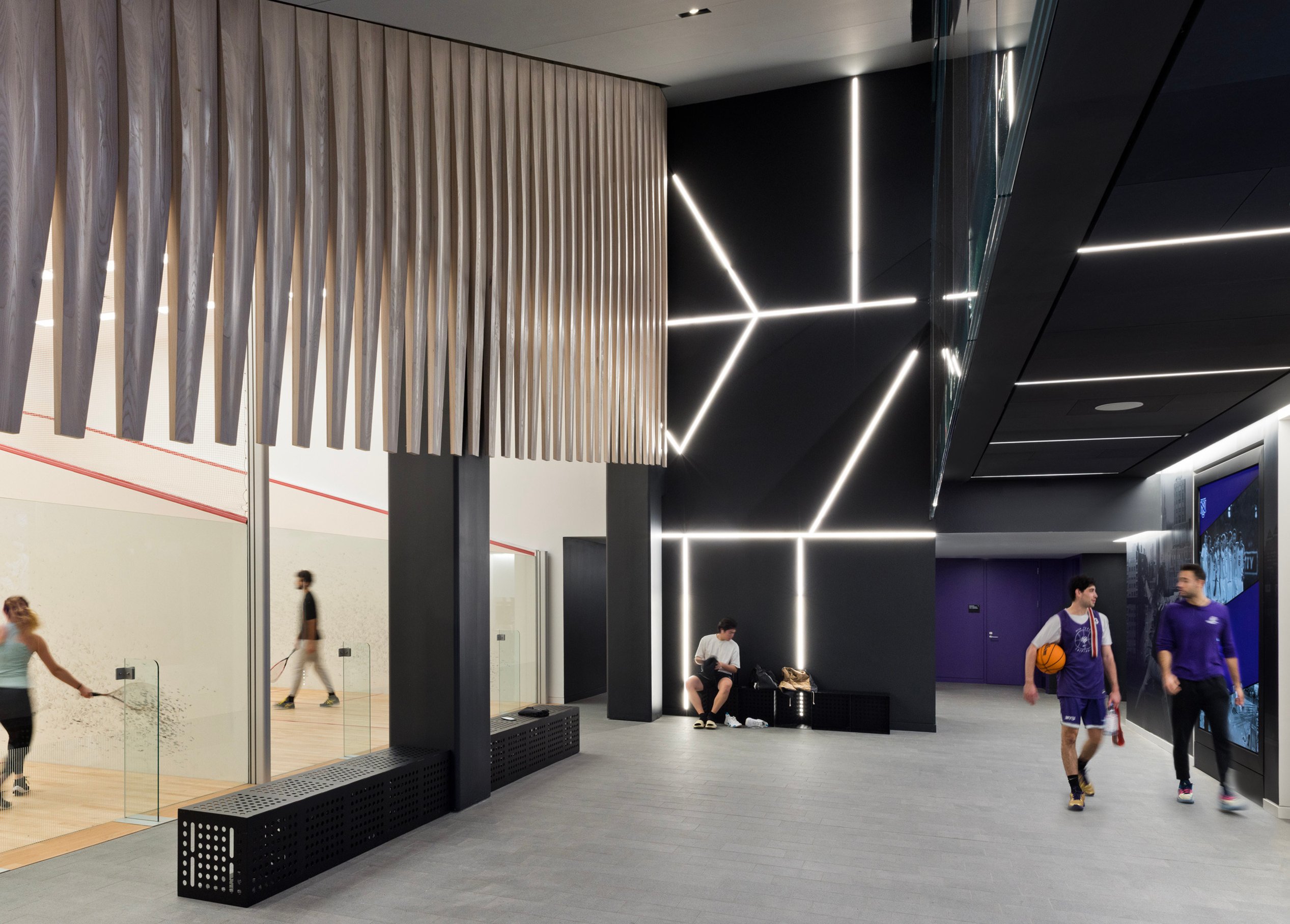
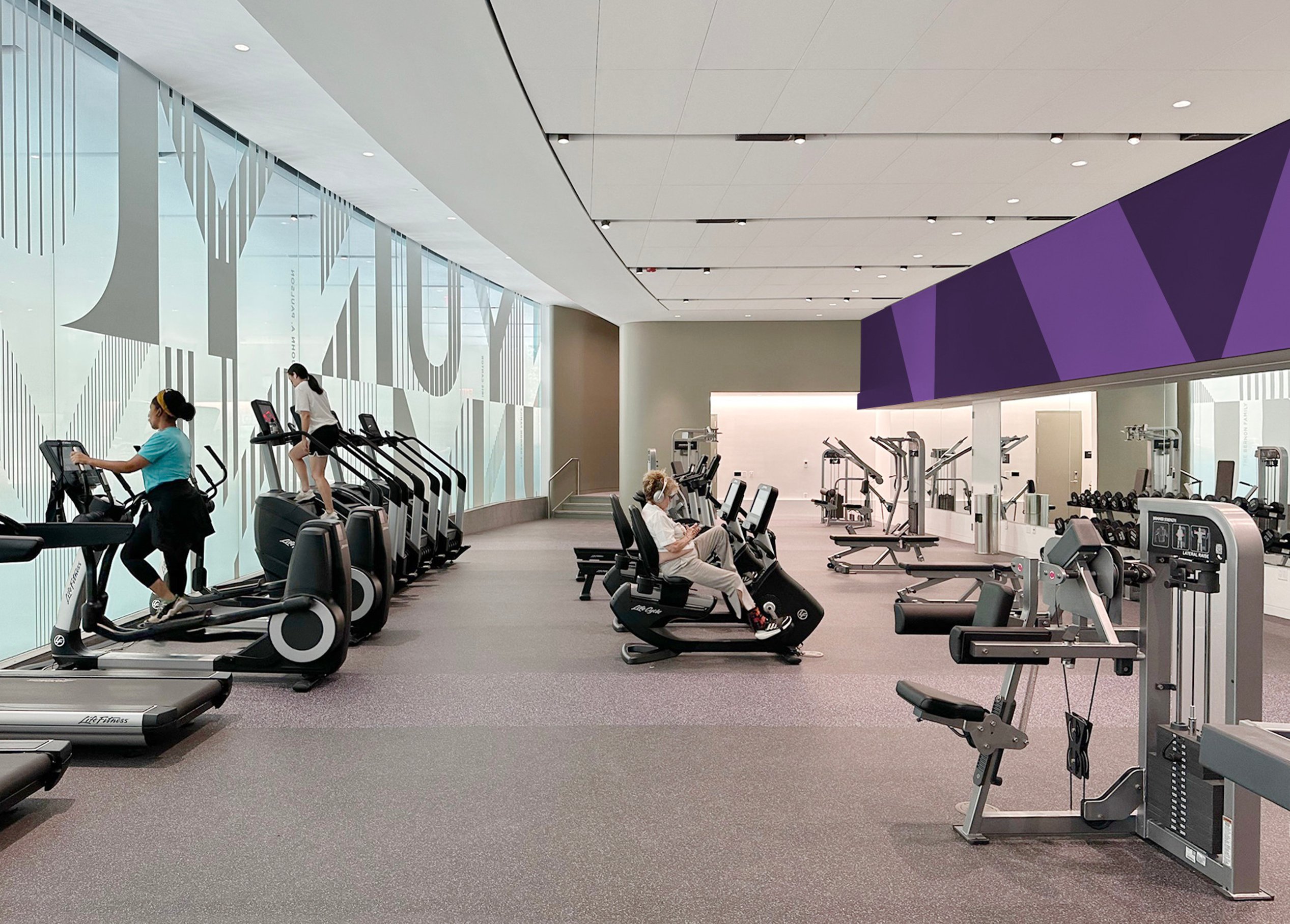
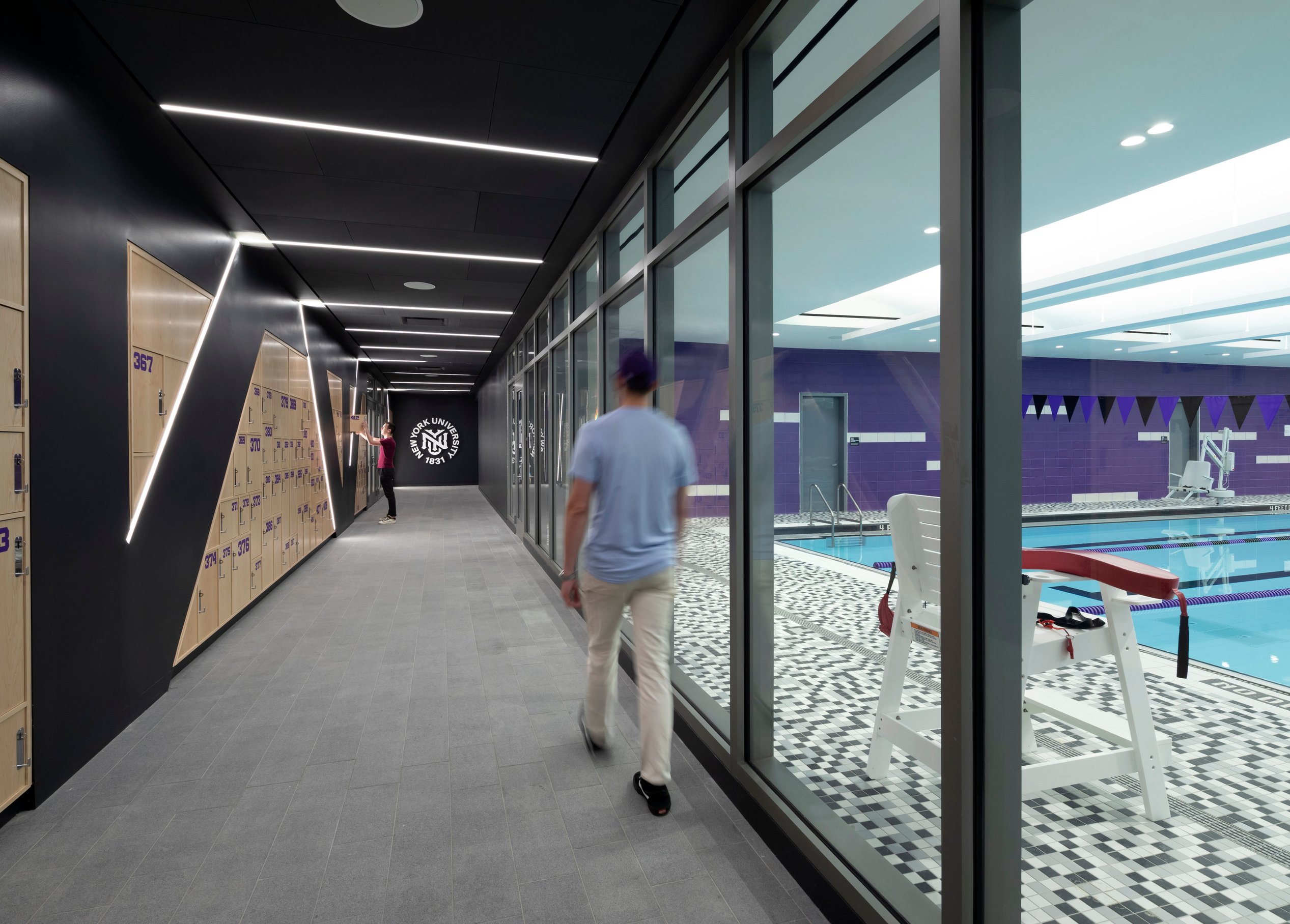
The center opened in Spring 2023 and houses the Tisch and Steinhardt performance spaces, classrooms, student and faculty housing, and top-tier athletic facilities. Each program is organized into a unique “neighborhood” connected to an open and expansive commons area for meeting, gathering, and collaborating.
Guided by best practices in sustainability and urban integration, the center aligns with NYU’s Climate Action Plan, reducing emissions and water waste while leveraging NYU’s Co-Gen plant for efficient energy use. As a vibrant campus gateway, it strengthens pedestrian flow and green spaces, reinforcing NYU’s presence in the city while shaping the future of interdisciplinary learning.
Awards
-
12024 AIA National Honor Award for Architecture
-
22024 AIA National Honor Award for Educational Facilities
-
32024 World & Architecture Design Awards, World Selection in the Most Beautiful Campuses Category, Prix Versailles
-
42024 A+ Awards, Architizer
-
52023 World Architecture Festival Higher Education & Research Highly Commended (2nd Place)
Engaging community
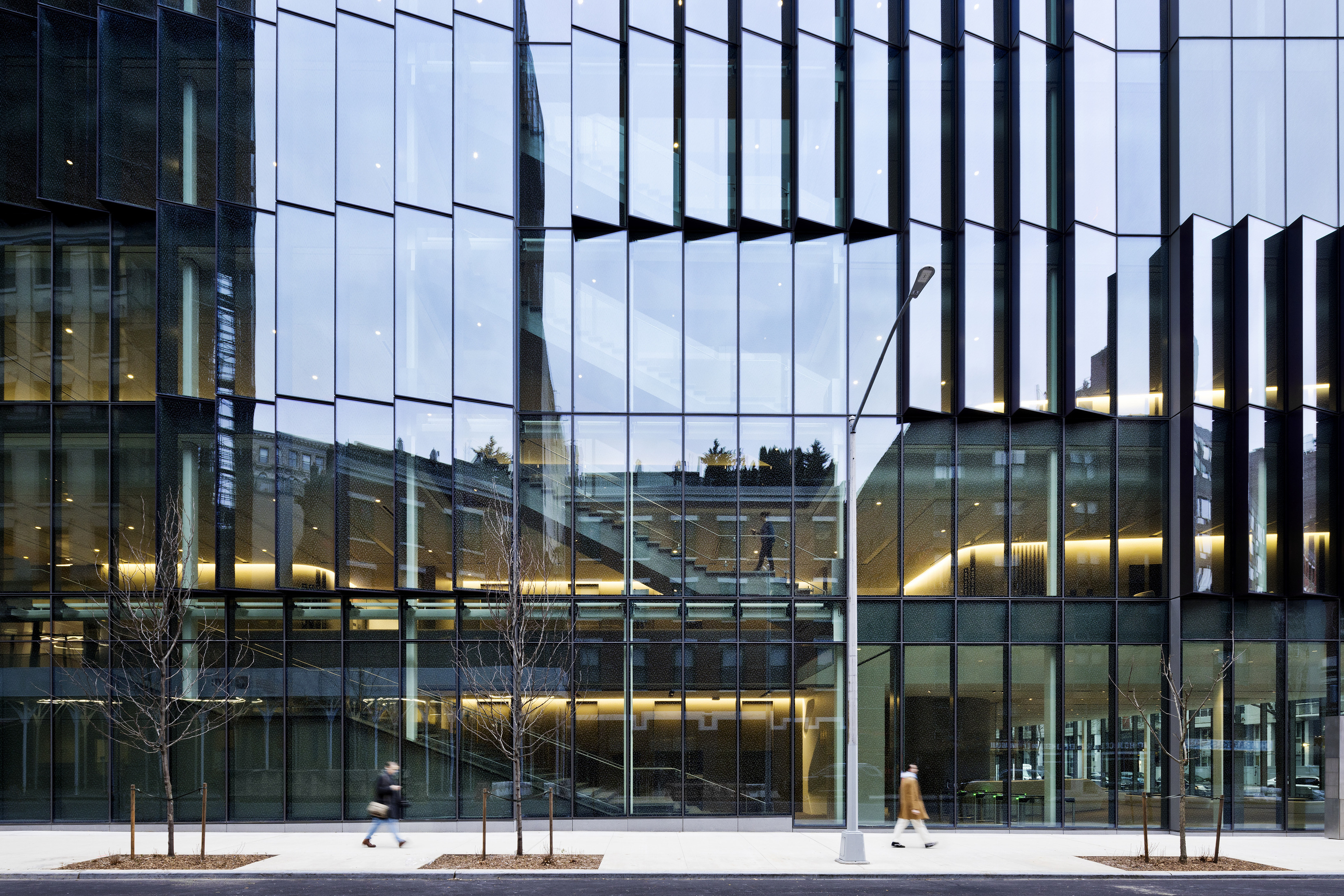
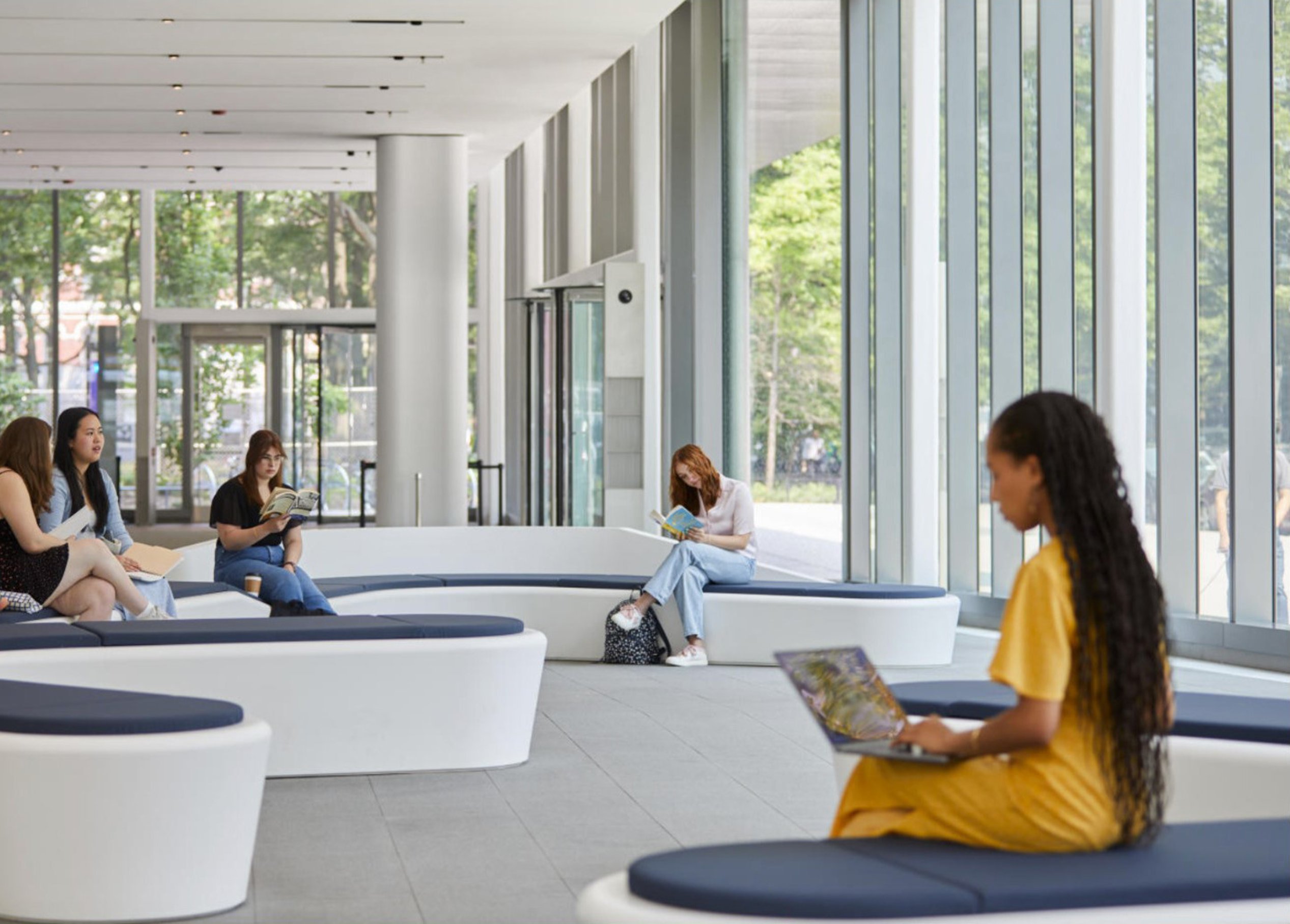
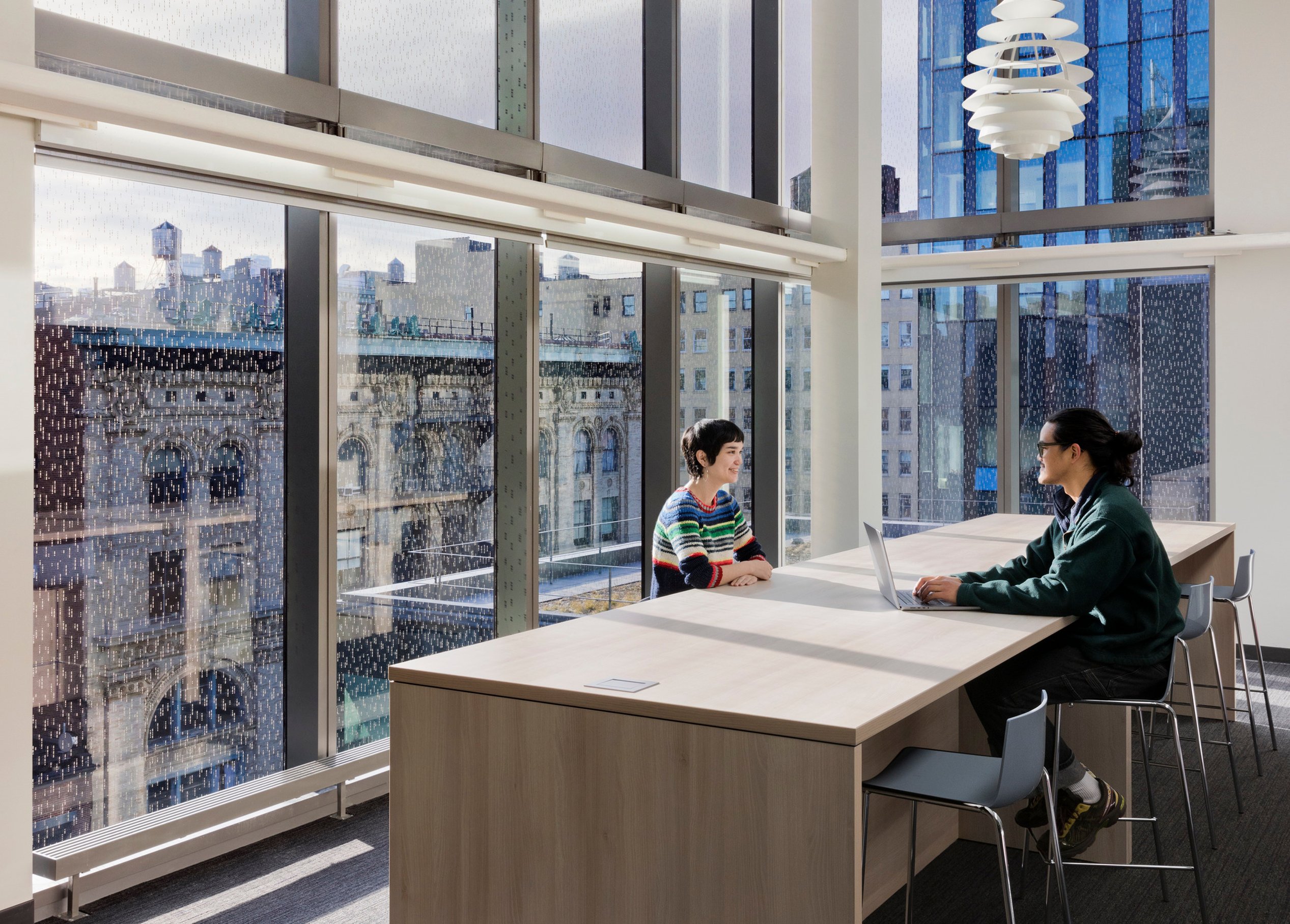
The Paulson Center has a 360-degree relationship with the surrounding neighborhood. Circulation happens around the perimeter, with classroom and instructional spaces in the center of the building. This bold transparency provides faculty and students with city views while allowing passersby to observe the building’s energy and creativity.
Academic spaces

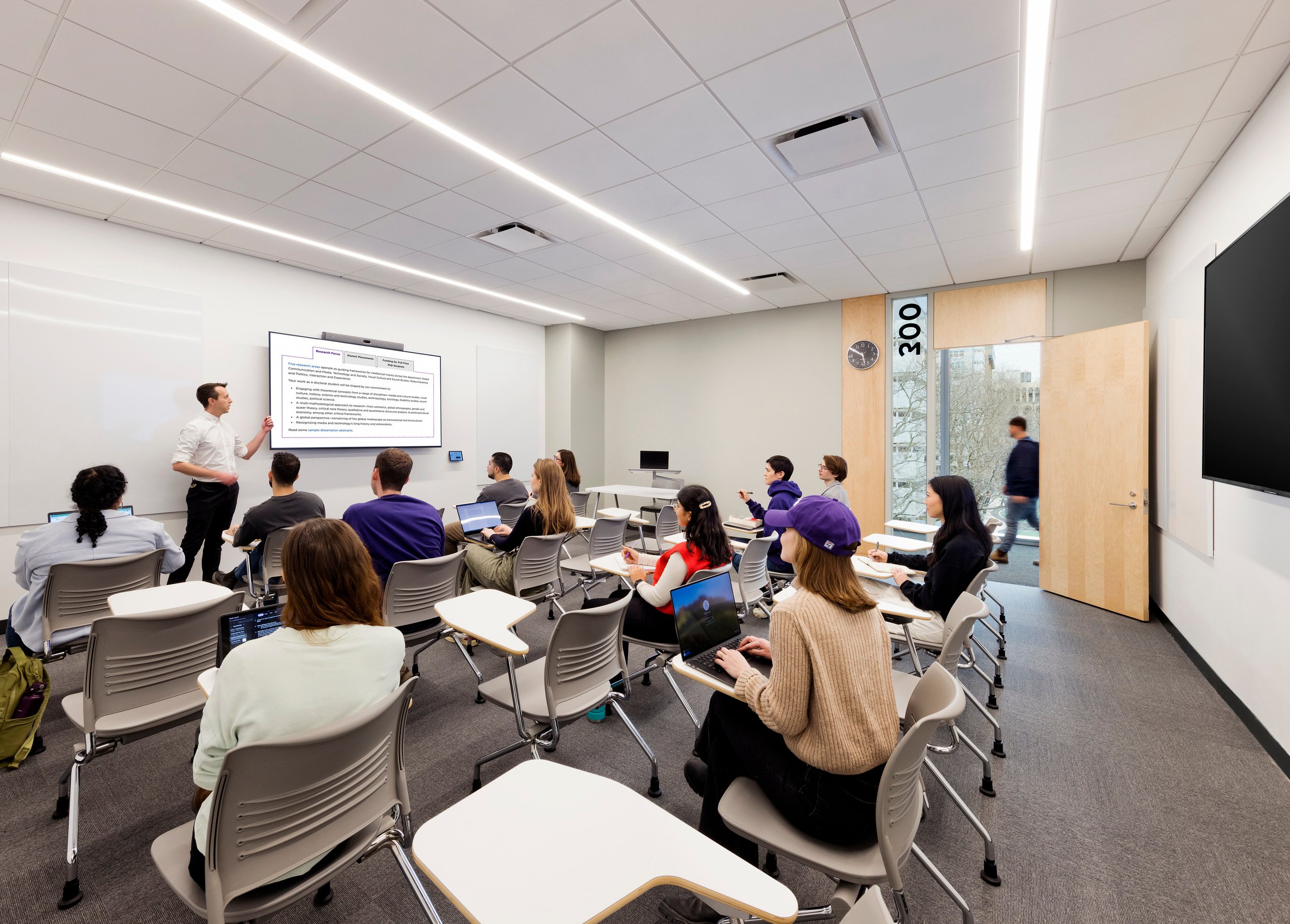
Designing contemporary academic buildings requires balancing current institutional needs with the flexibility to adapt over time. As NYU’s most classroom-dense building, the Paulson Center addresses this challenge with a modular design that accommodates evolving curriculum, pedagogy, and class sizes. To prevent common renovation complications—such as disruptions to perimeter heating, cooling, and facade integrity—classrooms are strategically located inboard of the perimeter circulation zone. Modular structural and MEP systems further enhance adaptability, ensuring that spaces evolve seamlessly with changing academic demands.
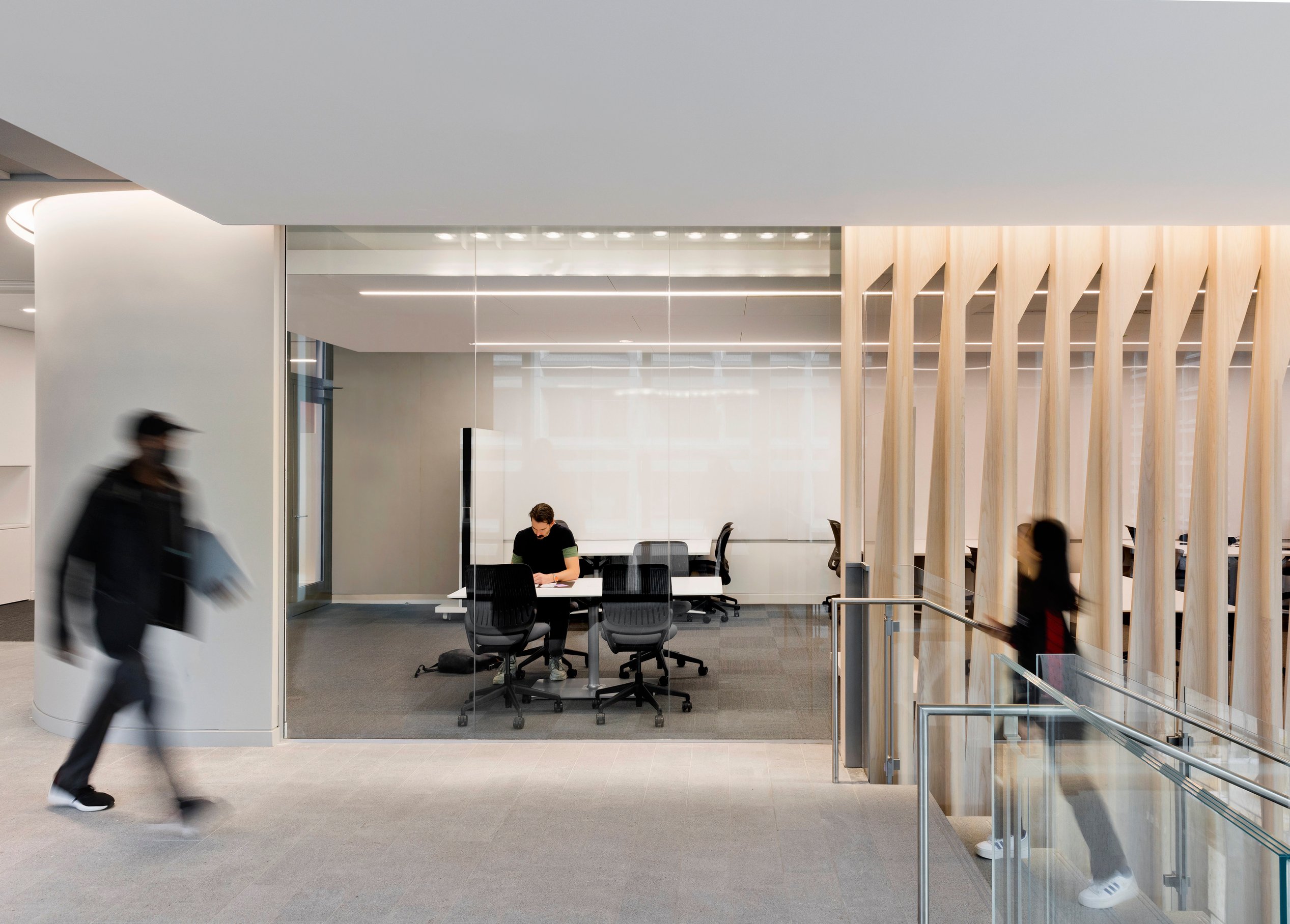
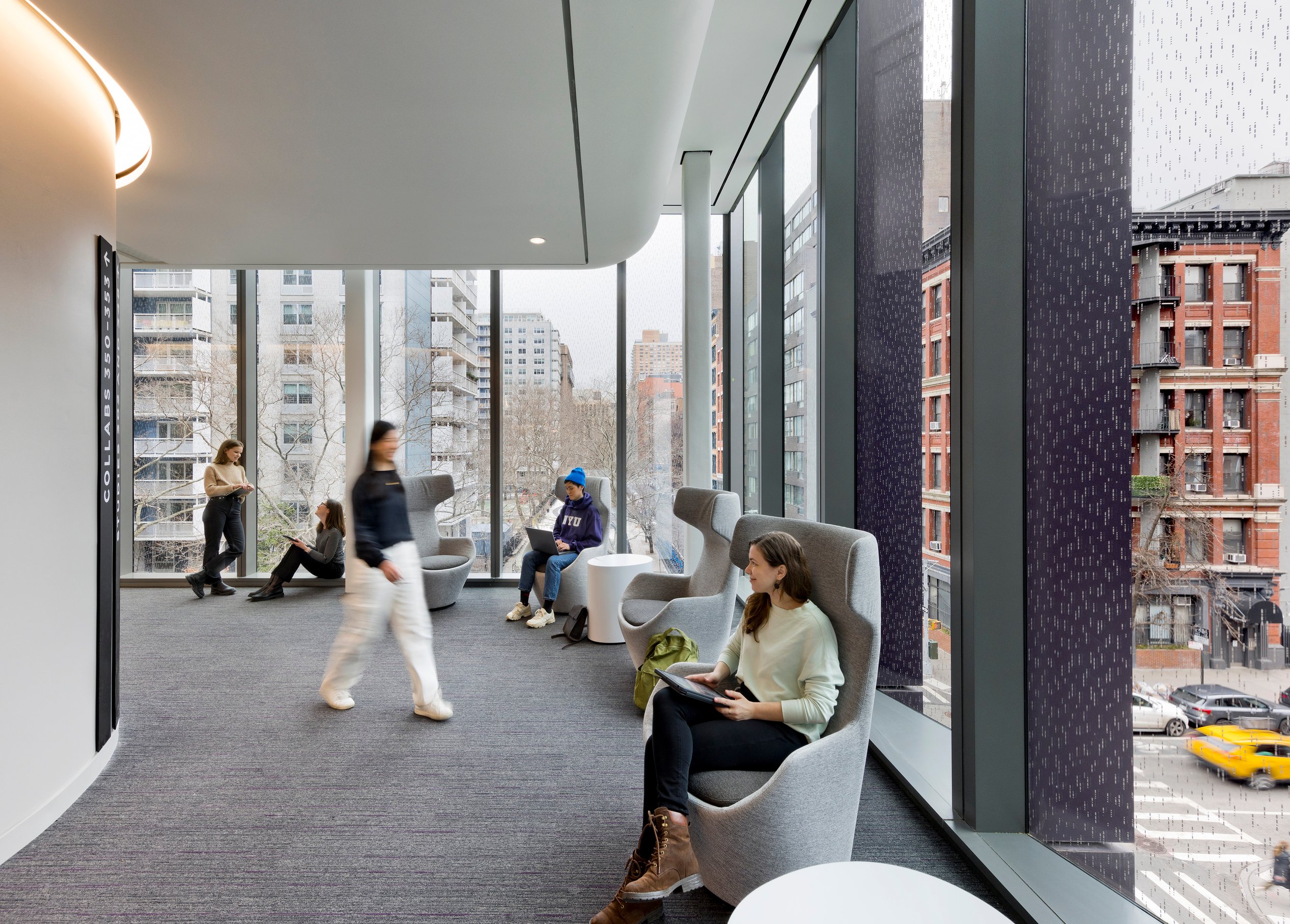
Designed for maximum flexibility, classrooms feature movable furniture, dual digital displays, and three-wall whiteboards, creating dynamic learning environments. Glazed corridors maximize daylight, while spacious halls support smooth student circulation, accommodating up to 1,100 students per hour. Beyond classrooms, the Paulson Center provides diverse, student-informed study environments: quiet study in a glass-walled, third-floor space; open study in sunlit lounges and nooks; active study near the Commons with movable whiteboards; and collaborative spaces equipped with digital displays.
By integrating adaptable classrooms with versatile study zones, the Paulson Center fosters creativity, engagement, and discovery—setting a new standard for academic excellence at NYU.

/
Student life
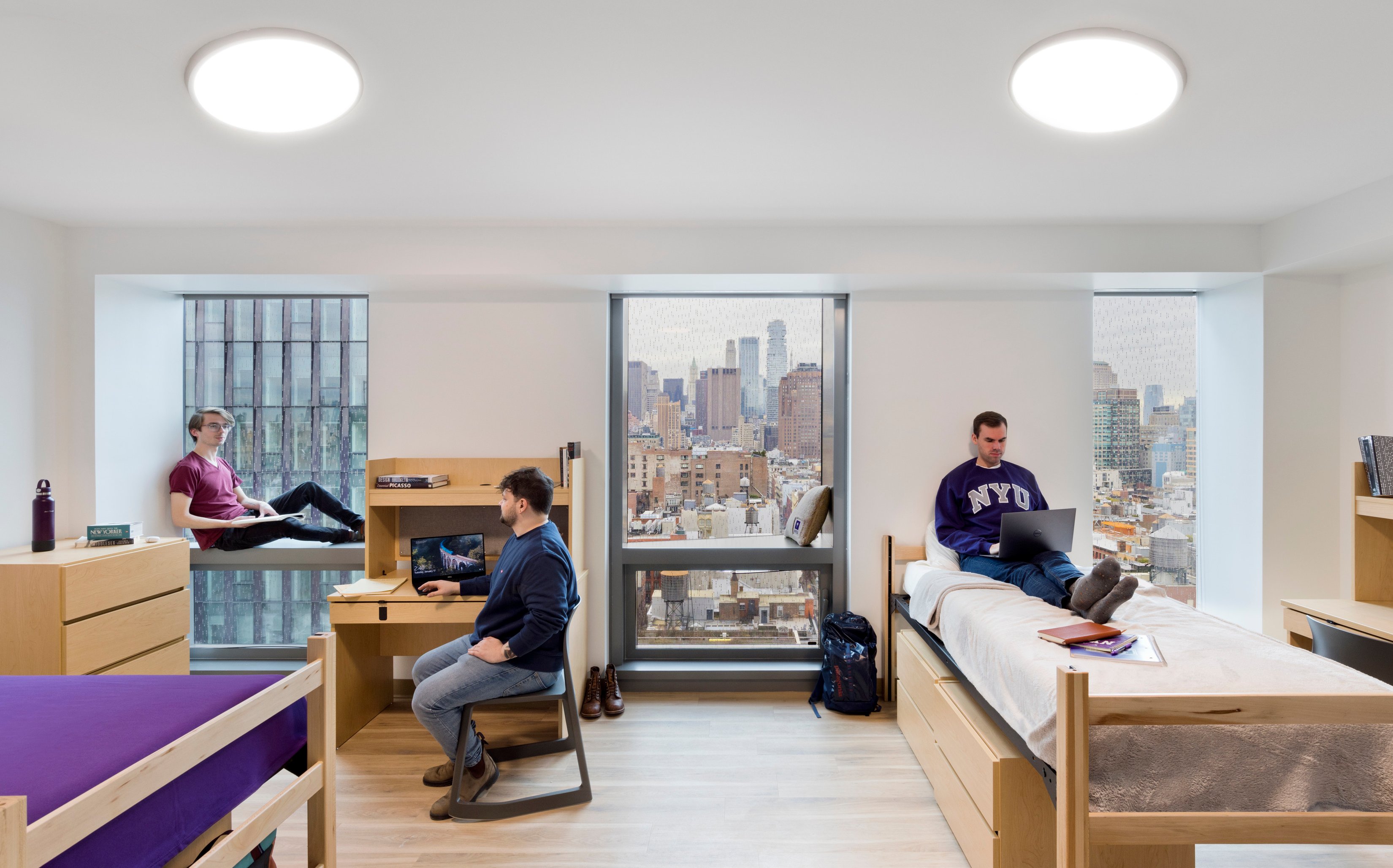
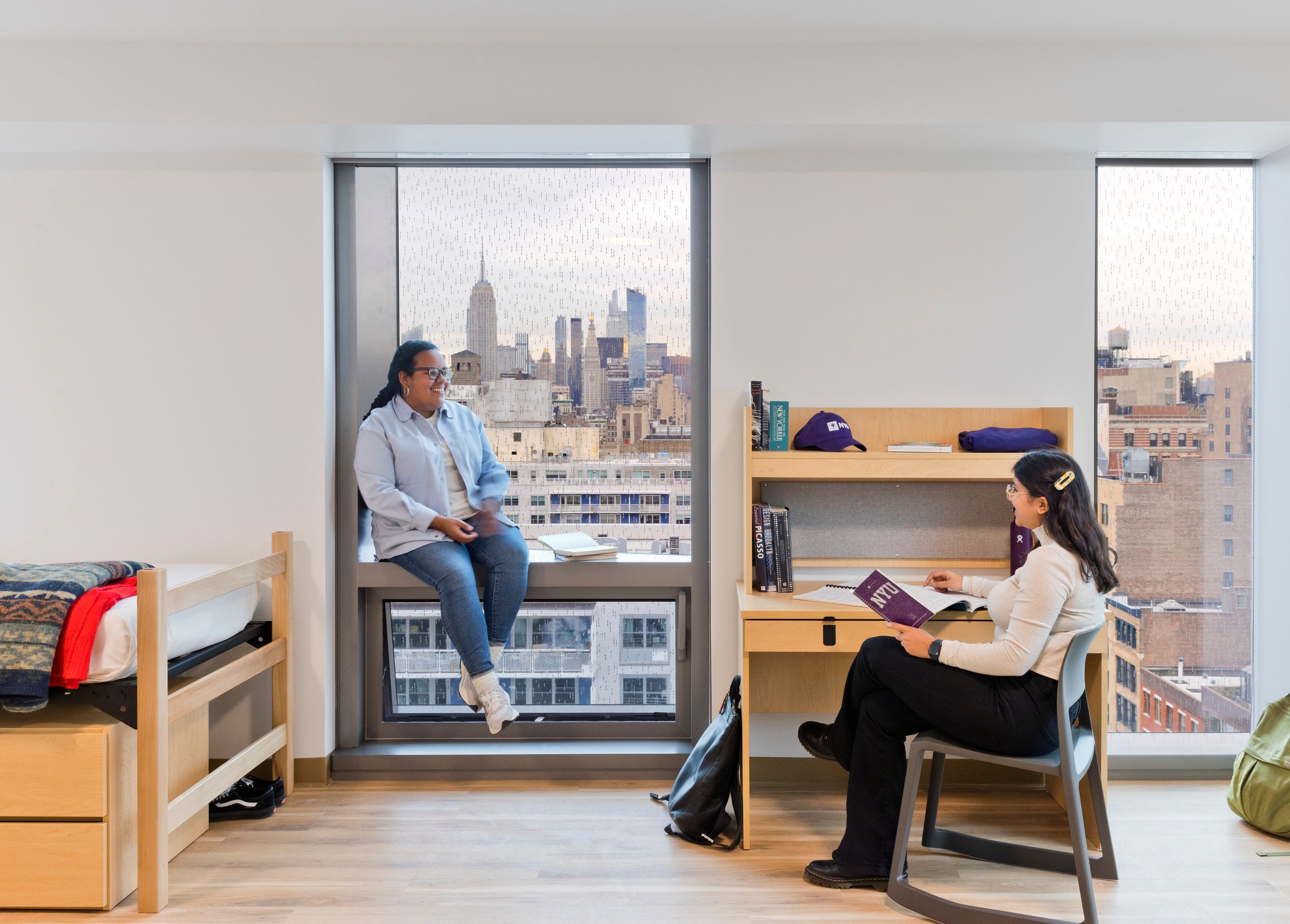
Located in Greenwich Village, this first-year residence hall fosters a dynamic, diverse community of 400 students. Supported by 15 resident assistants and three full-time staff members, it offers a vibrant living-learning environment, encouraging connections, academic growth, and personal development in the heart of NYU’s campus.
The Paulson Center’s student housing program enhances the freshman experience with two new residential towers, housing two freshman residential colleges. Secure, accessible public spaces encourage connection through academic, athletic, recreational, and cultural programming.
Key features include:
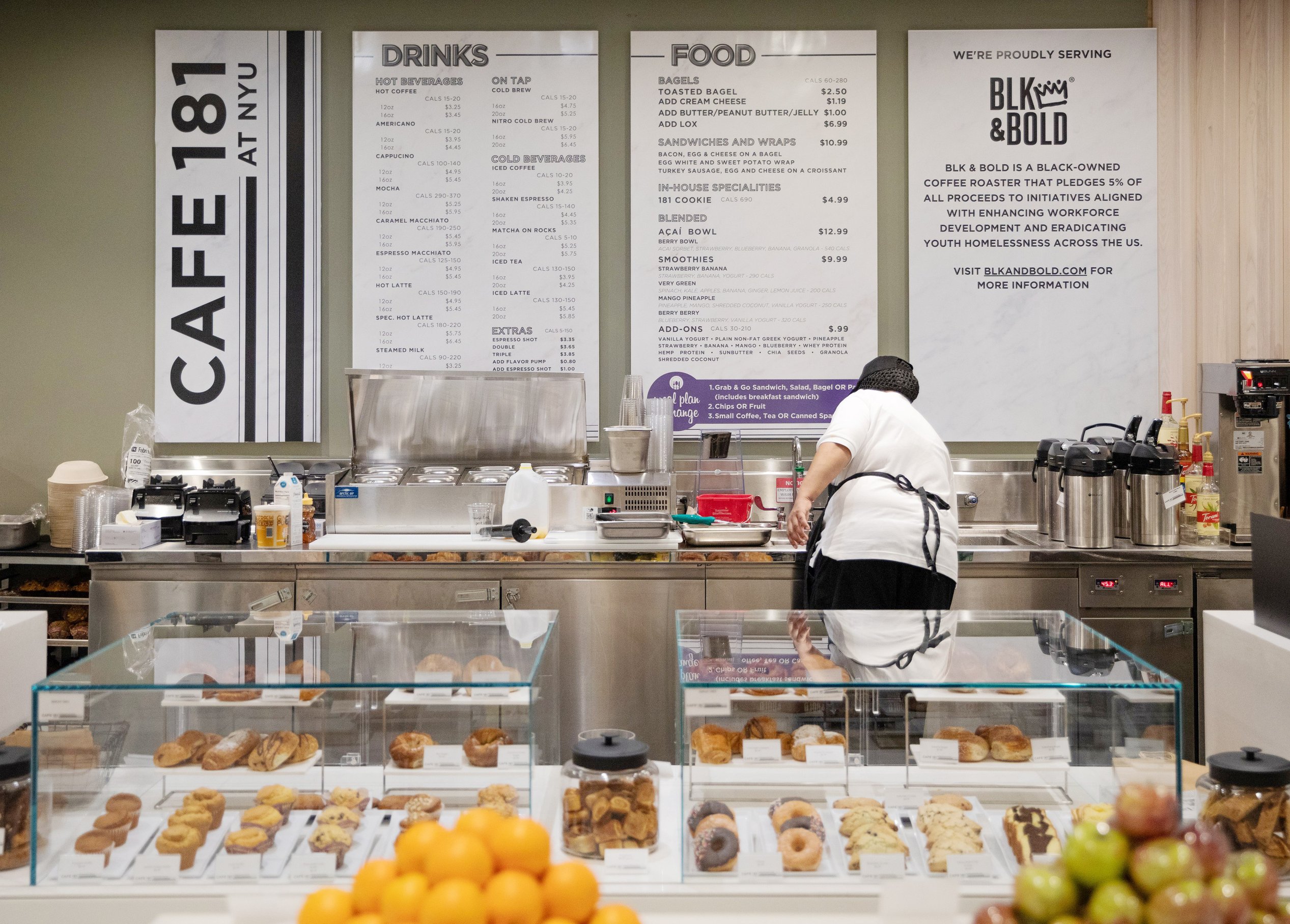
Sky Lobby & Café: A sixth-floor transition space open to students and faculty, serving as the primary housing access point.
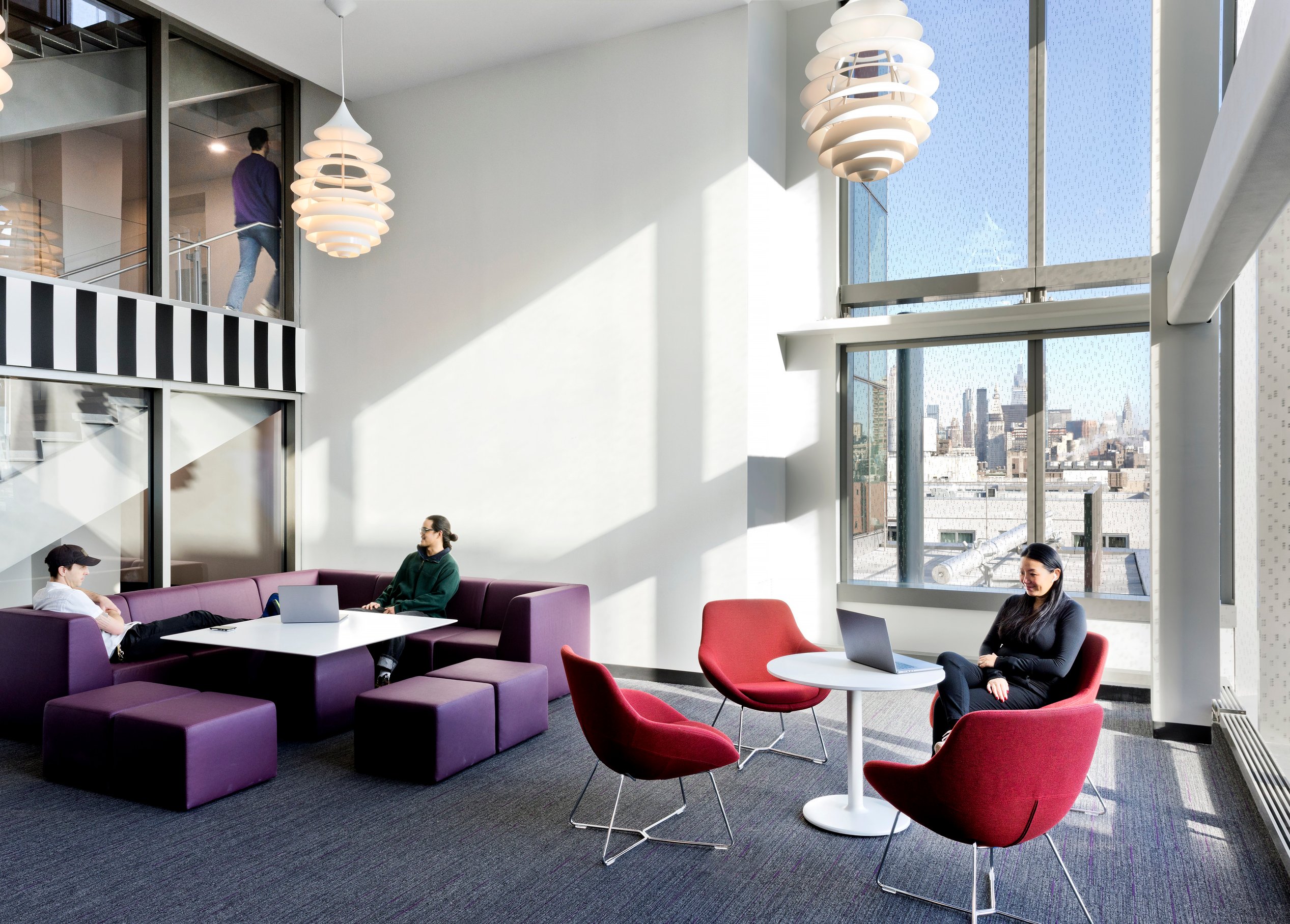
All Residential College Lounge: A two-story, multifunctional gathering space shared by both residential colleges, fostering community.
Suite living: Housing 407 first-year students and 18 resident advisors, the residence hall offers single, double, and triple-bedroom suites. Each college includes a faculty and staff apartment.
Window benches: The building’s distinctive wedge panels create built-in seating in student rooms.
Study & social spaces: Small and medium-sized rooms for quiet study, seminars, and social gatherings are integrated throughout the building.
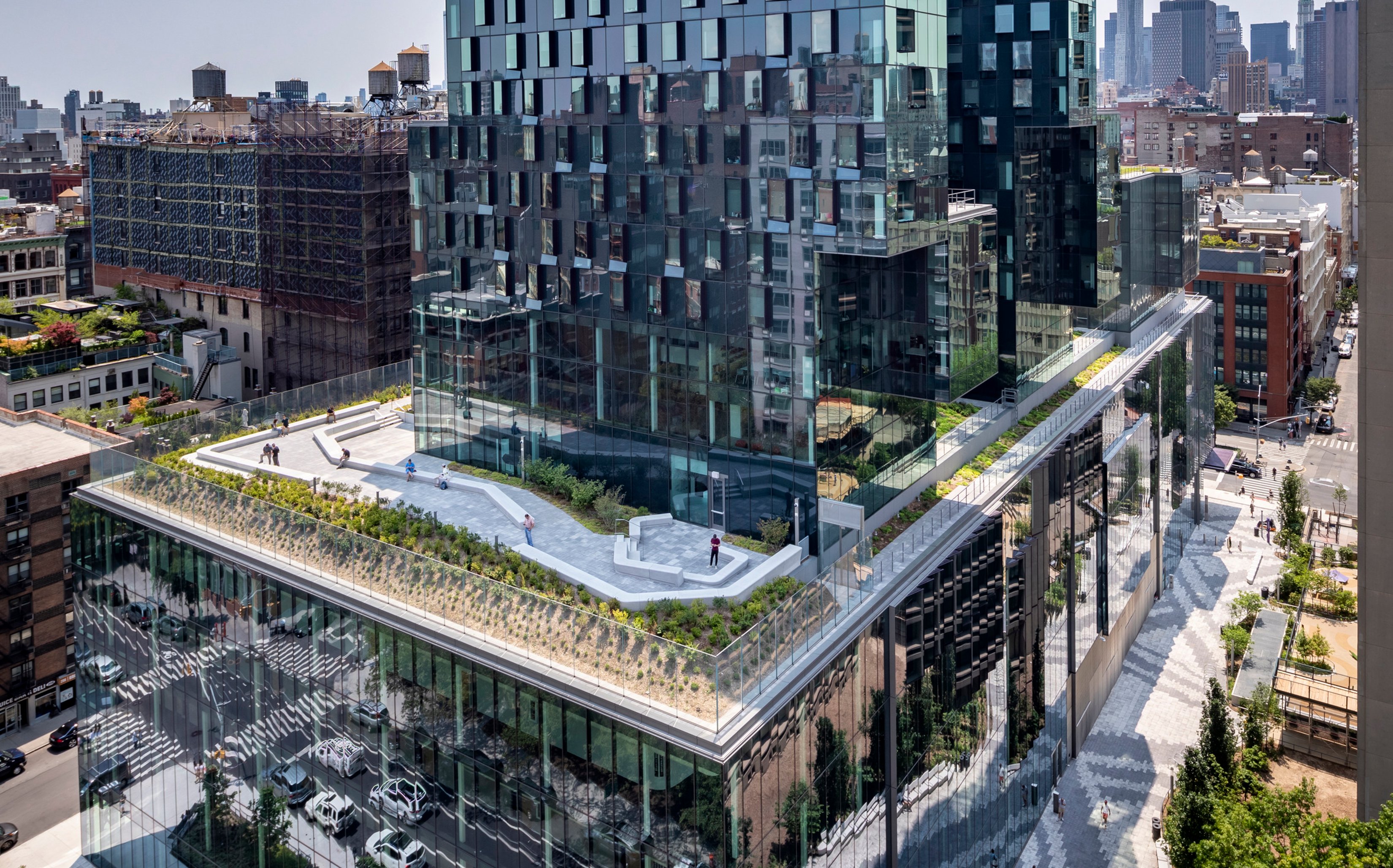
Terrace & green roof: A landscaped sixth-floor terrace provides an outdoor retreat for students and faculty.
By blending living, learning, and social spaces, the Paulson Center’s housing program creates a dynamic residential experience that supports student engagement and community building.

/
Performing arts
Photography by Connie Zhou
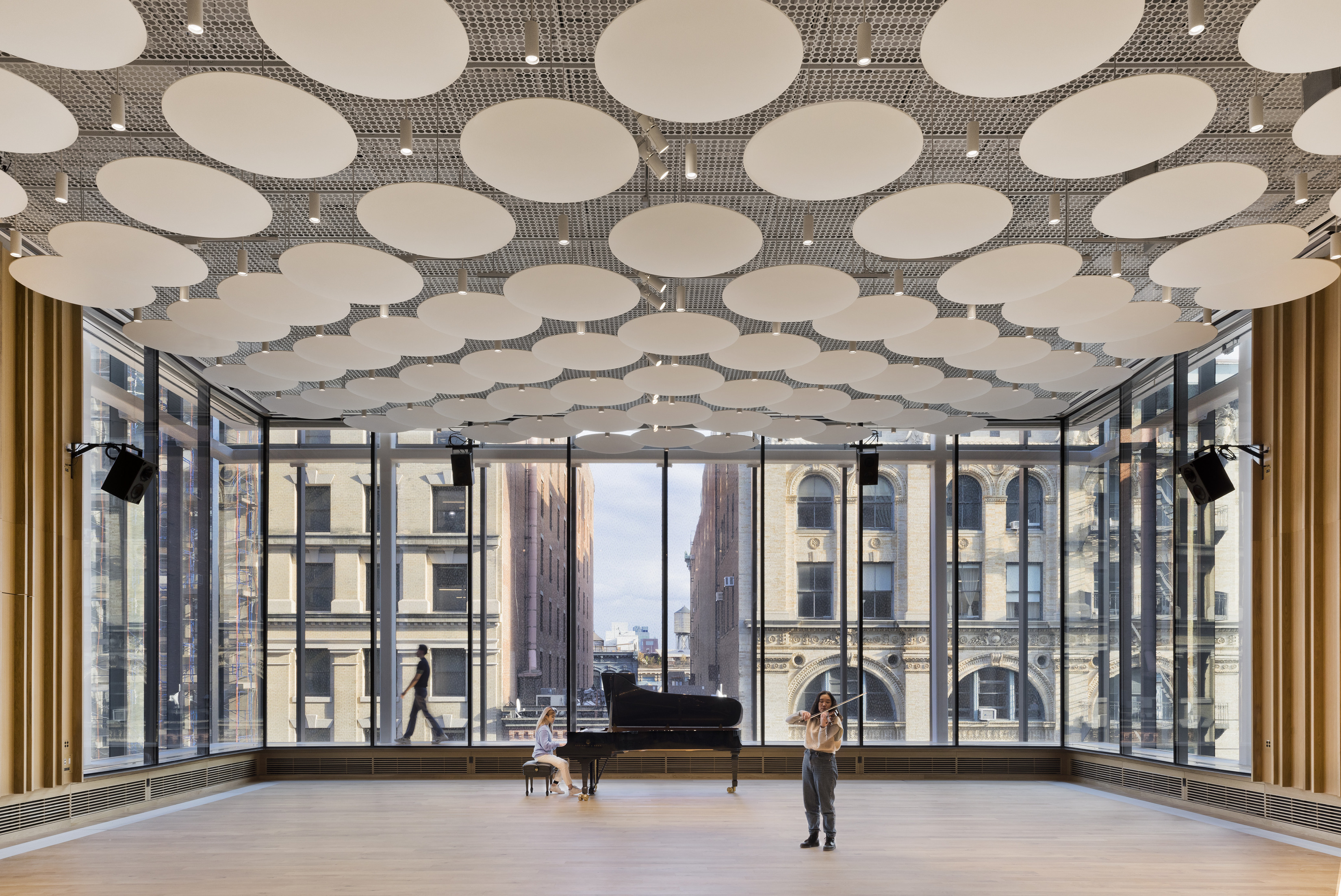
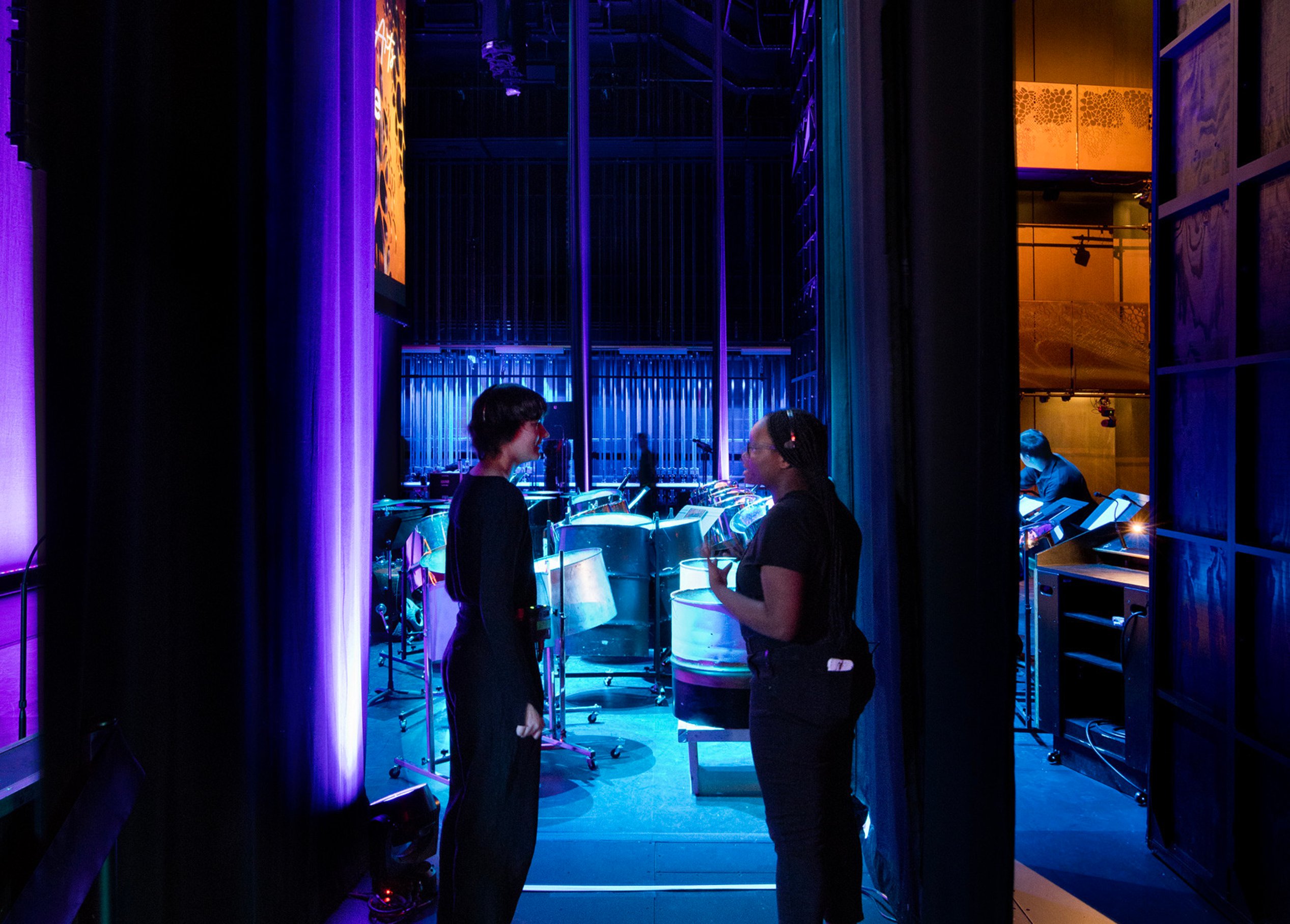
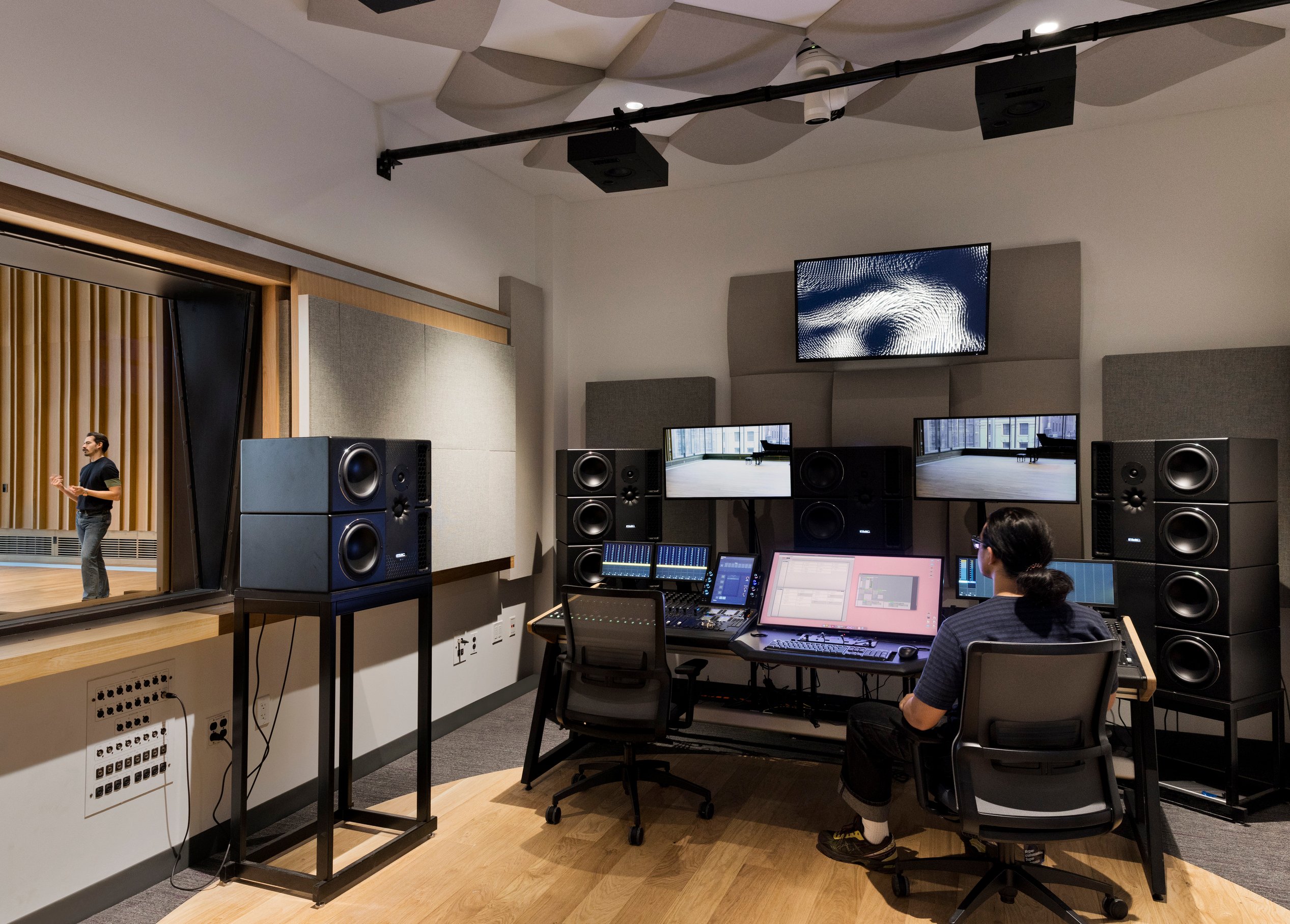
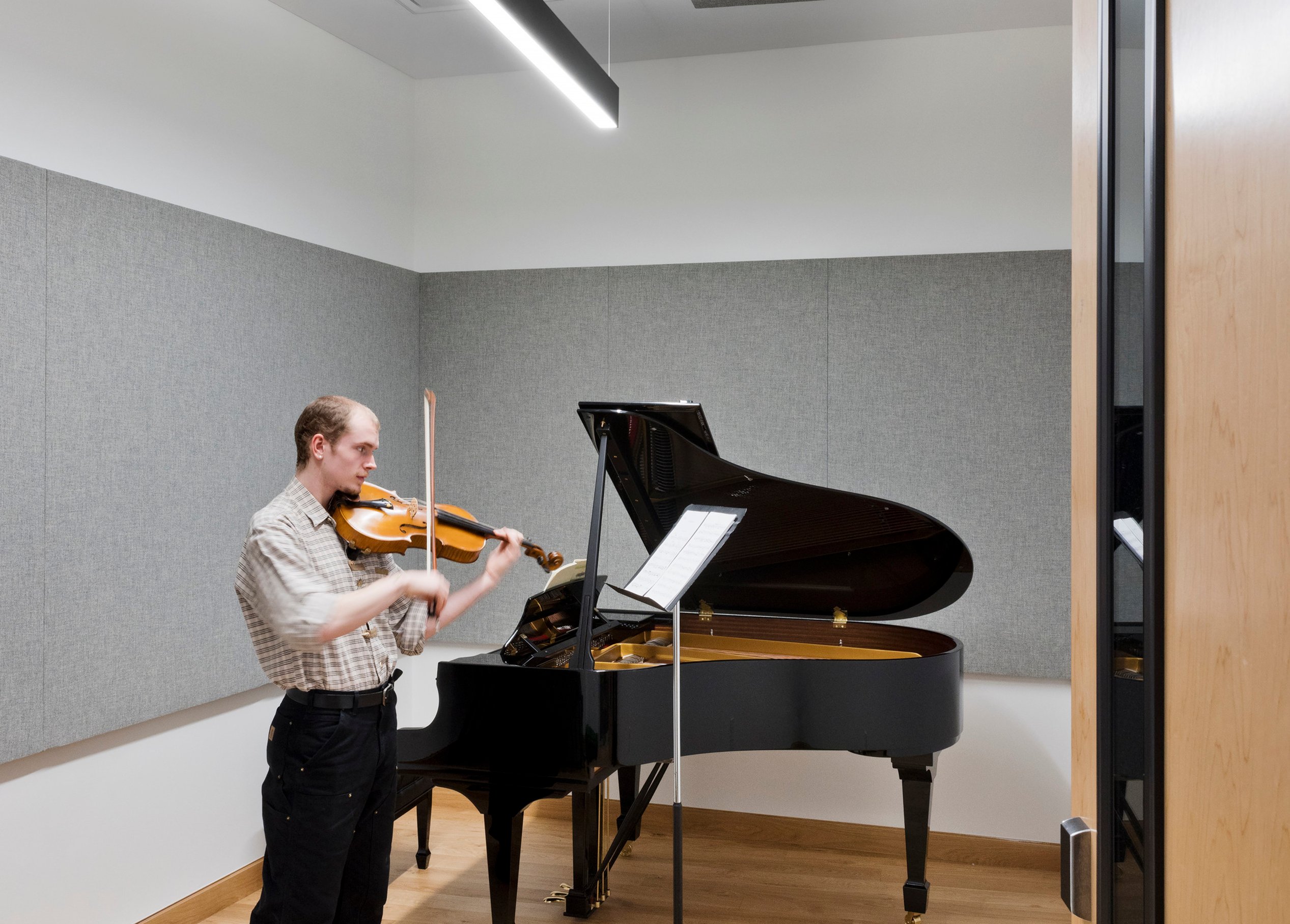
The Tisch School of the Arts and the Steinhardt Department of Music occupy 210,000 square feet within the Paulson Center, offering state-of-the-art spaces designed to support NYU’s drama and music programs. With a focus on flexibility, innovation, and inclusivity, the center provides premier venues for performance, rehearsal, and instruction.
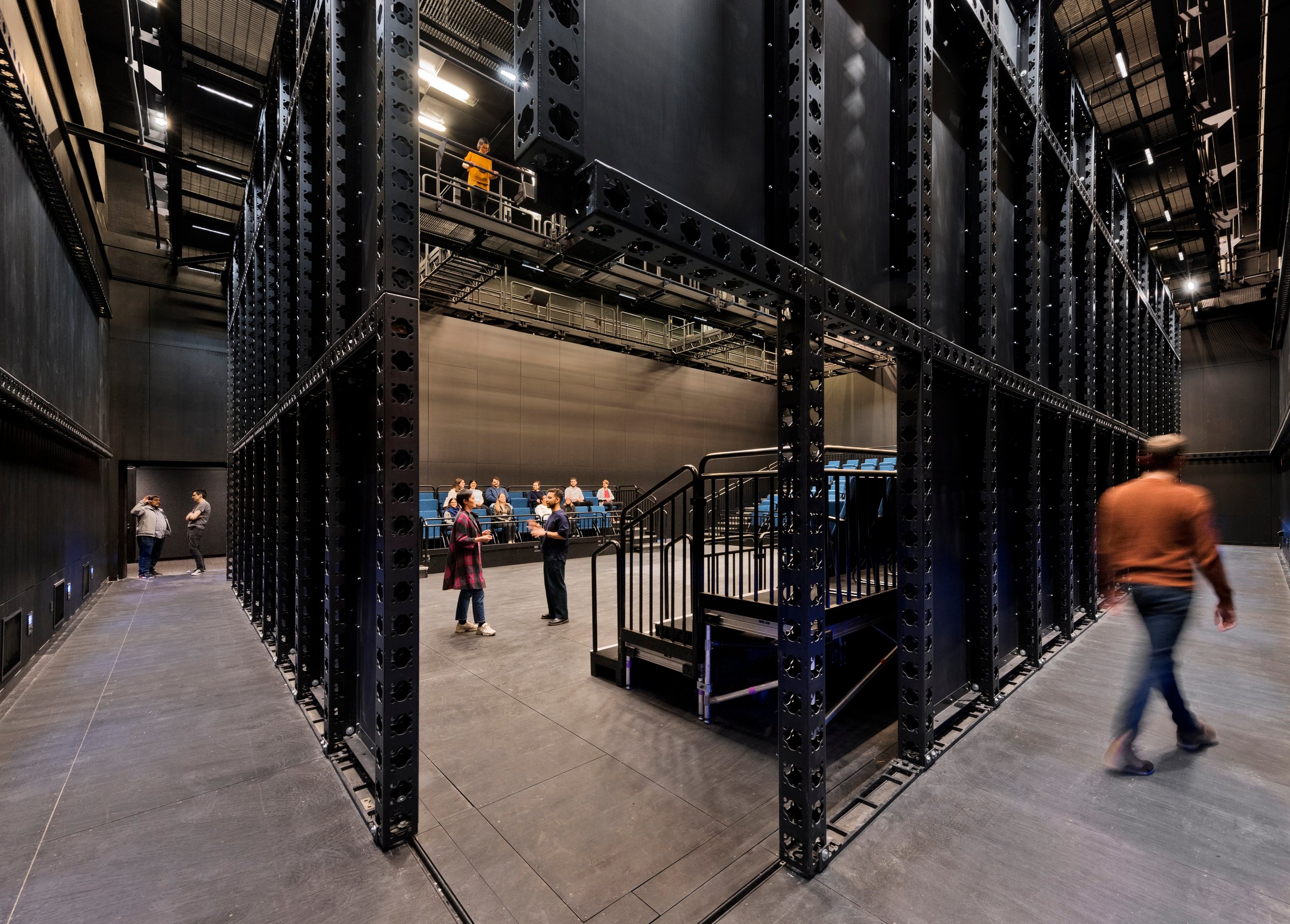
At the heart of the performing arts spaces is the Iris Cantor Proscenium Theatre, NYU’s first professional-level proscenium venue. Designed for diverse performances, it features 350 seats across three levels, a fly tower, an orchestra shell, a control booth, and an adjustable orchestra lift for flexible configurations. Complementing this is the Warehouse Theatre, a 140-seat experimental space for Tisch graduate students with a reconfigurable Mod-truss wall system and movable catwalk trolleys. The African Grove Theatre, named in honor of America’s first Black theater, provides a 140-seat end-stage venue with flexible seating for experimental performances and motorized stage rigging.
Beyond performance venues, the Ensemble Rehearsal Room offers an acoustically advanced space with double-glazed walls for city views and sound isolation, along with adjustable acoustic banners. Additional spaces include two cabaret studios, three dance studios, 58 music practice rooms, a large ensemble classroom, woodshops, wardrobe rooms, and dedicated music instruction spaces.
Photography by Connie Zhou

/
Academic neighborhoods
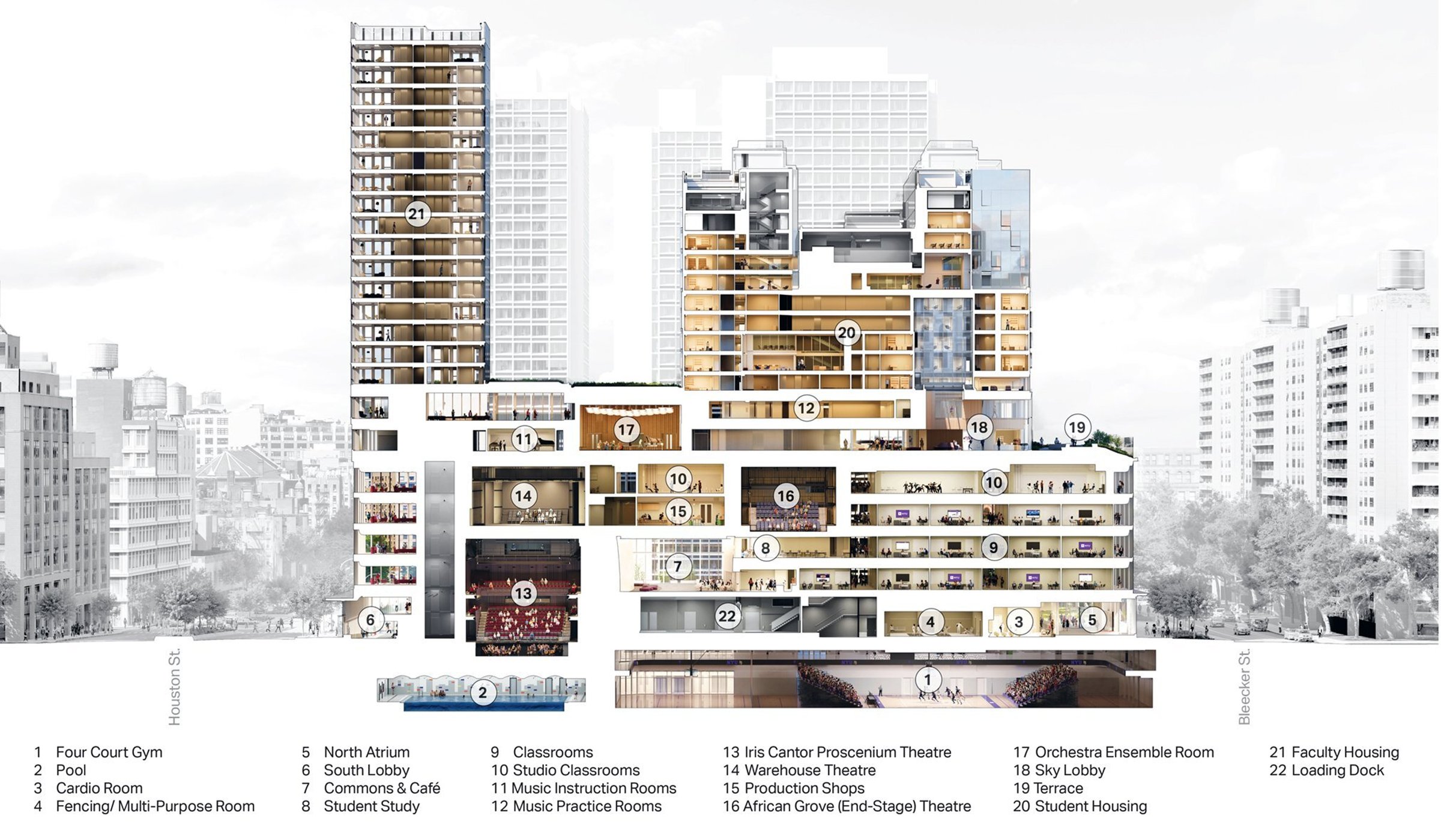
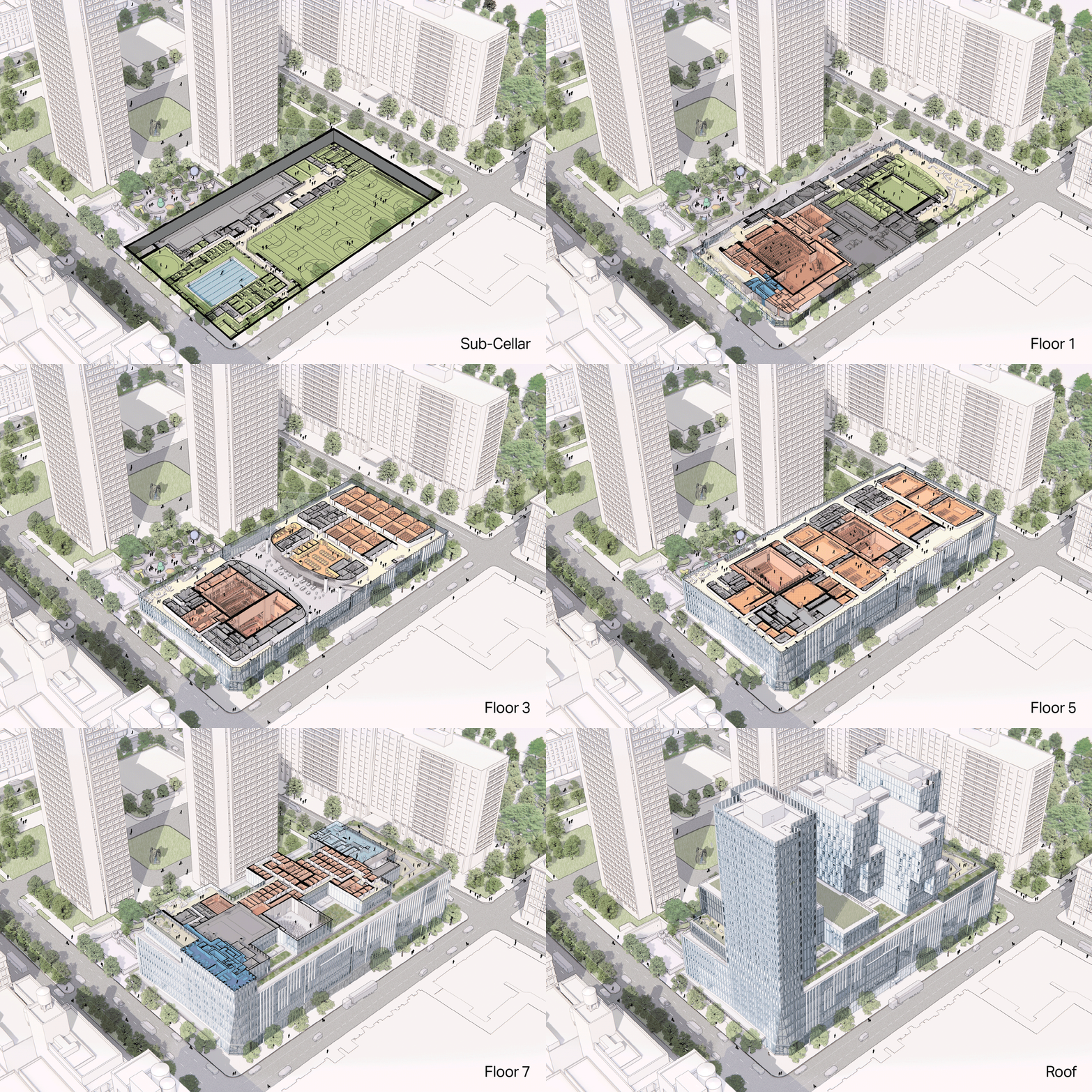
This axonometric diagram at Houston and Mercer highlights the Paulson Center’s distinct programmatic “neighborhoods”: athletics (green) in the sub-cellar, performing arts (salmon) and classrooms (orange) in the middle levels, and student (light blue) and faculty (medium blue) housing above. Commons and circulation spaces (pale yellow) connect these dynamic areas.
Sustainability
Advancing NYU’s 2040 carbon neutrality goal through sustainable innovation
The John A. Paulson Center embodies NYU’s Climate Action Plan, targeting LEED Gold certification. Designed for efficiency, it expands NYU’s Co-Generation plant, reduces carbon emissions, and integrates bird-friendly fritted glass. Green roofs minimize stormwater runoff, while air quality is enhanced through strict material selection, filtration, and sustainable maintenance practices.
Project coordination
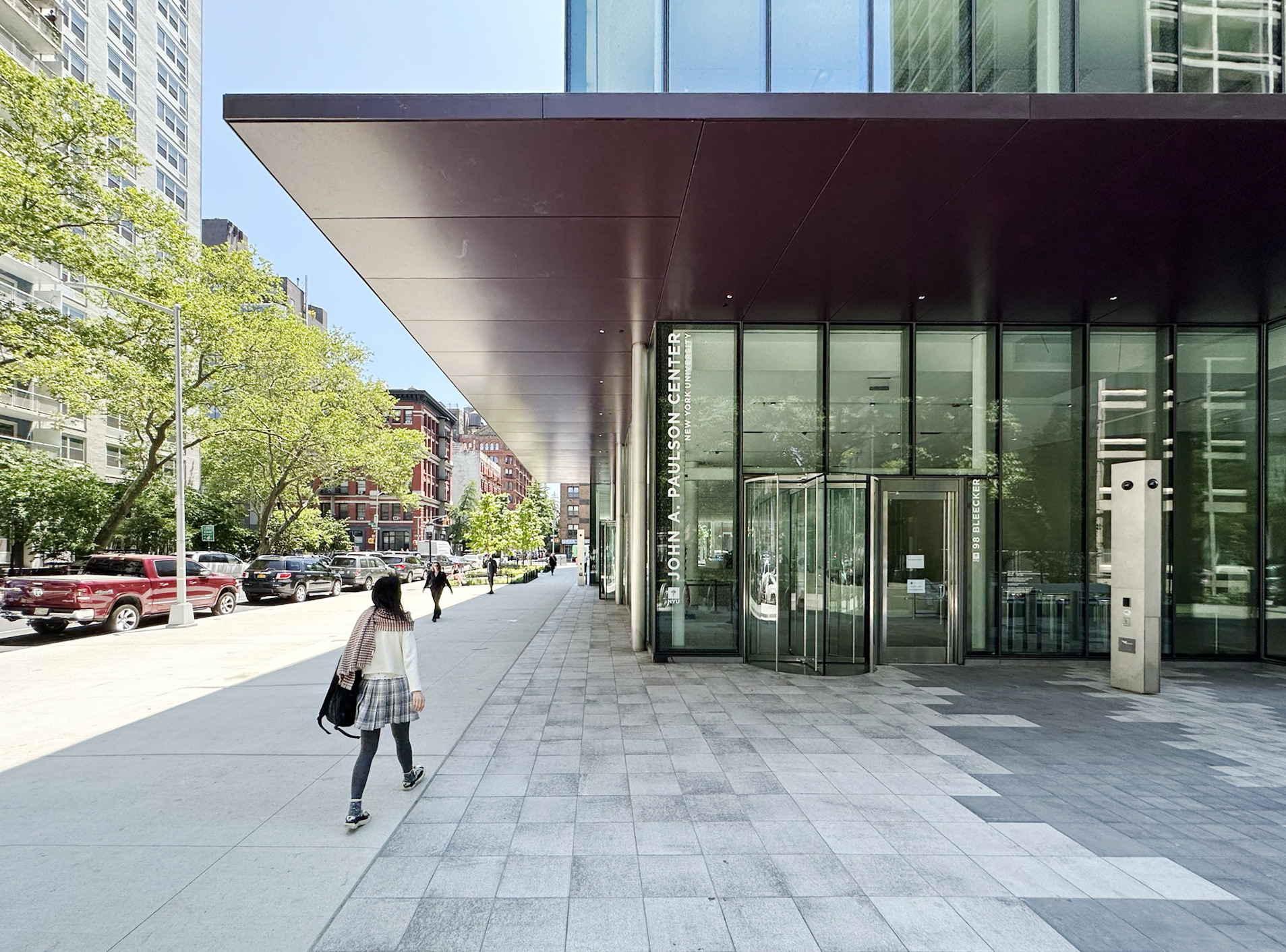
A gateway to connection and greenery
Positioned at the southern edge of campus, the new building creates a welcoming gateway, featuring enhanced green pedestrian pathways that seamlessly weave through the dense urban environment, reinforcing the school's commitment to connectivity and sustainability
The NYU Paulson Center is a dynamic addition to Greenwich Village, requiring close collaboration with the New York City Department of City Planning and approvals through the Uniform Land Use Review Procedure (ULURP). Given its high-profile location, the planning process prioritized meaningful community engagement from the outset, ensuring that local voices helped shape the project.
Designed to blend seamlessly into its historic surroundings while delivering leading-edge academic, athletic, and residential spaces, the Paulson Center reflects a thoughtful approach to urban development. Every stage—from vision to execution—balanced the needs of NYU, city planners, and the Greenwich Village community. By fostering an open dialogue and integrating feedback, the project not only met regulatory requirements but also reinforced its role as a carefully considered extension of the neighborhood.
A gateway to connection and greenery
Positioned at the southern edge of campus, the new building creates a welcoming gateway, featuring enhanced green pedestrian pathways that seamlessly weave through the dense urban environment, reinforcing the school's commitment to connectivity and sustainability

Similar projects

/

Talk with us
Complex challenges need fresh perspectives and deep expertise. Connect with our team to explore how we can help you create spaces that make a real difference.