
Theodore Levin U.S. Courthouse
Completed in 1934 and occupying an entire city block, the Theodore Levin U.S. Courthouse stands as a testament to Detroit architect Robert O. Derrick's interpretation of the Classical Modern Style. Its design balances tradition with the verticality, simplicity, and the streamlined qualities of Moderne architecture. Originally serving as Detroit’s main post office and housing seven federal courtrooms, the building evolved over time to meet the growing needs of the judiciary.
As the number of courtrooms expanded to 26, the courthouse faced challenges in circulation, security, and life safety. Additionally, its aging infrastructure, with systems well past their expected lifespan, underscored the need for thoughtful modernization.
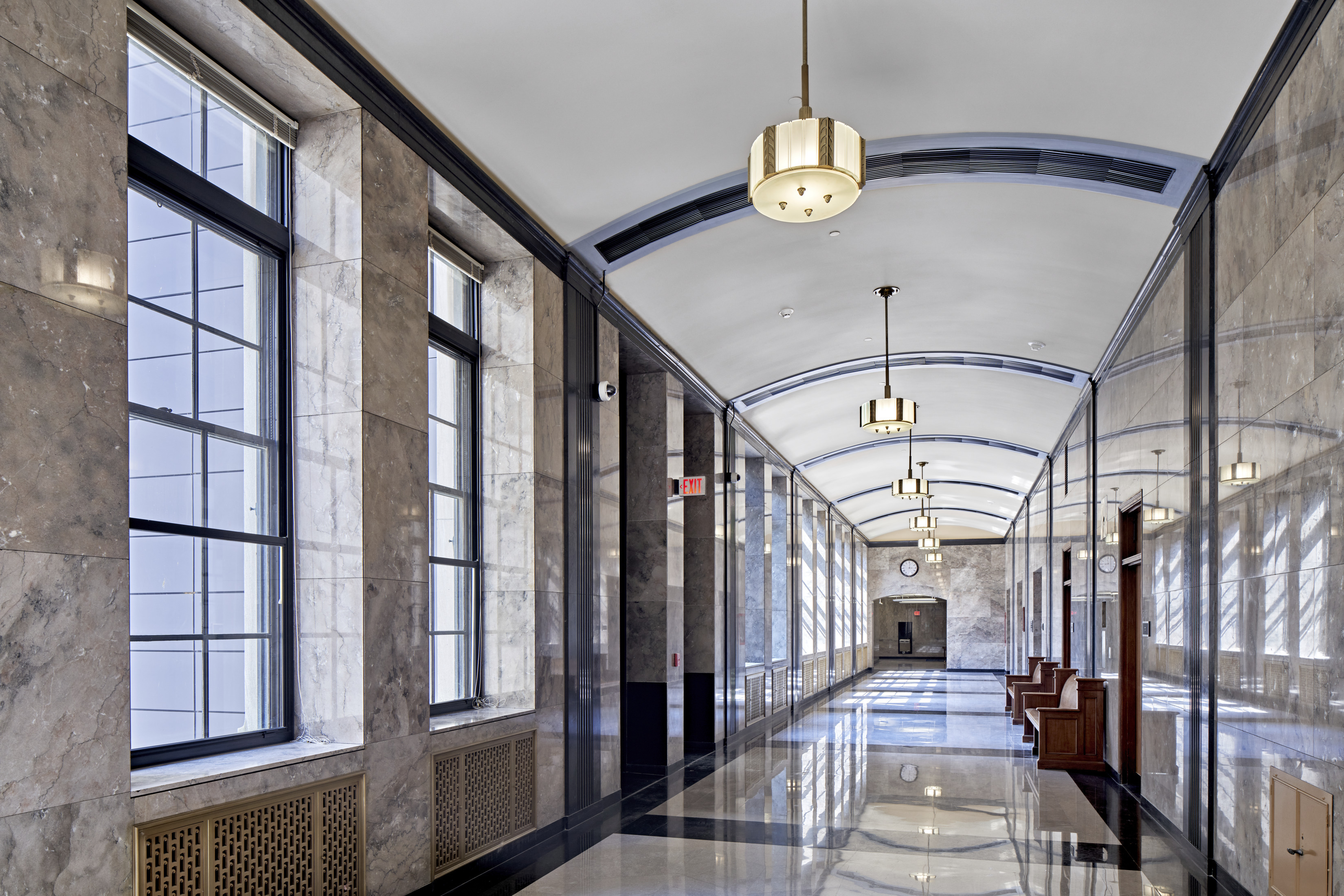
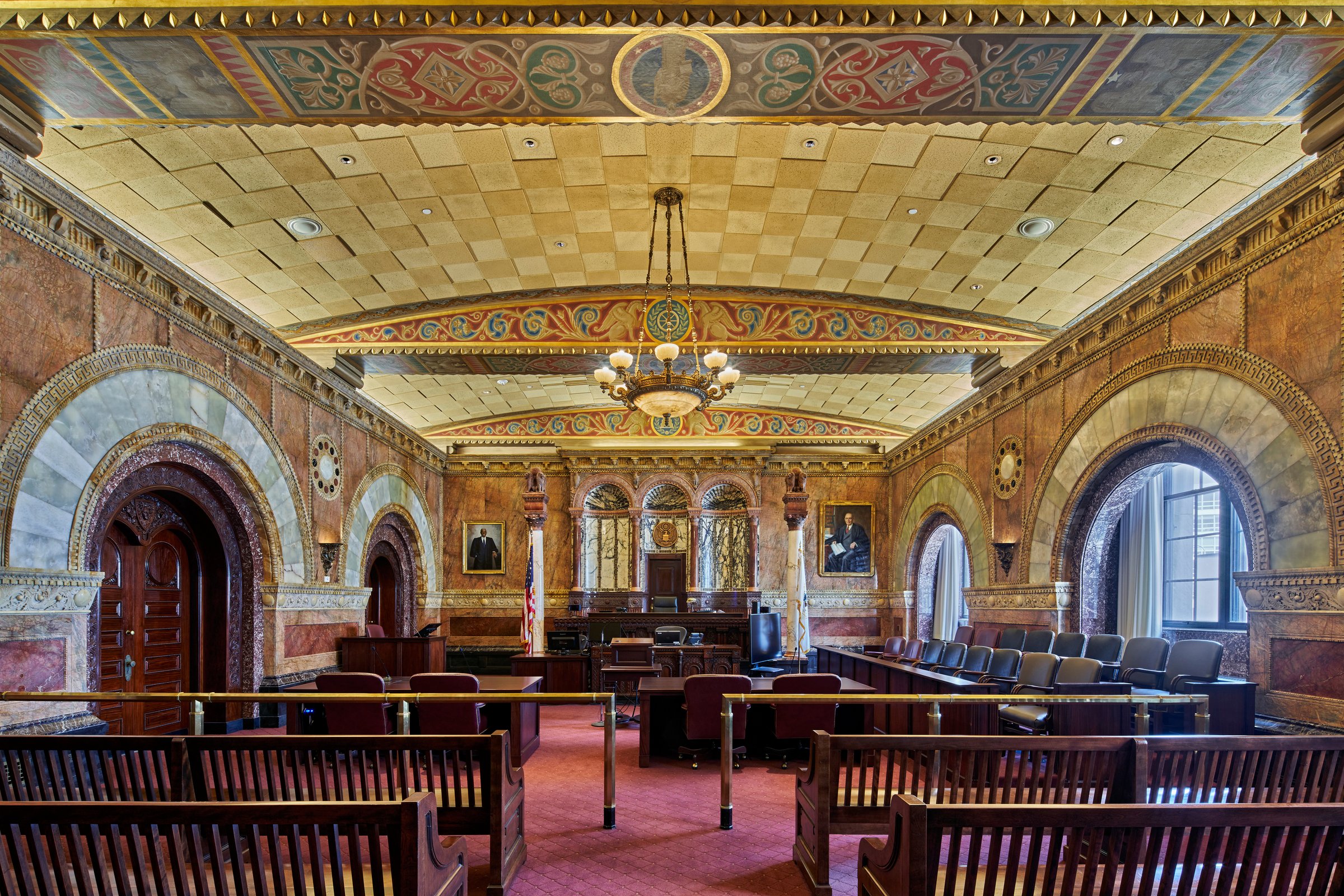
Page protected the building’s historic character while addressing these concerns and creating a modern workplace. Comprehensive mechanical, electrical, and plumbing upgrades and modernized interiors create Class A office space; a new circulation tower improves egress and security; and meticulously restored ceilings return the main floor historic corridor to its former glory.
Awards
-
1Build Michigan Award, Federal & Heavy Construction, Associated General Contractors of Michigan
-
2Silver Award, Reconstruction, Building Design + Construction
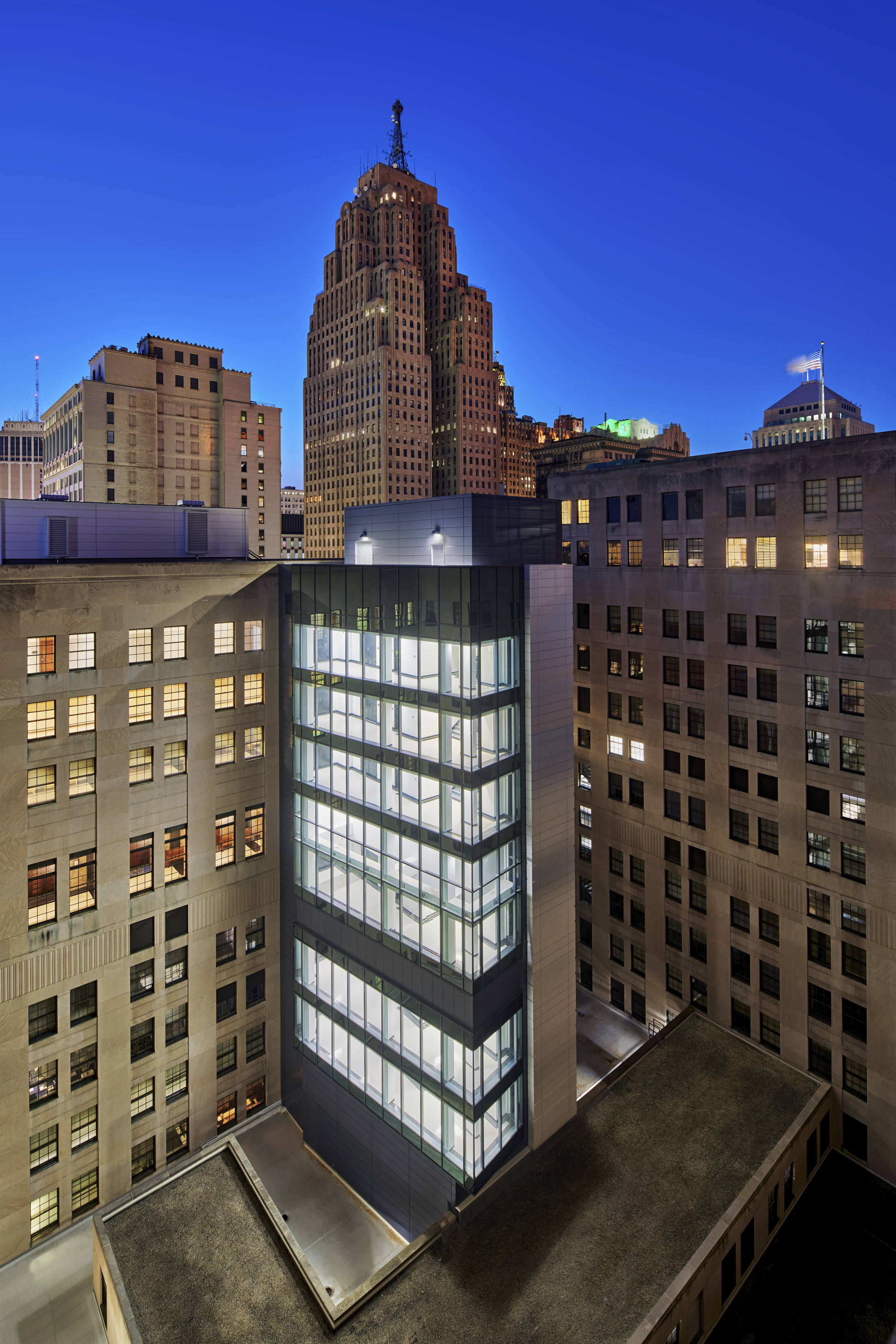
Addressing longstanding issues with vertical circulation, code compliance, and secure movement of people and materials, Page designed a new stair and elevator tower inside the building’s light court.
To comply with federal regulations that additions be differentiated from but compatible with the historic building, the new tower is clad with metal panels in a layout inspired by the rhythm and detailing of the limestone light court walls. The lighter color panels are sympathetic to the original Indiana limestone, without trying to match it. Charcoal gray panels cladding the service core are easily distinguishable from the original material while linking to the historic building.
The new tower creates impromptu meeting and discussion spaces away from the active courtrooms and judges’ chambers. Expansive glazing admits daylight, enhancing workplace productivity while symbolizing transparency in the judicial process.

Project phasing
The Levin Courthouse is a significant building, not only in historic importance but in size and stature. Unlike some renovations of this scale, which require departments to relocate off-site, construction at the Levin Courthouse was carefully phased to keep all staff and agencies within the building, allowing the federal courts to remain fully operational. Page coordinated closely with the courts and other occupants to develop a strategic swing space plan. Each occupant moved only once—temporarily shifting within the building before returning to their original location.
Historic restoration


/
Energy improvements

By restoring this historic building and upgrading all building systems, Page created energy savings for the client and reduced the overall CO2 emissions related to construction.
Engineering
Page’s modernization of the Levin Courthouse involved comprehensive upgrades of the building systems, architectural modifications to accommodate the new systems, improvements to address code and life safety deficiencies, and the development of office retrofits for some agencies to reduce their operational footprint.
The building’s HVAC equipment was a patchwork of components, from original 1934 piping to recently installed control systems. Page’s design preserved elements in good condition while integrating new equipment into a more energy-efficient, maintainable system. A key improvement was relocating new air handling units to the roof, replacing outdated units scattered throughout the building. This upgrade enhanced ventilation air delivery to meet current standards, creating a healthier work environment for staff and visitors.
Similar projects


/

Talk with us
Complex challenges need fresh perspectives and deep expertise. Connect with our team to explore how we can help you create spaces that make a real difference.