by Robert McClure, Alison Ledwith, and Mo Elsayed

In today’s world, the conversation around design is shifting beyond aesthetics, branding, or space efficiency. Increasingly, architects, designers, and clients alike are recognizing that the built environment plays a critical role in shaping human health, productivity, and well-being. Nowhere is this more evident or more urgently needed than in healthcare, where design decisions can influence patient outcomes, caregiver resilience, and overall community trust.
Across industries, the pendulum has swung between enclosed, segmented layouts and open, collaborative spaces. For instance, the corporate workplace has evolved rapidly over the past two decades, moving from cubicles and benching to the open floor plans popularized by the tech industry. While open floor plans offer opportunities for collaboration, they also pose challenges, including a loss of privacy, reduced focus, and increased sensory overload. Research consistently shows that while employees value open spaces for teamwork, they continue to need private spaces for periods of deep concentration, especially in a post-pandemic landscape where people are searching for both connection and the ability to focus.1
In healthcare, however, the conversation around spatial design is different but no less critical. Clinical environments have largely maintained enclosed, function-driven spaces, yet they face their own design challenges. Achieving the right balance among collaboration zones, public spaces, private treatment areas, patient and family spaces, and staff respite zones presents a complex design challenge. Additionally, and even more critically, the delivery of person-centered care requires addressing the challenges of ensuring patients’ emotional comfort, dignity, and recovery. In behavioral health environments, these goals are especially urgent. Research shows that incorporating elements like single-patient rooms, private bathrooms, nature views, and outdoor access can reduce stress and aggression.2 In these spaces, environmental and sensory design have the power to profoundly influence not only patient outcomes but also staff well-being and operational performance.
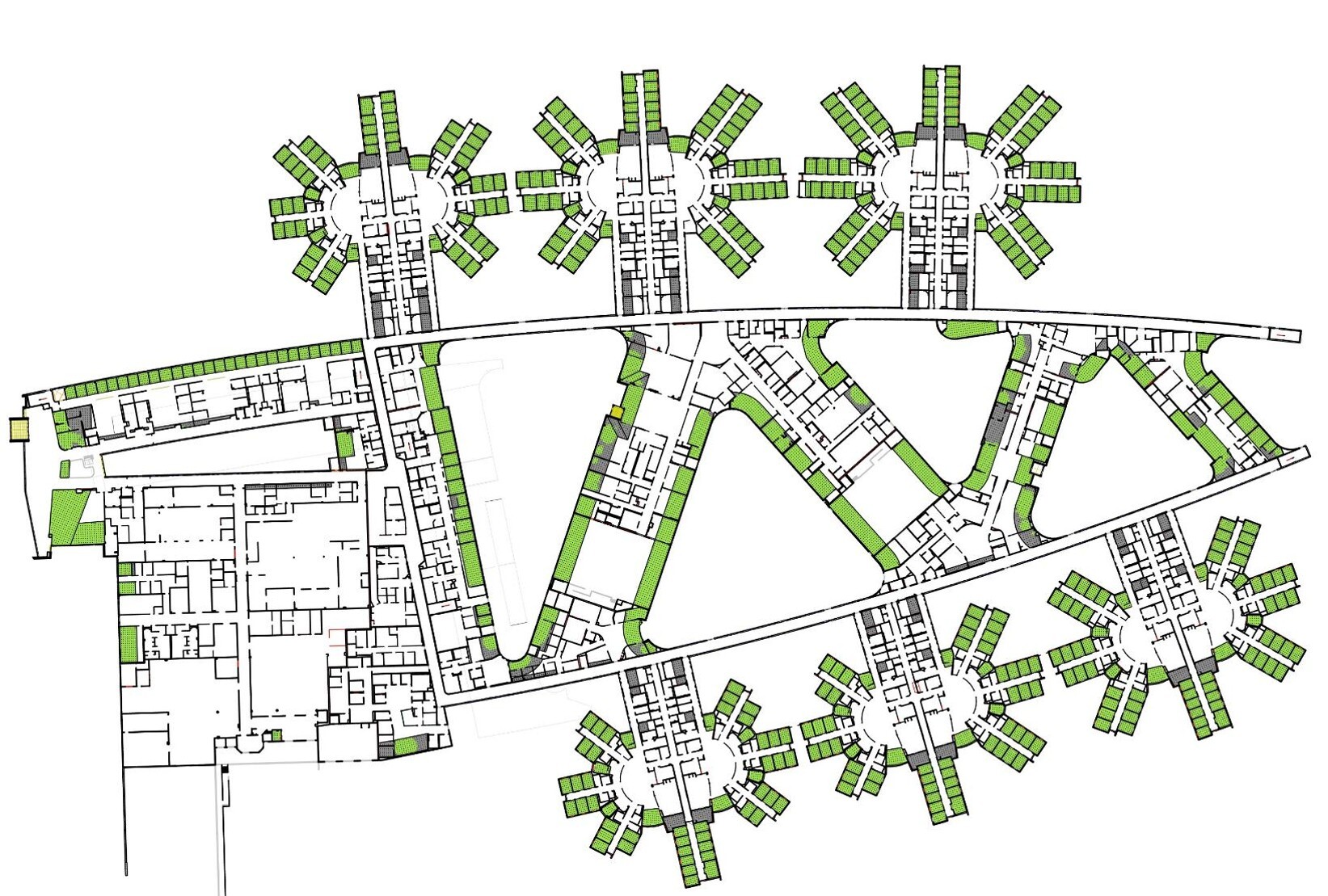
The design at New Central State Hospital achieves 86.5% spatial daylight autonomy (sDA), which enhances occupant well-being and earns all 3 LEED for Healthcare points for daylighting performance.
While the size and layout of a space are central to its sensory impact, equally important is the presence and thoughtful use of natural light. One of the most powerful but underappreciated tools in the designer’s toolkit is daylighting - the strategic use of natural light to illuminate interior spaces. While artificial light can fill in the gaps, it cannot replicate the biological and emotional benefits of sunlight. Studies have shown that exposure to natural light improves mood, regulates circadian rhythms, enhances alertness, reduces stress, and even speeds recovery in clinical settings.3,4
Designers and healthcare providers are increasingly turning to evidence-based design approaches to harness these benefits. Natural light has been shown to shorten hospital stays and improve sleep patterns among patients.4 For staff, daylight improves satisfaction, reduces fatigue, and boosts retention in high-pressure clinical environments.5 Given the ongoing challenges of staff burnout and patient satisfaction in healthcare, these impacts are more than aesthetic; they are critical to operational success.
Delivering the benefits of daylighting, however, is no simple task. The challenge lies in delivering these benefits across complex, often space-constrained healthcare settings. Even in new construction, balancing the needs of staff, patient care, energy efficiency, and privacy requires thoughtful, data-driven strategies. Page uses advanced building performance analysis tools to model daylight autonomy, glare conditions, and load calculations. These methods have produced outstanding results, with some projects achieving 86.5% spatial daylight autonomy (sDA), 52% energy use savings, and 25% energy cost savings.

Advanced building performance analysis tools were used at New Central State Hospital to help achieve a 52% energy performance savings.
One of the most significant benefits of daylighting in offices, schools, and healthcare facilities occurs not only within the space itself but also has lasting impacts on the health and performance of the individuals within long after they leave. Daylighting aligns with humans' natural circadian rhythms, improving the sleep quality of all who are immersed in natural light for long periods of time – and better sleep is directly correlated with improved happiness and productivity, thus improving the performance and well-being of workers, students, healthcare providers, the patients they’re caring for, and more. A research study published in 2014 found that workers with windows and natural light in the workplace exhibited more physical activity during the day and longer and higher quality sleep at night.6 In addition to improved sleep, natural light has also been found to reduce levels of anxiety and depression.7 Additionally, the study found that windows guaranteeing exposure to fresh air and sunlight were the single most important design feature for improving the mood and mental health of individuals within the naturally lit space.
One critical but often underestimated challenge in daylighting is glare. While natural light is a valuable asset, uncontrolled daylight can disrupt visual comfort, interfere with employees’ critical tasks, and even compromise safety in sensitive environments. From open-plan offices where employees read screens to healthcare settings where staff monitor patients and equipment, managing glare is essential to ensure that the positive impacts of daylighting are not overshadowed by discomfort or diminished performance.
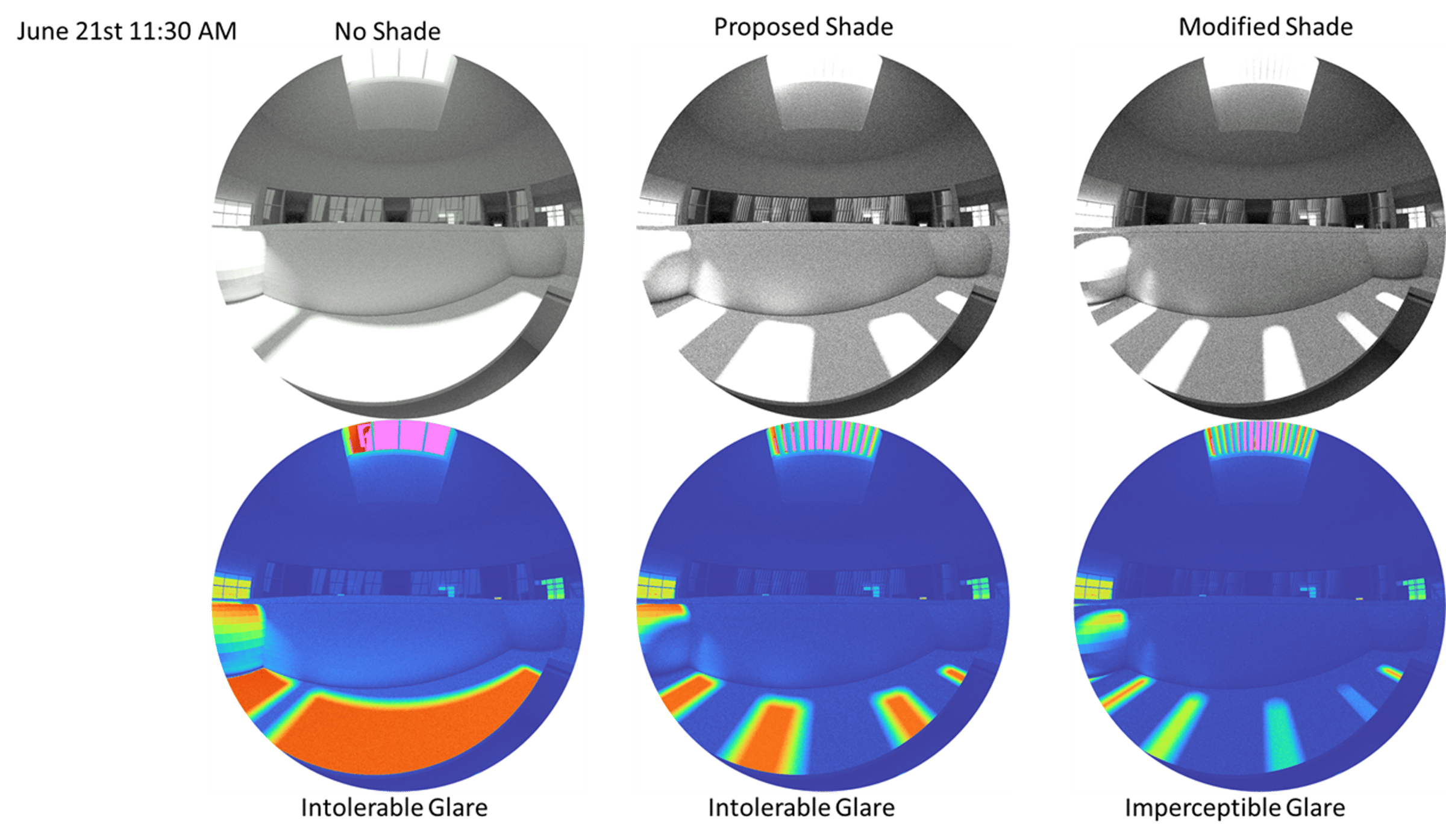
In the Living Unit at New Central State Hospital, skylight analysis shows the reduction of glare with modified shading elements to bounce and scatter light from producing glare on critical working surfaces.
A 2001 study found that morning sunlight reduced the length of hospitalization for individuals experiencing bipolar depression, with significant improvements during summer and fall admissions.8 Designers at Page are employing the benefits of daylighting across all projects, and while the workplace is a common target for environmental and sensory design, Page is deploying innovative new technology to improve health outcomes of patients across a variety of healthcare facilities. At New Central State Hospital, an inpatient psychiatric facility in central Virginia, designers at Page employed a data-driven approach to maximize daylighting in all patient care rooms as well as the lobby area, which serves as the welcome area and first impression of guests visiting New Central State Hospital. Beyond maximizing daylight, Page also explored integrating circadian lighting systems to supplement natural light, helping synchronize patients’ biological clocks, reduce symptoms, and improve recovery outcomes.
The benefits of intentional environmental and sensory design are far-reaching, with measurable impacts on the performance and well-being of the people who inhabit these spaces. Well-executed daylighting strategies can be applied across offices, schools, healthcare settings, retail environments, and more. While the immediate improvements in productivity, satisfaction, and healing are compelling, the long-term alignment with human circadian rhythms delivers even deeper rewards. Natural light activates fundamental human responses that promote health, creativity, and resilience, benefits that few other design elements can replicate.
Ulrich, R. S., Bogren, L., & Lundin, S. (2012). Towards a design theory for reducing aggression in psychiatric facilities. In ARCH 12: ARCHITECTURE / RESEARCH / CARE / HEALTH Chalmers Institute of Technology.

Justin has a passion for problem-solving. Working alongside his design colleagues, Justin uses computational analysis to answer our most pressing sustainable design questions. In his role, he partners with clients and design teams to set bold sustainability goals and map out clear, effective strategies to achieve them. He provides performance-based recommendations through climate, building energy, building envelope, daylighting, computational fluid dynamics analyses, and more. With a Ph.D. in Arch. Sci. and a certificate in Building Energy Modeling, understanding complex problems and providing simple solutions has defined Justin’s career.
More
by Robert McClure, Alison Ledwith, and Mo Elsayed

Complex challenges need fresh perspectives and deep expertise. Connect with our team to explore how we can help you create spaces that make a real difference.