Feature
July 7, 2025
The hidden keys to project delivery success in the built environment
by Kurt Neubek
Listen to this story
AI powered reader
/
Owner expectations for design and construction projects have long been straightforward: deliver the original scope at the expected quality, on time, and under budget. One might think that these things are givens—that owner/designer/builder teams long ago figured out how to deliver these predictably. Yet history shows otherwise. Traditional project delivery approaches are absurdly unreliable. Multiple studies1 show that approximately 75% of construction projects2 finish over schedule, over budget, or both.3 Owners are increasingly adopting Lean design and construction methods, not merely as a trendy term or a procedural obligation, but as a powerful strategic tool designed to drive superior results. They request Lean by name, incorporate it into their RFP (request for proposal), and choose design teams and builders who are committed to collaborative work from the outset. The outcomes? Enhanced budget certainty, reduced unexpected surprises, stronger alignment among stakeholders, and projects that are completed more swiftly and at a lower cost than traditional methods. Moreover, participants commonly report that the project was a great experience and that they never want to go back to working on projects that don’t use Lean.
Lean is widely recognized by savvy clients as a critical differentiator for project success, regardless of the contract or project delivery method. They understand that their most invaluable asset is a team capable of experimenting, adapting quickly, communicating effectively, and solving problems in real-time, without shifting blame. As capital programs grow increasingly ambitious and stakeholder networks become more complex, embracing Lean is not just beneficial for design and construction firms; it distinguishes them in a competitive landscape. Owners who hire these firms (or design-build teams) are investing not only in the project outcome but also in the agility and innovation that Lean methodologies nurture. The numbers don’t lie: studies4 have demonstrated that Lean projects are approximately four times more likely to finish on time, seven times more likely to stay within budget, and three times more likely to achieve design excellence. Furthermore, owners involved in Lean projects report feeling more like strategic partners, noting increased satisfaction and improved collaboration.
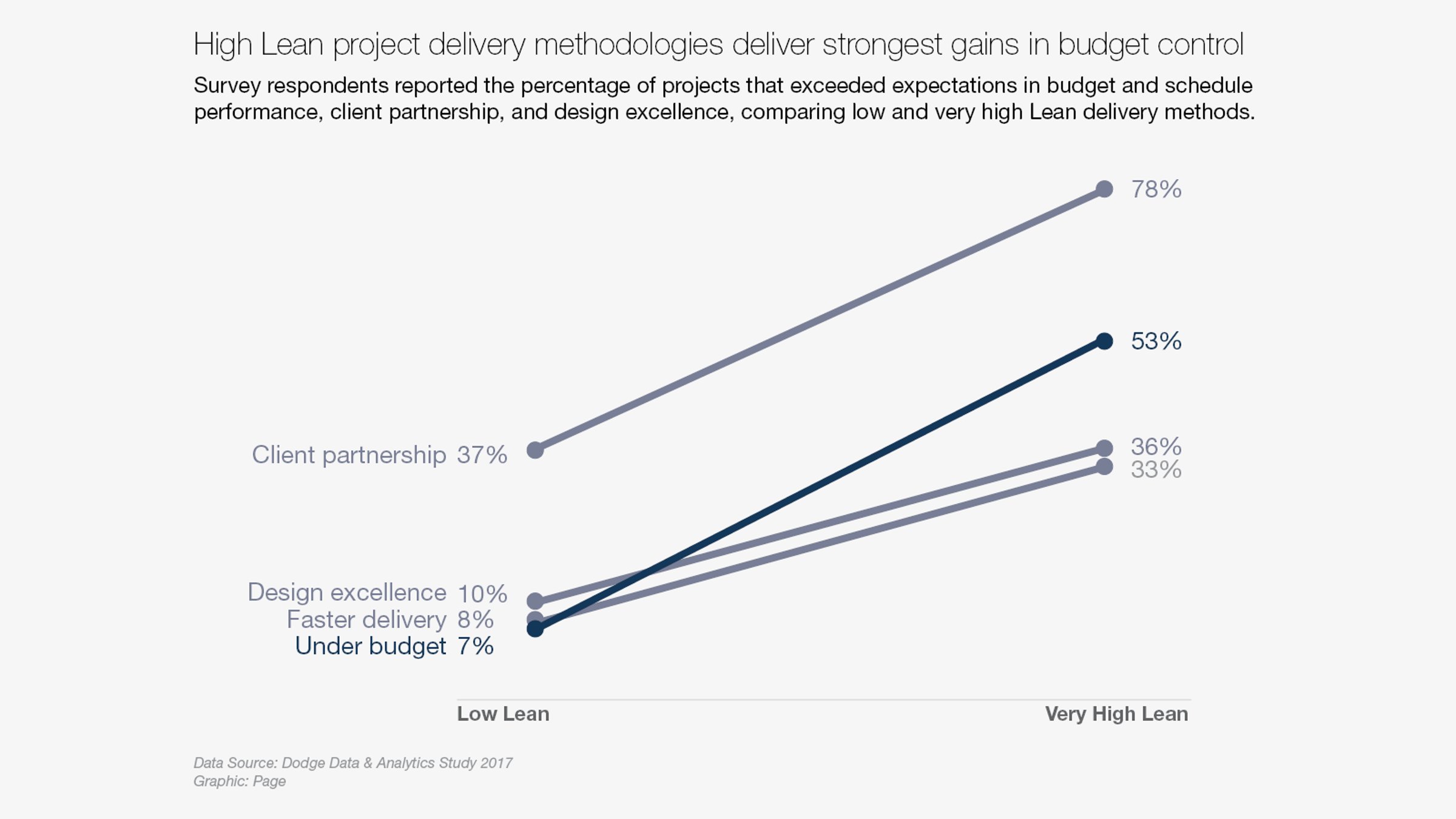
Projects with high Lean implementation consistently outperform across key metrics, most notably in budget control.4 This highlights the value of Lean strategies in delivering faster, more cost-effective outcomes and enhanced quality design.
These results are being achieved across various contract types, including Design + Construction Manager, Design-Build, Progressive Design-Build, and Integrated Project Delivery (using an Integrated Form of Agreement). In contrast, the traditional Design-Bid-Build approach, where builders are selected after the complete design is finalized, significantly limits early collaboration. Nevertheless, even Design-Bid-Build can benefit from Lean practices.
A shift in client expectations
Clients leading this movement are evolving their inquiries from simply asking, “Can this be built?” to a more strategic, “How do we ensure this delivers value throughout its lifecycle?" This change in perspective significantly impacts project execution, affecting everything from pre-design strategy to closeout. By insisting on Lean-trained teams, these clients promote early alignment, data-informed decision-making, and a dedicated focus on continuous improvement.
Lean construction prioritizes maximizing value while minimizing waste, effectively reducing both physical waste on construction sites and the prevalence of ambiguity and rework. By fostering early alignment among teams, Lean enables the identification of constraints before they escalate into roadblocks, ensuring that design decisions are closely linked to project goals.
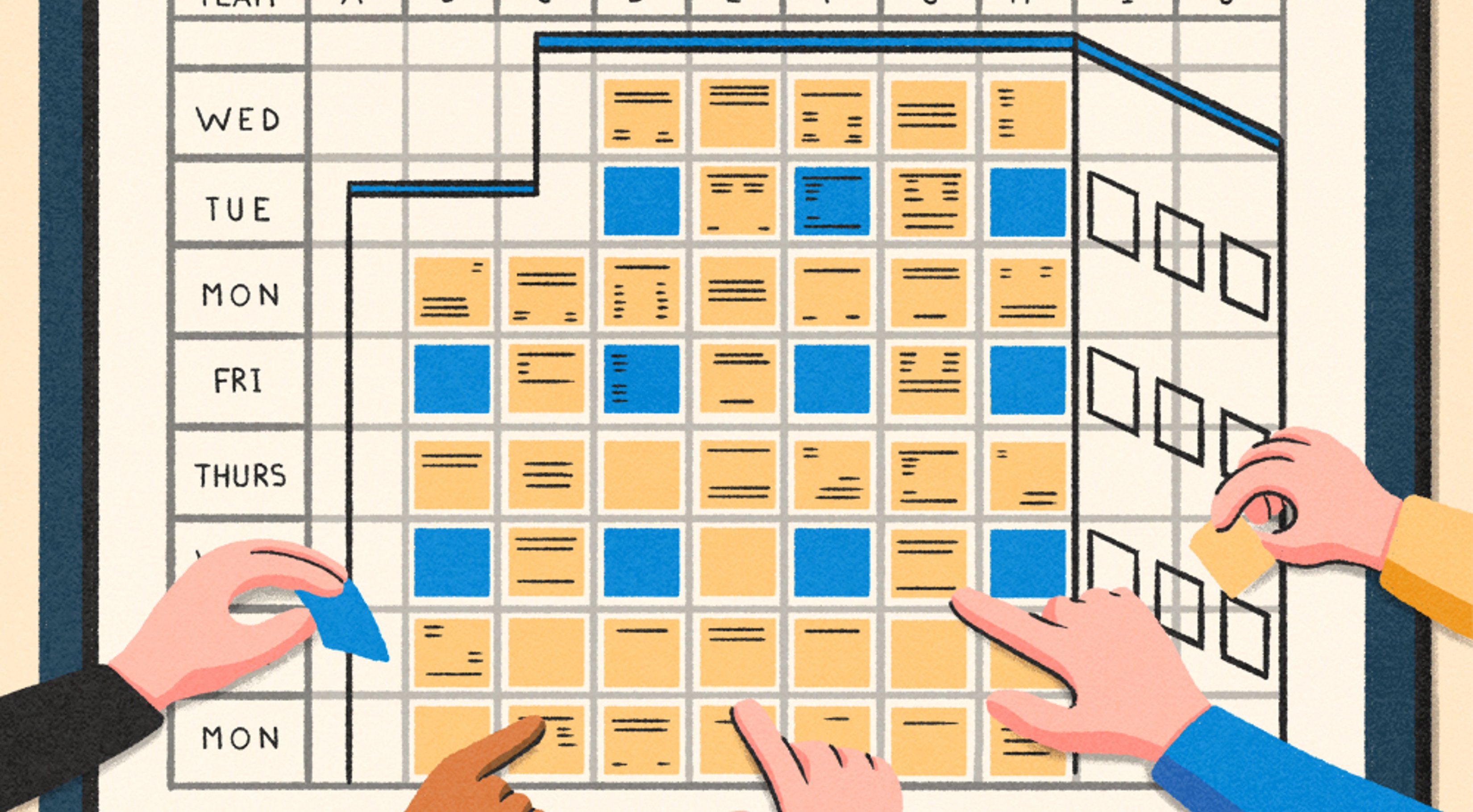
For example, the Last Planner System®, a widely adopted system for scheduling and production control, is not limited to jobsite coordination. High-performing owners expect to see it in use starting in the early design phases, enabling the team to track commitments, address constraints, and maintain momentum across disciplines. Similarly, Target Value Delivery (TVD) is being utilized to establish budgets that reflect real-time market data and project goals, rather than just aspirational benchmarks.
These tools focus on more than efficiency. They build trust, create transparency, and give owners greater control over outcomes without the need to manage every detail themselves.

Owners, designers, and builders collaborating on early design strategy in a project Big Room. Photo/Page.
From process to partnership
The best-performing owners recognize that project success is directly linked to team health and collaboration. That’s why Lean-informed owners seek more than just deliverables; they invest in relationships. They take the time to select and nurture a high-performing team with regular assessments of team health and collaboration. Through Big Room environments, periodic co-location, and shared governance models, these clients foster conditions for unified teams and effective communication.
Some even go further by asking teams to conduct personality assessments, define shared “Conditions of Satisfaction,” and engage in cross-functional retrospectives. These initiatives enhance trust and minimize the risk of downstream conflict, ultimately safeguarding the schedule, budget, and project vision.

Page architects leading a group through the evaluation of design options using Choosing By Advantages. Photo/Page
A case study in Lean leadership
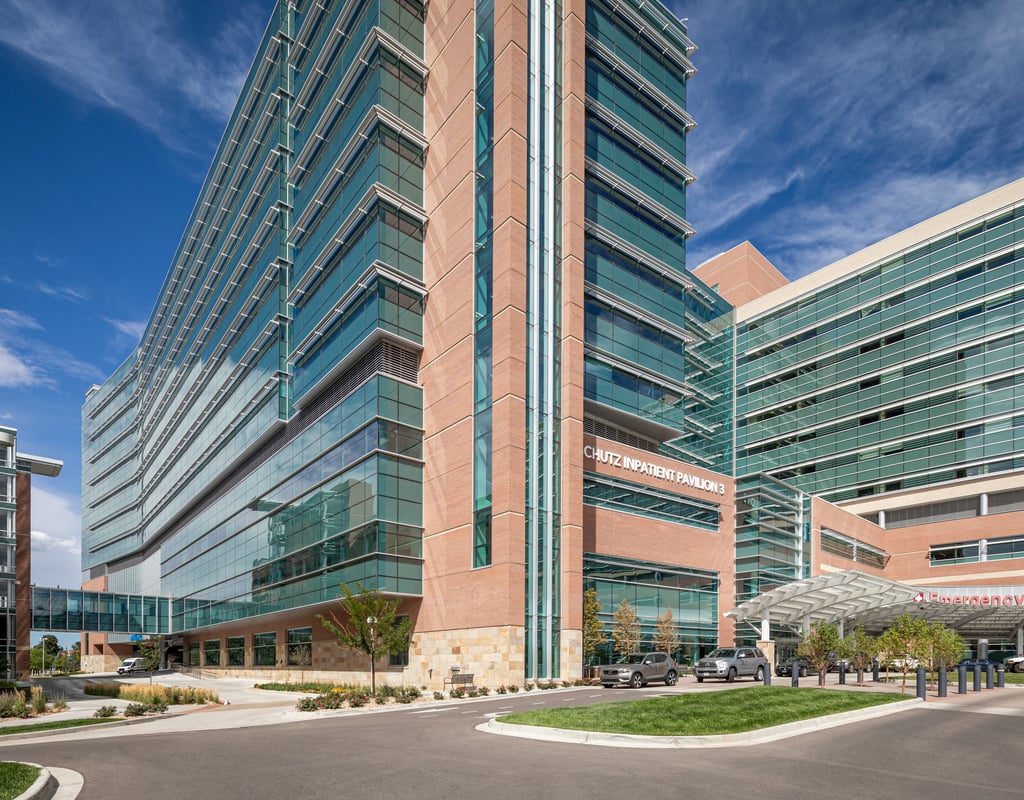
Texas Children’s Hospital North Austin Campus serves as a strong example of Lean design and construction. Although the owner initially had no formal requirement for Lean practices, the design and construction team, led by Page and McCarthy, suggested a Lean-based delivery model. After reviewing industry data, hospital leadership agreed that if this approach represented the industry's best practices, “Why would we do it any other way?”
That decision proved transformative. Despite challenges from a global pandemic, supply chain disruption, and the highest inflation in forty years, the team delivered a $485 million greenfield hospital campus on time and under budget. Key practices included:
- Training the owner, architect, and contractor team in Lean vocabulary and tools
- Creating a virtual Big Room to ensure transparency and collaboration
- Deploying decision-making frameworks such as A3s, Choosing by Advantages, and Getting Decisions That Stick!
- Implementing the Last Planner System® from the design phase onward
- Utilizing Target Value Delivery to establish an achievable design-to-budget and continuous cost modeling throughout design
- Engaging trade partners (subcontractors) early and developing a prefab strategy during early design

On this project, Lean practices and visual tools like the Last Planner System® were used from the start of the design to align teams, increase transparency, and drive project momentum.
The Lean Construction Institute named Texas Children’s Hospital North Austin Campus its 2024 Design Award winner, and the Construction Owners Association of America honored it with a Project Leadership Award. It has also won awards for planning, interior design, and construction. Perhaps more importantly, many project participants cite the experience as the most rewarding of their careers, not just because of the outcomes but also because of the culture created through Lean. Texas Children’s Hospital North Austin Campus and many other projects demonstrate a growing consensus: projects that prioritize Lean culture deliver more value. The call to action for owners is simple yet powerful: “Ask for Lean.” Include it in the selection criteria. Not because it is trendy, but because the most successful clients across the country and internationally have consistently proven that it leads to superior project outcomes.
Hear how Kurt's approach to Lean in architecture fosters a culture of respect to boost value, cut waste, and keep projects on schedule and within budget.

Texas Children’s Hospital North Austin Campus showcases how Lean delivery led to on-time, under-budget success during one of the industry’s most volatile periods. Photo/McCarthy Building Companies.
References:
1.
Procore and IDC. (2021). Owners at the leading edges: how construction project owners are using technology to achieve on-time, on-budget performance. E-book.
2.
Flyvbjerg, B., & Gardner, D. (2023). How big things get done: the surprising factors that determine the fate of every project, from home renovations to space exploration and everything in between. New York: Penguin Random House.
3.
Webster A., Carruthers, B., Wheless, J. (2025). Blueprint for success: how top performers consistently deliver on their infrastructure and capital projects' commitments. Accenture.
4.
Lean Construction Institute. (2017). Lean Construction Institute Designer Satisfaction Survey: The Business Case for Lean in Design.
Contributors

Kurt is a nationally recognized expert in healthcare architecture, strategic planning, and Lean project delivery. With programming, planning and project management experience spanning tens of millions of square feet worldwide, he excels in predesign services for a wide range of facility types. Kurt, a Six Sigma Black Belt and instructor for the Lean Construction Institute and Construction Owners Association of America, has spoken at over 130 conferences. Renowned as a “strategic futurist” and “architect of decision-making,” Kurt’s exceptional talent in distilling complex data into actionable insights makes him a trusted leader among owners.
More

by Alireza Sedghikhanshir and Raffaella Montelli

by Vanessa Lampe Heimbuch and Portia Ellis as interviewed by Mary Loftus

Talk with us
Complex challenges need fresh perspectives and deep expertise. Connect with our team to explore how we can help you create spaces that make a real difference.