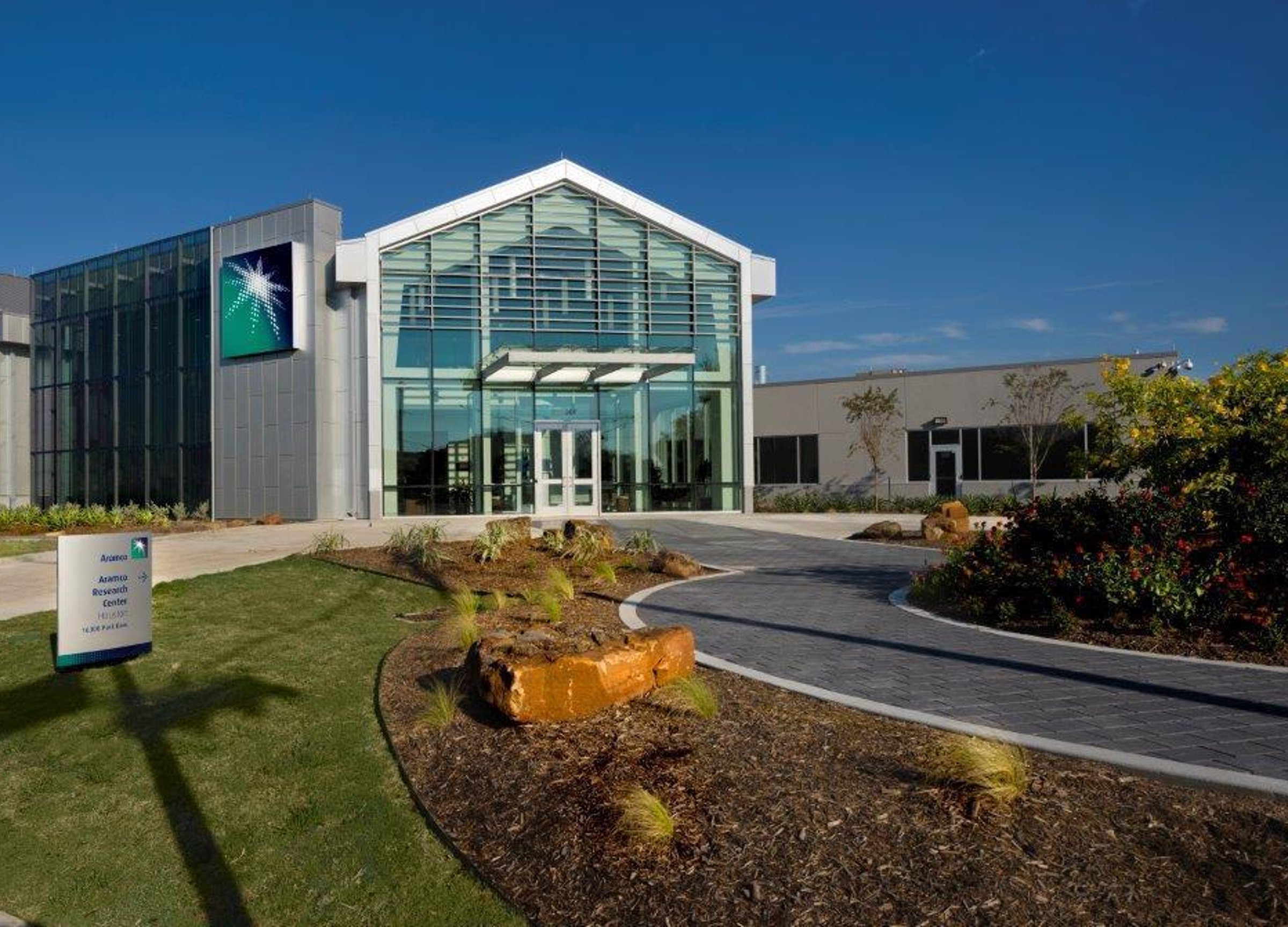
Aramco Services Company Houston Research Center
Aramco Americas, a leader in energy innovation, sought a state-of-the-art research facility in Houston’s Energy Corridor to advance oil and gas discovery. As part of a global network of research centers, the space needed to support leading-edge scientific exploration while reinforcing the company’s brand and vision.
The challenge was to create a highly functional, flexible lab environment that fostered collaboration, allowed for future expansion, while also serving as a recruitment tool. At the same time, the design had to replace the existing rustic aesthetic with a modern, forward-looking identity.
Page partnered with Aramco to bring this vision to life. The new facility features a striking modern façade that reflects the company’s innovation-driven brand. A transparent, high-bay office space connects lab and office areas, fostering communication. Modular lab layouts ensure adaptability for evolving research needs. The result is a dynamic environment that supports world-class research and strengthens Aramco’s leadership in energy exploration.
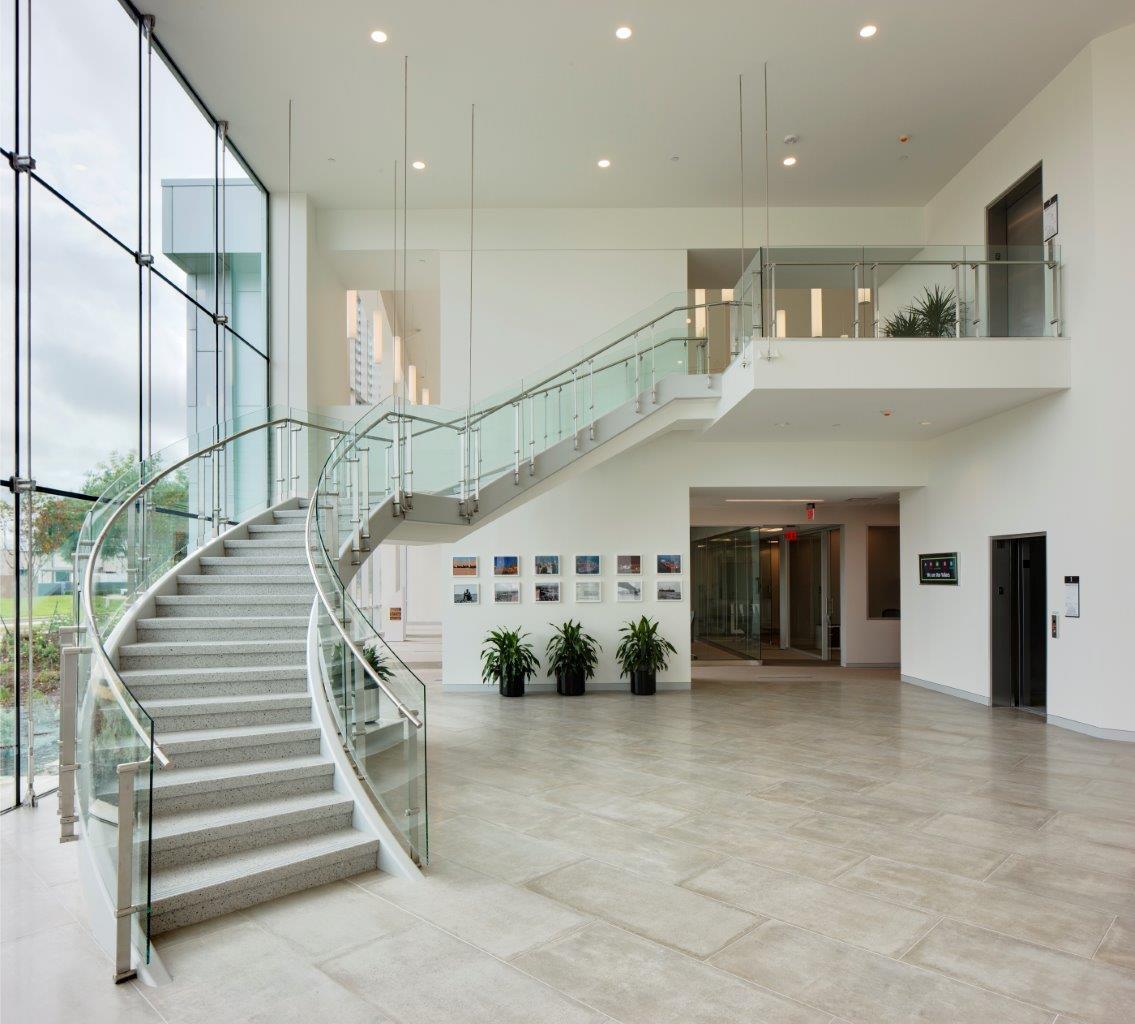
Modernization and repositioning
A double-height space, the lobby features a monumental stair and a sculptural light fixture. The office space features modern materials throughout, including glass, brushed stainless steel, sleek carpet tile patterns, and pendant lighting while using colors that reinforce the company’s brand.
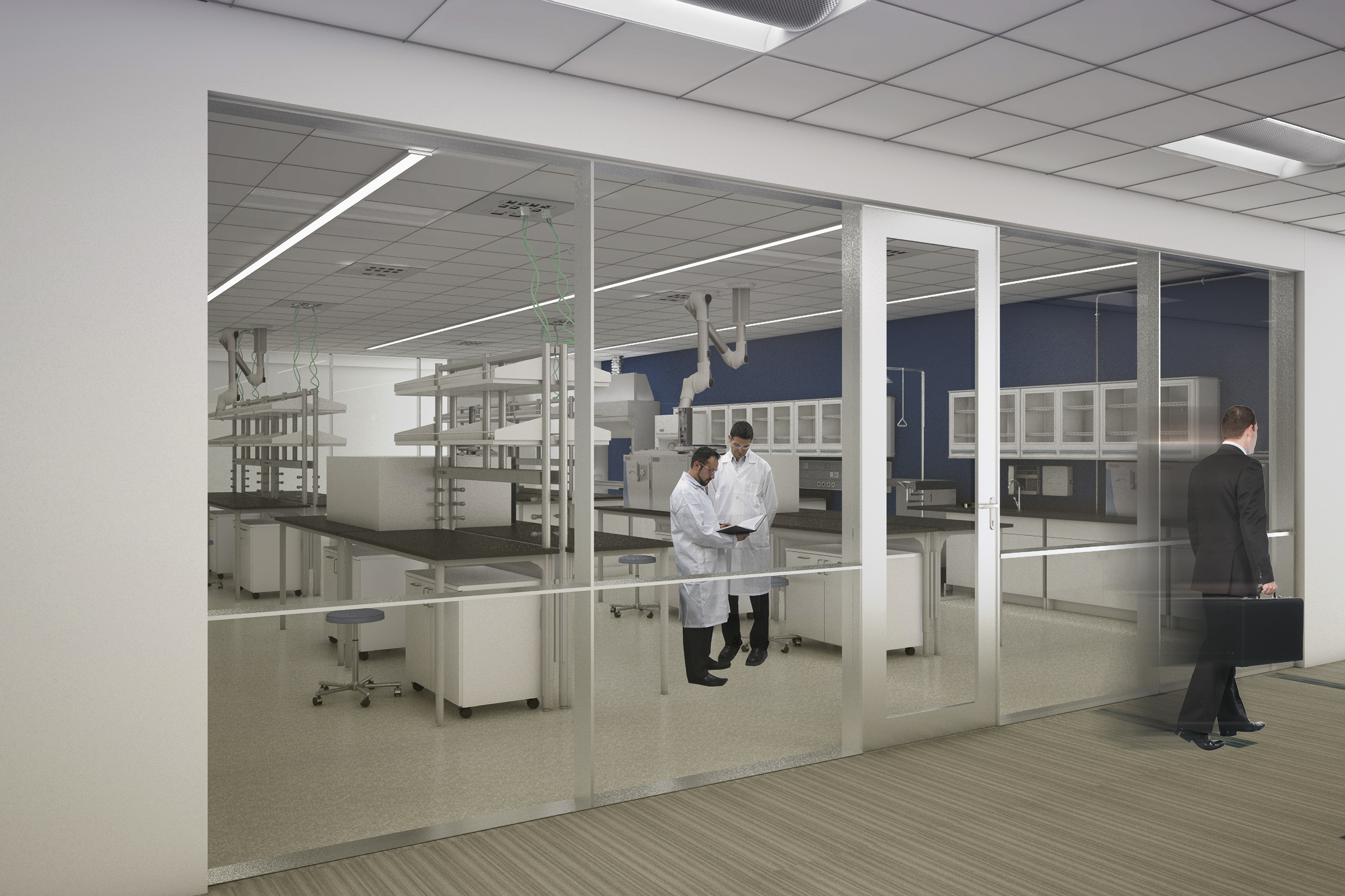
Laboratory design
The space accommodates a variety of research initiatives, including production management, drilling, reservoir engineering, geology, geophysics, and subsurface sensing and control. An adaptable laboratory design was achieved through modular, mobile lab furniture and flexible layouts. Lab gases and electrical connections are designed to allow for easy reconfiguration as needed.
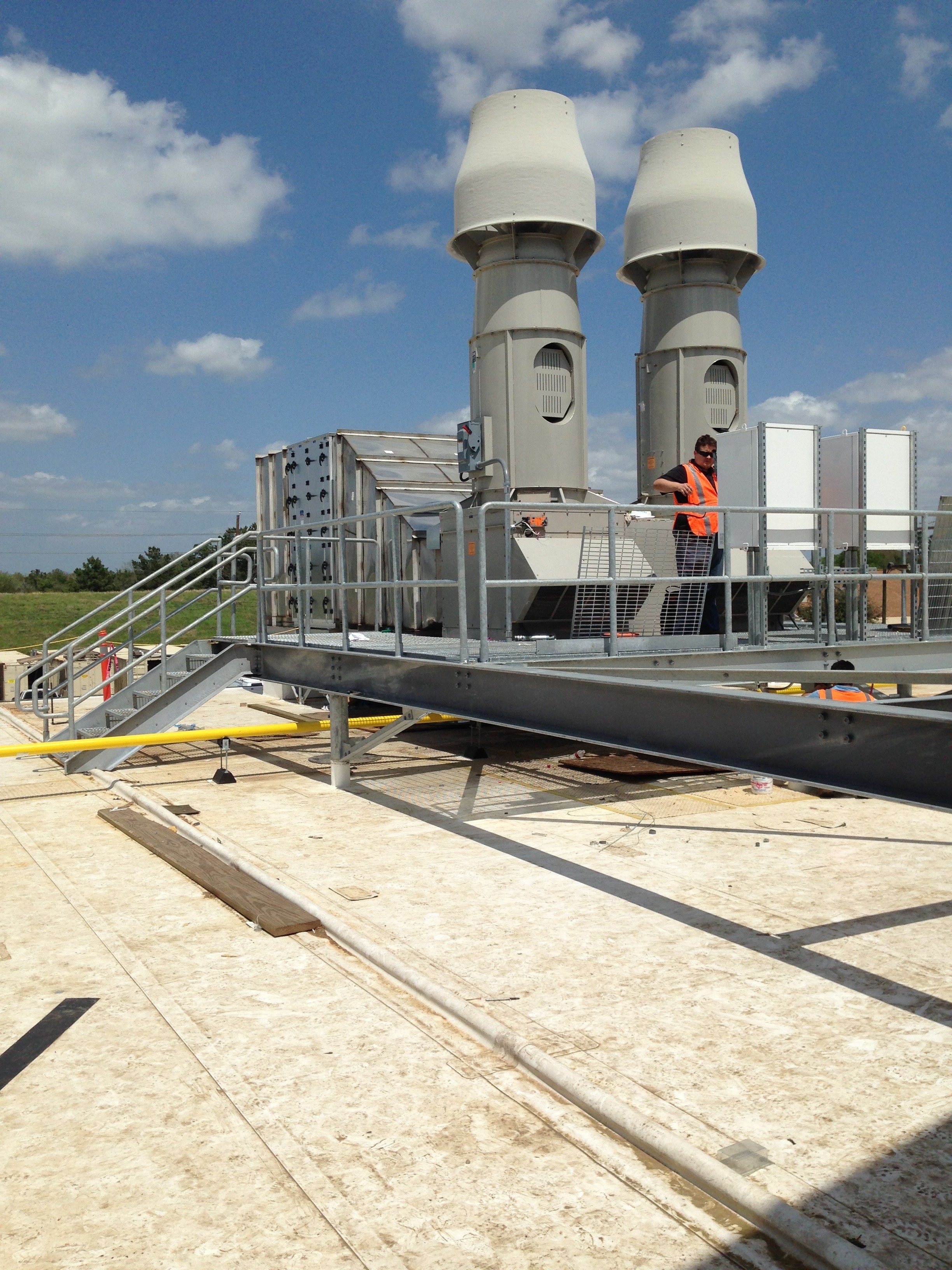
Engineering design
The laboratories in this facility were designed before specific users were assigned. Anticipating the use of Hydrogen Sulfide and Hydrogen Carbon gases, the Page team integrated high-performance ventilation systems with redundant supply fans and high-
plume exhaust systems. To ensure safety, the exhaust systems include scrubbers that remove harmful chemicals before release into the atmosphere. Each lab is equipped with sensors that detect unsafe chemical levels, triggering alarms and activating an exhaust purge mode when necessary.
To prevent disruptions, the laboratory ventilation system uses a specialized duct distribution approach that maintains airflow even when ventilation is reduced in nearby office spaces. Page designed a system with dedicated air dampers, electric actuators, and an automated sequence that redirects supply and exhaust air as needed. This ensures safe lab pressurization, even if a self-contained package unit unexpectedly fails, keeping the research environment secure and operational.

Similar projects


/

Talk with us
Complex challenges need fresh perspectives and deep expertise. Connect with our team to explore how we can help you create spaces that make a real difference.