Long Range Development Plan
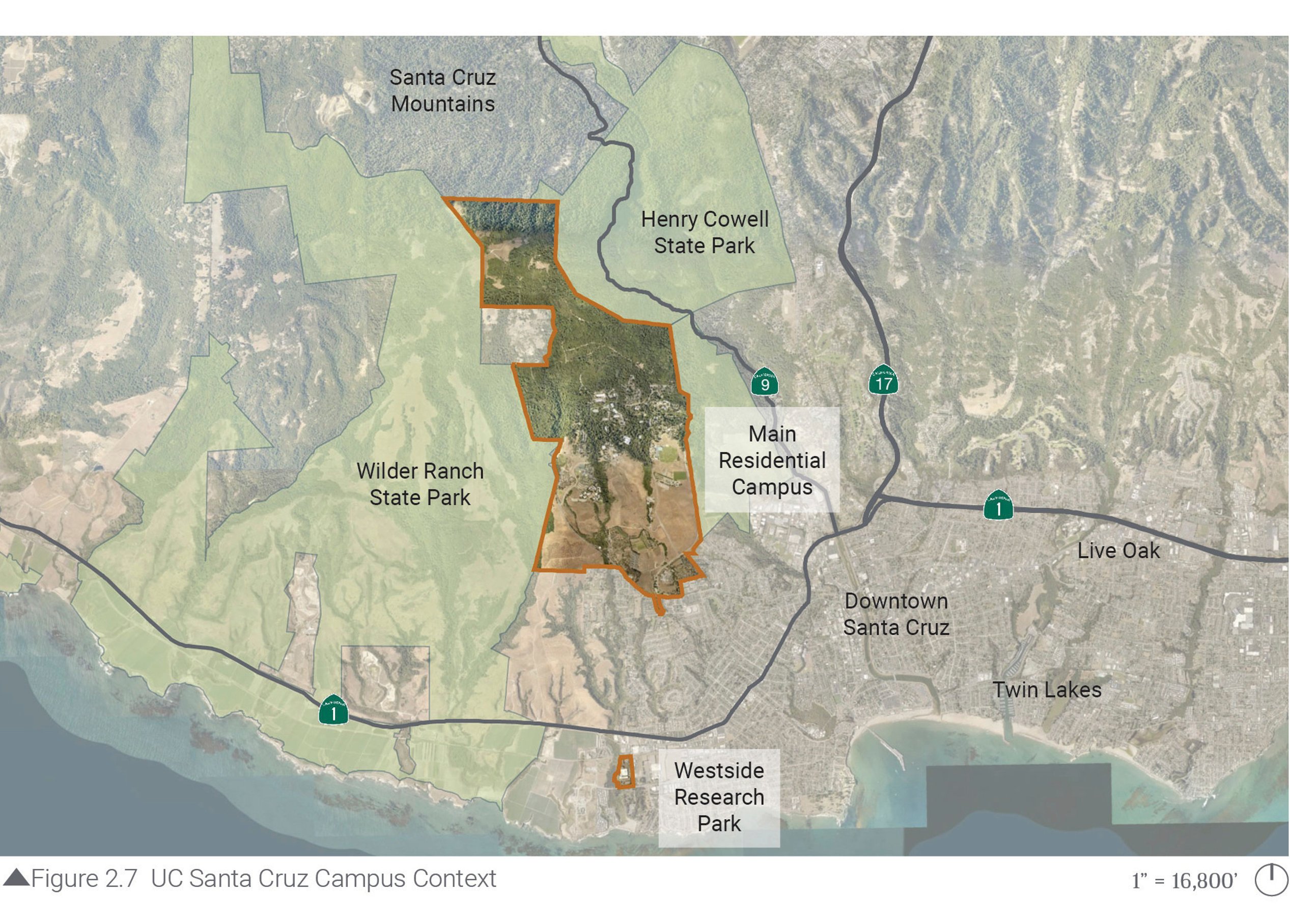
The University of California Santa Cruz Long Range Development Plan (LRDP) is a visionary roadmap shaping the campus for the next 20 years. Spanning 2,000 acres of forests, coastal plains, and riparian corridors, Page’s plan strikes a delicate balance between growth and environmental stewardship. This approach ensures the university preserves its natural beauty while advancing teaching and research.
At its core, the plan is focused on people, reinforcing UC Santa Cruz’s residential college system to foster an inclusive, engaged learning environment for a diverse student body, many of whom are low-income, minority, and first-generation.
With a proactive approach to the region’s housing crisis, the LRDP delivers real, actionable solutions, significantly increasing on-campus housing for students and staff. Prioritizing sustainability, resilience, and community engagement, UC Santa Cruz is forming a future-ready campus that will continue to thrive, adapt, and lead.
Engagement
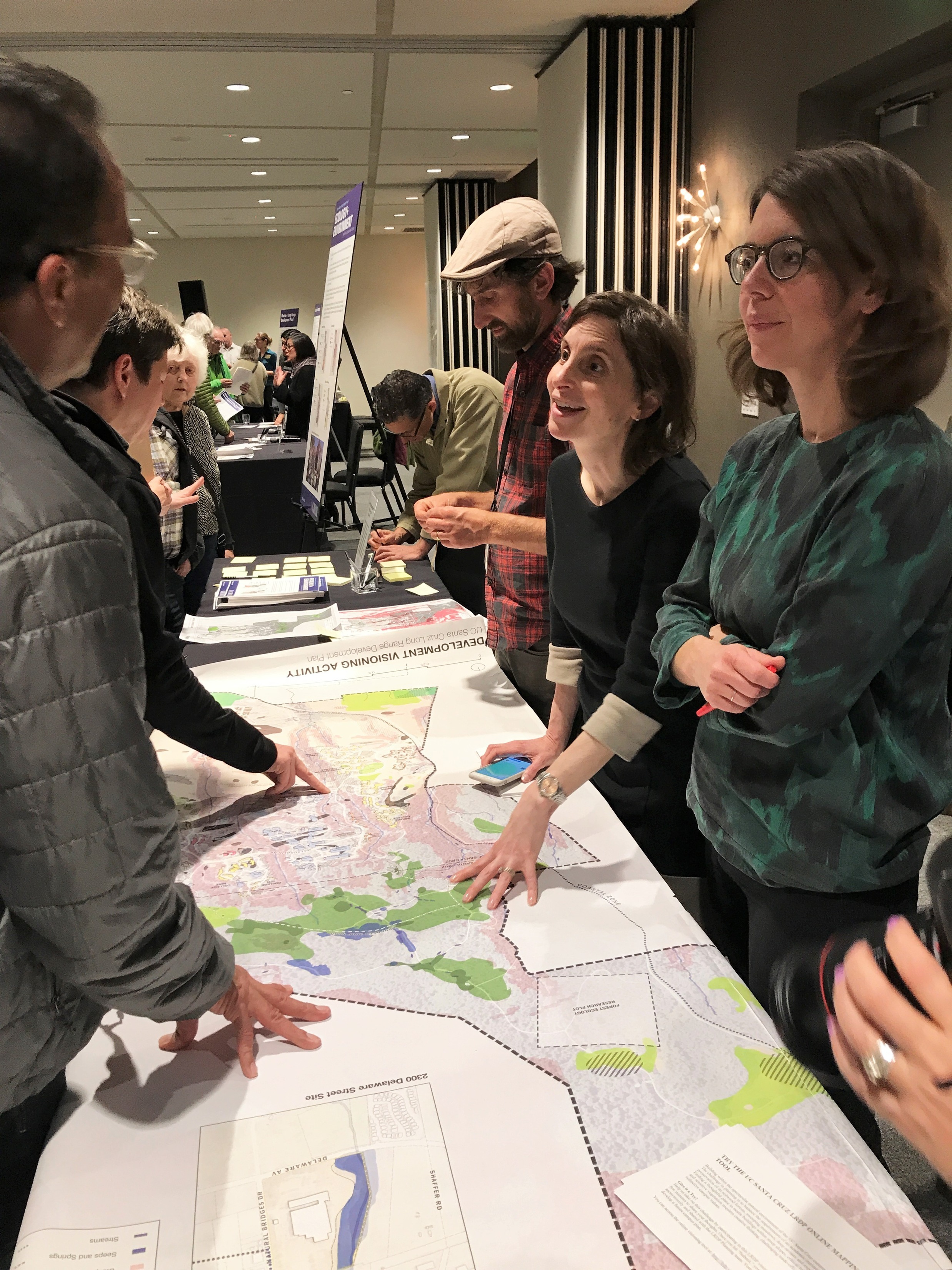
Prioritizing a collaborative effort, Page brought together faculty, staff, students, and community leaders to shape a shared vision for the future. Driven by inclusivity and smart planning, leadership and advisory committees collaborated to build consensus on key growth strategies.
Through engaging, solution-focused workshops—both on and off campus—the university sparked human-centered dialogue, ensuring that campus expansion aligns with regional needs while balancing environmental and community impacts.
Plan drivers
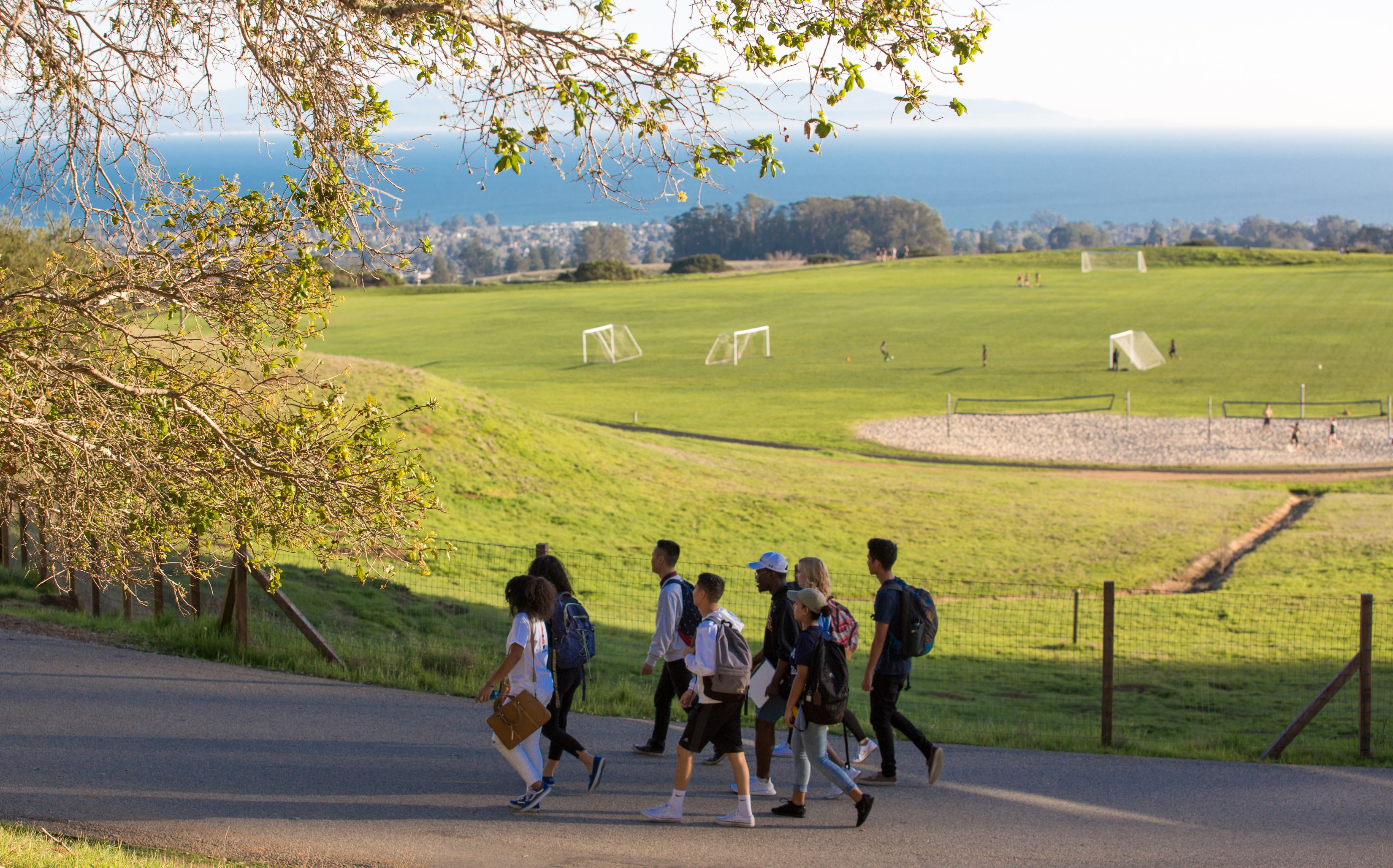
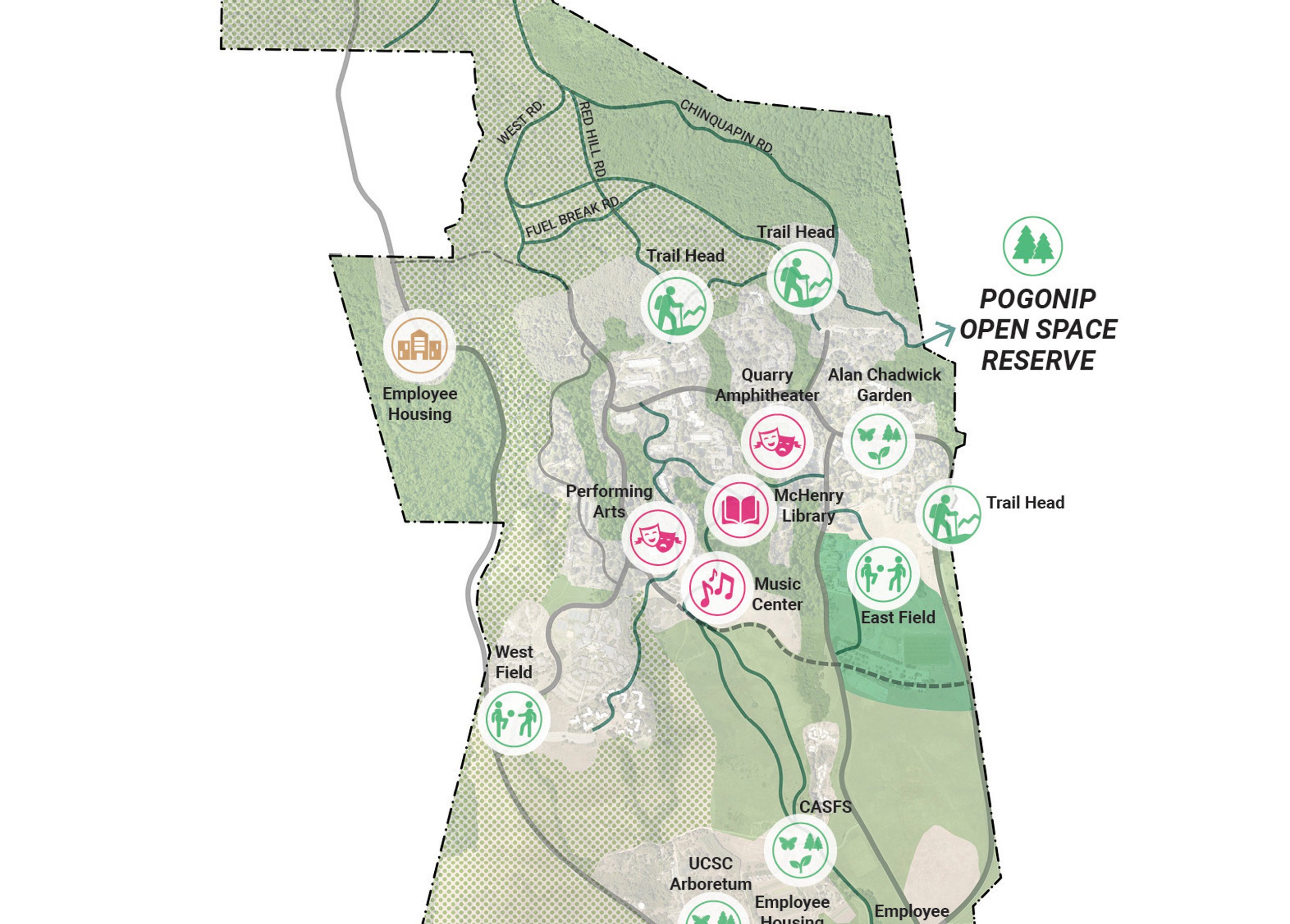
UC Santa Cruz’s campus spans 2,000 acres of diverse natural and built environments, offering endless places for learning, research, and exploration. Its stunning landscape—rich with forests, ravines, and sensitive habitats—presents incredible opportunities and unique challenges for growth. The LRDP process combines site analysis with extensive community engagement to shape a future that honors the university’s mission while overcoming environmental constraints.
Resilience fuels this vision. The LRDP champions sustainable development, disaster preparedness, and economic strength, setting ambitious goals for net zero energy, carbon, water, and waste. Protecting the campus’s ecological value is central to both its environmental responsibility and its teaching and research mission. And because a thriving campus is ultimately about the students it serves, the plan ensures that growth supports an inclusive, connected learning environment while strengthening long-term regional resilience.

Land use plan
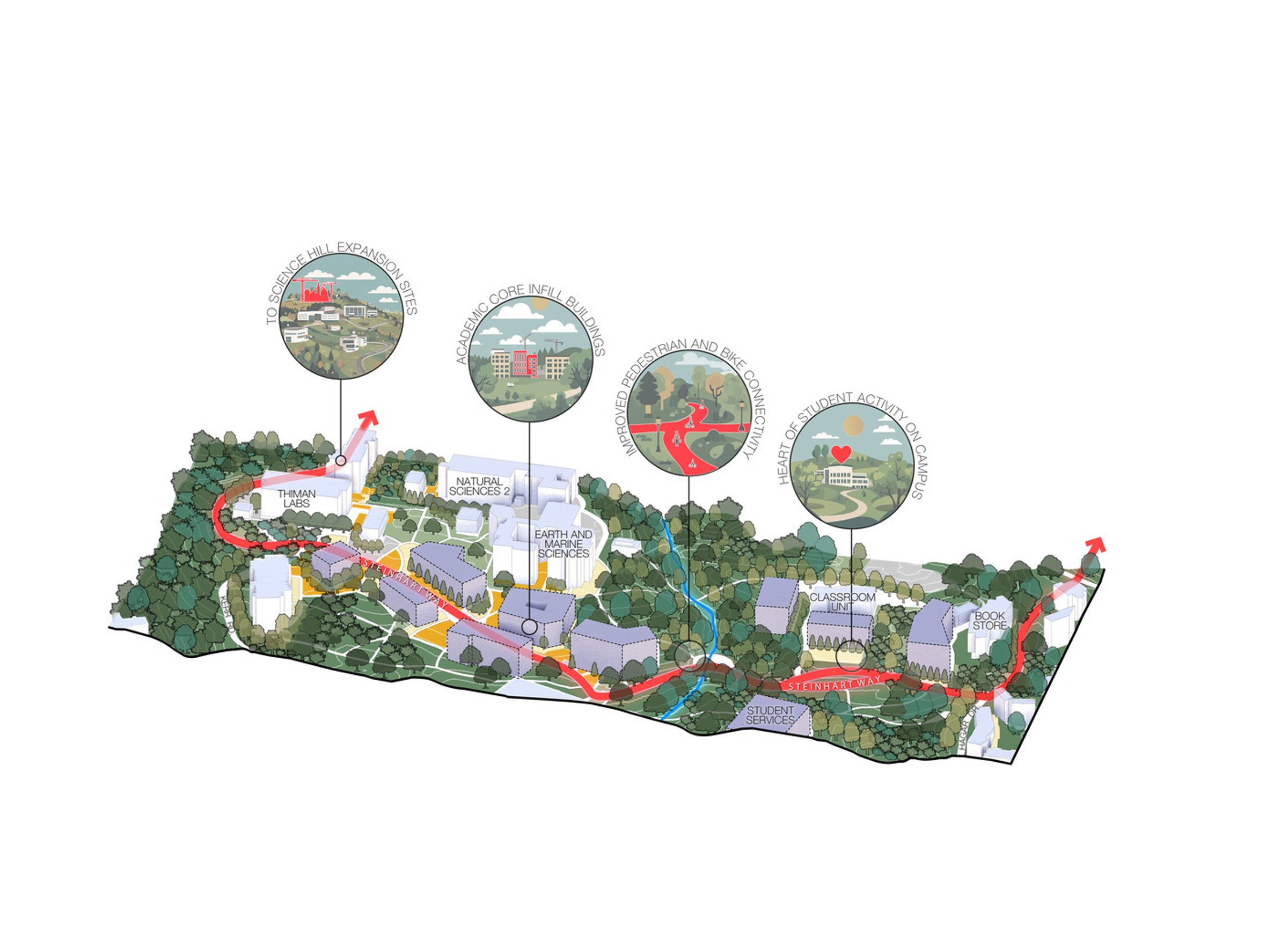
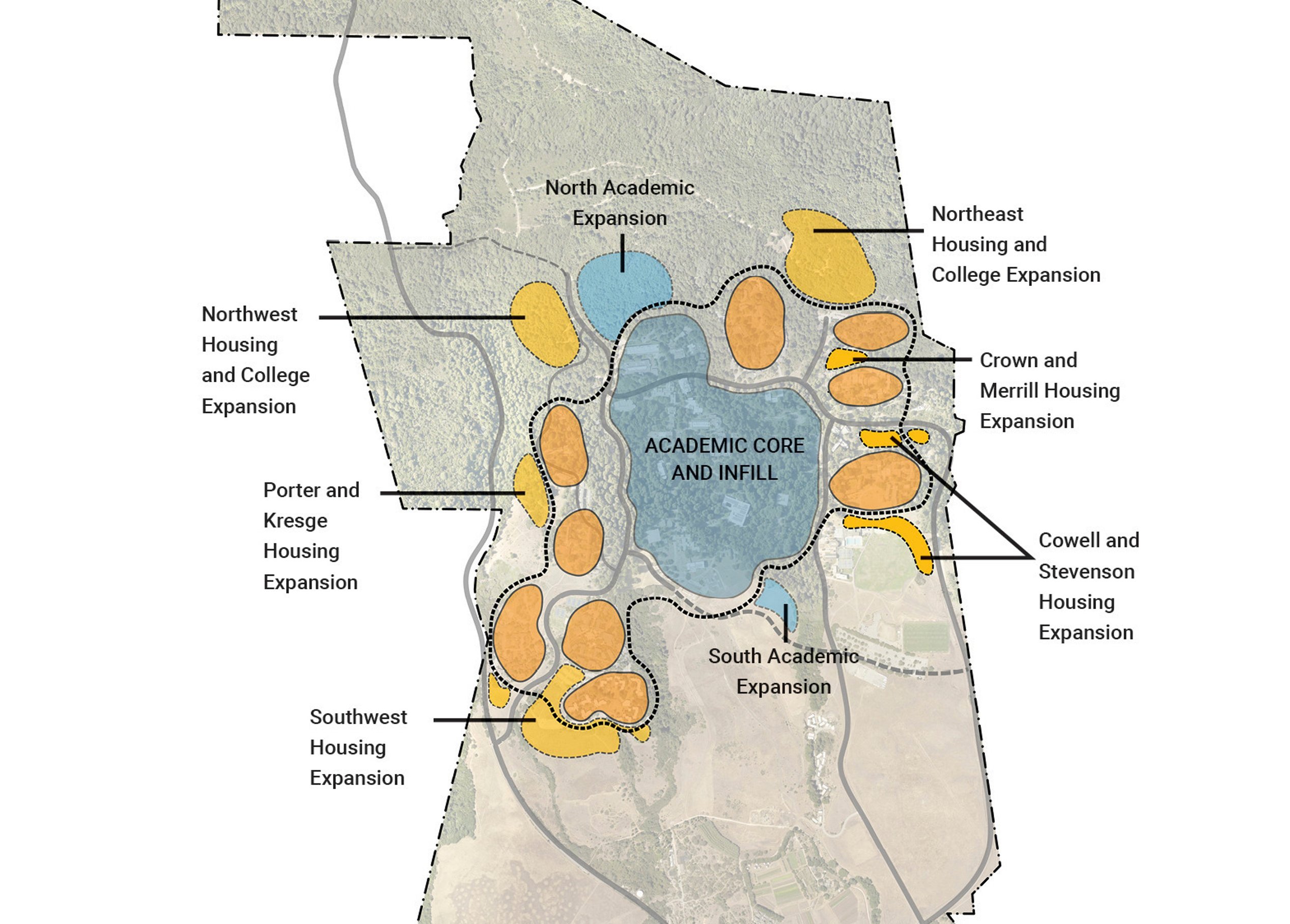
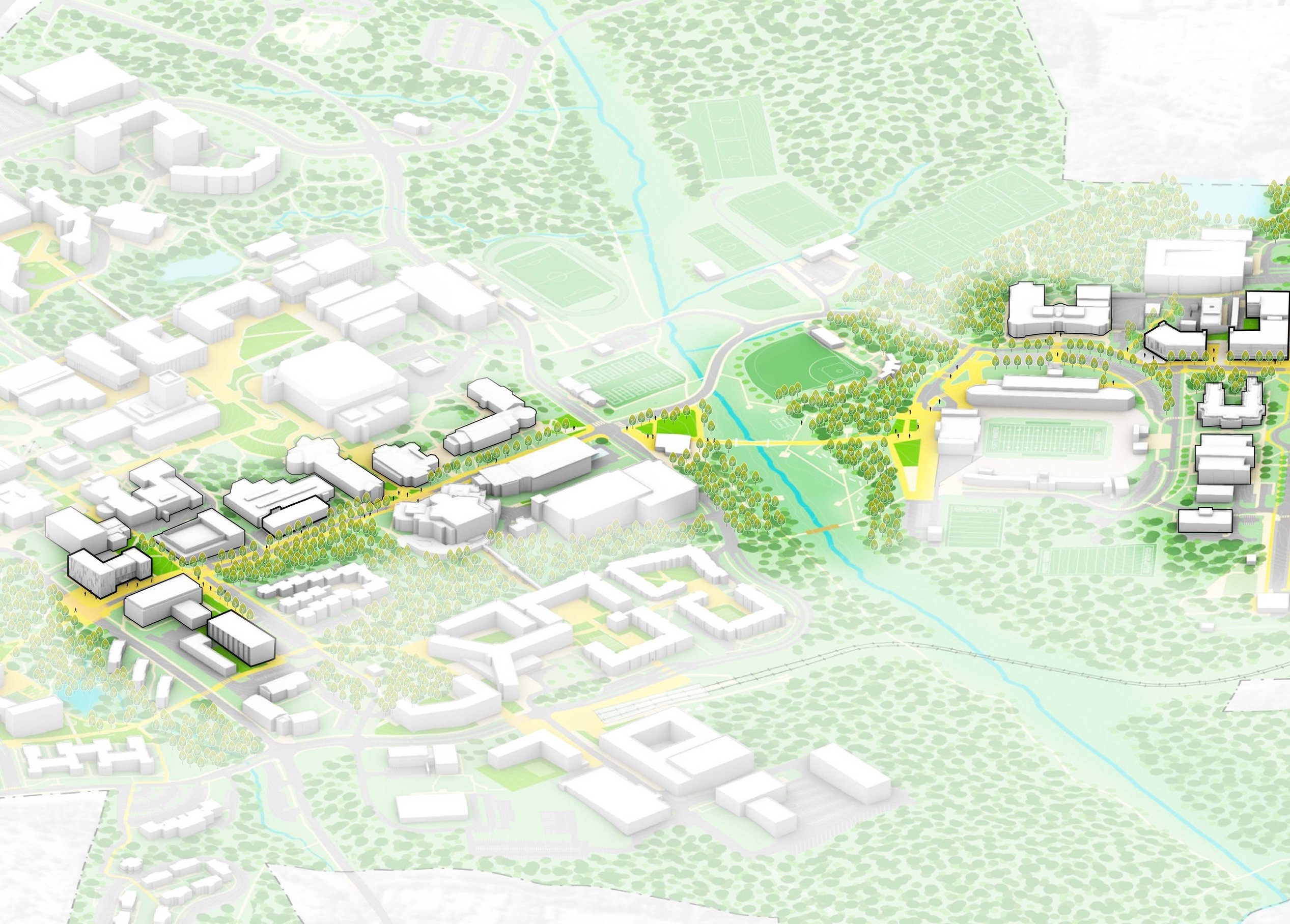
The land use plan takes a strategic approach, centering growth around a compact academic core to protect natural open spaces. This design maximizes access to academic hubs, fosters dynamic social connections, and encourages shared resources across programs.
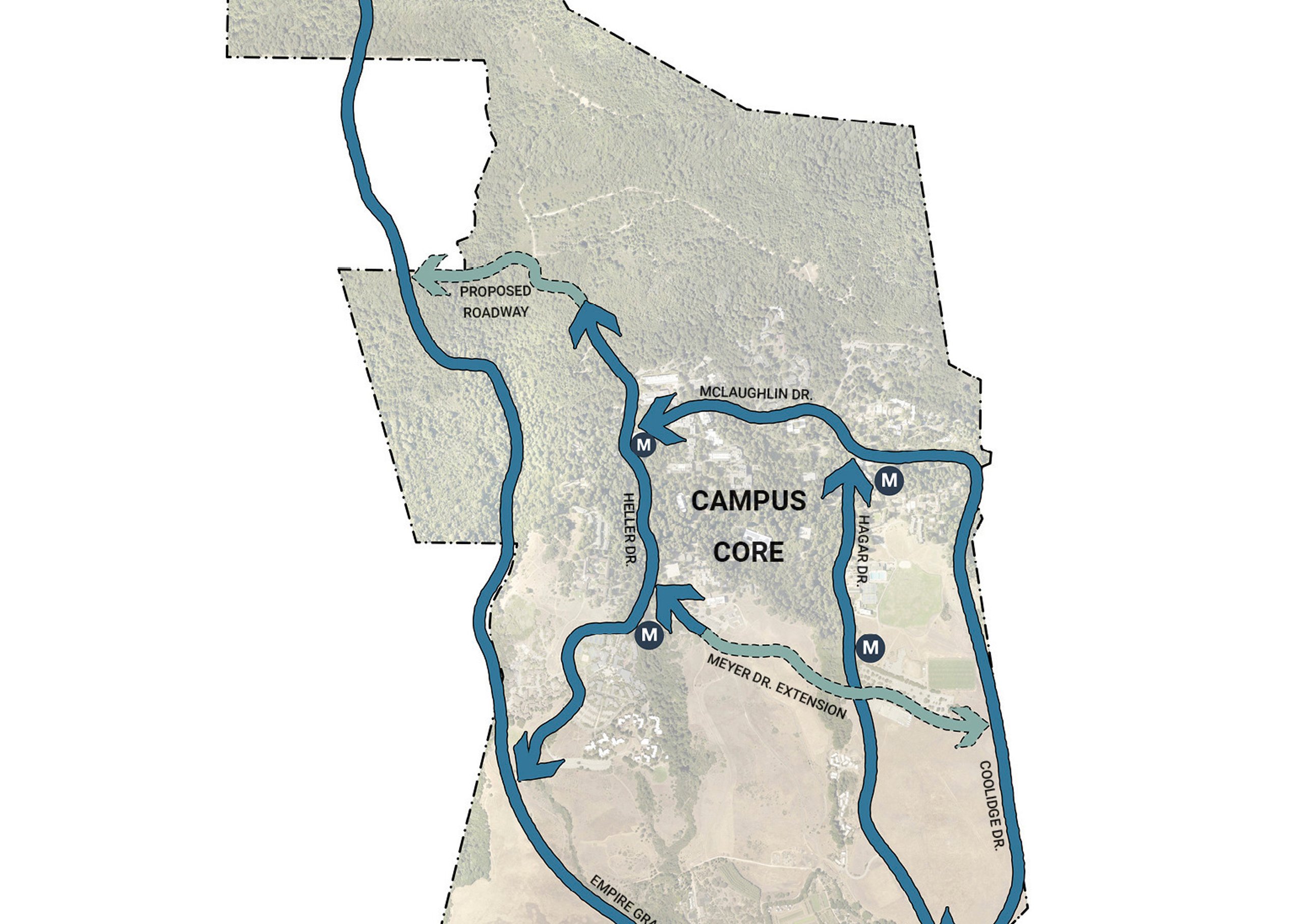
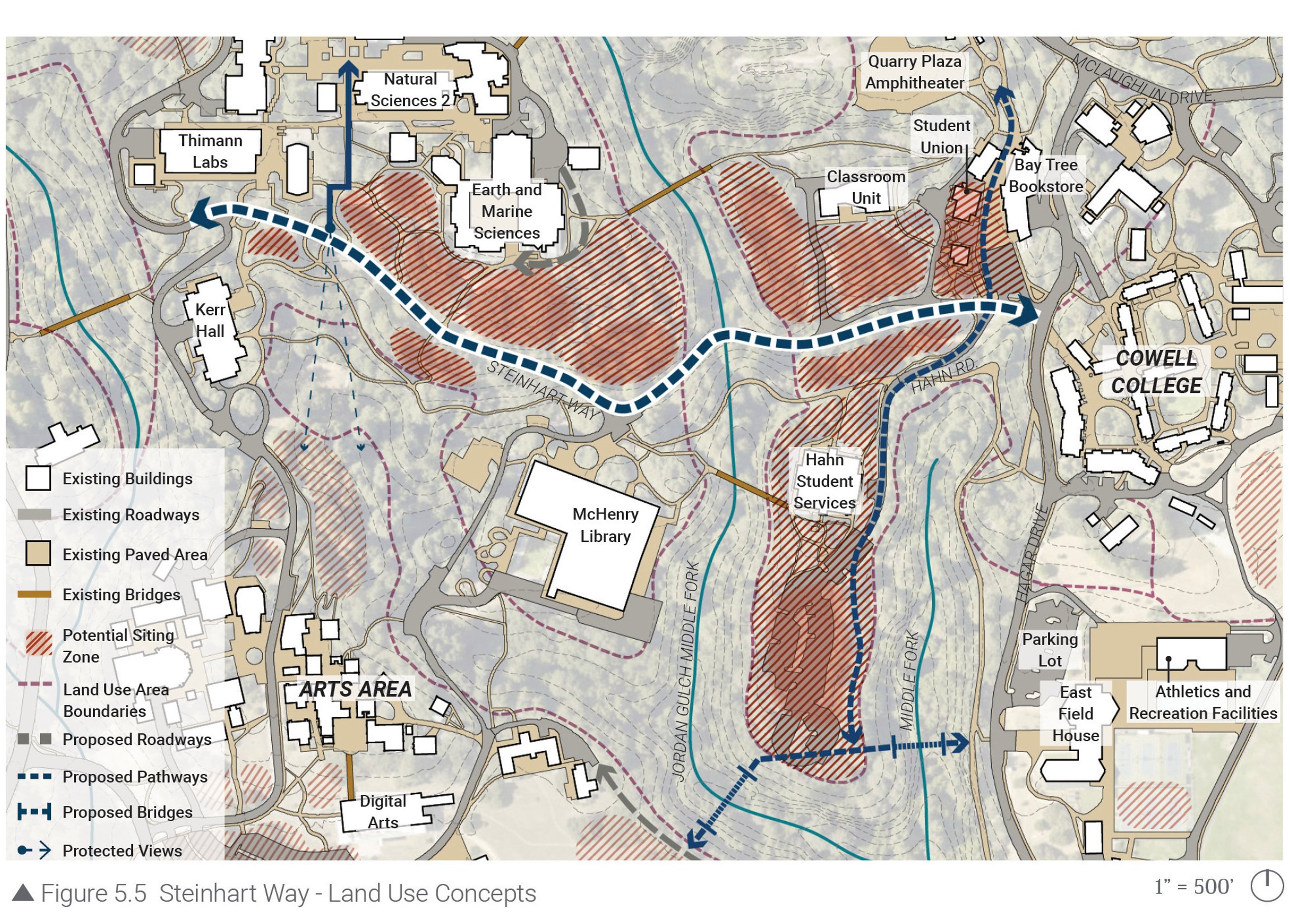
The plan optimizes campus land use and preserves the stunning landscape through thoughtful development within existing spaces. UCSC’s unique topography can be challenging to navigate, but increasing density creates new opportunities for collaboration, interaction, and a more connected campus community. The land use plan is reinforced by an integrated mobility strategy, prioritizing walkability through transit, biking, and pedestrian-friendly pathways, with peripheral parking reducing congestion. Investments in upgrading aging infrastructure ensure a resilient foundation for future growth, optimizing existing systems while strategically expanding utilities.
By maintaining a compact, efficient footprint for academics and housing, the plan fosters connections, promoting both social and physical resilience. Rooted in UCSC’s legacy, the LRDP builds on past successes while boldly shaping the campus’s evolution—preserving its best elements while steering it toward a dynamic, sustainable future.
Infrastructure and utilities
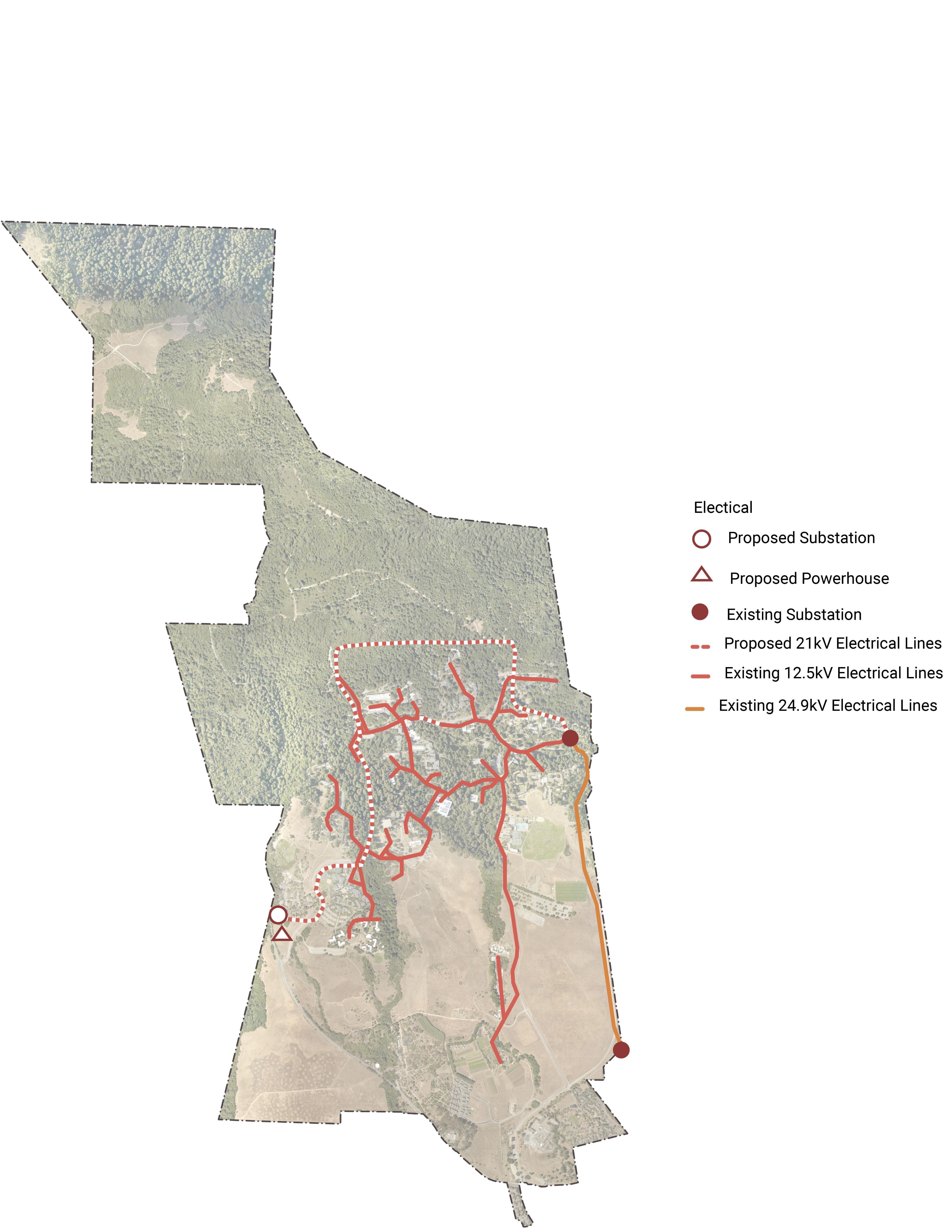
The LRDP vision rethinks smart, sustainable water and energy strategies, aligning UCSC with state and UC system goals. With aging 55-year-old infrastructure, the campus faces a critical moment: balancing system renewal with the need for higher capacity and performance to meet future demands.
A recent comprehensive capacity study assessed utility systems across the main residential campus, leading to strategic plans that address deficiencies and ensure long-term resilience. At Westside Research Park, studies confirmed that growth can be supported through city-owned utilities, allowing expansion without overburdening campus systems. UCSC is proactively upgrading infrastructure, ensuring a sustainable, high-performing campus that supports its mission for generations to come.


/
Similar projects

/

Talk with us
Complex challenges need fresh perspectives and deep expertise. Connect with our team to explore how we can help you create spaces that make a real difference.