Press Release
Design for Impact 2025: Aligning performance with purpose
We design for impact by creating high-performing, healthy, and resilient projects for our communities.
We believe that design has the power to transform the world around us. With more than 125 years of history, and now, as part of Stantec, our commitment to sustainability, community impact, and continuous improvement is stronger than ever. The 2025 Design for Impact book showcases projects where performance meets purpose, revealing how resilient, human-centered design creates lasting value for both people and the planet.
A compass for contextually rich, purpose-driven projects
We begin our projects with the end in mind, asking: What impact story will this project tell? The Design for Impact framework guides our response. Across markets and geographies, it shapes how we integrate resilience and equity, customizing solutions to reflect the needs of each place.
The holistic approach is organized around eight performance drivers:
- Energy: Reducing demand, advancing electrification, and achieving net-zero targets
- Water: Designing smarter systems to optimize water use and resilience
- Ecology: Restoring biodiversity and enhancing natural systems
- Resilience: Equipping buildings and communities to adapt and thrive
- Materials: Cutting embodied carbon through ethical, low-impact choices and adaptive reuse strategies
- Well-being: Advancing health equity through inclusive, human-centered design
- Community: Designing for belonging, connection, and cultural context
- Discovery: Turning project lessons into shared knowledge and progress
Stories of impact
This year’s featured projects show how design rooted in purpose becomes a force for good:
- George Mason University’s Fuse at Mason Square is on track for net-zero energy with its photovoltaic façade and all-electric systems.
- Seattle University’s Jim and Janet Sinegal Center for Science and Innovation integrates bio-retention planters, an underground detention tank, and low-flow fixtures to reduce water use intensity 32% below baseline.
- UMLAUF Sculpture Garden and Museum reimagines an iconic cultural site into an ecologically vibrant and accessible destination through native planting and regenerative design.
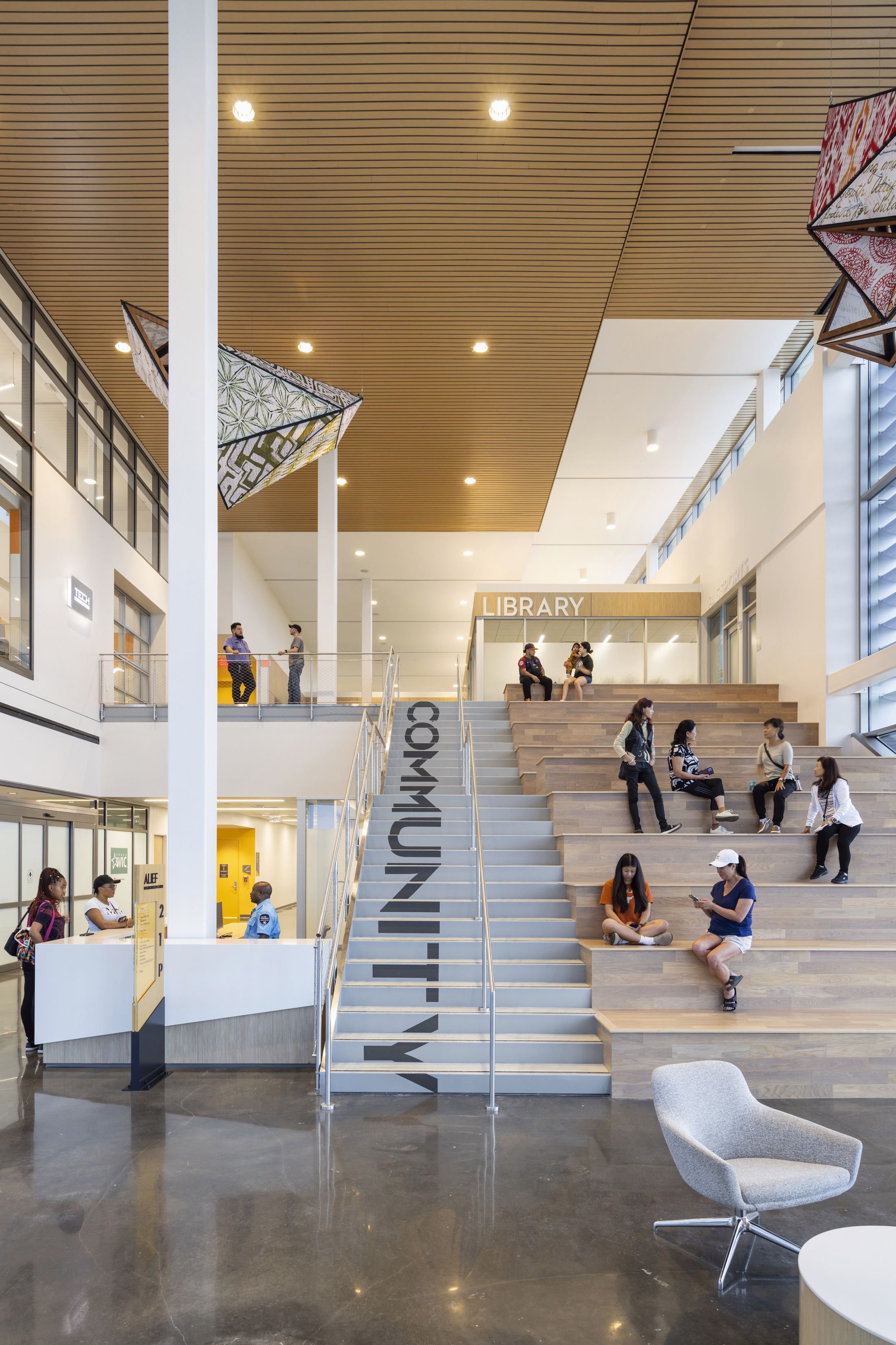
- Alief Neighborhood Center is the first major project in Houston’s Resilience Master Plan, designed to withstand extreme weather events and foster intergenerational connections.
- NYU’s John A. Paulson Center creates a dynamic campus hub where performance venues, classrooms, residences, and athletic facilities converge to foster interdisciplinary learning, cultural engagement, and community connection.
- IAH Terminal B Transformation blends adaptive reuse with material-conscious upgrades to reduce embodied carbon while welcoming 36 million annual travelers into a seamless, future-forward space.
- The Rosedale School sets a new benchmark in inclusive education through sensory-aware design and universal accessibility.
Each case study showcases how we integrate technical precision with empathetic design, creating places that perform today and build resilience for tomorrow.
Looking ahead
While we reflect on our past achievements, we see the 2025 Design for Impact book as a roadmap for the work ahead. From reducing carbon emissions to fostering inclusive communities, Page is committed to creating designs that are sustainable and transformational.

Talk with us
Complex challenges need fresh perspectives and deep expertise. Connect with our team to explore how we can help you create spaces that make a real difference.