





Bio
Jill Kurtz
Principal, Director of Building Sciences
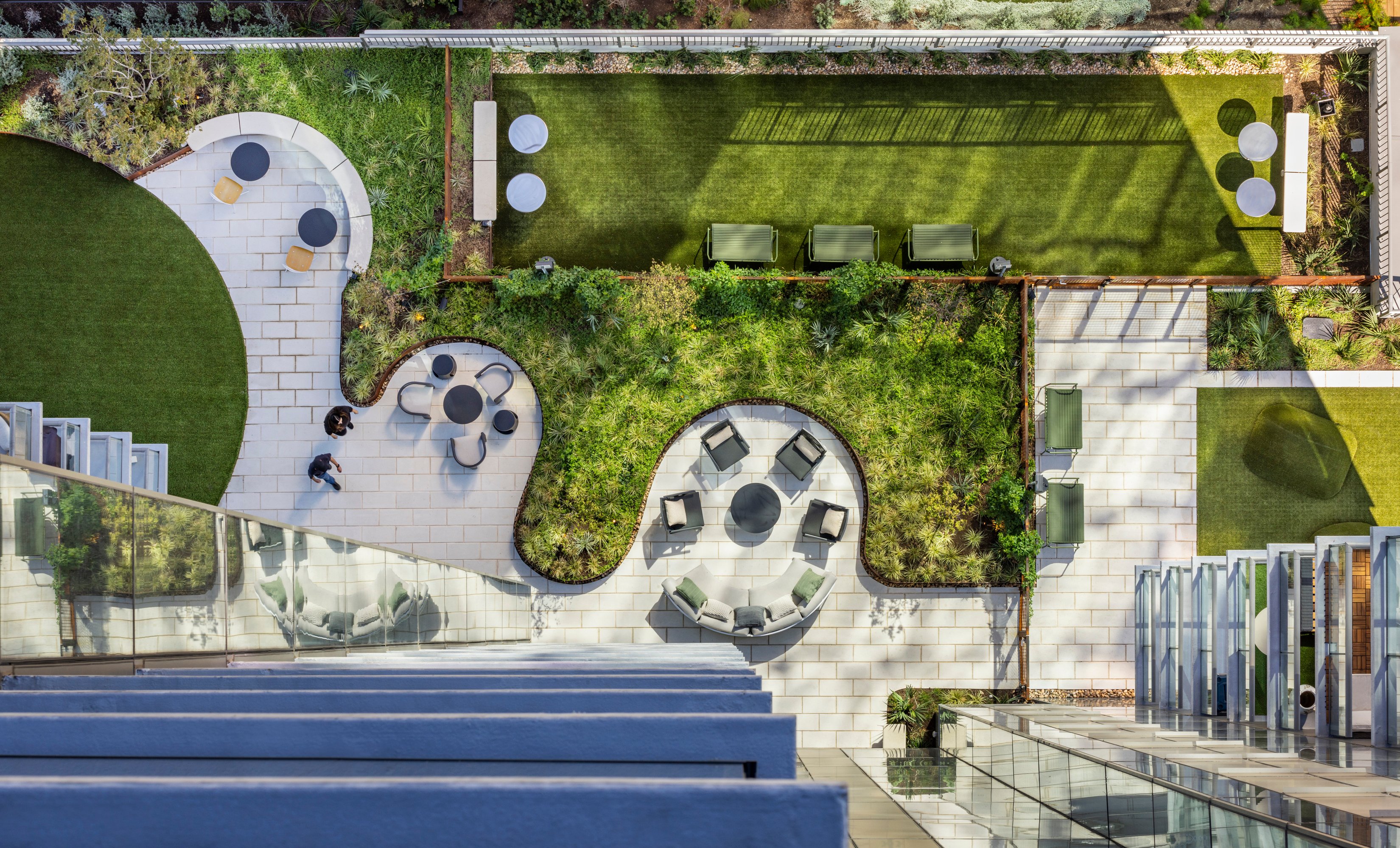

We understand the tremendous impact our work has on the built environment and the communities where we live, work, and play. We also recognize that every climate presents unique challenges, every site has a distinct fingerprint, and every project has its own goals. Our Design for Impact approach to sustainability and impact is grounded in these stories and rooted in individual responses to place.
We believe that design has the power to transform the world around us. The 2025 Design for Impact book showcases exemplary projects meeting ambitious, impact-driven performance goals.
With buildings responsible for 33% of global energy-related greenhouse gas emissions, a figure expected to double by 2050, the architecture and engineering community faces a defining moment, and the most decisive lever we have is design.
Our approach centers on reducing demand and accelerating the transition to carbon-free energy sources. From day one, we track every project’s predicted energy use intensity to drive smarter choices and better outcomes.
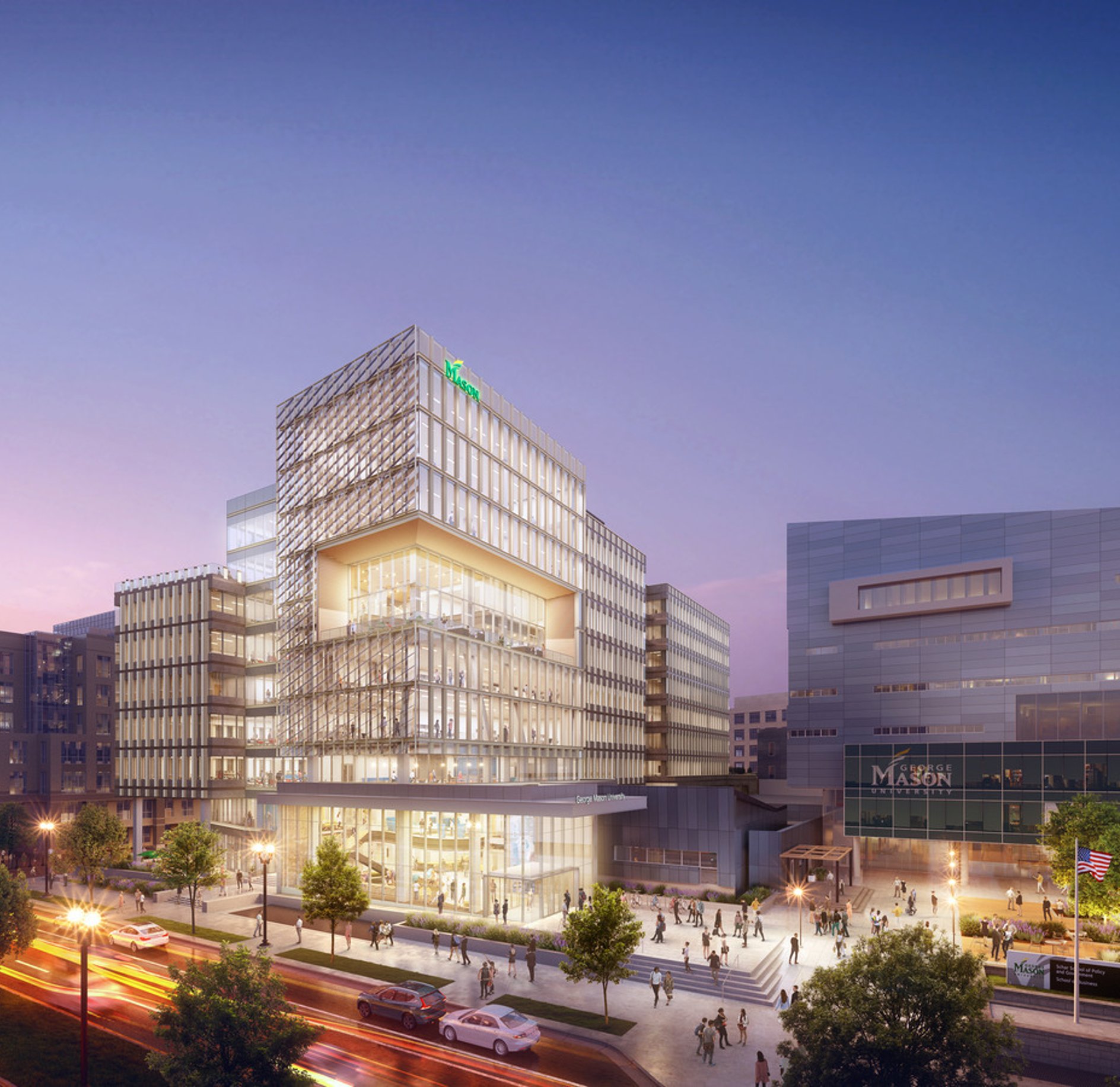
At Fuse at Mason Square, strategically placed photovoltaic panels maximize solar exposure while preserving daylight and views. An all-electric HVAC system and future solar arrays on the adjacent parking structure will work together to achieve net-zero energy.
Responsible water consumption strategies are not only essential for human health and longevity; they also improve energy efficiency, enhance building resiliency, and reduce environmental threats.
We leverage a systems mindset—one that recognizes the interconnected relationship between water flows across the site, irrigation, process water, and drinkable water needs—to optimize performance and extend the useful lifecycle of water within the built environment. Guided by this mindset, our green building certification projects have rigorous water use reduction goals. These benchmarks drive both immediate operational savings and long-term environmental value.
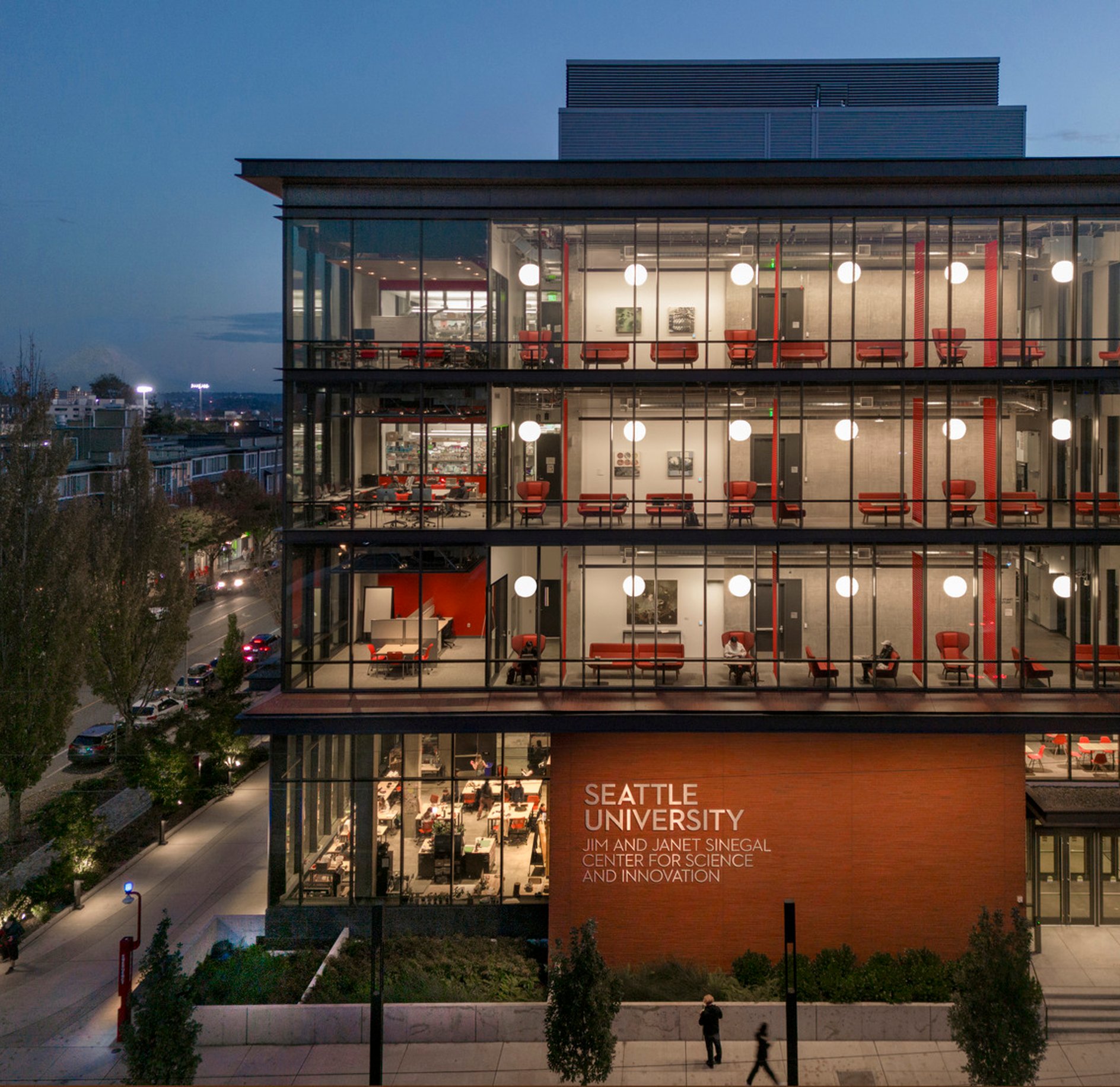
Seattle University's Jim and Janet Sinegal Center for Science and Innovation exemplifies place-based resilience. Given Seattle’s high rainfall and combined sewer-stormwater infrastructure, the building faced elevated risks of flooding and sewage backup. In response, the design team integrated a network of bioretention planters that collect surface runoff and roof drainage, channeling it into a large underground tank. There, water is slowly released into the municipal system, reducing strain and minimizing risk. Inside, low-flow plumbing and water-smart fixtures help reduce water use intensity by 32% below baseline.
As biodiversity declines, extinction rates climb, and temperatures rise, the old standard of “do no harm” no longer meets the need. To respond to the challenges of today and the future, we must advance proactive solutions that actively restore and build resilience.
At Page, our work is rooted in continuous, regenerative loops that support both ecological vitality and human well-being. From treating water as a living system and restoring native plant ecologies in dense urban settings to selecting materials that enhance biodiversity, sequester carbon, and improve human health, we maximize potential and resilience. By intentionally shaping built environments to align with and amplify natural flows, we can transform design into a renewing force.
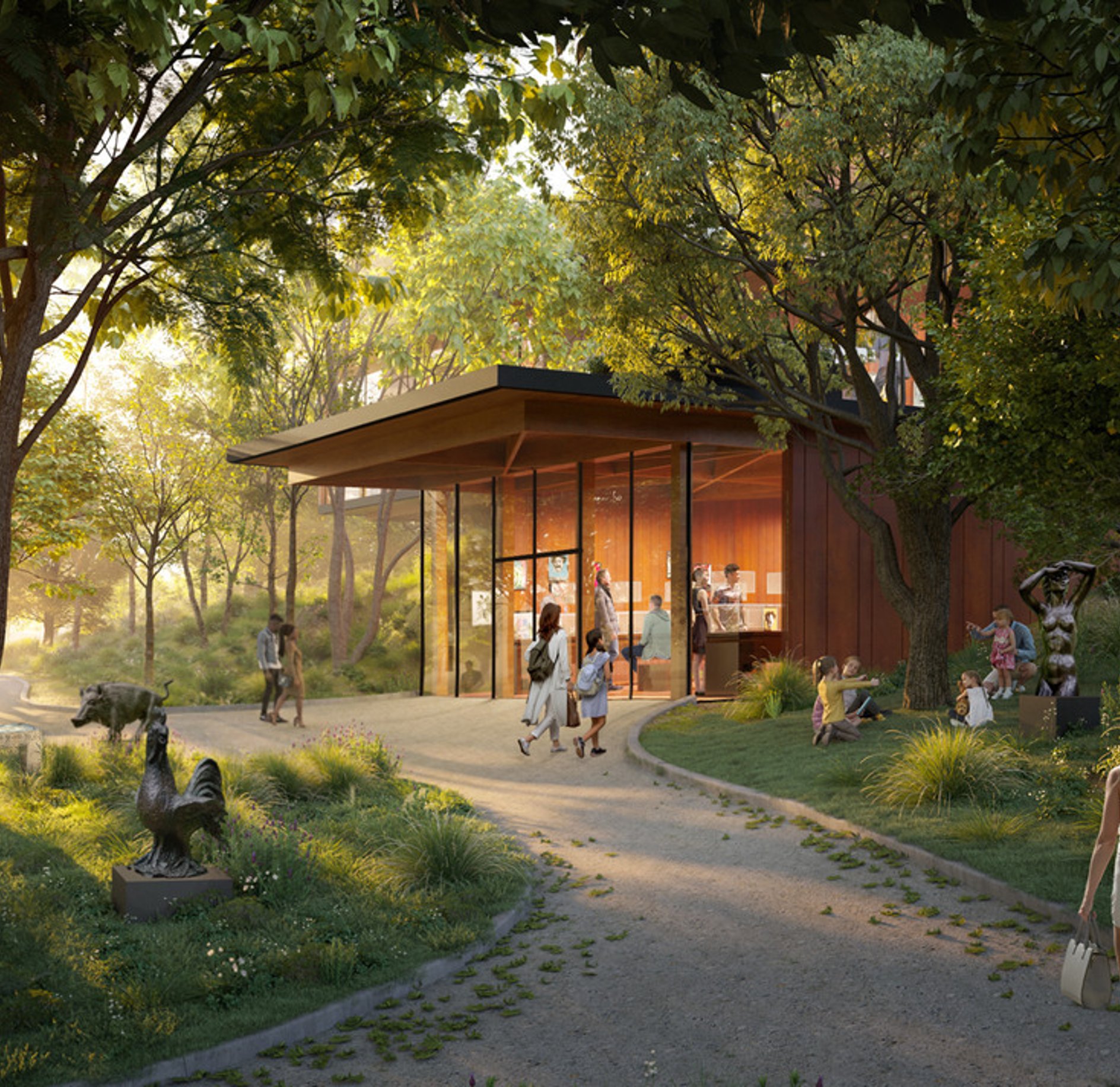
The UMLAUF’s landscape restoration plan brings this philosophy to life. Invasive species will be carefully removed, historic trees protected, and native shrubs and forbs thoughtfully introduced. Each plant is selected not only for its beauty but for its ecological function: fixing nitrogen, repelling pests, supporting pollinators, and offering medicinal value. Tree and plant roots will help filter stormwater runoff and prevent erosion, quietly sustaining the land and enriching the visitor experience.
In the face of accelerating climate volatility and environmental challenges, resilient design is a strategic foundation for durable, adaptable, and high-performance structures.
Page plans for the future by identifying risks and designing solutions that span economic, environmental, and health spectrums. We research, plan, design, and advocate with intention, equipping our clients to navigate complexity with confidence. And resilience doesn’t stop at the building scale. It uplifts entire communities, offering the backbone for adaptability, the fuel for innovation, and the glue that binds us together.
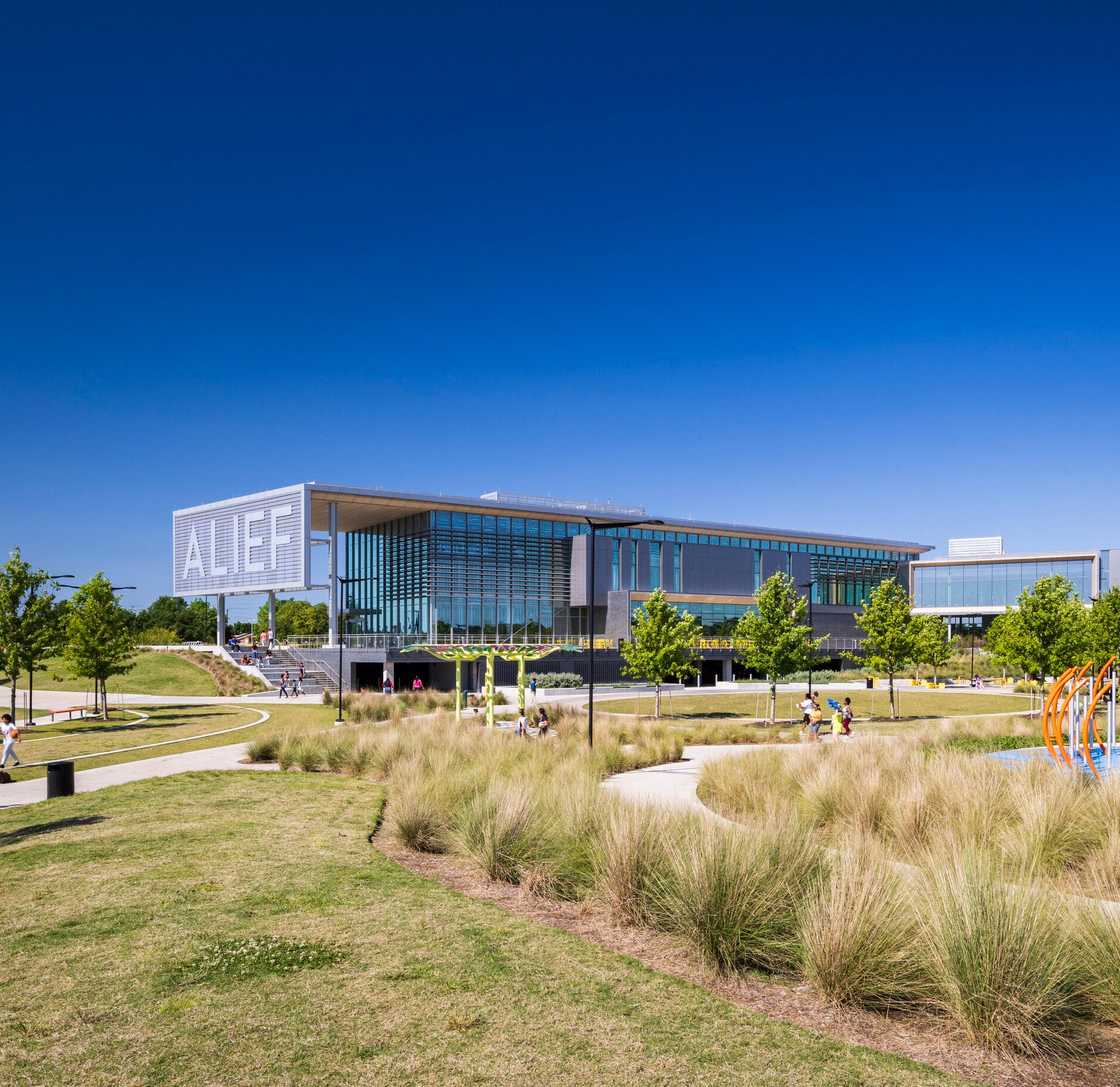
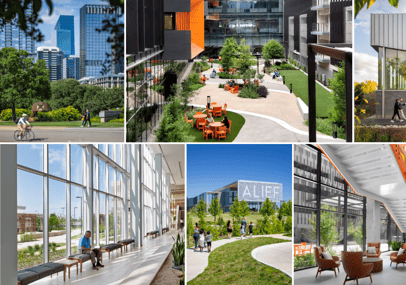
The Alief Neighborhood Center embodies resilience at every scale. Elevated above the 500-year floodplain and powered by an on-site generator, it remains operational during extreme weather, offering shelter, cooling, and critical services to the community. Its surrounding landscape manages stormwater through bioswales and native plantings, while hundreds of preserved trees buffer wind, reduce heat, and support biodiversity.
Buildings are responsible for 39% of global carbon emissions, with 11% from construction materials. As mechanical systems grow more efficient, embodied carbon becomes a larger share of a building’s 60-year footprint.
Through thoughtful design, sourcing, and adaptive reuse strategies, Page reduces these day-one impacts and extends a building’s life. Material choices affect not just environmental outcomes but also human health and dignity. That’s why we prioritize verified health and environmental declarations and work to eliminate prison and forced labor through transparent, ethical procurement practices.
At the Creative Design Office, a refined mix of terrazzo, Greenguard-certified leather, felt, and exposed concrete brings style with substance. We minimized new materials by using concrete structures as finished surfaces, choosing carpet with recycled content and carbon-negative backing, and sourcing reused furniture for more than a third of the project budget.
Health is shaped by the environments we move through every day—where we live, work, learn, and heal. With people spending nearly 90% of their time indoors, advancing health equity requires design that addresses both physical and social conditions.
We define practical, actionable solutions tailored to each client’s culture, business, and long-term goals, creating regenerative, restorative environments that actively support human potential. Whether addressing mobility, cognitive needs, or cultural context, we leverage an ultra-inclusive approach to create spaces that are not only functional, but also equitable, welcoming, and deeply human.
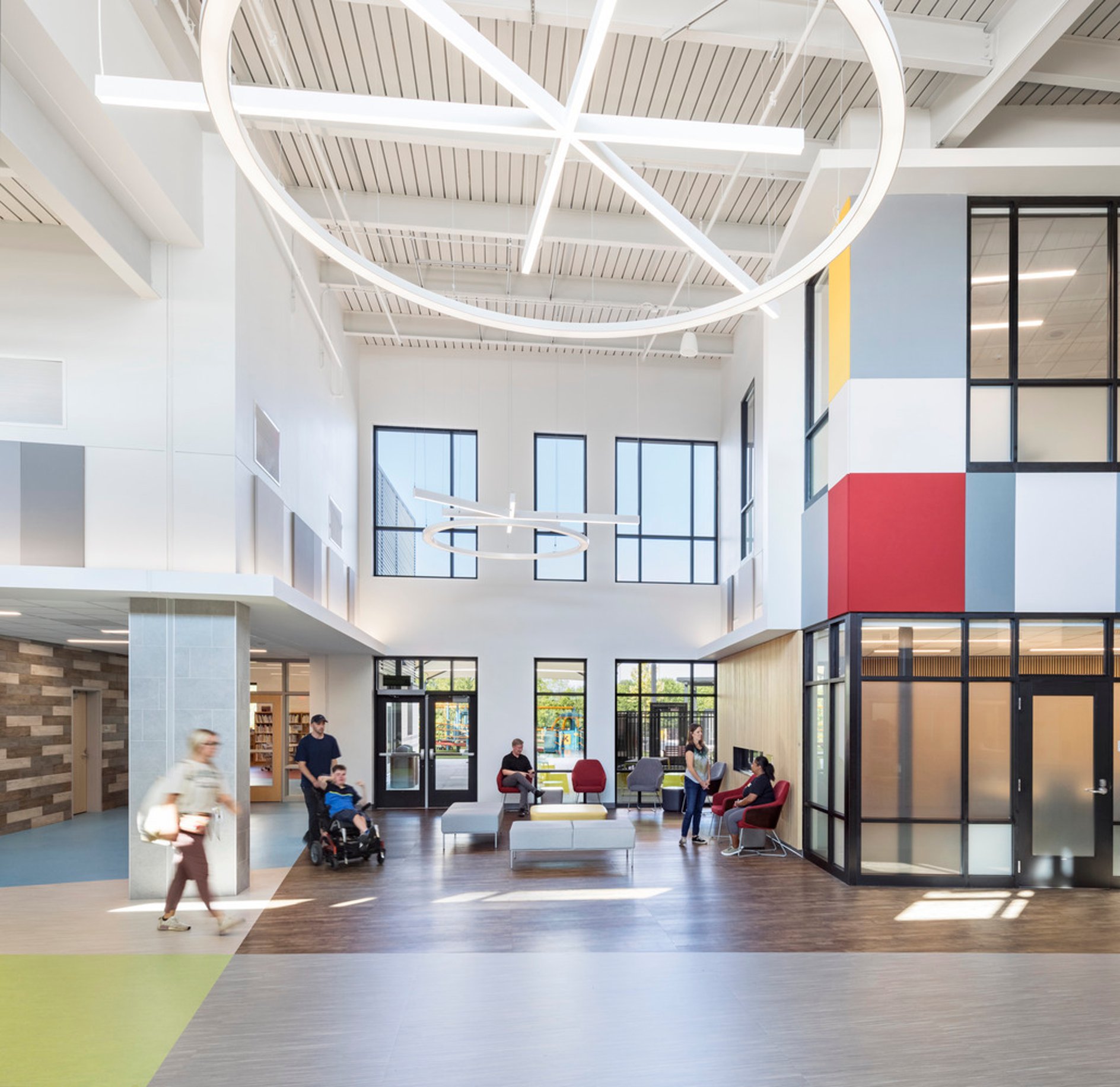
At the Rosedale School, home to 100 learners with diverse and significant special needs, every detail reflects the seven Principles of Universal Design. The environment is crafted to support a full spectrum of cognitive, sensory, and mobility needs. Smooth spatial transitions, multisensory wayfinding, and enhanced acoustics create a neuroinclusive setting that empowers every student to engage, connect, and thrive.
Whether it’s designing spontaneous collision points in workplaces, integrating green space on healthcare campuses, or creating spaces where students thrive together, intentional design serves as the connective tissue between diverse populations.
Because we believe better buildings can build better communities, we embed human-centered principles at every stage. Through inclusive engagement and data-informed strategies, we draw on a deep understanding of place, context, and culture to transform space into a catalyst for connection and collective progress.
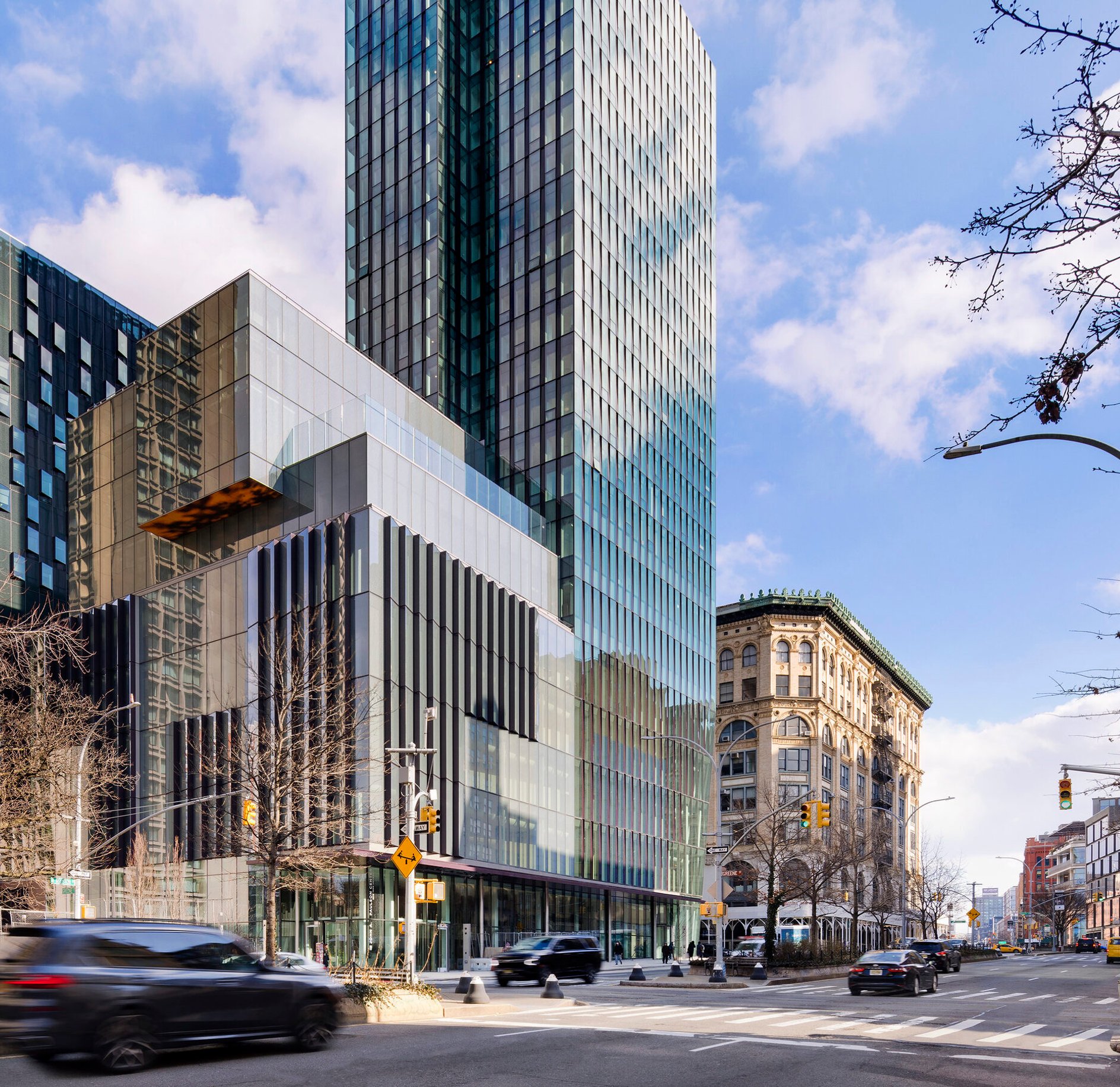
Page partnered with Kieran Timberlake to design the John A. Paulson Center, a multi-use campus hub brings together performance venues, classrooms, residences, and athletic facilities, each organized into its own “neighborhood” to maintain a distinct identity. These neighborhoods are united by a light-filled common area designed to foster connection, collaboration, and cross-disciplinary exchange.
Emerging technology, shifting populations, climate urgency, and evolving ways of living and working demand smarter, more adaptive solutions. Discovery is how we get there.
Every project generates a wealth of insight: strategies for overcoming persistent obstacles, tools for sensitively challenging assumptions, methods for building stronger teams, and approaches for improving user experiences. But without a way to share those lessons, that knowledge stays siloed within project teams. Through effective storytelling and continuous learning, we turn individual breakthroughs into collective progress.
At Texas Children’s Hospital North Austin, where the pandemic struck just three weeks into the project, Page put Lean project delivery to the test. Strong team dynamics became a lifeline, enabling the team to complete a four-building master plan, design, permitting, and construction in under four years. On time. Under budget. During COVID. Amid supply chain breakdowns and soaring inflation.

Developing our Design for Impact framework is our way of tackling environmental and social responsibility through our work and how we work. Progress won’t happen overnight, but it will happen with each of us contributing to a more sustainable and equitable world, one step at a time.
Jill Kurtz Principal, Director of Building Sciences

Complex challenges need fresh perspectives and deep expertise. Connect with our team to explore how we can help you create spaces that make a real difference.